

Industrial 3D printing in Singapore: what can a business order?

A business can order almost any part from us that 3D printing can make: one prototype or a batch, in plastic, nylon or metal, from a palm-sized bracket to a filament print 1.2 metres tall. Industrial 3D printing, also called additive manufacturing, means printing working parts for a business.
This guide covers the processes, the largest sizes, quantities, lead times and how to order in Singapore.
Industrial 3D printing processes at a glance
| Process | What it is best for | The largest single piece |
|---|---|---|
| Filament printing (FDM), in our own studio | Jigs, fixtures, housings, enclosures and big display pieces, at the lowest cost for the size | Up to a 360 mm cube on a desktop printer, and 1000 x 1000 x 1200 mm on our large-format printers |
| Resin printing (SLA) | Smooth, finely detailed parts, master patterns and see-through parts | Up to 1700 x 800 x 600 mm in some resins, and 800 x 800 x 500 mm in clear resin |
| Nylon powder printing (SLS) | Tough working parts, clips and hinges, printed with no supports | Up to 670 x 360 x 550 mm |
| Nylon powder printing (MJF) | The same tough nylon parts, with a slightly smoother surface, in black | Up to 670 x 360 x 550 mm |
| Metal printing (SLM) | Real metal parts in stainless steel, aluminium or titanium | Up to 420 x 420 x 450 mm |
Largest single piece: the biggest part that prints whole, with no joins. Anything larger is printed in sections and joined.
Which process: match it to the job
Filament (FDM) builds the part from a melted plastic strand, layer by layer. We run it in our own studio, and it is the cheapest way to make a big or chunky part. Engineering filaments such as carbon-fibre PETG make it stiff enough for jigs and housings. Read what FDM printing is or see our 3D printing service.
Resin (SLA) cures liquid resin with light. It gives the finest detail and the smoothest surface, so it suits display parts, small precise parts and master patterns for moulds. See what SLA printing is and SLA printing.
Nylon powder (SLS and MJF) fuses fine nylon powder. The loose powder holds the part up, so clips, hinges and closed shapes print with no supports. In practice the two are close; SLS or MJF explains how to choose. Services: SLS and MJF.
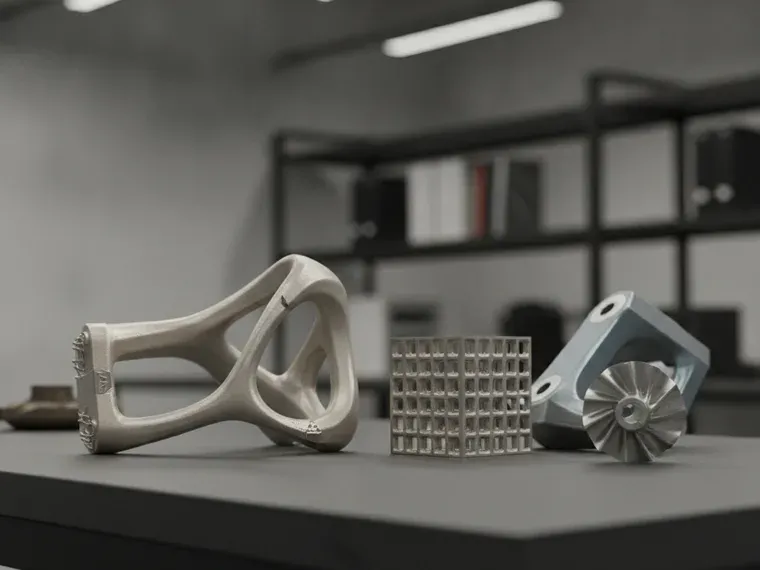
Metal (SLM) melts metal powder with a laser into a solid part. Choose it only when the part has to be metal. Read what SLM is, which metals you can print and our metal 3D printing service.
Still unsure? FDM, SLA or SLS: which is right for you walks through it.
Size: up to 1.2 m tall in one piece
Large-scale 3D printing is where filament leads. A single filament piece can be up to a 360 mm cube on a desktop printer, or up to 1000 x 1000 x 1200 mm on our large-format printers. Big is possible, but it comes with trade-offs worth knowing before you ask for it:
- Warping and shrinkage. Plastic shrinks as it cools, so long, flat parts can lift at the corners or bow.
- Much longer print time. A big piece can run for days, so a failure near the end costs far more time and material.
- Visible layer lines. They show more on large, smooth faces, and sanding them out is extra work.
- More support and cleanup. Big overhangs need more support material, which has to be removed by hand.
- Cost. Material and machine time rise quickly with size.
That is why printing in sections and joining them is often the better choice. Each section prints faster, a failure costs one section rather than the whole piece, and the joins can sit on natural edges.
The other processes have smaller boxes. Resin goes up to 1700 x 800 x 600 mm in some resins, nylon powder to 670 x 360 x 550 mm and metal to 420 x 420 x 450 mm. How big a 3D print can be covers splitting and joining in detail.
Quantity: from one prototype to a batch
The same file can be printed once or many times, with no tooling to pay for. That makes 3D printing the natural choice for a prototype, a test fit, a few jigs or a short run while a product is still changing.
As the number grows, other methods start to win on cost per part. Silicone moulding usually suits about 20 to a few hundred parts per mould. Past about 1,000, injection moulding usually wins, because the cost of the tool is spread over every part. 3D printing, silicone moulding or injection moulding compares the three, and we offer silicone moulding and injection moulding too.
Lead times: about one to three weeks
These are a rough gauge for a simple, low-complexity design of a normal size, about 10 to 15 cm across. Ask us for an accurate date.
| Process | Standard lead time |
|---|---|
| Filament (FDM) or resin (SLA) | 4 to 7 working days |
| Nylon powder (SLS) | 8 to 12 working days |
| Metal (SLM) | 10 to 12 working days |
| Nylon powder (MJF) | 12 to 15 working days |
Filament and resin can also go Express (3 to 5 working days) or Super Rush (1 to 3, after we check the part can be done in time). Express and Super Rush exist for nylon and metal too, but check with us first. Big parts and batches take longer, so ask us.
Ordering as a business: quote, PO and NDA
- Get an instant price. Upload your 3D file (STL or STEP) to the instant quote, choose filament, resin or nylon, and see the price. Metal parts are quoted by a person, so send us the metal part instead.
- Pay by card, or by purchase order. Business accounts can apply to pay by purchase order instead of by card.
- A person checks every file. After payment, our team reviews each file before it prints. If it needs an adjustment, such as a wall too thin to print, we contact you first.
Confidential drawings? We sign NDAs before you share drawings. Say so when you first get in touch, and send nothing until it is signed.
No 3D file yet? Our product development team can design the part from a sketch, a drawing or the old part.
Real jobs: what businesses have ordered
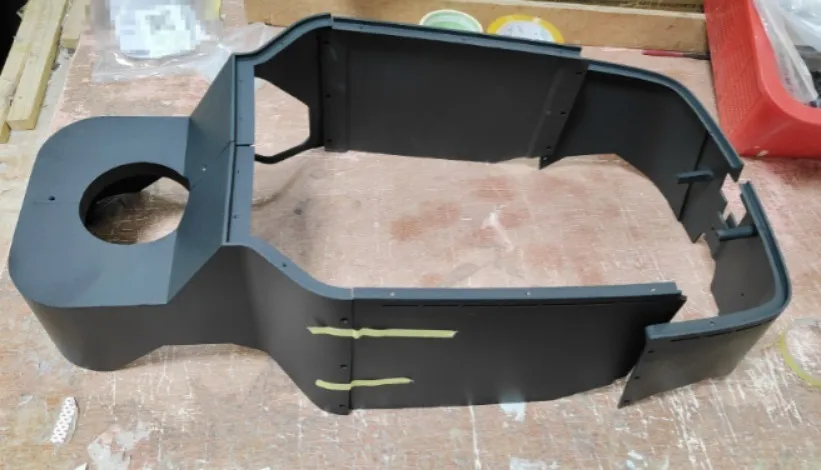
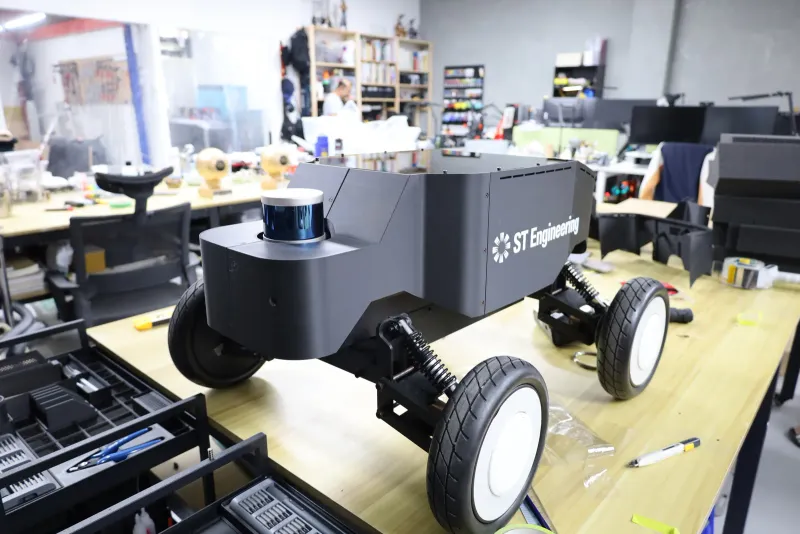
- A robot casing for ST Engineering. We reworked their shell design on the real robot, then printed it in matt black carbon-fibre PETG panels, with the logo UV printed on.
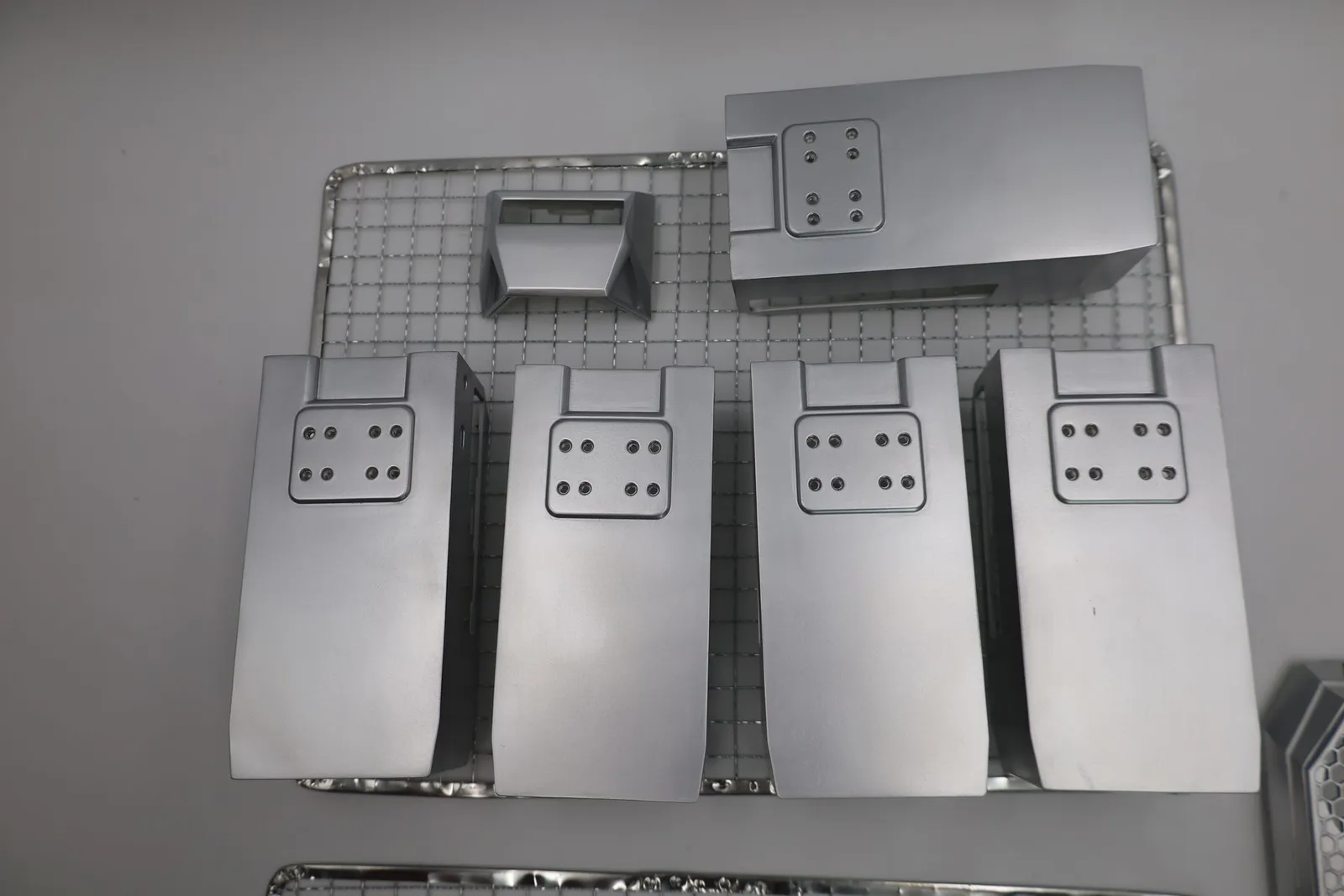
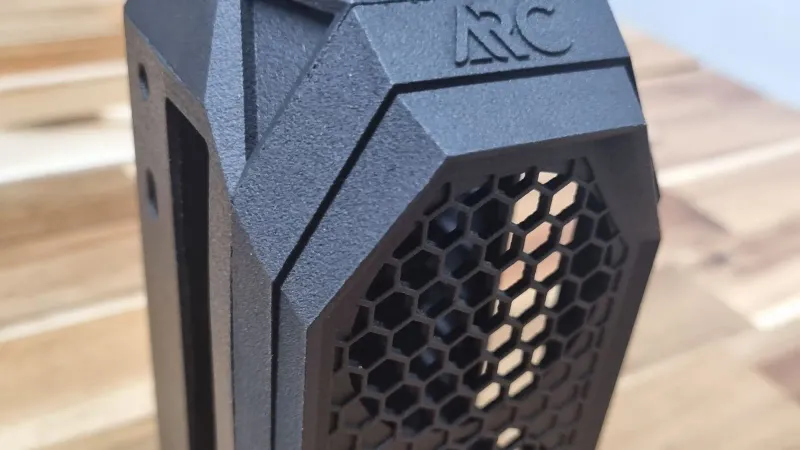
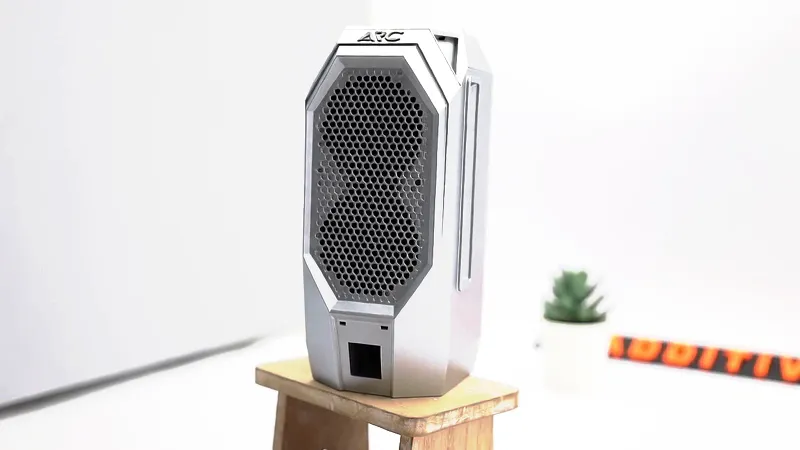
- A case for SE Manufacturing. Arc, a computer case, printed in MJF nylon with its honeycomb grille in one piece, then sprayed silver.
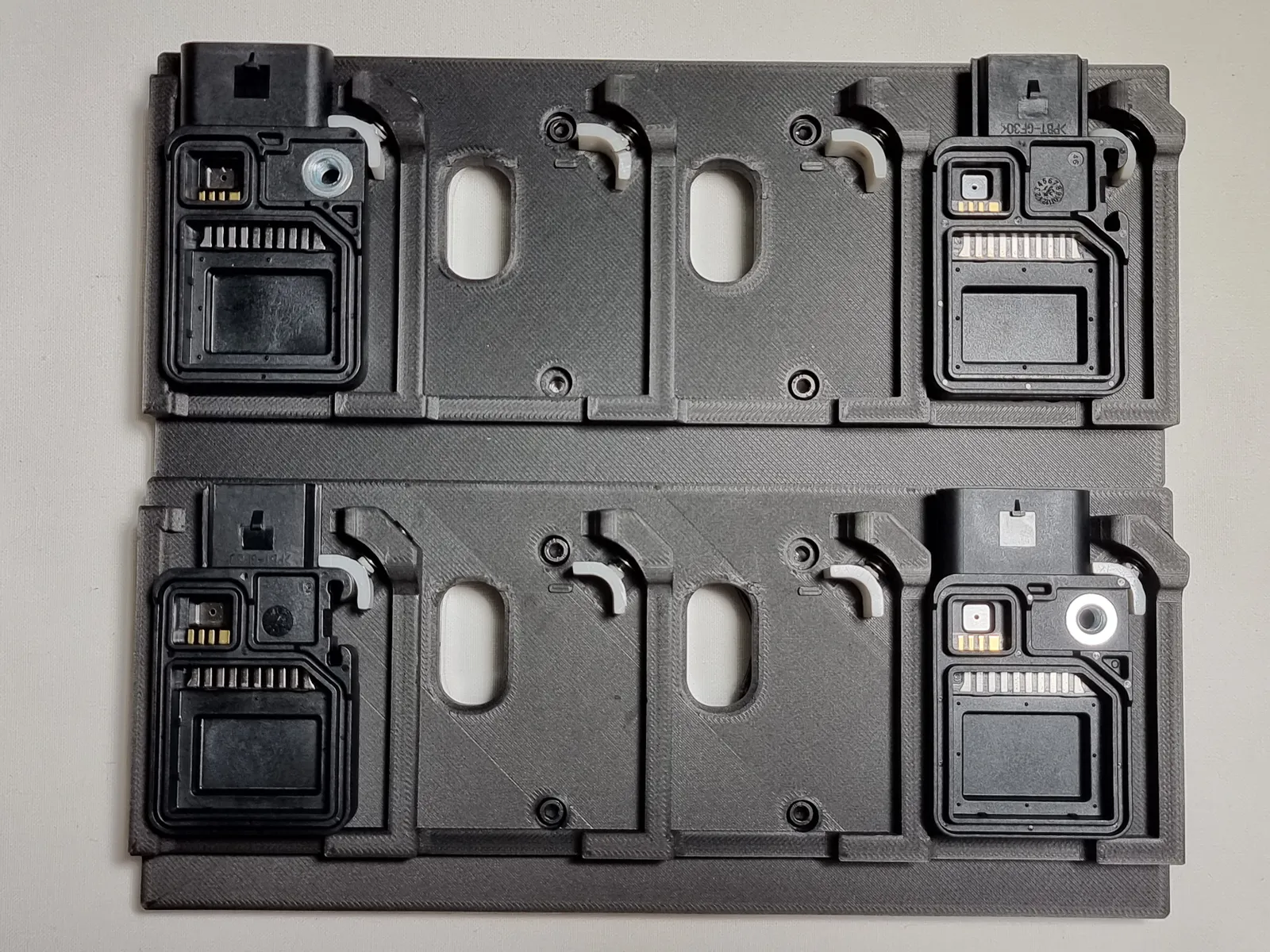
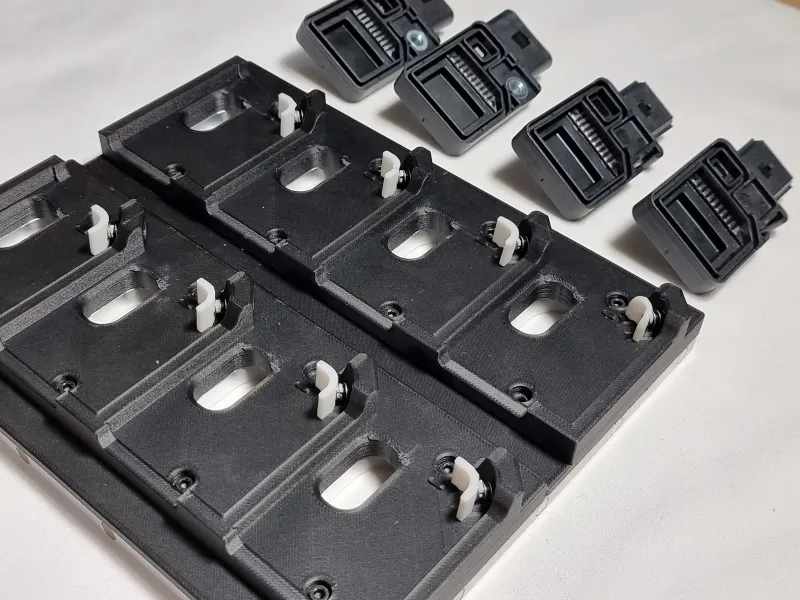
- Holding jigs for Sanwa Intec. Carbon-fibre PETG trays that seat each electronic part the same way on their measuring machine.
- A stainless steel housing for the SAF. A carry sleeve drawn from the unit’s sketch, laser cut and rolled from stainless steel 304 sheet.
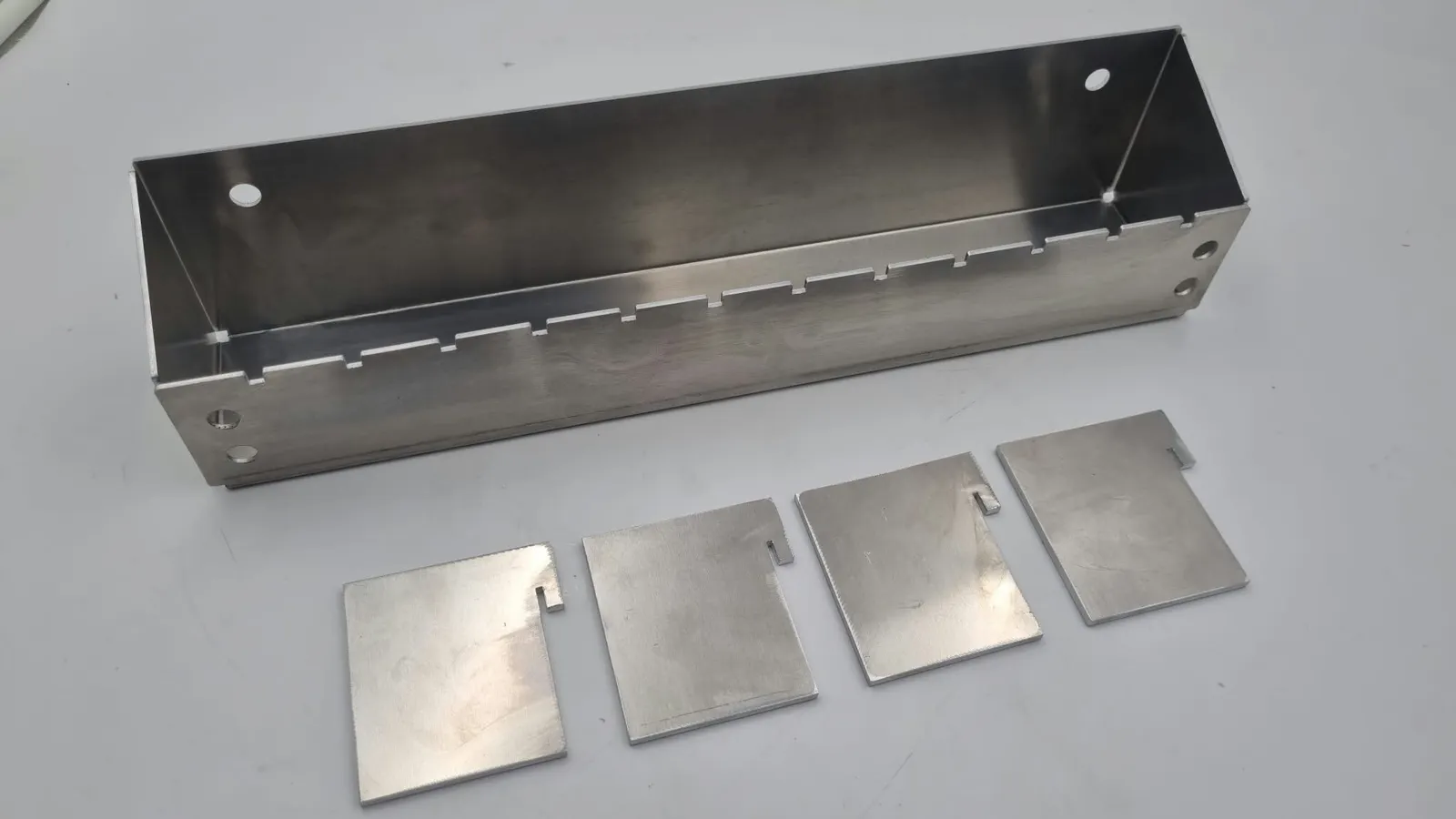
- An aluminium holder for MINDEF. A holder cut and folded from aluminium 5052 sheet, with slot-in dividers.
Frequently asked
What is industrial 3D printing?
Industrial 3D printing is using 3D printing, also called additive manufacturing, to make working parts for a business: prototypes, jigs, housings, spare parts and short production runs. We print in filament, resin, nylon powder and metal, so the process can be matched to what the part has to do.
Do you sign an NDA?
Yes, we sign NDAs before you share drawings. Tell us when you first get in touch, send your NDA or ask for ours, and only send the files once it is signed.
What is the largest part you can 3D print in one piece?
In filament, we can print a single piece up to 1000 x 1000 x 1200 mm. Resin goes up to 1700 x 800 x 600 mm in some resins, nylon powder up to 670 x 360 x 550 mm and metal up to 420 x 420 x 450 mm. Bigger parts are printed in sections and joined, which is often the better choice anyway.
Can you 3D print metal parts in Singapore?
Yes, we make metal 3D printed parts by selective laser melting (SLM) in 316L and 17-4PH stainless steel, AlSi10Mg aluminium and Ti6Al4V titanium, up to 420 x 420 x 450 mm. Other alloys are on request, so ask us.
Can you print production quantities?
Yes, we print anything from a single prototype to a batch of parts from the same file. For about 20 to a few hundred identical parts, silicone moulding can cost less per part, and past about 1,000 injection moulding usually wins. We tell you which suits your number.
How long does an industrial 3D print take?
As a rough gauge for a simple, normal-size part, filament and resin take 4 to 7 working days on Standard, SLS nylon 8 to 12, metal 10 to 12 and MJF nylon 12 to 15. Big parts and batches take longer, so ask us for an accurate date.
Can my company pay by purchase order?
Yes, business accounts can apply to pay by purchase order. Get your price in the instant quote, then apply for a purchase order there instead of paying by card.
Do I need a 3D file to order?
No, a 3D file is not required. With a file (STL or STEP) you get an instant price. Without one, send us a drawing, a sketch or the old part, and we can design or reverse engineer it first.
Related
-
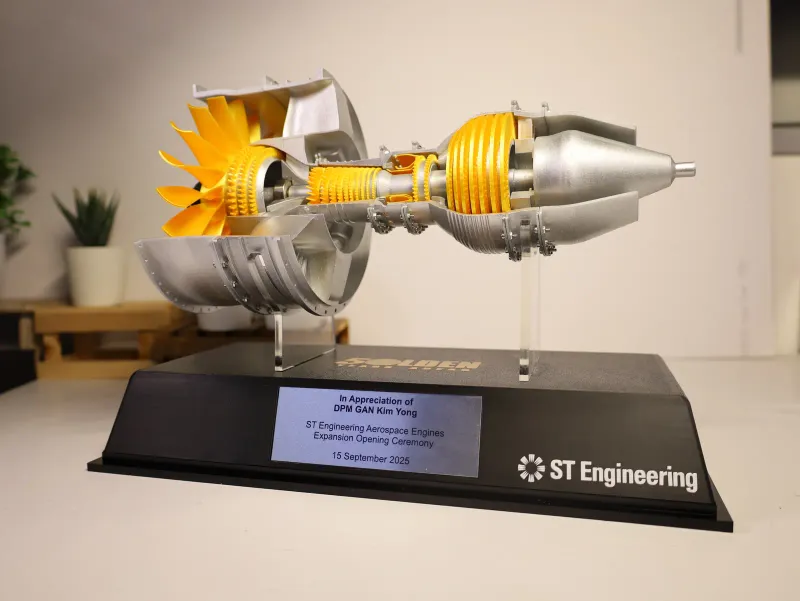 GuideWhat is additive manufacturing, and how is it used?
-
 GuideHow big can a 3D print be, and what if mine is bigger?
-
 GuideFDM, SLA, SLS, MJF or metal: which 3D printing process suits your part?
-
 ServiceIndustrial 3D Printing
-
 ServiceMetal 3D Printing
-
 ServiceProduct Development & Prototyping
-
 Project3D printed robot casing for ST Engineering
-
 ProjectARC computer case parts for SE Manufacturing
-
 ProjectElectronic parts holding jig for Sanwa Intec