

One part, 50 or 5,000: 3D printing, silicone moulding or injection moulding?
On this page
- 3D printing, silicone moulding or injection moulding at a glance
- 3D printing: best for one part up to a handful
- Silicone moulding: best for about 20 to a few hundred
- Injection moulding: worth it past about 1,000
- Cast materials: hard, rubbery or clear parts from one mould
- The printed original: it sets the finish of every cast
- How to decide: start from how many you need
- Frequently asked
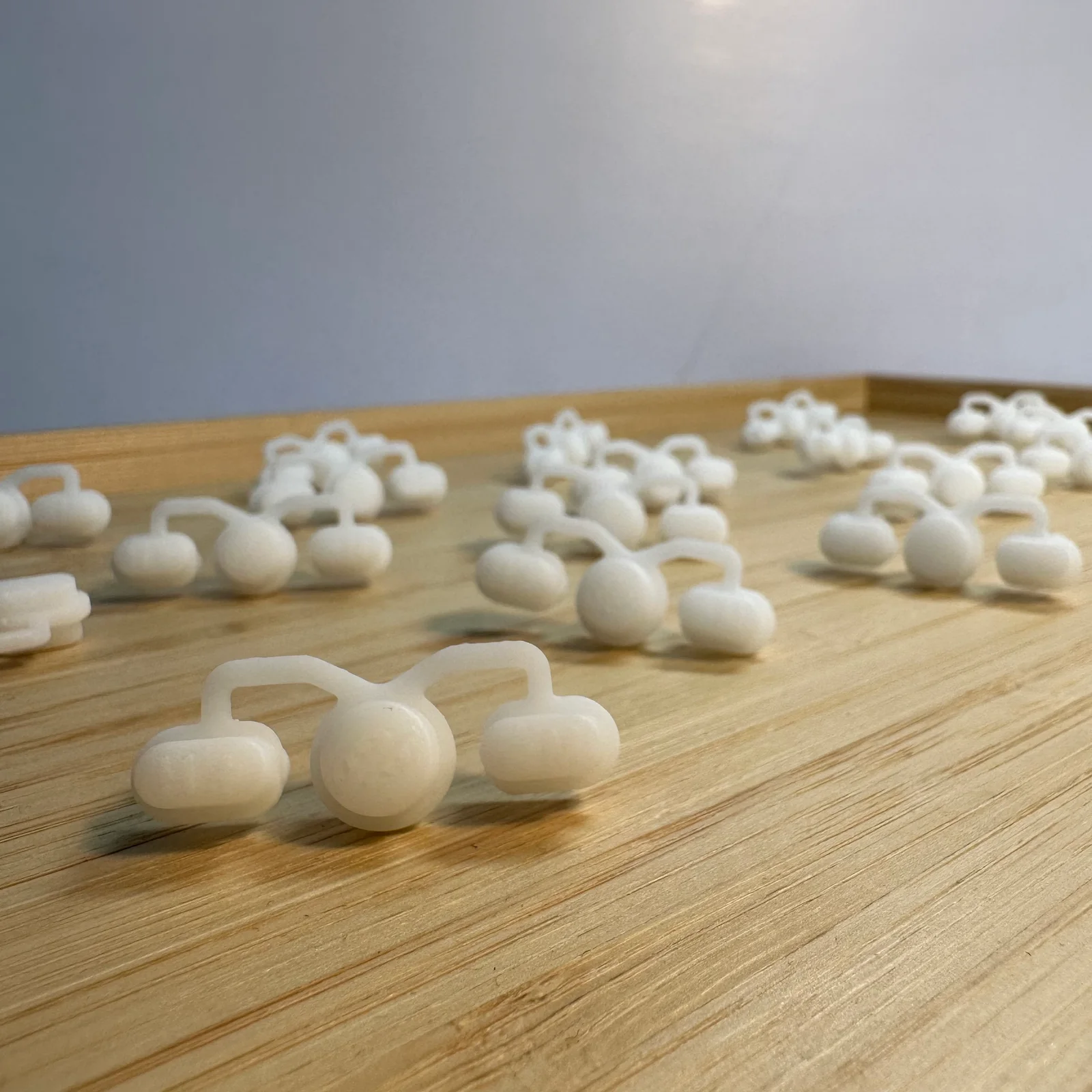
Pick 3D printing for one part up to a handful, and silicone moulding to cast about 20 to a few hundred copies from one printed original. Past about 1,000 identical parts, injection moulding with a steel or aluminium tool costs the least per part.
3D printing, silicone moulding or injection moulding at a glance
| Route | How many parts | Time to the first parts | Best for |
|---|---|---|---|
| 3D printing | One to a handful | 4 to 7 working days | Prototypes, one-offs, fit tests |
| Silicone moulding | About 20 to a few hundred | About 3 to 4 weeks | Pilot runs, rubber parts, short runs |
| Injection moulding | From about 1,000 | Longest, as the tool comes first | Mass production of a final design |
The more a route costs before the first part, the less each part costs after it. Printing needs nothing up front, silicone moulding needs a printed original and a mould, and injection moulding needs a metal tool, the biggest cost of the three. Times are a rough guide for a normal-size part (about 10 to 15 cm across); nylon prints take 8 to 12 working days, and bigger parts take longer.
From a handful to about 20 parts, or from a few hundred to about 1,000, the best route depends on the part’s size and shape, so ask us.
3D printing: best for one part up to a handful
Printing needs no mould and no tool, so the first part costs the same as the tenth. That makes it the route for a prototype, a one-off or a few test parts. We print in filament (fused deposition modeling, FDM), resin (stereolithography, SLA) and nylon powder (selective laser sintering, SLS).
- Pick it for: prototypes, display models, a handful of working parts, and checking the fit before you commit to a mould.
- Changing the design costs nothing: edit the file and print again.
- Time: 4 to 7 working days for a normal-size part (about 10 to 15 cm across) in filament or resin; nylon powder takes 8 to 12. Bigger parts take longer, so check with us.
Its honest limits:
- Cost per part stays flat. The fiftieth part costs about the same as the first, so a long run gets expensive (what sets the price of a print in Singapore).
- Parts vary a little. Each print is made on its own, so the surface can differ slightly from part to part, where a mould repeats it exactly.
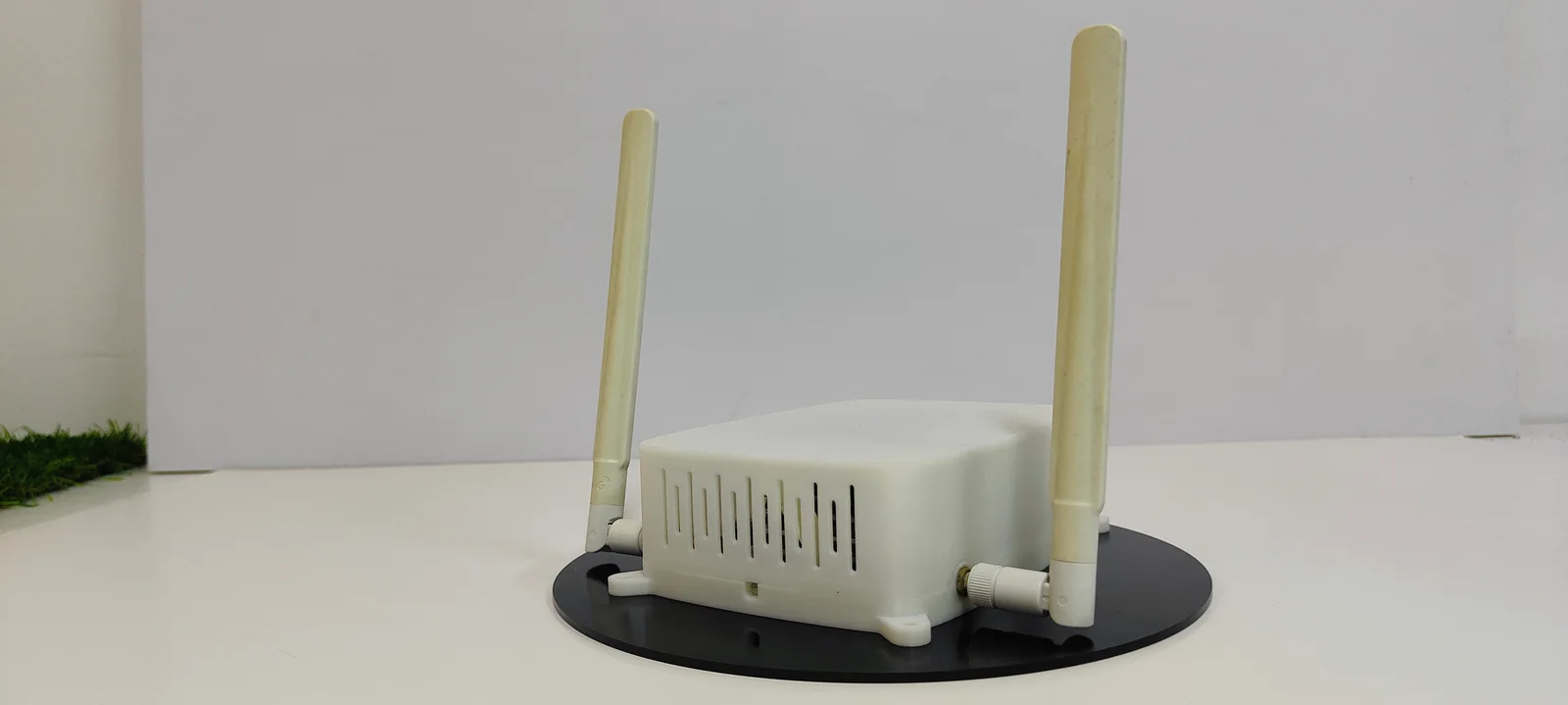
Silicone moulding: best for about 20 to a few hundred
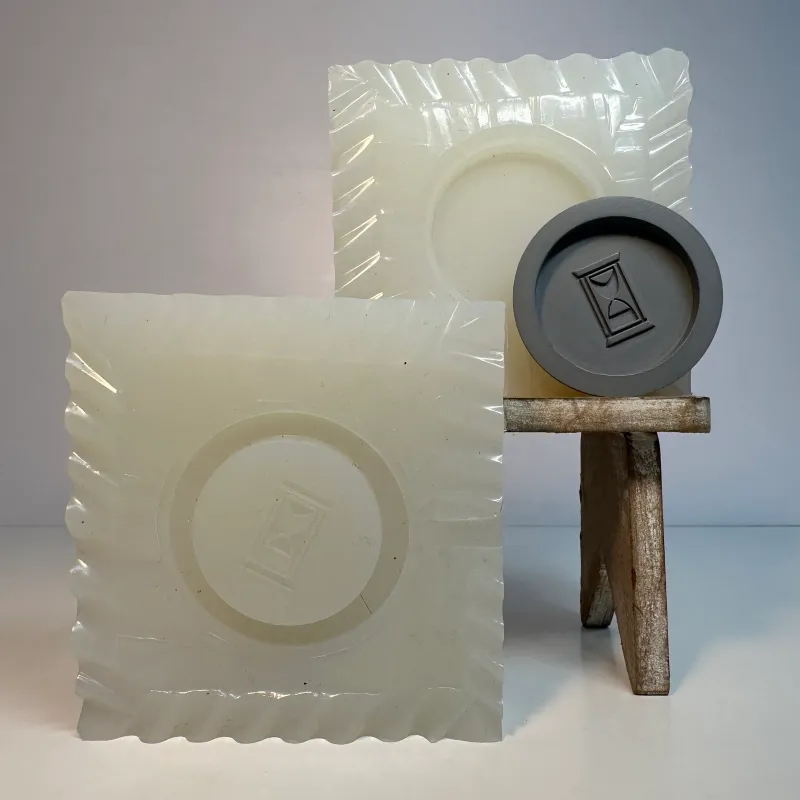
Silicone moulding (also called vacuum casting or urethane casting) copies one printed original. We print and finish the original, pour liquid silicone around it to make a soft, flexible mould, then fill that mould with polyurethane or silicone again and again. There is no minimum order, and the price per part falls as the run grows.
- Pick it for: pilot runs, short production runs, rubber parts such as seals and grommets, and parts that must all look the same.
- Mould life: a silicone mould usually gives 20 to 50 good casts before fine detail softens (Formlabs’ casting guide puts it at roughly 50). For a few hundred parts we pour more moulds from the same original.
- Time: as a general guide, about 1 week to design the master, 2 to 3 working days for the mould, then 7 to 10 working days of casting. Smaller parts can be faster, so check with us.
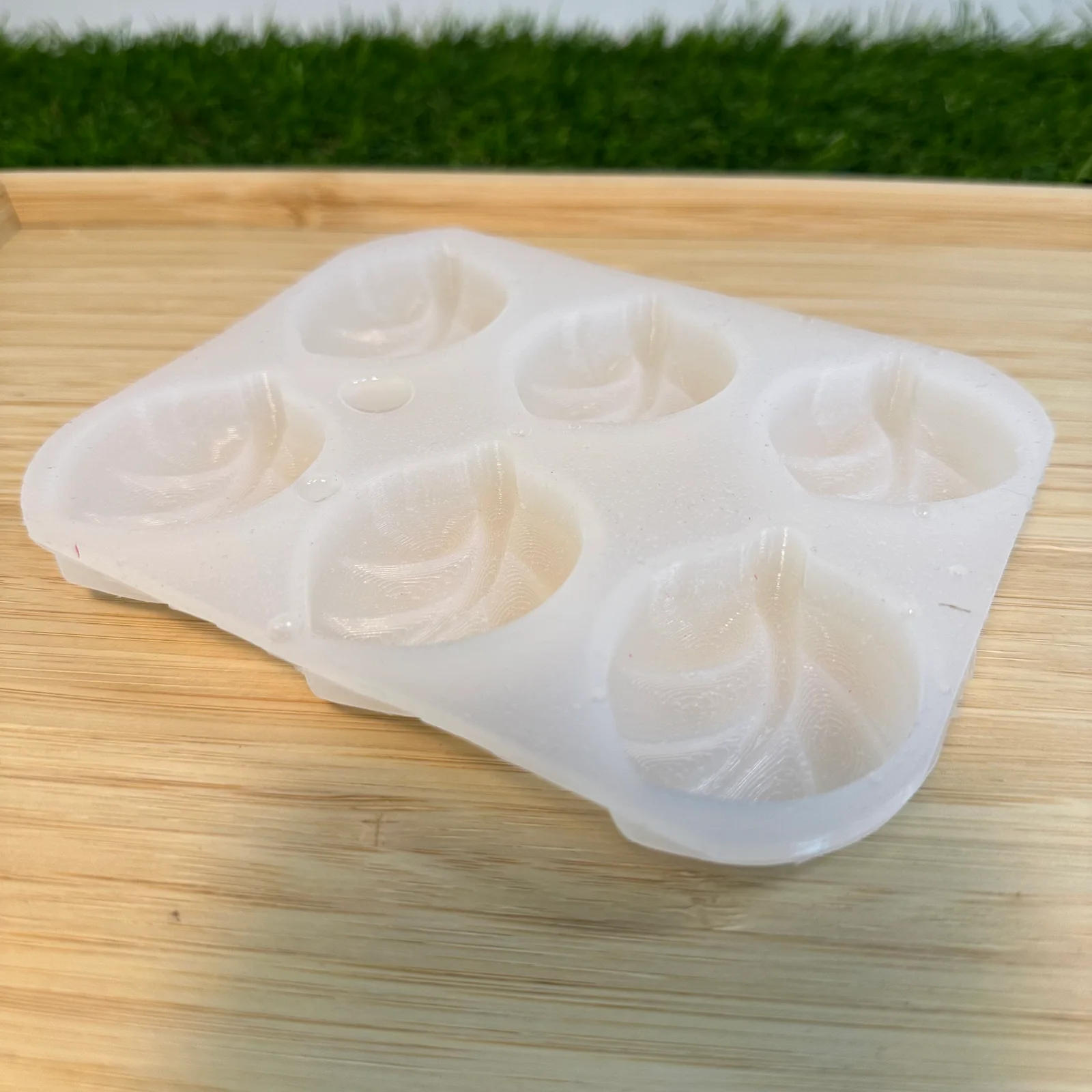
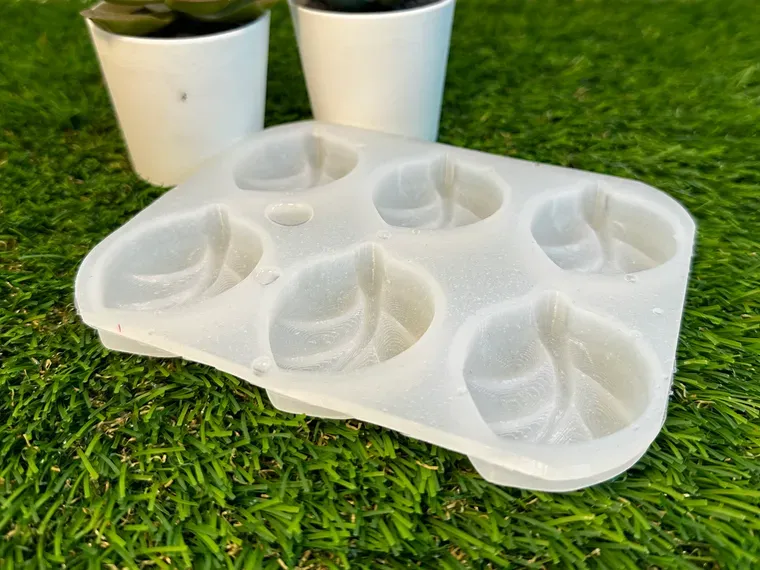
- Several at once: small parts can share one mould, like the six leaves below.
Its honest limits:
- Sharp inside corners and straight walls with no taper can tear the silicone as the part comes out. We suggest small changes to the design.
- Cast plastics are look-alikes. A rigid cast is an ABS-like polyurethane, close to ABS but not the same plastic, so ask us if the part must meet a production data sheet.
- A faint parting line shows where the mould opens. We trim and sand it on every part.
Injection moulding: worth it past about 1,000
Injection moulding forces molten plastic into a metal tool. The tool is the big cost: once it is paid for, each part costs very little, which is why it wins past about 1,000 identical parts. We review the design for moulding, print samples to test it, and arrange the steel or aluminium tool, the sample parts for your approval and the production run.
- Pick it for: thousands of parts of a design that is final, in a real production plastic such as ABS, PP, PE or PC.
- Aluminium or steel: an aluminium tool is quicker to make and suits thousands to tens of thousands of parts; a steel tool lasts hundreds of thousands to millions, according to Protolabs’ tooling guide.
Its honest limits:
- The tool comes first. It has to be made and its first parts approved before the run starts, and a steel tool can take months (Protolabs).
- Changes are costly. A metal tool is hard to alter, so test the design in printed or cast parts first.
- The design must suit the tool: even walls, a slight taper on the sides so the part slides out, and no trapped undercuts. We check this before any metal is cut.
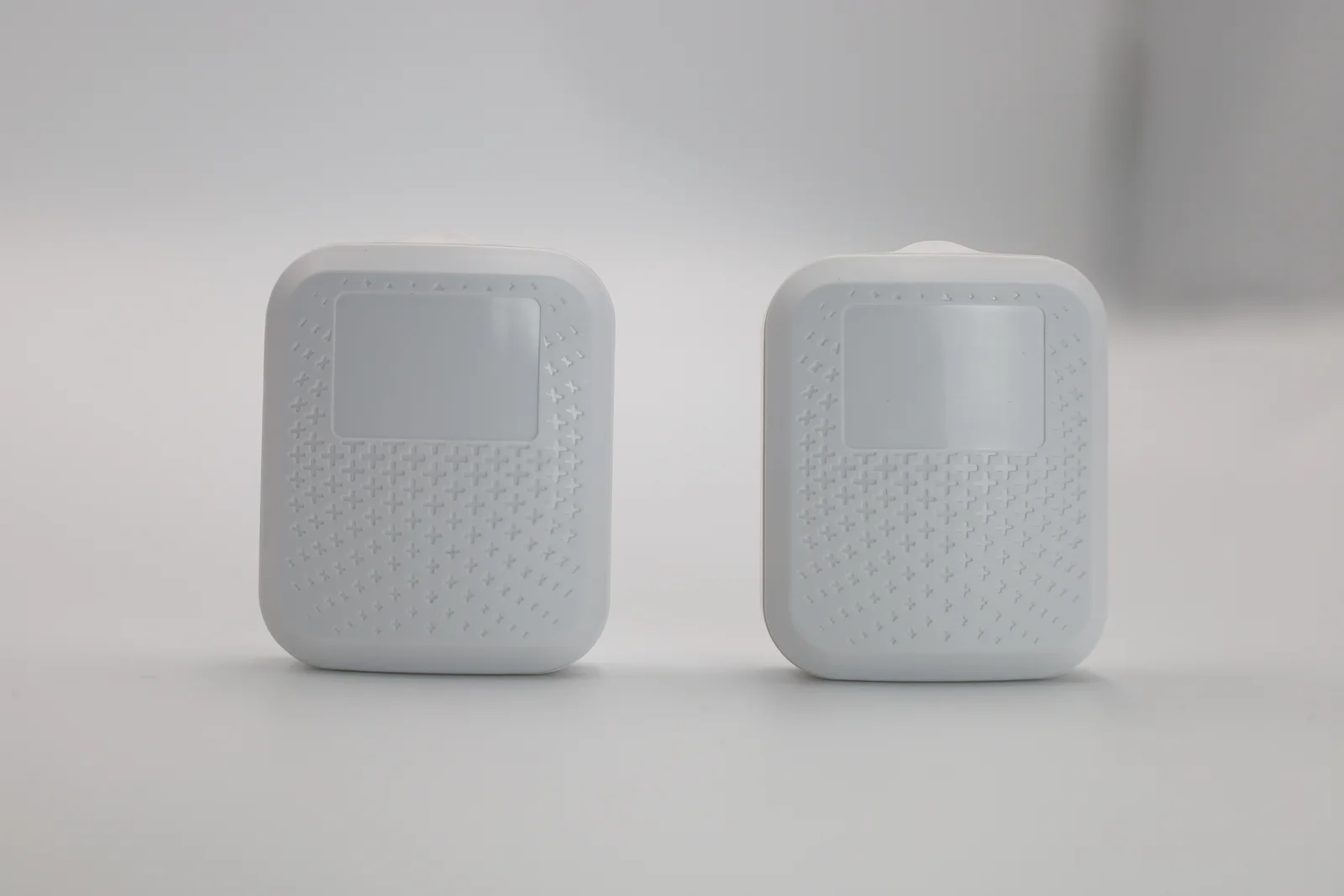
Cast materials: hard, rubbery or clear parts from one mould
A silicone mould can be filled with four kinds of material, so one printed original can become a hard part, a rubbery one or a clear one.
| Cast material | What it is like | Typical parts |
|---|---|---|
| Rigid polyurethane | Hard and tough, close to ABS plastic | Housings, covers, knobs, display pieces |
| Soft rubber-like polyurethane | Flexible, from Shore A 40 (soft) to Shore A 90 (firm) | Seals, grommets, grips, bumpers, feet |
| Silicone | Soft, flexible and easy to clean | Soft-touch parts, kitchen products in food-safe silicone |
| Clear resin | See-through once the original is polished | Light covers, clear windows, display pieces |
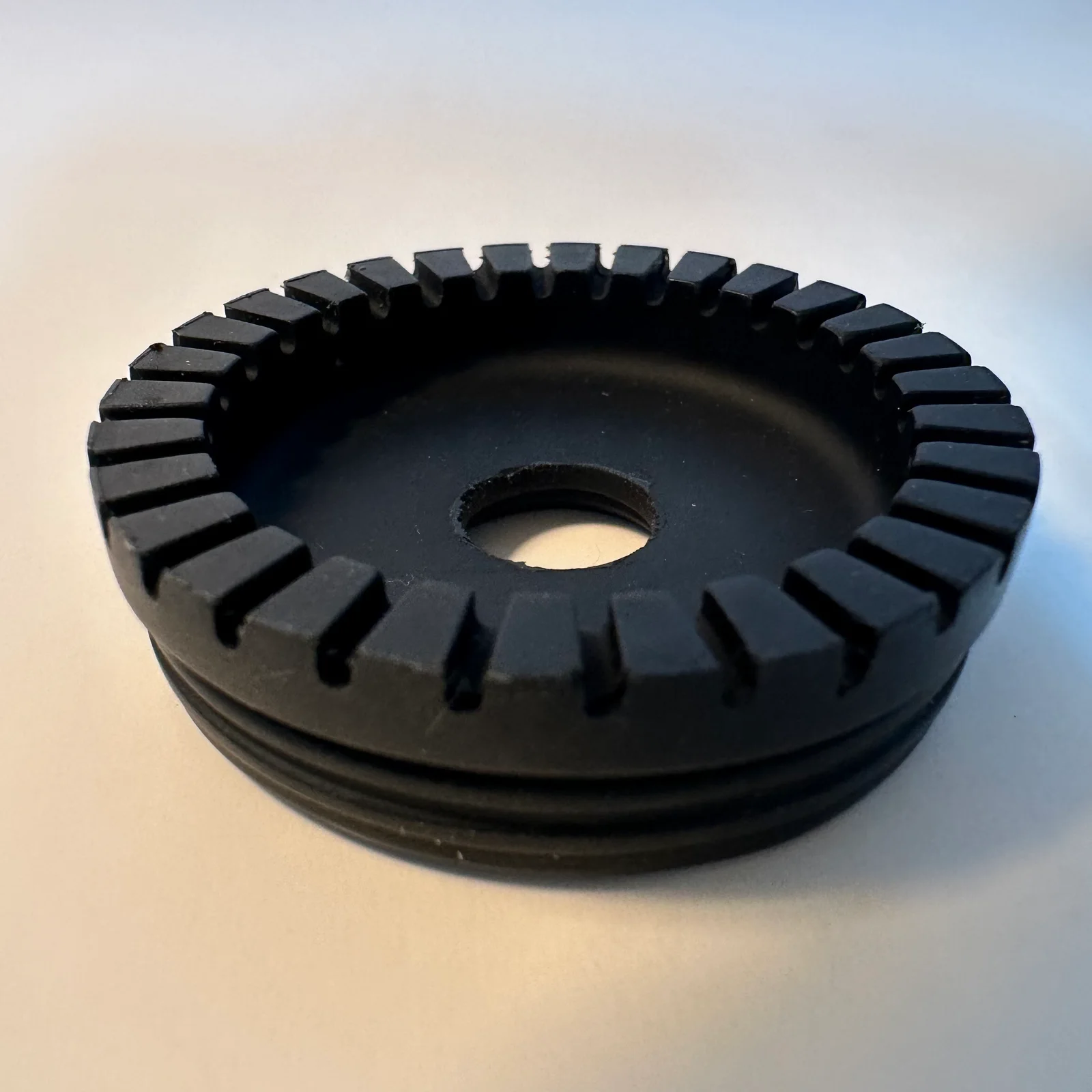
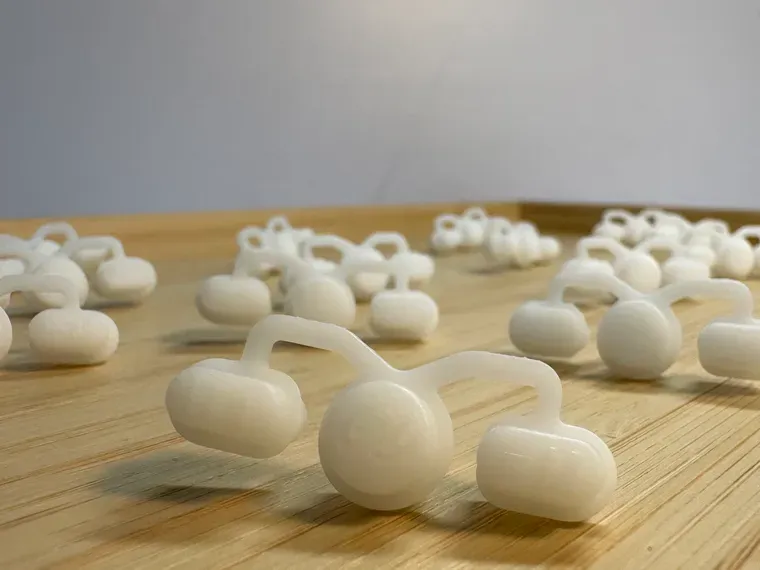
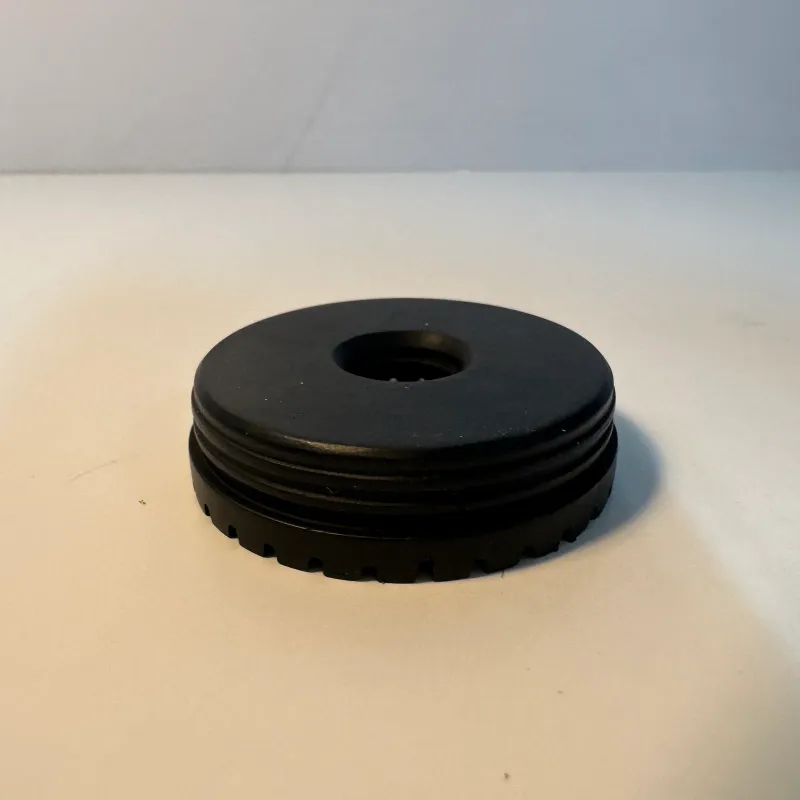
Shore A is the hardness scale used for rubber: the lower the number, the softer the part. The grommet below is cast in soft polyurethane, so it flexes and grips without tearing.
The printed original: it sets the finish of every cast
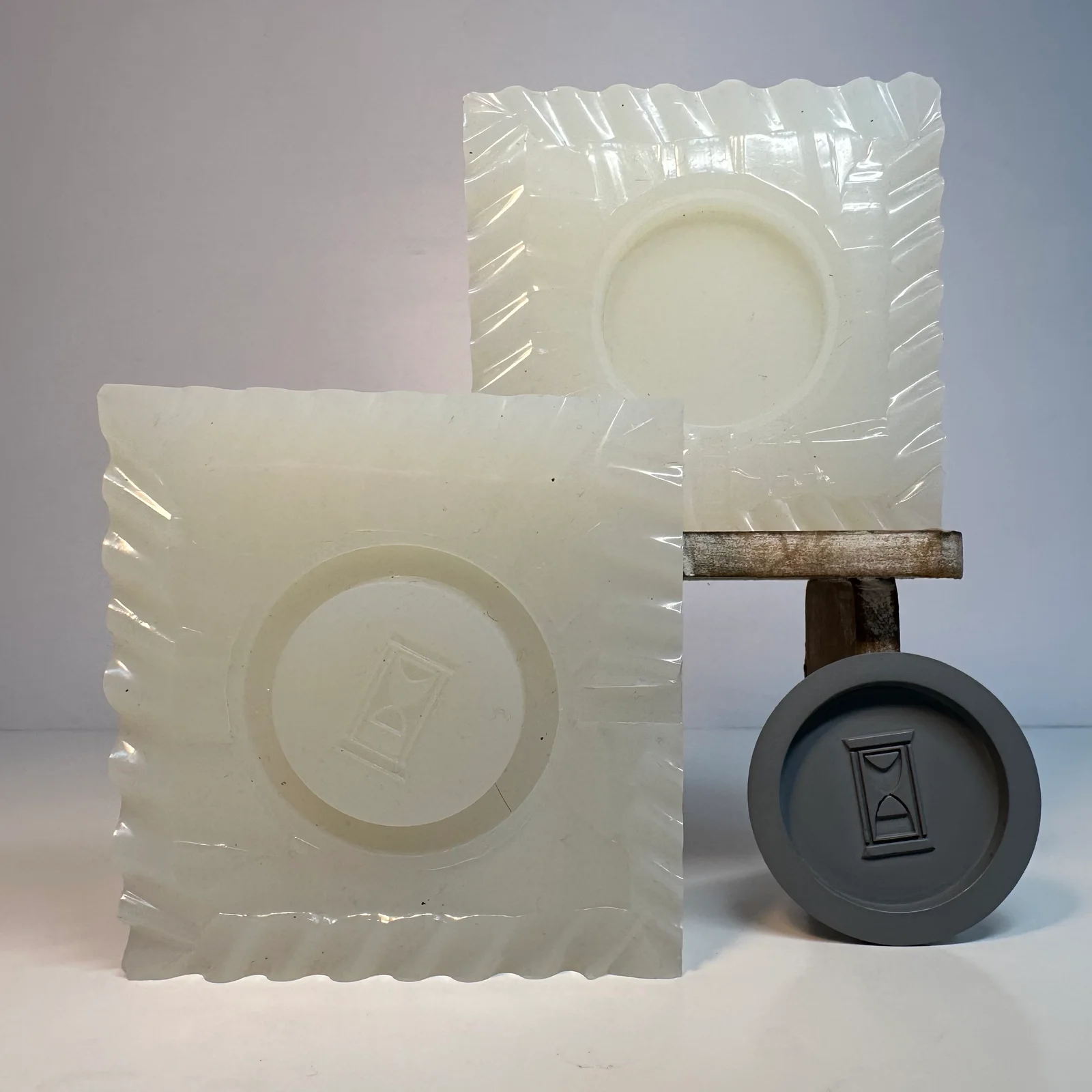
A silicone mould copies everything on the original: its shape, its detail and every scratch or layer line. So the original is printed, then sanded and finished until it is exactly what every cast should look like. A smooth original gives smooth casts; a polished one gives clear casts.
- Why it matters: fixing a flaw once on the original fixes it on every part. A flaw left on the original is copied into every part.
- Filament or resin: a resin print (SLA) starts smoother, so it suits fine detail; a filament original is sanded smooth first (how we finish prints).
- No 3D file? We can design or reverse-engineer the part from a sample first, through product development.
How to decide: start from how many you need
- One part, or a few to test: 3D print it. Nothing to pay for before the first part, and the design can change freely.
- About 20 to a few hundred identical parts: silicone moulding from one printed original.
- A rubber part in any batch: silicone moulding in soft polyurethane or silicone. For one or two, a flexible print in TPU (a rubbery filament) may do.
- Thousands of parts of a final design: injection moulding.
- Not sure how many will sell: cast a few hundred first, then move to a tool once demand is proven. Protolabs gives the same advice on tools: aluminium to prove the design, steel once demand is established.
- A design still changing: stay with printing or silicone moulding until it settles, because a metal tool is costly to change.
Many products take all three steps in turn: a printed prototype to test, a cast pilot run to sell or trial, then injection moulding once the numbers are there. Our product development work covers the whole path, and FDM, SLA or SLS helps you pick the printing process first.
Frequently asked
How many parts can one silicone mould make?
A silicone mould usually gives 20 to 50 good casts before fine detail starts to soften. Fewer for a complex part or a hard material, more for a simple shape; Formlabs' casting guide puts it at roughly 50. For a run of a few hundred we pour more moulds from the same printed original, so every batch still matches.
Is there a minimum order for silicone moulding?
There is no minimum order for silicone moulding. The mould is made once and every cast after it costs little, so the price per part falls as the run grows. For one or two parts, printing each one is usually the better route, and we tell you if so.
At what quantity is injection moulding worth it?
Injection moulding usually pays off from about 1,000 identical parts. Below that, the cost of the steel or aluminium tool is spread over too few parts, and silicone moulding is cheaper. Between a few hundred and about 1,000 parts the answer depends on the part's size and shape, so send us the file and the quantity and we work it out.
What is the difference between silicone moulding and vacuum casting?
Silicone moulding and vacuum casting are the same process under two names. A silicone mould is poured around a printed original, then liquid polyurethane or silicone is drawn into it, often under vacuum so no air bubbles are trapped. Some makers call it urethane casting too.
Can I change the design after the mould is made?
A design cannot be changed inside a finished mould, but a silicone mould is quick to replace: we print a new original and pour a new mould. A steel injection tool is slow and costly to change, which is why the design should be final, and tested in printed or cast parts, before the tool is made.
What does Shore A 40 to 90 mean?
Shore A is the hardness scale used for rubber, and the lower the number, the softer the part. Our soft rubber-like polyurethane casts run from Shore A 40, soft and squashy, to Shore A 90, firm but still flexible. Tell us what the part has to do, such as seal, grip or cushion, and we suggest a hardness.
Do cast parts look like injection-moulded parts?
Cast parts can look and feel close to production parts, because the silicone copies the printed original's surface exactly. Each cast has a faint parting line where the mould opens, which we trim and sand. Rigid casts are an ABS-like polyurethane rather than ABS itself, so tell us if the part must match a production plastic's data sheet.
Can you cast clear parts?
Clear parts can be cast in clear resin in a silicone mould. A clear cast is only as clear as the original is smooth, so we sand and polish the printed original first. For one or two clear parts, a polished resin print may do the same job.
Related
-
 GuideFDM, SLA, SLS, MJF or metal: which 3D printing process suits your part?
 -
 GuideHow much does 3D printing cost in Singapore?
 -
 GuideUnderstanding our 3D Design Process
 -
 ServiceSilicone Molding & Vacuum Casting
 -
 ServiceInjection Molding
 -
 ServiceProduct Development & Prototyping
 -
 ProjectCast Rubber Grommet
 -
 ProjectSilicone Emblem Mould
 -
 ProjectGPS Tracker Casing