

FDM, SLA, SLS, MJF or metal: which 3D printing process suits your part?
Updated
On this page
- The five processes at a glance: FDM suits most parts
- Print or not: 3D printing wins on shape, speed and small numbers
- FDM filament printing: the cheapest choice for most parts
- SLA resin printing: the finest detail and smoothest surface
- SLS nylon printing: tough working parts with no supports
- MJF nylon printing: much like SLS, a little smoother
- SLM metal printing: for heat, load and wear
- Still not sure? Answer five questions
- Frequently asked
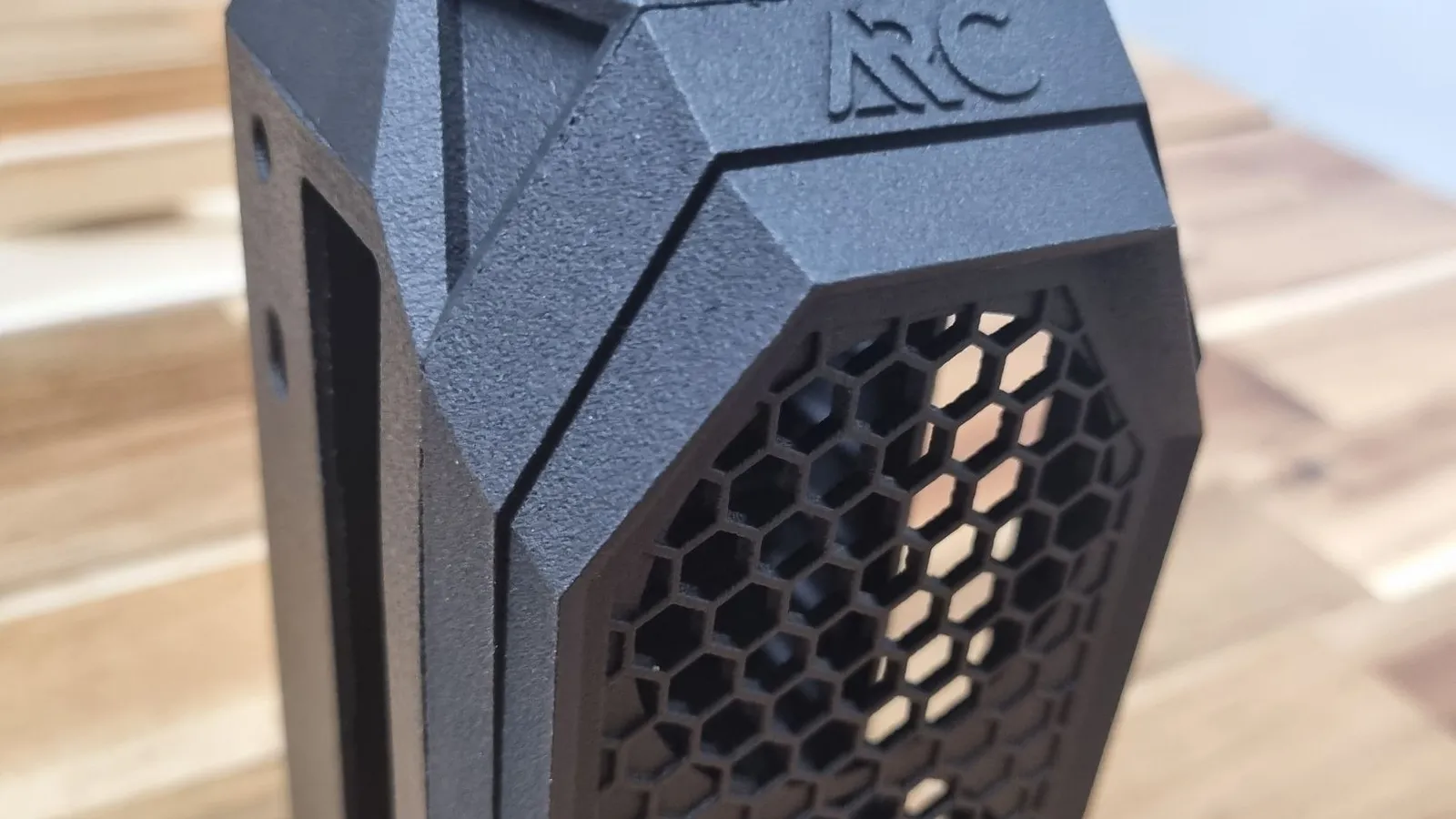
Start with FDM: filament printing is the cheapest process and suits most parts, from prototypes to big display pieces. Move to SLA resin for fine detail and a smooth surface, SLS or MJF nylon for tough parts that have to work, and SLM metal for heat, load and wear.
The photo above is one frame printed three ways. New to all of this? Start with what 3D printing is.
The five processes at a glance: FDM suits most parts
| Process | Materials | Best for | Lead time, working days |
|---|---|---|---|
| FDM (filament) | PLA, ABS, PETG, nylon, TPU | Prototypes, jigs, big pieces | 4 to 7 |
| SLA (resin) | Standard, tough, flexible, clear and castable resins | Fine detail, figurines, mould masters | 4 to 7 |
| SLS (nylon powder) | PA12 (grey, black or white), glass-filled PA12, PA11-like nylon | Hinges, snap fits, working parts | 8 to 12 |
| MJF (nylon powder) | Black PA12 or glass-bead PA12 | Working parts with a smoother finish | 12 to 15 |
| SLM (metal) | Stainless steel, aluminium, titanium | Heat, load and wear | 10 to 12 |
Lead times are a rough guide for a normal-size part, about 10 to 15 cm across. Bigger parts take longer, so check with us. On cost, filament is the cheapest per gram, resin costs two to three times as much and SLS nylon four to six times as much, while MJF and metal are quoted for each job.
Print or not: 3D printing wins on shape, speed and small numbers
Printing wins on complex shapes, speed and small numbers. It loses on simple shapes, tight tolerances and volume, and we would rather say so at the quote than after you have paid.
Print it when
- You need the part this week, not after a mould is built
- The shape has undercuts, internal channels or lattices a cutting tool cannot reach
- You want a handful or a small run, so there is no tooling to pay off
- Every piece is different
Another route wins when
- The part is a simple solid shape a cutting tool can reach, where CNC machining holds tolerances to ±0.05 mm
- You want 20 to a few hundred copies, where vacuum casting from a silicone mould costs less per piece
- You want about 1,000 units or more, where injection moulding takes over
- The surface has to be moulding-smooth with no finishing
In a hurry? Answer five questions and we will name a process for you.
FDM filament printing: the cheapest choice for most parts
FDM (fused deposition modelling) melts plastic filament and lays it down line by line. It is the cheapest process, prints the biggest pieces and takes the widest range of materials, which is why most parts start here. More on FDM printing.
Good at
- The lowest price per part, because filament is the cheapest material per gram
- Big pieces, printed in sections and joined when they are larger than the printer
Not so good at
- Layer lines show, so a smooth painted finish needs sanding and a primer first
- Parts can split along the layers under load
- Fine features and thin walls get lost
Where we use it
- Prototypes, jigs and fixtures
- Architectural models and display pieces
- Low-volume parts in PLA, ABS, PETG, nylon or TPU
SLA resin printing: the finest detail and smoothest surface
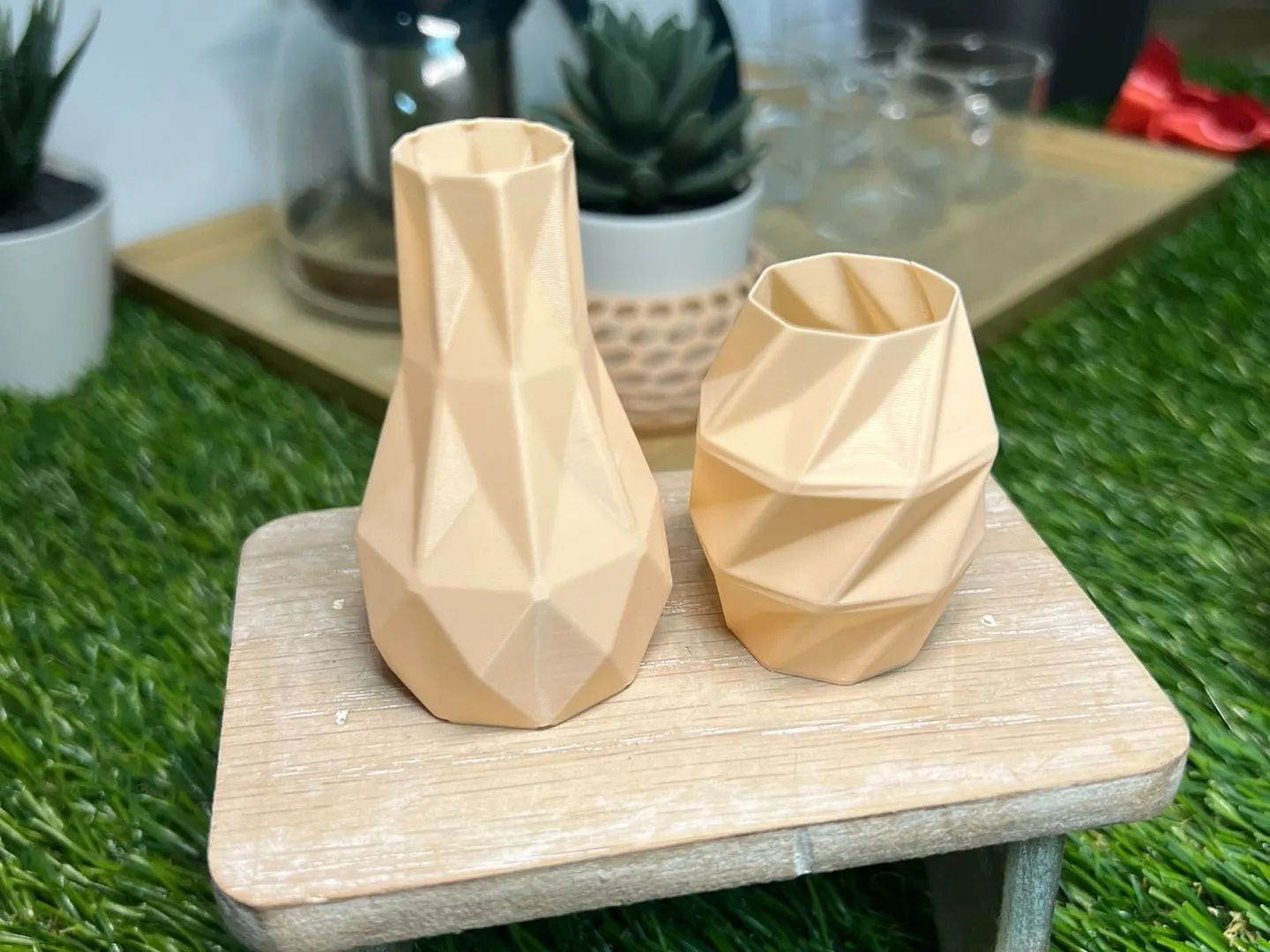
SLA (stereolithography) cures liquid resin with a UV laser, one thin layer at a time. It holds the finest detail of anything we run and comes off the printer smooth, so it needs only light sanding and a primer before paint. The trade-off is toughness: resin chips under a knock that nylon would shrug off. More on SLA resin printing.
Good at
- Layers of 0.08 to 0.1 mm, with raised or sunken detail down to 0.5 mm
- Small text: resin letters read from 2 mm tall, against 5 mm in filament
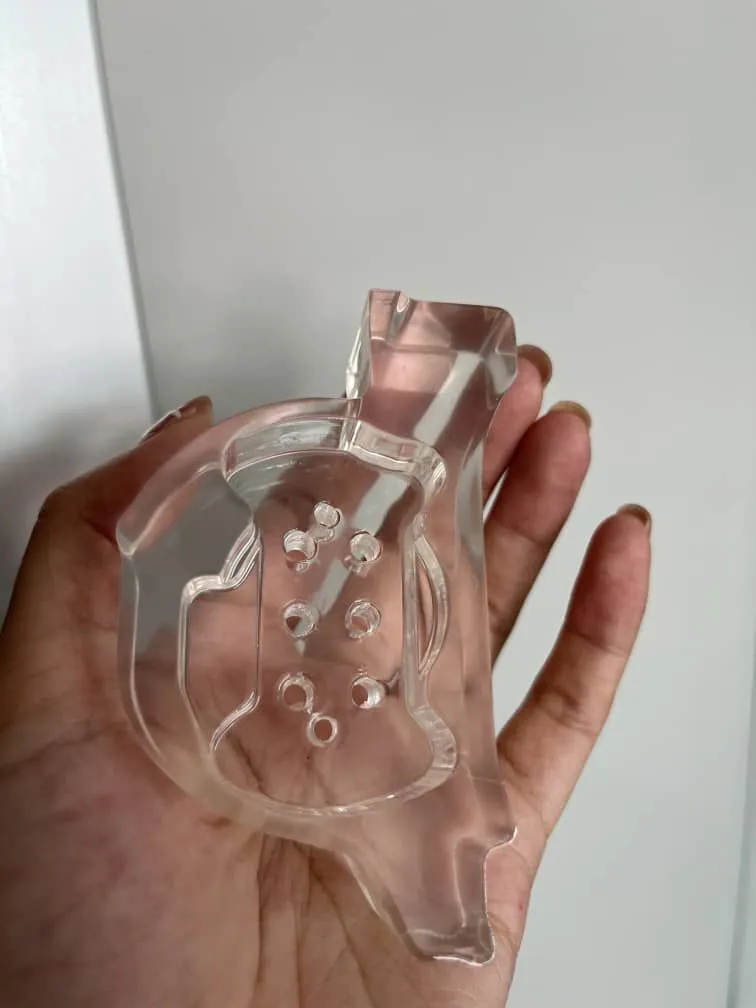
- Clear and see-through parts, though how clear a print gets depends on the finishing
Not so good at
- Resin is brittle, so it chips where plastic would bend
- Every part is washed and cured after printing, which adds a day
- A part bigger than 1700 x 800 x 600 mm (800 x 800 x 500 mm in clear resin) is printed in sections and joined
Where we use it
- Figurines, miniatures and display models
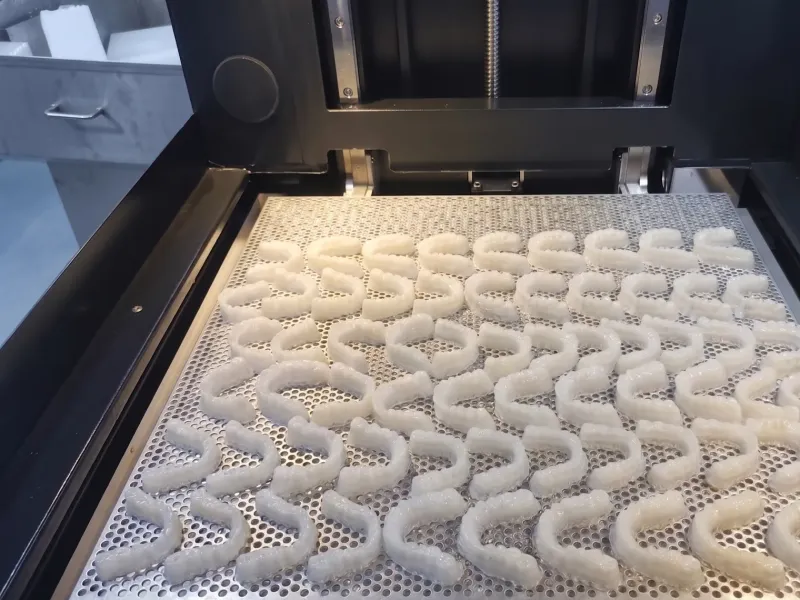
- Dental and jewellery work
- Masters for silicone moulds and casting
SLS nylon printing: tough working parts with no supports
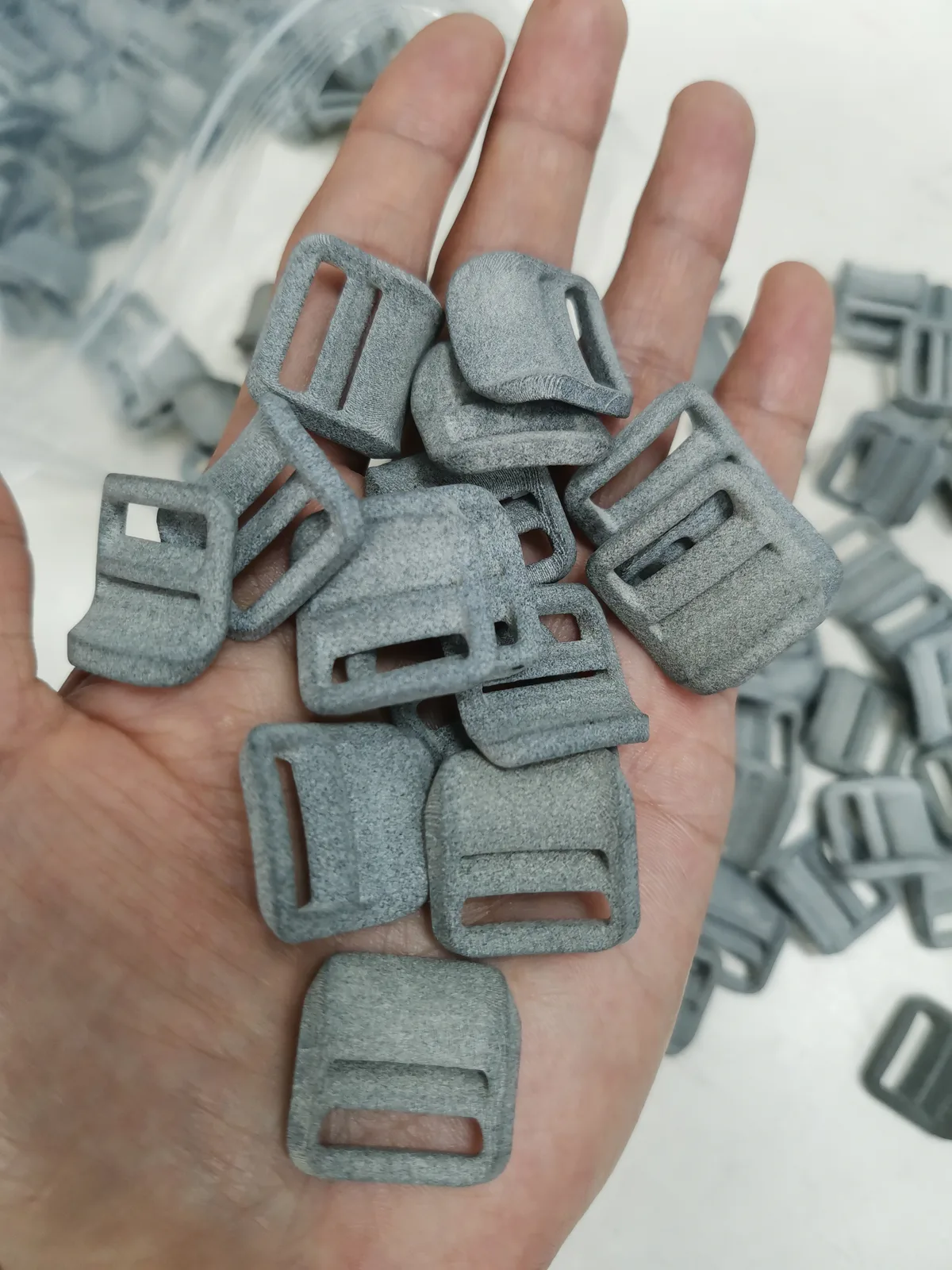
SLS (selective laser sintering) uses a laser to fuse nylon powder, and the loose powder holds the part up as it prints. There are no supports to cut off, and the part is equally strong in every direction. More on SLS nylon printing.
Good at
- Strength that is the same in every direction
- Hinges, snap fits and moving assemblies, printed already assembled
Not so good at
- The surface has a fine grain rather than a polish
- Parts cool slowly in the powder, so allow a few more days
- Grey, black or white as standard (check with us for more)
Where we use it
- Functional parts that have to work, not just look right
- Brackets, housings and clips for real use
- Small runs of end-use parts
MJF nylon printing: much like SLS, a little smoother
MJF (Multi Jet Fusion) prints the same kind of nylon powder, fused by heat and a liquid printed onto the powder instead of a laser. In practice it differs little from SLS: the surface is a little smoother, but not by much, so the choice usually comes down to price and preference. More on MJF nylon printing.
Good at
- Tough nylon parts with no supports
- A slightly smoother surface than SLS
Not so good at
- Black only, with other colours by dyeing on request
- A longer lead time than SLS
- More than a first prototype usually needs
Where we use it
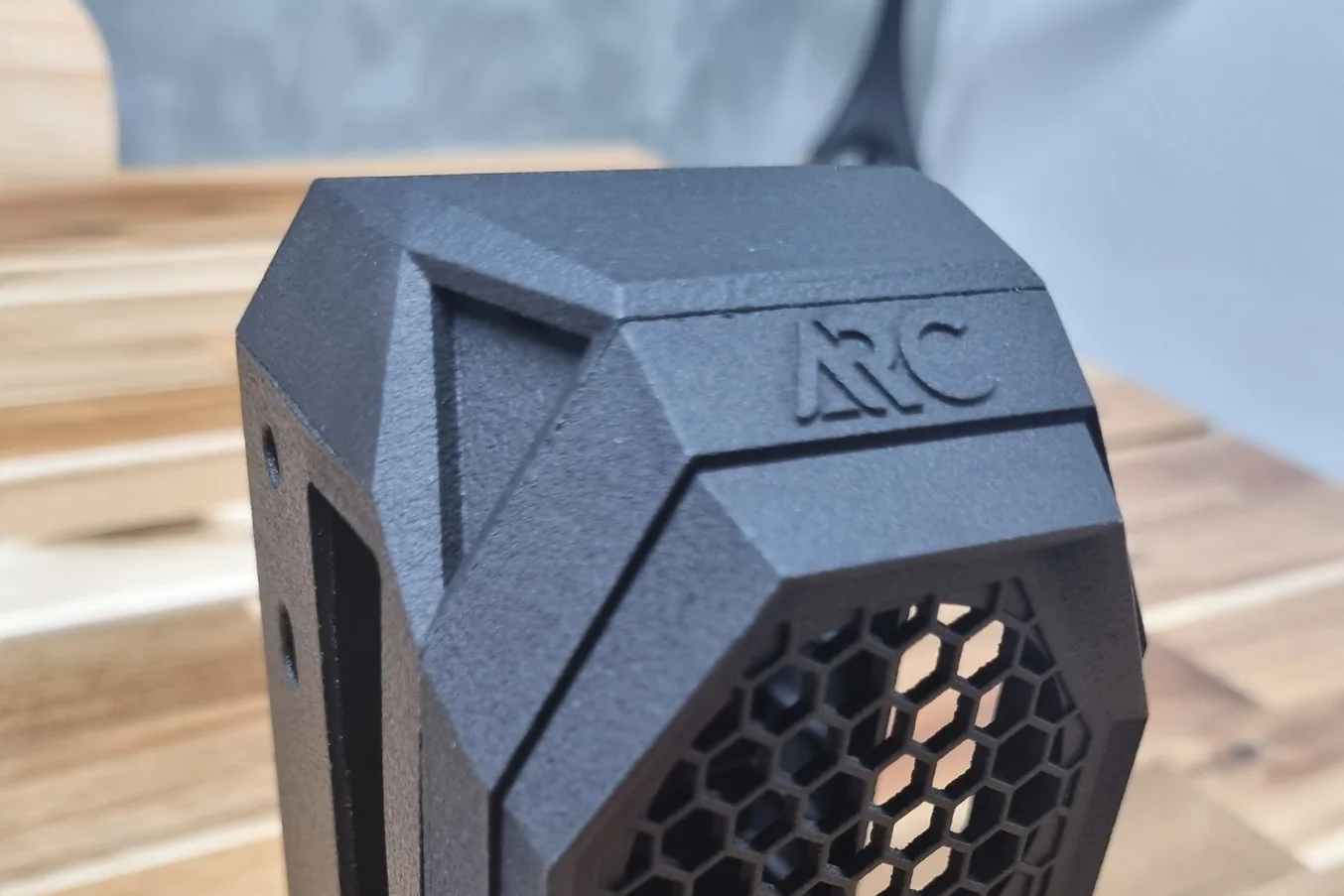
- Low-volume end-use parts and enclosures
- Lattices, vents and grilles
- Functional prototypes going to a customer
SLM metal printing: for heat, load and wear
SLM (selective laser melting) melts fine metal powder with a laser, in stainless steel, aluminium or titanium, for parts that have to take heat, load or wear that no plastic survives. We usually prove the fit in FDM first, because a plastic test print costs far less than a metal one. More on metal 3D printing.
Good at
- Heat, load and wear, in real metal
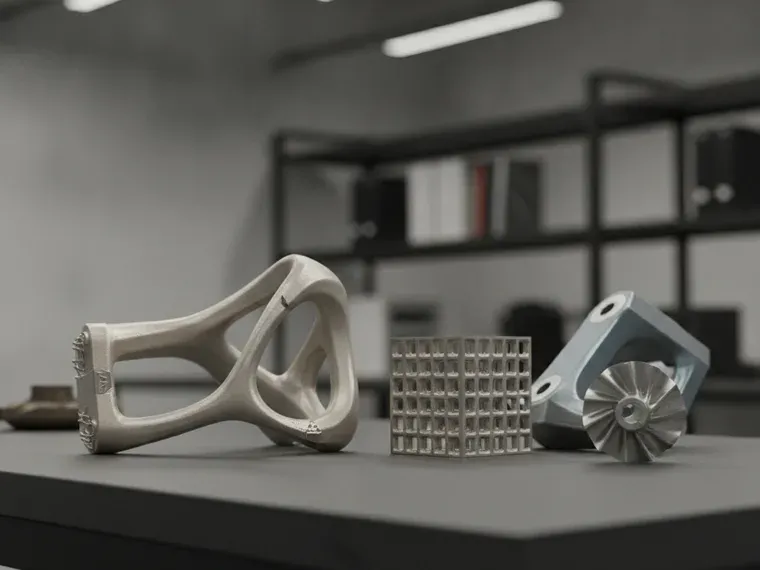
- Shapes a cutting tool cannot reach
Not so good at
- The most expensive of the five, by some distance
- Faces that seal and threads that must fit are machined after printing
Where we use it
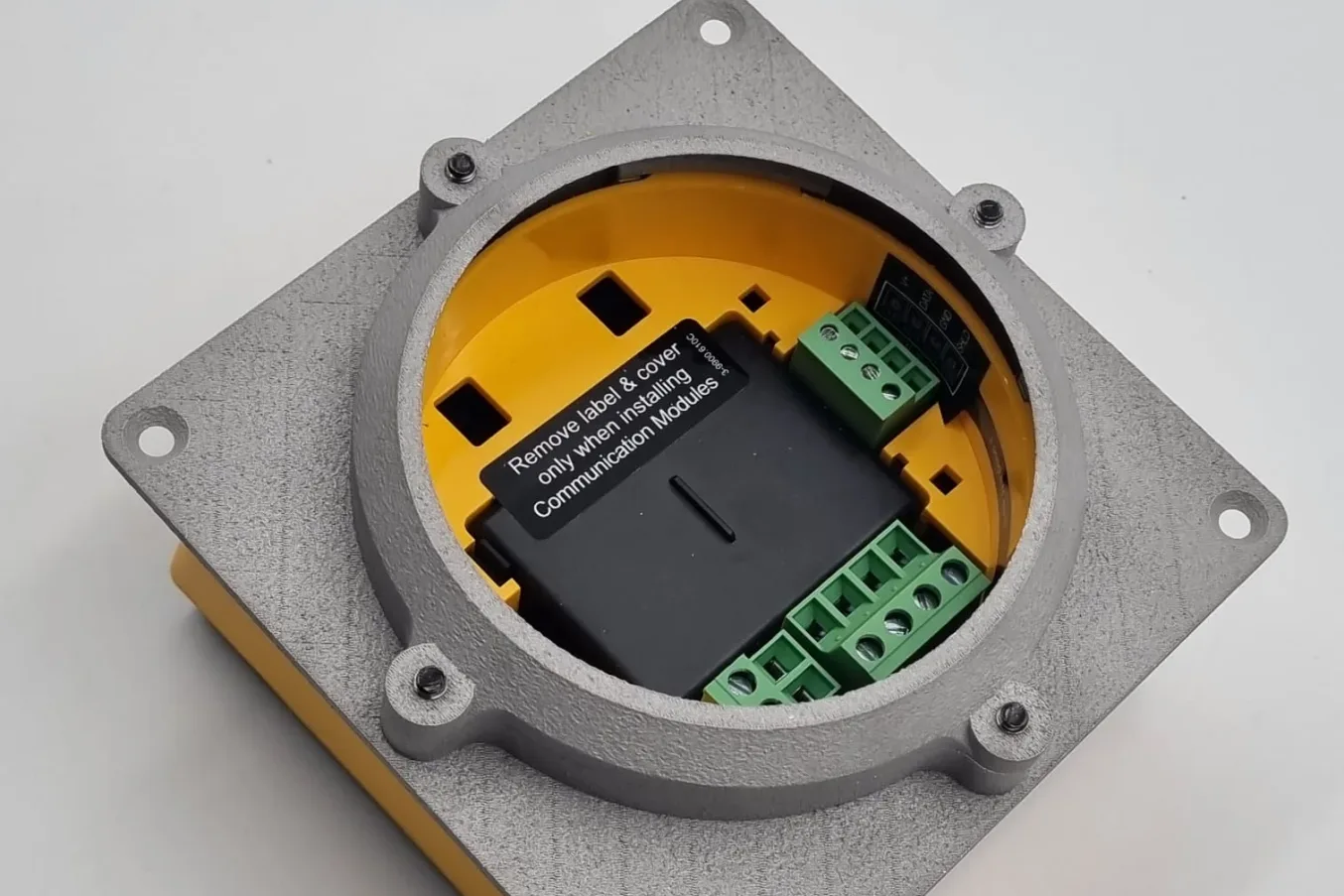
- Replacement parts that are no longer made
- Brackets and mounts that live inside a machine
- One-offs where tooling makes no sense
Still not sure? Answer five questions
Frequently asked
Which 3D printing process is cheapest in Singapore?
FDM is the cheapest process per part, because filament is the cheapest material per gram. SLA resin costs two to three times as much per gram and SLS nylon four to six times as much, while MJF and metal are quoted for each job. Use FDM for concept models, fixtures and large pieces, and step up only when the surface or the material demands it.
When should I choose SLA over FDM?
Choose SLA resin when the surface and the detail matter more than toughness. Resin prints raised or sunken detail down to 0.5 mm, against 0.6 mm in filament, and letters from 2 mm tall, against 5 mm. It comes off the printer smooth, so it paints after light sanding and a primer, it makes good masters for silicone moulds, and it prints clear parts. Avoid it for parts that flex or take a knock, because resin is brittle.
Is SLS worth it for prototypes?
SLS nylon is usually more than a first prototype needs, because it costs four to six times as much as FDM. It earns its price on hinges, snap fits and small runs of end-use parts, where filament layers could split. For a first prototype, FDM almost always wins.
What is the difference between SLS and MJF?
In practice there is little difference between SLS and MJF. Both fuse nylon powder with no supports, so parts nest freely and moving assemblies print in one go. MJF comes out a little smoother, but not by much, so the choice usually comes down to price and preference. MJF is black PA12 or glass-bead PA12; SLS adds grey and white, a glass-fibre grade and a PA11-like grade. A normal-size part takes 8 to 12 working days by SLS and 12 to 15 by MJF.
How long does each 3D printing process take?
A normal-size part, about 10 to 15 cm across, takes 4 to 7 working days in FDM or SLA, 8 to 12 by SLS, 12 to 15 by MJF and 10 to 12 in metal (SLM). Filament and resin can go Express in 3 to 5 working days or Super Rush in 1 to 3. Larger parts take longer, so check with us, and tell us your deadline when you order.
Which 3D printing process makes the strongest parts?
SLM metal makes the strongest parts, followed by SLS and MJF nylon. Nylon powder parts are equally strong in every direction and take hinges, clips and knocks. FDM parts can be strong but may split along their layers under load, so a filament part that carries force is printed facing the right way. SLA resin is the most brittle of the five.
When is metal 3D printing worth it over a plastic part?
Metal earns its cost when the part has to survive heat, load or wear that no plastic will take, or when the shape is one a cutting tool cannot reach. Metal is quoted per job, not per gram, because the alloy, the part's size, the finishing and the quantity all move the price. Send the file, the metal you want and the faces that have to be exact, and we come back with a firm quote, usually within 24 hours.
When does 3D printing lose to CNC or injection moulding?
3D printing loses on simple solid shapes and on large numbers. CNC machining holds tighter tolerances, down to ±0.05 mm, and is often cheaper for a part a cutting tool can reach all over. Injection moulding takes over at around 1,000 identical units, with the crossover between 500 and 2,000 depending on the shape. Between 20 and a few hundred copies, vacuum casting from a silicone mould usually wins. We will say which route is cheaper for your numbers when we quote.
Can one order mix different processes?
Yes, one order can mix processes, and one quote covers the lot. A common mix is an FDM body with a resin face for the fine detail, or a prototype in FDM that moves to MJF once the design is settled.
Related
-
 GuideWhat is FDM 3D printing, and when is it the right choice?
-
 GuideOne part, 50 or 5,000: 3D printing, silicone moulding or injection moulding?
-
 GuideWhat is additive manufacturing, and how is it used?
-
 ServiceIndustrial 3D Printing
-
 ServiceSLA 3D Printing
-
 ServiceMetal 3D Printing
-
 ProjectFlow meter panel mount for Bencontrol Technologies
-
 ProjectShure 100 Years mic figurines
-
 Project3D printed electronics enclosure (FDM)