

How big can a 3D print be, and what if mine is bigger?
Updated

The biggest single 3D print we make in our Singapore studio is 1000 x 1000 x 1200 mm, on a large-format filament printer, and anything bigger is printed in sections and joined into one piece. Resin can go longer, up to 1700 x 800 x 600 mm, in a slimmer box, and nylon powder goes to 670 x 360 x 550 mm and metal to 420 x 420 x 450 mm.
This page is about large 3D printing of parts, props, sculptures and models. Buildings printed in concrete are a different trade.
How big one 3D print can be, by process
Every printer builds inside a fixed box, its build volume, and a single piece has to fit inside it whole. These are the largest single pieces we print, in millimetres. Filament is fused deposition modeling (FDM), resin is stereolithography (SLA), nylon powder is selective laser sintering (SLS) or Multi Jet Fusion (MJF), and metal is selective laser melting (SLM).
| Process | Largest single piece (mm) |
|---|---|
| Filament, large-format (FDM) | 1000 x 1000 x 1200 |
| Filament, desktop (FDM) | 360 x 360 x 360 |
| Resin (SLA) | 1700 x 800 x 600 |
| Nylon powder (SLS, MJF) | 670 x 360 x 550 |
| Metal (SLM) | 420 x 420 x 450 |
Clear resins print up to 800 x 800 x 500 mm. Filament makes the biggest part overall; resin can go longer, up to 1700 mm, in a slimmer box.
Size is only the first test. Pick the process for the finish and strength the piece needs, then split it if it is too big. What each is for, and its honest limit:
- Filament suits most parts and props at the lowest cost, and a big piece with no joins on the large-format printer. It shows its layer lines until the part is filled, sanded and painted.
- Resin gives a smooth surface and fine detail, but it is brittle, so a big, thin resin piece chips where filament or nylon would bend.
- Nylon powder makes tough working parts with no support marks, with a fine grain rather than a smooth surface.
- Metal is for a part that has to be metal, and costs far more than plastic at the same size.
Each is priced by the process, the size and the finish; see pricing. The smallest wall, hole and gap for each process are in the design rules at a glance.
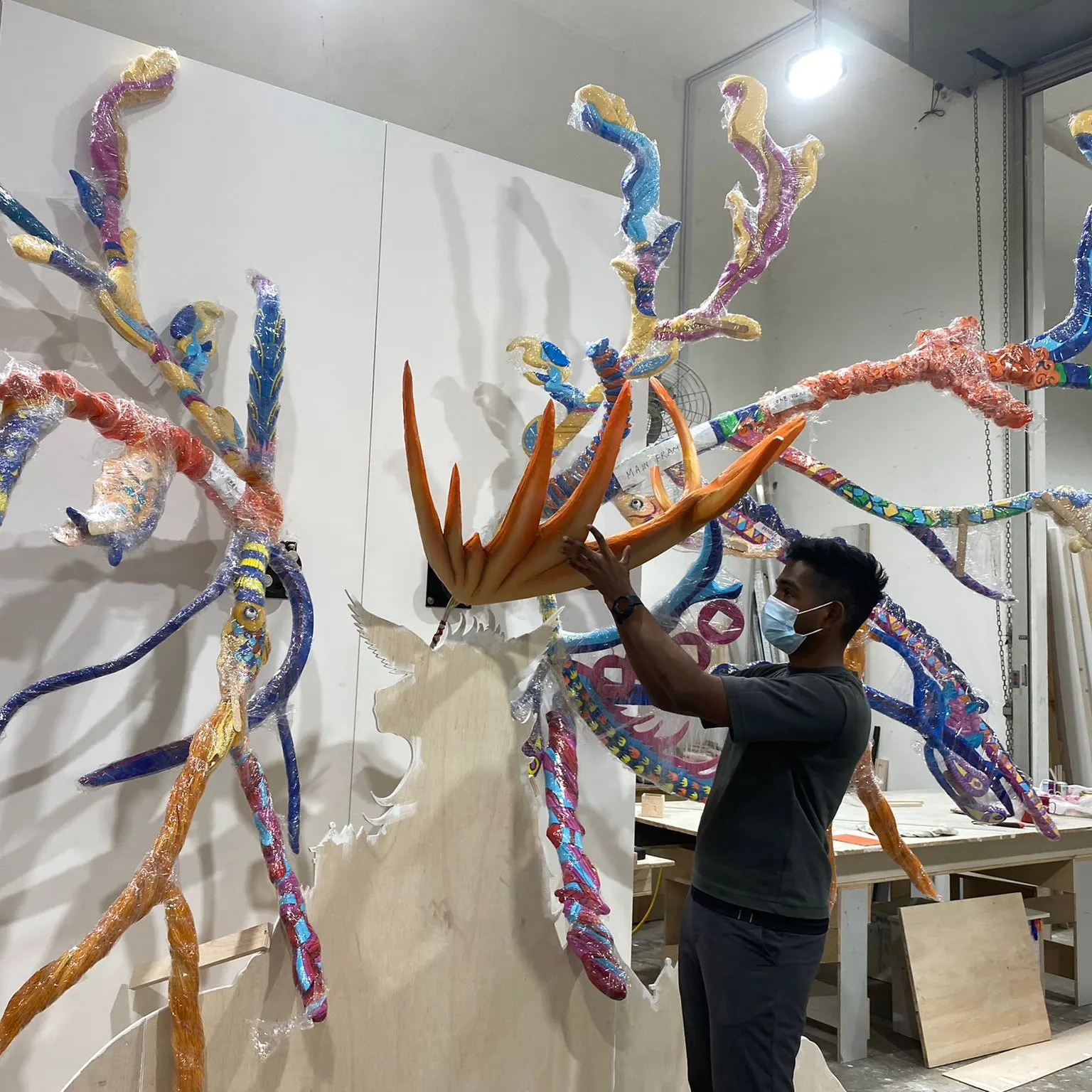
Bigger than one print: made in sections
A piece bigger than the box is printed in parts, called sections, and joined into one. Where the cuts go decides how the finished piece looks, so we split along lines that are already in the design: a panel edge, a corner, a floor of a building, the line where a wing meets a body, or the shadow behind a raised detail. A cut straight across a smooth face that people look at leaves a seam that has to be filled and painted out, and on an unpainted piece it never fully hides. Fine detail, such as a face or lettering, stays whole inside one section.

We also split a piece that would fit in one, when sections make it easier to paint or assemble: a wing painted on its own can be reached on every face, and a sculpture in sections goes through a doorway and up a lift. A smaller section also curls less as it cools, and a print that fails costs one section, not the whole piece.
We recommend, you decide. A person checks every file before it prints. On a big piece we mark where we would split it and tell you why, and you approve the lines or move them. The decision is always yours: if you want a seam somewhere else, or one piece where it fits the machine, say so.
How the sections join
A joint has to line the sections up before it holds them. A flat butt joint, where two flat faces are simply glued together with nothing to guide them, slides out of line while the glue sets, so every joint gets a locating feature:
- Pegs and sockets at a push fit, 0.2 mm each side on filament, so the sections line up by themselves. The gaps for resin and nylon are in 3D printing tolerances and clearances.
- Glue, usually two-part epoxy, for a joint that never opens. The peg still lines it up first.
- Screws, through matching flanges or into brass inserts, for a joint that carries load or has to come apart for transport.
- Magnets for a cover or panel taken off by hand.

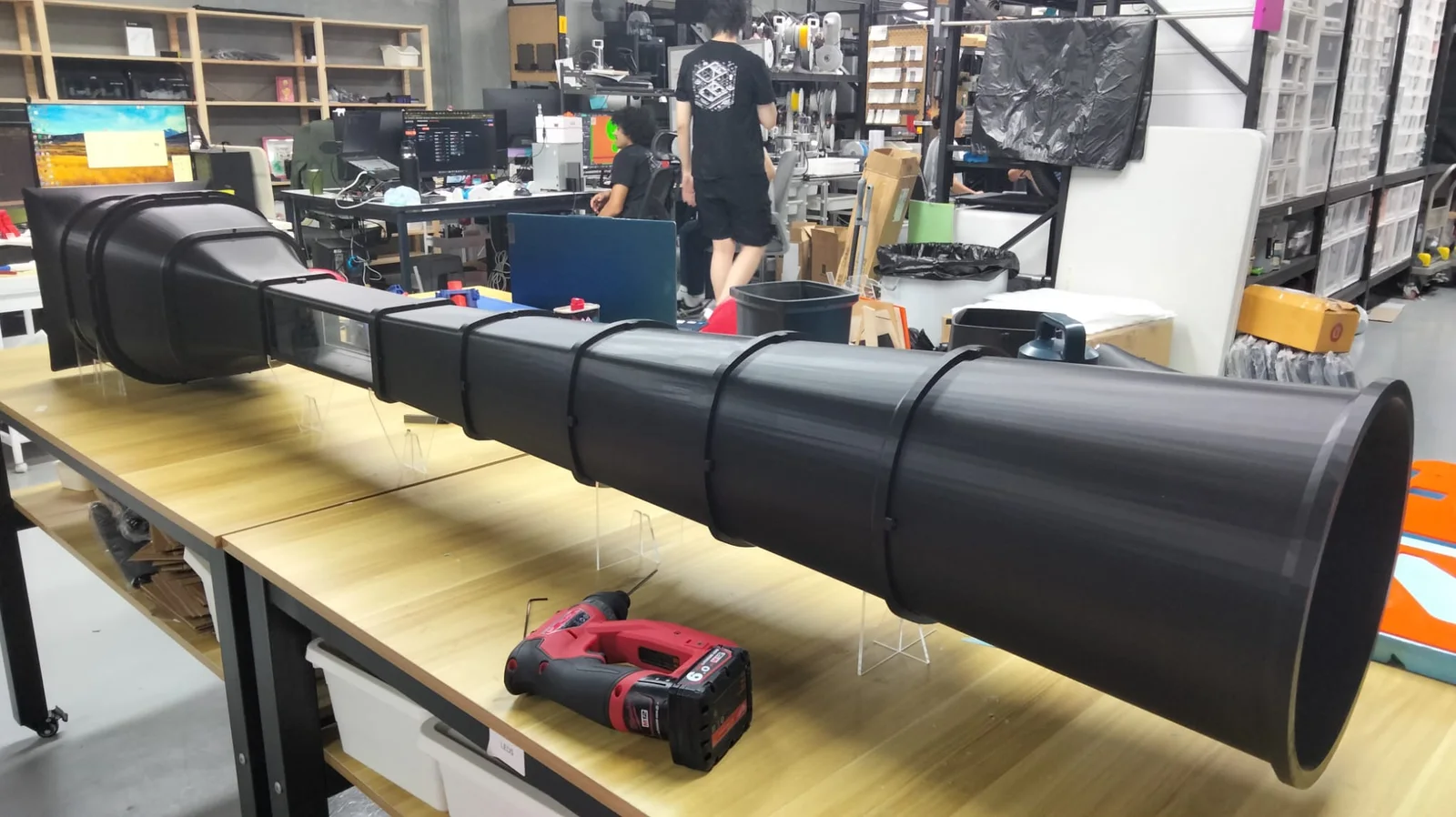
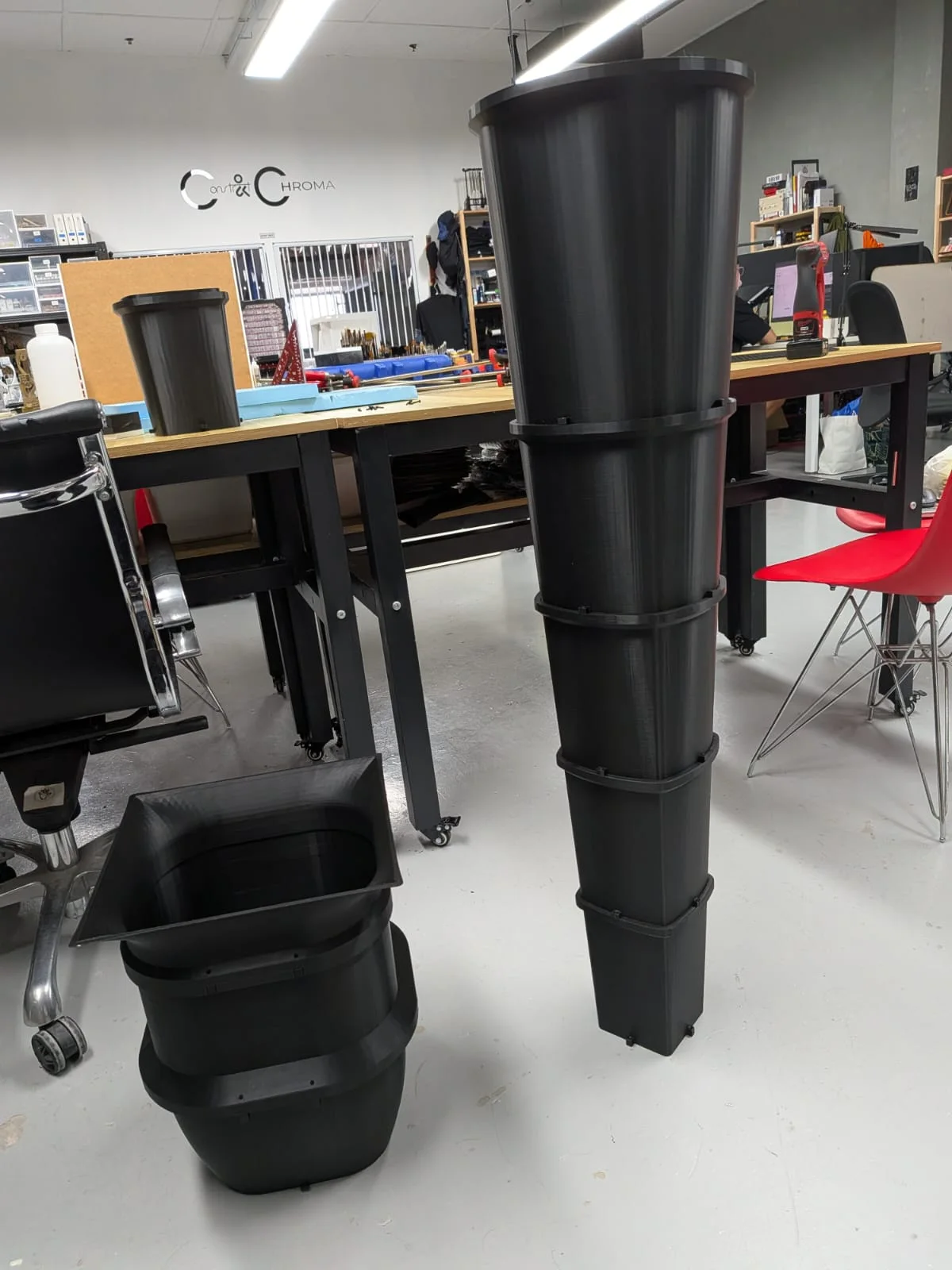
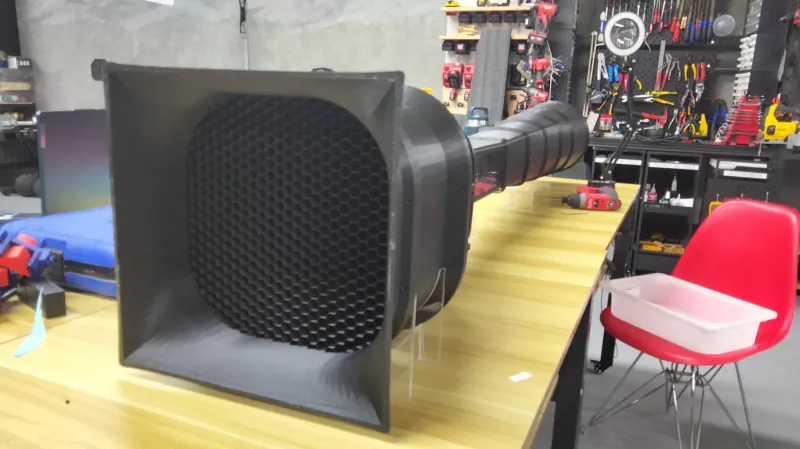
A glued joint is usually the weakest point of a big assembly, so we put joints where the load is lowest and add pegs, ribs or screws where one has to carry weight. The wind tunnel below was too long for any single print: we split it into sections sized to the printer, each ending in a flange, and bolted them into one straight tunnel.
Hiding the seams
On a painted piece the seam disappears. Each join is filled, sanded smooth, primed (the primer shows any low spot, which is filled and sanded again) and painted across, so the finished piece reads as one. Filling and sanding explains the routine.
A piece left in the raw print colour, or printed in several colours, will show every seam. On those, plan the finish together with the split, so each line falls on an edge where a line looks intended. The paints for big pieces are in painting big pieces.
What can go wrong on a big print
Size magnifies every defect, so a large piece is designed and checked more carefully than a small one:
- Warping. The bigger the part, the more it shrinks as it cools or cures. A wide filament base can lift at the corners, and a large flat resin piece can bow. Rounded corners, ribs behind a flat face and smaller sections keep it flat. More in warped or flared bases.
- Sagging and leaning. A long unsupported span sags on a filament printer, and a tall thin part can lean as it builds. Supports, ribs and a column under a long span keep it straight.
- Cracks. A thick, solid resin part can crack as it cures, so we hollow it to a 2.0 mm shell with two or more drain holes of 5 mm (10 mm on big parts) at its lowest and highest points; see resin print defects. A thick filament part can split along its layers when the load pulls across them, so we print it lying the way that puts the load along the layers.

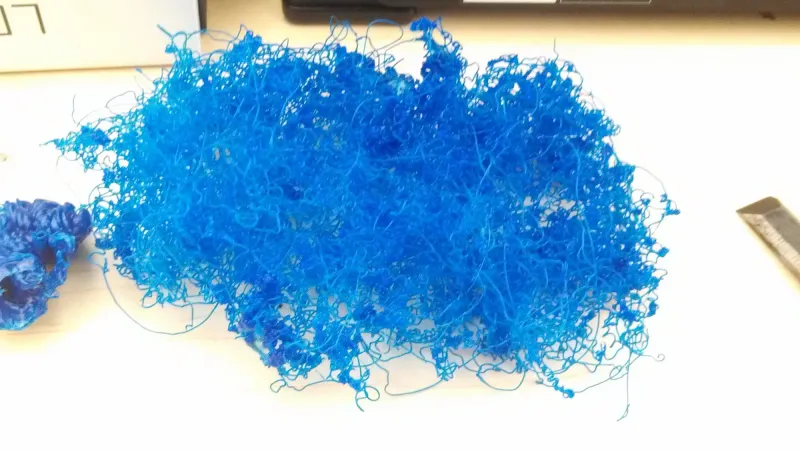
A person checks every large file before it prints, and every piece is checked before it leaves us. Printer-side faults, such as a layer shift or a print letting go of the bed, are in common problems with 3D printed models.
Large 3D prints we have made
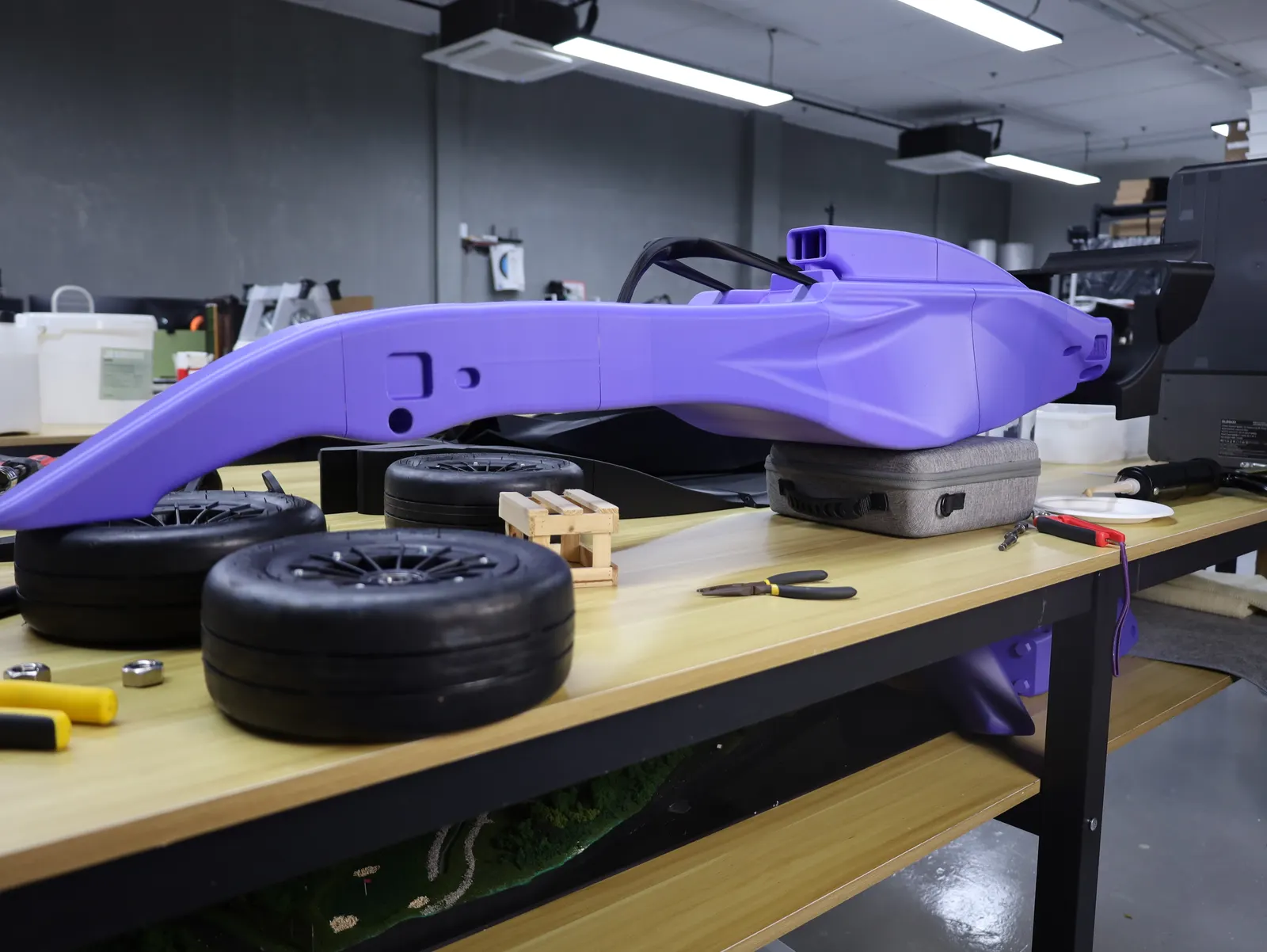
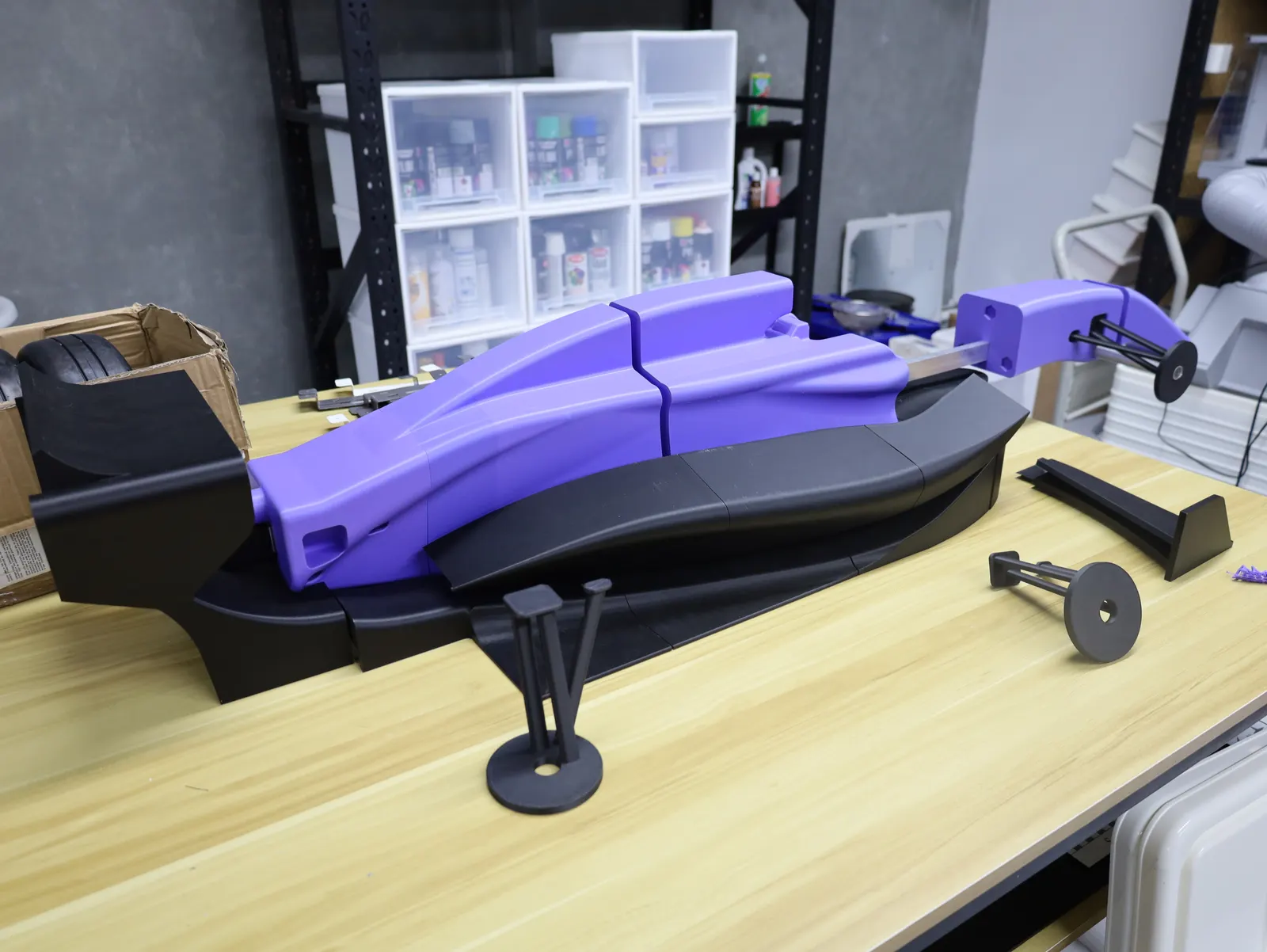
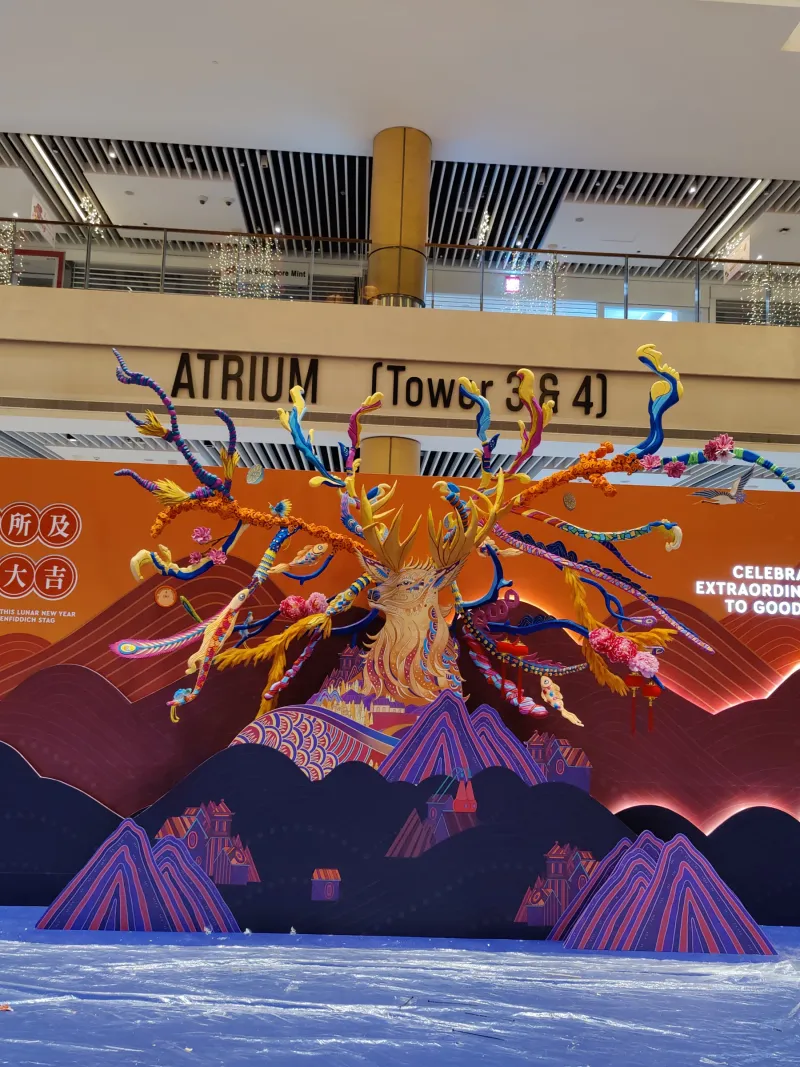
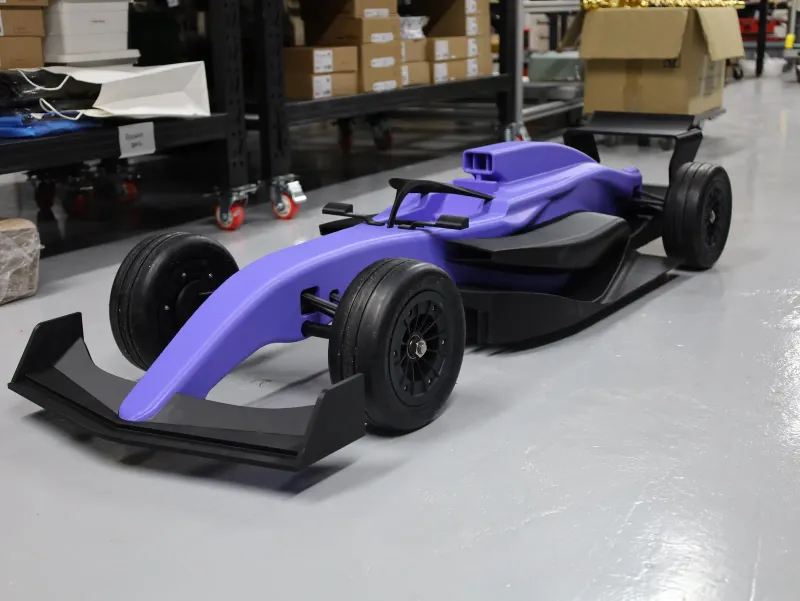
Big builds are regular work in our studio: 3 m props, full-scale concept cars and display pieces made in sections, joined and painted to read as one. The Formula 1 showpiece below was printed in sections along its body and joined over steel rods, so it could roll onto an expo floor. The Glenfiddich stag antlers spread 3.5 m by 2 m. They were sculpted digitally, printed in lightweight segments, painted by hand and hung over a mall atrium for a Lunar New Year campaign.
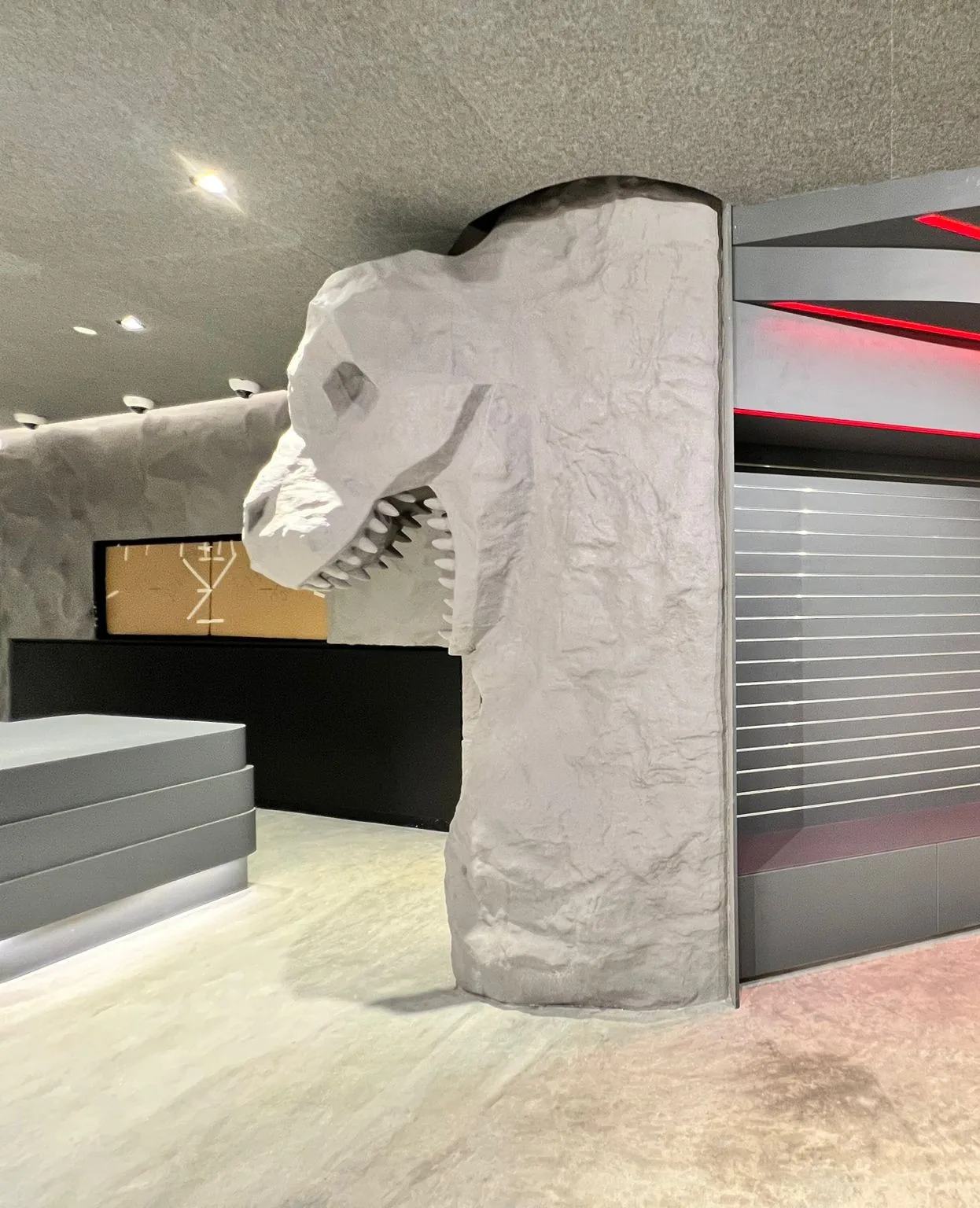
We also build wall murals and themed features, where printed pieces meet paint and sculpture. At Mandai, a 3D printed dinosaur head bursts out of a stone feature wall.
Frequently asked
How big can you 3D print in Singapore?
The largest single piece Additive Inn prints in Singapore is 1000 x 1000 x 1200 mm, on a large-format filament printer in our own studio. Resin can run longer, up to 1700 mm, but in a slimmer box, and nylon powder and metal have smaller limits. Anything bigger is printed in sections and joined: the Glenfiddich antlers we made for a mall atrium spread 3.5 metres.
What is the largest single piece for each 3D printing process?
Filament goes to 360 x 360 x 360 mm on a desktop printer and 1000 x 1000 x 1200 mm on a large-format one. Resin goes to 1700 x 800 x 600 mm (clear resins 800 x 800 x 500 mm), nylon powder to 670 x 360 x 550 mm and metal to 420 x 420 x 450 mm.
Can a big 3D print be made in parts and joined?
Yes: a part bigger than the largest print is made in parts (sections) and joined into one piece. We split the model along natural lines, add pegs so the sections line up, then glue or screw them together and fill, sand and paint the seams. Send the whole model and we suggest the split, or send it already split.
Where should a large 3D model be split?
Split a large 3D model along a natural line in the design: a panel edge, a corner, a floor of a building or the line where a wing meets a body. Avoid a cut across a smooth face people look at, and keep fine detail inside one section. We recommend where to split and why; the decision is always yours.
How are large 3D printed sections joined together?
Pegs and sockets line the sections up, with 0.2 mm each side on filament, then glue or screws hold them. Two-part epoxy suits a joint that never opens, screws through flanges or into brass inserts suit one that carries load or comes apart, and magnets suit a cover taken off by hand.
Can you hide the seams between sections?
Yes, on a painted piece: each seam is filled, sanded smooth, primed and painted across until it disappears. A piece left in the raw print colour, or printed in several colours, will show the line, so on those we put the split on an edge where a line looks intended.
Is a large 3D printed part as strong as a small one?
The printed material is as strong at any size, but a glued joint is usually the weakest point of a big assembly. We put joints where the load is lowest and add pegs, ribs or screws where a joint has to carry weight. If a part is load-bearing, tell us the load when you send the file.
Which 3D printing process is best for a large piece?
Usually filament (fused deposition modeling, FDM), up to 1000 x 1000 x 1200 mm in one piece and the lowest cost for its size. Choose resin when the surface must be smooth and finely detailed, nylon powder when the part must be tough, and metal only when it has to be metal.
Do large 3D prints warp or crack?
Large 3D prints can warp or crack more than small ones, because a bigger part shrinks more as it cools or cures. A wide filament base can lift at the corners and a large flat resin piece can bow. Rounded corners, ribs, hollowing thick resin parts and splitting into smaller sections all help, and a person checks every file before it prints.
How do I get a price for a large 3D print?
Upload the file, up to 1 GB in STL, 3MF, OBJ, STEP or IGES, for an instant price. For a piece bigger than one print, send the whole model with its finished size and we come back with where we would split it. Price depends on the process, the size and the finish; see our pricing page.
Related
-
 GuideHow much clearance do 3D printed parts need to fit together?
 -
 GuideWhat does filling and sanding do to a 3D print?
 -
 GuideWhat are the most common problems with 3D printed models?
 -
 ServiceConcept to Fabrication
 -
 ServiceIndustrial 3D Printing
 -
 ServiceColour Application & Finishing
 -
 Project3D printed stag antlers for Glenfiddich
 -
 Project3D printed golf ball wind tunnel
 -
 Project3D printed F1 show car for an expo stand