

Sheet Metal Fabrication and Bending in Singapore
Flat metal sheet cut to shape, then bent into brackets, covers, trays and enclosures, and thick plate laser cut up to 60 mm. Stainless steel, mild steel, aluminium, brass or copper.
- Lead timeQuoted per job
- Quote1 to 2 working days
Same-day reply. No obligation.
What we make
- 01
Brackets & mounts
L, U and Z brackets in stainless steel, mild steel or aluminium
- 02
Covers & enclosures
Boxes, lids and panels for electronics and equipment
- 03
Trays & holders
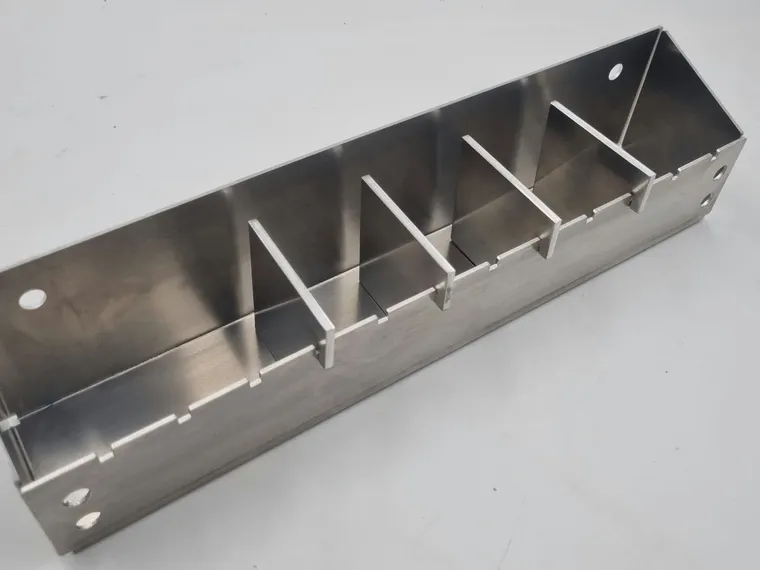
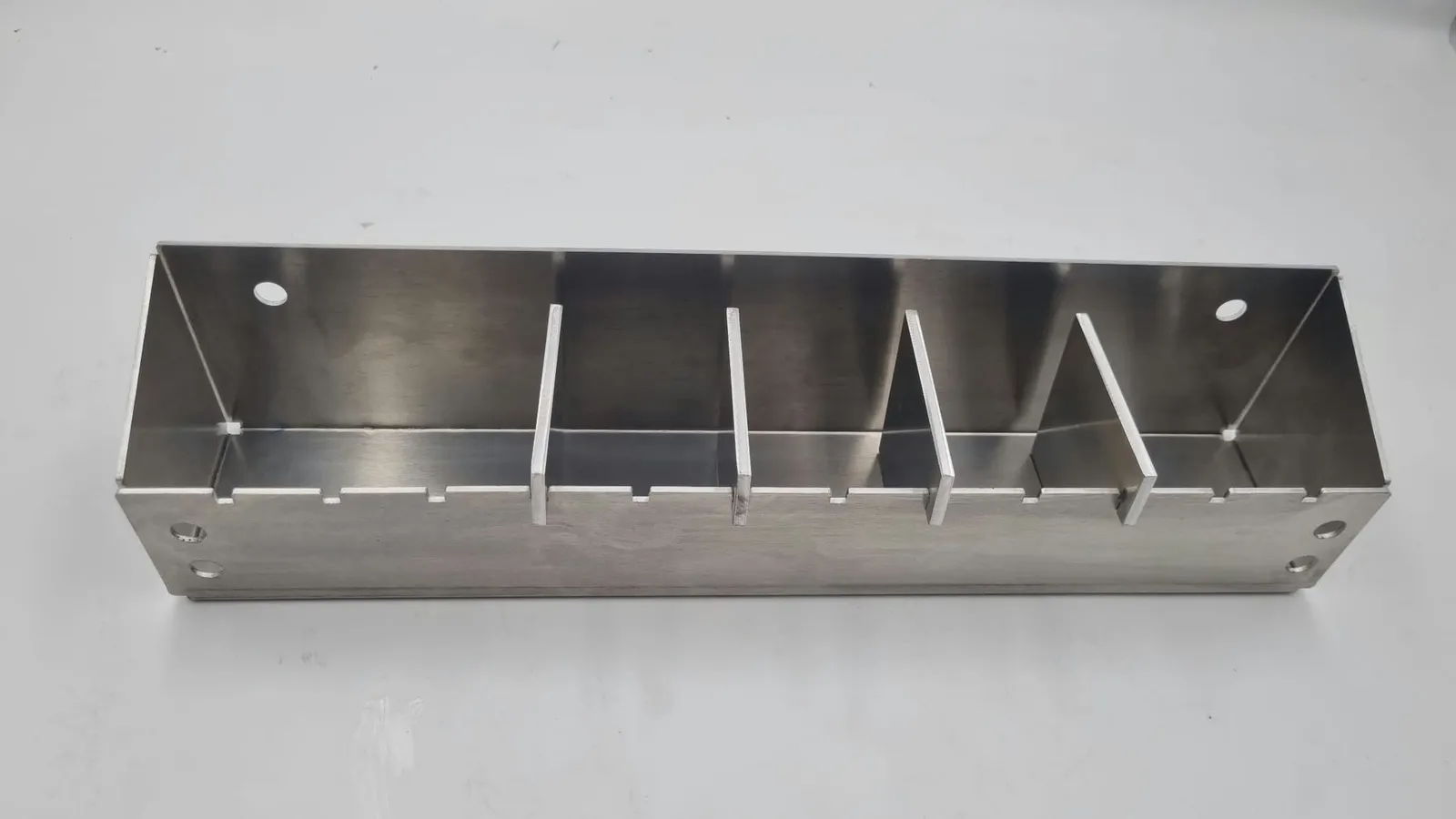
Open trays, racks and slot-in dividers bent from sheet
- 04
Holes, slots & cutouts
Cut in while the sheet is flat, so they line up after bending
Selected work
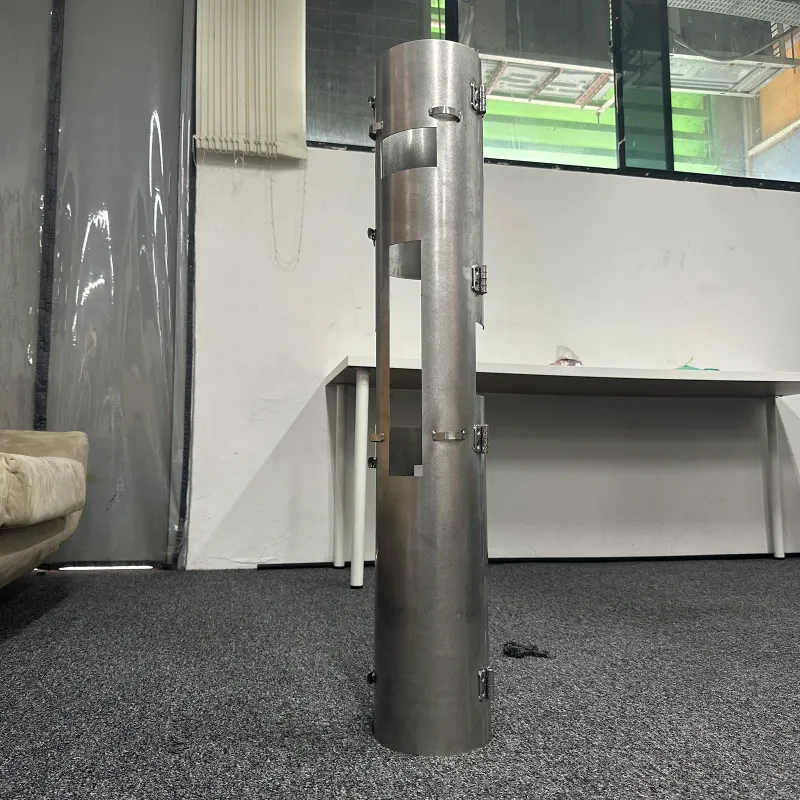
Sheet metal fabrication turns flat metal sheet into working parts. We cut the flat shape with its holes and slots, then fold it on a press brake into brackets, covers, trays, panels and enclosures. The part stays the same thickness everywhere, so it is light, stiff and often costs less than machining the same shape from a solid block. Thicker plate is laser cut flat, up to 60 mm thick in stainless or mild steel.
| What you need to know | Sheet metal at Additive Inn |
|---|---|
| What we do | Cut sheet to shape, then bend it. Laser cut thick plate |
| Metals | Stainless 304 and 316, mild steel, aluminium, brass, copper |
| Laser cut plate | Steel 60 mm, aluminium 40 mm, brass and copper 15 mm |
| Size and thickness | Confirmed from your drawing |
| Accuracy | Confirmed on the dimensions you mark |
| Finish | Confirmed to suit the metal |
| Lead time | Quoted per job |
| Best for | Brackets, covers, trays, panels, enclosures |
| Not for | Solid blocks, or shapes curved every way |
When to choose sheet metal: thin, strong metal parts
Pick sheet metal when the part is a shell or a plate rather than a solid block:
- Brackets and mounts: L, U and Z shapes that hold something up or bolt two things together.
- Covers, panels and enclosures: boxes and lids for electronics, machines and equipment.
- Trays and holders: open trays, racks and dividers, like the tray below.
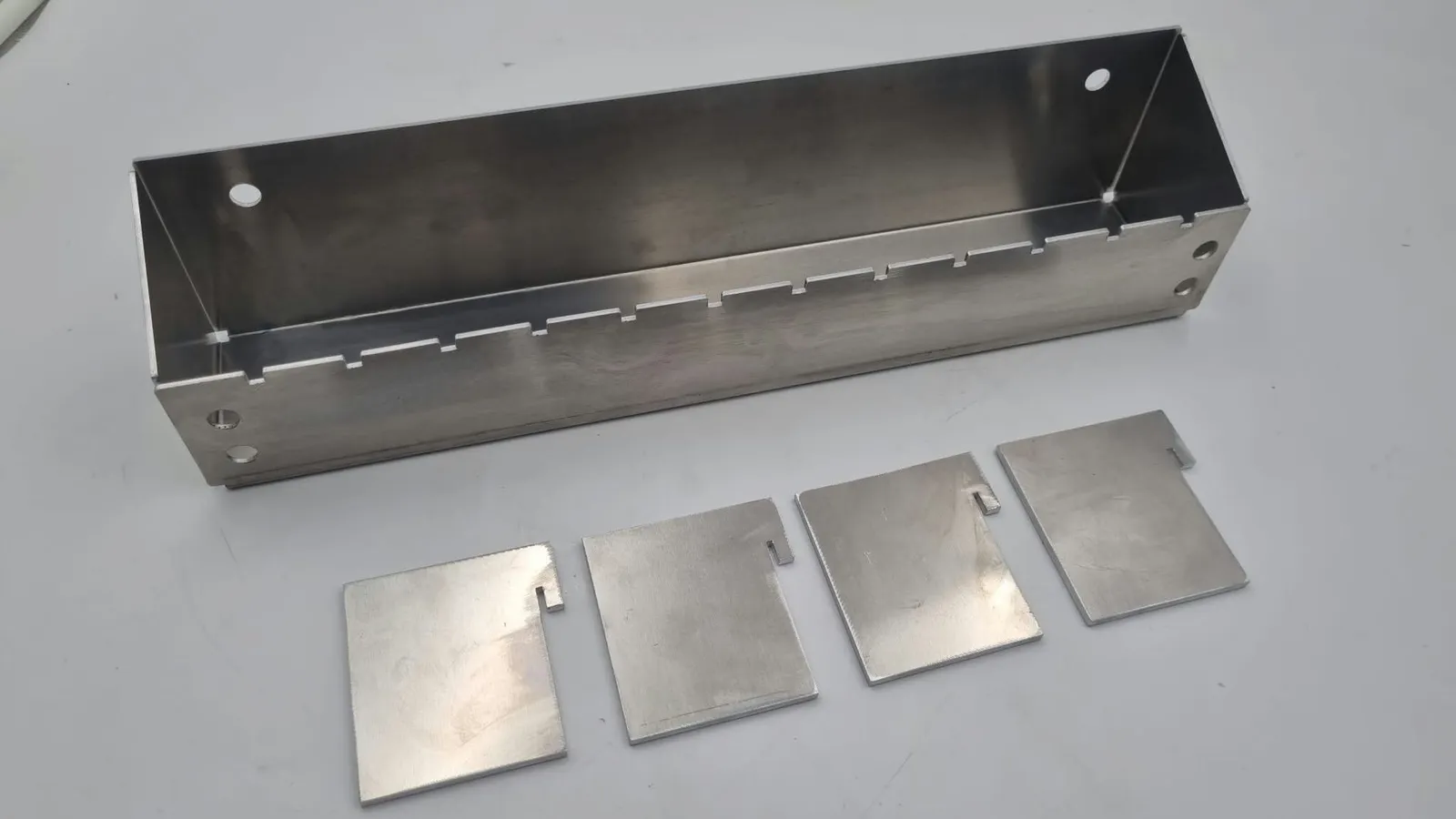
Cutting and bending go together: holes, slots and tabs are cut while the sheet is still flat, so they land in the right place once it is folded. Keep holes back from the bend lines and we check the rest when the drawing arrives.
Metals: stainless steel, mild steel, aluminium, brass and copper
- Stainless steel 304 for parts that must not rust: wet areas, kitchens, outdoor fittings and housings like our custom stainless steel housing. 316 for salt water, sea air and chemicals.
- Mild steel for strong, economical brackets and frames. It rusts if left bare, so plan a primer and paint.
- Aluminium for light parts that do not rust: covers, trays and panels.
- Brass for name plates, trims and decorative parts, and copper for electrical and heat parts.
Need another metal? Ask us and we confirm. Finishes are on request too, so tell us what the part needs when you send the drawing.
Metal laser cutting: plate up to 60 mm thick
Not every metal part is bent. Base plates, flanges, gussets, mounting plates and spacers are laser cut flat from plate, then used as they are or welded or bolted into a frame. We laser cut:
- stainless steel and mild steel up to 60 mm thick,
- aluminium up to 40 mm thick,
- brass and copper up to 15 mm thick.
The largest plate size, and the thickest sheet that can still be bent, depend on the part, so send the drawing and we confirm.
How to send a job: drawing, size and thickness
Send a drawing or CAD file, such as a STEP, DXF or PDF, with:
- the overall size and the sheet thickness,
- the metal,
- the dimensions that matter, marked on the drawing,
- how many you need.
We check the bends, holes and size, confirm what we can make, and quote the job. Lead times are quoted per job.
Not sure sheet metal fits: send the drawing and we advise
A solid part with thick sections or precise machined faces is a job for CNC machining. A complex metal shape that cannot be folded from a sheet suits metal 3D printing. A name, logo or marking on the finished part can be laser engraved. A plastic part, or a quick prototype to check the fit first, suits 3D printing.
Send the drawing on WhatsApp or through the contact form and we tell you which process suits it before we quote.
What's included
- Stainless steel 304 and 316, mild steel, aluminium, brass and copper
- Metal laser cutting: up to 60 mm stainless or mild steel, 40 mm aluminium, 15 mm brass or copper
- Flat parts cut to shape, with holes, slots and cutouts
- Bending on a press brake into brackets, trays and enclosures
- Size and thickness confirmed from your drawing
- Finishes confirmed per part when you send the drawing
- Quoted per job
How we make it
-
Send the drawing
Send a drawing or CAD file with the size, the sheet thickness, the material and how many you need.
-
Check & quote
We check the bends, holes and size against the sheet, confirm what we can make and quote the job.
-
Cut the flat shape
The part is cut from flat sheet as an unfolded pattern, with its holes, slots and cutouts in place.
-
Bend
A press brake folds the sheet along each bend line, one bend at a time, into the finished shape.
-
Check & deliver
Each part is checked against the drawing before packing. Collect from Bendemeer or have it couriered islandwide.
Frequently asked
What is sheet metal bending?
Sheet metal bending turns a flat metal sheet into a 3D part by folding it along straight lines. The part is first cut from flat sheet as an unfolded shape, with its holes and slots already in it, then a press brake folds it into a bracket, tray, cover or enclosure. The finished part is the same thickness everywhere, which keeps it light for its strength.
What metals can you bend?
We work in stainless steel 304 and 316, mild steel, aluminium, brass and copper. Stainless steel resists rust and suits wet or food areas, with 316 for salt and chemicals. Mild steel is strong and economical but needs a coating to keep rust off. Aluminium is light and does not rust. Brass and copper suit decorative and electrical parts. For any other metal, ask us and we confirm.
How thick a metal plate can you laser cut?
We laser cut metal plate up to 60 mm thick in stainless steel or mild steel, up to 40 mm in aluminium, and up to 15 mm in brass or copper. Thick plate is cut flat into base plates, flanges and gussets; thinner sheet is cut, then bent. Send the drawing and we confirm the size.
How big and how thick can a sheet metal part be?
We confirm the size and thickness for each job, so send the drawing with the size and sheet thickness and we check it. Thicker sheet needs more force to bend and a wider bend, so the size, the thickness and the shape of the part are checked together before we quote.
Should I choose sheet metal, CNC machining or 3D printing?
Choose sheet metal when the part is a thin metal shell or plate: a bracket, cover, tray, panel or enclosure. Choose CNC machining when the part is solid, with thick sections or precise machined faces. Choose 3D printing when the shape is complex, curved in every direction or needed in plastic. If you are not sure, send the drawing and we suggest the process.
What finishes can a sheet metal part have?
Ask us about the finish when you send the drawing, and we confirm what suits the metal and the part. Stainless steel and aluminium are often used as they come. Mild steel rusts if left bare, so plan a coating from the start: a primer and then paint, or another finish we confirm.
How long does a sheet metal job take and how much does it cost?
Sheet metal is quoted per job, and the lead time is confirmed in the quote. The price and the time depend on the metal, the thickness, the size, the number of bends and cutouts, and how many parts you need. Send the drawing on WhatsApp or through the contact form and we reply with a quote.