

SLS or MJF: which nylon powder process suits your part?
On this page
- SLS vs MJF at a glance
- How they work: a laser, or a fusing agent and heat
- Surface and colour: MJF a little smoother, SLS more colours
- Grades: SLS has more, and both have a stiffer option
- Size: both print up to 670 mm in one piece
- When neither suits: filament, resin or metal instead
- Designing for powder: one set of rules for both
- Frequently asked
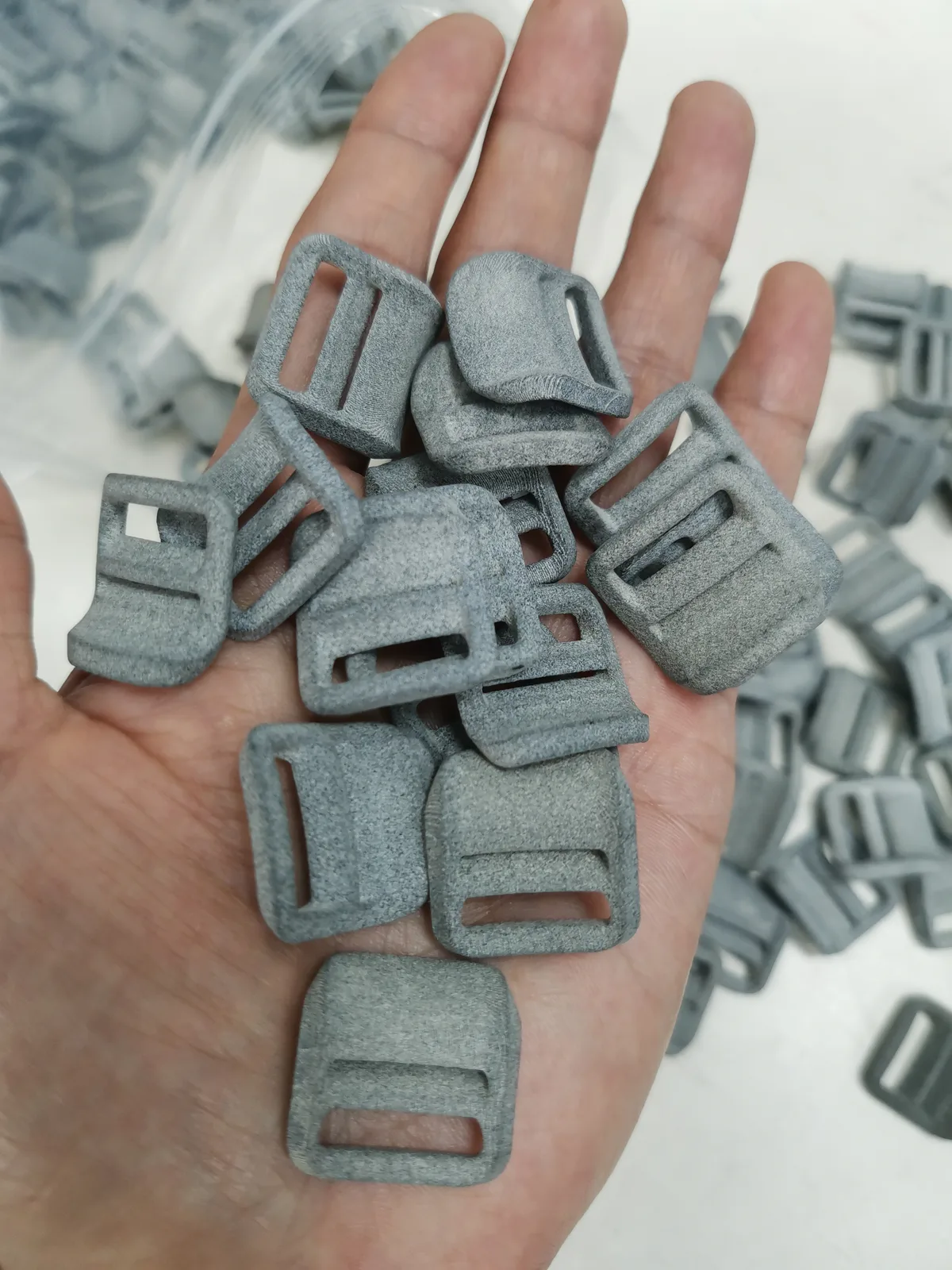
Selective laser sintering (SLS) and Multi Jet Fusion (MJF) make much the same part: tough PA12 nylon printed from powder, with no supports. MJF is a little smoother, but not by much, so the choice comes down to the price for your part, the grade or colour you need, and which finish you prefer.
SLS vs MJF at a glance
| What you are comparing | Selective laser sintering (SLS) | Multi Jet Fusion (MJF) |
|---|---|---|
| How the powder is fused | A laser melts each layer | A fusing agent and heat fuse each layer |
| Surface off the printer | Matte, with a fine grain | Matte, a little smoother |
| Nylon grades | PA12, PA12 glass fibre, or PA11-like | PA12, or PA12 glass bead |
| Colours | Grey, black or white, more on request | Black, or dyed on request |
| Largest single piece | 670 x 360 x 550 mm | 670 x 360 x 550 mm |
| Lead time for a 10 to 15 cm part | 8 to 12 working days | 12 to 15 working days |
| Best for | White or grey parts and the extra grades | Black parts with a smoother face |
Lead times are a rough guide for a normal-size part printed with us in Singapore. Bigger parts and batches take longer, so check with us.
How they work: a laser, or a fusing agent and heat
Both start the same way. A thin layer of nylon powder is spread across the build area and warmed. The loose powder around each part holds it up as it prints, so neither process needs supports. When the build is done, it cools slowly, and the parts are dug out and cleaned of powder.
- SLS: a laser traces the shape of each layer and melts the powder it touches into solid nylon (Formlabs’ guide to SLS).
- MJF: a printhead lays a fusing agent where the part should be and a detailing agent around its edges. Heat then passes over the whole layer, and only the powder carrying fusing agent melts (HP on MJF and SLS).
The detailing agent keeps the edges sharp, which helps give MJF its slightly smoother finish. Read more on our SLS printing and MJF printing pages.
Surface and colour: MJF a little smoother, SLS more colours
Both come off the printer matte, with a fine, sandy grain and almost no visible layer lines. MJF is a little smoother to the touch, but side by side most people would struggle to tell them apart.
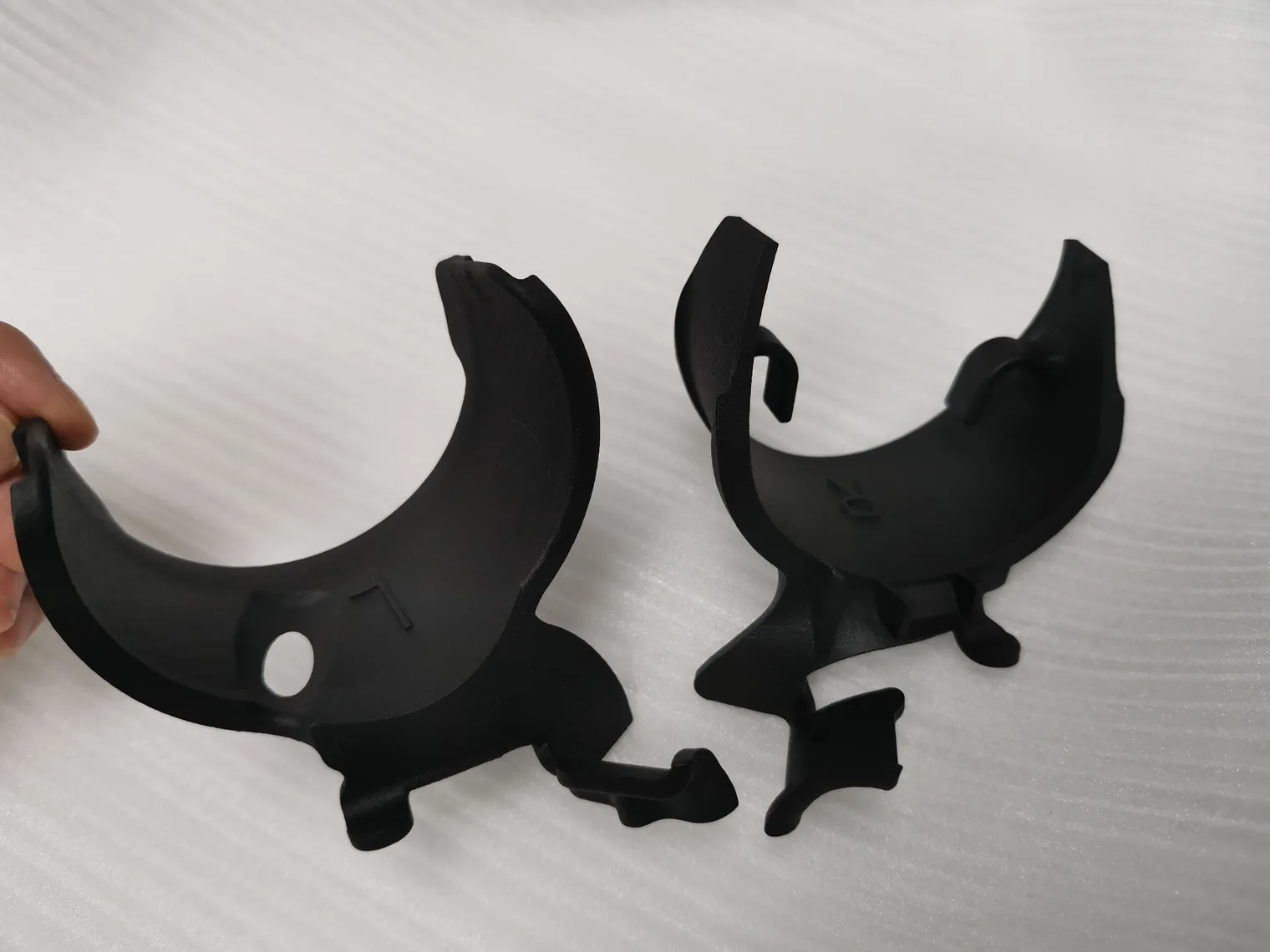
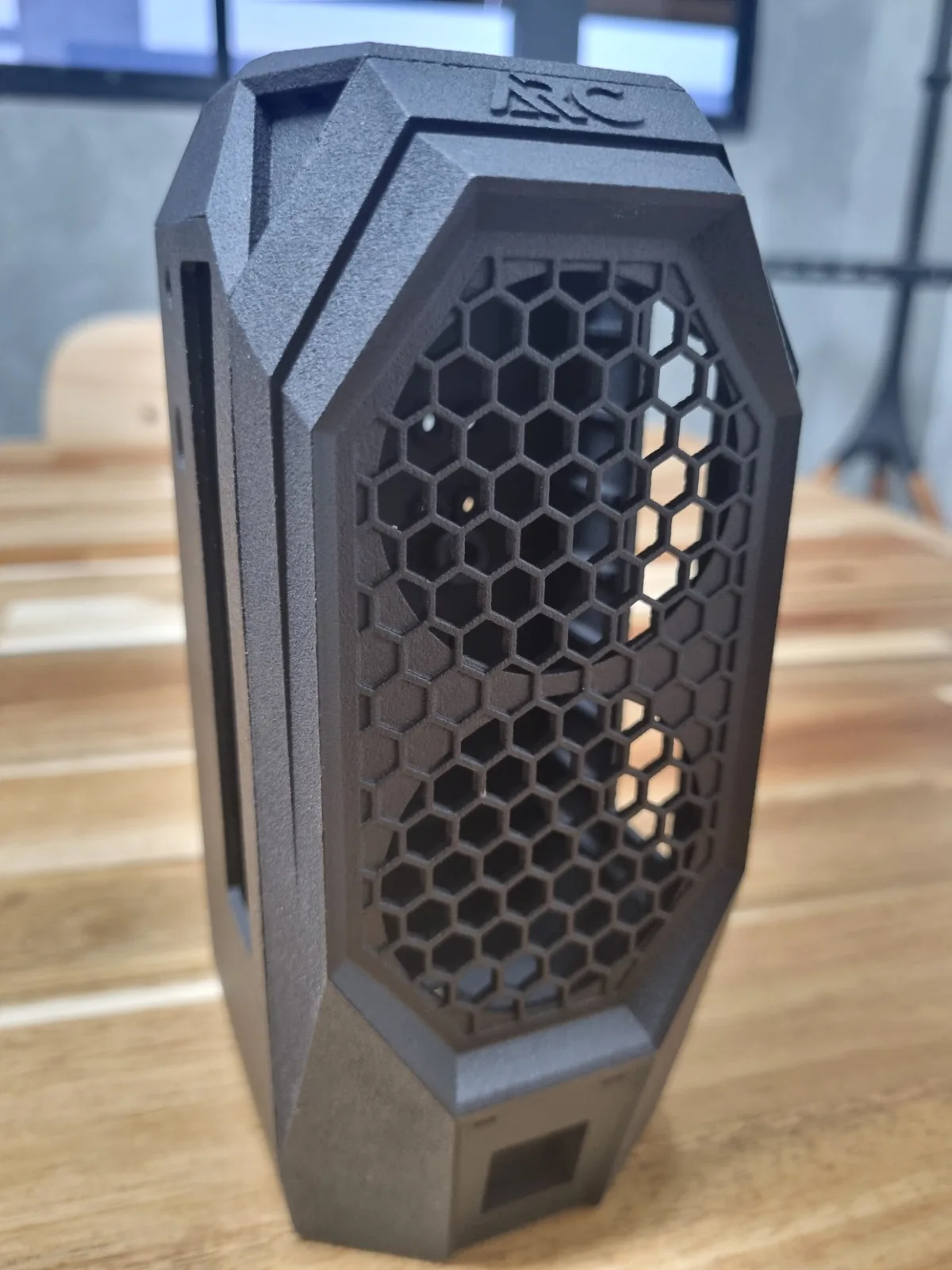
Colour is the clearer difference:
- SLS: grey, black or white. Check with us for other colours.
- MJF: black. Another colour is possible by dyeing, on request.
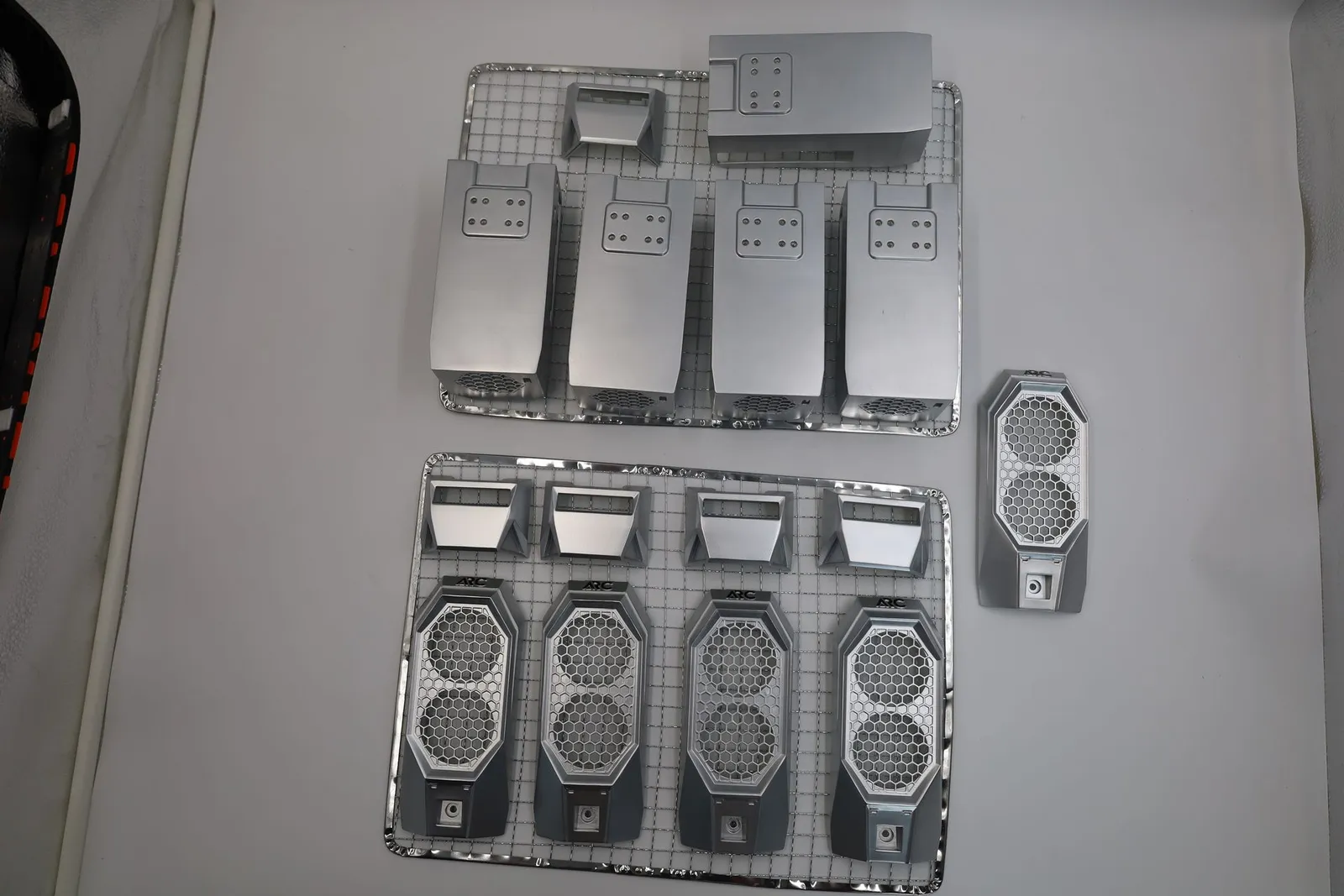
- Any exact colour, on either: we paint it, always over a primer first.
Grades: SLS has more, and both have a stiffer option
Both print PA12, the all-round nylon for tough, functional parts. Beyond that, the grades differ:
- PA12 with 30% glass fibre (SLS): stiffer than plain PA12, for brackets and housings that must not flex.
- PA12 with glass beads (MJF): also stiffer than plain PA12, for parts that must hold their shape under load.
- PA11-like (SLS): for parts that take knocks. PA11 nylon is known for bending further before it breaks (Formlabs’ guide to SLS).
Glass makes the nylon stiffer but less able to bend before it breaks, so a clip or snap fit is usually better in plain PA12. If you need a grade we have not listed, ask us.
Size: both print up to 670 mm in one piece
Either process prints a single piece up to 670 x 360 x 550 mm. A bigger part is printed in sections and joined, and we place the joins where they are hidden or carry the least load. Our guide to large 3D prints shows how split parts come together.
A part near the size limit, or a big batch, takes longer than the lead times above, so check with us if you have a date.
When neither suits: filament, resin or metal instead
Nylon powder is not always the answer:
- A one-off prototype to check size and fit: filament printing (fused deposition modeling, FDM) is usually cheaper and quicker, at 4 to 7 working days. See how FDM works.
- Fine detail or a smooth face to paint: resin printing (stereolithography, SLA), also 4 to 7 working days. See SLA printing.
- Real metal, for heat, load or wear: metal printing (selective laser melting, SLM) in stainless steel, aluminium or titanium, at 10 to 12 working days. See metal 3D printing.
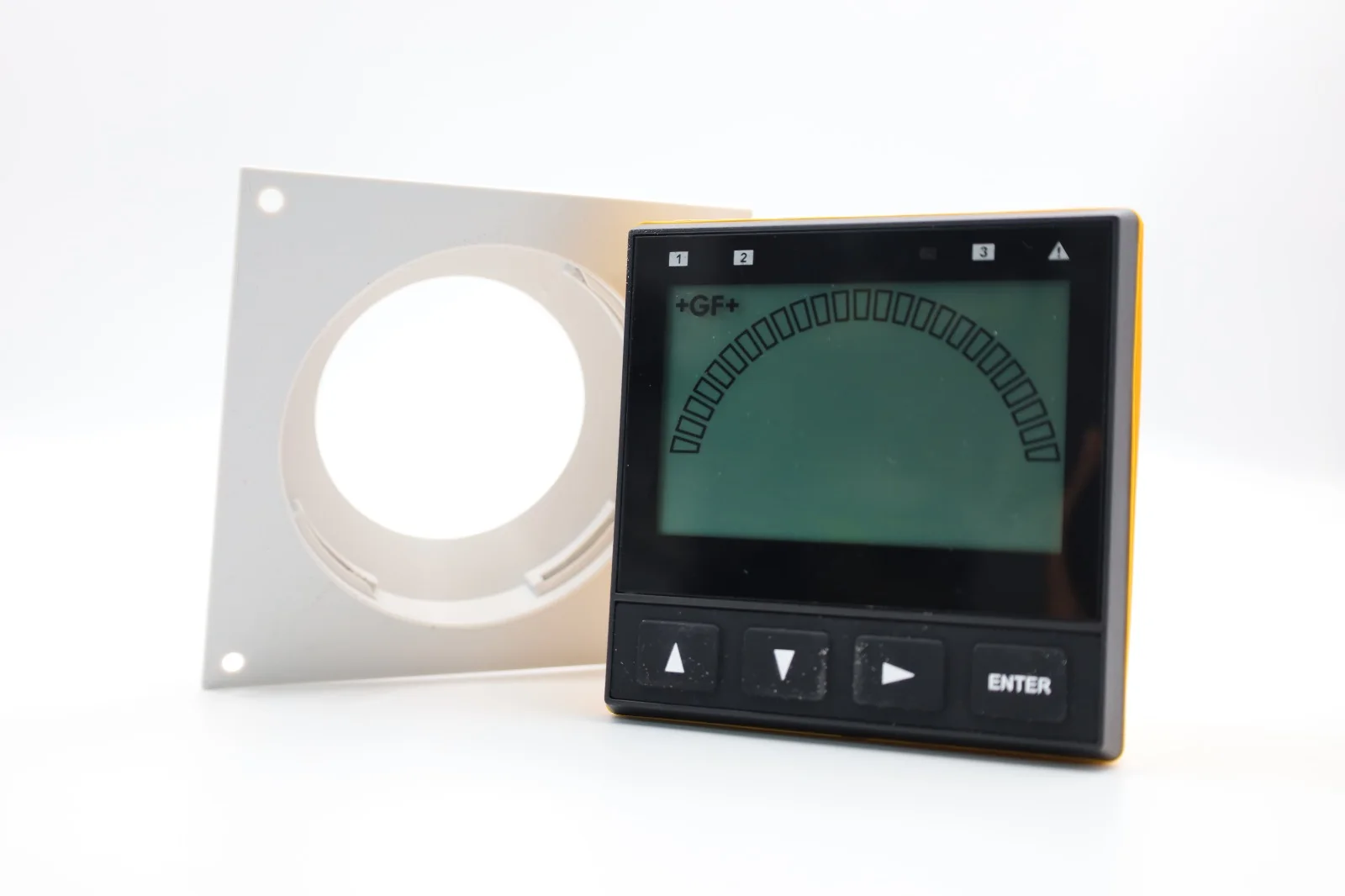
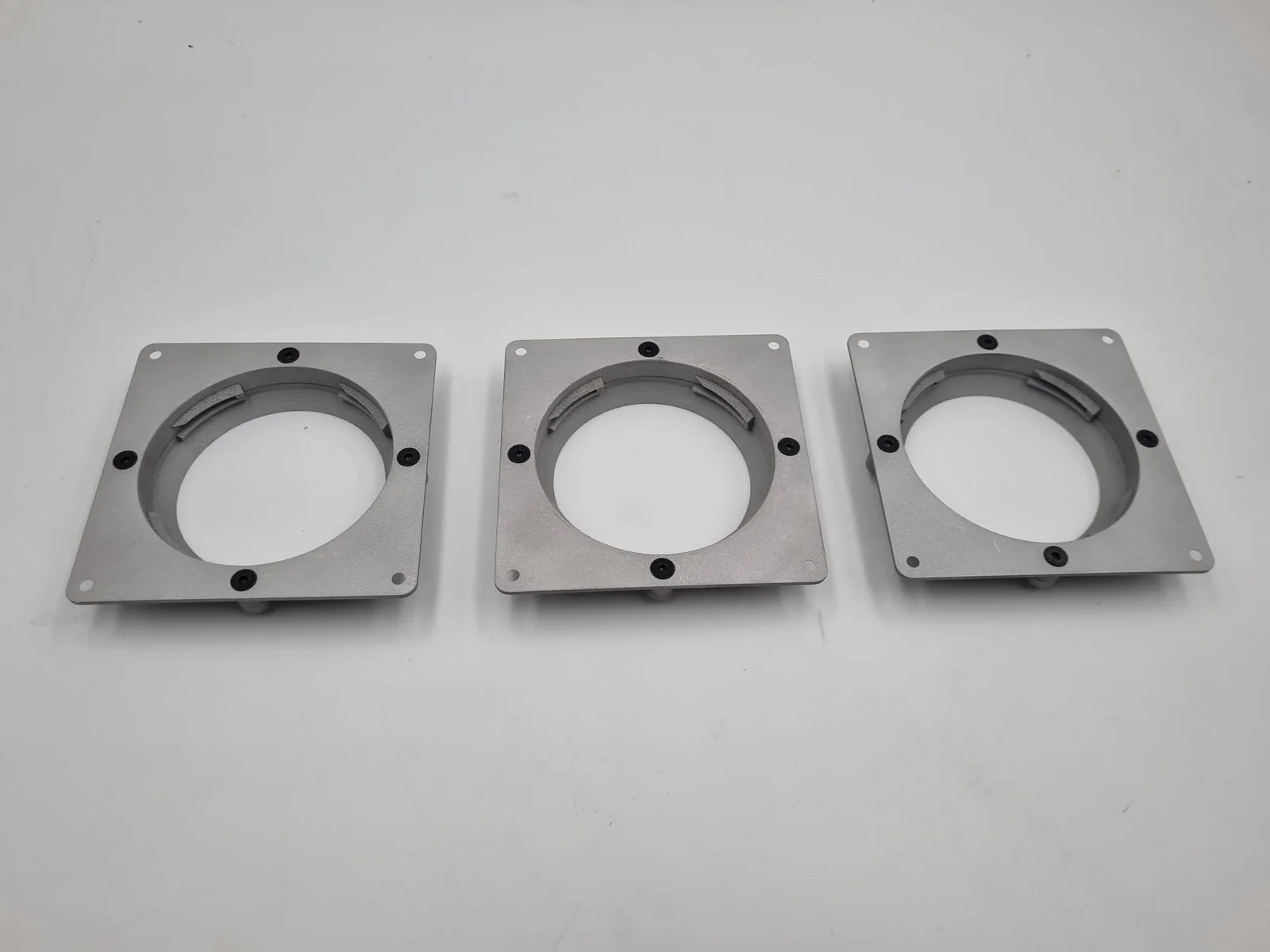
FDM, SLA, SLS, MJF or metal compares all five processes side by side.
Designing for powder: one set of rules for both
You do not need to choose the process before you design: SLS and MJF follow the same rules.
- Walls: at least 1.0 mm thick, or 2.0 mm for anything handled.
- Hollow parts: two escape holes of 5 mm, so the loose powder can pour out.
- Parts printed already assembled: 0.35 mm on each side between them, so they do not fuse.
- Text: lines 1.0 mm thick, in letters at least 5 mm tall.
Our guide to nylon SLS and MJF problems you can fix in the model explains each rule, and tolerances and clearances covers parts that fit together.
Frequently asked
What is the difference between SLS and MJF?
The difference is how the nylon powder is fused: selective laser sintering (SLS) melts each layer with a laser, while Multi Jet Fusion (MJF) prints a fusing agent onto the powder and heats the whole layer at once. The parts come out much the same: tough PA12 nylon, no supports, a matte grainy surface. MJF is a little smoother; SLS offers more grades and colours.
Is MJF better than SLS?
MJF is not clearly better than SLS: on most parts you would not notice the difference. MJF gives a slightly smoother surface, but not by much, and SLS gives you more choice: white, grey or black, a glass-fibre grade and a PA11-like grade. Choose on the price for your part, the colour and grade you need, and which finish you prefer.
Is MJF faster than SLS?
No, MJF is not faster than SLS with us. A normal-size part (about 10 to 15 cm across) usually takes 8 to 12 working days in SLS and 12 to 15 in MJF. Bigger parts and batches take longer either way, so check with us if you have a date to hit.
What colours do SLS and MJF parts come in?
SLS nylon comes in grey, black or white, and MJF nylon in black. Check with us for other SLS colours; MJF parts can be dyed another colour on request. For an exact colour on either, we paint the part over a primer.
Can SLS and MJF parts be painted?
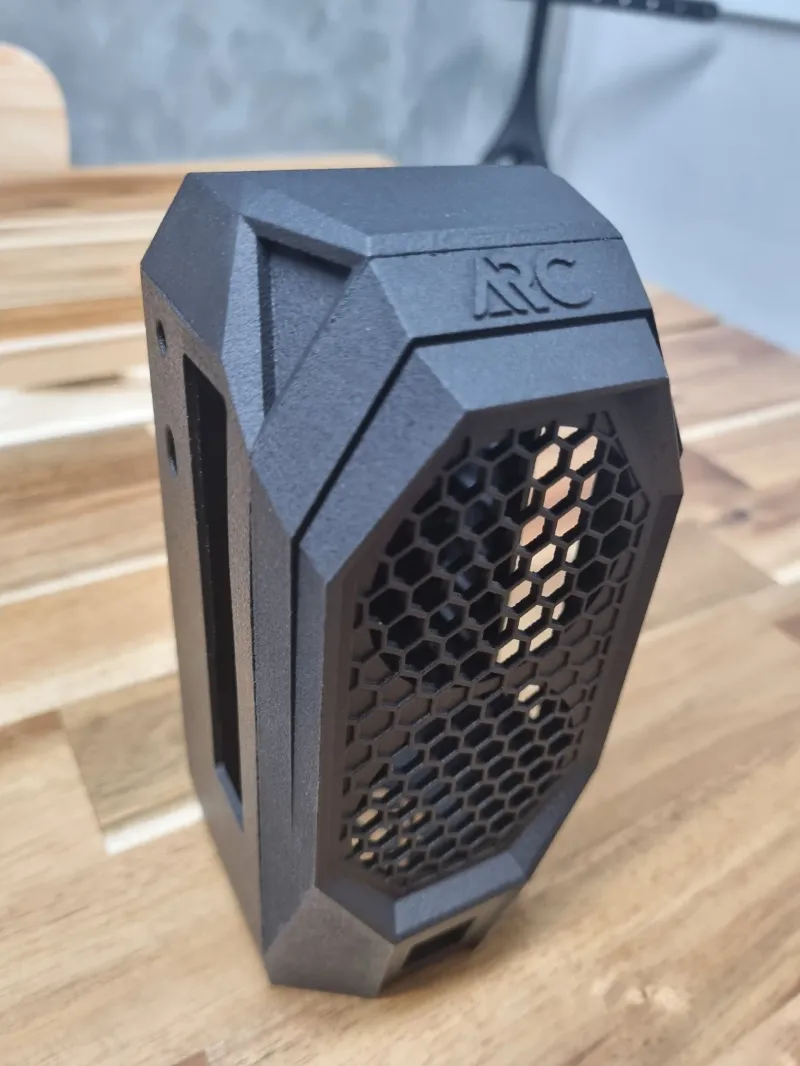
Yes, SLS and MJF parts both take paint well, always over a primer. The primer evens out the grain before the colour goes on. Our Arc computer case was printed by MJF, then primed and sprayed silver.
How big can an SLS or MJF part be?
An SLS or MJF part can be up to 670 x 360 x 550 mm in one piece. A bigger part is printed in sections and joined, and we plan the joins where they are hidden or carry the least load.
Is SLS or MJF cheaper?
Neither SLS nor MJF is always cheaper: it depends on the part, so compare both for your own file. Upload your file for an instant price, or ask us to price it both ways. Our pricing page explains how nylon is charged.
Do I need to design differently for SLS and MJF?
No, SLS and MJF follow the same design rules. Walls need to be at least 1.0 mm thick (2.0 mm for anything handled), a hollow part needs two 5 mm escape holes, and parts printed already assembled need a 0.35 mm gap on each side. Our nylon design guide covers the rest.
Related
-
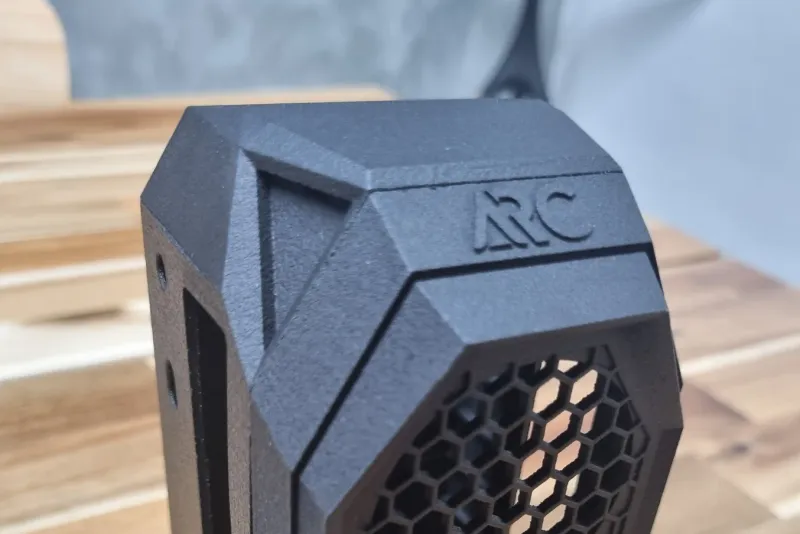 GuideWhich nylon powder (SLS and MJF) print problems can you fix in the design?
 -
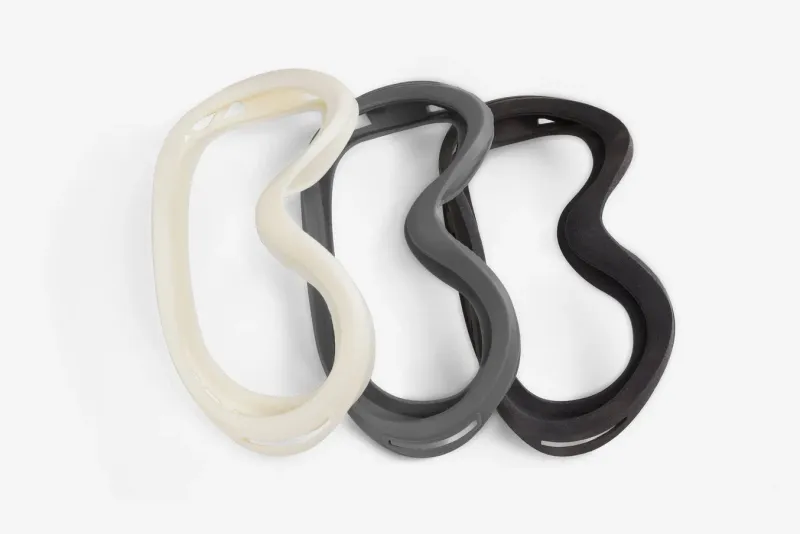 GuideFDM, SLA, SLS, MJF or metal: which 3D printing process suits your part?
 -
 GuideWhich 3D printing material should you choose?
 -
 ServiceSLS 3D Printing
 -
 ServiceMJF 3D Printing (Multi Jet Fusion) in Singapore
 -
 ServiceIndustrial 3D Printing
 -
 ProjectArc CPU Case
 -
 ProjectFlow Meter Panel Mount
 -
 ProjectElectronics Enclosure (FDM)