

Which resin do you need: epoxy, UV, polyurethane or 3D printing resin?
Epoxy, UV resin, polyurethane casting resin and 3D printing resin compared: how each cures, how thick to pour, what each suits and how to stay safe.
How much resin, and which kind, for your pour?
Pick a shape, enter the size and the depth, and see the volume, the weight and how many pours it takes.
Volume
1,200ml
1.2 litres
Weight
1,296g
1.3 kg
Suits
Deep-pour epoxy
38 mm a pour
Pours
1
of 20 mm
| Resin type | One pour holds | For 20 mm |
|---|---|---|
| Coating epoxy | about 3 mm (ArtResin) | 7 pours |
| Deep-pour epoxy Suits | 38 mm, or 50 mm with fans (EpoxAcast 692) | 1 pour |
| UV resin | about 3 mm, small pieces only (PADICO) | 7 layers |
Within 38 mm, so one pour of a deep-pour epoxy such as EpoxAcast 692.
Weight uses 1.08 g per ml, the specific gravity on one maker's data sheet (Smooth-On's EpoxAcast 692). A real resin's data sheet may differ a little.
Each pour limit is one maker's figure for one product, and your own product's data sheet decides. Epoxy tabletops and river tables are not on our service list, so ask us first and say the size.
“Resin” covers materials that behave nothing alike. Epoxy cures slowly by itself, UV resin cures under a lamp, polyurethane casting resin sets inside a mould, in minutes for the fastest grades, and 3D printing resin is hardened by the printer’s own light. We print in resin and cast copies in silicone moulds, so the table below says what each type is for and how thick it can go.
Resin types at a glance
| Resin | How it cures | Working time | Thickness per pour | Suits |
|---|---|---|---|---|
| Coating epoxy | Two parts mixed, left to cure alone | About 45 minutes (ArtResin) | 3 mm a layer (ArtResin), 3 to 6 mm (TotalBoat) | Art, thin coats, small tabletops |
| Deep-pour epoxy | Two parts mixed, slow to cure | 12 hours pot life (EpoxAcast 692) | 38 mm, or 50 mm with fans (EpoxAcast 692) | Clear blocks, river tables, paperweights |
| UV resin | A UV lamp, which starts it within a second (PADICO) | Open until light reaches it | About 3 mm, then another layer (PADICO) | Small charms, jewellery, inlays |
| Polyurethane casting resin | Two parts mixed, sets fast in a mould | About 3 minutes (Smooth-Cast 300) | Whatever the mould holds | Hard copies of one shape |
| 3D printing resin | The printer’s light, layer by layer | None: the printer handles it | 0.08 to 0.1 mm a layer (our printers) | Fine detail, masters, display pieces |
Pot life or working time is how long mixed resin stays liquid enough to pour. Each figure above belongs to the product named beside it; another brand will differ, so check the data sheet of the product you buy.
Coating epoxy for thin pours
Coating epoxy is a two-part liquid. You mix resin and hardener, spread it on and wait. ArtResin, an art epoxy maker, says its resin was designed as a surface coating, not a casting resin, and levels itself to about 3 mm.
- Working time. About 45 minutes after mixing, then it thickens.
- Cure. Dry to the touch after about 24 hours, fully cured at 72 hours.
- Layers. Pour about 3 mm at a time. Thicker, and bubbles may stay trapped. For a taller piece, pour another layer.
- Another brand. TotalBoat, a boat-epoxy maker, puts coating epoxy at 3 to 6 mm per layer.
It is slow, and it only works thin. Our service pages do not list epoxy coating, so ask us first.
Deep-pour epoxy for blocks and tables
Deep-pour epoxy is made to go thick, and heat is what limits it. Smooth-On’s EpoxAcast 692 allows 38 mm in a standard pour and 50 mm with fans cooling it, and takes 72 hours to cure at 38 mm. UltraClear’s deep-pour epoxy allows 2 inches (about 50 mm) in one pour. TotalBoat lists its Fathom deep-pour epoxy at up to 2 inches for river tables, but its ThickSet epoxy at only half an inch, so the product decides.
- Stay under the limit. TotalBoat warns that a pour that is too deep will bubble, smoke, shrink and crack.
- Pour at once. Smooth-On says not to delay between mixing and pouring, because the resin can cure in the container.
- Heat and sun. Smooth-On says unpainted epoxy yellows in UV light or above 38°C, and hot cups over 49°C can damage the surface.
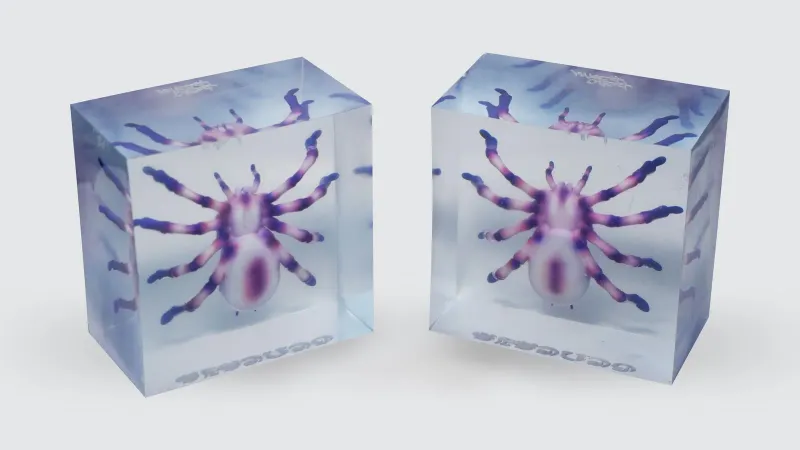
We have cast clear epoxy blocks: twenty moulds poured in one batch around a 3D printed spider, with a torch passed over each pour to lift the bubbles.
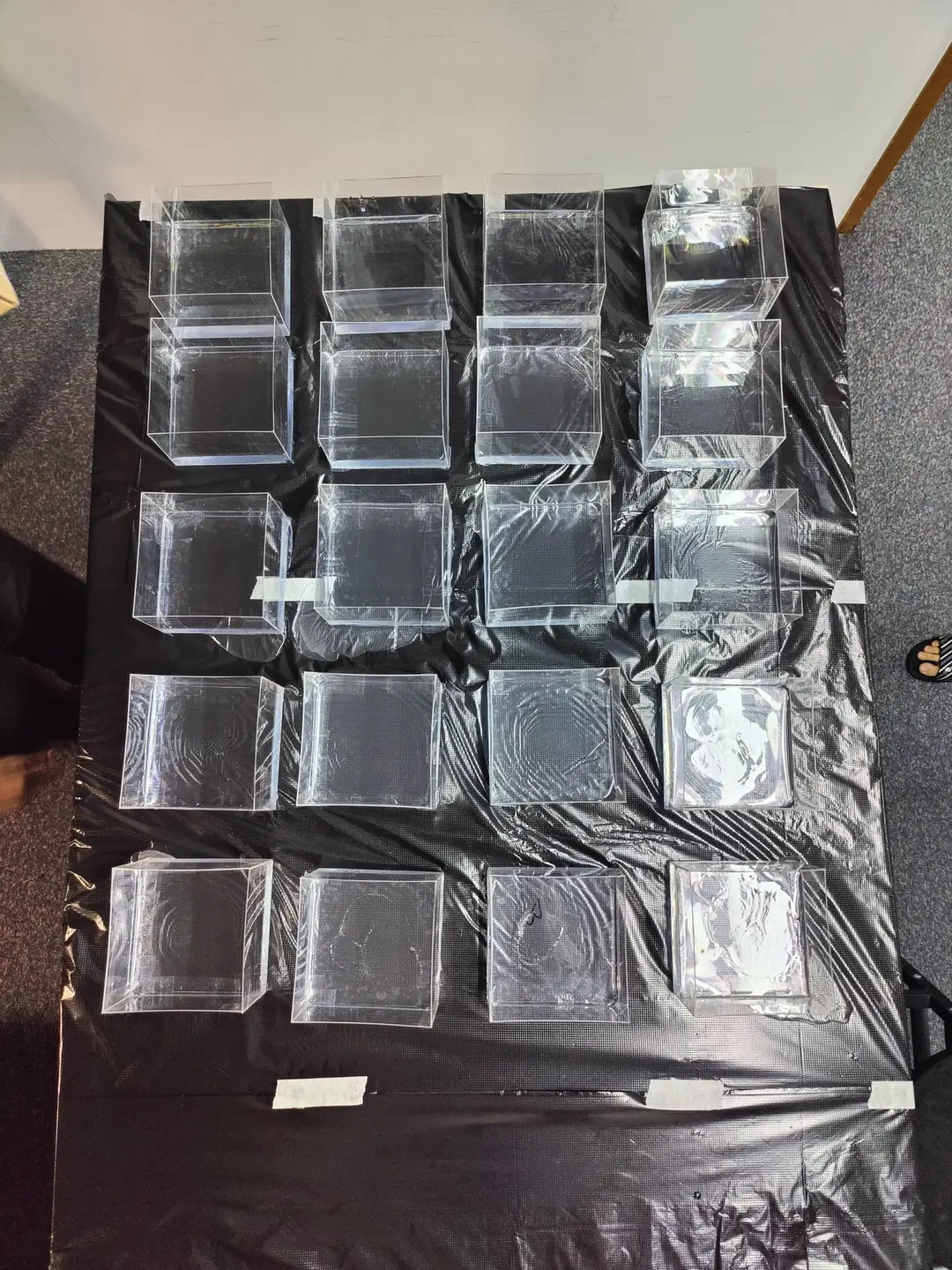
Every product has its own depth, so the data sheet decides. Our service pages do not list river tables.
UV resin for small pieces
UV resin is a craft liquid that a UV lamp hardens. PADICO, a hobby resin maker, says curing starts within a second under its UV-LED light.
- Thin layers. Pour about 3 mm, cure it, and repeat for anything 1 cm or more, or for coloured resin.
- Colour slows it. Coloured resin needs longer under the lamp.
- What to embed. Objects with water or oil in them do not suit it, and neither does chocolate.
- Light leaks. Keep spare resin away from the lamp, and do not work by a sunny window.
- Heat. The resin can get hot as it cures, so let it cool.
Keep it small: a thick block belongs to epoxy. PADICO notes slight discolouration as the resin ages. And UV resin is not UV printing. Our UV print studio prints artwork on acrylic and does not pour resin.
Polyurethane casting resin for copies
Polyurethane casting resin is a two-part liquid plastic that sets in a mould, in minutes for the fastest grades. Smooth-On’s Smooth-Cast 300 mixes one part to one by volume, has a pot life of 3 minutes and can be taken out of the mould in 7 to 10 minutes. Its slower cousins take 30 to 40 minutes and 2 to 4 hours. Its cured plastic is hard, white and can be tinted, machined and painted.
Polyurethane also comes soft. Smooth-On says flexible urethanes run from gel-like to harder than a car tyre, and we cast rubber-like polyurethane from Shore A 40 to 90.
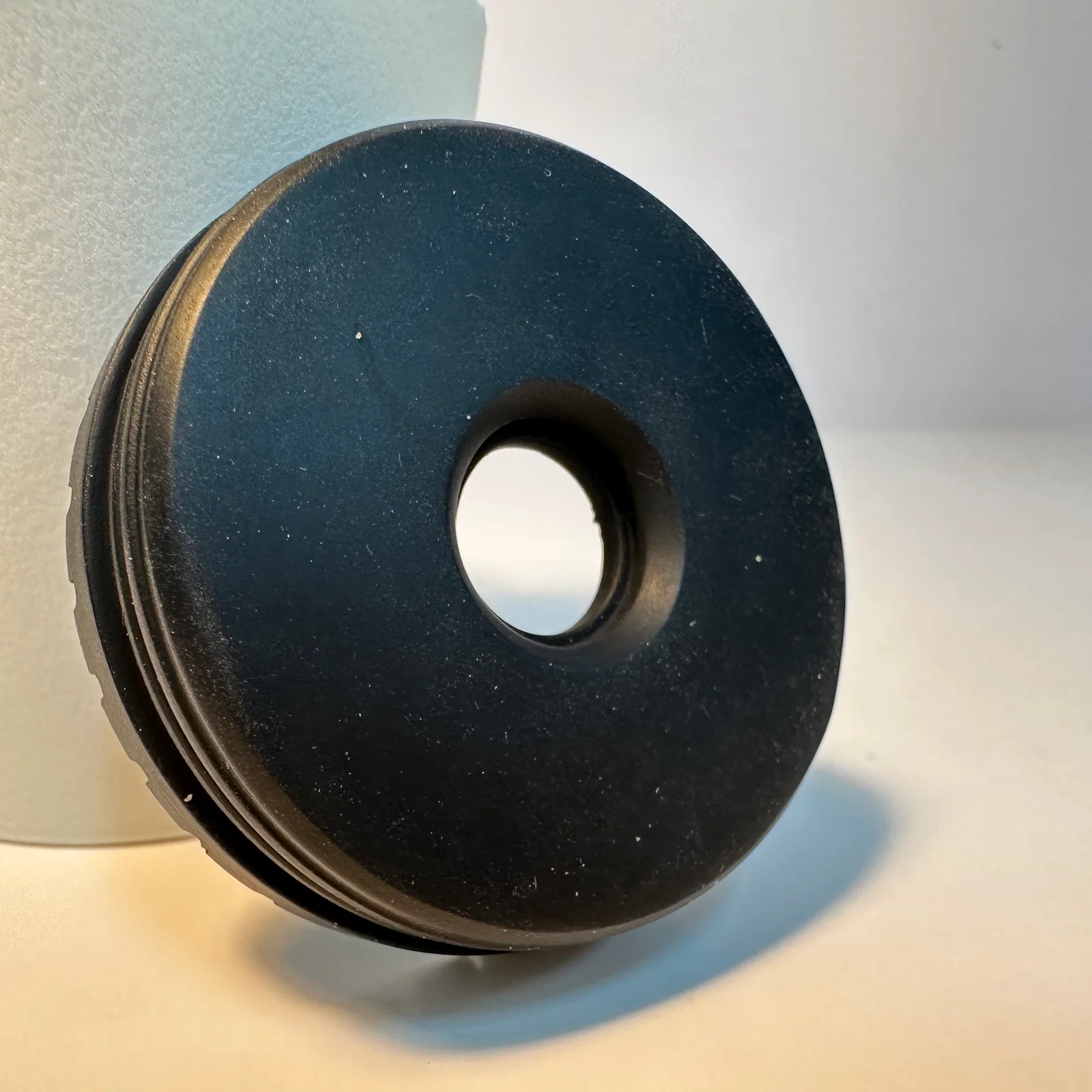
The catch: Smooth-On says to use a release agent on most surfaces (silicone lets it go without one), and that urethanes are sensitive to moisture and may bubble. The usual mould is silicone: see silicone rubber, what vacuum casting is and which vacuum casting material to choose.
3D printing resin for printers
3D printing resin is a photopolymer: a light source cures it into hardened plastic, one thin layer at a time, in a resin printer. Formlabs, a resin printer maker, says the part is then washed, most often in isopropyl alcohol, and some resins need curing further with light and heat.
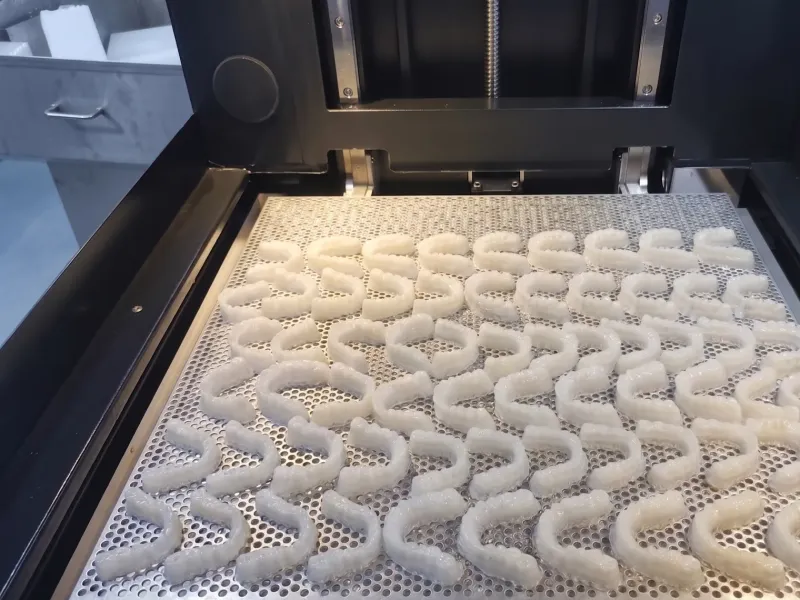
We print in resin on this route, in layers 0.08 to 0.1 mm thick, and we offer standard, tough, clear and high-temperature grades, plus castable resin on request for jewellery and lost-wax masters. Our guides cover which resin to pick, how resin printing works, resin print defects and investment casting, the metal route that a castable pattern leads to.
Standard resin is brittle, and sunlight changes it, so a resin print belongs indoors.
Safety with every resin
All of these are chemicals, and each maker sets its own precautions below. Read the product’s own safety data sheet before you start.
- Resin printing. Formlabs says gloves are for liquid resin and unwashed parts, whatever the material, and calls printing resins sensitisers: repeated exposure may cause an allergy over time.
- Epoxy. WEST SYSTEM, an epoxy maker, lists gloves, eye protection and protective clothing as the minimum. It says breathing partly cured epoxy dust raises the risk of sensitisation, and it wants ventilation when sanding.
- Casting urethane. Smooth-On wants a garage, workshop or basement with good ventilation, and says its liquids are not for children. Some of its clear plastics are for industrial use only.
- UV resin. PADICO says to wear gloves if you have delicate skin or an allergy, and never to look into the UV-LED light.
If a reaction starts, stop using the product. Smooth-On says someone who becomes sensitised to urethane will react every time.
What we make, and what to ask us about
- We print in resin. See our resin printing service.
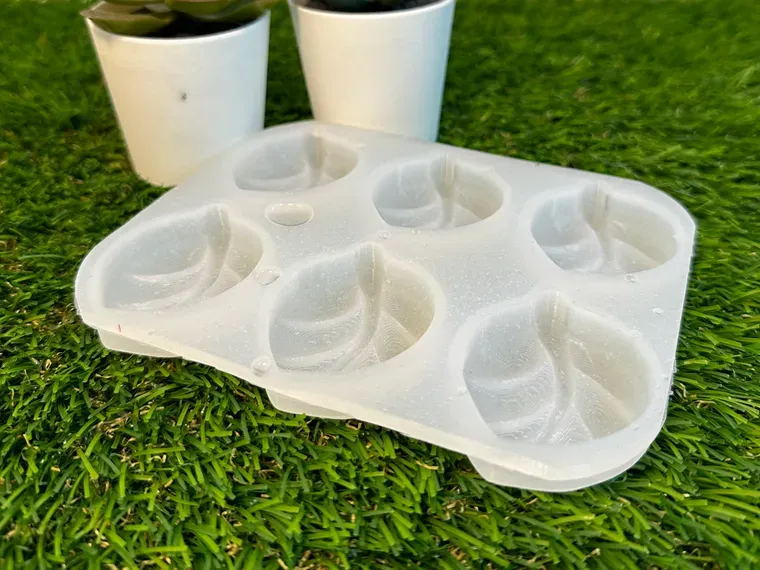
- We cast copies in silicone moulds. Polyurethane and rubber-like parts, from a 3D printed master: see the silicone moulding service.
- We have cast clear epoxy blocks and Jesmonite. The spider blocks were epoxy; our Jesmonite guide covers the mineral casting material.
- Not on our service list. Epoxy tabletops, river tables and UV resin jewellery. Ask us first and say the size.
Where these facts come from
Every figure was read on the maker’s own page on 19 November 2026. Products and data sheets change, so check the one you are buying.
- ArtResin: How thick can I pour ArtResin, Sanding epoxy between coats and its FAQ: working time, cure, layer depth, mould depth, food safety, hardener.
- Smooth-On: EpoxAcast 692 Deep Pour, Smooth-Cast 300, and its FAQs on silicone rubber, polyurethane rubber, safety and SLA prints.
- TotalBoat: How deep can I pour epoxy in a single layer. UltraClear: maximum epoxy layer depth.
- PADICO: UV-LED resin series.
- Formlabs: What is SLA 3D printing and resin safety FAQ.
- WEST SYSTEM: General epoxy safety guidelines.
- Our own pages: the resin printing service, the silicone moulding service and the spider project.
Frequently asked
How long does epoxy resin take to cure?
It depends on the product and the thickness. ArtResin, an art epoxy, is dry to the touch after about 24 hours and fully cured at 72 hours, in a layer about 3 mm thick. Smooth-On's EpoxAcast 692, a deep-pour epoxy, takes 72 hours in a pour 38 mm thick. Read the maker's data sheet for your own resin.
How long can I work with epoxy after mixing it?
ArtResin gives about 45 minutes before it starts to thicken, and warming it cuts that by roughly 10 minutes. Smooth-On lists a pot life of 12 hours for its EpoxAcast 692 deep-pour epoxy. Smooth-On says pot life depends on mass and mould shape, so check the data sheet for your batch size.
Can I add more hardener to make epoxy cure faster?
No. One epoxy maker warns that extra hardener will not speed things up and can cause curing problems. Measure the ratio on the label, by volume or by weight as that product says.
Does epoxy resin turn yellow?
It can. One casting epoxy maker says unpainted epoxy yellows after exposure to UV light or heat above 38°C. An art epoxy maker says its resin carries light stabilisers that slow yellowing, which is slower, not never. Keep a clear piece out of direct sun.
Is epoxy resin food safe?
It depends on the product, so read its own label. One art epoxy maker says its resin is a safe food contact surface when mixed as directed and fully cured. Another maker sells its casting epoxy for industrial use only. If a piece will touch food, ask us before you choose a resin.
Can I pour epoxy into a silicone mould?
Yes, and silicone lets cured resin out easily. One silicone maker says silicone has the best release properties of the mould rubbers. One art epoxy maker says you can pour a little deeper into a mould, but not past about 6 mm, because bubbles stop escaping and the resin heats up.
Can I mould copies of a resin 3D print?
Yes, but the print must be fully cured first or platinum silicone may not set against it. One silicone maker asks for an alcohol wash, then at least 6 hours of UV light, turning the print so every face is lit. See our silicone rubber guide for the details.
Is resin craft safe to do with children around?
Keep children out of the room. One casting maker says its liquids are not for children to use and wants a ventilated workshop, not the home. A UV resin maker says long sessions are inadvisable for pregnant women or the elderly. Gloves for everyone who touches liquid resin.
Is UV resin the same as UV printing?
No. UV resin is a liquid you cure with a lamp. UV printing is our studio printing artwork onto acrylic. The studio at /uv-print takes acrylic only, so it is not the place for a poured resin piece.
Can Additive Inn pour epoxy for me?
We have cast clear epoxy blocks, twenty in one batch around a 3D printed spider. River tables and coating work are not on our service list, so ask first and say the size. For copies of a small shape, we usually cast polyurethane in a silicone mould instead.
Related
-
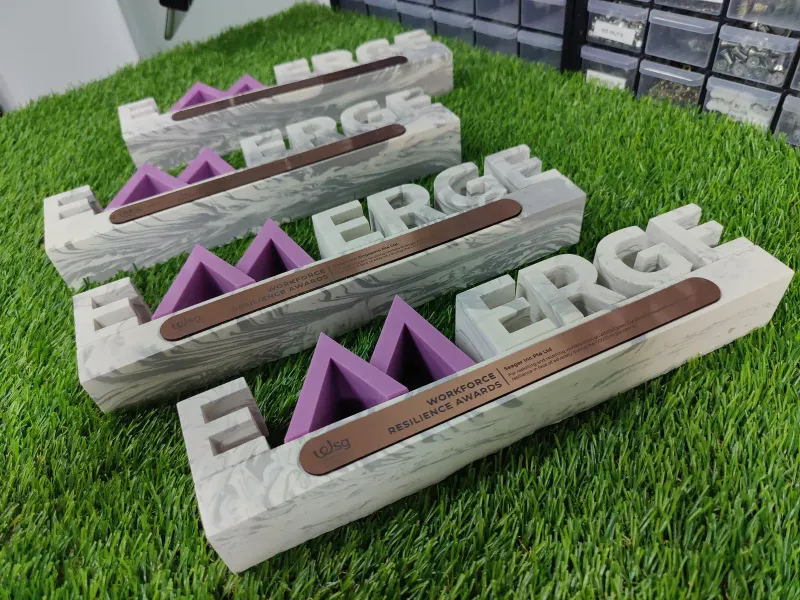 GuideWhat is Jesmonite, and how does it compare with plaster of Paris and resin?
-
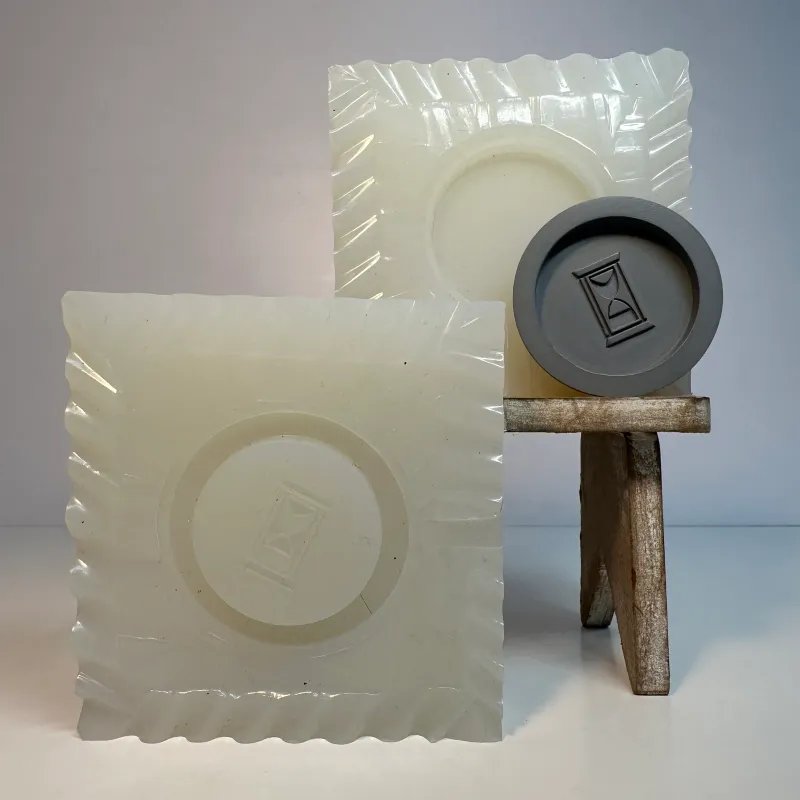 GuideWhich silicone rubber should your mould or soft part be made from?
-
 GuideWhat is vacuum casting, and when should you use it?
-
 ServiceSilicone Moulding & Vacuum Casting
-
 ServiceSLA 3D Printing
-
 ServiceCustom Trophies & Awards
-
 ProjectSpider trophy for Peso Pluma
-
 ProjectMarbled Jesmonite planters and cups
-
 ProjectCast rubber grommet