

Which silicone rubber should your mould or soft part be made from?
Silicone rubber for moulds and soft parts: tin-cure against platinum-cure, Shore hardness, what stops it curing and how many casts one mould gives.
On this page
- Silicone rubber types at a glance
- Tin-cure silicone for short jobs
- Platinum-cure silicone for steady moulds
- Shore hardness in plain words
- What stops silicone from curing
- One-piece or two-piece moulds
- How many casts a mould gives
- Food-safe silicone
- Soft parts: silicone or polyurethane
- Where these facts come from
- Frequently asked
How much silicone for your mould?
Enter your part's size and the wall you want around it. The tool draws the mould box and works out the silicone.
Mould box, inside
80 × 60 × 40mm
192 ml in all
Silicone
156ml
Weight
184g
Mould
One piece
part stands on the floor
A one-piece mould suits a part with a flat side and no deep undercuts, like an ice cube tray (Formlabs).
Weight uses 1.18 g per ml, the specific gravity on one maker's data sheet (Smooth-On's Mold Star 15 SLOW, a platinum-cure silicone). A real silicone's data sheet may differ a little.
The 10 mm wall is Formlabs' figure for the silicone to cover the master with. This tool uses the same thickness on every side, which is a simple assumption, so change it to suit your part.
Silicone rubber is a two-part liquid that cures into a soft, flexible solid. For moulds there are two types: tin-cure, which costs less, and platinum-cure, which holds its shape longer. We pour two-part platinum-cure silicone around 3D printed masters, and the table says when each type is the one to pick.
Silicone rubber types at a glance
| Type | Cures with | Pick it for | Watch out for |
|---|---|---|---|
| Tin-cure silicone | Tin, also called condensation cure | Short jobs and resin casting where cost matters | Shrinks more; the mould ages sooner |
| Platinum-cure silicone | Platinum, also called addition cure | Steady moulds and long shelf life; some grades for food or skin | Costs more; Smooth-On says it will not cure against sulphur |
| Food-contact platinum grades | Platinum, certified by the maker | Baking moulds, chocolate and ice trays | Only the named grades; read the data sheet |
| Polyurethane rubber (not silicone) | Two parts mixed | Soft cast parts and abrasive casting | Sticks to almost anything; is moisture sensitive |
Shore hardness is how much a material resists being pressed in. A lower number is softer, and the A scale covers rubbers.
Tin-cure silicone for short jobs
Smooth-On, a mould rubber maker, says tin-cure silicones are the work horses of the industry, and cost significantly less than platinum. They stand up well to production casting of urethane, epoxy and polyester resins.
The trade-offs, from Smooth-On unless another maker is named:
- Shrinkage. A tin-cure mould shrinks more over time. Formlabs puts it at 1 to 4 percent.
- Shelf life. Some tin-cure moulds last as little as 12 months. One of the maker’s ranges lasts at least 5 years.
- Skin. Smooth-On cites one independent lab test in which no tin-cure silicone passed skin safety.
It is the choice for a mould you need now, for a short run, when cost matters. See the silicone moulding service to order one.
Platinum-cure silicone for steady moulds
Smooth-On says platinum silicones shrink least over the long run and have the longest shelf life of the mould rubbers, measured in decades, at a price to match. Museums use them to mould valuable artefacts. Some platinum grades are certified skin safe or food safe.
Their trade-off is sulphur. Smooth-On says platinum-cure silicone is critically sensitive to it and will not cure at all when it meets it. That is one thing that goes wrong, and the next section has the others.
Our moulds are platinum-cure: our service page describes two-part platinum-cure silicone poured around the master.
Shore hardness in plain words
Smooth-On defines Shore hardness as a material’s resistance to indentation. Three anchors help:
- Shore 40A feels like a pencil eraser, says Formlabs, and 40A to 50A makes a mould that lasts dozens of casts and still bends to free a part.
- Shore 30A or softer suits a fragile original, says Smooth-On, such as a figure with thin arms.
- Shore 70A is as hard as a car tyre, according to Smooth-On, and too stiff for that figure.
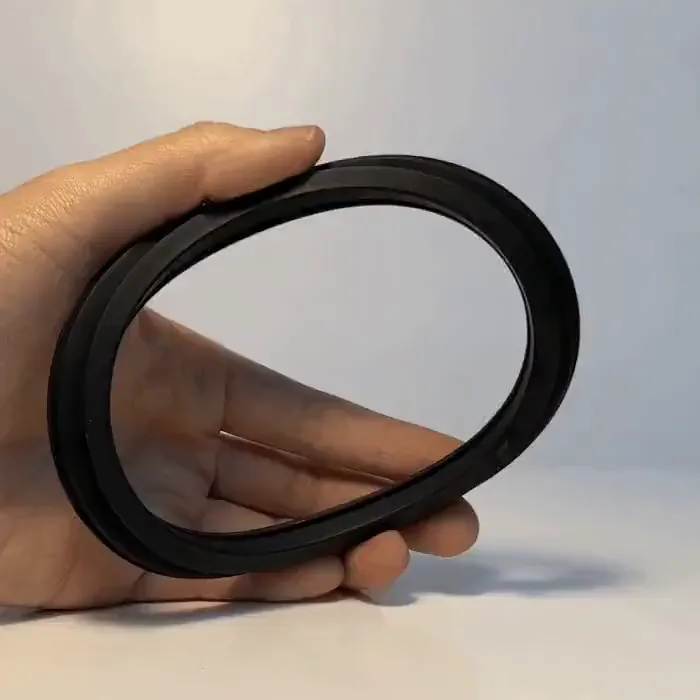
For soft cast parts we offer rubber-like polyurethane from Shore A 40 to 90, and silicone too. Vacuum casting materials shows each.
What stops silicone from curing
Cure inhibition is a surface contaminant stopping the rubber from setting. Smooth-On says it leaves rubber sticky and uncured wherever it touched the model.
- Sulphur clay. Smooth-On says platinum silicone will not cure over it, while tin-cure can if the model is sealed with acrylic spray first.
- Uncured resin. A 3D printed resin master must be fully cured. Smooth-On says to rinse it in 91 percent isopropyl alcohol, wash it with soap and water, then give it a minimum of 6 hours of UV light, turning it so every face is lit.
- Wet sealer. Let it dry about 30 minutes before you pour.
Clear resin cures through better than opaque, and a print that yellows after curing is a sign the light reached it. Tin-cure silicone is less likely to be inhibited by UV resin, though Smooth-On says tin-cure and platinum-cure silicone are not compatible, so a tin-cure mould cannot cast platinum silicone parts.
One-piece or two-piece moulds
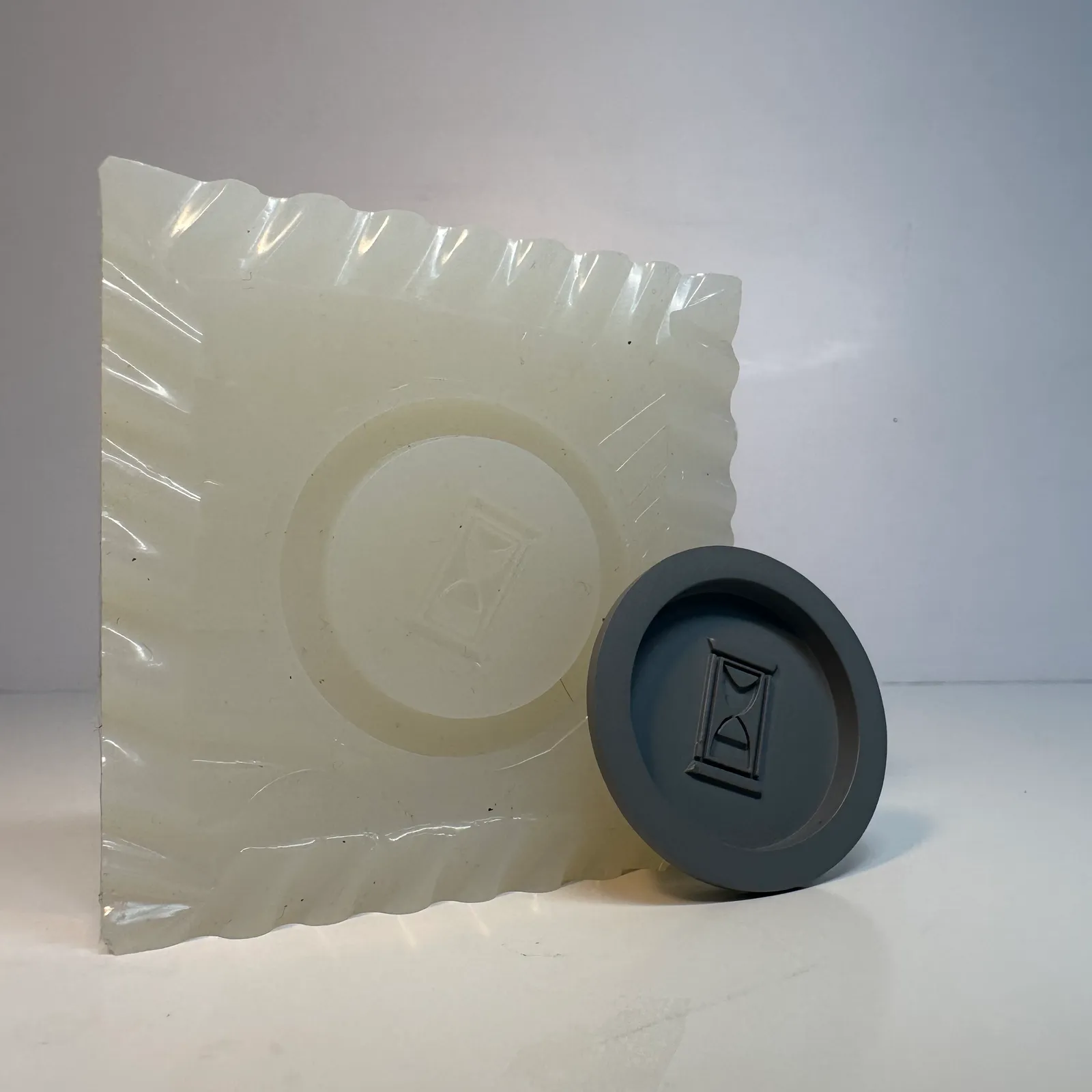
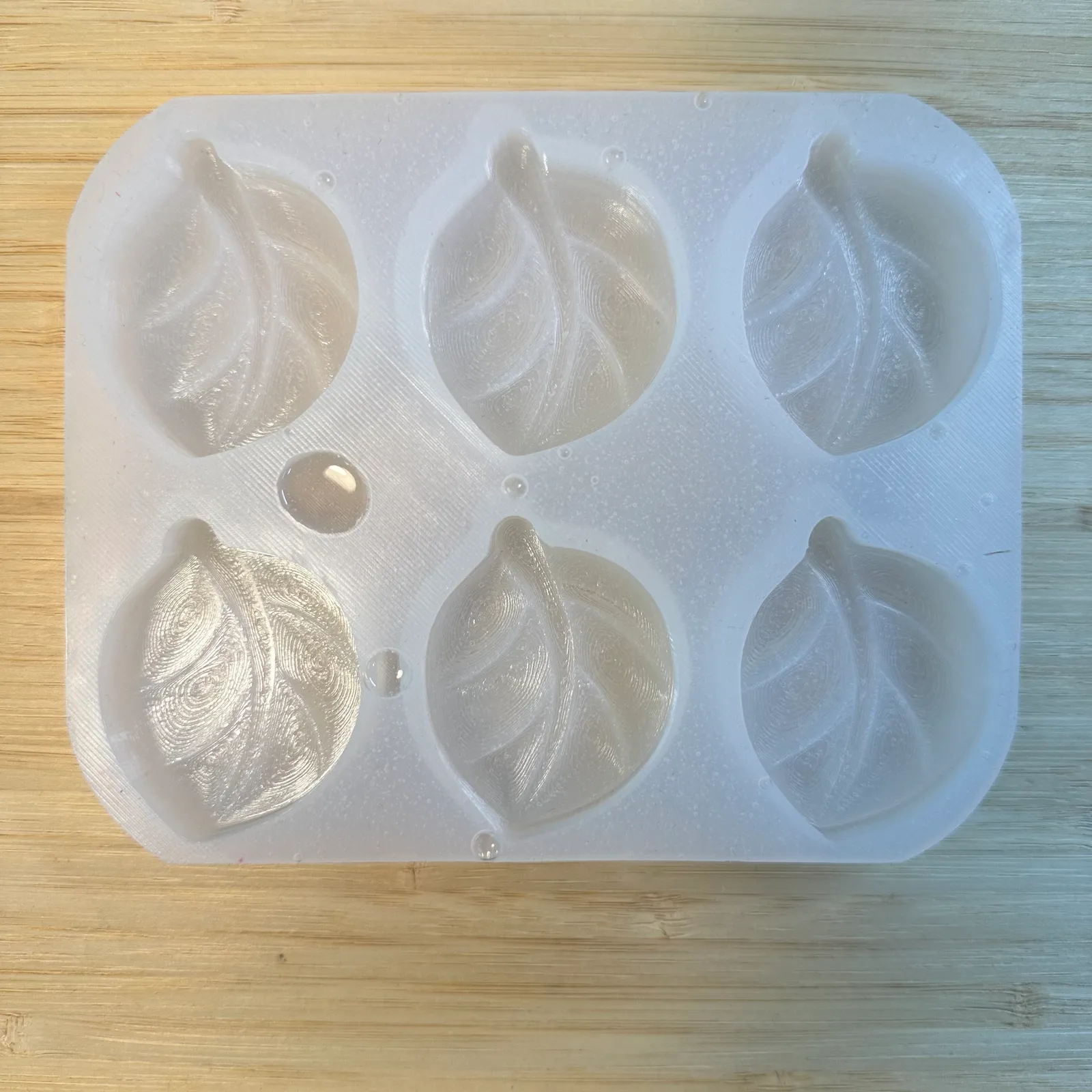
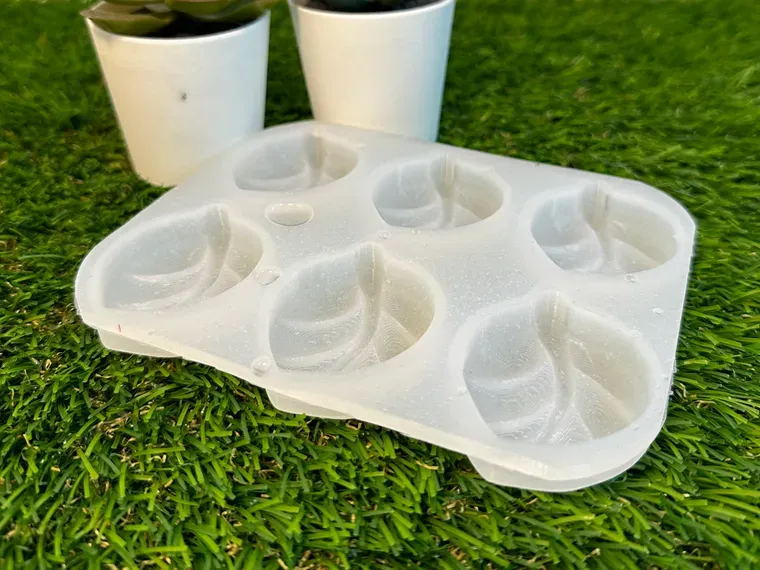
Formlabs says a one-piece mould works like an ice cube tray: it needs a flat side and no deep undercuts. A two-piece mould splits and joins again, so it suits a shape with no flat side or with deep undercuts, at the cost of a seam if the halves do not sit flush. Formlabs also says a silicone mould allows significant undercuts in the part.
We have made both: a six-leaf mould as one block, and an emblem mould in two halves.

How many casts a mould gives
Our figure is 20 to 50 casts from one mould, then fine detail starts to soften. Formlabs puts it at roughly 50. For more, we pour another mould from the same master.
What you cast matters most, says Smooth-On: beeswax can give hundreds, a harsh resin only a handful. A release agent can as much as double the count, and taking the casting out early saves the rubber.
Food-safe silicone
Some platinum silicones are certified for food contact. Smooth-On names several for baking moulds, ice trays and chocolate, and says compliance with the US rule for repeated-use rubber is not the same as FDA approval. The user still has to follow the rules for the food they make.
We cast food-safe silicone for kitchen products. A 3D print itself is not food grade: our bagel mould project notes that a food-contact mould would be vacuum cast or CNC machined instead. Ask us before you plan any food-contact piece.
Soft parts: silicone or polyurethane
Smooth-On says polyurethane rubber costs less than silicone, is simple to mix, and needs no vacuum. It also says polyurethane sticks to almost anything and is sensitive to moisture. Silicone releases best and resists heat, and costs more.
We cast soft parts in rubber-like polyurethane and in silicone. What vacuum casting is explains the process. For the resins that go in the mould, see our epoxy and resin guide.
Where these facts come from
Every figure was read on the maker’s own page on 19 November 2026. Products change, so check the data sheet of the one you buy.
- Smooth-On FAQs: tin-cure against platinum-cure, cure inhibition, silicone rubber, polyurethane rubber, Shore hardness, how many castings, food safe rubber, tin-cure and skin and SLA 3D printed models.
- Formlabs: How to make silicone molds and the guide to vacuum casting.
- Our own pages: the silicone moulding service, the vacuum casting materials guide and the projects linked above.
Frequently asked
What is the difference between tin-cure and platinum-cure silicone?
The metal that makes the rubber set. Smooth-On says tin-cure usually costs a good deal less, shrinks more over time and has a shorter shelf life as a mould. Platinum-cure costs more and is critically sensitive to sulphur, which stops it curing at all. Platinum grades also come certified for food or skin.
Why will my silicone not cure?
Something on the surface of the model is stopping it, which is called cure inhibition. Smooth-On names sulphur in some modelling clays, and uncured resin on a 3D print. The rubber stays sticky where it touched the model. Seal the model and let the sealer dry for about 30 minutes before you pour.
What Shore hardness should a mould be?
Formlabs says a mould of 40A to 50A is durable enough to reuse dozens of times and soft enough to demould awkward parts. Smooth-On says a 70A rubber, as hard as a car tyre, is too stiff for a model with thin arms, and suggests 30A or softer.
Can I make a silicone mould from a resin 3D print?
Yes, if the print is fully cured. Smooth-On's platinum silicones work against most resin prints only when the print has had at least 6 hours of UV light on every face. Tin-cure is less likely to be inhibited by resin, though Smooth-On says a tin-cure mould is no use for casting platinum silicone parts.
How long does a silicone mould last?
There are two clocks. Shelf life: Smooth-On says a tin-cure mould can last as little as 12 months, and a platinum-cure mould decades. Casts: ours give about 20 to 50 each. What you pour in matters, and a release agent can as much as double the count, according to Smooth-On.
Do I need a release agent with silicone?
Usually not for resin. Smooth-On says silicone has the best release of the mould rubbers and needs none when casting resins in production. It does say a release agent can as much as double how many casts a mould gives, so it is worth using on a mould you want to keep.
Is silicone mould rubber food safe?
Only certain grades. Smooth-On names specific platinum silicones certified for food contact and says compliance is not the same as approval. Formlabs tells you to check the maker's safety data sheet. Smooth-On says no tin-cure silicone passed the independent skin safety test it cites.
Can you make a silicone mould of my part?
Yes. We print a master, pour two-part platinum-cure silicone round it, and cast in polyurethane, rubber-like resin or food-safe silicone. Send the file or the part and the number of copies, and a person replies with the route and a price.
Related
-
 GuideWhat is vacuum casting, and when should you use it?
-
 GuideWhich resin do you need: epoxy, UV, polyurethane or 3D printing resin?
-
 GuideWhat is Jesmonite, and how does it compare with plaster of Paris and resin?
-
 ServiceSilicone Moulding & Vacuum Casting
-
 ServiceIndustrial 3D Printing
-
 ServiceProduct Development & Prototyping
-
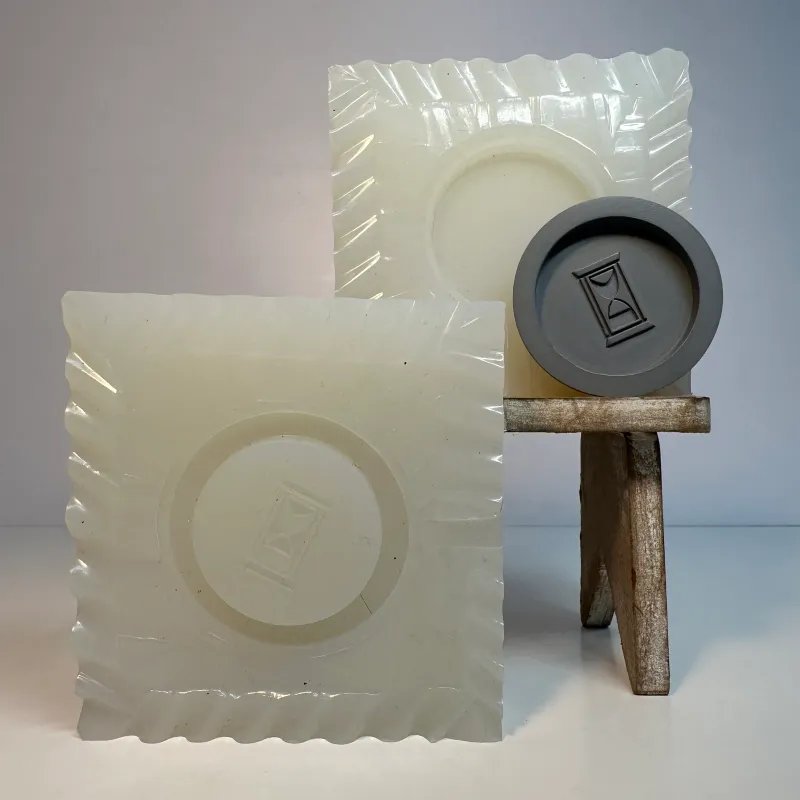 ProjectSilicone mould for a round hourglass emblem
-
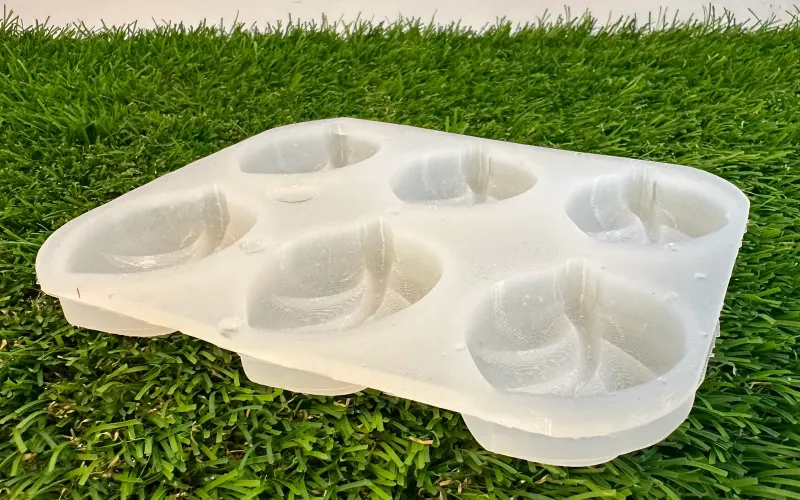 ProjectSix-cavity silicone leaf mould for Four One Eleven
-
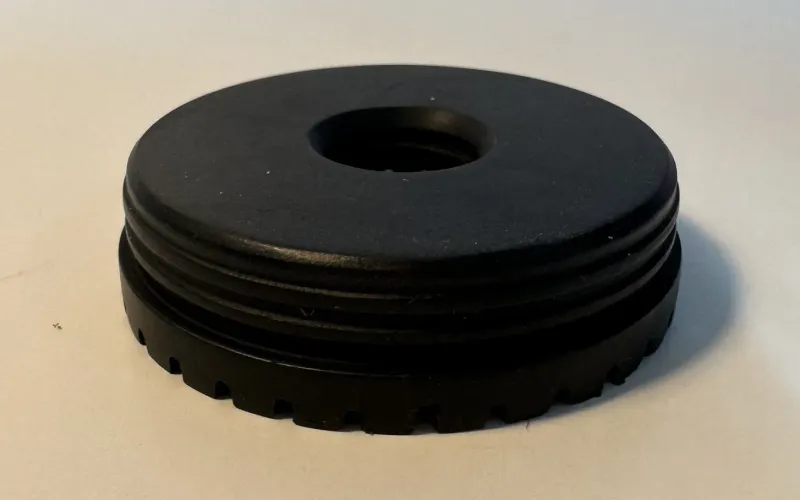 ProjectCast rubber grommet