

Which SLA resin should you choose for your part?
Updated
On this page
- SLA resin types at a glance
- Standard resin: the right pick for most parts
- Strong and tough resin: for parts that get handled
- Fine-detail and accurate resin: for tiny parts and close fits
- High-temperature resin: for parts near heat, figure on request
- Clear resin: frosted or fully clear, finished as you ask
- Rubber-like and chemical-resistant resin: for grips and fluids
- Frequently asked

Choose standard SLA resin for most parts: it holds fine detail and gives the smoothest base for primer, paint and plating. Step up only when the job asks for it: a tough grade for parts that get handled, a fine-detail grade for tiny parts, high-temperature resin near heat, clear resin to see through, rubber-like resin for a soft touch and chemical-resistant resin near fluids.
Every resin below prints on our SLA resin 3D printing line in Singapore, in layers 0.08 to 0.1 mm thick.
SLA resin types at a glance
| Resin | Colours | Best for | Watch out for |
|---|---|---|---|
| Standard | White | Models, figurines, masters, painted or plated parts | Brittle: it cracks rather than bends |
| Strong and tough | Light yellow, yellow or white | Parts that get handled or assembled, the odd snap fit | Still not for a clip that flexes again and again |
| Fine-detail and accurate | Brown (finest surface) or black (accurate and strong) | Tiny detailed parts, masters, parts that must fit closely | The brown grade has the smallest print size |
| High-temperature | Semi-translucent yellow-green | Fixtures and moulds that sit near heat | No temperature figure published: ask us |
| Clear (like acrylic) | Frosted or fully clear | Lenses, light guides, windows, see-through covers | Needs polishing to look like glass |
| Flexible (rubber-like) | White | Soft-touch grips and covers | No flex figure published: tell us how much it must bend |
| Chemical-resistant (like polypropylene) | Semi-translucent | Parts that touch fluids or chemicals | Tell us exactly what it will touch |
| Castable | Ask us | Jewellery and small metal-casting masters | Ask us before you order |
Every resin is for indoors: sunlight turns resin brittle and changes its colour (what heat and sun do to prints).
Source: our resin data sheets, which describe each grade but give no heat or strength figures, so ask us when a number matters.
Standard resin: the right pick for most parts
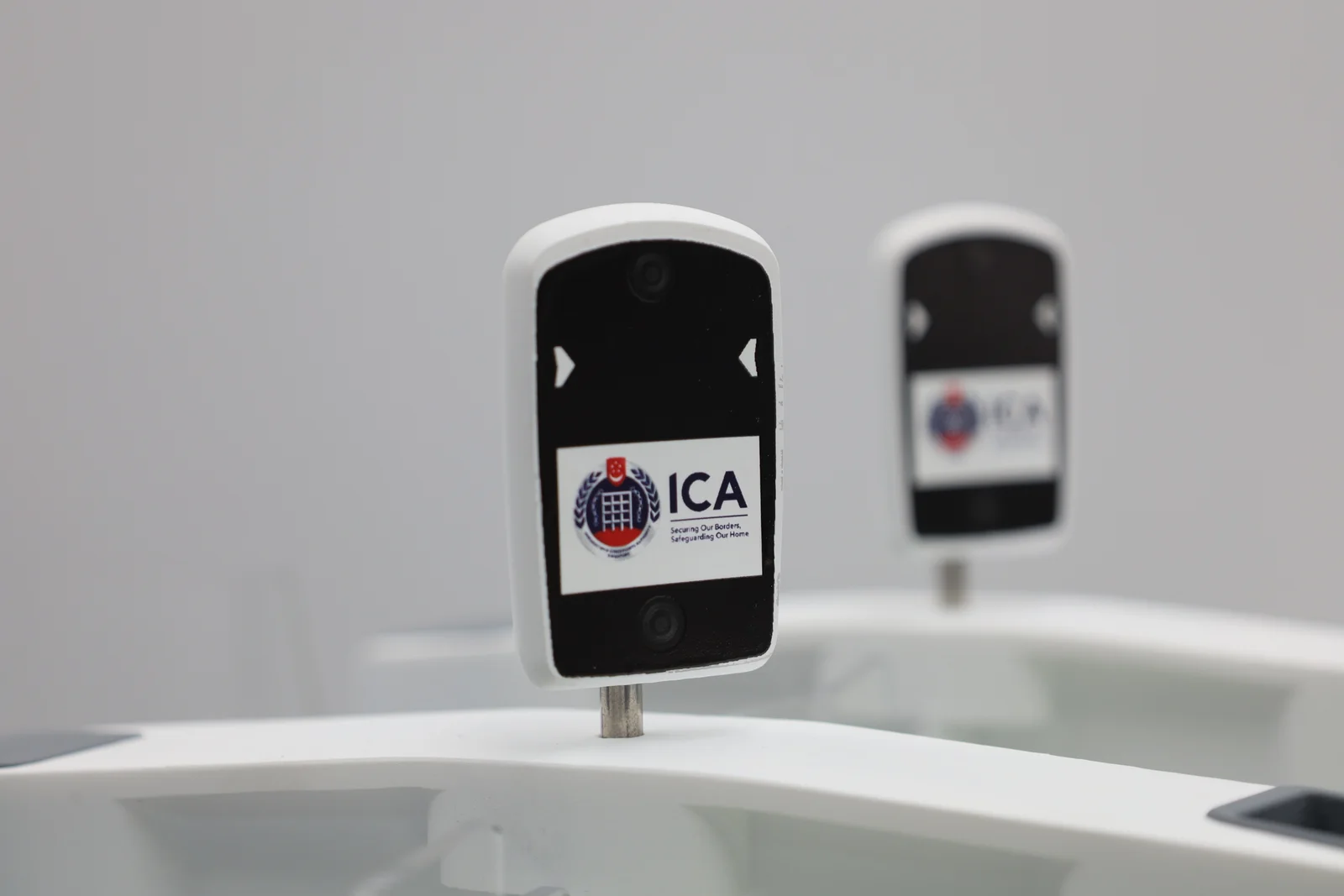
Standard resin carries most of our resin work: figurines, trophies, architectural and scale models, and masters for silicone moulds. It comes off the printer smooth, keeps sharp edges and sands cleanly.
- Painting: every painted part gets a primer first, then colour.
- Plating: resin takes electroplating better than most printed plastics, which is why our chrome and gold trophies start as resin prints.
Its one real limit is brittleness, so it suits parts that are looked at more than they are knocked about.
Strong and tough resin: for parts that get handled
The tough grades keep resin’s smooth surface but stand up to being fitted, carried and passed around. Pick one for parts that are assembled or handled often, and for the occasional snap fit.
Be honest about the load, though. A clip that flexes many times, or a living hinge, breaks in any resin. Nylon powder, printed by selective laser sintering (SLS), is built for that. Our guide to clips that snap in resin shows how to design a clip that lasts.
Fine-detail and accurate resin: for tiny parts and close fits
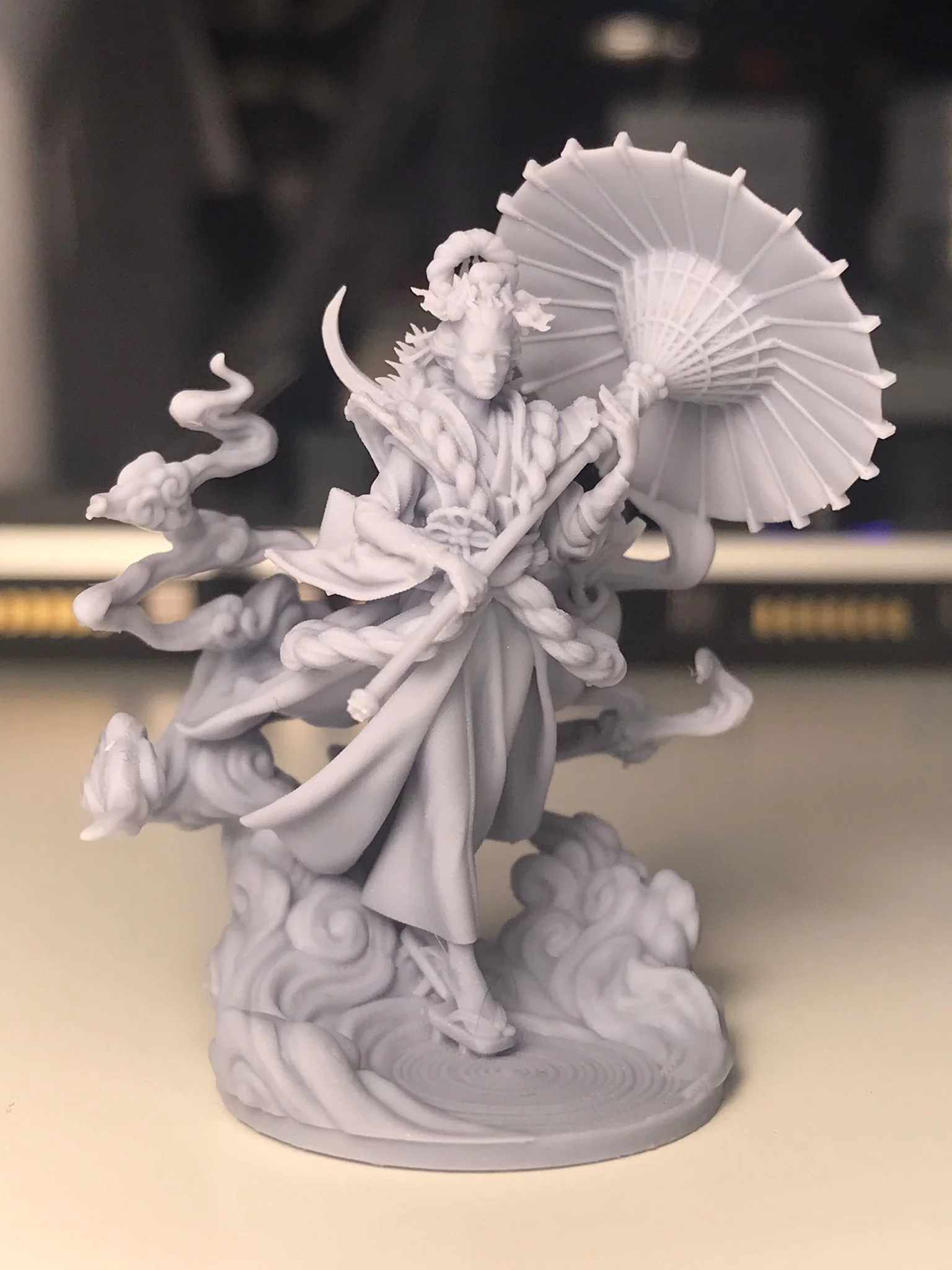
Two grades go further than standard. The brown one gives the finest surface, with crisp edges and corners. The black one is highly accurate and strong too, so it suits parts that must fit closely.
Pick them for miniatures, small masters and pieces that slot into something else. The brown grade prints up to 600 x 600 x 400 mm, the smallest of the range.
High-temperature resin: for parts near heat, figure on request
This semi-translucent yellow-green resin is made for fixtures and moulds that sit near warmth. Our data sheet says it resists high temperatures but gives no figure, so tell us how hot the part will get and we check it before we print.
Like every resin, it still belongs indoors and out of the sun.
Clear resin: frosted or fully clear, finished as you ask
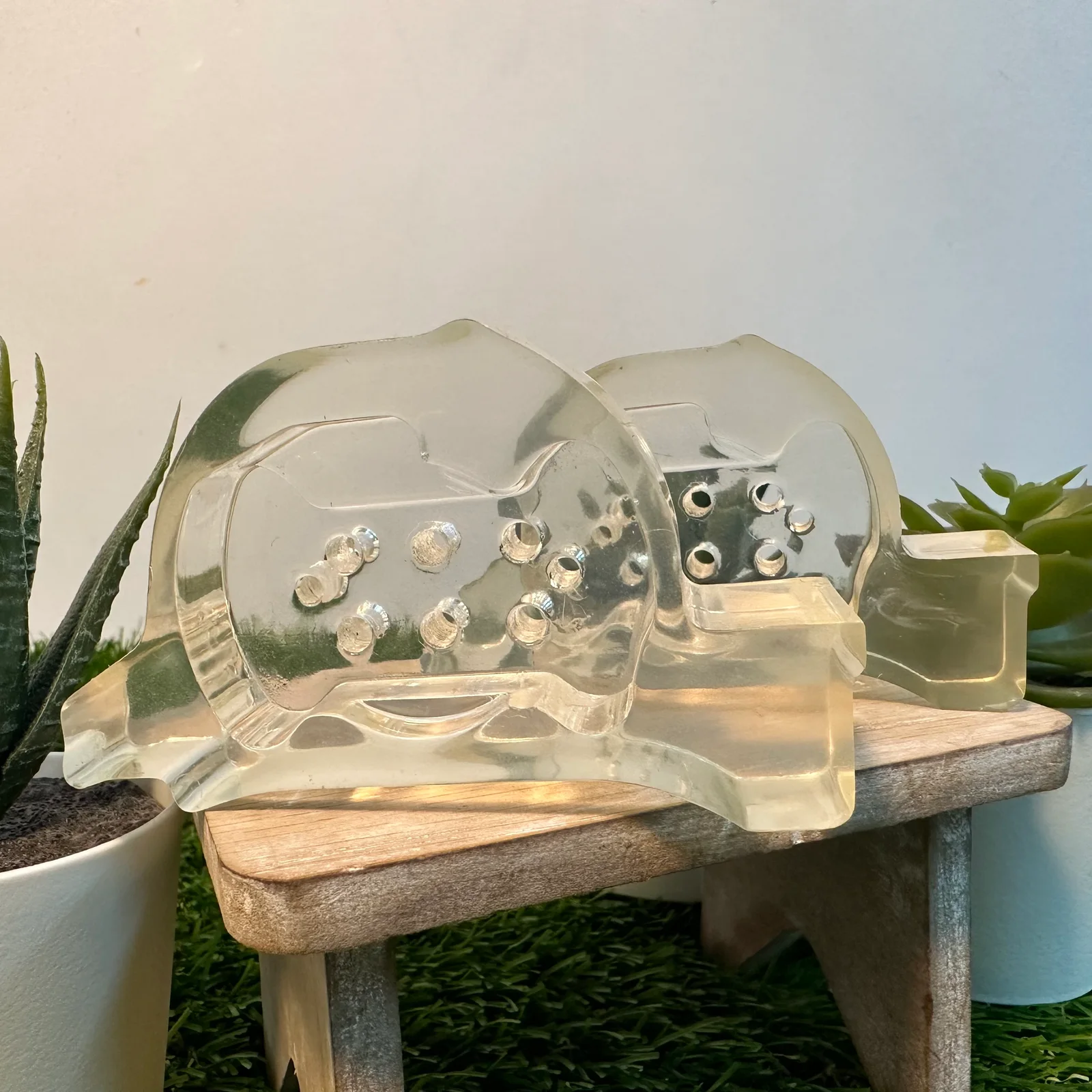
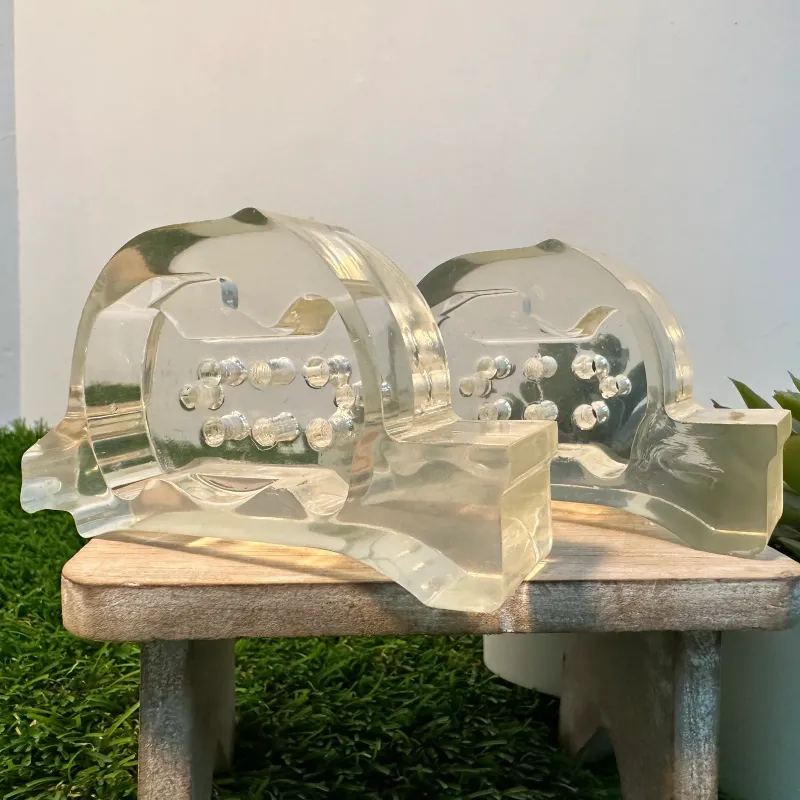
Clear resin (called PMMA-like, after acrylic) comes in two grades. The frosted one looks like frosted glass: light passes, detail does not. The fully clear one is for lenses, light guides, windows and covers you look through.
Even the fully clear grade comes off the printer translucent rather than window-clear. We finish it polished clear or frosted, whichever you ask for: wet-sanding, polishing and a clear coat take it close to glass on the faces we can reach. Clear resin also yellows slowly over time, faster in a window. Our transparent parts guide covers how clear each route gets, including when laser-cut acrylic beats printing.
Rubber-like and chemical-resistant resin: for grips and fluids
The rubber-like resin is white and flexible, for grips, soft covers and parts that need some give. For a truly rubbery part that stretches, TPU filament is often the better fit (filaments compared).
The chemical-resistant resin (called PP-like, after polypropylene) is semi-translucent and made to resist chemicals, for parts that touch fluids. Tell us exactly what the part will touch, and for how long, and we check it against the data sheet.
Still weighing resin against filament, nylon or metal? The materials guide compares them all.
Frequently asked
What SLA resins do you offer in Singapore?
We print seven families of SLA resin in Singapore: standard, strong and tough, fine-detail and accurate, high-temperature, clear (frosted or fully clear), flexible rubber-like and chemical-resistant PP-like, plus castable resin for jewellery masters on request (ask us). Standard resin suits most parts. Tell us what the part has to do and we match the resin rather than guess.
Does resin go yellow or brittle?
Resin goes brittle and changes colour in sunlight, so a resin part belongs indoors. Clear resin also yellows and hazes slowly over time, faster in a window. If the part has to sit in sun, say so when you send the file (a UV-blocking clear coat may help: check with us) and we suggest a material that suits it.
Is resin strong enough?
Resin is strong enough for models, display pieces and parts that are handled with care, but standard resin is brittle: it cracks rather than bends when it is hit or flexed. A tough grade suits parts that get handled, assembled or clipped together now and then. For a clip or hinge that flexes again and again, nylon powder printing is the better choice.
Which resin is best for painting and plating?
Standard resin is the best base for painting and plating, because it prints smooth and sands cleanly. Every painted resin part gets a primer first, then colour. Resin also takes electroplating better than most printed plastics, which is why our chrome, gold and copper trophies start as resin prints.
Are clear resin prints actually transparent?
Clear resin prints come off the printer translucent, not window-clear. We finish them polished clear or frosted, as you ask: wet-sanding, polishing and a clear coat take them close to glass on the faces we can reach. The frosted grade stays like frosted glass, letting light through without showing detail.
How much heat can a resin part take?
Ordinary resin parts are for room temperature, and our resin data sheets give no softening figure for any grade. For a part that sits near heat we use a high-temperature resin, made for that job. Tell us the temperature the part will see and we check it against the resin before we print.
How big can one resin part be?
One resin part can be up to 1700 x 800 x 600 mm in standard, rubber-like and the white tough resins. The yellow tough grades go up to 1200 x 800 x 600 mm; clear, black accurate, high-temperature and chemical-resistant resin to 800 x 800 x 500 mm; and the brown fine-detail resin to 600 x 600 x 400 mm. Bigger parts are printed in pieces and joined.
How long does SLA resin printing take?
A normal-size resin part, about 10 to 15 cm across, takes 4 to 7 working days. A painted or plated part takes 12 to 18 working days. Large parts take longer, so check with us if you have a date to hit.
Related
-
 GuideWhich 3D printing material should you choose?
 -
 GuideWhich resin (SLA) print defects can you fix in the design?
 -
 GuideHow clear can a 3D printed part get?
 -
 ServiceSLA 3D Printing
 -
 ServiceColour Application & Finishing
 -
 ProjectICA Automated Border Clearance Gate Model
 -
 ProjectCoin-Sized Princess Miniature
 -
 ProjectTransparent Embossed Dome