

Bambu Filaments
Genuine Bambu Lab filament in Singapore: PLA, PETG, ABS, TPU and carbon-fibre blends, plus a buying guide. Self-collect or islandwide delivery.
Which Bambu Lab filament should you use?
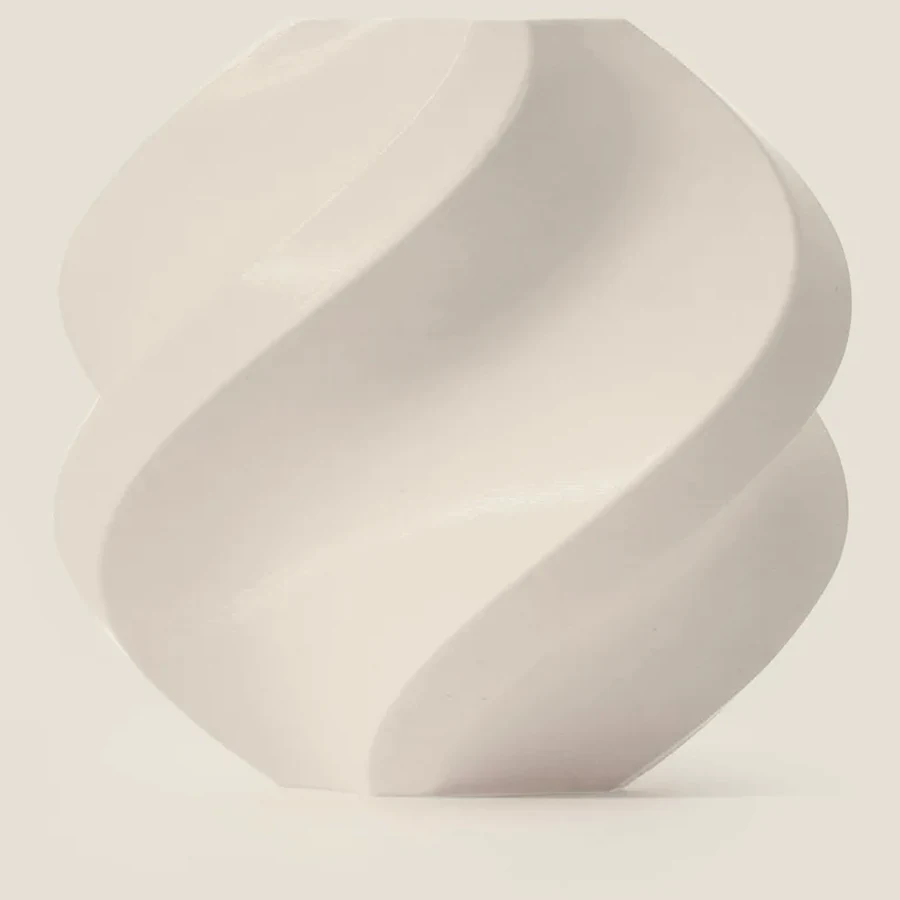
For everyday prints, prototypes, toys and brackets, reach for PLA Basic. It’s the easiest filament to print, beginner-friendly, with a smooth finish and the widest colour range we stock. Want the print to look less like plastic? PLA Matte hides layer lines and reads as moulded rather than printed; PLA Silk+ goes the other way, with a glossy, chrome-like sheen for vases and display pieces. All PLA softens around 50°C, so it isn’t the pick for anything living in the sun.
If the part has a job to do, a bracket, an outdoor fitting, anything that needs to flex without snapping, move up to PETG. It’s tougher and more heat- and weather-resistant than PLA, and it’s the practical default for functional prints.
Need real heat resistance and a finish you can sand, glue or vapour-smooth? ABS softens only from about 85°C under load and is the best material here for post-processing, but it needs an enclosed printer, since it warps badly in open air. ASA is the same idea built for outdoors: Bambu Lab rates it highest for UV and weather resistance.
For flexible parts, phone cases, gaskets, grips and feet, TPU is the family. TPU 95A HF is firm and fast to print, the sensible one to start with. TPU 85A is much softer, closer to a rubber band, and needs a 0.6 or 0.8 mm nozzle. TPU for AMS is the only flexible filament that runs through an AMS, so it’s the one for multi-colour flexible prints without hand-feeding the spool.
Building something that has to carry load, jigs, brackets, gears, drone frames? The carbon-fibre and engineering blends step in. PLA-CF is the gentlest introduction to fibre-filled printing; PC is the toughest everyday material in the range; PA6-CF and PAHT-CF are nylons for parts that wear against something else; PPA-CF and PPS-CF sit at the top for genuine metal-replacement work. All of these need a hardened-steel nozzle.
Printing complex overhangs or captured parts? PVA dissolves completely in tap water; Support Filament peels away by hand and costs less, for anywhere fingers can reach.
We keep every material in stock in Singapore: self-collect at Bendemeer, or we’ll courier it to you islandwide.
Frequently asked questions
What’s the difference between PLA and PETG?
PLA is easier to print and has the widest colour range; PETG is tougher, more heat-resistant and better outdoors. Use PLA for shelf models, PETG for parts with a job to do.
Do I need an enclosed printer for ABS?
Yes. ABS and ASA both need an enclosed, heated-bed printer; printed in the open, they warp and split apart as they cool.
Which filaments need a hardened nozzle?
The carbon-fibre and engineering blends: PLA-CF, PETG-CF, PC, PA6-CF, PAHT-CF, PPA-CF and PPS-CF. A standard stainless nozzle wears out quickly on these.
Which TPU works with an AMS?
Only TPU for AMS. TPU 95A HF and TPU 85A have to run from an external spool holder, not through the AMS.