

What is investment casting, and how does it differ from sand casting?
Investment (lost wax) casting and sand casting compared: detail, finish and size, where 3D printed patterns fit, and what we make instead of cast metal.
Which casting route fits your part?
Two questions, and you get the route from this guide that fits.
Investment casting, also called lost wax casting, makes a metal part by pouring metal into a ceramic shell built around a wax pattern. Sand casting pours metal into packed sand instead, and suits bigger, rougher parts. 3D printing comes in at the pattern: a printed part in wax or castable resin can stand in for the hand-carved one.
Casting methods side by side
| Method | How the mould is made | Detail and finish | Size it suits | Where 3D printing fits |
|---|---|---|---|---|
| Investment (lost wax) | A ceramic shell baked over a pattern that burns away | Fine detail and thin sections, good surface | Smaller parts: one-piece size and weight are limited | Prints the pattern in castable resin or wax |
| Sand | Sand packed around a pattern you can reuse | Coarse detail, surface cannot be particularly fine | A few grams up to tons | Can print the pattern the sand is packed around |
| Die | A hardened steel tool, machined to shape | High precision, but the steel tool is costly | Large runs of the same part | Not at the pattern stage, because the tool is machined steel |
Investment casting: wax in, metal out
A wax pattern is made. For jewellery or one-offs it is often carved by hand; for volume it comes from a steel tool that wax is shot into; and small ones can now be 3D printed. The pattern is dipped in ceramic slurry, dusted with a dry powder, and dipped again until the shell is thick enough. Each layer needs several hours to dry.
The shell is then baked. The wax burns out, which is why the process is called lost wax, and the baked ceramic is left as a hollow the exact shape of the pattern. Metal is poured in. When it has cooled the shell is broken away, the channels the metal ran through are cut off, and the marks are ground and polished.
Xometry puts the strength of the method plainly: it is renowned for combining precision and fine detail without the up-front cost of a die casting tool. The Investment Casting Institute adds that the process was first developed by ancient Chinese and Egyptian cultures to make art, and was used mainly for art until the jet engine was developed at the end of the Second World War.
Pick it for: jewellery, small parts with thin walls, and shapes with a lot of surface detail.
Its limits:
- There are many steps, and each is a place for something to go wrong.
- A one-off costs more than the same part in sand.
- One-piece size and weight are more limited than in sand.
Sand casting: packed sand and a pattern
A pattern, made of wood or printed, is set in the lower half of a two-part box and sand is packed round it. The pattern is lifted out, and the two halves close over the empty shape. Metal is poured in through a channel. Once it has cooled, the sand is broken away.
Xometry says that, with a pattern made, setting up the cavity can take as little as an hour or less when the process is well established. The method works on parts from a few grams to several tons, in nearly any metal.
Pick it for: large or chunky parts, and one-offs where a rough surface is fine and will be machined or ground afterwards.
Its limits:
- Xometry lists the surface finish as one that cannot be particularly fine.
- Accuracy and repeatability can vary from one casting to the next.
- It keeps only relatively thick sections and coarse detail.
Where 3D printing fits
Printing replaces the carving. Formlabs, a resin printer maker, sells castable resins for the job. One is a resin “designed for investment casting, to directly print patterns that can be invested and cast”, with low ash. Low ash matters because the pattern has to burn out of the shell and leave nothing behind.
Castable resin for jewellery and lost wax masters is on our resin list, and our resin guide says to ask us before you order: tell us the size and the thinnest wall. Our guide to resin types shows where it sits among the other resins, and the resin printing service page covers what we print.
Two honest points. We have not listed pouring metal as a service, so ask us before you plan around it, or arrange the casting with a foundry. And because the pattern is lost, every casting needs a new pattern.
When we print the metal look instead
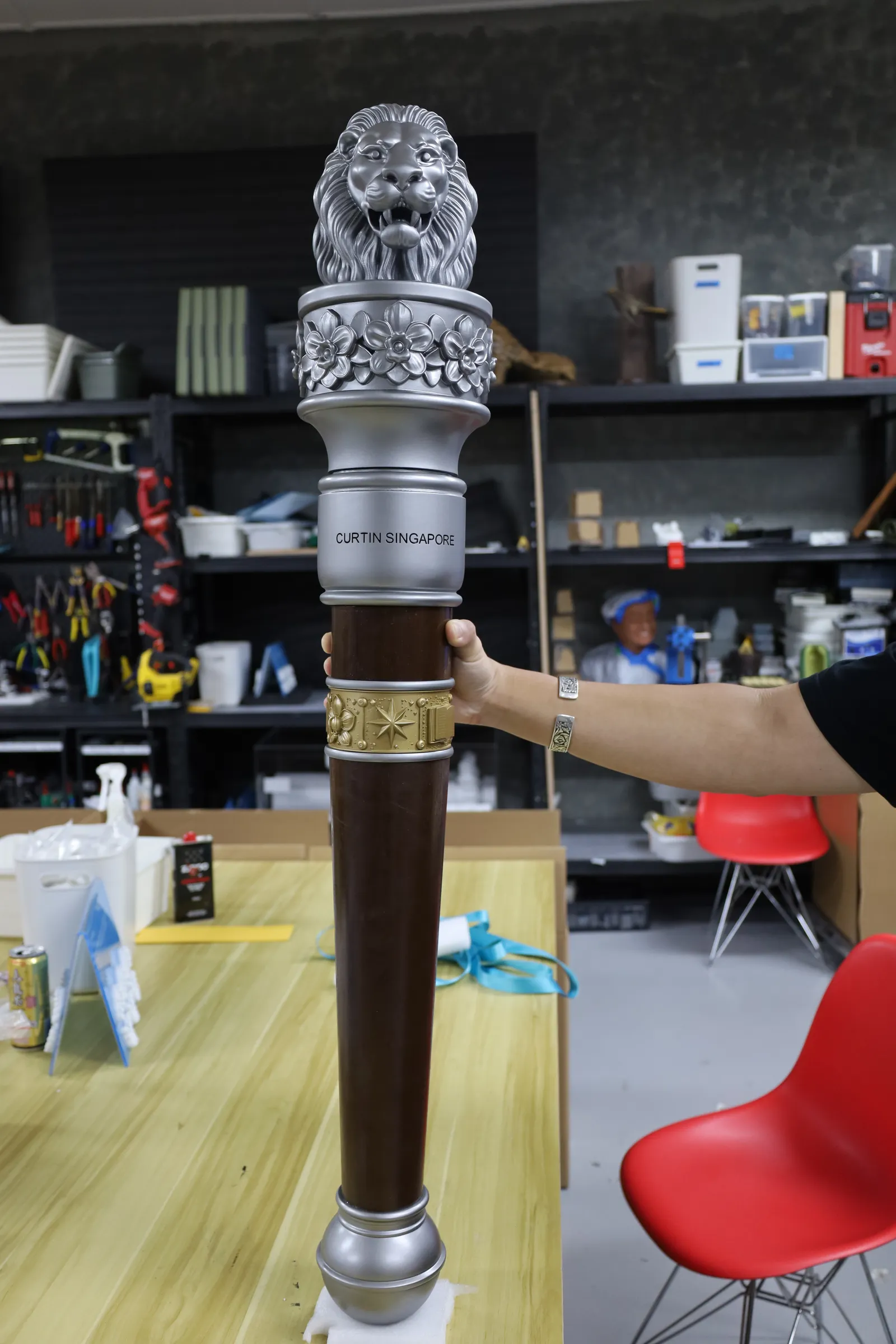
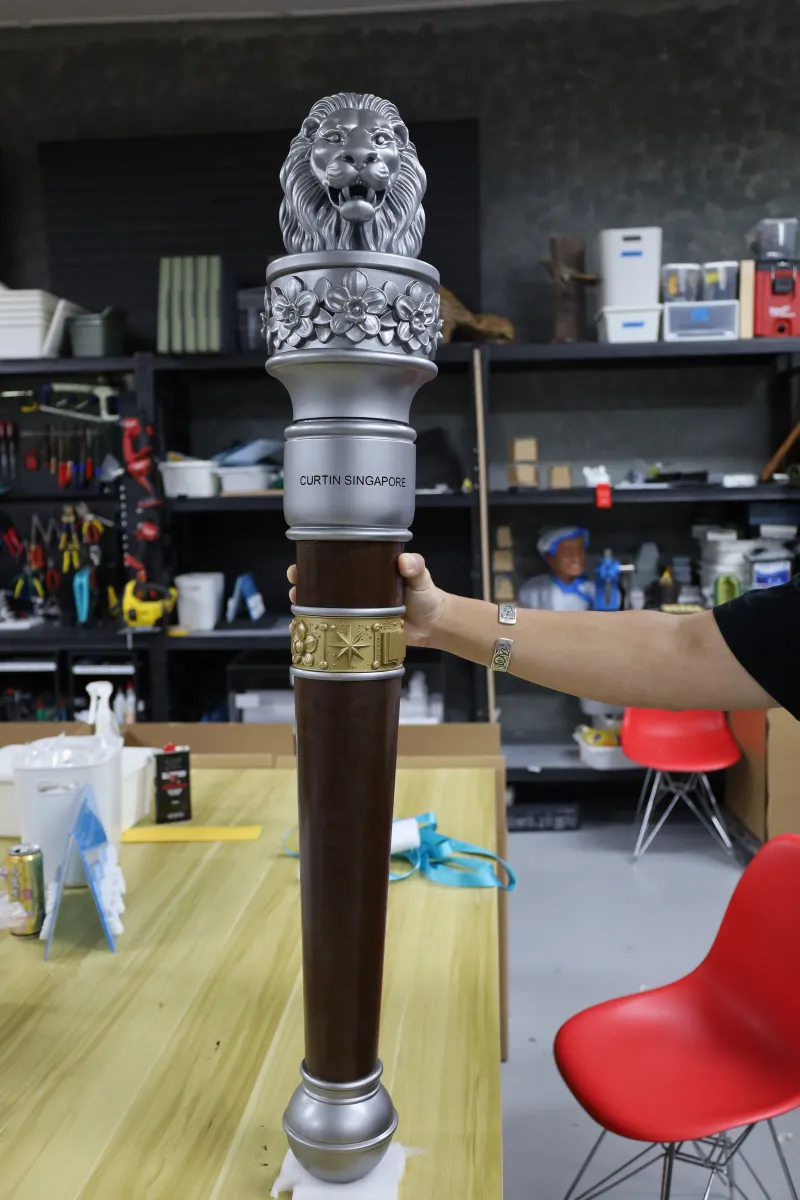
Many jobs that start as “can you cast it?” are really “can it look like metal?”. For those we print the part in resin and finish it. The Curtin Singapore mace has a lion head, orchid collar and pommel printed in resin and finished in metallic silver. It is a printed part, not a casting.
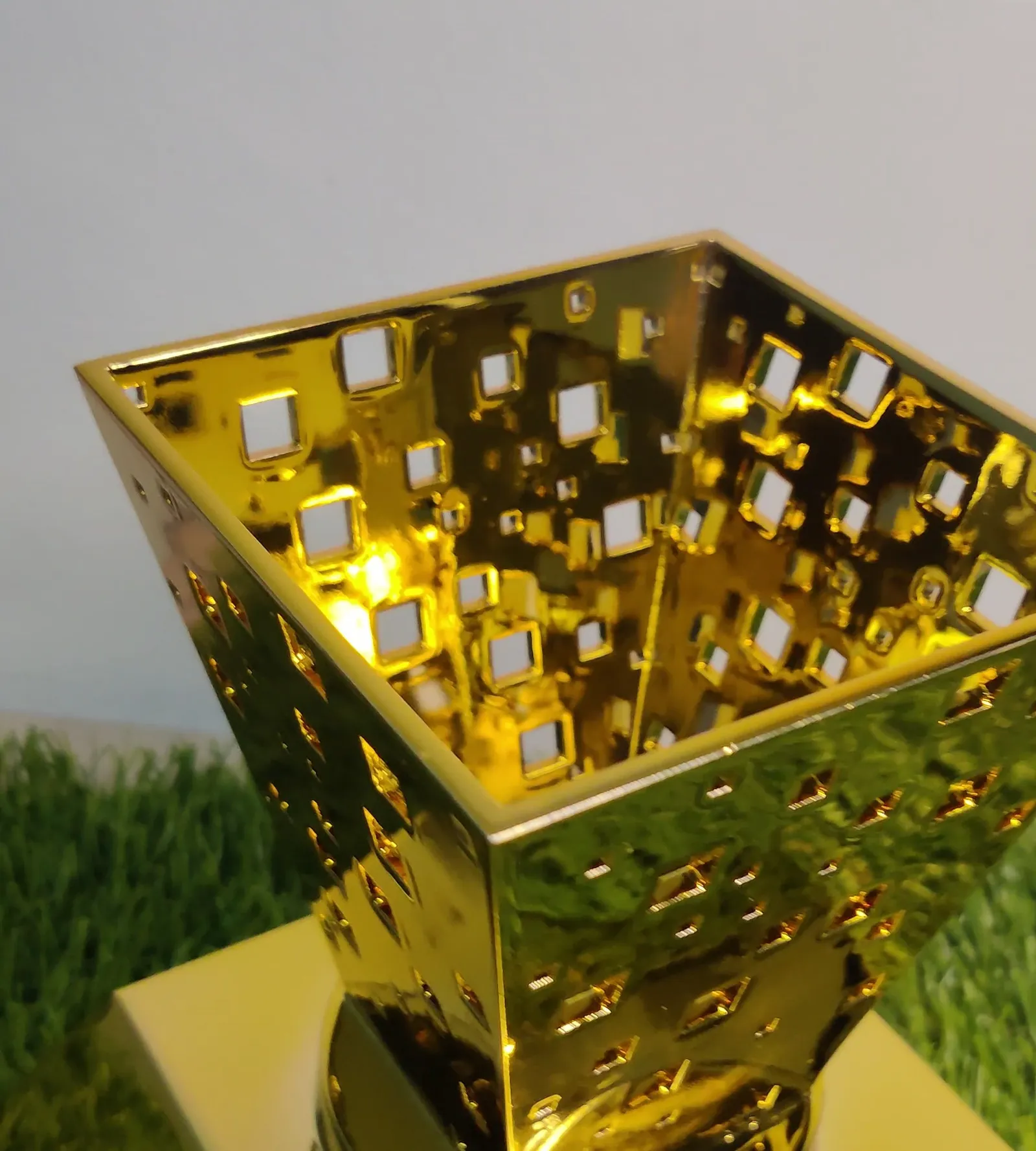
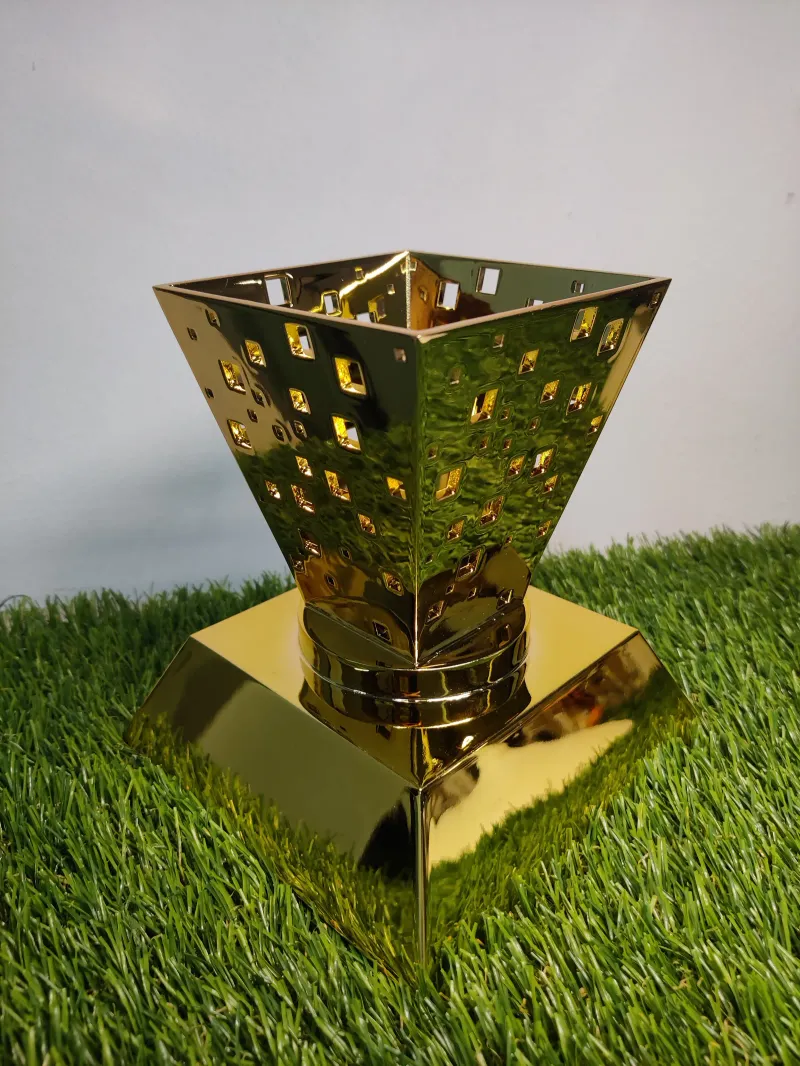
Plating goes a step further. In the trophy below, a printed resin urn was electroplated in mirror gold, inside and out. Our electroplating guide explains the finish.
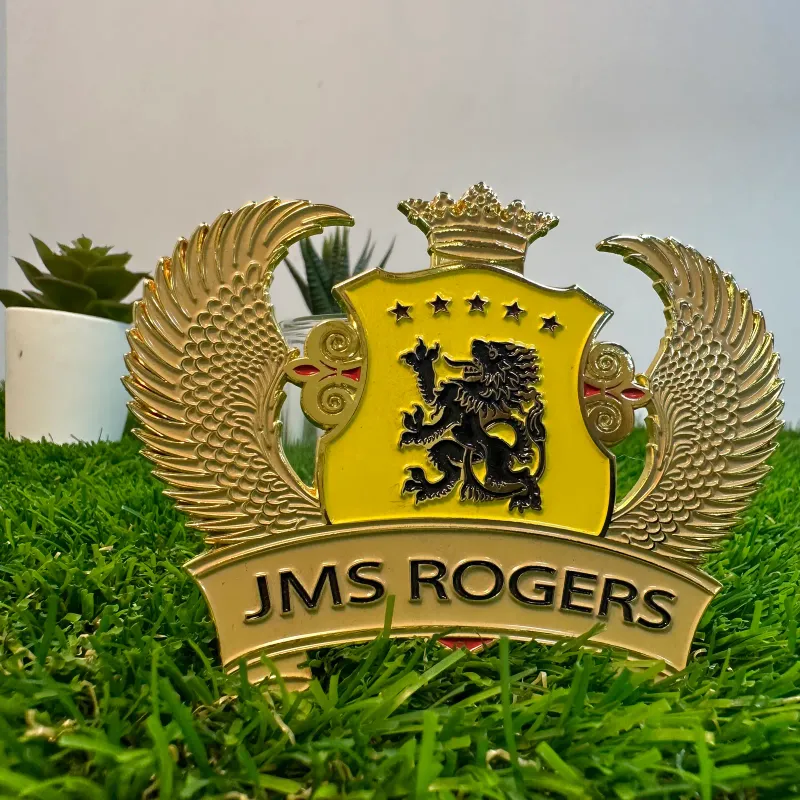
When it has to be solid metal, we also print stainless steel, aluminium and titanium: see metal 3D printing and the metal materials guide. The hero photo shows a different route again: die-cast zinc emblems we delivered for JMS Rogers. Its project page says they were made from the client’s vector logo and that the proof was approved before tooling began.
Casting in plastic, not metal
If copies in plastic will do, a printed original can go into a silicone mould and be cast in polyurethane. That route suits 20 to a few hundred copies. It is covered in our vacuum casting guide, and the epoxy resin guide covers resins you can pour yourself.
Where these facts come from
Every outside fact was read on the page named below on 19 November 2026. Casting methods vary by foundry, so ask a foundry about its own limits.
- Xometry, Investment Casting and Sand Casting: how each process works, how the cavities are made, and the detail, finish, size and cost trade-offs.
- Investment Casting Institute, What is Investment Casting?: where the process came from.
- Formlabs, materials: castable resins and what they are designed for.
- What we make, offer and have delivered comes from our own project and service pages and the resin types guide.
Frequently asked
Is lost wax casting the same as investment casting?
In practice, yes. Xometry, a manufacturing network, treats lost wax as the other name for investment casting. The wax is lost because it is burned out of the ceramic shell before the metal goes in.
Can a 3D printed part be used as the pattern?
Yes. Resin makers sell castable resins made to burn out with little ash, and a printed pattern can also be the master that sand is packed around. We print castable resin on request, so ask us before you order.
Do you pour metal yourselves?
We have not listed metal pouring as a service, so do not plan around it without asking. What we do offer is metal 3D printing, plated resin prints and silicone-mould casting in plastic.
Why does one casting use up one pattern?
In investment casting the pattern is burned away to leave the cavity, so every casting needs its own pattern. That is why a printed pattern suits one-offs and short runs, and why a steel wax tool is used for large ones.
Which is cheaper, sand casting or investment casting?
For a one-off, Xometry says investment casting costs more per part than sand casting. The gap shrinks as volume and automation rise, and die casting is cheaper again at large volumes.
Can sand casting make fine detail?
Not well. Xometry lists a surface finish that cannot be particularly fine and variable accuracy among its drawbacks. If a lion's mane or a wire filigree has to come out sharp, use investment casting.
How is the sprue mark removed from a casting?
In investment casting the metal runs in through a sprue and channel, and these are cut off afterwards. Xometry says any marks are repaired by grinding, sawing and clipping, then sanding and polishing, which is part of the work in a finished casting.
What file do I send for a pattern?
A 3D model in STL or STEP, with the size, the metal you will cast in and how thin the thinnest wall is. A person checks it before anything prints.
Related
-
 GuideWhich SLA resin should you choose for your part?
-
 GuideElectroplating colours and finishes
-
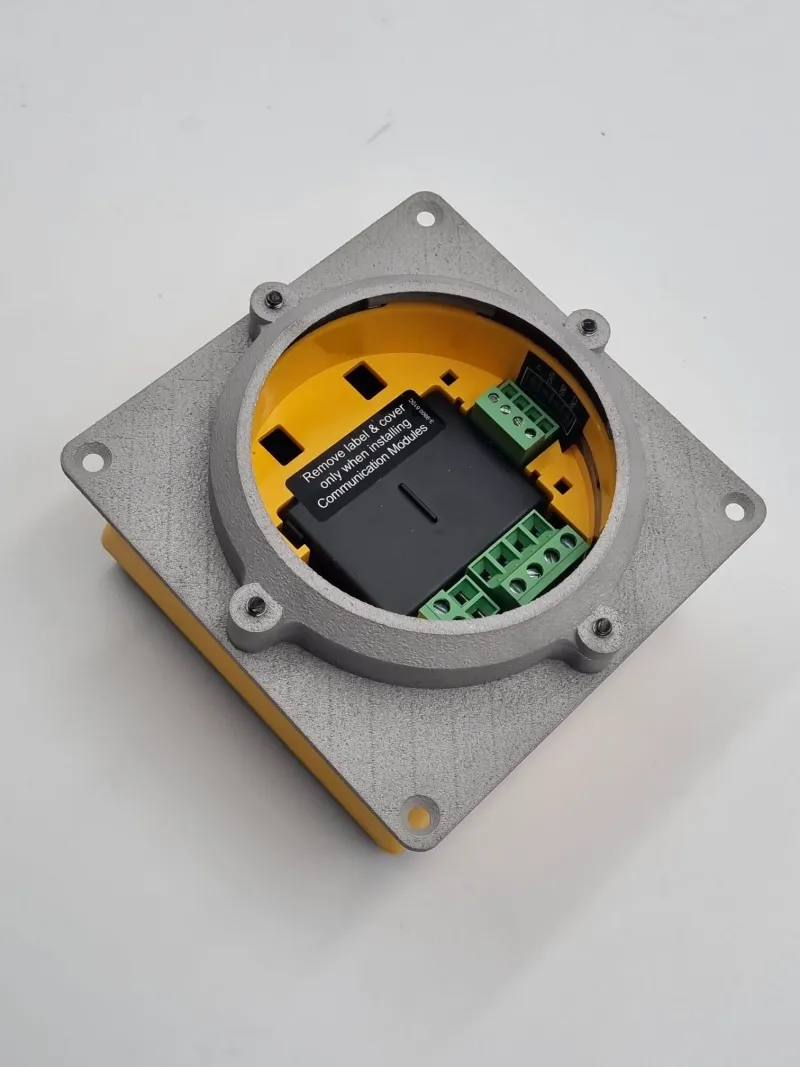 GuideStainless steel, aluminium or titanium: which metal to 3D print?
-
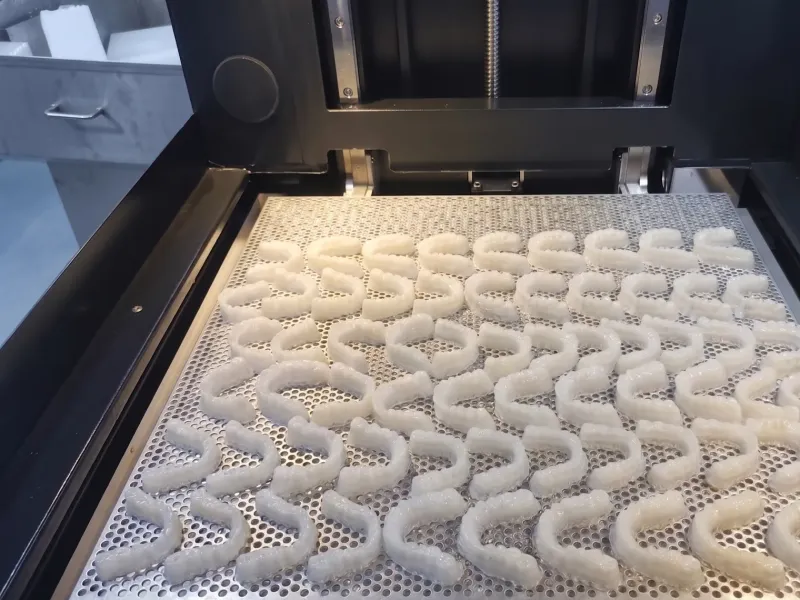 ServiceSLA 3D Printing
-
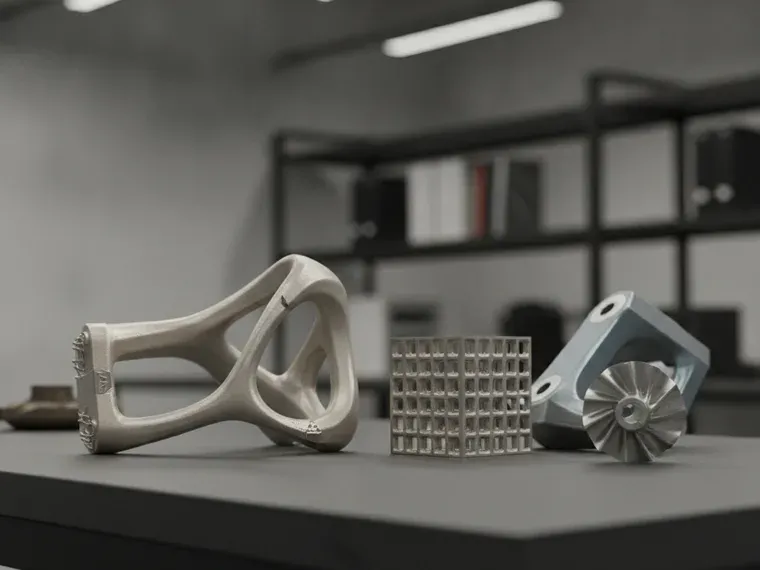 ServiceMetal 3D Printing
-
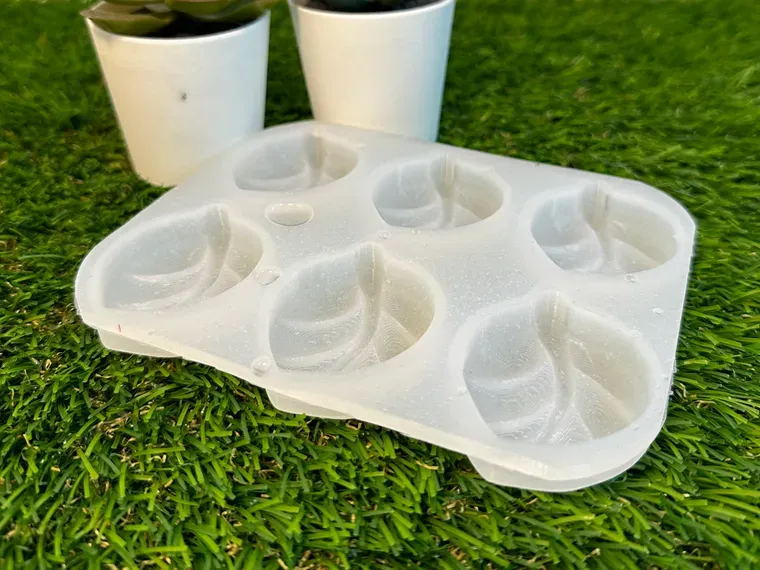 ServiceSilicone Moulding & Vacuum Casting
-
 ProjectCeremonial mace for Curtin Singapore
-
 ProjectElectroplated gold trophy for Crest Secondary School
-
 ProjectMetal car grille emblems for JMS Rogers