

What is Jesmonite, and how does it compare with plaster of Paris and resin?
Jesmonite is a water-based acrylic and mineral casting material. How it compares with plaster of Paris and resin, what it suits and how it is cast.
Is Jesmonite the right material for your piece?
Two questions, and you get the casting material from this guide that fits.
Jesmonite is a two-part casting material: a mineral powder stirred into a water-based acrylic liquid, poured into a mould and left to set. It sits between plaster and resin, and its maker sells it as an alternative to both. We cast it for plaques, trophies and small homeware, and the table sets it beside plaster of Paris and epoxy.
Jesmonite, plaster of Paris and epoxy compared
| Jesmonite (AC100) | Plaster of Paris | Epoxy resin | |
|---|---|---|---|
| Made from | A mineral base and a water-based acrylic liquid | A gypsum-based powder and water | Resin and hardener, two liquids |
| Sets in | 30 minutes to 2 hours | 20 to 30 minutes (DAP) | About 24 hours to touch, 72 to cure (ArtResin) |
| Water and sun | Porous, so seal it for water; its pigments are for indoors | Sold for indoor use (DAP) | Resists moisture; unpainted epoxy yellows in sun (Smooth-On EpoxAcast) |
| Suits | Plaques, planters, trays, marbled pieces | Quick moulds and indoor repairs | Clear blocks and thin coats |
AC100 is the maker’s fine-detail grade. It contains gypsum, so it is a close relative of plaster with acrylic added. AC730 is the maker’s cement-based grade, with decorative aggregates, for a concrete or stone look.
What Jesmonite is
The maker, Jesmonite Ltd, supplies it as a two-pack kit: a reactive mineral base and a pure water-based acrylic liquid. You mix them with a high-shear blade, which keeps air bubbles and lumps out. The maker says all its products are water-based and non-solvent, and calls the range an eco-friendly alternative to resin, plaster and concrete. That last part is the maker’s own claim.
It can be tinted to any colour and made to look like stone, metal, wood, leather or fabric. Its listed markets include craft, tableware, sculpture, lighting, furniture and film sets. It is a brand name, sold through resellers.
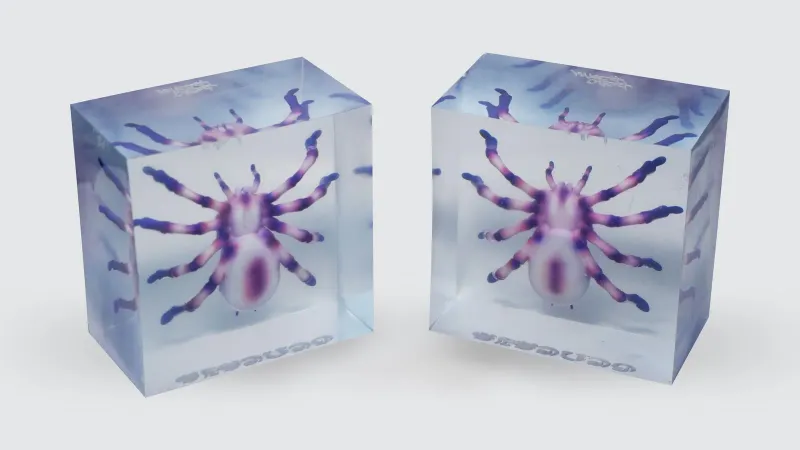
It is porous, so it needs sealing for water, and the maker has not tested it for food. For a see-through piece, use epoxy.
Jesmonite or plaster of Paris
Plaster of Paris is a powder made from gypsum that hardens when wet. DAP, a plaster maker, sells it for filling holes in interior walls and ceilings and also for mould making and casting figures. DAP’s data sheet says it sets hard in 20 to 30 minutes.
Pick plaster when the job is quick and indoors. Pick Jesmonite for a piece that will sit on a shelf or hang on a wall and get handled. Its maker calls its materials stronger and lighter, without saying than what. That is the maker’s claim, so judge a sample in your own hand.
Plaster is made for indoors, says DAP. Jesmonite AC100 can take up to 2 hours to set.
Jesmonite or resin
Epoxy is the clear one: Smooth-On sells EpoxAcast as a clear casting epoxy. Smooth-On says its cured EpoxAcast resists moisture, while Jesmonite is porous until it is sealed. In return, Jesmonite is water-based with no solvent, and it can be made to look like stone.
Pick epoxy for clear blocks and thin coats. Pick Jesmonite for plaques, planters, bowls and trays. Our epoxy and resin guide sets out the other resins.
Jesmonite is a mineral composite, so it is not the one for a see-through piece.
What to cast in Jesmonite
The maker lists table-tops, coasters, bowls, plates, soap dishes and trays in AC630, planters and splash-backs in AC730, and light jewellery and hair clips in AC100.
We cast it in three ways:
- The Keystone plaque. A hand-cast marbled frame round a black engraved plate, on a mount that hangs or stands. See the Jesmonite plaque.
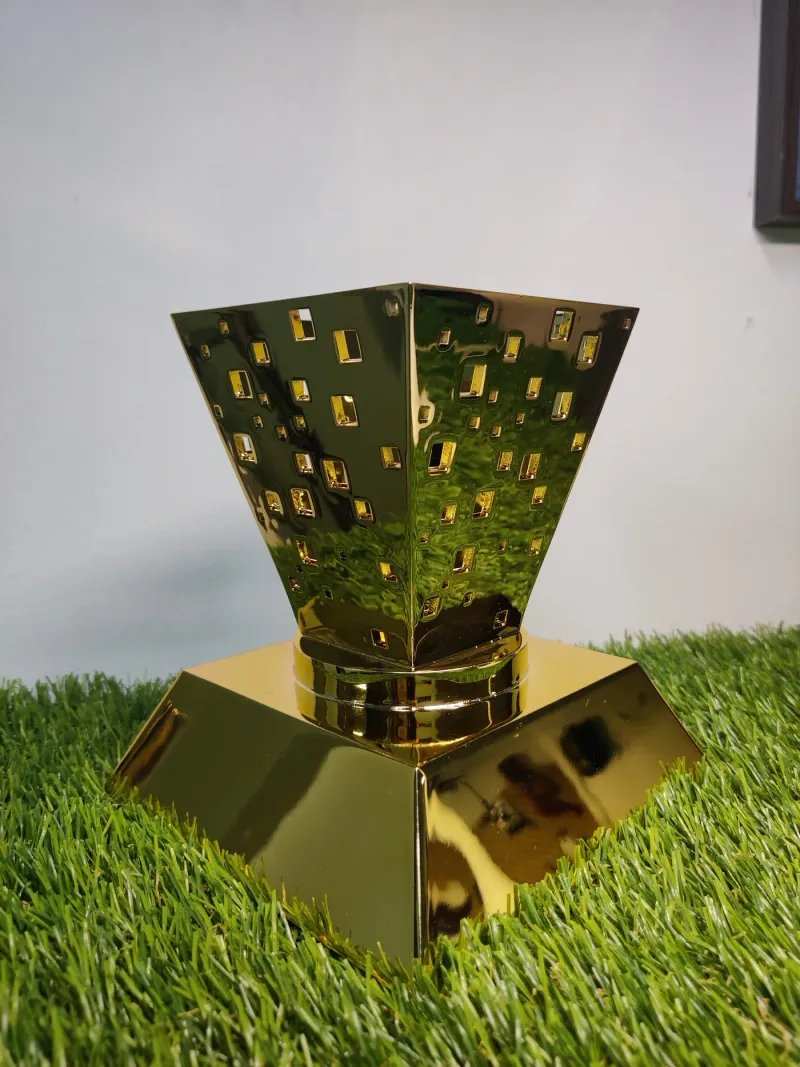
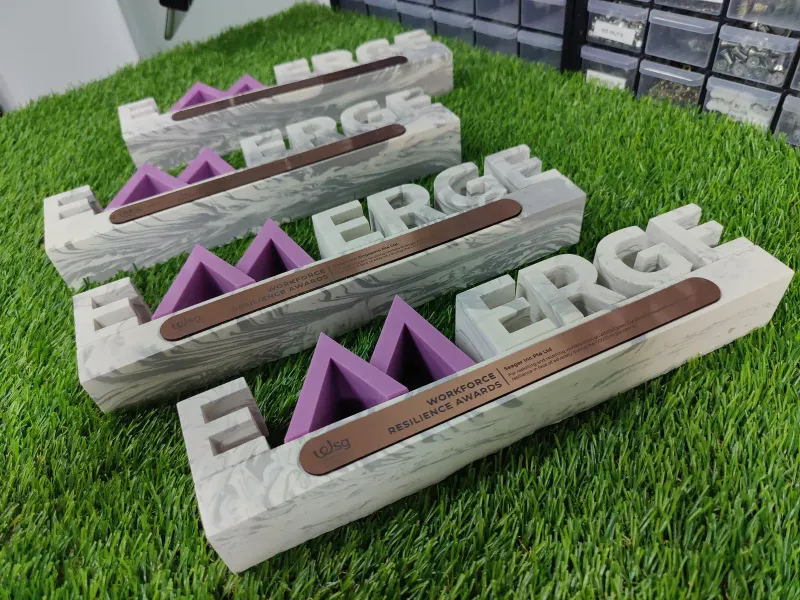
- Trophies. Nine EMERGE awards for Workforce Singapore, cast in grey-white Jesmonite with a brass plate on each.
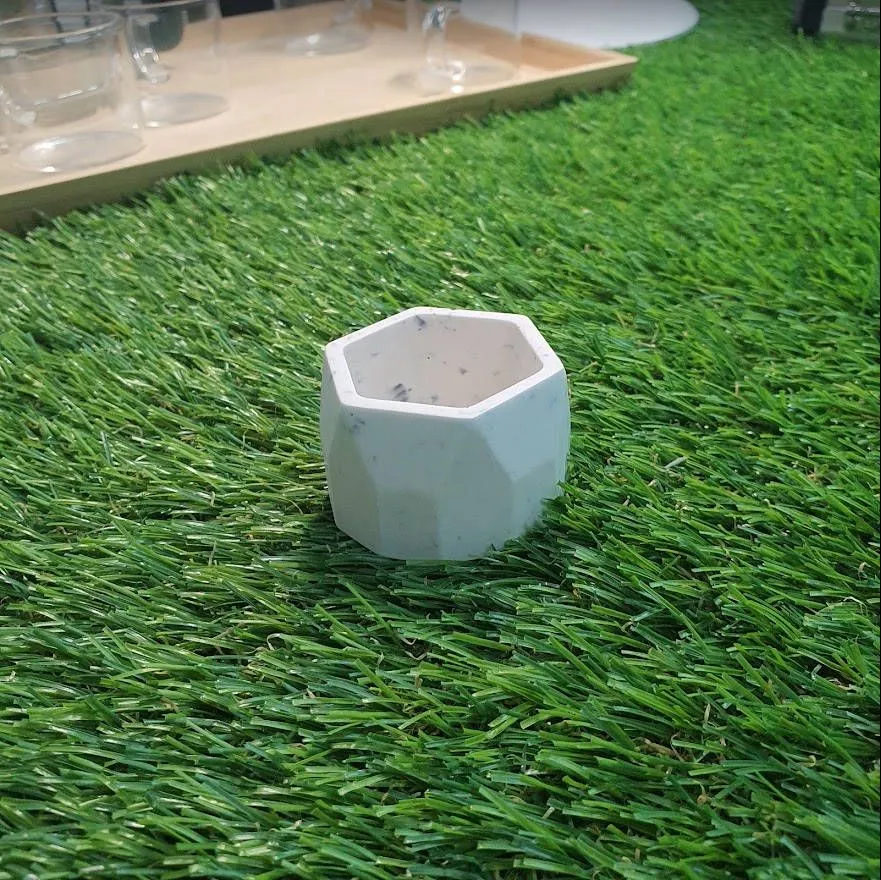
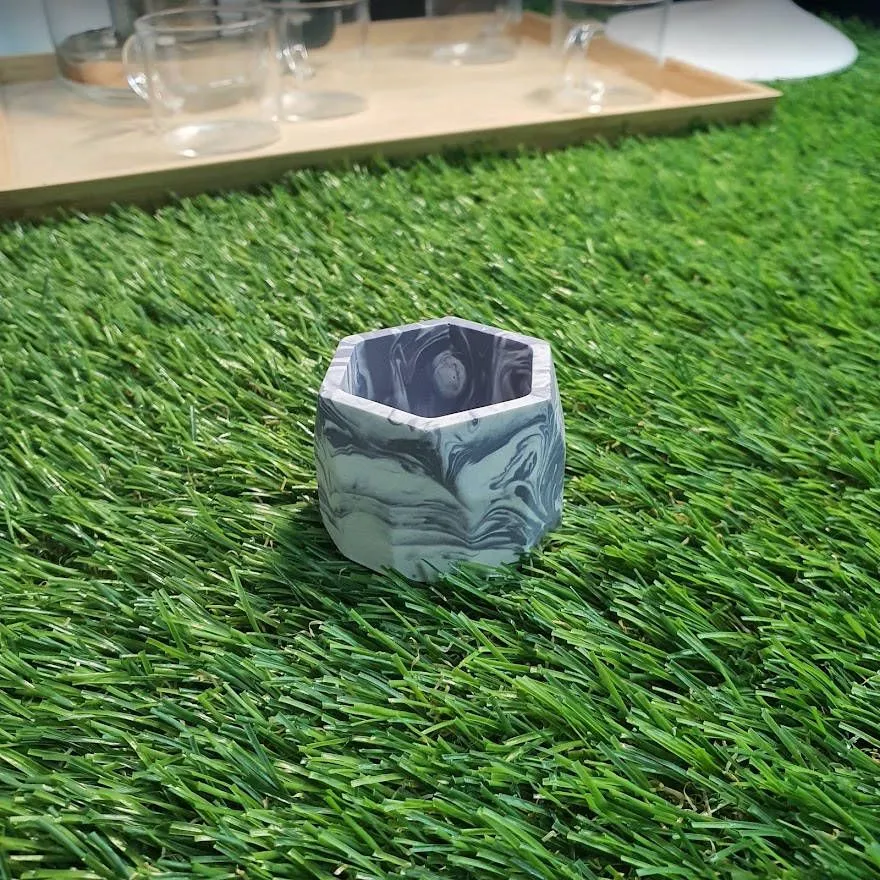
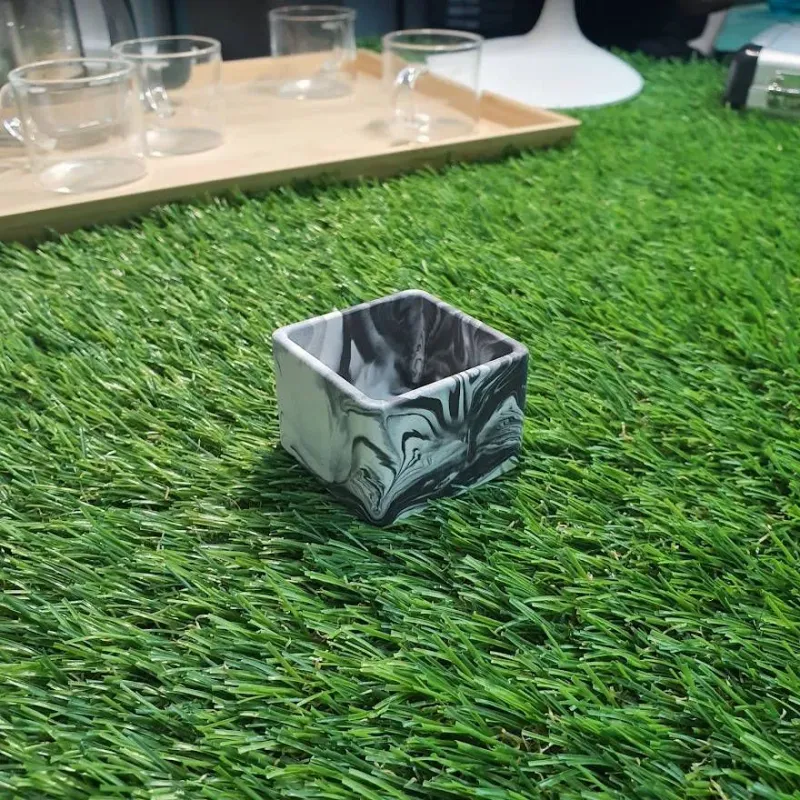
- Samples. Planters and cups we cast ourselves to show the finish.
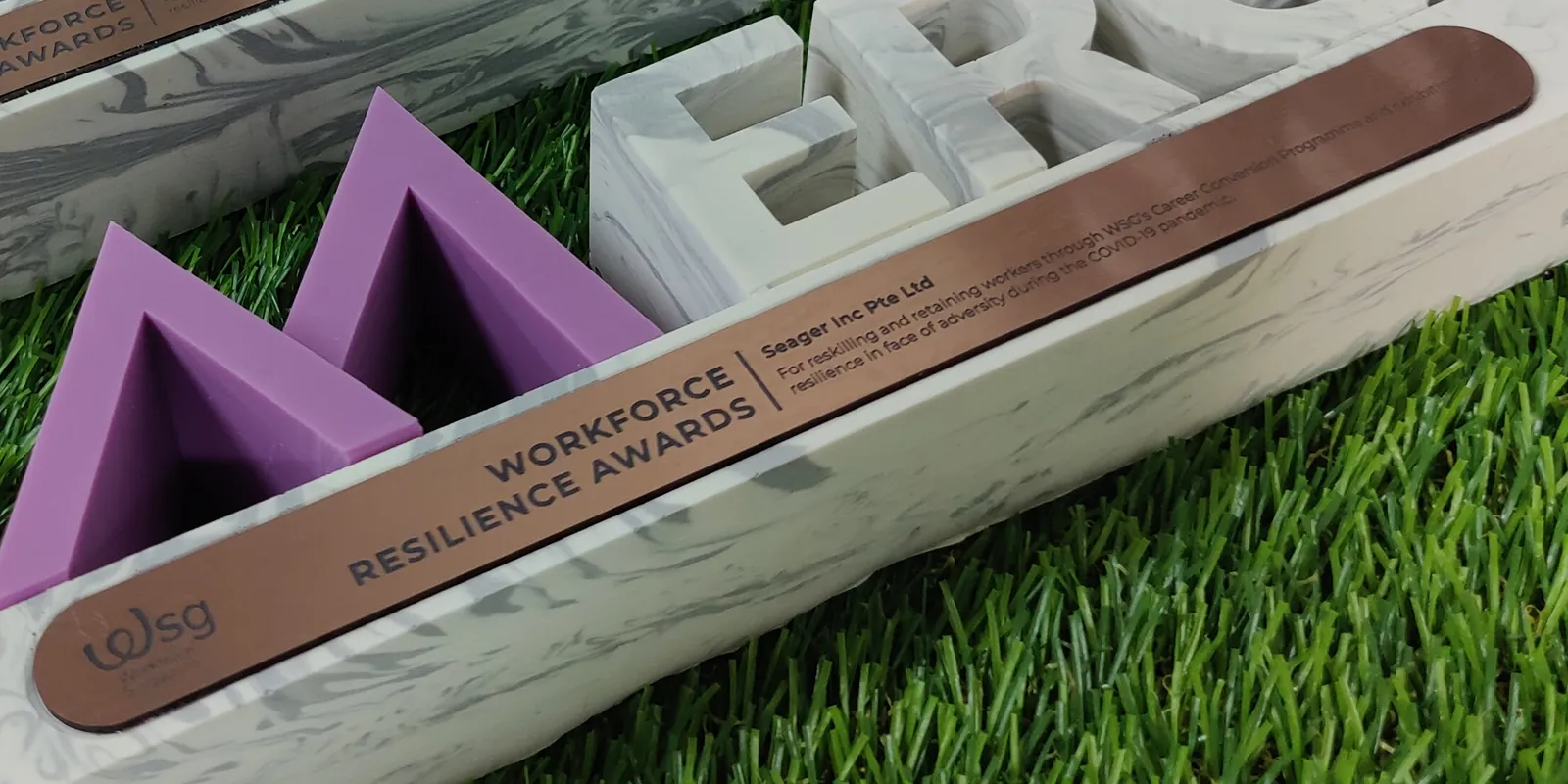
Every swirl is different, so a set of twenty will not match. Our plaques guide has more.
How Jesmonite is cast in a silicone mould
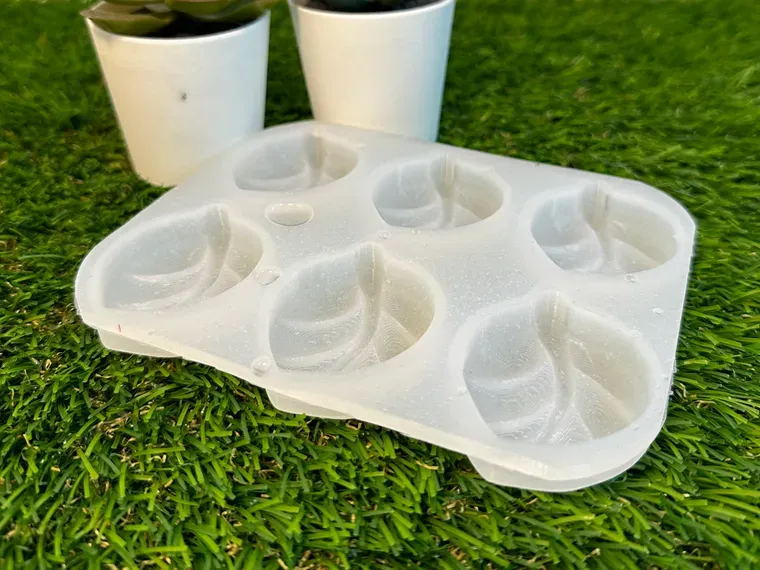
The maker says high-grade silicone moulds are the usual choice, because silicone bends to let a piece out and copies fine detail. Rigid moulds need a release wax.
The steps run like this:
- Make the master. We 3D print the shape.
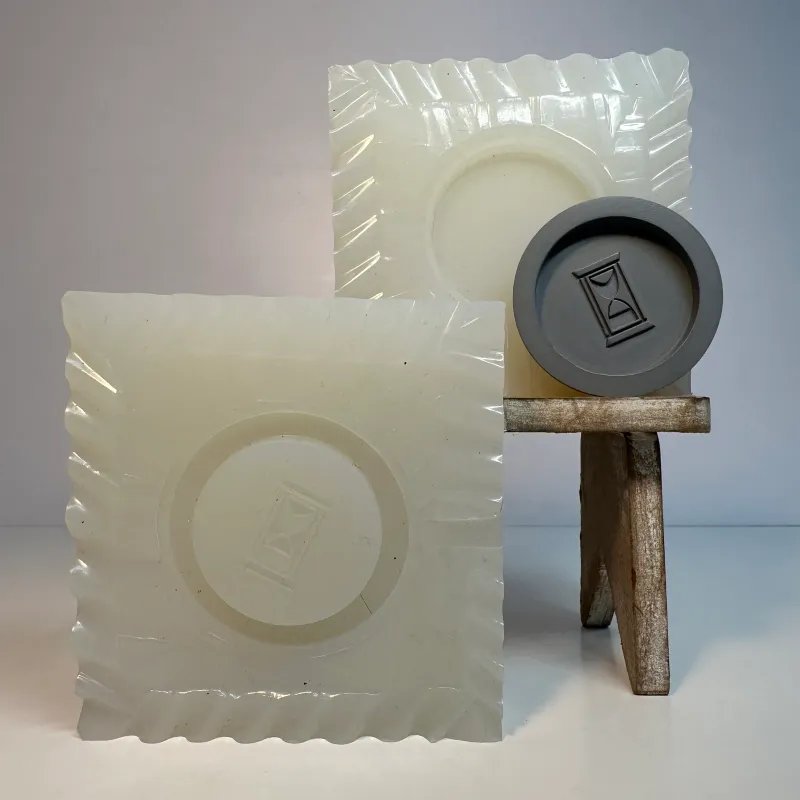
- Make the mould. We pour silicone around the master. See silicone rubber for the types.
- Mix and brush. Brush a first layer 1 to 2 mm thick into the mould to push air out, then fill up behind it.
- Set. AC100 sets in 30 minutes to 2 hours.
- Demould and rest. Leave the piece 24 hours before sanding or sealing.
For the marbled look, pigment moves through the pour, so no two come out the same.
Finishing and sealing
- Sanding. Cured AC100 sands from coarse to fine paper, by hand or with a power sander.
- Sealing. The maker names an acrylic sealer, flexible and UV resistant, for home ornaments.
- Heat. Keep it below 80°C.
- Food and washing. Not for food or liquids, and not for the dishwasher or microwave.
- Colour outdoors. The liquid pigments are not fully UV stable, so coloured pieces are for indoors.
Where these facts come from
Every claim about the material was read on the maker’s own page on 19 November 2026. Plaster details were read on DAP’s own product page and technical data sheet.
- Jesmonite Ltd: its FAQs for composition, grades, set time, moulds, sealing, heat, food and glue, and its home page for the two-part kit and its description of itself.
- DAP, Plaster of Paris: indoor use, mould making and casting. The 20 to 30 minute set is from DAP’s technical data sheet, headed August 2018.
- Epoxy column: ArtResin’s FAQ for cure time and Smooth-On’s EpoxAcast page for yellowing.
- Our own pages: the Jesmonite plaque, the marbled casting project, the WSG trophies and the silicone moulding service.
Frequently asked
Is Jesmonite the same as plaster of Paris?
No, though they are related. Jesmonite's maker calls its AC100 an acrylic modified gypsum composite, which means it contains gypsum, the mineral plaster is made from, mixed with an acrylic liquid instead of plain water. Its AC730 is cement based, with decorative aggregates.
Is Jesmonite waterproof?
Not by itself. The maker classes all its products as porous, so a piece needs a sealer on top to hold water. It says AC730 can go in water features and wet places. Sealing is a finishing step, so say if your piece will get wet.
Is Jesmonite food safe?
The maker has not tested its products for food safety, and it does not recommend putting food or liquids on finished Jesmonite. It also advises against the dishwasher and the microwave. Use it for decorative tableware, such as a tray for keys or soap, not for serving.
Can Jesmonite go outdoors?
The maker does not give one rule for outdoors. It says AC730 can be used for planters, water features and wet environments. Its liquid pigments are not fully UV stable and are meant for indoor projects only, so a coloured or marbled piece should live indoors. Ask us if yours must go outside.
How long does Jesmonite take to set?
The maker gives 30 minutes to 2 hours for AC100, depending on how warm the room is. After taking the piece out of the mould, leave it 24 hours before sanding or sealing. Our own lead times depend on the piece, so ask us with your date.
What can Jesmonite be glued with?
The maker suggests an epoxy or polyurethane adhesive, and finds two-part epoxy glues stronger than one-part glues. Plan the join before you cast, so there is a flat face to stick.
Is Jesmonite heat resistant?
Only up to a point. The maker would not put it in a kiln or above 80°C. It says AC730 is rated non-combustible under a European fire test, which is about fire, not about hot pans.
Can you make a one-off Jesmonite piece for me?
Ask us. We cast Jesmonite for our own Keystone plaque and for trophies, and we print the master and make the silicone mould ourselves. Send the shape, the number of pieces and the colours, and a person replies with what is possible.
Related
-
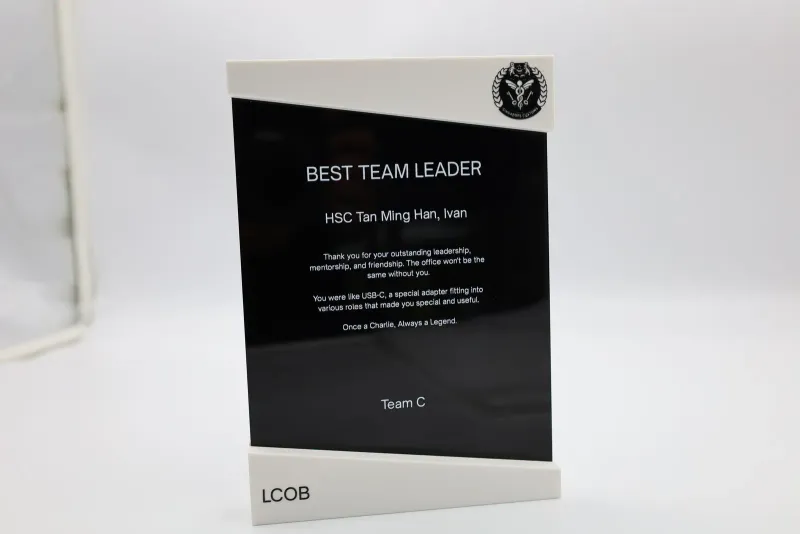 GuideHow do you choose an award plaque?
-
 GuideWhich silicone rubber should your mould or soft part be made from?
-
 GuideWhich resin do you need: epoxy, UV, polyurethane or 3D printing resin?
-
 ServiceSilicone Moulding & Vacuum Casting
-
 ServiceCustom Trophies & Awards
-
 ServiceIndustrial 3D Printing
-
 ProjectMarbled Jesmonite planters and cups
-
 ProjectWSG Workforce Resilience Awards trophies
- ProjectSilicone mould for a round hourglass emblem