

Which plastic sheet do you need, and how is each one cut?
Plastic sheet types compared: acrylic, polycarbonate, PETG, PVC, polypropylene, HDPE, ABS and POM, how each is cut, and which one our laser cuts.
On this page
- Plastic sheets at a glance
- Acrylic: clear, and the one our laser cuts
- Polycarbonate: clear, and very tough
- PETG: clear, and easy to form
- PVC: solid sheet and foam board
- Polypropylene and HDPE: tough sheet for rough jobs
- ABS: the tough, opaque shell
- POM: for gears and slides
- Aluminium composite: a plastic core in metal skins
- Where our laser stops
- Where these facts come from
- Frequently asked
Which plastic sheet fits your part?
One or two questions, and you get the sheet from this guide that fits.
Plastic sheet comes in many types, and they differ in clarity, toughness and how they are cut. The table sets nine of them side by side. Of these, only acrylic goes on our laser, and the rest are machined, formed or left to a specialist.
Plastic sheets at a glance
| Plastic | Clear or not | Tough or brittle | How it is cut | Good for | On our laser |
|---|---|---|---|---|---|
| Acrylic | Very clear | Far less tough than polycarbonate | Laser, CNC machining | Signs, display cases, glazing | Yes, 3–25 mm |
| Polycarbonate | Clear | Almost unbreakable | CNC machining, vacuum forming | Machine guards, safety glazing | No, never |
| PETG | Clear | Tougher than acrylic, below polycarbonate | Cut, routed, drilled, vacuum formed | Guards, displays, trays, covers | Not on its list |
| PVC, solid | White, grey or clear | High impact strength | Cut, drilled, milled with standard tools | Chemical trays, wall cladding, signs | No, never |
| PVC foam board | Opaque | Light, with high impact strength | Cutter, saw, CNC | Printed signs, displays | No, never |
| Polypropylene (PP) | Translucent or coloured | Springy, harder than polyethylene | Machined, welded | Hinged lids, folders, storage boxes | Not on its list |
| HDPE | Black at the supplier we checked | Excellent impact resistance | Saw, drill, mill, weld | Marine, outdoor, rough use | Not on its list |
| ABS | Opaque | Tough, high impact resistance | Machined, vacuum formed | Housings, prototypes | No, never |
| POM (acetal) | Opaque white or black | Stiff, hard, low friction | Milled, turned | Gears, bushings, wear strips | Not on its list |
Acrylic: clear, and the one our laser cuts
Acrylic is polymethyl methacrylate (PMMA), the clear sheet most people picture. One maker says its clear cast sheet passes more light than glass, and lists glazing, furniture and display cases among its uses.
It is not tough. The same maker says polycarbonate has a much higher impact resistance. Wikipedia calls acrylic brittle, and says it cannot be bent at room temperature.
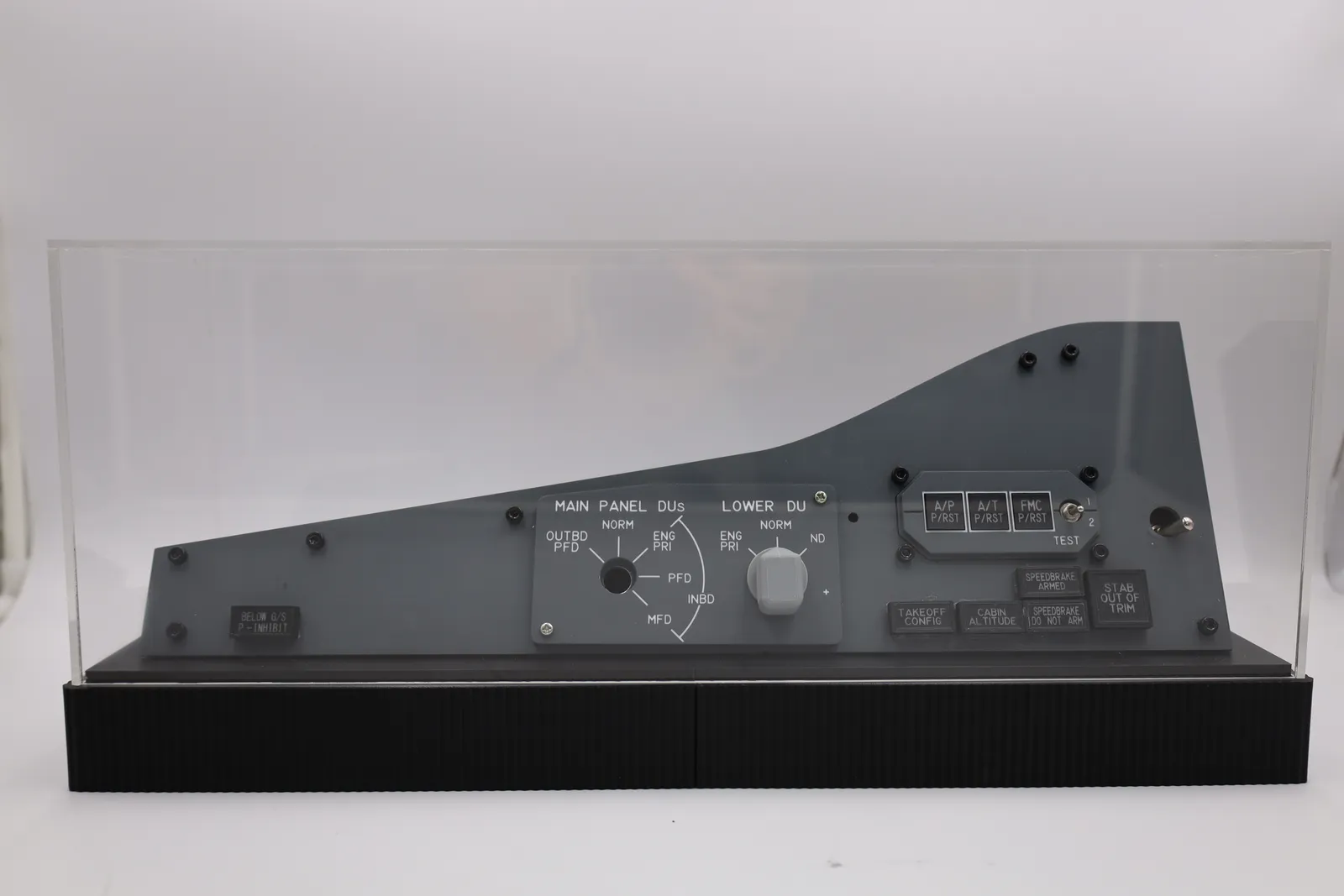
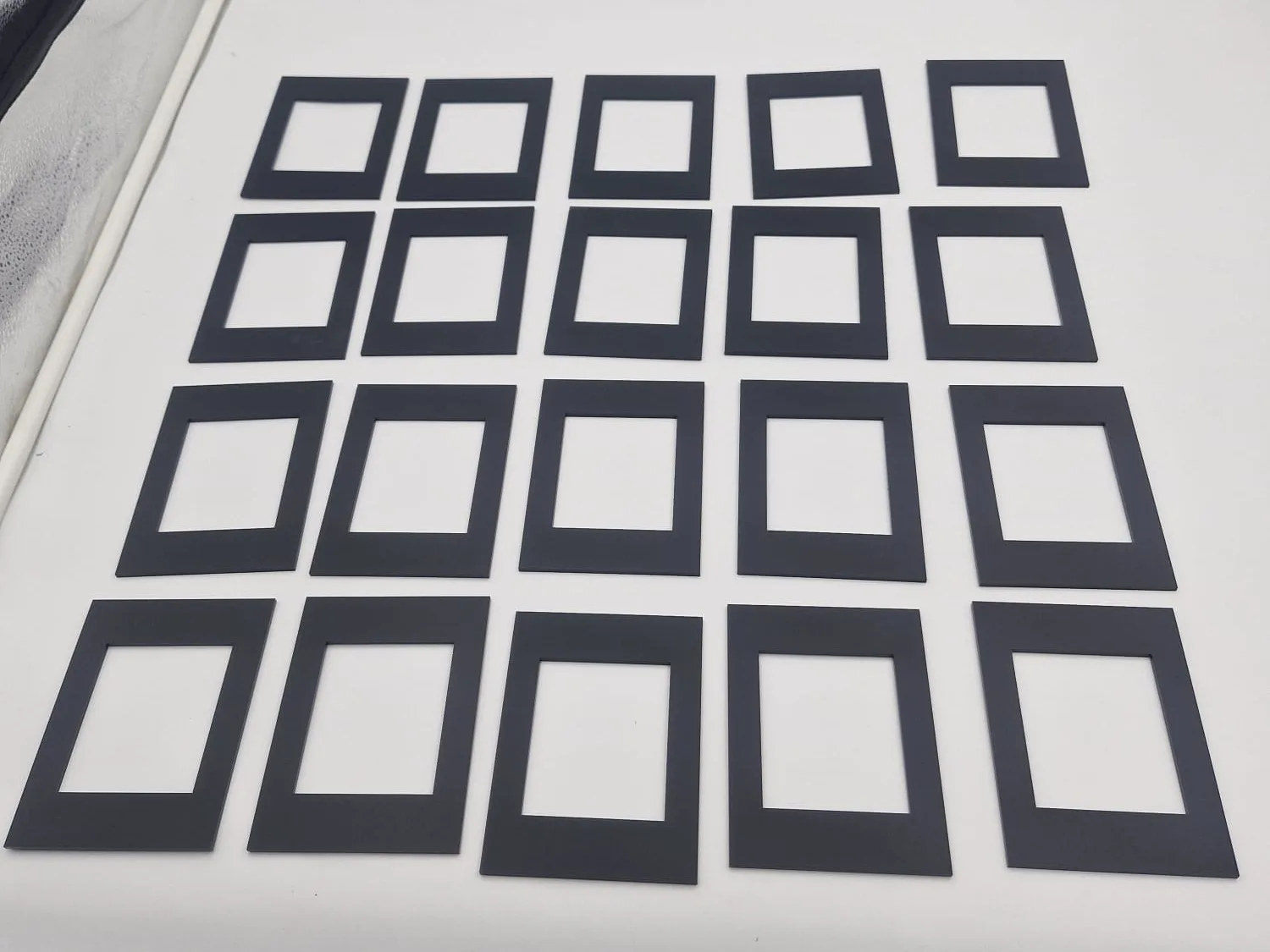
We laser cut acrylic from 3 mm to 25 mm, in clear, frosted and the full Pantone range, and we print full colour straight onto it. Sheet sizes, thicknesses and finishes are in our acrylic sheet guide. Perspex, Plexiglas and the other names are sorted out in acrylic vs Perspex vs Plexiglass.
Polycarbonate: clear, and very tough
Polycarbonate looks like acrylic and takes a hit far better. A sheet maker calls it almost unbreakable, with over 200 times the strength of glass at the same thickness, and lists machine guards and safety glazing among its uses.
- Its limit is the surface. It scratches easily, which is why lenses and car parts get a hard coating.
- Its other limit is sunlight. A sheet supplier notes that polycarbonate can yellow under UV light without additives.
We machine polycarbonate on a CNC mill and vacuum form it. We do not laser cut it, whatever the thickness. The long comparison is in acrylic vs polycarbonate.
PETG: clear, and easy to form
PETG is polyethylene terephthalate glycol-modified. A plastics supplier lists machine guards, retail displays, signage and thermoformed parts among its uses, and says it forms at low temperatures and bonds easily. It sits between the other two clear plastics for toughness: above acrylic, below polycarbonate.
Its limit is the surface, which is soft and easy to mark.
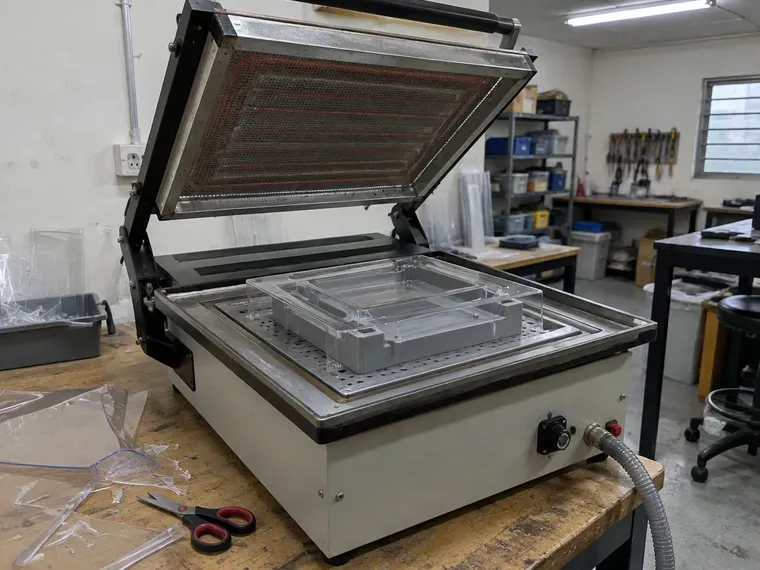
That low forming temperature is why PETG is a vacuum former’s sheet. We form it over a 3D printed mould into trays, covers and shells, and what vacuum forming is explains the process. PETG is also the name of a 3D printing filament, and our PLA, PETG, ABS and ASA guide covers that.
PVC: solid sheet and foam board
Two different sheets share the name. One supplier sells solid PVC in white, dark grey or transparent, and another says it has high impact strength, and goes into chemical trays, wall cladding and signs. PVC foam board is the light, opaque sheet that sign printers use for big printed boards. One maker rates its classic grade for up to 5 years of exterior use.
Foam board is cut with a cutter, saw or CNC machine, and solid PVC with standard tools. Neither is cut with a laser. A laser maker warns that the hydrogen chloride from PVC is hazardous to the laser system, and another lists PVC among the materials that create dangerous gases or dust. PVC never goes on our laser, and we do not offer PVC foam board. PVC foam board and when a sign should be acrylic has the detail.
Polypropylene and HDPE: tough sheet for rough jobs
Polypropylene (PP) is harder than polyethylene and tolerates higher temperatures, according to one supplier. It is springy: after a load comes off, the sheet returns to its shape. That is why most plastic living hinges, such as the ones on flip-top bottles, are made from it. As sheet it goes into folders, ring binder covers, packaging and storage boxes. Uncoloured PP is translucent at best, and it is often opaque or coloured.
High-density polyethylene (HDPE) is the one for hard use: the supplier credits it with excellent resistance to impact, moisture, chemicals and UV exposure, and says a sea buoy in salt water lasts for years. That supplier sells it in black only, and says it saws, drills, mills and welds without special tools.
- HDPE is difficult to glue. The supplier says to fix it with fasteners or weld it. PP can be welded too, by melting a rod into the joint.
- Neither is on our laser’s list. We machine PP on a CNC mill. For HDPE, ask us.
HDPE does not easily stick to epoxy, so it makes a mould for it: see epoxy resin.
ABS: the tough, opaque shell
ABS is acrylonitrile butadiene styrene. A sheet supplier calls it known for its exceptional toughness, high impact resistance and ease of processing, and lists housings and enclosures among its uses. Most ABS is opaque. It can be sanded, glued and painted.
Its limit is the sun. Standard ABS has poor UV resistance, and long exposure turns it yellow and brittle, so it is a bad pick for a sign outdoors.
We machine ABS, vacuum form it and arrange injection moulding for it, but it never goes on our laser. Injection moulding plastics compares ABS with the others for moulded parts.
POM: for gears and slides
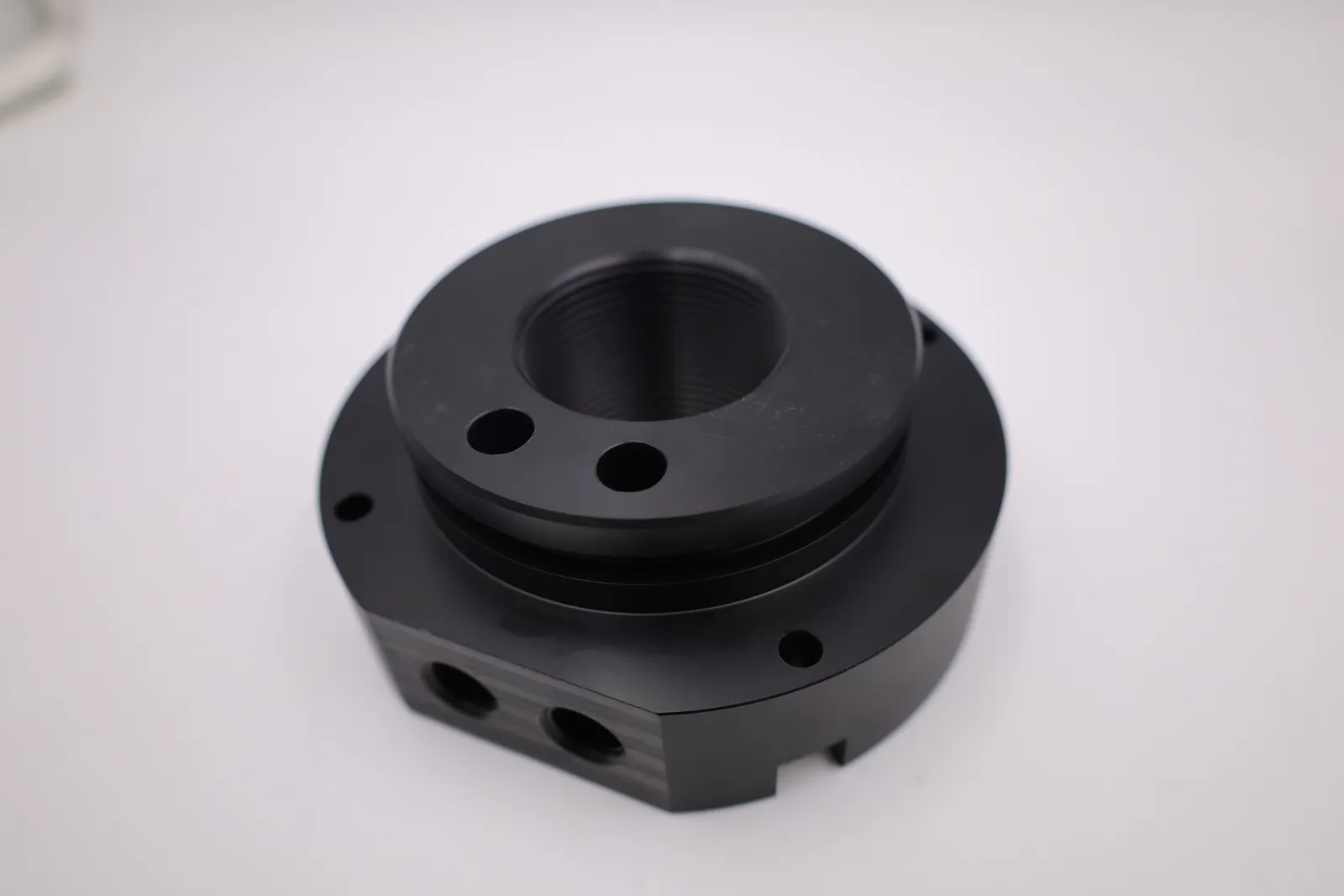
Polyoxymethylene (POM), also called acetal, is a stiff, low-friction plastic that keeps its size. A parts maker says it resists wear and machines cleanly, and names gears, bushings and bearings among its uses.
Its limits are glue and sun: adhesive bonding is hard, so plan fasteners, and standard grades can degrade outdoors without stabilisation. We machine POM from solid.
POM, acetal and Delrin explains the names and the two grades.
Aluminium composite: a plastic core in metal skins
Aluminium composite panel is not a plain plastic, but it is sold beside them for signs. It has a polyethylene core bonded between two aluminium sheets, and suppliers sell it indoors and outdoors for signage and displays. Aluminium composite panel covers what it is, the core types and the fire rules in Singapore.
Where our laser stops
Of the plastics in this guide, acrylic is the only one on our laser, from 3 mm to 25 mm. Polycarbonate, PVC and ABS never go on it. PETG, PP, HDPE and POM are not on its list either. We form PETG, machine PP and POM, and for HDPE, ask us.
A sheet nobody can identify does not go on our laser. If you are not sure what yours is, tell us what you know. The full list of what the laser cuts is in our laser cutting materials guide.
Where these facts come from
Every outside fact was read on the source’s own page on 19 November 2026. Sheet ranges change, so check the maker before you order.
- Perspex Distribution, cast acrylic, polycarbonate sheets, polyester sheet (APET/PETG), solid PVC and aluminium composite: clarity, impact strength, uses.
- Plastic Sheets Shop, engineering plastics, HDPE sheets and solid PVC sheets: PP, HDPE, polycarbonate and PVC properties and uses.
- Laird Plastics, PETG sheets and POPAI, PETG: PETG toughness, forming and surface.
- Plastock, ABS and Protolabs, POM plastic: ABS and POM properties, uses and limits.
- 3A Composites, FOREX classic: PVC foam board.
- Epilog Laser, unsafe materials and Trotec, materials not suited for laser processing: why PVC stays off the laser.
- Wikipedia, polycarbonate, polypropylene and acrylonitrile butadiene styrene: scratch resistance, cold bending, living hinges, sheet uses and opacity.
What we cut, machine, form and make comes from our own laser cutting, CNC, vacuum forming and injection moulding pages. That polycarbonate, PVC and ABS never go on our laser is the studio’s own rule (owner, 13/11/2026).
Frequently asked
Which plastic sheets come clear?
Acrylic, polycarbonate and PETG all come clear, and solid PVC has a transparent version. One maker says its clear acrylic passes more light than glass, and rates its PETG at 90 percent, the same as glass.
Which plastic sheet is the toughest?
Polycarbonate and HDPE are the two to ask about. One maker calls polycarbonate almost unbreakable, and a supplier lists HDPE for its resistance to impact. Acrylic is the one in this guide that can crack.
What is the difference between PP sheet and HDPE sheet?
HDPE is a polyethylene, and one supplier says polypropylene is the harder of the two and tolerates higher temperatures. HDPE is difficult to glue, so plan to screw or weld it.
Can you laser cut ABS, PETG or polycarbonate sheet?
Not on our laser. Of the plastic sheets in this guide it cuts acrylic only. Polycarbonate and ABS never go on it, and PETG is not on its list. We machine polycarbonate and ABS, and vacuum form PETG, polycarbonate and ABS.
What does PETG stand for?
Polyethylene terephthalate glycol-modified. It is a clear sheet that forms at a low temperature, which is why vacuum formers like it. The same letters also name a 3D printing filament, which is a different product.
Which of these plastics can be glued?
PETG bonds easily with solvent or adhesive, and ABS can be glued. HDPE is difficult to glue, and POM is hard to bond. Where glue will not hold, plan screws, clips or welding.
Which plastic sheet suits an outdoor sign?
It depends on the sheet and the spot. Standard ABS yellows and turns brittle in sunlight, plain polycarbonate can yellow, and standard POM can degrade. Our signage pages say acrylic is happiest indoors and point to ASA or aluminium composite for outdoor signs, so tell us where the sign goes.
Is it safe to cut PVC?
Sheet suppliers describe cutting it with a blade, saw or CNC machine. Not with a laser: a laser maker warns that the hydrogen chloride from PVC is hazardous to the laser system, and PVC never goes on ours.
How is PETG different from acrylic?
One supplier puts PETG's impact resistance above acrylic and below polycarbonate. Its surface is soft and marks easily. Acrylic is the one that goes on our laser.
Do you sell plain plastic sheets?
We make finished parts: cut, machined, formed or printed. If you only want a plain sheet to cut yourself, ask us whether we can supply one, or try a plastics supplier.
Related
-
 GuideWhat should you know before you buy an acrylic sheet in Singapore?
-
 GuideWhat is the difference between acrylic and polycarbonate?
-
 GuideWhat can be laser cut, and which material suits your job?
-
 ServiceLaser Engraving & Cutting
-
 ServiceVacuum Forming in Singapore
-
 ServiceCNC Machining
-
 ProjectLaser-cut acrylic cover panels for RVM Systems
-
 ProjectControl panel enclosure with acrylic cover
-
 ProjectCNC machined fuel filling lids for JFD