

Are POM, acetal and Delrin the same plastic?
POM, acetal and Delrin name one stiff, slippery plastic family. The two grades, what it suits, where it falls short and how we machine it in Singapore.
Which POM should you ask for?
Two questions, and you get the grade or route from this guide that fits.
Yes. POM, acetal and Delrin all point at one family of plastic, polyoxymethylene, and Delrin is a brand of one of its two grades. It is the machinist’s plastic for gears, bushings and wear strips. We machine it to your file.
POM, acetal and Delrin: what the names mean
| Name on the quote or datasheet | What it is | Which grade |
|---|---|---|
| POM | Polyoxymethylene, the plastic itself | Either |
| Acetal, polyacetal | Other names for the same plastic | Either |
| POM-H, homopolymer | The stiffer, stronger grade | Homopolymer |
| Delrin | A brand name for the homopolymer | Homopolymer |
| POM-C, copolymer | The grade that copes better with chemicals and heat, and suits thick parts | Copolymer |
Delrin is a brand, not a separate plastic
A parts maker calls Delrin a brand name for POM-H. A DuPont press release dated 1 November 2023 describes the Delrin acetal homopolymer business, and says DuPont would complete that day the sale of an 80.1 percent ownership interest in it to an affiliate of TJC LP, a private equity firm. DuPont would keep a 19.9 percent non-controlling interest. Other makers sell acetal under other names, such as Celcon, Hostaform and Ultraform.
In practice, engineers often say acetal for the copolymer and Delrin for the homopolymer, even though both are acetals. If a quote only says “acetal”, ask which one.
Homopolymer or copolymer
- POM-H (homopolymer) offers higher stiffness, tensile strength and fatigue resistance. Its flaw is in thick stock: a supplier says homopolymer sheet and rod inherently contain more porosity down the centre, most visible in thick sheets and large rods.
- POM-C (copolymer) is slightly lower in strength but better with chemicals and heat, and it has no centreline porosity. That makes it the better choice for thicker cross-sections.
One parts maker’s rule of thumb: choose POM-C for thicker parts, and choose POM-H when stiffness, strength and fatigue resistance matter most.
What POM does well
POM is a stiff, low-friction plastic that keeps its size. A parts maker says it resists wear and machines cleanly, and that it is a common choice for gears, bushings and wear strips. A sheet supplier says it only becomes moderately brittle below zero degrees and can be stressed above 100 degrees Celsius.
It is naturally opaque white and comes in colours such as black, but not clear. One parts maker offers its machined POM in natural and black.
Where POM falls short
- Glue is a poor way to join it. A reference says POM cannot be glued, and a parts maker says fasteners, press fits or welding are often more reliable than adhesive.
- Sun is a problem. Standard grades can degrade outdoors without stabilisation.
- Harsh chemicals. It handles fuels and many solvents, but is not ideal for strong acids or oxidising chemicals.
- Heat. It cannot handle sustained high temperatures the way PEEK can.
- Price. A sheet supplier lists it as a pricey material.
How we make POM parts
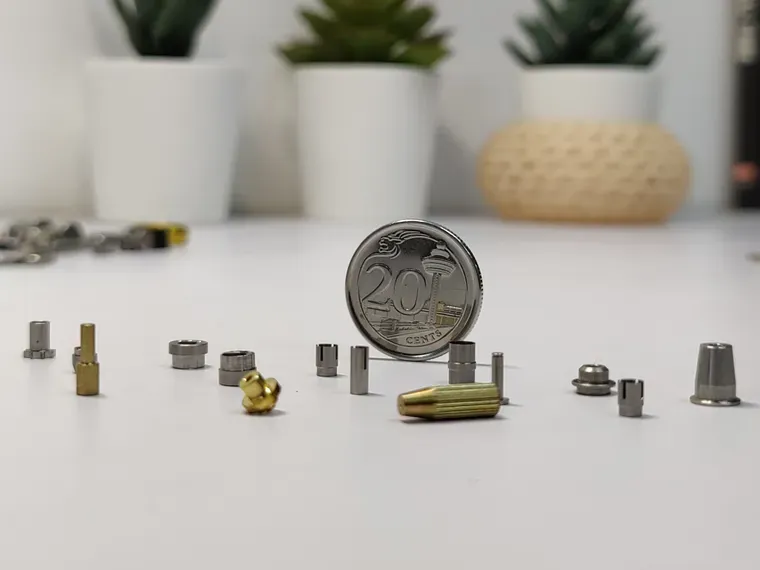
Our CNC service lists Delrin (POM) among its engineering plastics, alongside nylon, ABS, acrylic, PC and PP. Our 3-axis milling goes down to plus or minus 0.05 mm, we turn round parts on request, and we work in batches of 1 to 50. Send a STEP file with the tight dimensions marked. A plastic moves a little with heat and moisture, so we confirm what it can hold.
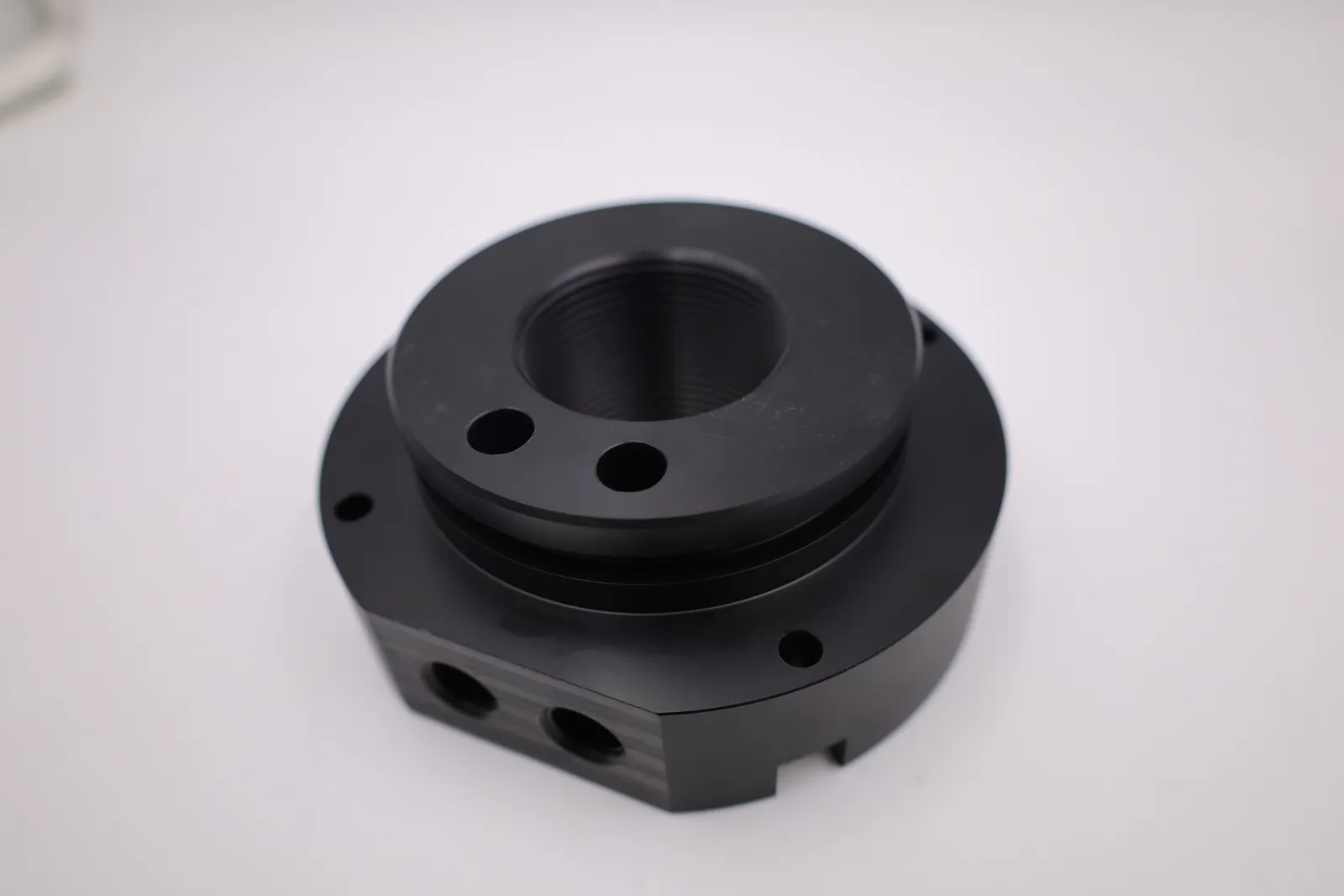
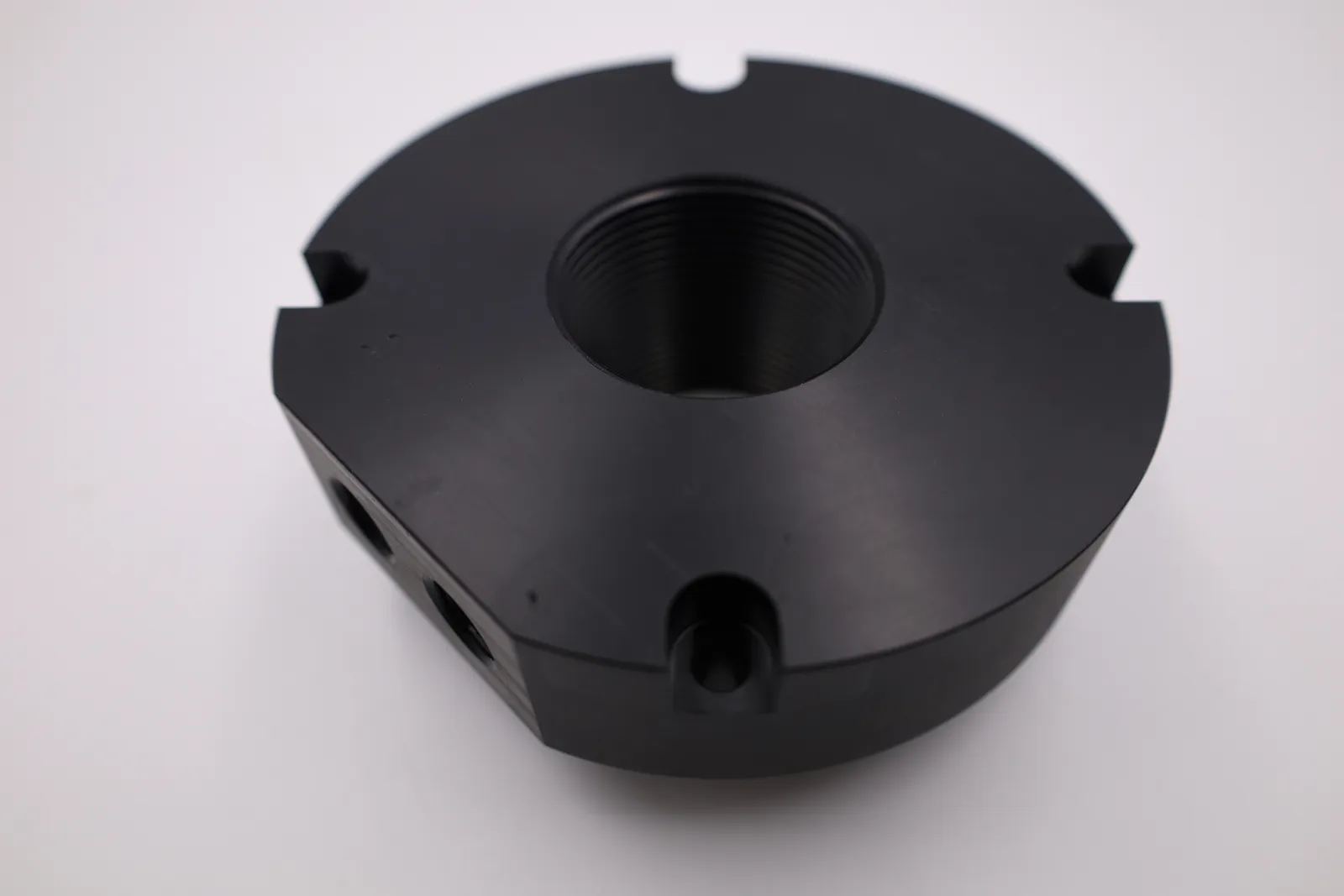
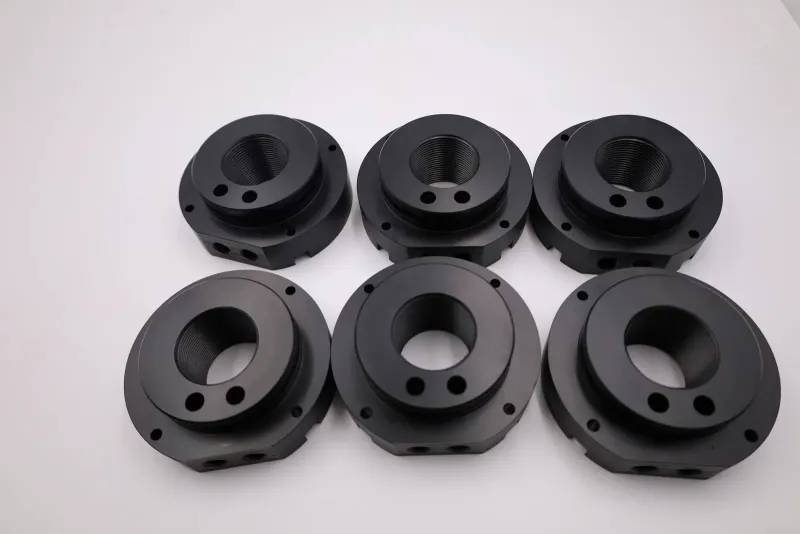
For that job we cut one sample lid for the client’s team to test, then machined six, from their own STEP file with no design changes. The lids are left as machined, with a threaded centre bore, side ports and bolt holes.
Other routes exist for other jobs. For fit tests we cast a POM-like resin, and vacuum casting materials lists the cast grades. For real POM in volume, we arrange injection moulding, and injection moulding plastics compares POM with the other moulding plastics.
More plastics to compare
POM is one of the plastics compared in our plastic sheet types guide, and our CNC machining materials guide puts it next to nylon, PTFE and the metals we machine. POM is not on our laser’s list. If you need a flat clear part, acrylic is the sheet that does.
Where these facts come from
Every outside fact was read on the source’s own page on 19 November 2026. Grades and brand ownership change, so check the maker’s datasheet before you order.
- Protolabs, POM plastic: the two grades, the Delrin brand name, uses, limits and machining stock.
- Plastics International, acetal homopolymer vs copolymer: centreline porosity in homopolymer stock.
- Plastic Sheets Shop, engineering plastics: temperature range, brittleness, UV and price.
- DuPont, sale of the Delrin business to TJC and Boedeker Plastics, Delrin 527 UV stable acetal: the Delrin business and a UV-stabilised grade.
- Wikipedia, polyoxymethylene: other names, brand names, 1960 plant, colour and bonding.
What we machine, cast and mould comes from our own CNC and injection moulding pages, the vacuum casting materials guide and the fuel filling lid project.
Frequently asked
Is Delrin the same as acetal?
Delrin is a brand of acetal, the homopolymer grade. Acetal is the general name, and engineers often use it to mean the copolymer. Both are polyoxymethylene.
What does POM stand for?
Polyoxymethylene. It is also sold as acetal, polyacetal and polyformaldehyde, and under brand names such as Delrin, Celcon and Hostaform.
Is POM-C or POM-H better?
Neither wins every time. POM-H is stiffer and stronger. POM-C handles chemicals and heat better and has no centreline porosity, which makes it a better choice for thick parts. We machined a set of fuel filling lids in POM-C.
Can POM be glued?
Not well. One reference says it cannot be glued but can be joined to POM by melting. Another says fasteners, press fits or welding are often more reliable than adhesive. Design in screws or clips.
Can POM go outdoors?
Standard grades can degrade in sun without stabilisation. One supplier lists a UV-stabilised acetal, so ask whether your grade comes that way, and ask us before you pick POM for a part that lives in the sun.
Is POM transparent?
No. It is naturally opaque white and comes in colours such as black, but not clear. For a see-through part, look at acrylic or polycarbonate in our plastic sheet guide.
Do you machine Delrin?
Yes. Our CNC service lists Delrin/POM among its engineering plastics. Send a STEP file with the critical tolerances marked, and ask which grade we can supply.
How accurate is a machined POM part?
Our 3-axis milling goes down to plus or minus 0.05 mm. Metals hold that most easily. Plastics move a little with heat and moisture, so we confirm what a plastic can hold before we cut.
Can you cast or mould POM?
We cast a POM-like resin that behaves like acetal and suits fit tests, and long-wear parts are a question for us. For real POM in volume we arrange injection moulding through our moulding service.
Related
-
 GuideWhich plastic sheet do you need, and how is each one cut?
-
 GuideWhich CNC machining material should your part be made in?
-
 GuideWhich plastic should your injection moulded part be made in?
-
 ServiceCNC Machining
-
 ServiceInjection Moulding
-
 ServiceProduct Development & Prototyping
-
 ProjectCNC machined fuel filling lids for JFD
- ProjectInjection-moulded buttons for an electronic device
-
 ProjectThreaded bottle caps for Millice