

What is the difference between acrylic and polycarbonate?
Acrylic and polycarbonate look alike but differ in impact strength, scratching, sun and cutting. A plain comparison, and what we laser cut and do not.
Which clear plastic suits your part?
One or two questions, and you get the plastic this guide would start with.
Acrylic and polycarbonate are both clear sheet plastics, and they look almost the same. Polycarbonate (PC) takes a knock far better. Acrylic, which is polymethyl methacrylate (PMMA), is clearer, scratches less and cuts cleanly with a laser. We laser cut acrylic and we do not laser cut polycarbonate.
Acrylic and polycarbonate side by side
| What you compare | Acrylic | Polycarbonate |
|---|---|---|
| Clarity | Very clear | Clear, but less than acrylic |
| A hard knock | Can crack | Far tougher: one supplier calls it almost unbreakable |
| Scratches | Hard surface, and scratches can be polished out | Scratches more easily |
| In the sun | Makers back it with long guarantees against yellowing | Plain sheet yellows: needs a UV-protected grade |
| Heat | Copes less well with extreme heat | Holds up longer |
| Cost | The cheaper of the two, usually | Costs more |
| Colours | A wide range | A narrower range |
| Bending | Needs heat, brittle when cold | Bends cold |
| Laser cutting | Clean, glossy edge | Edge often yellows and chars: we do not laser cut it |
Acrylic: clearer, and kind to a laser
Acrylic is the one to pick when how it looks matters more than how it takes a hit. Its surface is harder than polycarbonate’s: in a pencil test, one acrylic maker rates its sheet 5H and polycarbonate HB. It polishes back to a clear finish, takes colour in a wide range of finishes, and laser cuts to a clean line.
It suits shop displays, signs, covers, cases and printed pieces. We also print full colour straight onto it.
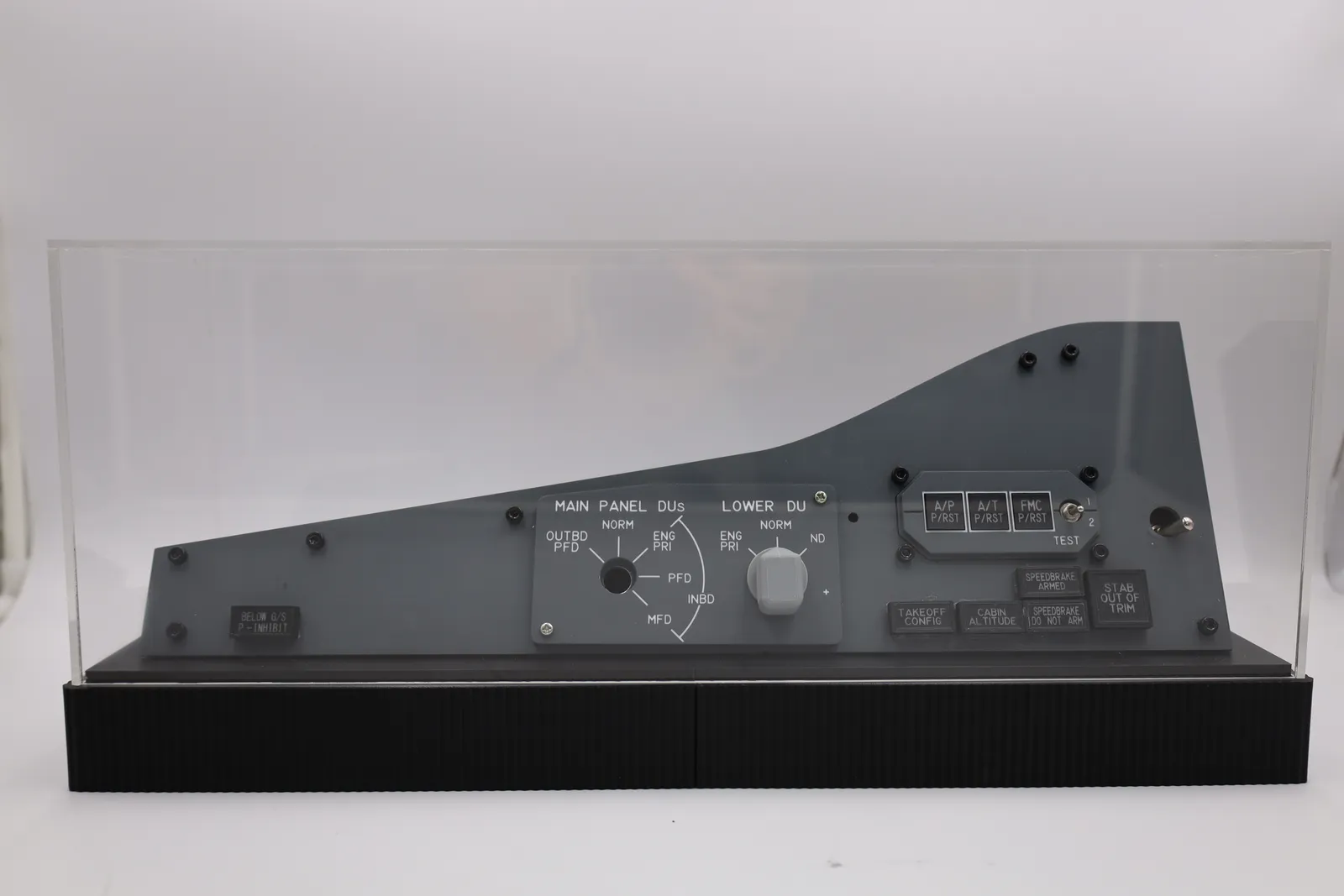
- Its limit is impact. A hard knock can crack it. Polycarbonate is the answer where the part will be hit.
- Its limit is cold bending. It is brittle, so a bend needs heat.
Polycarbonate: for guards, glazing and knocks
Polycarbonate is the tougher plastic. Suppliers sell it for machine guards, safety glazing, street furniture and roof lights, where a break is the problem. It also bends cold, so it forms into folded covers without heating.
Its faults are the other half of the table. It scratches more easily, which is why lenses and car parts get a hard coating. Plain sheet yellows in sunlight, so outdoor sheet carries a UV layer.
- Pick it when the part will be hit, dropped or leaned on.
- Its limit is the surface. A clear window that gets wiped every day will show wear sooner than acrylic.
- Ask for the grade. Indoor and outdoor sheet are not the same product.
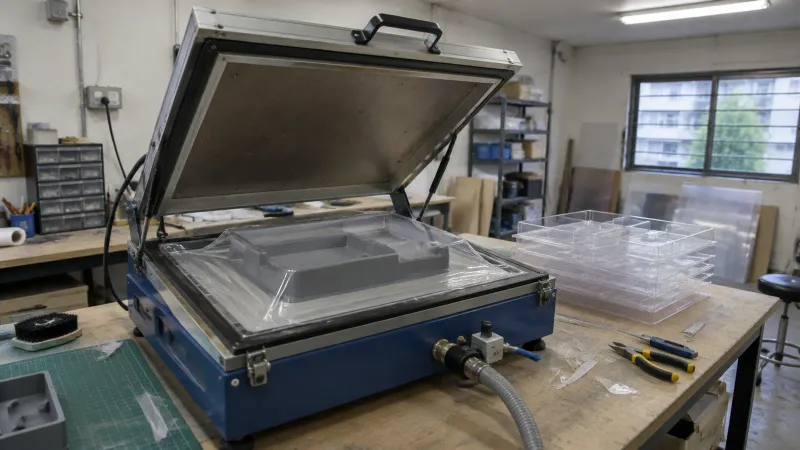
What we do with polycarbonate is machine it with CNC and vacuum form it. See what vacuum forming is.
Why we do not laser cut polycarbonate
A laser cuts by heat. Acrylic copes with it: it is less prone to burning and discolouring in a laser cut, so the edge comes out glossy. Polycarbonate does not. The cut edge tends to turn yellow to brown, and it chars if the cut runs slowly.
Novanta, which makes laser sources, calls polycarbonate notorious for cutting badly, and Xometry lists discoloration and charring on the cut edges. We do not laser cut polycarbonate, whatever its thickness.
So the rule here is simple. A flat part in a clear plastic goes to the laser in acrylic. A part that needs polycarbonate goes to a CNC mill or a vacuum former. Our laser cutting materials guide lists what goes on the laser.
Shop display, machine guard or awning
| The job | The plastic to start with | Why |
|---|---|---|
| A shop display or case | Acrylic | Clearer, polishes well, comes in colours |
| A sign or a printed piece | Acrylic | Takes a laser cut and a printed face |
| A machine guard | Polycarbonate | It takes a hit without breaking |
| A folded prototype cover | Polycarbonate | It bends cold |
| An awning or roof | Ask a roofing supplier | Ask for the UV grade and the warranty |
If you are comparing sheets for an awning or roof, ask the supplier for the UV grade and the warranty in writing. For the sheet itself, see our acrylic sheet guide for Singapore.
Telling them apart
Clear acrylic and clear polycarbonate are visibly alike, so a sheet with no label is a guess. The seller or the packing slip is the best answer. When it matters, as it does before any laser cut, tell us what you know about the sheet. A sheet nobody can identify does not go on our laser.
Where these facts come from
Every outside fact was read on the source’s own page on 19 November 2026.
- Perspex Distribution, cast acrylic and polycarbonate sheets: impact resistance, clarity, uses, UV-protected grades, warranty.
- Polyvantis, Scratch resistance and What is PLEXIGLAS: surface hardness of acrylic and polycarbonate, colour range.
- Wikipedia, poly(methyl methacrylate) and polycarbonate: cost, cold bending, heat, UV yellowing, bisphenol A.
- Novanta, polycarbonate and CO2 lasers and Xometry, polycarbonate laser cutting: yellowing and charring at the cut edge.
- UAL Creative Computing Institute, laser-safe materials: the two plastics look the same.
What we cut, machine and form comes from our own laser cutting, CNC and vacuum forming pages. That we do not laser cut polycarbonate is the studio’s own rule (owner, 13/11/2026).
Frequently asked
Which is stronger, acrylic or polycarbonate?
Polycarbonate, by a wide margin. One sheet supplier calls it almost unbreakable. Acrylic has better impact strength than glass, but a hard knock can still crack it.
Can polycarbonate be laser cut?
Some workshops do cut it, but the edge often turns yellow to brown and chars. We laser cut acrylic and we do not laser cut polycarbonate, whatever the thickness.
Does polycarbonate turn yellow in the sun?
Plain polycarbonate does, because ultraviolet light breaks it down. Sheet for outdoor use can carry a UV-protective layer. Ask the seller for a UV-protected grade, not the plain one.
Which costs less?
Acrylic is usually the cheaper of the two, and it is also the one sold in more colours. Prices change with thickness and size, so ask for both when you quote.
Can you bend polycarbonate without heat?
Often, yes. Polycarbonate can be bent cold, even at a sharp angle, where acrylic is brittle and needs heat. That is why it suits prototype covers and folded guards.
Is polycarbonate safe for food or drink?
Ask the maker, not the sheet seller. Polycarbonate is made from bisphenol A, and using polycarbonate containers for food storage is controversial. Acrylic has no bisphenol A subunits.
How can I tell which one I have?
You mostly cannot by eye, because clear sheets look alike. Check the seller's label or the packing slip, or ask the shop. Do not guess before a laser cut.
Do you machine or form polycarbonate?
Yes, in two ways. We machine it with CNC (computer numerical control) machining, and we vacuum form it over a printed mould. Both suit clear covers. Send the part and tell us what it has to do.
Which is better for a display case?
Acrylic, for most cases. It is clearer, polishes to a glossy edge, comes in more colours and laser cuts cleanly. Choose polycarbonate when the case will be knocked or dropped.
Related
-
 GuideWhat should you know before you buy an acrylic sheet in Singapore?
-
 GuideWhat is vacuum forming, and when should you use it?
-
 GuideWhat can be laser cut, and which material suits your job?
-
 ServiceLaser Engraving & Cutting
-
 ServiceCNC Machining
-
 ServiceVacuum Forming in Singapore
-
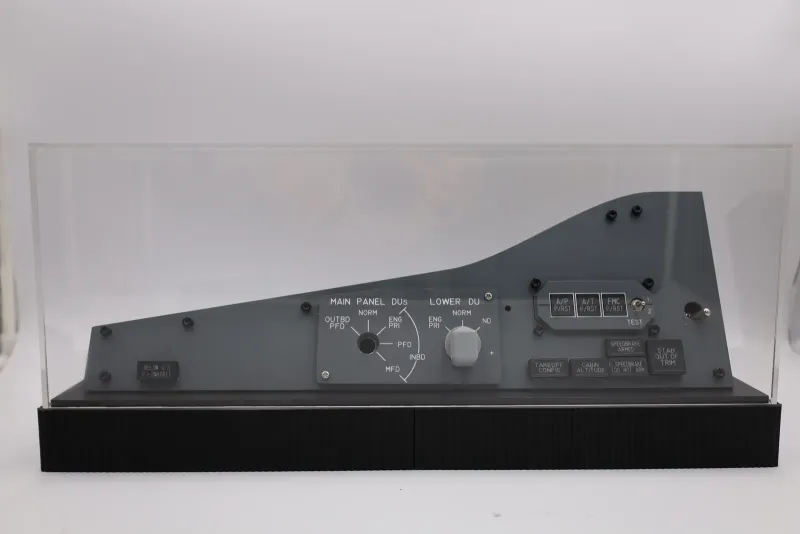 ProjectControl panel enclosure with acrylic cover
-
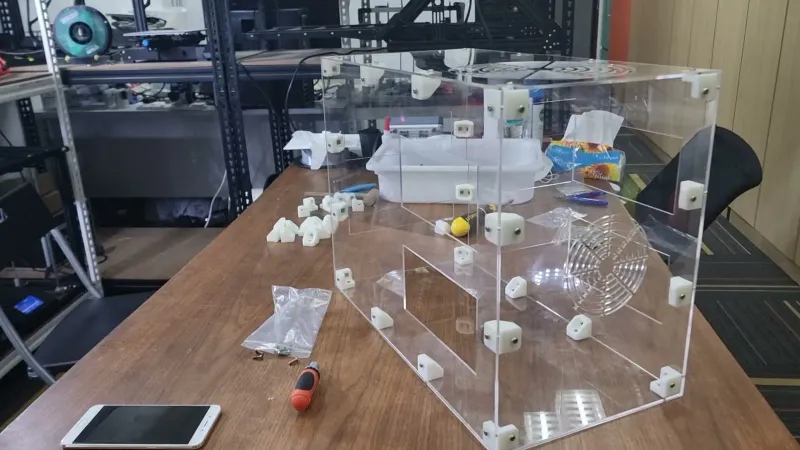 ProjectAcrylic cases for a Singapore Institute of Technology project
-
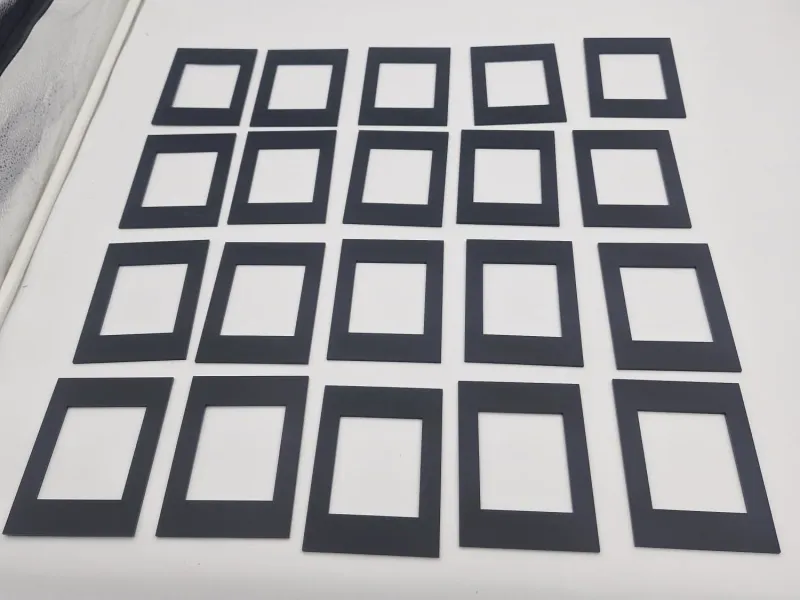 ProjectLaser-cut acrylic cover panels for RVM Systems