

PLA, PETG, ABS or ASA: which filament should your part be printed in?
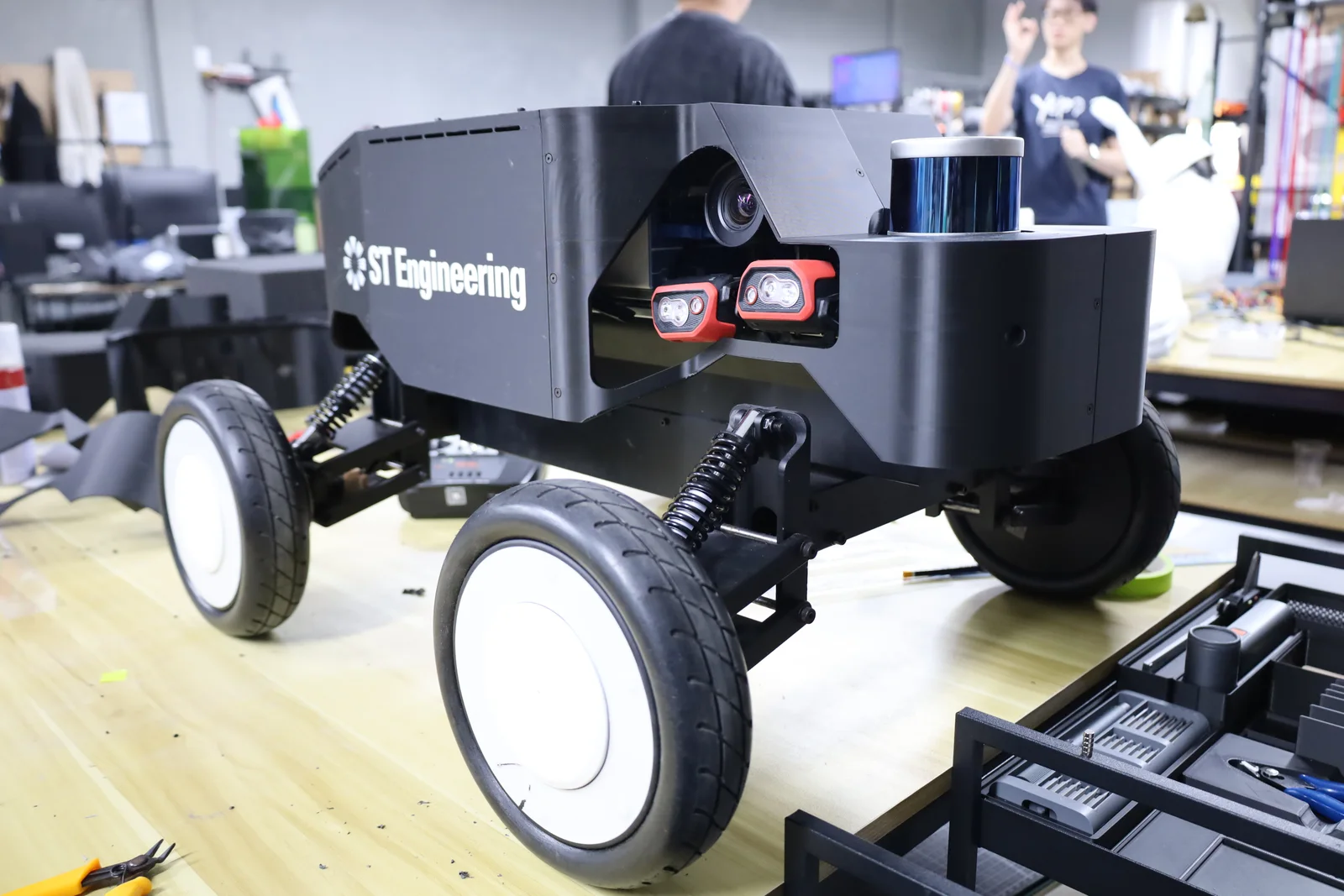
PLA softens from about 55°C, PETG 68°C, ABS 85°C and ASA 90°C, so PLA suits indoor parts, PETG working parts, ABS warm spots and ASA anything in the sun. All four are for filament printing (fused deposition modeling, FDM), and we print them in our own studio as part of our 3D printing service. Below is how they compare, then which to pick for your part.
PLA vs PETG vs ABS vs ASA at a glance
| Filament | Softens from (under load) | Sun and rain | Takes a knock, flat / across layers | Sanding and paint | Typical use |
|---|---|---|---|---|---|
| PLA Basic | about 55°C | Indoors only: goes brittle in sun | Fair flat, best across layers (26.6 / 13.8) | Easiest to sand, prime and paint | Models, prototypes, display pieces |
| PETG | about 68°C | Fine in shade, or for a season outside | Tougher flat, fair across (34.2 / 10.5) | Paints after a primer | Housings, brackets, parts with a job |
| ABS | about 85°C | Rated UV resistant, but ASA is safer in full sun all day | Tough flat, weak across (39.3 / 7.4) | Sands, primes and paints well; acetone smoothing on request | Warm indoor parts, car interiors |
| ASA | about 90°C | Best of the four: made for sun and weather | Toughest flat, weakest across (41.0 / 4.9) | Sands, primes and paints well | Outdoor fittings, vehicle panels, signage parts |
Softens from: the temperature at which a loaded part starts to bend (heat deflection, ISO 75 at 1.8 MPa).
Takes a knock: how hard a knock a test bar takes before it breaks (Charpy impact, ISO 179, kJ/m²). “Across layers” is the honest figure for a part loaded that way.
Source: the makers’ technical data sheets, on solid, annealed bars. A normal print softens a little sooner, so read every figure as “about”.
PLA: for display pieces and prototypes
PLA (polylactic acid) is the filament most parts start in. It prints the cleanest, holds fine detail and sharp edges, and comes in the widest range of colours: about 30 solid PLA Basic colours, up to four in one print (how colour works). It is also the easiest of the four to sand, prime and paint, which is why most painted display pieces start as PLA.
- Pick it for: models, prototypes, display pieces and indoor fixtures that stay out of the sun.
- Need a tougher PLA? PLA Tough+ takes about three times the knock of PLA Basic when printed flat and softens from about 58°C: a good fit for clips and brackets that stay indoors.
Its honest limits:
- Heat: PLA Basic softens from about 55°C, which a car parked in the sun passes easily.
- Sun and humidity: it goes brittle in sunlight and breaks down in heat plus humidity, the worst of the four outdoors in published weathering tests.
- Acids and alkalis: not resistant, though it shrugs off most oils and grease.
PETG: the step up from PLA for functional parts
PETG (the same family of plastic as drinks bottles, with glycol added so it prints) is the default for parts with a job to do: housings, brackets, mounts and fittings. It takes more heat than PLA, softening from about 68°C, and is tougher along its layers. It is sold for its resistance to water, UV and temperature, and it held up well in published short weathering tests.
- Pick it for: functional parts indoors, and outdoor fittings that sit in shade or only need to last a season.
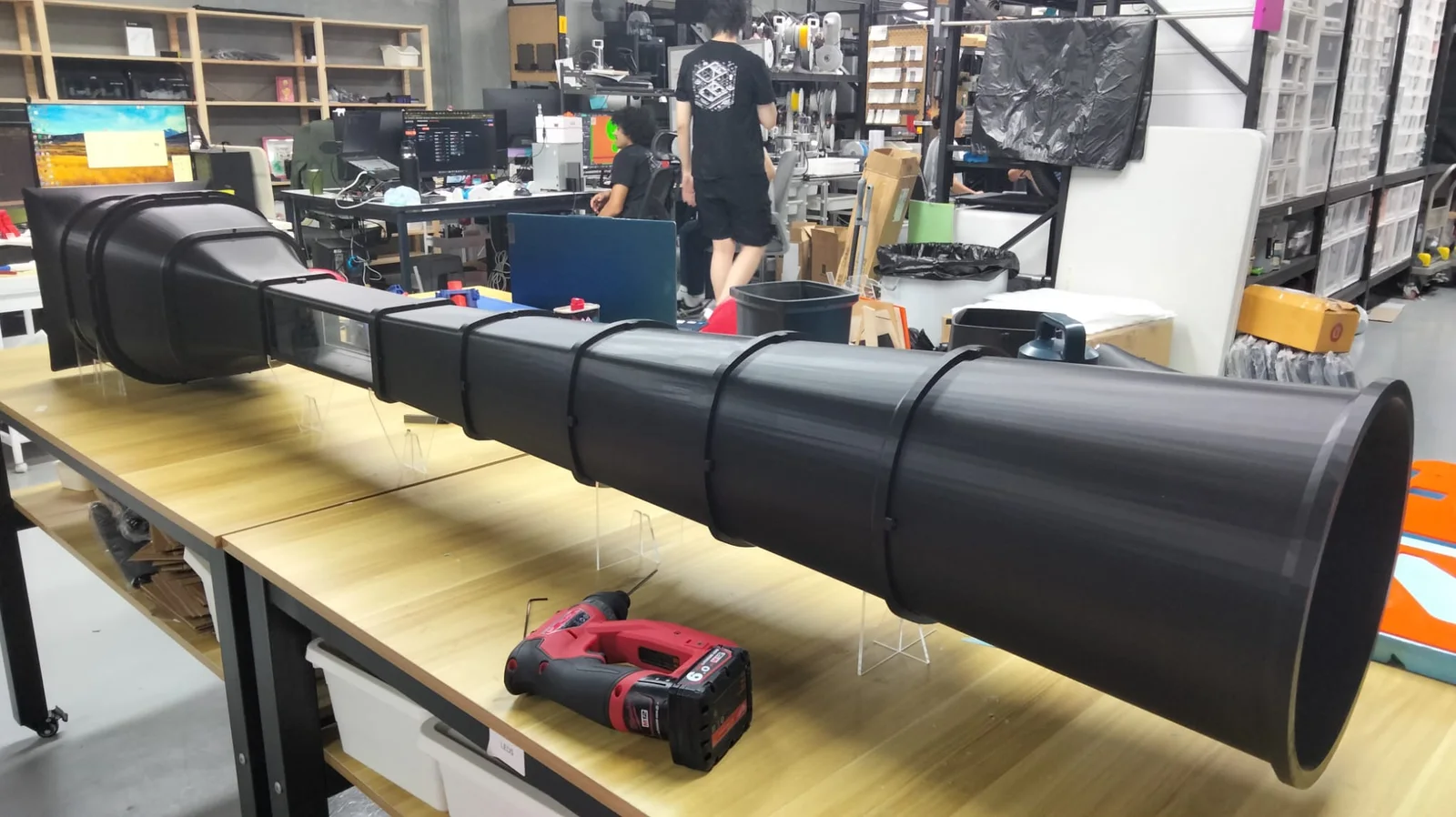
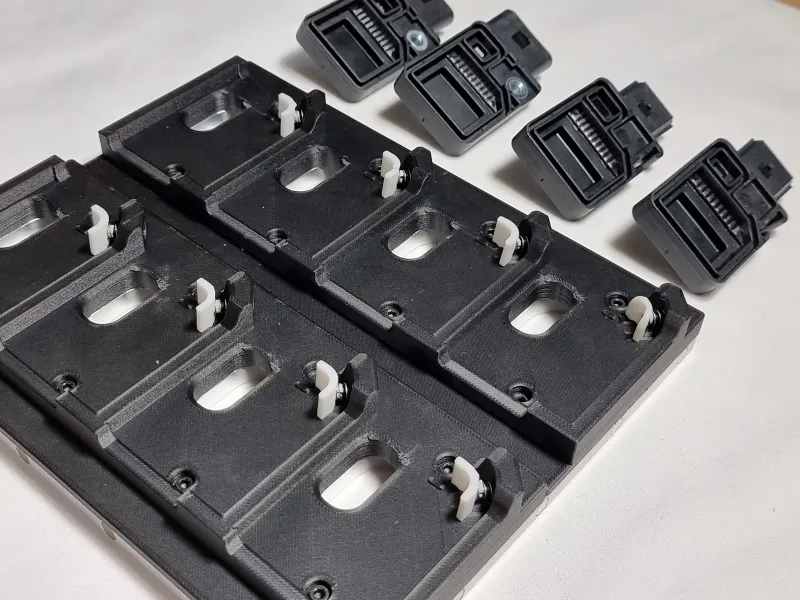
- Need it stiffer? Carbon-fibre PETG adds chopped carbon fibre for a rigid part that keeps its shape, which is what we used for the measuring jig below. More in our guide to carbon-fibre and engineering filaments.
Its honest limits:
- Across the layers it is no tougher than PLA, so a part that takes a knock still needs to be turned the right way on the printer (parts that snap along the layers).
- Acids and alkalis: its data sheet says it does not resist them, whatever many guides say. Most oils and grease are fine.
- A sunny dashboard (about 69°C) is right at its softening point, so it is not a car filament.
- Finish: it paints after a primer, but PLA is the easier one to sand smooth.
ABS: for parts that get warm
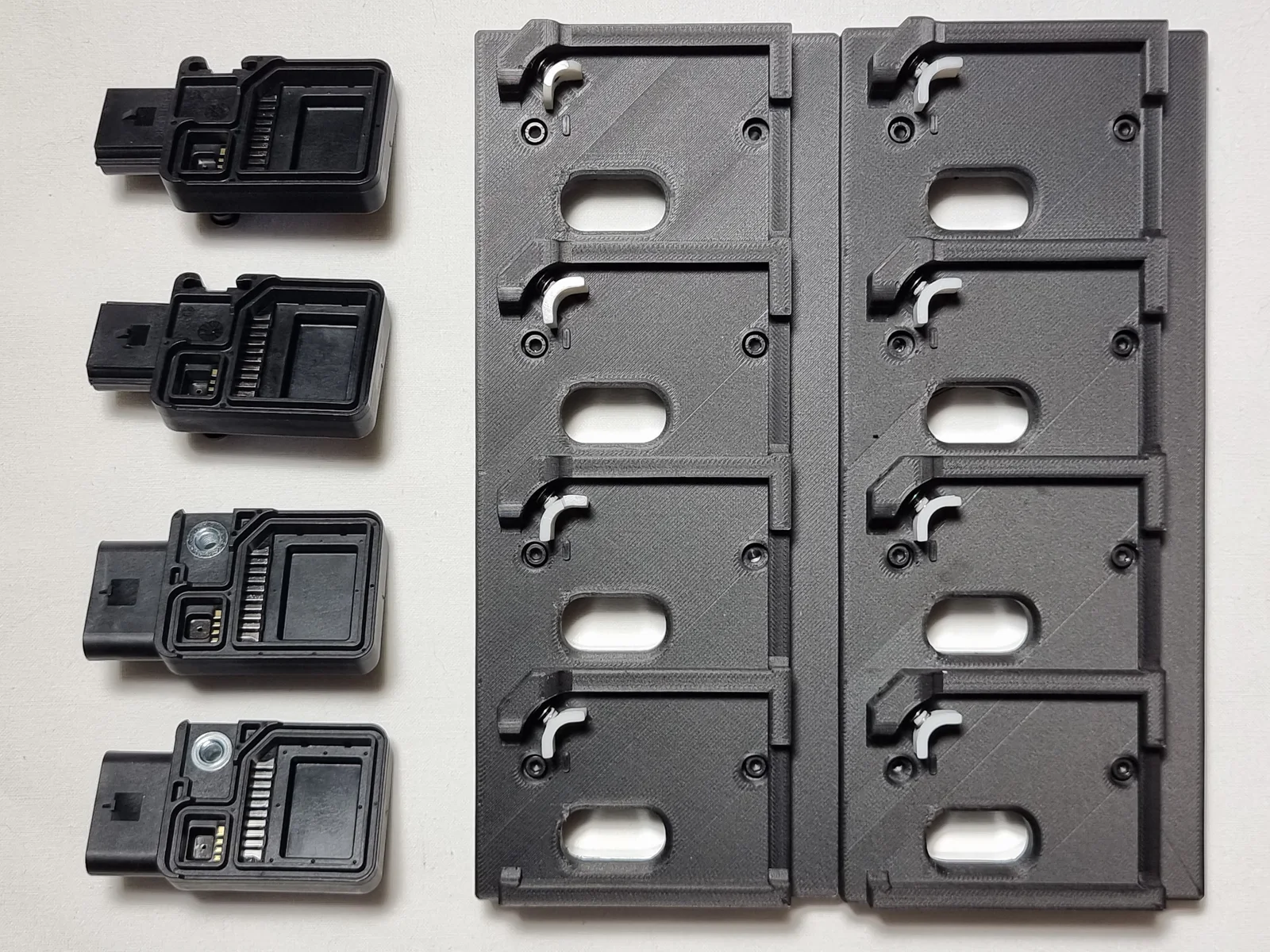
ABS (acrylonitrile butadiene styrene, the plastic LEGO bricks are made of) is the filament for parts that get warm: it softens from about 85°C, so it stays firm on a sunny dashboard where PLA and PETG soften. It resists acids and alkalis, and it is good to work on after printing: it sands, glues and takes paint well over a primer. Its data sheet rates it as UV resistant.
- Pick it for: warm indoor parts, car interiors, and parts you want to smooth, glue up or tap for screws.
- Smoothing: ABS can be smoothed with acetone vapour (a solvent that melts the surface glossy). It is not an option in the instant quote, so ask our team.
Its honest limits:
- Layer bond: it is tough flat but takes only about a fifth of that knock across the layers, so orientation matters.
- Solvents and oils: some of them attack it, so tell us what the part will touch.
- Full sun all day: ASA is made for that job, so it is the safer pick.

ASA: for sun and rain
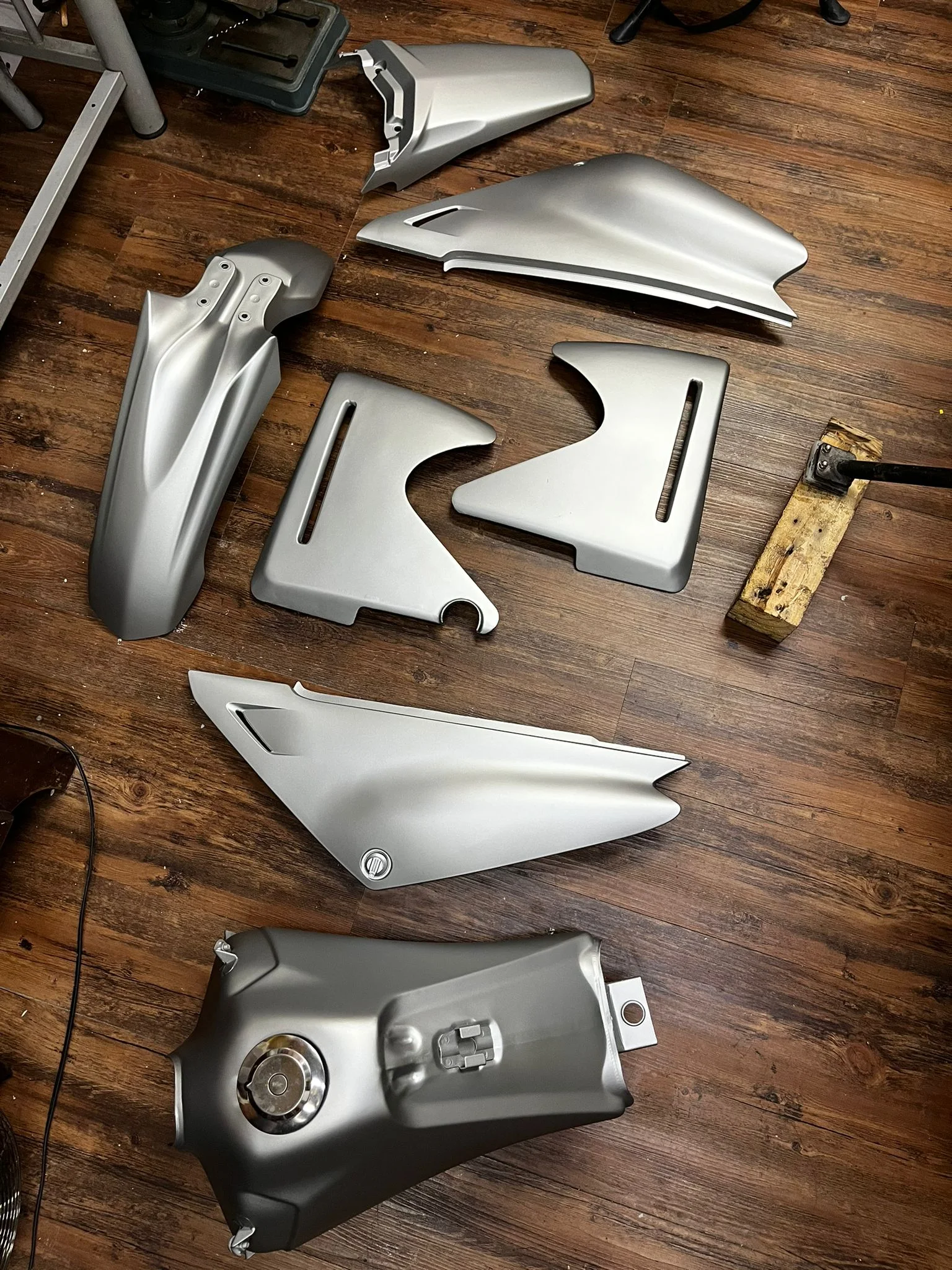
ASA (acrylonitrile styrene acrylate) behaves much like ABS but is made for the outdoors: its maker sells it for its UV and weather resistance, and it changed least of the four in published weathering tests. It also takes the most heat here, softening from about 90°C. It is what we printed a full set of motorbike body panels in, for a bike that lives in the open.
- Pick it for: anything in full sun or rain, such as outdoor mounts, signage parts and vehicle panels.
- Finish: it sands, primes and paints like ABS. The panels below were sanded, primed and sprayed in automotive paint.
Its honest limits:
- Weakest layer bond of the four: across the layers it takes about a third of the knock PLA Basic does, so turn the part so its load runs along the layers, not across them.
- Solvents and oils: like ABS, some of them attack it.
- Colours: fewer than PLA: white, black, grey and a handful more, with primer and paint for anything else.
Which one for my part?
Start from where the part will live and what it has to do:
- An indoor display piece, model or prototype: PLA. It looks the best straight off the printer and is the easiest to prime and paint.
- A functional bracket, clip or housing indoors: PETG, or PLA Tough+ if it takes knocks but no heat. Tell us in the quote notes how it is loaded, and we turn it on the printer so the load runs along the layers.
- Outdoors in Singapore: ASA for full sun or rain; PETG for shade or a season. Keep PLA indoors. Our guide to heat, sun and rain goes further, resin and nylon included.
- A car interior: ABS or ASA. In a 2018 Arizona State University study (published in the journal Temperature), a dashboard in the sun reached about 69°C after an hour on a day of about 38°C outside, past PLA’s softening point and right at PETG’s. The cabin air reached about 47°C, below all four, but a PLA part under load in a closed car for months is still the wrong pick.
- Something to sand, prime and paint: PLA indoors, ABS or ASA if it also has to take heat or sun (how we paint and finish prints).
Beyond these four: for more strength, heat or detail
Some parts need more than these four can give:
- More strength, stiffness or heat: carbon-fibre nylon, polycarbonate (PC) and the other engineering filaments, in our guide to engineering filaments.
- Something that bends: TPU 95A, a rubbery filament for grips, seals and bumpers.
- Fine detail or a smooth finish to prime and paint, or plate: resin, by stereolithography (SLA).
- Strong batches with no support marks: nylon powder, by selective laser sintering (SLS) or Multi Jet Fusion (MJF).
- Real metal: selective laser melting (SLM), in stainless steel, aluminium or titanium.
Our materials guide compares every family across all five processes, and FDM, SLA or SLS helps you pick the process first. Buying filament for your own printer instead? The full range is in our filament store.
Frequently asked
Is PETG stronger than PLA?
Yes along the layers: the maker's data sheets give PETG a pull strength (tensile strength) of about 51 MPa against 35 MPa for PLA Basic, and more impact toughness, 34.2 against 26.6 kJ/m². Across the layers the gap closes, and PLA Basic even scores a little higher on impact (13.8 against 10.5), so how the part is turned on the printer matters as much as the filament. PETG's clearer win is heat: it softens from about 68°C, PLA Basic from about 55°C.
Which filament handles heat best?
Of these four, ASA, which softens from about 90°C under load, just ahead of ABS at about 85°C; PETG manages about 68°C and PLA Basic about 55°C (published data sheets, ISO 75 at 1.8 MPa). The test bars are solid and annealed, so a normal print softens a little sooner. For more heat than that, polycarbonate (PC) and carbon-fibre nylon go well past 100°C: see our guide to engineering filaments.
Which filament is best for outdoor use?
ASA is the best of the four outdoors: it softens from about 90°C, is made for UV and weather resistance, and changed least in published weathering tests. PETG is fine in shade or for a season, ABS is rated UV resistant on its data sheet but ASA is the safer pick for full sun all day, and PLA belongs indoors because it goes brittle in sun and breaks down in heat and humidity.
Is ABS or ASA better?
ASA is better for anything in the sun, and slightly better on heat (about 90°C against 85°C); ABS is the usual pick for indoor parts and the usual one to smooth. ASA has the weakest layer bond of the four (4.9 kJ/m² impact across the layers against 7.4 for ABS), so turn the part so the load runs along its layers. Both sand, prime and paint well.
Why is PLA the default filament?
PLA is the default because it prints the cleanest and comes in the widest range of colours, about 30 solid PLA Basic colours, and it is the easiest of the four to sand, prime and paint. For a model, a prototype or a display piece that stays indoors and out of the sun, nothing else does the job better. Its limit is heat, from about 55°C.
Which filament is easiest to sand, prime and paint?
PLA is the easiest of the four to sand, prime and paint, which is why most painted display pieces start as PLA. ABS and ASA sand, prime and paint well too, and our ASA motorbike panels were sanded, primed and sprayed in automotive paint. Smoothing ABS with acetone vapour is not an instant-quote option, so ask our team if you need it.
Which filament is the cheapest?
The cheapest filament for your part shows up in the instant quote, because the price depends on the material and how long your part takes to print, not on the filament alone. Upload the file and switch between filaments to compare them for your own part. How pricing works is on our pricing page.
Does PETG resist chemicals?
PETG resists most oils and grease but not acids or alkalis, according to its maker's own data sheet, which is the opposite of what many guides say. PLA is the same. ABS and ASA resist acids and alkalis but not some solvents or some oils, so tell us what the part will touch and we check it against the sheet.
Is PLA or PETG food-safe?
Ordinary PLA, PETG, ABS and ASA are not food-contact grade, but one PLA is: PLA Pure, certified under EU Regulation 10/2011. We print it for short, dry contact below 60°C, such as cookie cutters, with no acidic or alkaline food left on it and no soaking. A print's layer lines can still trap food, so for hot, wet or daily kitchen use we cast in food-safe silicone instead.
Can you print in a brand or filament that isn't listed?
Yes, other brands and special filaments are on request, at extra cost. We print in our own studio in quality filament from established makers: PLA Basic, PLA Tough+, PETG, ABS, ASA and TPU 95A, plus carbon-fibre and engineering filaments. Tell us the brand and grade and what the part has to do, and we confirm whether we can run it.
Related
-
 GuideWhich 3D printing material should you choose?
 -
 GuideWill a 3D printed part survive Singapore heat, sun and rain?
 -
 GuideWhich filament is strong enough for a jig, fixture or end-use part?
 -
 ServiceIndustrial 3D Printing
 -
 ServiceProduct Development & Prototyping
 -
 ServiceColour Application & Finishing
 -
 Project3D-Printed Hanging Installation
 -
 ProjectRaspberry Pi Zero Enclosure
 -
 ProjectGoPro Lens Snap Adapter