

How much does 3D printing cost in Singapore?
Updated
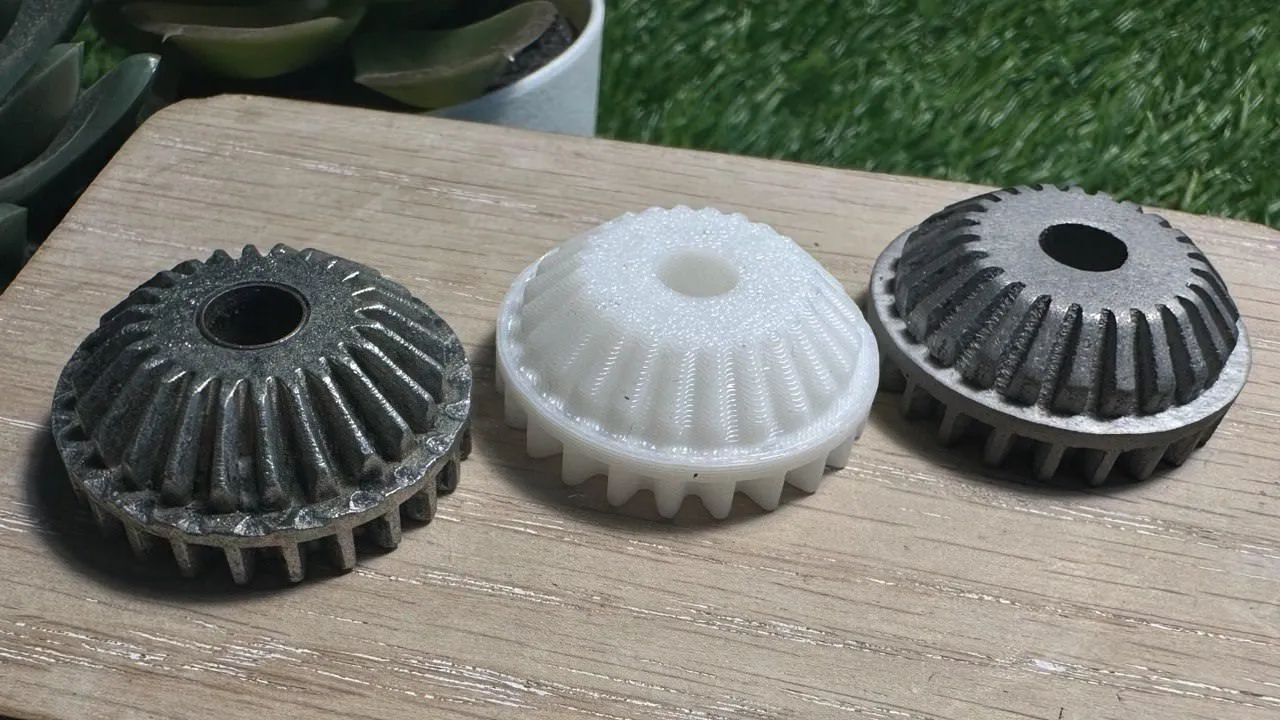
3D printing cost in Singapore comes down to what a part takes to make: the grams of material, the hours on the machine and any finishing, which on a small part can cost more than the print itself. Fused deposition modeling (FDM) in plastic filament is the cheapest per gram, stereolithography (SLA) resin costs about two to three times as much, and selective laser sintering (SLS) nylon about four to six times. FDM runs about S$0.10 to 0.30 per gram, so a small FDM part starts from about S$2 to 3, and a typical small to hand-sized part costs about S$2 to 30 in FDM, S$5 to 90 in SLA and S$10 to 180 in SLS. For a 3D printing quote on your own file, the instant quote prices it in seconds, and a person quotes anything the tool can’t within 24 hours.
What actually goes into a quote?
Seven things make up every quote, with one fair margin on top and no setup fees.
| What you pay for | What it covers | How to keep it down |
|---|---|---|
| Material | The grams of filament, resin or powder the part uses | Choose PLA filament and around 15 percent infill |
| Machine time | The hours the part holds a printer, which wears it and uses power | Use less infill, which saves material too |
| Labour | Preparing the file, setting up the print, taking off supports and checking the part | Design out steep overhangs that need supports |
| Finishing | Work after the print: sanding, primer, paint, plating or a printed logo | Leave parts nobody sees as they come off the printer |
| How hard the print is | Extra care for thin, tall or delicate parts and tight fits | Ask us whether printing it at another angle, or in pieces, makes it easier |
| Design work | Drawing a part from a sketch, photo or measurements, or fixing a file | Send a finished 3D file if you have one |
| Extras you ask for | Assembly, or hardware such as threaded inserts or magnets fitted in | Only charged when you ask for them |
The shape of a part moves the price more than its size. Light infill, the sparse honeycomb that fills the inside of a print, uses a fraction of the plastic and machine time of a solid block with the same outside dimensions, so it costs a fraction as much. The material you choose sets the rate per gram, and our material guide helps you pick one. If you need the part drawn first, our design process guide explains how that is quoted.

Which process should you budget for?
Process choice sets the baseline rate, so pay for the properties the part needs, not for the nicest process:
- FDM is the cheapest and the workhorse for prototypes, jigs, enclosures and large parts in PLA, PETG, ABS or TPU plastic. The trade-off is visible layer lines.
- SLA resin buys fine detail and a smooth, paint-ready surface. It is worth paying for on display pieces, and wasted on a bracket nobody sees.
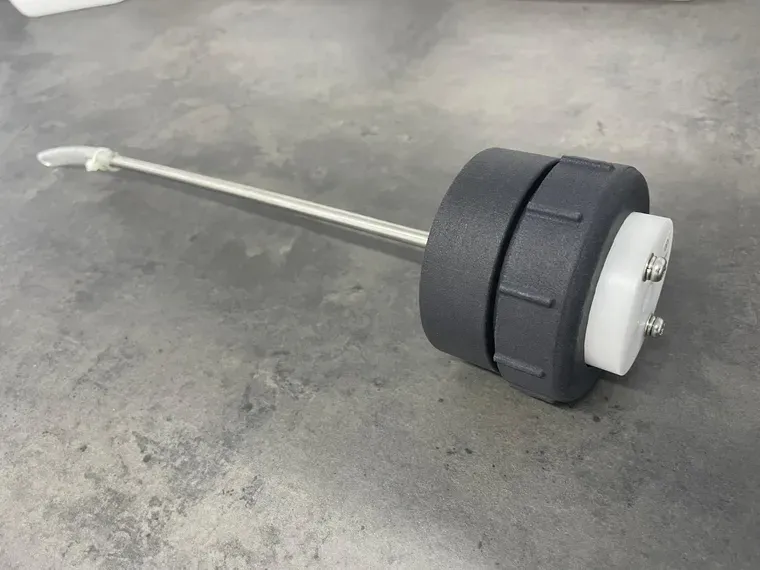
- SLS nylon, the most expensive of the three, buys tough working parts with no support marks.
- MJF nylon and metal (SLM) can be priced in the instant quote too, so upload your file to compare them with the three above.
The 3D printing service page, the SLA page and the SLS page cover what each does best. For a rough figure before you have a file, try the estimator.
How much does finishing add?
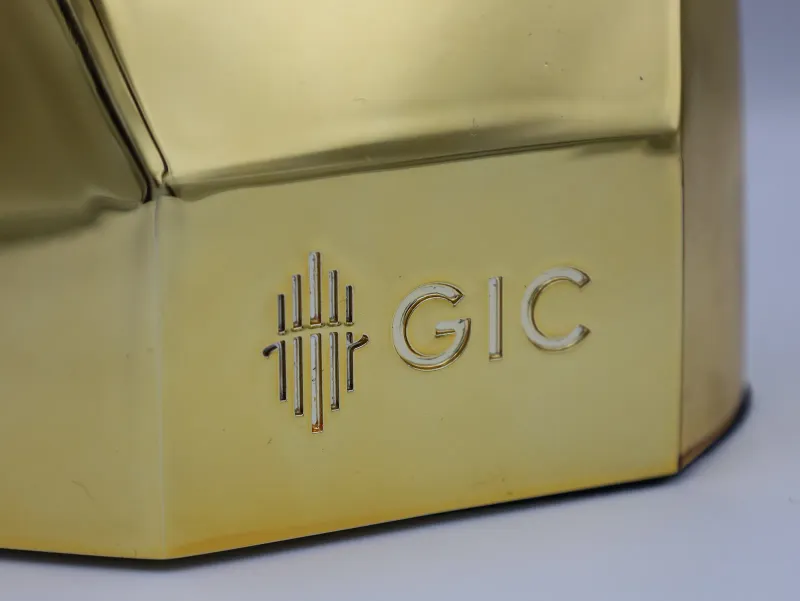
Nothing, if the part goes out as it comes off the printer. If it has to look like a product, finishing is priced by the part’s surface area, the prep it needs and how complex the finish is. Starting prices rise in this order: a UV-printed logo, sanding and primer, spray paint with a topcoat, airbrush detailing, then electroplating. The pricing page shows where each finish starts, and the finishing guide helps you pick one by what the part has to do.
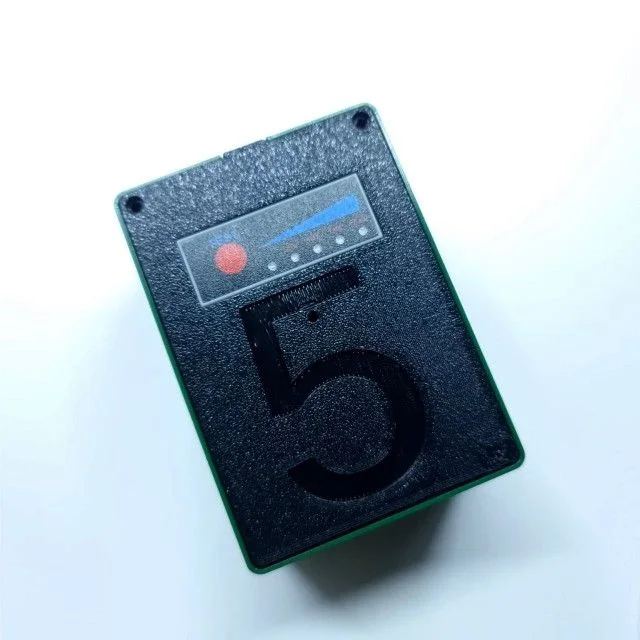
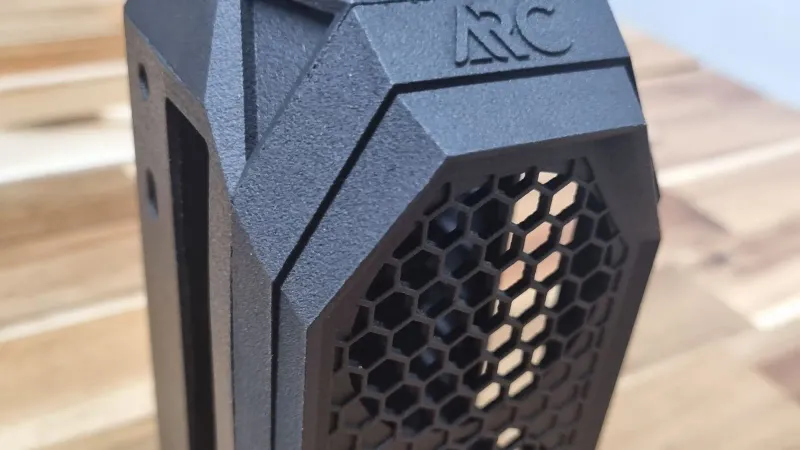
Smart design can skip the cost entirely. The FDM electronics enclosure we built around a client’s sensor and battery has a textured lid that hides layer lines on its own, so it needed no finishing at all.
How do you bring the price down?
- Drop the infill. Most parts do not need to be solid; around 15 percent infill is plenty for parts that carry no real load.
- Pick FDM and PLA unless the job needs fine detail, strength or heat resistance.
- Skip finishing on parts nobody will see.
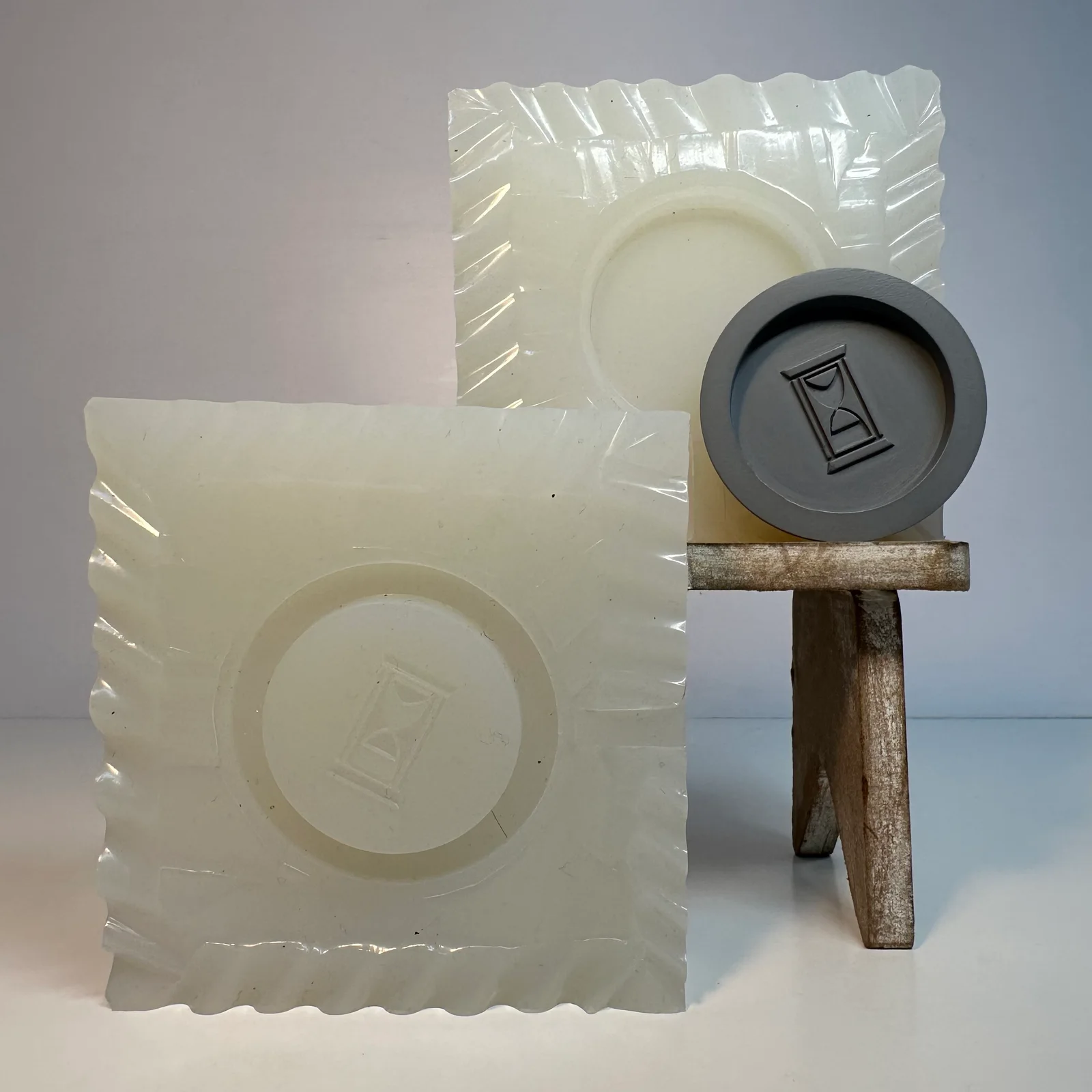
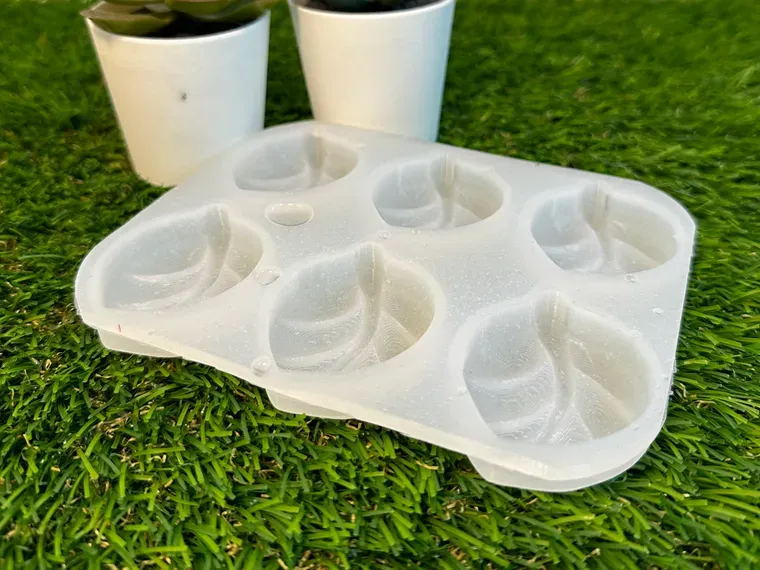
- Order identical parts together. The quote takes about 10 percent off at 10 to 24 identical units, 20 percent at 25 to 99 and 30 percent at 100 to 499. From around 50 identical pieces, silicone moulding from a printed master is usually cheaper per piece, because the mould is made once and every cast after it costs little. Past about 1,000, injection moulding takes over.
Cheap test prints save money too. For the GoPro lens snap adapter we printed a string of FDM prototypes and tried each one on the real camera housing until the latch clicked home. One more test print costs far less than a batch that does not fit.

How do you get a 3D printing quote?
There are two ways, and both are free.
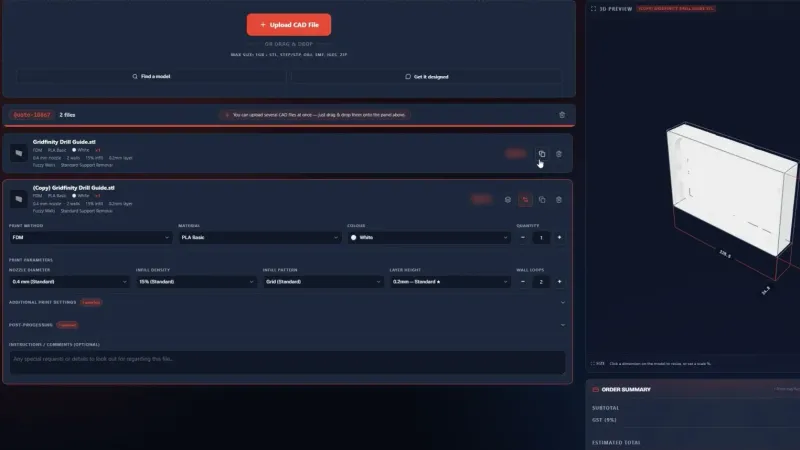
- Instant quote, in seconds. Upload a 3D file (STL, STEP, OBJ, 3MF, IGES or a ZIP) or a JPG or PNG photo, up to 1 GB, to the instant quote. Choose the process, material, colour and quantity for each part and the price appears straight away, with no email needed. Pay by card or PayNow. Our instant quote guide walks through it step by step.
- A quote from a person, within 24 hours. Assemblies, special finishes and parts we design for you are quoted by our team, usually the same business day. Send us the details or message us on WhatsApp.
After you pay, a person on our team reviews every file before it prints. If the part is not printable as uploaded, or needs an adjustment, we contact you before printing. A filament or resin part of normal size then takes 4 to 7 working days on the Standard queue, or less on Express or Super Rush, as a general guide for simple designs. If a print fails on our machines, the reprint is on us, never on your bill.
Frequently asked
How much does it cost to 3D print a hand-sized part?
A small FDM part starts from about S$2 to 3, and a typical small to hand-sized part costs about S$2 to 30 in FDM filament, S$5 to 90 in SLA resin and S$10 to 180 in SLS nylon. Where it lands in that range follows the grams of material and the machine hours the part takes, not its outside size. The instant quote prices your own file in seconds, free.
Why do two parts the same size get different quotes?
Two parts the same size get different quotes because the price follows what a part takes to make, not the box it fits in. Beyond infill, two things move it: supports, the throwaway scaffolding printed under steep overhangs, which add material and clean-up time; and height, especially in resin, where print time follows the number of layers, so a tall part takes longer than a flat one of the same volume. A design with fewer steep overhangs costs less to print.
What is the cheapest way to get something 3D printed?
FDM in PLA filament at around 15 percent infill, left raw off the printer, covers most functional parts at the lowest price. Ordering identical parts together saves more, because the volume discount is worked out on identical units in one quote, so ten copies ordered at once cost less each than ten ordered one at a time.
Do 3D printing quotes cost anything?
No. The instant quote is free and unlimited, with no email needed, and a job that needs a person to look at it, such as an assembly, custom finishing or design work from a sketch, is quoted free as well, with no obligation to order.
How long does a 3D printing quote take?
The instant quote prices your file in seconds. A job that needs a person, such as an assembly, a special finish or a part we design for you, is quoted within 24 hours, usually the same business day.
Is the instant quote price final?
After you pay, a person on our team reviews every file before it prints. If the part is not printable as uploaded, or needs an adjustment, we contact you before printing, so nothing goes on the machine until it is right.
Are there volume discounts on 3D printing?
Yes, on identical parts in one quote: about 10 percent off at 10 to 24 units, 20 percent at 25 to 99 and 30 percent at 100 to 499. From around 50 identical pieces, ask us to compare silicone moulding too, because one mould made from a printed master can cast them for less each.
How long does a 3D print take after I order?
A filament (FDM) or resin (SLA) part of normal size, up to about 10 to 15 cm across, takes 4 to 7 working days with no finishing, or 3 to 5 on Express and 1 to 3 on Super Rush. Nylon powder (SLS) takes about 8 to 12 working days, Multi Jet Fusion (MJF) 12 to 15 and metal 10 to 12, Express and Super Rush exist for those too, but not on the same days, so check with us. Painted or plated parts take 12 to 18 working days for 1 to 3 parts. A finished batch of 15 or more takes at least 15 working days painted or 18 plated, often longer, so ask us. Big parts take longer too. Every lead time is a general guide for simple, low-complexity designs.
Related
-
 GuideHow does the instant 3D printing quote work, and is the price final?
-
 GuideFDM, SLA, SLS, MJF or metal: which 3D printing process suits your part?
-
 Guide3D Print Finishing Options: Which Coat Should You Choose?
-
 ServiceIndustrial 3D Printing
-
 ServiceColour Application & Finishing
-
 ServiceSilicone Moulding & Vacuum Casting
-
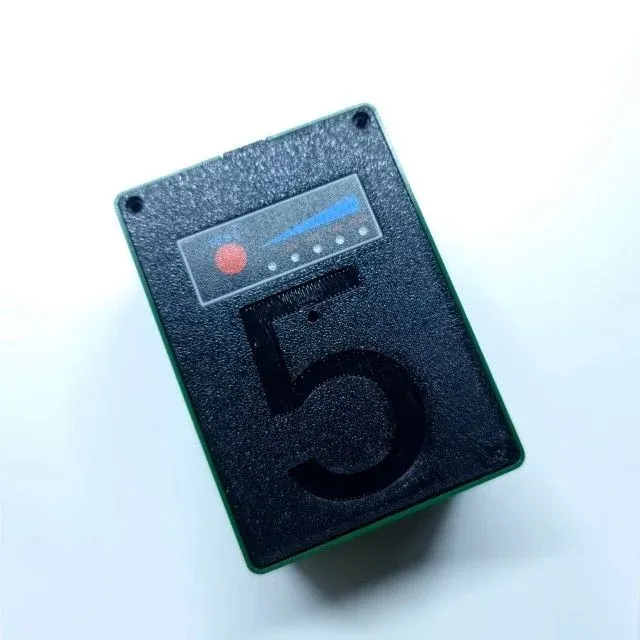 Project3D printed electronics enclosure (FDM)
-
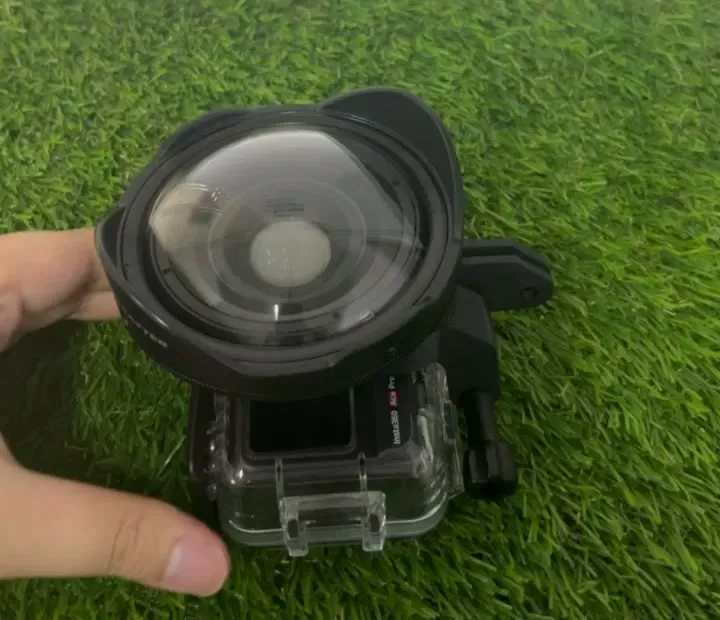 ProjectWet lens adapter for an action camera dive housing
-
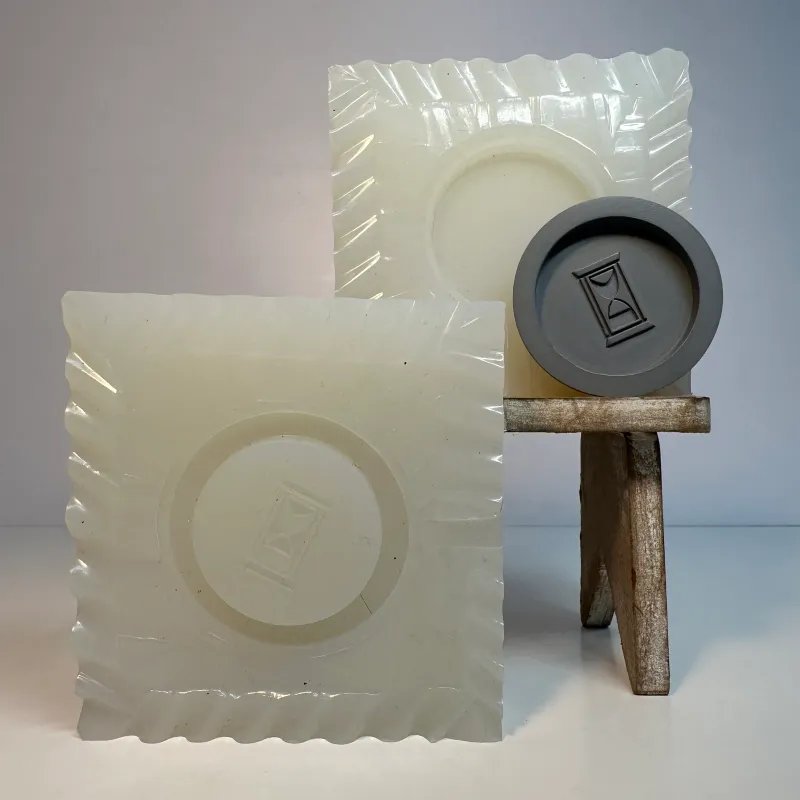 ProjectSilicone mould for a round hourglass emblem