

Which 3D printing material should you choose?
Updated
On this page
- Which 3D printing material for which job
- Every material compared: FDM, SLA, SLS, MJF and metal
- Looks and display models: PLA Basic or resin
- Strength and durability: PETG, carbon fibre or nylon
- Heat resistance and outdoors: ABS, ASA or PC
- Flexible parts: TPU 95A or flexible resin
- Fine detail: resin printing
- Clear parts: clear resin
- Food contact: PLA Pure filament or food-safe silicone
- Metal: stainless steel, aluminium or titanium
- A materials guide for every process
- Material finder: answer one question
- Frequently asked
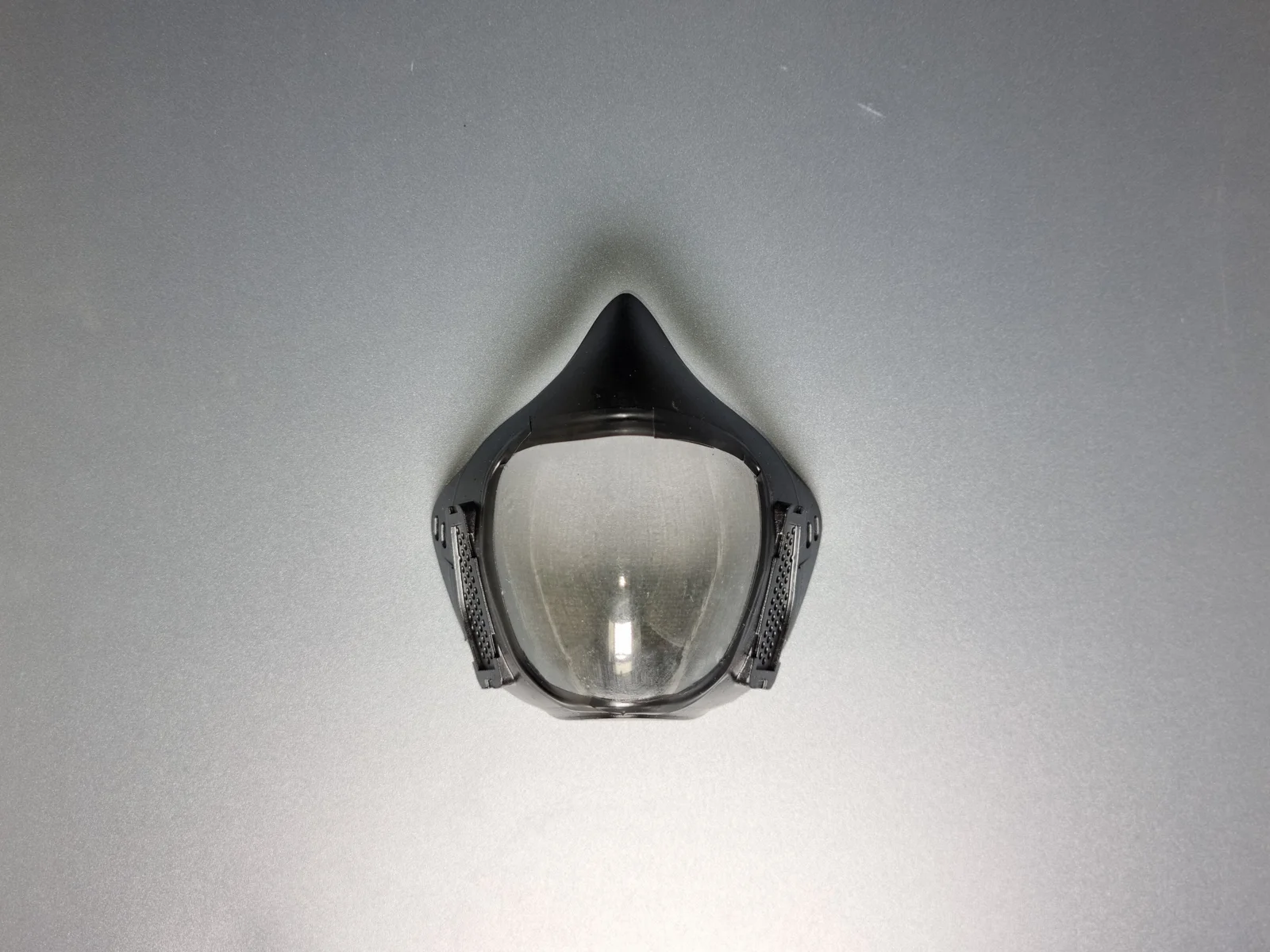
PLA Basic filament suits most models and prototypes; move off it only when the part must take load, heat above about 55°C, full sun, bending, fine detail, clear faces or metal strength. The table below matches each job to a material, and each section after it gives the short answer and a link to the deeper guide.
Which 3D printing material for which job
The best material for 3D printing a part depends on what it has to do, so start there, not from the material.
| The part must | Choose | Printed in | Why it fits |
|---|---|---|---|
| Look good on a desk or shelf | PLA Basic | Filament | Widest colour range, cheapest and quickest; indoors only |
| Show fine detail up close | Standard or fine-detail resin | Resin | Detail down to 0.5 mm, a smooth surface |
| Do an everyday job | PETG | Filament | Tougher than PLA, softens from about 68°C |
| Hold load as a jig, fixture or bracket | PETG-CF, PA6-CF or PPA-CF | Filament | Stiff carbon-fibre grades, strongest along the layers |
| Take load every way, or come as a batch | PA12 nylon | Nylon powder | Close to equally strong in every direction, no supports |
| Survive heat | ABS, ASA or PC; PAHT-CF or PPA-CF for more | Filament | Softens from about 85°C (ABS) up to about 195°C (PPA-CF) |
| Live outdoors in full sun | ASA | Filament | Rated for UV and weather by its maker |
| Bend, grip or seal | TPU 95A, or flexible resin | Filament or resin | Rubbery; TPU stretches over 650% before breaking |
| Sit near acids, alkalis or chemicals | ABS, ASA, PPA-CF, or chemical-resistant resin | Filament or resin | PLA and PETG are not acid or alkali resistant |
| Be see-through | Clear resin | Resin | Frost clear or full clear, after finishing |
| Touch food | PLA Pure for short, dry contact; food-safe silicone for hot, wet or daily use | Filament or silicone moulding | PLA Pure only below 60°C, and layer lines can hold food |
| Be real metal | Stainless steel, aluminium or titanium | Metal | Heat, load and wear no plastic survives |
Source: filament figures are from the makers’ technical data sheets.
Every material compared: FDM, SLA, SLS, MJF and metal
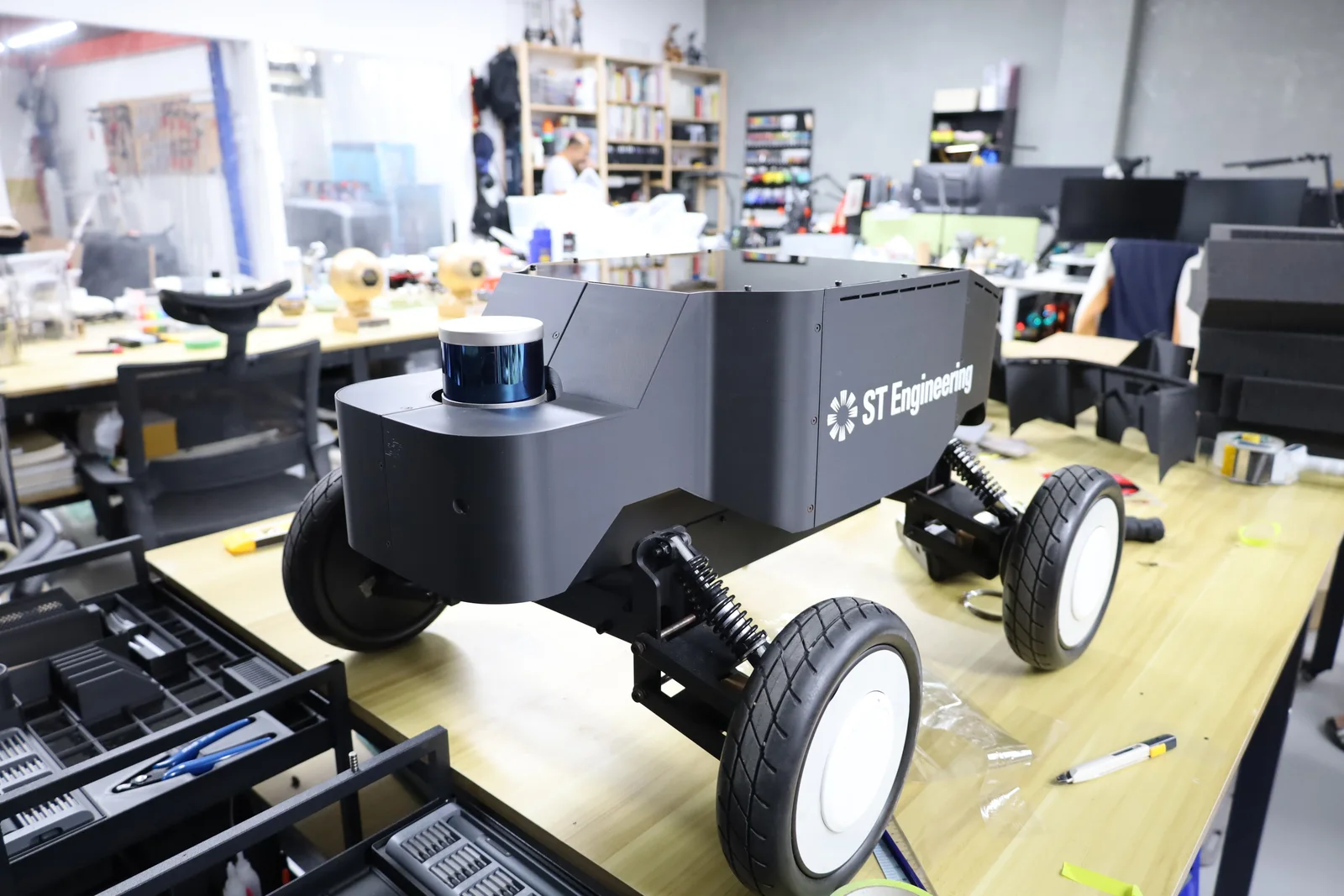
We print in five ways in our Singapore studio:
- Filament printing (fused deposition modeling, FDM)
- Resin printing (stereolithography, SLA)
- Nylon powder in two processes: selective laser sintering (SLS) and Multi Jet Fusion (MJF)
- Metal (selective laser melting, SLM)
The table shows how hot each material gets before it softens, its colours and the usual time to make a normal-size part (up to about 10 to 15 cm across).
| Material | Printed in | Softens from (part doing a job) | Colours | Lead time, part up to about 10 to 15 cm |
|---|---|---|---|---|
| PLA Basic | Filament | About 55°C | Widest range of any material | 4 to 7 working days |
| PLA Tough+ | Filament | About 58°C | Full filament range | 4 to 7 working days |
| PETG | Filament | About 68°C | Full filament range | 4 to 7 working days |
| ABS | Filament | About 85°C | Full filament range | 4 to 7 working days |
| ASA | Filament | About 90°C | White, black, grey and more | 4 to 7 working days |
| PC | Filament | About 110°C | White, black, clear black | 4 to 7 working days |
| TPU 95A | Filament | No figure published: ask us | Full filament range | 4 to 7 working days |
| Fibre-filled: PETG-CF, ABS-GF, PA6-CF, PAHT-CF, PPA-CF | Filament | About 68 to 195°C, by grade | Mostly black | 4 to 7 working days |
| Resins: standard, tough, fine-detail, high-temperature, clear, flexible, chemical-resistant | Resin | No figure published: ask us | White, yellow, brown, black, clear | 4 to 7 working days; a large resin part takes longer, ask us |
| PA12 nylon | Nylon powder, SLS | About 55 to 65°C (about 145°C with no load on it) | Grey, black or white | 8 to 12 working days |
| PA12 nylon | Nylon powder, MJF | About 95°C (about 175°C with no load on it) | Black | 12 to 15 working days |
| Stainless steel (316L, 17-4PH), aluminium (AlSi10Mg), titanium (Ti6Al4V) | Metal | Far beyond any Singapore use | Natural metal finish | 10 to 12 working days |
Softens from: under the standard ISO 75 bending load, rounded down; a print with light infill softens a little sooner. Filament figures are from the makers’ data sheets, nylon from typical published PA12 powder data.
Lead times: a rough guide for a normal-size part, up to about 10 to 15 cm across. Larger prints take longer, large resin (SLA) parts especially, so check with us. Express is 3 to 5 working days and Super Rush 1 to 3; primed and painted, or plated, parts take 12 to 18.
Looks and display models: PLA Basic or resin
PLA Basic is where most parts start. It is the cheapest material we print (priced by size, material and print time) and among the quickest, it comes in the widest range of colours, up to four in one print, and it is the easiest to sand, prime and paint. Its limits: it softens from about 55°C and goes brittle in the sun, so it stays indoors.
When the detail has to hold up close, a figurine face or small lettering, resin is the better pick: it prints lettering from 2 mm tall where filament needs 5 mm, with a smoother surface that needs only light sanding before primer and paint.
- Choosing between PLA and its neighbours: PLA, PETG, ABS or ASA compares the four everyday filaments.
- Choosing colours: colours for a 3D print covers the filament range, multi-colour and painting.
Strength and durability: PETG, carbon fibre or nylon
PETG is the default for a part that does a job: tougher than PLA and good to about 68°C. For more, we print engineering filaments in our own studio: PETG-CF, ABS-GF, PC, PA6-CF, PAHT-CF and PPA-CF, so ask for the one you want, PETG-CF for example, in the quote notes. The carbon-fibre grades are stiff, but every filament print is weakest across its layers: PA6-CF’s pull strength (tensile strength) across them is about half what it is along them (the maker’s data sheet). How the part lies on the printer matters as much as the material, which carbon-fibre and engineering filaments explains grade by grade.
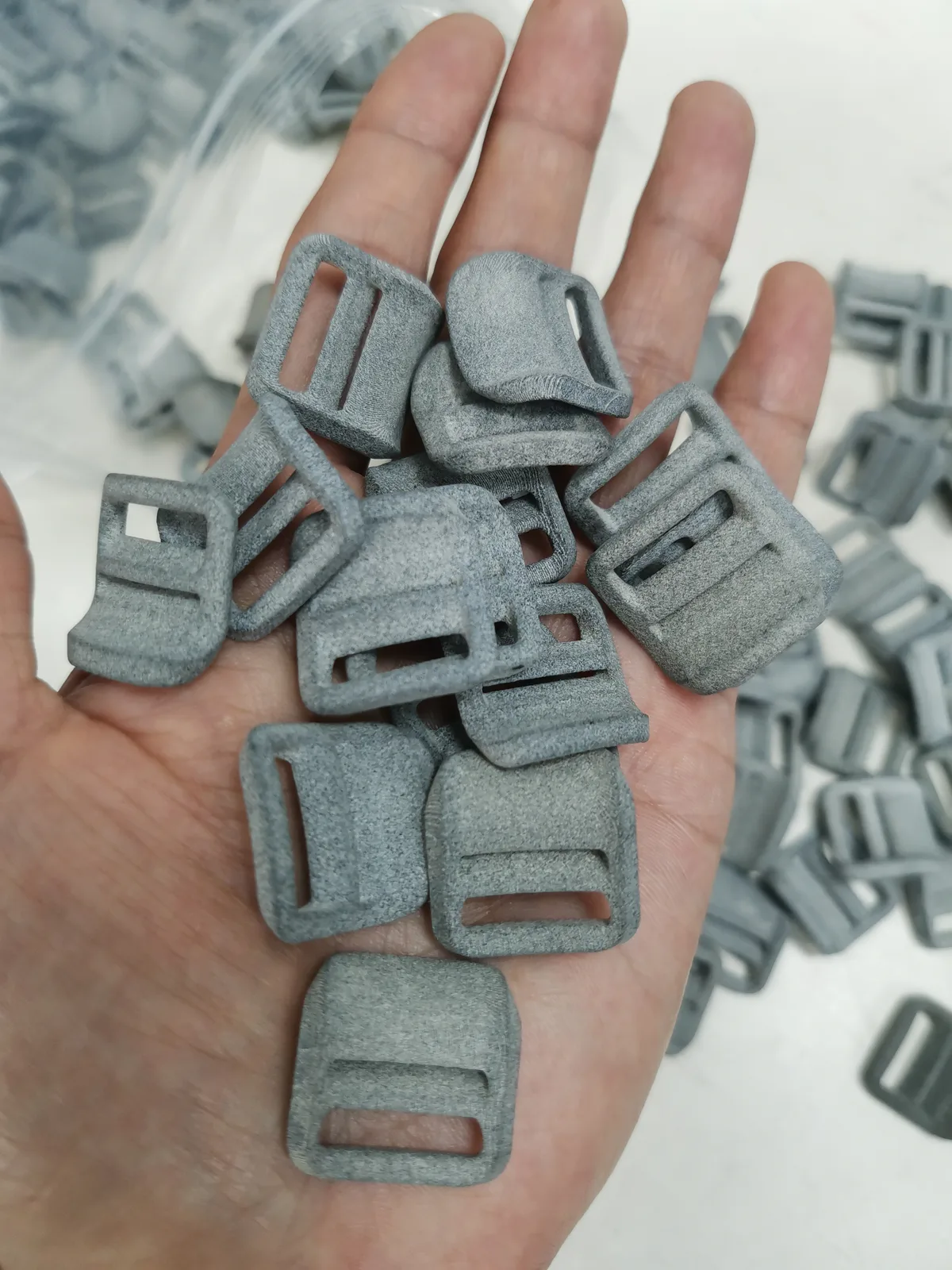
Nylon powder (PA12: grey, black or white on SLS, black on MJF) is the pick when the load comes from every direction or you need a batch. In SLS a laser fuses the powder layer by layer; in MJF, heat and a printed fusing agent do it. Either way the loose powder holds the part up, so hinges, clips and grilles print with no supports. It is close to equally strong in every direction, though it stretches less before breaking when pulled across the layers. MJF gives a smoother surface and very even batches; SLS is quicker here. Stiffer glass-filled nylon is made only on request: ask us.
- Designing for nylon powder: nylon SLS and MJF problems you can fix in the model.
- Nylon powder printing: our SLS service.
Heat resistance and outdoors: ABS, ASA or PC
Under load, PLA softens from about 55°C, PETG about 68°C, ABS about 85°C, ASA about 90°C and PC about 110°C (published data sheets). In a 2018 Arizona State University study published in the journal Temperature, a dashboard in the sun reached about 69°C after an hour: past PLA, right at PETG’s softening point, and below ABS, ASA and PC. Hotter still, PAHT-CF holds to about 170°C and PPA-CF to about 195°C.
- Full sun: ASA. Its maker rates it for exceptional UV and weather resistance.
- Shade or a season outside: PETG.
- Damp: PA6-CF soaks up 2.35% water and loses 37% of its bending strength wet, so PAHT-CF is the carbon-fibre nylon for damp spots.
- Indoors only: PLA and resin, which go brittle or yellow in sunlight.
Will a 3D printed part survive Singapore heat, sun and rain? has the full figures for every material, from parked cars to rain.
Flexible parts: TPU 95A or flexible resin
TPU 95A is a rubbery filament that bends and springs back, stretching over 650% before it breaks, and it is the toughest filament on impact by far (the maker’s data sheet). It suits grips, seals, bumpers, straps and soft covers. It isn’t painted as a rule, because paint flexes off.
Flexible resin gives a softer-touch part with finer detail, in white. For a batch of soft rubber parts, a silicone mould cast from one printed master is often the better route.
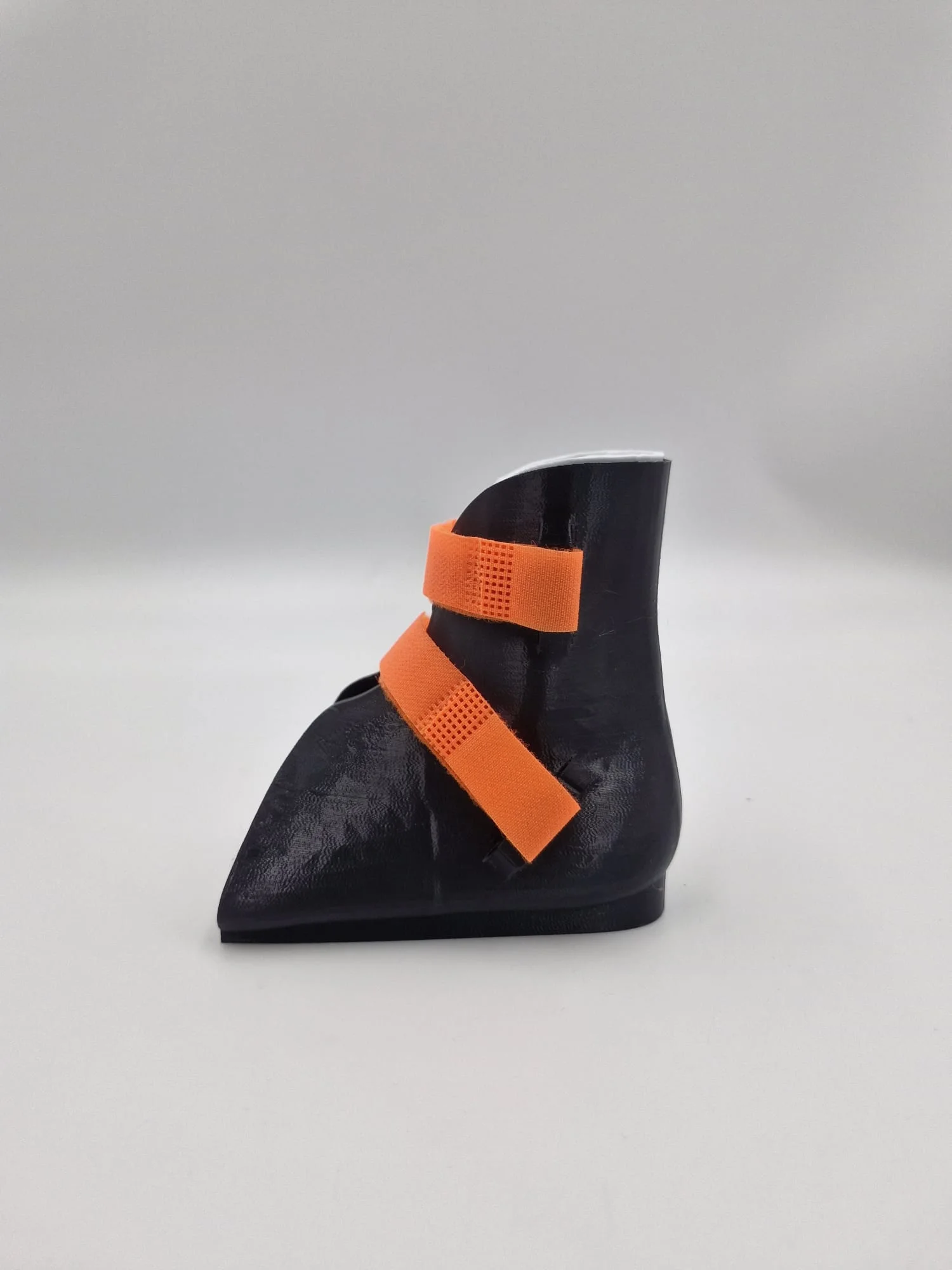
Fine detail: resin printing
Resin holds detail down to 0.5 mm and gives the smoothest surface we print, so it is the base for figurines, masters for moulding, and anything primed and painted, or plated. The grades:
- Standard resin (white): detail, display pieces and masters.
- Strong and tough resins (light yellow, yellow or white): parts that are handled or snapped together.
- Fine-detail and accurate resins (brown or black): small detailed parts and tight fits.
- High-temperature resin (semi-translucent yellow-green): fixtures near heat and moulds; ask us for its figure.
- Clear, flexible and chemical-resistant resins: see the sections above and below.
Resin stays indoors, because sunlight yellows and weakens it, and a thin clip in resin can snap where nylon would flex. Which SLA resin should you choose? goes through each grade, and our resin printing service shows what it is used for.
Clear parts: clear resin
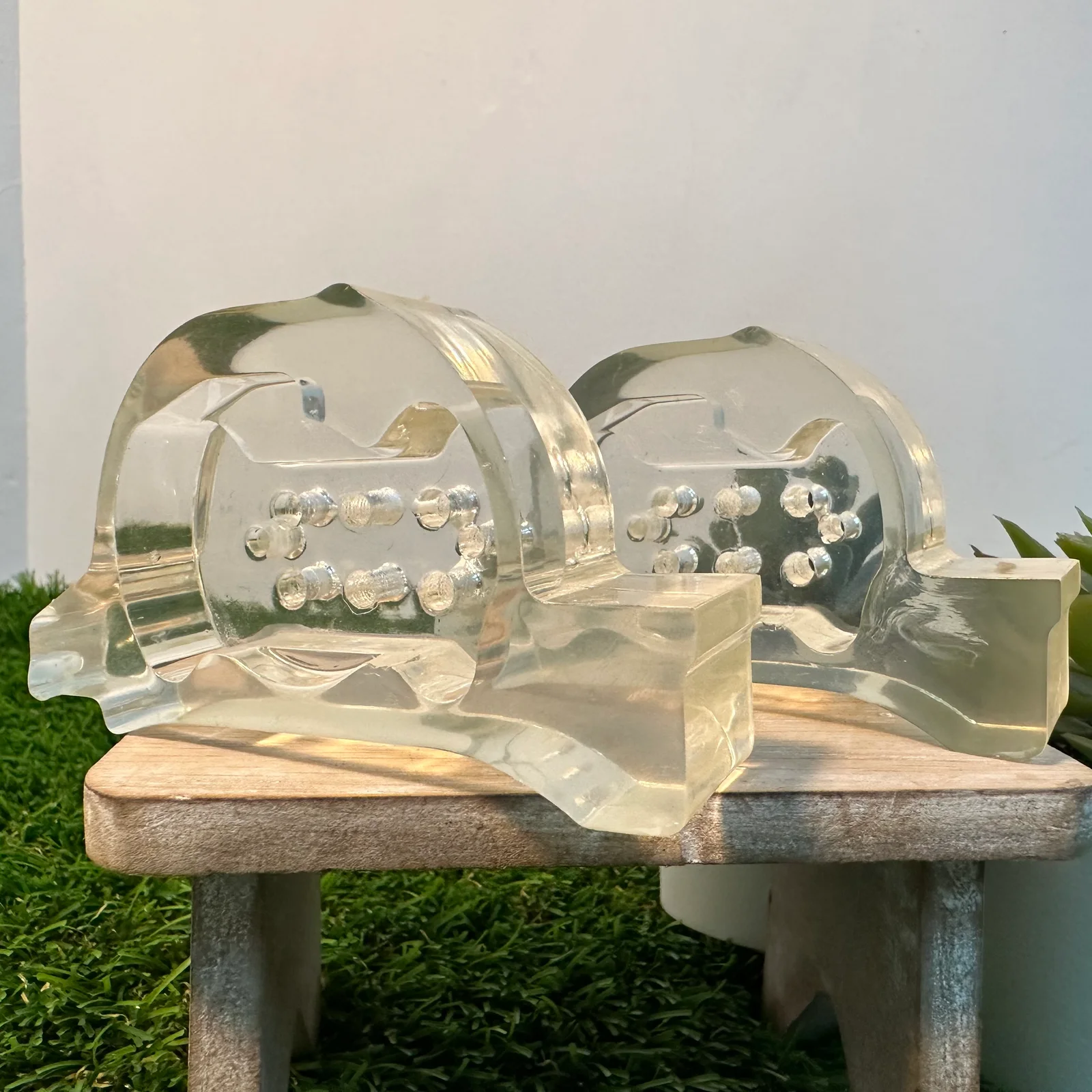
Clear resin comes in frost clear or full clear and turns see-through after finishing, for lenses, light guides, windows and display parts. It yellows in sunlight, so it stays indoors. If the part can be flat, laser-cut acrylic is clearer still. How clear can a 3D printed part get? compares the routes.
Food contact: PLA Pure filament or food-safe silicone
If you need a food safe filament, the one we print is PLA Pure. It has passed the EU’s food-contact tests under Regulation 10/2011 (70°C for two hours against water, oil and acid) and the EN 71-3 toy-safety test.
Its maker sets the limits: keep the part between 0°C and 60°C, don’t leave acidic, alkaline or oily food on it for long, and don’t soak it in liquid. Even in PLA Pure, a print’s layer lines and tiny gaps can hold food and bacteria, so it suits short, dry contact: cookie cutters, stencils, a scoop for dry goods. No other filament or resin we print is food-contact grade.
We print PLA Pure the way the maker’s PLA Pure guide recommends:
- a new, non-brass nozzle kept only for PLA Pure
- a print path never shared with fibre-filled or high-temperature filament
- a build plate washed with dish soap, and no glue
- 20 to 40% infill and 3 to 4 walls, so fewer gaps can hold dirt
- the food-facing surface printed as a side or top, never against supports
- each part trimmed, rinsed under running water, wiped with ethanol, rinsed again and dried
If you are designing the part, round off the inside corners and avoid blind holes a brush cannot reach.
For hot food, liquids or a kitchen product used every day, we cast in food-safe silicone from a 3D printed master instead. The smooth silicone part has none of a print’s layer lines. Silicone moulding has no minimum order, and a larger run costs less per piece.
Metal: stainless steel, aluminium or titanium
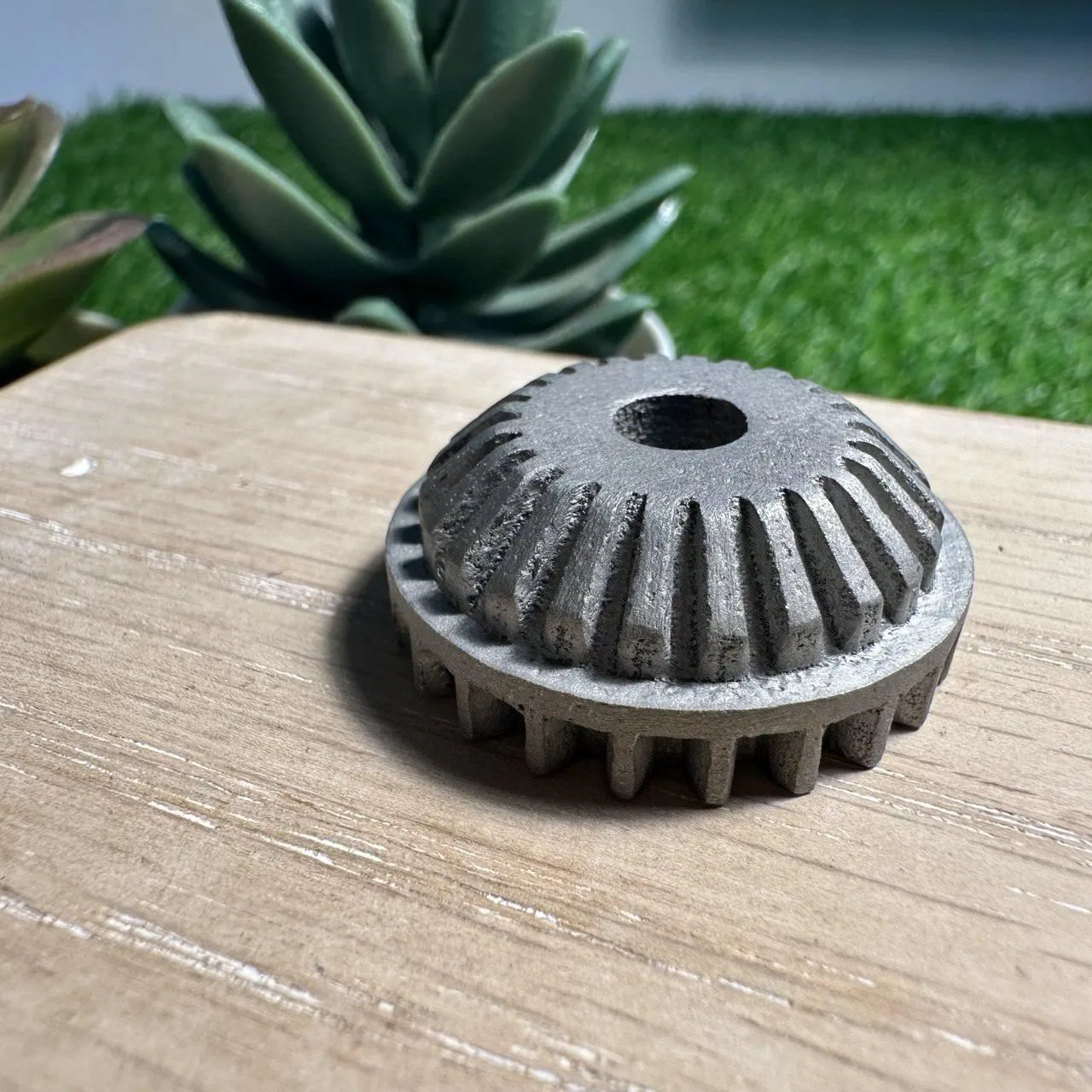
When a part must take heat, load or wear that no plastic survives, we print it in stainless steel, aluminium or titanium (the alloy grades are in the comparison table). For another alloy, ask us.
- Aluminium: light and conducts heat well, for heat sinks, brackets and housings. It needs a finish to stay bright outdoors.
- Stainless steel: tough, hard-wearing and corrosion resistant, for tooling, jigs and marine parts.
- Titanium: the strongest for its weight, and it shrugs off weather.
Faces that must fit are machined after printing, and we usually prove the fit in plastic first. 3D printing tolerances and clearances shows how much gap a fitting part needs. Metal 3D print problems and the design fix covers the design side, and metal 3D printing vs CNC machining whether it should be printed at all. See our metal printing service.
A materials guide for every process
Each process and technology has its own guide to the materials we use, with what each one suits:
| Process or technology | Materials it covers | Guide |
|---|---|---|
| Filament (FDM) | PLA, PETG, ABS, ASA, TPU and carbon-fibre grades | Filaments compared |
| Resin (SLA) | Standard, tough, clear, flexible and more | Resin types |
| Nylon powder (SLS, MJF) | PA12, glass-filled and PA11-like | Nylon powder materials |
| Metal 3D printing (SLM) | Stainless steel, aluminium, titanium | Metals compared |
| CNC machining | Aluminium, steels, brass, titanium, plastics, hardwoods | CNC materials |
| Vacuum casting | ABS-like, clear, rubber-like, silicone and more | Cast materials |
| Injection moulding | ABS, PC, PP, PE, POM, nylon, TPU | Moulding plastics |
| Sheet metal and metal laser cutting | Stainless and mild steel, aluminium, brass, copper | Sheet metal materials |
| Laser cutting | Acrylic, wood, paper, leather, felt, foam, fabric | Laser materials |
Material finder: answer one question
The finder gives you a starting point, and a person still checks your file before it prints. To compare the processes themselves, see FDM, SLA, SLS, MJF or metal: which is right for you, or our 3D printing service.
Frequently asked
Which 3D printing material should I use?
Start with PLA Basic (softens from about 55°C) for models and prototypes, and choose PETG (about 68°C) for everyday parts that do a job. Pick ASA for full sun, ABS or PC for heat, TPU 95A for rubbery parts, resin for fine detail or clear parts, nylon powder (SLS or MJF) for tough parts and batches, and metal for heat, load or wear no plastic survives. Not sure? Upload your file and say what the part does: a person checks every file and suggests a change if the material doesn't fit.
What is the strongest 3D printing material?
Metal is the strongest material we print, in stainless steel, aluminium or titanium; among plastics, PPA-CF carbon-fibre filament leads on paper at 168 MPa of pull strength (tensile strength: the force per square millimetre that snaps it) along its layers, but only 57 MPa across them (the maker's data sheet). Nylon powder is lower on paper but close to equally strong in every direction, so it often wins for a part loaded several ways.
Is nylon powder stronger than filament?
Carbon-fibre nylon filament (PA6-CF) is stronger along its layers, about 102 MPa, but drops to about 48 MPa across them (the maker's data sheet), while PA12 nylon powder takes about 48 MPa both ways on MJF and about 48 and 42 MPa on SLS (typical published figures). For a part loaded one way, a well-oriented filament print can win; for one loaded every way, or a batch, nylon powder is the safer pick.
What is the most heat-resistant 3D printing material?
Metal takes the most heat; among plastics, PPA-CF filament softens from about 195°C under load, PAHT-CF about 170°C, PA6-CF about 160°C, PC about 110°C, ASA about 90°C and ABS about 85°C (published data sheets). PLA, from about 55°C, takes the least. Our resin sheets give no temperature, so ask us before a resin part goes near heat.
Which material is best for outdoor parts in Singapore?
ASA is the best filament for parts in full Singapore sun: its data sheet lists exceptional UV and weather resistance, and it softens from about 90°C. PETG suits shade or a season outdoors. ABS's data sheet also lists UV and water resistance, but ASA is the one we pick for full sun. PLA and resin belong indoors, because sunlight makes them brittle or yellow. Stainless steel and titanium shrug off weather; aluminium needs a finish to stay bright.
Can you 3D print something flexible?
Yes: TPU 95A filament is rubbery and stretches over 650% before it breaks (the maker's data sheet), for grips, seals, bumpers and straps. Flexible resin gives a softer-touch part with finer detail. For a batch of soft rubber parts, we can also cast them in silicone or rubber from a printed master.
Can you 3D print clear parts?
Yes, in clear resin, in frost clear or full clear, and the part turns see-through after finishing. Clear resin yellows in sunlight, so keep it indoors. For a flat clear part, laser-cut acrylic is clearer still.
Is there a food-safe 3D printing filament?
Yes: PLA Pure has passed the EU's food-contact tests under Regulation 10/2011, at 70°C for two hours. It is the one filament we print for parts that touch food, within its maker's limits: between 0 and 60°C, no acidic, alkaline or oily food left on it for long, and no soaking in liquid. A print's layer lines can still hold food, so it suits short, dry contact such as cookie cutters. For hot, wet or everyday kitchen use, we cast in food-safe silicone from a 3D printed master instead.
Which 3D printing material is cheapest?
PLA Basic on a filament printer is the cheapest material we print, and among the quickest at 4 to 7 working days for a normal-size part (up to about 10 to 15 cm across). Resin, nylon powder and metal cost more, metal the most. The price depends on size, material and print time, so upload your file for an instant price or see our pricing page.
Can you print in another brand or a special filament?
Yes, other brands on request, at extra cost. We print in our own studio in quality filament from established makers. For another brand, or a special filament such as silk, marble or glow-in-the-dark, tell us which and we'll quote it.
Related
-
 GuidePLA, PETG, ABS, ASA or TPU: which filament should your part be printed in?
 -
 GuideWill a 3D printed part survive Singapore heat, sun and rain?
 -
 GuideWhich filament is strong enough for a jig, fixture or end-use part?
 -
 ServiceSLA 3D Printing
 -
 ServiceSLS 3D Printing
 -
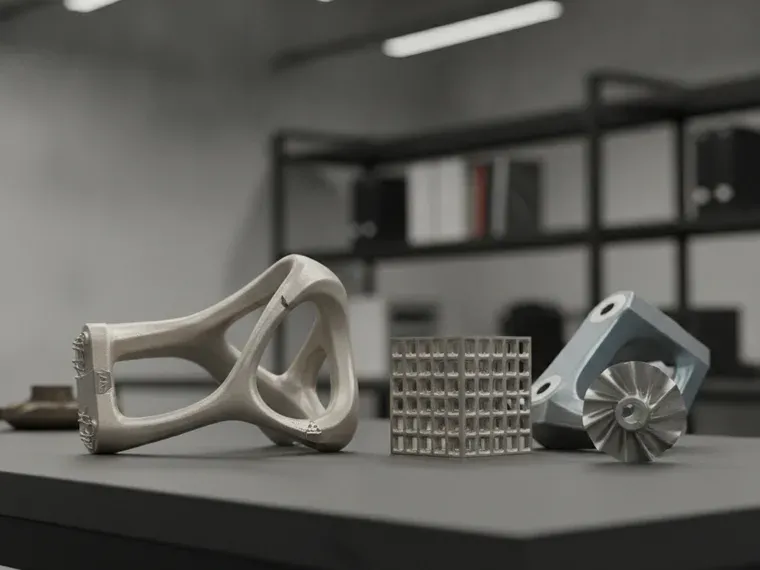 ServiceMetal 3D Printing
 -
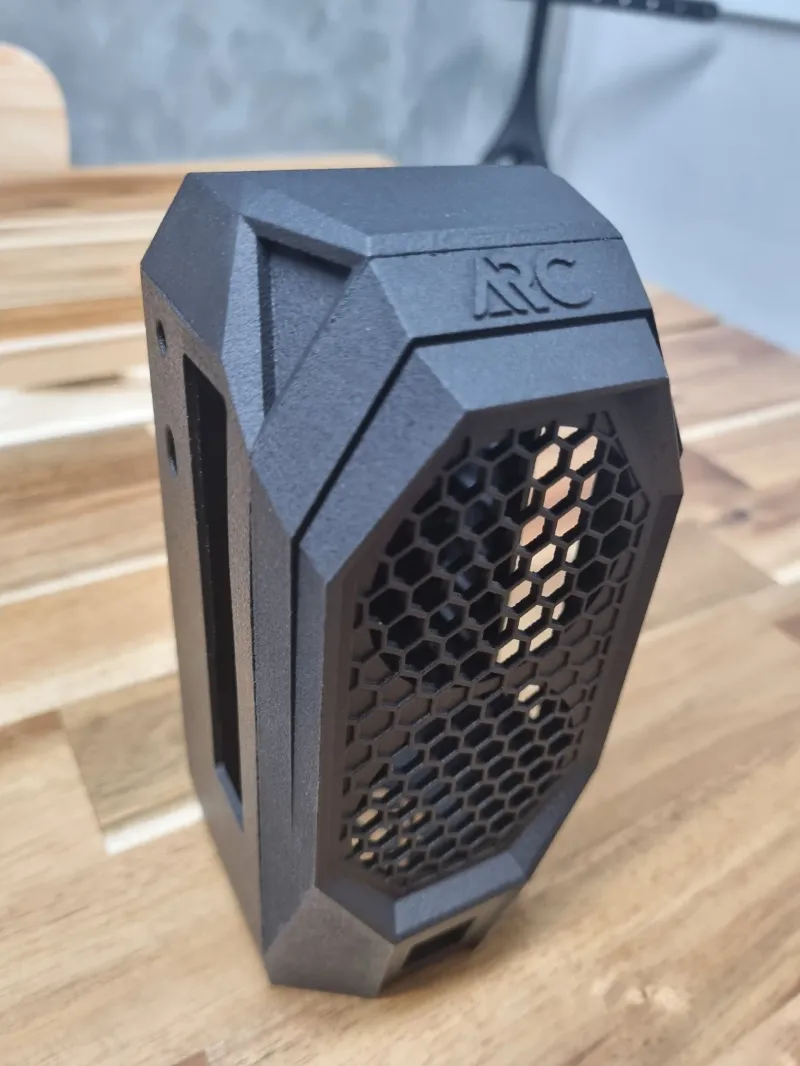 ProjectArc CPU case
 -
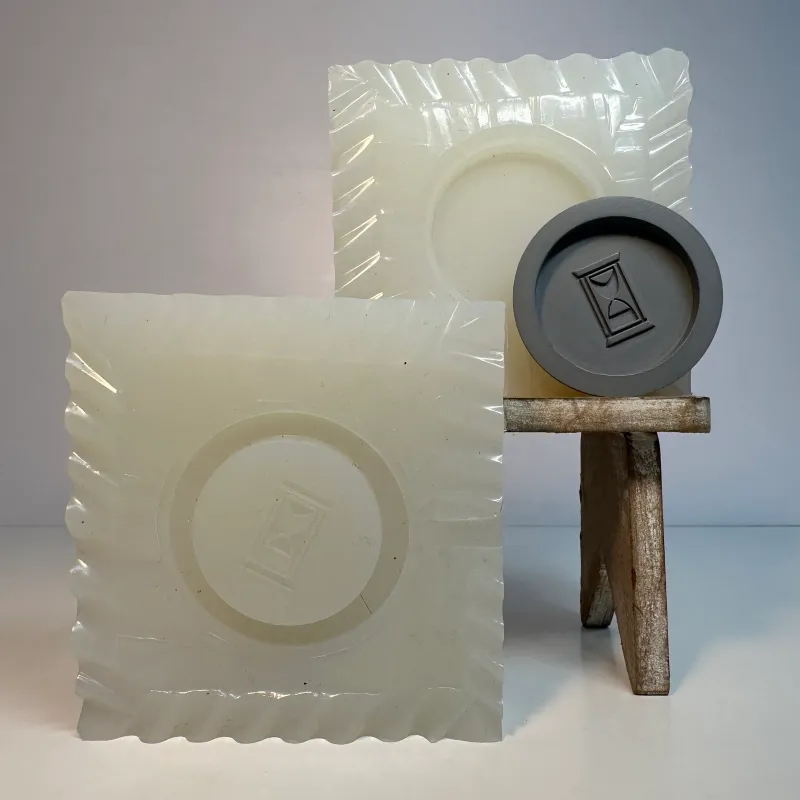 ProjectSilicone emblem mould
 -
 ProjectAluminium extrusion brackets