

Can you run a 3D printer at home in a Singapore flat?
On this page
- 3D printer at home in Singapore: the eight checks at a glance
- Noise and space: a spare room and a solid table
- Fumes: PLA is mild, but ABS needs an enclosure and fresh air
- Humidity: keep the filament sealed and dry
- Power and fire safety: its own socket and a smoke alarm
- Enclosed printer: the choice for ABS and ASA
- Renting first: live with a printer for five days
- Our printing service: better for a few parts
- Frequently asked
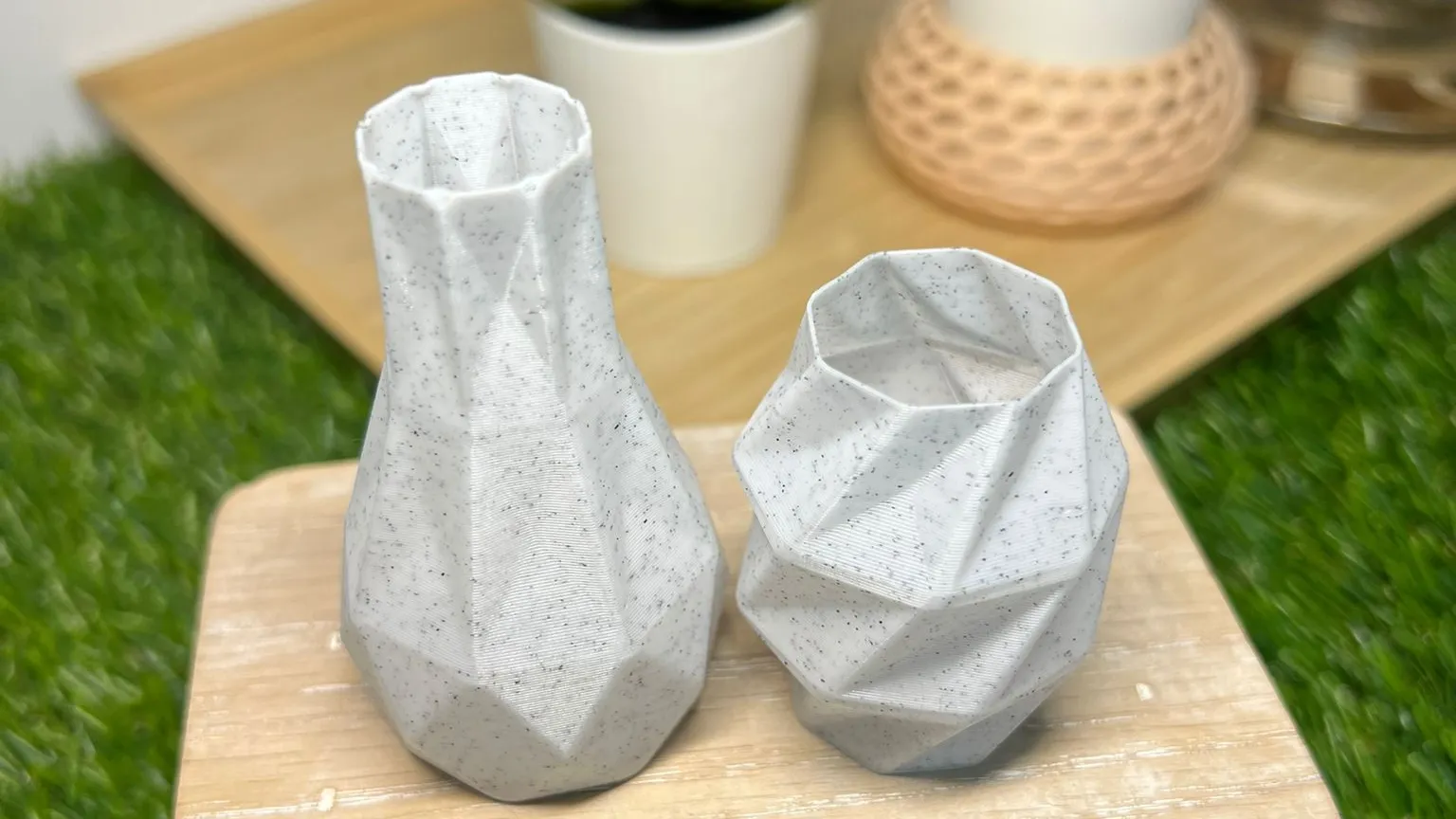
Yes, you can run a 3D printer at home in a Singapore flat, HDB or condo, if you print PLA on a quiet machine, keep it out of the room you sleep in and keep the filament dry. ABS and other hot plastics need an enclosed printer with a filter and a ventilated room, or you can have those few parts printed for you. This post covers filament printers (fused deposition modeling, FDM), the kind most people buy for home.
3D printer at home in Singapore: the eight checks at a glance
| What you’re weighing | Short answer | The figure behind it |
|---|---|---|
| Space | A sturdy desk in a room with a window | An A1 mini is 347 × 315 × 365 mm |
| Noise at night | Quiet in Silent Mode, but keep it out of the bedroom | Under 48 dB at 1 m on an A1 mini or A1 |
| Fumes | PLA needs an open window; ABS needs an enclosed printer | ABS gives off 10 to 110 µg of styrene a minute |
| Which filament | Start with PLA | PLA softens at about 55°C, ABS at about 85°C |
| Humidity | Keep opened rolls sealed with desiccant | The air averages about 82% humidity |
| Cost to run | A few cents an hour in electricity | About 2.6 cents an hour on an A1 mini |
| Power and fire | Its own wall socket and a smoke alarm nearby | An A1 can draw 1,300 W while the bed heats |
| Leaving it alone | Only after you have watched several prints finish | The A1 mini and A1 have no camera to spot a failed print |
Figures: these come from Bambu Lab’s published spec sheets, as shown on our store’s printer pages. Noise is measured in Silent Mode, which prints at half speed.
Softens from: this is the temperature at which the plastic starts to bend under a real load (ISO 75 at 1.8 MPa), taken from the makers’ data sheets.
Electricity: the cost is worked out at Singapore’s current regulated tariff, about 32 cents a kilowatt hour before GST. The tariff changes every quarter.
Noise and space: a spare room and a solid table
Bambu Lab rates the A1 mini and A1 under 48 dB and the P2S and X2D below 50 dB, measured 1 m away in Silent Mode. It publishes no figure for the P1S, so treat any number you read for it as someone’s own measurement.
- Silent Mode costs time. It runs at half speed, so a long print gets longer.
- The table matters. A light desk against a shared wall passes on the most vibration. Use a heavy table or a rubber mat.
- Start long prints in the morning, so they finish before bedtime.
- Pick a study or spare room with a window, out of direct sun and not inside a closed cabinet (Bambu’s operating range tops out at 30°C). A P1S needs about 500 × 500 × 950 mm of space.
Fumes: PLA is mild, but ABS needs an enclosure and fresh air
Melting plastic gives off ultrafine particles and volatile organic compounds (VOCs, gases such as styrene), and the filament decides how much. A 2016 study of five desktop printers found ABS giving off about 10 to 110 micrograms of styrene a minute, compared with about 4 to 5 micrograms of lactide from PLA. NIOSH’s guide to safe 3D printing says switching from ABS to PLA can reduce the hazard.
- PLA with a window open is the low-risk default.
- ABS and ASA belong in an enclosed printer with its filter fitted, in a ventilated room. NIOSH lists a “clearance time” of about 20 minutes: wait that long after a print before opening the enclosure.
- Leave the room while it prints and check on it from the app.
A filter is no substitute for fresh air, and nothing tells you when it is used up.
Humidity: keep the filament sealed and dry
Singapore’s mean relative humidity is around 82%, above 90% before sunrise. Filament soaks up that moisture, and damp filament gives stringy, bubbly, weak prints. Bambu’s data sheets say to store it sealed with desiccant, below 20% humidity.
- Seal opened rolls. Keep them in an airtight box with desiccant.
- Dry the ones that absorb most. Bambu lists drying as required for PETG, TPU, PVA, PC and nylon.
- Let the AMS do it. The AMS 2 Pro, Bambu’s multi-spool feeder, dries spools at up to 65°C while they sit in it. The AMS lite holds them but doesn’t dry them.
Power and fire safety: its own socket and a smoke alarm
A home printer uses less power than you might think: about 80 W on an A1 mini and 200 W on a P2S while printing PLA. An A1 can peak at 1,300 W while the bed heats up, so give it a wall socket of its own. The Singapore Civil Defence Force says never to overload outlets.
NIOSH notes that a working, correctly set nozzle usually stays below the temperature needed to start a fire, so the real risk is a faulty or badly set machine. The failure to watch for is a print that comes loose from the bed.
- Watch the first layer and the first few prints to the end.
- Know your sensors. The A1 mini and A1 have runout and tangle detection but no camera that spots a failed print; the P2S’s camera spots a failed print and pauses it.
- Fit a smoke alarm where it will hear the printer. SCDF makes a home fire alarm device) compulsory in new homes.
Enclosed printer: the choice for ABS and ASA
If you want ABS and ASA, or just a quieter printer with its own filter, choose an enclosed machine such as the P1S or P2S. For hot materials the P2S recirculates its own air, so its activated carbon filter cleans the air inside the printer, not the room.
- Keep a window open anyway, and change the filter every 1,440 hours.
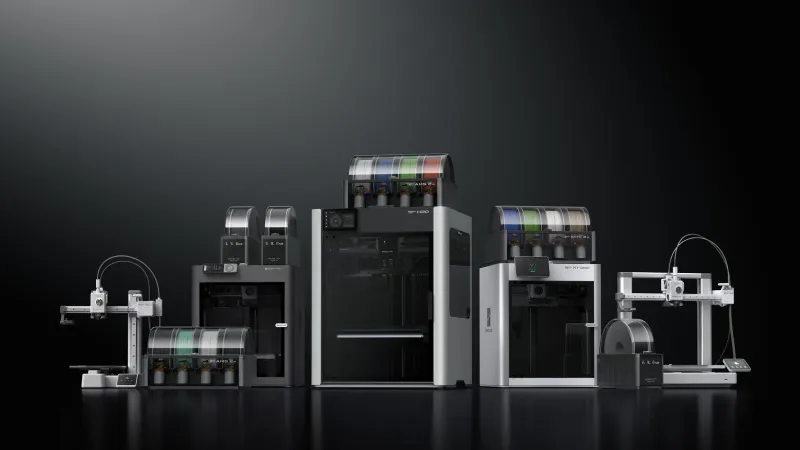
- It takes more space and costs more than an open machine. Our guide to which 3D printer to buy in Singapore compares them.
Renting first: live with a printer for five days
The surest test is to live with one. We rent the A1 mini, the P1S and the X1C for five days or more: book online, collect at our Bendemeer studio and pay the refundable deposit at the counter.
- Collection and return are on working days, in office hours.
- For ABS and ASA, rent the enclosed P1S or X1C.
- New to 3D printing? Our 3D printing workshops cover the basics.
Our printing service: better for a few parts
For a handful of parts, or anything in ABS, nylon or resin, a home printer may be the wrong answer. Our 3D printing service in Singapore makes them for you: upload the file for an instant price, and one of our team checks it before it is printed.
- Expect about 4 to 7 working days for a normal-size filament or resin part (up to about 10 to 15 cm across), 8 to 12 for nylon (selective laser sintering, SLS), and longer for bigger parts, so check with us. More in how long will my order take.
- Not sure which process? Tell us what the part has to do and we’ll suggest one.
Frequently asked
Is it safe to keep a 3D printer in your bedroom?
It is safer not to keep a running 3D printer in your bedroom, and better still not to sleep beside one. The US workplace safety institute NIOSH advises spending less time near a running printer and keeping as much distance from it as you can, and an overnight print puts you next to it for hours. If the bedroom is the only space, print PLA, open the window, and start long prints in the morning rather than at bedtime.
Do I need an enclosed 3D printer to print PLA at home?
No, you don't need an enclosed printer for PLA. PLA, PETG and TPU all print well on an open-frame machine like the A1 mini or A1. An enclosure earns its place when you want ABS or ASA, which need the warm, still air inside a box, and when you want the printer's own filter between the hot plastic and the room.
Can I print ABS in an HDB flat?
You can print ABS in an HDB flat with an enclosed printer, a fresh carbon filter and a ventilated room, but it's still the material to think twice about. ABS gives off styrene and more ultrafine particles than PLA, and a chamber filter cleans the air inside the printer, not the room. If you only need a few ABS parts, having them printed for you keeps the fumes out of your home.
How loud is a 3D printer at night?
At night, a home 3D printer in Silent Mode is about as loud as a quiet office, which can still keep a light sleeper awake. Bambu Lab rates the A1 mini and A1 under 48 dB in Silent Mode, measured 1 m away, and the P2S and X2D below 50 dB. Silent Mode gets there by running at half speed, so the print takes longer. Bambu publishes no noise figure for the P1S, and the H2C peaks around 61 dB at the moment it changes hotends.
Does Singapore's humidity ruin 3D printer filament?
Singapore's humidity can ruin 3D printer filament: the air averages around 82% relative humidity, and Bambu Lab's data sheets say to store filament sealed with desiccant below 20%. Bambu lists drying before use as required for PETG, TPU, PVA, PC and nylon, and those are the ones that suffer first. Keep opened rolls in a sealed box with desiccant, or feed from an AMS 2 Pro, which dries the spools while they sit in it.
How much electricity does a home 3D printer use?
A home 3D printer uses very little electricity, a few cents an hour. An A1 mini draws about 80 W and a P2S about 200 W while printing PLA, by Bambu Lab's own measurements, which is 2.6 and 6.4 cents an hour at Singapore's current regulated tariff. The draw is highest while the bed heats up, which is why a printer belongs on its own wall socket. Each printer's page in our store works out the running cost per hour from Bambu's figures.
Can I leave a 3D printer running when I go out?
You can leave a 3D printer running when you go out only once you've watched several prints finish on that machine. NIOSH notes that a nozzle that is working and set properly is usually below the temperature needed to create a fire hazard, so what you are guarding against is a machine that isn't. Watch the first layer, check the camera in the app, and make sure a smoke alarm can hear it.
Which filament should I start with at home?
PLA is the filament to start with at home. It gives off the least fumes of the common filaments, prints on any machine, open or enclosed, and needs no drying to get started. It softens from about 55°C under load, so keep PLA parts out of a parked car and full sun. PETG (about 68°C) is the next step; ABS (about 85°C) and ASA (about 90°C) need an enclosed printer and a ventilated room.
Related
-
 GuideWhich 3D printer should you buy in Singapore?
-
 GuideHow do I get something 3D printed in Singapore for the first time?
-
 GuideWhat are the most common problems with 3D printed models?
-
 ServiceIndustrial 3D Printing
-
 ServiceSLA 3D Printing
-
 Service3D Modelling, CAD and 3D Scanning
-
 ProjectRaspberry Pi Zero enclosure for SMARTER AI
-
 Project3D printed modular storage boxes with tiled fronts
-
 ProjectWet lens adapter for an action camera dive housing