

Bambu Lab Filament
$20.00 – $285.00 SGD
excl. GST · 9% added at checkout
In stock
Bambu Lab PLA Basic is the everyday workhorse filament: reliable, easy to print and beginner-friendly, with a smooth surface finish and consistent colour. It's the one you'll reach for on prototypes, models and general printing.
- Easy to print & beginner-friendly
- Smooth surface finish
- Biodegradable
- Diameter 1.75mm
- AMS & AMS lite compatible
- Easy to print & beginner-friendly
- Matte surface texture
- Biodegradable
- Diameter 1.75mm
- AMS & AMS lite compatible
- Shiny like chrome, smooth like silk
- Enhanced layer adhesion
- A wide spectrum of colours
- Effortless printing, flawless results
- Diameter 1.75mm
- AMS & AMS lite compatible
- Dry out before use
- Silk finish with dynamic colour transformations
- Diameter 1.75mm
- All AMS series compatible
- Dry out before use
- Translucent appearance that diffuses light
- Bonds with all PLA filaments
- Durable for long-term use
- Diameter 1.75mm
- All AMS series compatible
- Clean build plates before printing
- Colour fades gradually through the print
- Multi-colour results from a single nozzle
- Same easy printing as PLA Basic
- Eight gradient combinations
- AMS compatible, 1.75mm, RFID tagged
- Arctic Whisper (10900)
- Solar Breeze (10901)
- Ocean to Meadow (10902)
- Glitter flecks throughout the filament
- Catches light from every angle
- Six sparkle colours
- Prints as easily as standard PLA
- AMS compatible, 1.75mm, RFID tagged
- Onyx Black Sparkle (13101)
- Slate Gray Sparkle (13102)
- Crimson Red Sparkle (13200)
- Glows in the dark after charging under light
- Five glow colours
- Great for signage, props and toys
- Prints as easily as standard PLA
- AMS compatible, 1.75mm, RFID tagged
- Glow Pink (15200)
- Glow Orange (15300)
- Glow Yellow (15400)
- Stone-effect veining through the print
- Matte finish that hides layer lines
- Ideal for vases, plinths and homeware
- Prints as easily as standard PLA
- AMS compatible, 1.75mm, RFID tagged
- White Marble (13103)
- Red Granite (13201)
- Metallic pigment with a cast-metal sheen
- Five metal finishes
- Great for trophies, plaques and display pieces
- Prints as easily as standard PLA
- AMS compatible, 1.75mm, RFID tagged
- Iron Gray Metallic (13100)
- Iridium Gold Metallic (13400)
- Oxide Green Metallic (13500)
- Real wood fibre blended into PLA
- Warm matte finish that hides layer lines
- Sandable and stainable like timber
- Prints as easily as standard PLA
- AMS compatible, 1.75mm, RFID tagged
- White Oak (13106)
- Black Walnut (13107)
- Rosewood (13204)
- Ultra-low emissions for safer indoor printing
- Toy-safe and food-contact-grade certified
- Prints as easily as standard PLA
- AMS compatible, 1.75mm, RFID tagged
- 1kg, and it works with the Bambu reusable spool
- Pure White (17100)
- Absolute Black (17101)
- Milky Pink (17200)
- Designed for speed
- Prints flawlessly with minimal tuning
- Smooth, soft surface texture
- Ready for outdoor use
- Diameter 1.75mm
- AMS & AMS lite compatible
- Dry out before use for best results
- Translucent finish that passes and diffuses light
- Tough, weather-ready PETG base
- Great for vases, lamps, containers and windows
- AMS compatible, 1.75mm, RFID tagged
- 1kg, and it works with the Bambu reusable spool
- Clear (32101)
- Gray (32100)
- Pink (32200)
- Diameter 1.75mm (Bambu Lab calibrated)
- Print temperature 240–270°C
- Bed temperature 90–100°C (heated bed required)
- Enclosure Strongly recommended (ABS warps in drafts)
- 1kg of filament, and 0.75kg and 0.5kg sizes on some materials
- The part will sit in a hot car or outdoor in Singapore sun
- You need it to flex without snapping under impact
- It needs to be machined, drilled, or tapped after printing
- UV resistant, holds colour outdoors
- Weather and water resistant
- ABS-like strength and heat resistance
- Best printed in an enclosed printer
- AMS compatible, 1.75mm, RFID tagged
- White (45100)
- Black (45101)
- Gray (45102)
- High-speed printing TPU
- Soft, flexible and tough
- Outstanding impact resistance and flexibility
- Wants a high-temperature spool, not the standard one
- Diameter 1.75mm
- AMS & AMS lite not compatible
- Dry out before use
- Seamless AMS & AMS lite integration
- Tough yet flexible
- Less TPU stringing
- Blazing-fast TPU printing
- Wants a high-temperature spool, not the standard one
- Diameter 1.75mm
- AMS & AMS lite compatible
- 0.2mm nozzle not compatible
- Ultra-soft 85A shore hardness, genuinely rubber-like
- Excellent rebound and tear resistance
- Grippy surface for handles, feet and wearables
- 1.75mm, 1kg of filament
- Feed via the spool holder or TPU feed path, not through the AMS
- Print slow and dry the filament before use for clean results
- Other TPU 85A colours are available on request
- 90A shore hardness flexible, but with real structure
- Excellent wear resistance and rebound
- Prints with PLA and PETG in the same part, on dual-nozzle H2D and H2C only
- Works on A Series as well as X, P, H2S and H2D/H2C, unlike TPU 85A
- 1.75mm, 1kg, and it ships on a high-temperature reusable spool
- Feed via the spool holder or AMS HT, not the AMS, AMS lite or AMS 2 Pro
- Blaze and Frozen shift colour once across the whole spool, not repeatedly
- Dry before use and keep the default speed for a clean finish
- Noticeably stiffer and more stable than plain ABS
- Much less warping, so larger parts stay flat
- Fine matte surface that hides layer lines
- Needs a hardened nozzle and an enclosed printer
- Dry before use; 1.75mm, 1kg
- UV and weather resistant, made for outdoor use
- Carbon fibre for stiffness and dimensional stability
- Matte black finish
- Hardened nozzle and an enclosed printer required
- Dry before use; 1.75mm, 1kg
- Foams when printed for a very low part weight
- Keeps ASA's UV and weather resistance
- Density is tuned by flow rate, so weight is adjustable
- Enclosed printer required; dry before use
- 1.75mm, 1kg
- High strength and stiffness for load-bearing parts
- Good heat resistance and toughness
- Glass fibre rather than carbon lighter colours available
- Hardened nozzle required; keep it very dry
- 1.75mm, 1kg
- Flame retardant, UL94 V-0 rated
- Very high impact strength and heat deflection
- For enclosures, electrical housings and covers
- Enclosed printer required; dry thoroughly before use
- 1.75mm, 1kg
- High stiffness with good toughness for a CF filament
- Heat and chemical resistant
- Low moisture sensitivity compared with nylon
- Hardened nozzle required
- 1.75mm, 0.5kg
- Sparkling mineral particles in a deep base colour
- Hides layer lines, so it flatters large flat surfaces
- Prints like standard PLA, no enclosure needed
- Best with a 0.4mm nozzle or larger
- 1.75mm, 1kg
- Far more impact resistant than standard PLA
- Stronger layer adhesion, so parts fail less at the seams
- Prints as easily as PLA Basic, no enclosure needed
- Good for brackets, clips and mechanical prototypes
- 1.75mm, 1kg
- Foams when printed for very low part weight
- Density tuned in the slicer via flow rate
- Soft matte finish, good for RC and cosplay parts
- Prints without an enclosure
- 1.75mm, 1kg
- Very high impact strength
- High heat resistance
- Transparent and clear options available
- Needs an enclosed printer and dry filament
- AMS compatible, 1.75mm, RFID tagged
- White (60100)
- Black (60101)
- Clear Black (60102)
- Carbon-fibre reinforced for higher stiffness
- Matte, low-sheen finish that hides layer lines
- Better dimensional stability than plain PLA
- Requires a hardened steel nozzle
- AMS compatible, 1.75mm, RFID tagged
- Black (14100)
- Lava Gray (14101)
- Burgundy Red (14200)
- Carbon-fibre reinforced PETG
- High stiffness with good impact strength
- Chemical and moisture resistant
- Matte finish with minimal warping
- Requires a hardened steel nozzle
- Black (31100)
- Titan Gray (31101)
- Brick Red (31200)
- Carbon-fibre reinforced PA6 nylon
- High strength and stiffness
- High heat resistance for functional parts
- Requires a hardened nozzle and dry storage
- Best printed in an enclosed printer
- Black (72100)
- High-temperature carbon-fibre nylon
- Excellent toughness and wear resistance
- Low moisture uptake compared with plain nylon
- Requires a hardened nozzle and dry storage
- Best printed in an enclosed printer
- Black (70100)
- Carbon-fibre reinforced PPA
- Very high stiffness and strength
- High continuous service temperature
- Low creep under sustained load
- Requires a hardened nozzle and high-temp hotend
- Black (73100)
- Carbon-fibre reinforced PPS
- Outstanding chemical resistance
- Inherently flame retardant
- Very high continuous service temperature
- Requires a hardened nozzle and high-temp hotend
- Black (76100)
- Dissolves fully in plain tap water
- Flawless surfaces under overhangs and in cavities
- Ideal partner for PLA prints with complex geometry
- 1.75mm, 0.5kg of filament
- Keep it dry PVA absorbs moisture quickly, store with desiccant and dry before use
- Use as a support interface layer to keep costs down
- Dissolving is faster in warm water with gentle agitation
- Support for PLA/PETG (Nature or Black): the all-rounder, works as a support interface for both PLA and PETG prints
- Support for PLA (White) tuned specifically for PLA when you want the easiest removal and crispest interfaces
- Breaks away cleanly, no soaking needed
- Use as an interface layer to keep material cost low
- Compatible with the AMS
- 1.75mm, 0.5kg of filament
SKU · SQ5732166
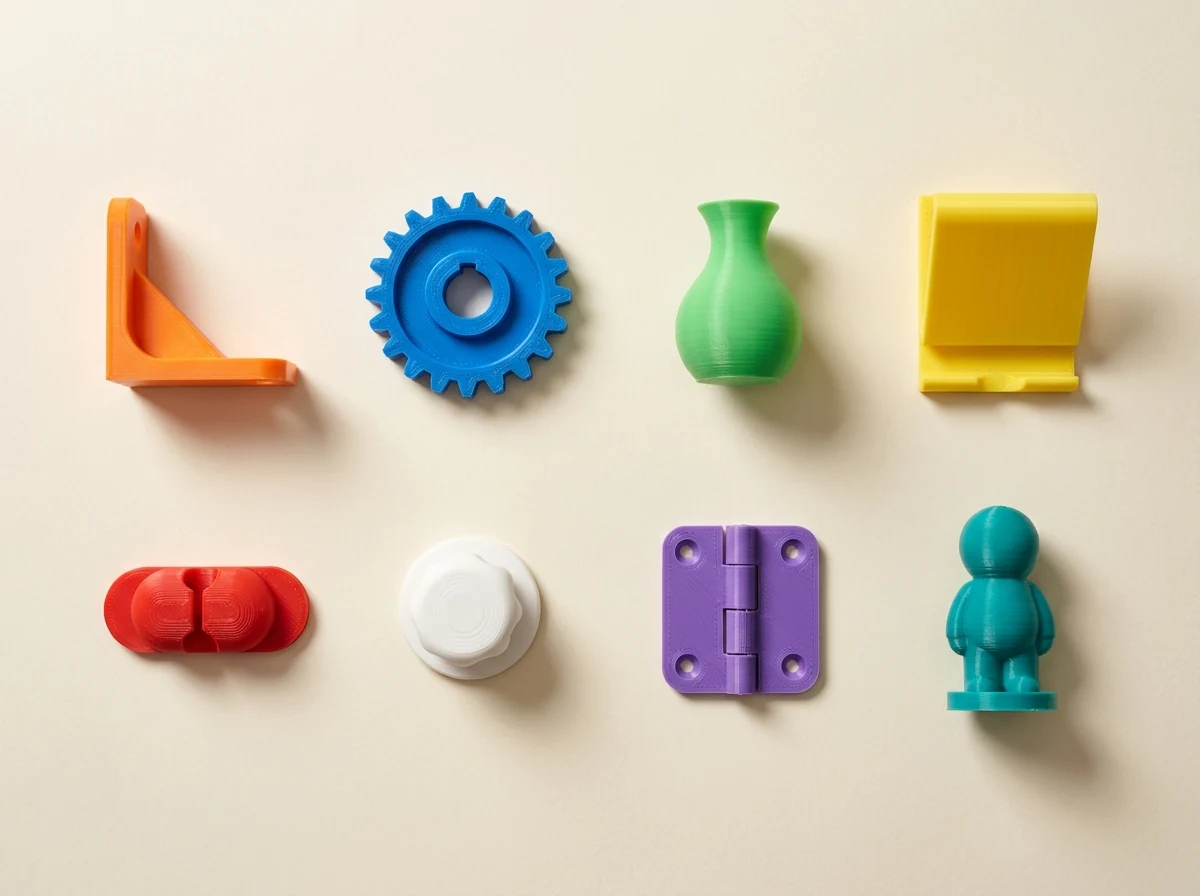
Bambu Lab · filament
Every roll we stock, in one place.
Genuine Bambu Lab filament, held in Singapore. Self-collect at Bendemeer or have it couriered.
- 244rolls listed
- 38materials
- 141colours
PLA
The one you reach for.
Easy, forgiving, and the widest colour range we carry.
PLA prints cold, needs no enclosure and holds fine detail, which is why it is most of this shelf: models, prototypes, props, gifts, anything that lives indoors.
The range goes well past Basic. Matte kills the shine, Silk+ adds it back, Sparkle and Galaxy put mineral flake through the colour, Wood and Marble read as the material they are named after, and Glow charges under light. Tough+ trades a little stiffness for impact strength when a PLA part has a job to do.
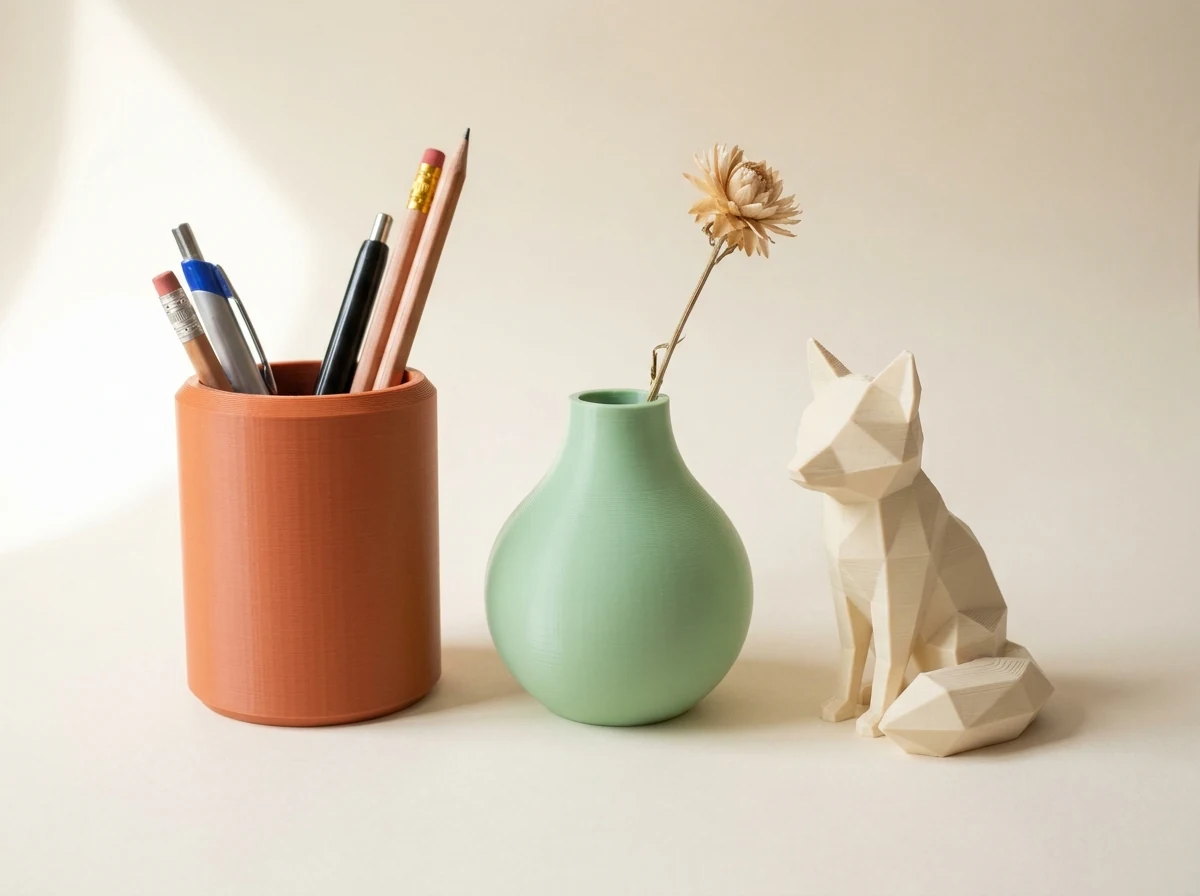
PETG
When PLA is not quite enough.
Tougher, more heat tolerant, and happy outdoors.
PETG takes a knock without snapping and shrugs off water and sunlight in a way PLA does not. It is the sensible step up for brackets, enclosures, planters and anything that will sit in a car or on a balcony.
It prints hotter and slower than PLA and likes a dry spool, but it needs no enclosure. Translucent is worth knowing about: it passes light properly, which the PLA translucents only pretend to do.
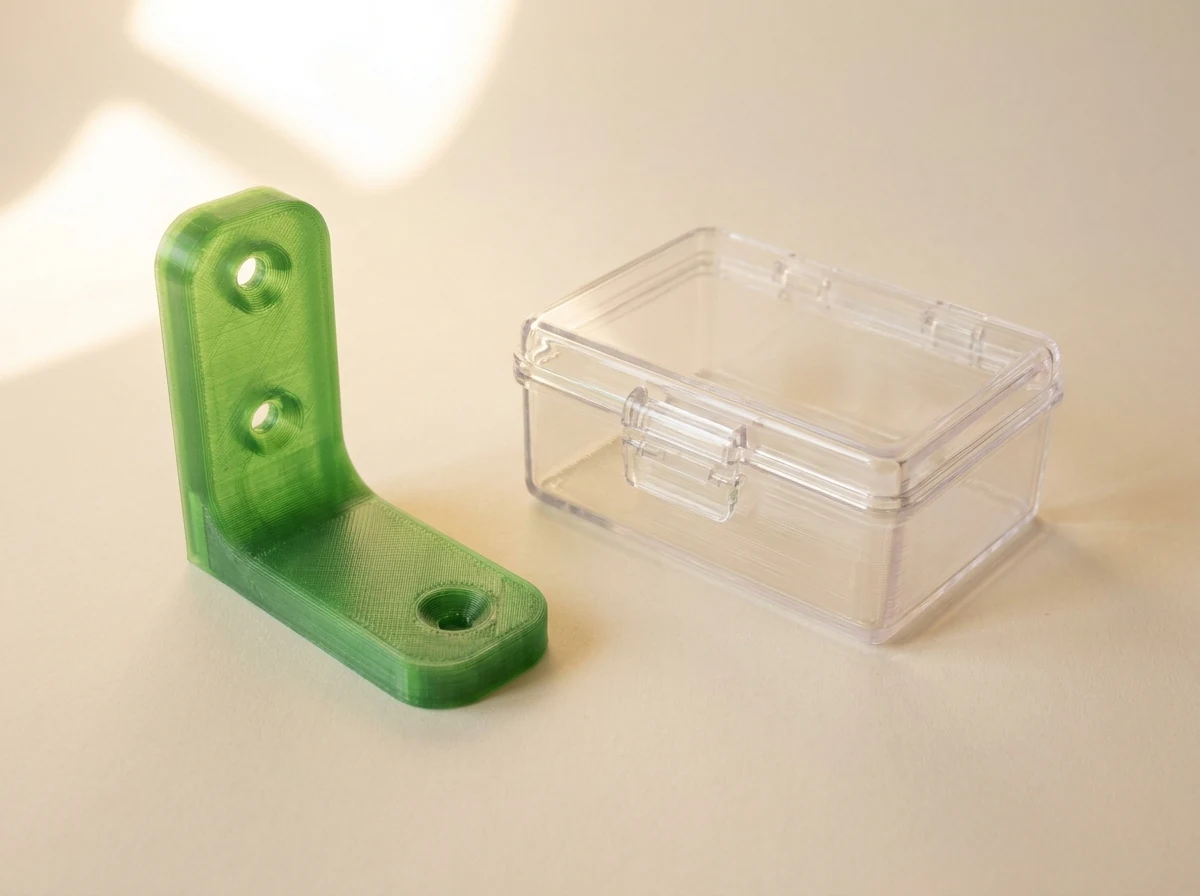
ABS and ASA
Heat, sun, and the inside of a car.
Engineering plastics that need an enclosed printer.
ABS is the classic tough plastic: high service temperature, easy to sand, glue and vapour-smooth. ASA is ABS that does not go chalky in the sun, so it is the one for anything mounted outdoors.
Both warp if the printer is open to the room, so an enclosure is not optional here. The GF and CF versions add glass or carbon fibre for stiffness and a matte finish, and want a hardened nozzle.
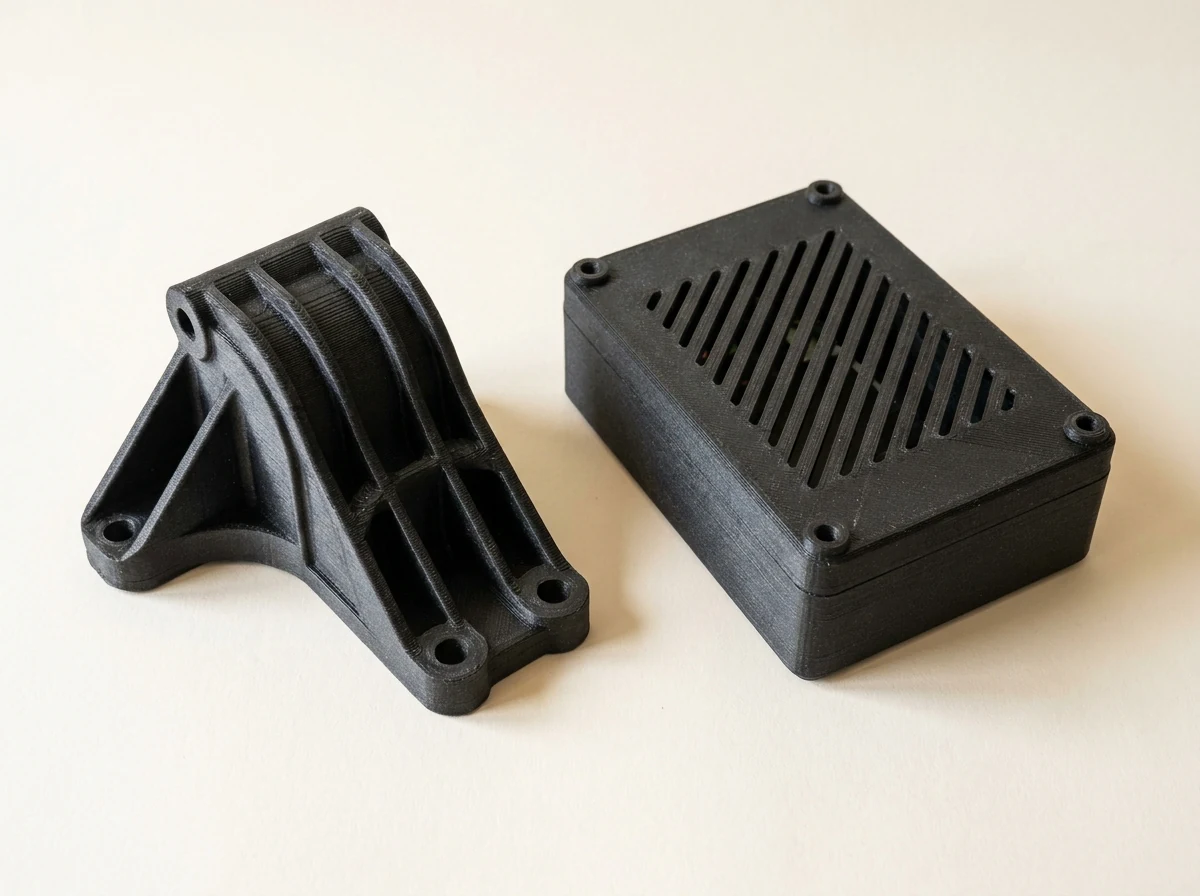
TPU
Parts that bend and come back.
Flexible filament, from soft 85A to structural 90A.
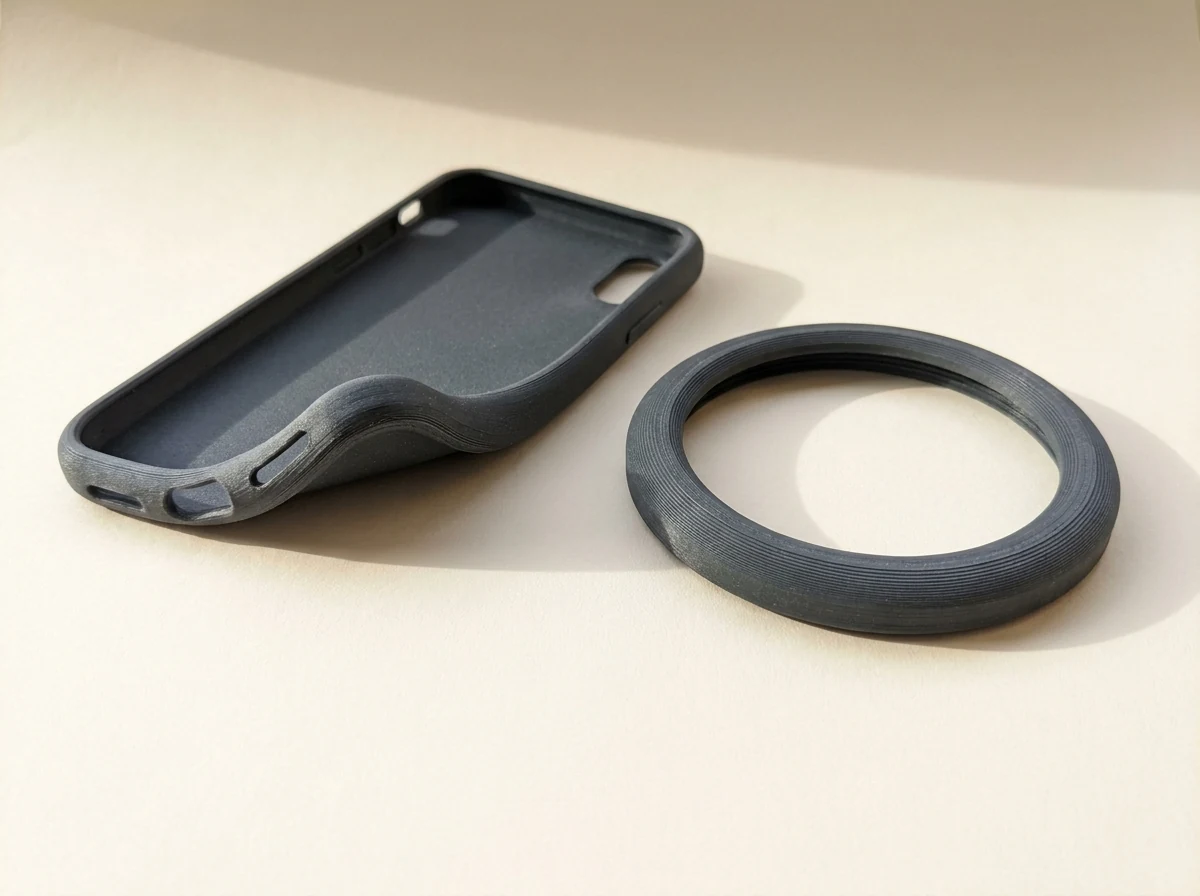
TPU is for grips, gaskets, phone cases, shoe soles and anything that has to squash. 85A is the softest and most rubber-like; 90A holds its shape better and is the only Bambu TPU that prints alongside PLA and PETG in one part.
TPU for AMS is the version tuned to feed through the multi-material system. The others go through the spool holder or the AMS HT, and all of them want to be printed slowly and dried first.
Engineering
When the part replaces a metal one.
Carbon and glass fibre nylons, polycarbonate, PPS and PPA.
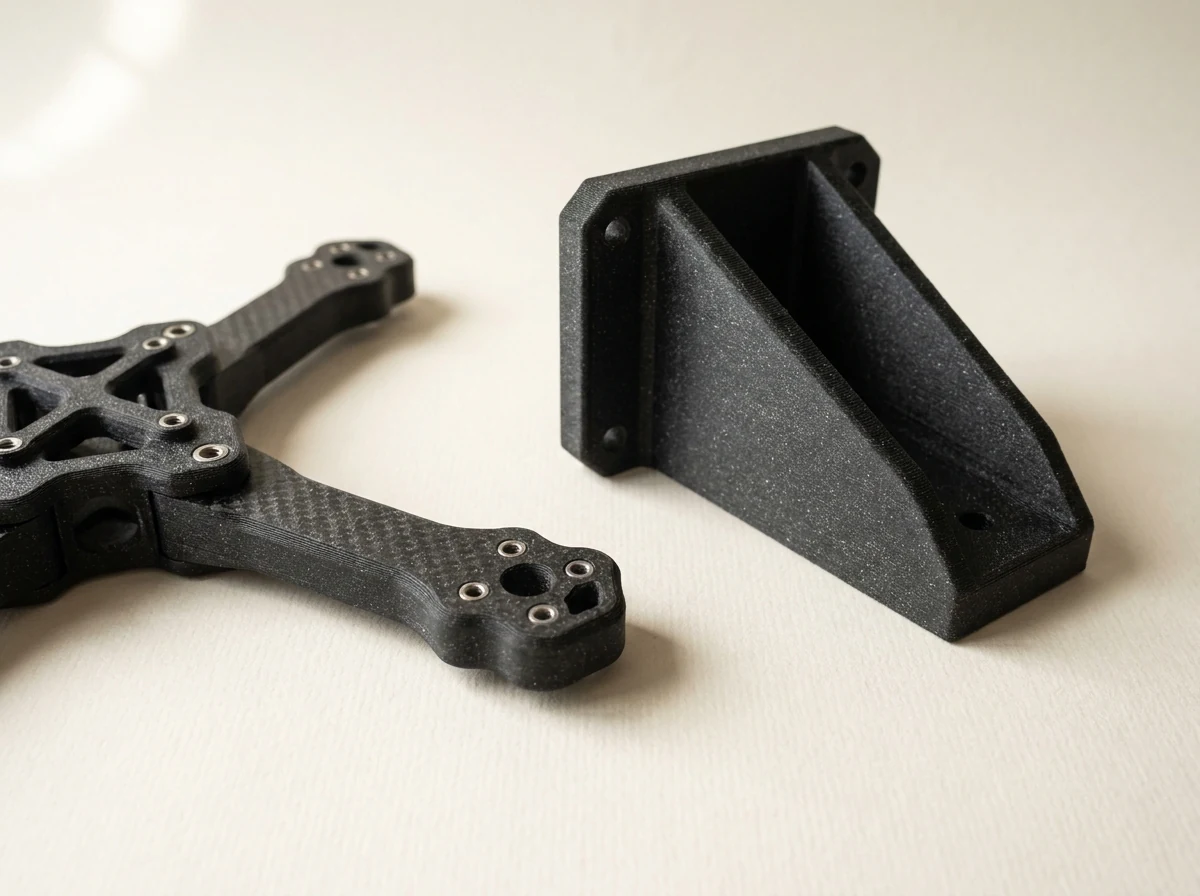
This is the top of the range: PA6, PAHT, PPA, PPS, PC and PET, most of them reinforced with carbon or glass fibre. High stiffness, high service temperature, and dimensional stability that survives a hot workshop.
They all need a hardened nozzle, most need an enclosure, and every one of them needs to be genuinely dry. Nylon in particular pulls moisture out of Singapore air fast enough to ruin a print that started fine.
Support
The layer you throw away.
Interface material that lets a support peel off clean.
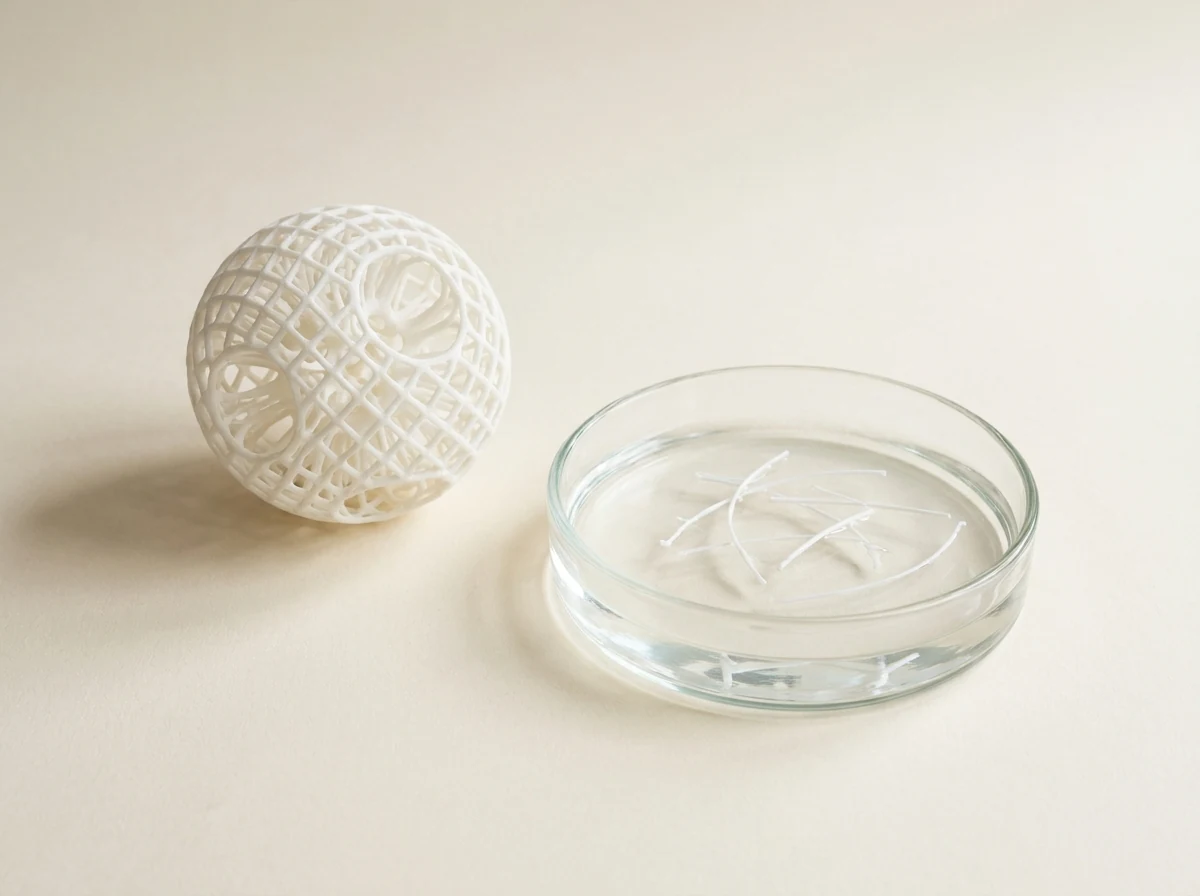
Printing supports in the same material as the part means sanding the scar afterwards. A support interface does not bond to the part, so it lifts off and leaves the surface underneath finished.
Pick the one that matches what you are printing: PLA, PLA/PETG, ABS, or PA/PET. PVA dissolves in water instead, which is the answer for internal cavities a hand cannot reach.
Multi-colour
Four colours, one print.
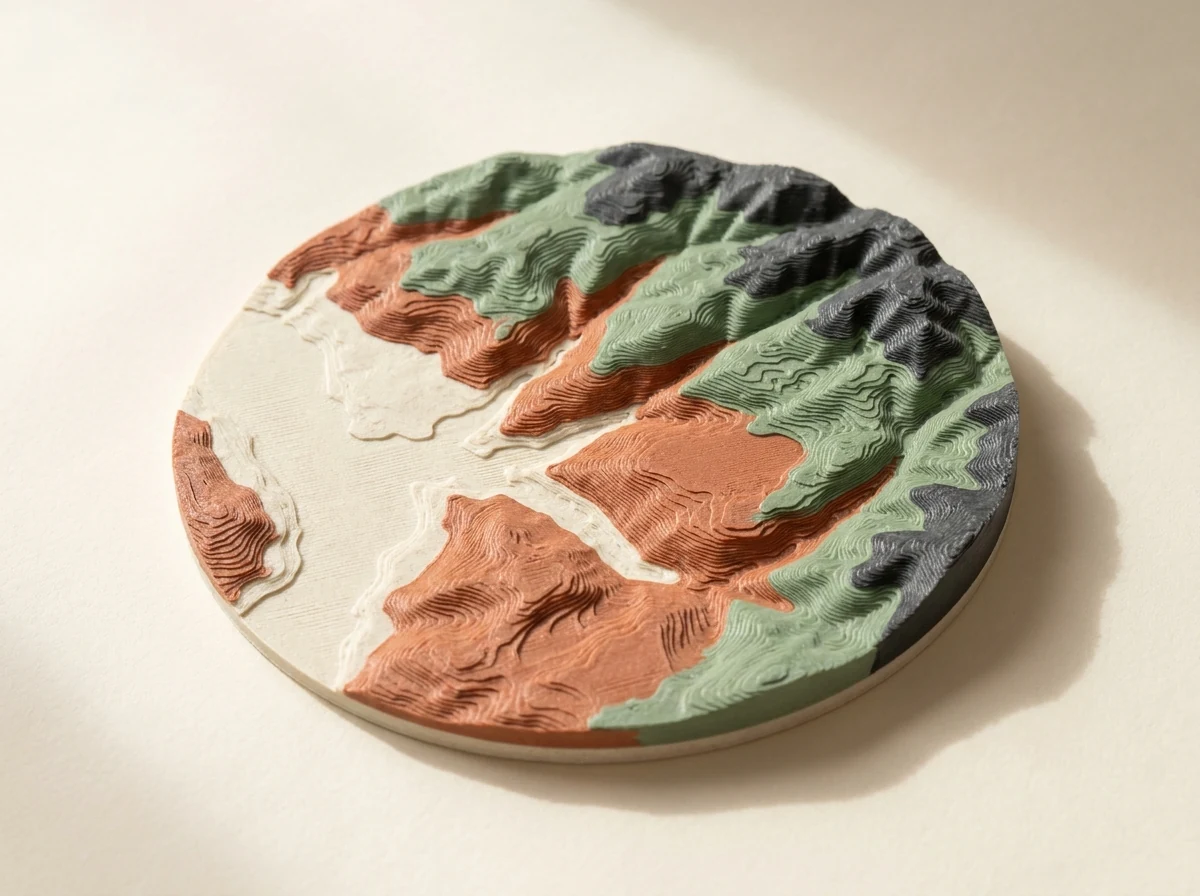
Every roll here is AMS-ready unless the material says otherwise.
Bambu spools carry RFID, so the AMS reads the material and colour and sets the parameters itself. Load four and the printer handles the swaps.
The exceptions are the ones that cannot bend round the AMS path: TPU 85A and 90A, and the high-temperature engineering blends, which feed from the spool holder or the AMS HT instead.
Storage
Wet filament prints badly.
In Singapore that is not a theoretical problem.
Damp filament pops and hisses at the nozzle, prints stringy and rough, and loses a lot of its strength between layers. Nylon and PVA will get there in a day left open; PLA takes longer but gets there.
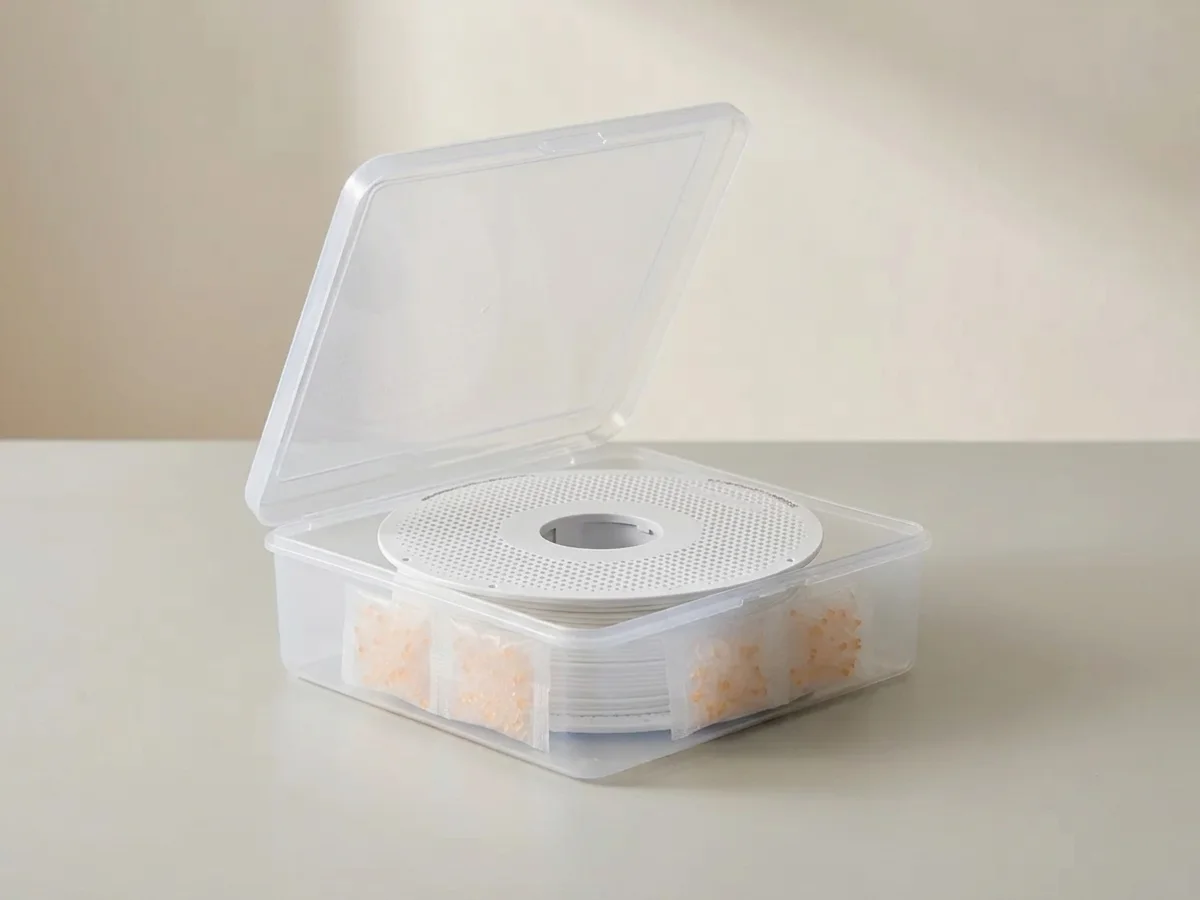
Keep opened rolls in a sealed box with desiccant, and dry anything that has been sitting out. The pamphlet below lists the temperature and time for every material we stock.
Before you order
What your printer needs to handle it.
The three things that decide whether a material will work on the machine you already own.
Needs an enclosure
ABS, ASA and their GF and CF versions, plus most of the engineering range. An open-frame A1 or A1 mini will warp them. P series, X series, H2 and any other enclosed printer are fine.
Needs a hardened nozzle
Anything with carbon or glass fibre in it, which is every CF and GF material here. Fibre chews through a standard brass nozzle in a few hundred grams.
Will not feed through the AMS
TPU 85A and TPU 90A, and the high-temperature engineering blends. Use the spool holder, or the AMS HT where the material allows it. TPU for AMS is the exception and is built for it.
Dry it before you print
Everything, in this climate, but nylon, PVA, PC and TPU are the ones that will visibly ruin a print if you skip it. Drying temperatures for each material are in the pamphlet below.
At a glance
How the families compare.
Rough guidance for choosing between them. Exact figures for each material are in the pamphlet below.
| Family | Enclosure | Nozzle | Best at |
|---|---|---|---|
| PLA | Not needed | Standard | Detail, colour, indoor parts |
| PETG | Not needed | Standard | Tough parts, outdoors, water |
| ABS & ASA | Required | Standard, hardened for GF and CF | Heat, sun, post-processing |
| TPU | Not needed | Standard, larger is easier | Flex, grip, impact |
| Engineering | Required for most | Hardened | Load, heat, replacing metal |
| Support | Match the part | Standard | Clean release, dissolvable |
Swipe the chart sideways for every column
All prices exclude GST; 9% is added at checkout.
Bambu Lab
Bambu Lab Filament
Bambu Lab's own published figures: print temperatures, drying times, and how each material compares on strength, heat and impact.
About the spool
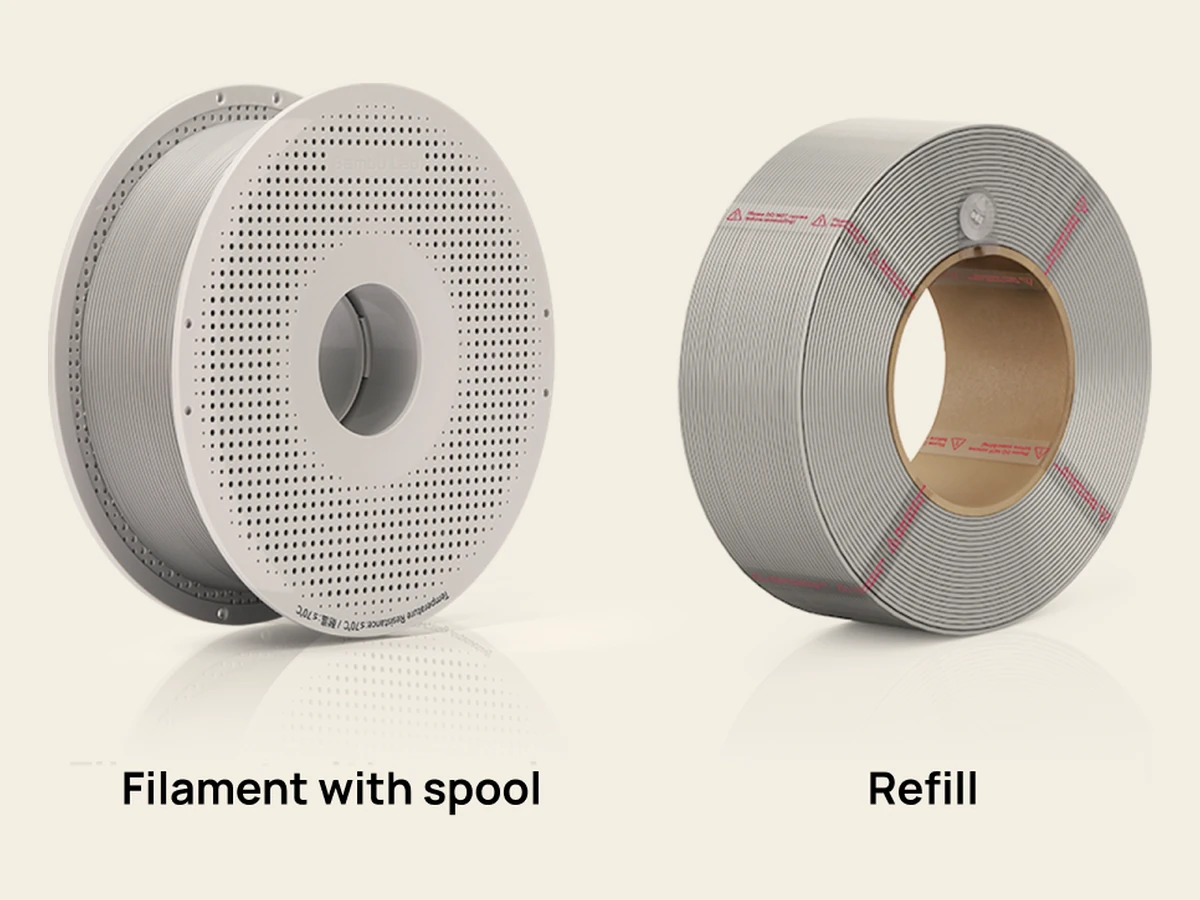
It might arrive on a spool. It might arrive as a bare refill, or with the spool loose in the box. We can't promise which.
Bambu moves colours between the two formats without announcing it, so what we can hand you is whatever the last carton held. Rather than print a promise we'd break, we've taken the claim off the listing.
A refill is the filament on its own, wound into a ring that holds its shape around a cardboard core. It prints identically and, where the roll carries a chip, the printer still reads it, but it needs a spool to sit on before it'll go into a machine or an AMS.
So if you need one for certain, add it next to the picker: S$15 for one of ours off a finished roll, cleaned and checked, or S$20 new. Same price they cost on their own page. Already got an empty spool on the shelf? Use that and skip it.
Where this sits in the range
PLAEasiest
The default. Easiest to print, widest colour range, best surface finish, no enclosure needed. Matte, Silk, Translucent, Glow, Marble, Wood and Sparkle are all PLA wearing a different look.
PETGTougher
Stronger and more heat-resistant than PLA, and it shrugs off sun and rain. The right pick for brackets, outdoor fittings and anything that has to flex a little without snapping.
ABS and ASANeeds enclosure
The best heat resistance in the everyday range, and the easiest to sand, glue and vapour-smooth. Both warp badly in open air. ASA is the outdoor one: it holds colour under UV.
TPUFlexible
Rubbery and hard-wearing, for gaskets, grips, phone cases and feet. 95A is firm, 85A is much softer. Only TPU for AMS feeds through an AMS.
EngineeringHardened nozzle
PC, and the fibre blends PLA-CF, PETG-CF, PA6-CF, PAHT-CF, PPA-CF and PPS-CF. Stiff, dimensionally stable and matte, for jigs, fixtures and parts that carry load.
SupportDissolves or peels
Printed as a second material on a multi-material machine. PVA dissolves in plain water; Support for PLA/PETG peels away by hand and costs less.
What you actually get
Whether there's a spool on it is the one thing we can't promise, and the panel above says why. Everything else about the roll is fixed.
Diameter1.75 mm
The only diameter Bambu makes and the only one their machines take. Bambu prints a tolerance on just three of these data sheets: PLA Wood at ± 0.03 mm, PPA-CF and PPS-CF at ± 0.05 mm. On everything else the sheet says 1.75 mm and stops there.
Net weightFilament only
1 kg on almost everything here. PPA-CF and PPS-CF are 0.75 kg, PVA and Support Filament are 0.5 kg. That figure is the filament on its own. Bambu doesn't publish a tare weight for the spools its filament comes on, so you can't weigh a part-used roll and work out what's left. The AMS estimate does that job instead, off the tag.
Spool sizeØ200 × 67 mm
That's the size an AMS is built around: it takes spools 197 to 202 mm across and 50 to 68 mm wide. Standard spools are ABS, rated to 70°C. High-temperature ones are ABS and PC, rated to 90°C, which is what anything dried hotter than 70°C needs. PPA-CF and PPS-CF go further again: they're dried at 100 to 140°C, past what either plastic spool survives, so they need a cardboard spool rated to 145°C.
The RFID tagReads itself in
The chip belongs to the filament, not to the spool. Bambu's own reload procedure ends with peeling the old label off and sticking on the one that came with the new roll. It tells the printer what it's holding, so Bambu Studio fills in material, colour and print profile without you picking anything. The AMS reads it twice: once for what it is, once to estimate what's left, counting the length fed out per turn of the spool. It's also what makes auto-refill work, where two slots holding the same brand, type and colour hand over mid-print. Don't peel it off a roll you're still printing.
Five of these carry no chipSet it by hand
Bambu leaves the tag off the filaments an AMS can't feed, so TPU 85A, TPU 95A HF, PA6-CF, PPA-CF and PPS-CF arrive with no chip and no serial number to read. Pick the material by hand in the slicer. For anything after-sales, the 10-character batch code printed near the label does the same job as a serial number.
Sealed bag and desiccantUnder 20% RH
Every roll we've had through the shop arrives in a sealed foil bag with a desiccant sachet inside. Bambu's storage line is identical on every data sheet: under 20% relative humidity, sealed, with desiccant. Check the bag hasn't been punctured before you open it, and if it has a resealable strip, keep it.
The number in the colour nameReorder code
White (10100). Black (10101). Those five digits are Bambu's own colour code, printed on the roll's own label, and we carry them through into the colour name so you can order the same shade again. It matters more than it sounds the moment a job runs past one spool.
PLA Basic in practice
The yardstick every other filament here gets measured against. A light sheen, not a full gloss, dependable dimensions, and the widest colour range we stock. If a print fails on PLA Basic, the problem is almost never the filament.
Use it for prototypes, fit checks, toys, jigs, cosplay parts and anything that lives indoors on a shelf. It's also what you want for the first print on a new machine, because it removes every variable except the machine itself.
PLA Matte in practice
A powder-matte surface with no shine at all, and it hides layer lines better than anything else in the range. Parts stop reading as 3D printed and start reading as moulded. That's why it photographs so much better than PLA Basic.
The default for display models, props, architectural massing, board-game pieces and gifts. If the object is there to be looked at, not used, Matte is usually the right answer.
Two things to know. It's a little more brittle than PLA Basic, so thin unsupported features snap more easily. And the matte surface scuffs pale instead of shiny, so scratches show as light marks that are hard to polish out. Design around it rather than counting on a fix afterwards.
PLA Silk+ in practice
A high-gloss, almost chrome-like sheen that catches light along every layer. It's the loudest-looking filament we stock, and on the right shape it looks nothing like plastic. The plus version improved layer adhesion over the original Silk, which used to be the material's weak point.
Made for vases, decorative pieces, gifts and anything spiralised. Tall smooth curves show the sheen best. The effect travels along the layer lines, so shapes that sweep upward get the most out of it.
The gloss is unforgiving of anything wrong. Seams, stringing and support scars that would vanish on Matte get lit up on Silk. Slow the outer wall down, put the seam somewhere you can't see, and keep supports off visible faces entirely.
PLA Silk Multi-Color in practice
The colour shifts along the filament itself, so a single nozzle with no AMS produces a print that changes colour as it climbs. Same glossy silk sheen as Silk+, with the transitions built into the spool.
Vases, spiral prints, lamps and single-wall pieces are what this is for. Anything tall and continuous shows the full sweep of colour, and the taller the part, the more of the cycle you see.
The transition length is fixed by the filament, not by your slicer. A small part may only ever show one or two of the colours. Two copies printed back to back won't match either, because the second one started further along the spool. That variation is the point, but it does mean you can't reproduce a piece exactly.
PLA Translucent in practice
Light passes through it, which changes what the material is for entirely. Thin walls glow softly. Thicker sections deepen the colour. It reads more like tinted resin than filament.
Lampshades, diffusers, light guides, window ornaments and anything sitting over an LED. It also makes a striking case material when you want the internals half-visible.
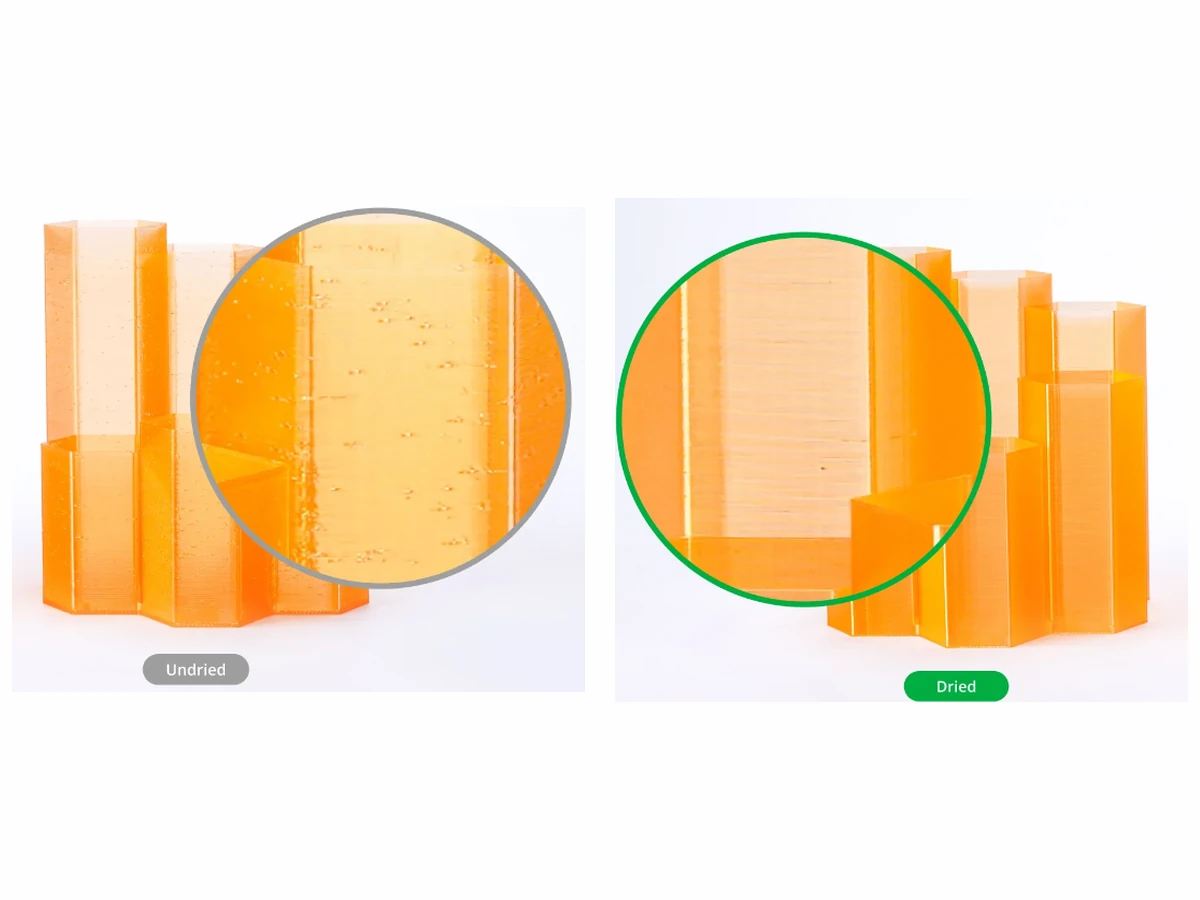
Because you can see inside the part, the infill and every internal structure become part of the design. Use a high wall count or a deliberate infill pattern instead of the default gyroid. It's also the material that shows moisture most plainly. Damp translucent PLA prints cloudy and bubbled, and that's a drying problem, not a defect.
PLA Basic Gradient in practice
The colour fades gradually from one shade to the next along the length of the spool. A plain single-colour print comes out with a smooth vertical gradient: no colour changes, no AMS, no purge waste.
Best on tall prints that use a good stretch of filament in one go: vases, towers, lamps, spiral models. Small parts use too little filament to show a meaningful shift.
Where your part falls in the spool decides its colours, so the first print off a fresh spool and the last one look quite different. Plan the pieces you care most about for the section of the fade you want, and accept that a reprint later won't match.
PLA Sparkle in practice
Fine glitter runs through the whole filament instead of sitting on the surface, so the flecks catch light from every angle and survive sanding. It reads festive, not technical.
Awards, keepsakes, ornaments, jewellery-scale pieces and gifts. It works particularly well on matte-ish shapes where the sparkle is the only thing reflecting.
The glitter softens very fine detail slightly, so text and crisp edges come out marginally less sharp than on PLA Basic. Size small lettering up a notch rather than hoping it holds at the same point size.
PLA Glow in practice
Charges under light and glows in the dark afterwards. The glow is strongest in the first few minutes and fades over an hour or so, and it recharges indefinitely. Under daylight it looks like a slightly chalky pastel.
Signage, wayfinding, light switches and handles, Halloween and cosplay pieces, and anything a child will take to bed. Thicker walls hold more phosphor and glow noticeably brighter, so don't skimp on wall count.
It's the most abrasive PLA we stock, which makes the hardened-nozzle rule in the panel below non-negotiable for this one. If an AMS lite is your only feeder, plan on loading this one by hand.
PLA Marble in practice
Stone-like veining runs through the material itself. The particles are mixed into the filament, not printed as a pattern, so every part comes out with different veining. Straight off the bed it reads as carved stone, not plastic.
Vases, plinths, planters, coasters, homeware and architectural models. Large flat or gently curved surfaces show the veining best. Busy geometry hides it.
It sands beautifully, and that's where the material earns its keep. A light pass with fine paper knocks back the layer lines and pushes the stone illusion much further than the raw print does.
PLA Metal in practice
Metallic pigment gives a cast-metal look with real depth to it, closer to pewter or bronze than to a painted finish. Trophies and plaques come off the plate already looking finished.
Awards, plaques, display pieces, model bases and anything that wants to look weighty. It pairs well with matte black for two-part assemblies.
It's a look, not a metal. It doesn't conduct, it doesn't weigh like metal, and it isn't plated, so don't sell it as such. If a customer needs a genuine mirror-metal finish, that's a plating or painting job, not a filament choice, and the trophy studio is the better route.
PLA Wood in practice
Real wood fibre is mixed into the PLA, so it sands, stains and even smells a little like wood. Sanded and oiled, a printed part is genuinely hard to pick as plastic.
Decorative pieces, model making, signage, picture frames and anything meant to look crafted. It rewards post-processing more than any other filament here. Straight off the bed it's unremarkable. Sanded and finished, it's convincing.
It asks for more care than the rest of the PLA family. Bambu list drying as required, not recommended, and wood fibre is the likeliest thing in our range to block a 0.4mm nozzle, so move up to 0.6mm if you have one. It's brittle too, brittle enough to snap inside a tight feed path.
PLA Pure in practice
Engineered for very low particle and VOC emissions while printing, and certified toy-safe and food-contact-grade as a material. It prints like PLA Basic. The difference is what it gives off and what it's cleared for.
The pick when the printer shares a room with people: homes, classrooms, offices, clinics. Also the sensible default for children's toys and for anything that will touch food indirectly.
One important distinction. Food-contact-grade material doesn't make a food-safe printed part. The layer lines in any FDM print trap residue that washing can't reach, and the nozzle itself may have run other filament. For genuinely food-safe parts you need a food-safe coating or a different process. Ask us and we'll talk it through honestly.
PETG Basic in practice
Tougher than PLA, noticeably more heat-resistant, and it bends before it breaks instead of snapping. Bambu rebuilt the formulation for the V3.0 data sheet, and tensile strength came out at 51 MPa flat, above ABS, above ASA and above almost every PLA we stock.
The right default the moment a part has a job to do: brackets, outdoor fittings, enclosures, watertight vessels, clips that need to flex. It also handles UV and rain far better than PLA.
It's the easiest PETG to slot into a machine you already own: every nozzle size from 0.2 to 0.8mm, every AMS including the lite, and no hardened steel needed. Drying and the glue-as-release-layer habit are covered in the PETG panel further down.
PETG Translucent in practice
The toughness and weather resistance of PETG with the pigment left out, so light passes through. Thicker and more impact-resistant than translucent PLA, and it survives outdoors.
Covers, sight glasses, light pipes, protective screens, bottles and anything that needs to be both see-through and durable. It's the better choice over translucent PLA anywhere the part gets handled or exposed.
Two things shape how you design for it. It's the softest PETG we stock, 1,420 MPa against PETG Basic's 2,780, so a thin wall flexes further than you'd expect. And it won't run through a 0.2mm nozzle at all, so fine detail has to come out of the geometry rather than out of a smaller orifice.
ABS in practice
The classic engineering plastic, and still the best in the range for post-processing. It sands without clogging paper, glues with solvent into a genuinely fused joint, and smooths with acetone vapour to a glossy finish no other filament here reaches.
Enclosures, automotive trim, tooling, prop and model making, and any part destined for painting. If the print is a stepping stone to a finished object, not the object itself, ABS is usually the right material.
One thing to plan for at the modelling stage: ABS takes a knock far better in the plane of a layer than across the layer bond: 39.3 kJ/m² flat against 7.4 upright. A bracket that gets levered or dropped wants the load running along its layers, not pulling them apart, so lay it flat rather than standing it up. Enclosure, bed and ventilation are all in the ABS and ASA panel further down.
ASA in practice
A little stronger than ABS and about 8°C better on heat, with the same easy post-processing, and it holds its colour outdoors instead of chalking and yellowing after a season in the sun.
Outdoor signage, garden and irrigation fittings, exterior automotive parts, roof-mounted brackets, marine fittings. Anywhere a part goes outside and has to still look right in a year, this is the material.
If the part is going outside, the small premium over ABS is always worth paying. UV damage can't be undone: once the surface has gone chalky and the colour has faded, paint is the only way back. Printing it is identical to ABS either way.
TPU 95A HF in practice
Firm flexible, roughly the feel of a shoe sole or a skateboard wheel. It bends and returns without creasing, and it's extremely hard-wearing. TPU outlasts every rigid filament here in abrasion and impact.
Phone cases, machine feet, grips, bumpers, drive belts, protective sleeves and gaskets that need to hold a shape. The high-flow formulation prints noticeably faster than older TPU while staying easy to feed.
Of the three TPUs it's the one to start with. Firmer than 85A, so it actually feeds. Stretchier than TPU for AMS, so it still behaves like rubber. One thing the name doesn't tell you: high flow describes the filament, not the hotend, and this won't run on a high-flow nozzle.
TPU for AMS in practice
The only flexible filament in the range that'll feed through an AMS. Bambu stiffened the formulation just enough to survive the curved path. That unlocks something no other TPU can do: flexible parts in more than one colour, or rigid and flexible materials in the same print.
Multi-colour grips, two-tone cases, seals printed directly onto a rigid body, and any job where swapping spools by hand mid-print isn't practical.
The trade for feedability is a slightly firmer, less stretchy part than TPU 95A HF, and a weaker one across a layer line: 11.2 MPa upright against the 95A's 22.3. If maximum squish matters more than automation, run the 95A off an external holder instead.
TPU 85A in practice
Much softer than 95A, closer to a rubber band than a shoe sole. It stretches a long way and conforms to shapes instead of holding its own. That's exactly what some jobs need, and exactly what makes it awkward.
Soft grips, squeeze bulbs, cushioning, wearable padding, seals that have to conform to an uneven face, and anatomical or prosthetic-adjacent models.
It takes 0.6 and 0.8mm nozzles only, so check you own one before you order. Bambu's geometry limits for it are the tightest on this page too, roughly 40° of overhang and 10mm of bridge, so design the supports in rather than hoping the material spans. The feeding discipline in the TPU panel below matters more here than for anything else we sell.
PC in practice
Polycarbonate is the toughest everyday material in the range. It's genuinely impact resistant, not just strong, and it stays rigid at temperatures that leave PETG soft. It also prints slightly translucent, which surprises people.
Light housings, machine guards, structural brackets, parts near motors or in enclosures, and anything that has to survive both heat and a knock. It's the sensible step up when PETG keeps failing on heat.
Two details are PC's alone. Glue stick on the plate, never liquid glue. And it's the only material in this group without fibre in it, so a stock 0.4mm hotend prints it and you don't need hardened steel. The rest of the discipline is in the engineering panel below, and PC is the material that punishes skipping it.
PLA-CF in practice
Chopped carbon fibre in a PLA base. It's markedly stiffer than plain PLA and holds dimensions better, with a fine matte texture that hides layer lines almost as well as Matte does. It's the gentlest introduction to fibre-filled printing.
Jigs and fixtures, RC and drone parts, camera rigs, tool holders and light structural brackets. Anywhere you want a part that won't flex under load but don't need heat resistance.
Stiffer means more brittle. It resists bending, then snaps instead of yielding when it finally goes. It's abrasive, so you'll need a hardened-steel nozzle, and Bambu recommends a 0.4mm hardened as first choice for this one specifically. It's still PLA, so the 50°C heat ceiling hasn't moved.
PETG-CF in practice
Carbon fibre in a PETG base, so you keep PETG's toughness and weather resistance and add stiffness and dimensional stability. It comes out matte black with a fine texture, and it warps far less than plain PETG.
Functional brackets, drone and RC frames, outdoor fixtures that can't be allowed to flex, jigs and fixtures. It's the practical middle ground between PLA-CF and the nylons.
You'll need a hardened nozzle. It works in a full AMS but isn't recommended in an AMS lite, which lacks the feed gear to handle it. An enclosed printer is recommended, as with all PETG, to keep layer bonding strong.
PA6-CF in practice
Carbon-fibre reinforced nylon 6. Very strong, very stiff, and unusually wear resistant. That's what makes nylon the standard choice for parts that rub against something else for a living.
Gears, bearings, bushings, cable guides, structural brackets, tooling and anything under sustained mechanical load. This is where printed parts start genuinely replacing machined ones.
It's the one nylon here that no AMS will feed, so it loads by hand and it wants a sealed dry box beside the machine rather than an open spool holder. Drying, hardened nozzle and heated chamber are all in the engineering panel below.
PAHT-CF in practice
High-temperature carbon-fibre nylon. Everything PA6-CF does, at a service temperature that reaches into territory where standard nylon starts to give up, and it holds its dimensions better as it heats.
Under-bonnet automotive parts, jigs that go through heat cycles, motor mounts, and functional parts that live near something warm. If a nylon part is failing on heat, not on load, this is the upgrade.
Unlike PA6-CF it will feed through an AMS, though not an AMS lite, which makes it much the easier of the two nylons to live with day to day. The trade is a little less raw pull, 92 MPa tensile flat against PA6-CF's 102, for heat performance you can actually use.
PPA-CF in practice
A carbon-fibre reinforced high-performance polyamide, printed at 285 to 320°C. Very high stiffness and strength with a service temperature well beyond standard nylon. This is metal-replacement territory.
Structural brackets that would otherwise be machined aluminium, high-load jigs, motorsport and aerospace-adjacent fixtures, and tooling that has to hold tolerance while hot.
Check your machine before you order. Not every hotend reaches the 320°C this wants, no AMS will feed it, and no AMS will dry it either: 100 to 140°C in a convection oven is the only route. What you get back is 168 MPa tensile flat, the strongest figure on this page by a wide margin.
PPS-CF in practice
The top of the range, printed at 310 to 340°C. Outstanding chemical resistance, flame retardance and dimensional stability at temperature. It shrugs off solvents and fuels that would destroy every other material here.
Chemical handling parts, fuel-system components, high-temperature electrical work, and demanding industrial fixtures. Specialist work, not everyday printing.
Talk to us before you order so we can check your machine against the job. It wants the same oven drying as PPA-CF, and no AMS gets near that temperature. Mechanically it's the odd one out of the two: 87 MPa tensile flat where PPA-CF manages 168, and only 24 MPa upright. You buy PPS-CF for what it resists, not for what it holds.
PVA in practice
Support material that dissolves completely in plain water. Print it as the second material on a multi-material machine, drop the finished part in a tub, and the supports simply disappear over a few hours. Warm water and gentle agitation speed it up considerably.
It buys you geometry you can't otherwise print: internal channels, captured moving parts, deep undercuts, hollow shells, lattices. Anywhere pliers can't reach, PVA is the only answer.
It's the most moisture-hungry filament we stock, and damp PVA won't feed through an AMS at all. Keep it sealed with desiccant, dry it before use, and print it soon after opening. It's also the most expensive way to make supports, so reach for Support for PLA/PETG on ordinary overhangs and save PVA for jobs that genuinely need dissolving.
Support filament in practice
A support material that bonds weakly enough to the model that it peels away in one piece, leaving a clean surface underneath instead of the scarring that same-material supports leave behind.
Overhangs, bridges and undersides on anything where the finish matters: display models, prop parts, anything customer-facing. Printed as an interface layer it uses very little material for a large improvement in surface quality.
It doesn't dissolve, so it can't reach enclosed geometry. That's PVA's job. For everything your fingers can get to, this costs a fraction as much and is far less hassle, and it doesn't need drying before every print the way PVA does.
Printing PLA well
PLA is the one material that mostly just works. A textured PEI plate at 45 to 65°C, the stock profile, and no enclosure needed. On an enclosed printer, leave the door open and the glass off so the chamber doesn't overheat and soften the filament on its way in.
Its one real limit is heat. Above roughly 50°C PLA softens and creeps, so a part left on a dashboard or in a parked car in Singapore will sag. Anything living outdoors or near heat wants PETG, ASA or PC instead.
Watch the filled finishes. Wood, Marble, Sparkle and Glow carry hard particles that widen a stainless nozzle within a few spools. Run those on a hardened-steel hotend, and keep Glow and Wood out of an AMS lite, which lacks the extra feed gear to handle them. Bambu rules Glow out of a lite outright and only discourages Wood.
Printing PETG well
PETG is tougher and more temperature-tolerant than PLA. It's the sensible default the moment a part has a job to do instead of a shelf to sit on. Bed at 60 to 80°C, nozzle 230 to 260°C. Print it enclosed if you can, because a cold draught weakens the bond between layers.
Two habits fix nearly every PETG complaint. Dry it, because PETG picks up moisture faster than PLA and damp PETG strings badly. And slow the first layer down, because PETG grips a PEI plate hard enough to take chunks out of it. A glue stick between the two protects the plate. It isn't there to help adhesion.
PETG Translucent is the same material with the pigment left out, and it shows moisture worse than anything else we sell. If it comes out cloudy and bubbled, it's damp, not faulty.
Printing ABS and ASA well
Both need an enclosed machine and a 90 to 100°C bed, with the door shut and the glass on. They shrink as they cool, and in open air that shrinkage lifts corners off the plate and splits layers apart partway up a tall part.
In exchange you get the best post-processing in the range. ABS sands, glues and vapour-smooths better than any other filament here. That's why prop and model makers keep coming back to it.
Pick ASA if it lives outside. It's ABS with UV stability added. Ventilate the room either way. Both give off a noticeable smell while printing, so run a machine with a filter if it sits near a desk.
Printing TPU well
TPU is flexible, which is exactly what makes it awkward to feed: push it too fast and it buckles in the extruder instead of moving forward. Keep it to 30 to 50mm/s, turn retraction down to almost nothing, and expect it to take its time. Bed at 30 to 45°C, nozzle 200 to 250°C.
Only TPU for AMS goes through an AMS. The 95A and 85A spools have to run from an external spool holder in a straight, unobstructed path, or from the AMS HT's bypass outlet. Force soft filament through an AMS channel and it jams.
Dry it before every print, no exceptions. And 85A is far softer than 95A. Softer means harder to feed, so start with 95A unless you specifically need the extra squish.
Printing engineering filament well
These reward preparation and punish improvisation. All of them want drying before every print and an enclosed printer with a heated chamber, and every fibre blend wants a hardened-steel nozzle. PC is the exception on the nozzle: no fibre in it, so a stock 0.4mm hotend is fine. PC and the nylons in particular will delaminate in a cold room no matter how good your profile is.
Use a 0.6mm nozzle if you can. Bambu's own first choice for fibre-filled material is 0.6mm hardened steel, with 0.4mm second, because a wider orifice clogs far less. Never a 0.2mm. Fibre blends are also brittle enough to snap inside an AMS feed path, so check the AMS column before loading one.
The ladder runs roughly PLA-CF and PETG-CF (stiff, easy), then PC and PA6-CF or PAHT-CF (strong, fussy, 100 to 120°C beds), then PPA-CF and PPS-CF at 285 to 340°C, which only the H2 series and X1E reach at all.
Using support material
Support filament is printed as a second material on a machine with an AMS or a second nozzle. It goes exactly where normal supports would, except it comes away without marking the part.
PVA dissolves in plain water. Drop the finished part in a tub, leave it a few hours, and internal channels and captured geometry you could never reach with pliers simply vanish. It's the most moisture-hungry material we sell, so keep it sealed, dry it before use, and print it soon after.
Support for PLA/PETG doesn't dissolve. It bonds weakly enough to the model that it peels off in one piece, which covers most overhangs at a fraction of the price. Reach for PVA only when the support is somewhere your fingers can't go.
Damp filament is the usual culprit
Filament pulls moisture out of the air. In the nozzle that water flashes to steam and the melt foams, which is why a damp roll fails in several ways at once rather than one. Singapore's humidity makes this the most common reason a print that used to come out fine no longer does, and the symptoms are the first four rows of the troubleshooting table below.
The picture is Bambu's own test: one spool, one profile, dried against undried. The bubbles in the left-hand part are trapped steam, and no slicer setting fixes them.
Bambu mark PETG 'required' to dry, and every fibre blend, TPU, PVA, PC and nylon the same. Singapore is the wrong climate to test that. The 'Dry before use' column below is Bambu's own call, material by material. An AMS 2 Pro dries and stores in one box up to 65°C. Anything that needs hotter than that takes an AMS HT or an oven.
Storing it in Singapore
Bambu's target for filament is under 20% relative humidity. Ordinary indoor air runs 45 to 65%, and outdoor air here sits far above that most of the year.
Bambu put numbers on what that costs. A freshly dried spool holds its condition for roughly two to seven days in a sealed box with working desiccant, depending on how thirsty the material is. Left out in room air at about 55% humidity, print quality starts slipping within two to twelve hours. A Singapore room without the aircon running is wetter than the case Bambu measured.
So the working rule here is that the spool lives in a sealed container, an AMS or a dry box, and only comes out to print. Bambu's own recommendation for a home-made one is a 4-litre airtight box with rollers inside so the spool turns freely, plenty of desiccant, and a cheap hygrometer sitting in there with it so you can see the number. Aim under 20%.
Desiccant is a consumable, not a fitting. Bambu's silica gel is a mix: the orange or yellow beads are the indicator, the white ones do the absorbing. When the indicator has changed colour the pack is finished. Check it every couple of weeks. You can bake it back at 80 to 90°C, never above 100°C, spread no more than 2 cm deep on foil, glass or ceramic, and it'll go around five to fifteen times before the beads start cracking. Bambu dropped calcium chloride desiccant entirely, because it turns liquid as it absorbs and that liquid corrodes AMS electronics.
Nylon and PC pick up moisture within hours here, so never leave those on the spool holder overnight. PLA is the forgiving one and stores fine at 50 to 60% humidity, with three exceptions Bambu name themselves: Silk, PLA-CF and PLA Wood. And expect an AMS humidity reading to climb right after a drying cycle. That's the chamber cooling, not new water getting in.
Buying it here
Everything on this page is genuine Bambu Lab filament held in stock in Singapore, 1.75mm, with the RFID tag intact. Self-collect free at Bendemeer, or take islandwide courier at $15 flat, free once the order passes $250 before GST.
Prices exclude GST. We add 9% at checkout. PayNow is free; paying by card adds a flat 4% processing fee.
Not sure what suits the part? Send the file through the instant quote and we'll print it for you instead, in whichever of these is right for the job.
Datasheets
Bambu publish a technical data sheet, a safety data sheet and a RoHS declaration for every material, plus a hex-code chart for most colour ranges. These open on Bambu's own site, so you always get the current revision.
| Material | Technical data | Safety data | RoHS | Hex codes |
|---|---|---|---|---|
| PLA Basic | TDS | SDS | RoHS | Hex |
| PLA Matte | TDS | SDS | RoHS | Hex |
| PLA Silk+ | TDS | SDS | RoHS | Hex |
| PLA Silk Multi-Color | TDS | SDS | RoHS | Hex |
| PLA Translucent | TDS | SDS | RoHS | Hex |
| PLA Basic Gradient | TDS | SDS | RoHS | Hex |
| PLA Sparkle | TDS | SDS | RoHS | Hex |
| PLA Glow | TDS | SDS | RoHS | Hex |
| PLA Marble | TDS | SDS | RoHS | Hex |
| PLA Metal | TDS | SDS | RoHS | Hex |
| PLA Wood | TDS | SDS | RoHS | Hex |
| PLA Pure | TDS | SDS | RoHS | Hex |
| PLA Galaxy | TDS | SDS | RoHS | Hex |
| PLA Tough+ | TDS | SDS | RoHS | Hex |
| PLA Aero | TDS | SDS | RoHS | - |
| PLA-CF | TDS | SDS | RoHS | Hex |
| PETG Basic | TDS | SDS | RoHS | Hex |
| PETG Translucent | TDS | SDS | RoHS | Hex |
| PETG-CF | TDS | SDS | RoHS | Hex |
| ABS Filament | TDS | SDS | RoHS | Hex |
| ABS-GF | TDS | SDS | RoHS | Hex |
| ASA | TDS | SDS | RoHS | Hex |
| ASA-CF | TDS | SDS | RoHS | - |
| ASA Aero | TDS | SDS | RoHS | - |
| TPU 95A HF | TDS | SDS | RoHS | Hex |
| TPU for AMS | TDS | SDS | RoHS | Hex |
| TPU 85A | TDS | SDS | RoHS | Hex |
| TPU 90A | TDS | SDS | RoHS | Hex |
| PC | TDS | SDS | RoHS | Hex |
| PC FR | TDS | SDS | RoHS | Hex |
| PA6-CF | TDS | SDS | RoHS | - |
| PA6-GF | TDS | SDS | RoHS | Hex |
| PAHT-CF | TDS | SDS | RoHS | - |
| PPA-CF | TDS | SDS | RoHS | - |
| PPS-CF | TDS | SDS | RoHS | - |
| PET-CF | TDS | SDS | RoHS | - |
| PVA (Water Soluble) | TDS | SDS | RoHS | - |
| Support Filament | TDS | SDS | RoHS | - |
Swipe the table sideways for every column
Sheets are published by Bambu Lab and open on their site.
How to read these numbers
Most properties come with two figures, because a printed part isn't the same in every direction.
Flat means the test bar was printed lying down, so the pull runs along the layers. Upright means it was printed standing up, so the pull is trying to peel the layers apart. Upright is always the smaller number and it's the honest one to design around, because a real part almost always has load crossing a layer line somewhere.
Impact is quoted twice in the flat direction, unnotched and notched. Unnotched is a clean bar. Notched has a groove cut into it to start the crack, which is much closer to what a sharp corner or a screw hole does to a part. The notched figure is smaller and more conservative.
Heat deflection comes at two loads. The 1.8 MPa figure is the part under real load; the 0.45 MPa figure is barely loaded and always flatters the material. Both are here so you can see the gap.
All of it is measured on Bambu's own test bars: 100% infill, one fixed speed and temperature, dried, and for PLA annealed afterwards. A part at 15% infill with two walls will not reach these. Bambu says the same in their own words, that the values are for design reference and comparison rather than a guarantee. And they publish a diameter tolerance on only three of these sheets, so where the row reads 1.75 mm, that is the whole of what Bambu states.
Technical data
Bambu Lab PLA Basic technical data sheet, V3.0.
| Property | Bambu Lab's figure |
|---|---|
| Density | 1.24 g/cm³ |
| Diameter | 1.75 mm |
| Net weight | 1 kg of filament |
| Tensile strength | 35 ± 4 MPa flat, 31 ± 3 MPa upright |
| Stiffness (Young's modulus) | 2,580 ± 220 MPa flat, 2,060 ± 170 MPa upright |
| Elongation at break | 12.2 ± 1.8% flat, 7.5 ± 1.3% upright |
| Bending strength | 76 ± 5 MPa flat, 59 ± 6 MPa upright |
| Bending modulus | 2,750 ± 160 MPa flat, 2,370 ± 150 MPa upright |
| Impact strength | 26.6 ± 2.8 kJ/m² flat, 7.9 ± 1.2 notched, 13.8 ± 0.9 upright |
| Heat deflection | 54°C at 1.8 MPa, 57°C at 0.45 MPa |
| Glass transition | 60°C |
| Melting point | 160°C |
| Moisture pickup | 0.43% saturated, at 25°C and 55% RH |
Bambu print their own test conditions on the sheet: 220°C nozzle, 35°C bed, 200 mm/s, 100% infill, dried and annealed at 55°C for 8 hours.
Technical data
Bambu Lab PLA Matte technical data sheet, V3.0.
| Property | Bambu Lab's figure |
|---|---|
| Density | 1.31 g/cm³ |
| Diameter | 1.75 mm |
| Net weight | 1 kg of filament |
| Tensile strength | 30 ± 5 MPa flat, 22 ± 4 MPa upright |
| Stiffness (Young's modulus) | 1,960 ± 180 MPa flat, 1,670 ± 140 MPa upright |
| Elongation at break | 14.8 ± 4.2% flat, 4.8 ± 1.7% upright |
| Bending strength | 53 ± 6 MPa flat, 29 ± 5 MPa upright |
| Bending modulus | 2,360 ± 250 MPa flat, 1,770 ± 210 MPa upright |
| Impact strength | 19.2 ± 3.7 kJ/m² flat, 6.3 ± 1.5 notched, 6.6 ± 1.1 upright |
| Heat deflection | 52°C at 1.8 MPa, 58°C at 0.45 MPa |
| Glass transition | 61°C |
| Melting point | 163°C |
| Moisture pickup | 0.40% saturated, at 25°C and 55% RH |
The matting agent costs strength: against PLA Basic that's 30 MPa instead of 35 flat, 22 instead of 31 upright, and half the upright impact. It's also denser at 1.31 g/cm³, so a 1 kg spool of Matte gives you less length than a kilo of Basic.
Technical data
Bambu Lab PLA Silk+ technical data sheet, V1.0.
| Property | Bambu Lab's figure |
|---|---|
| Density | 1.27 g/cm³ |
| Diameter | 1.75 mm |
| Net weight | 1 kg of filament |
| Tensile strength | 33 ± 4 MPa flat, 25 ± 4 MPa upright |
| Stiffness (Young's modulus) | 2,130 ± 210 MPa flat, 1,850 ± 140 MPa upright |
| Elongation at break | 2.8 ± 0.6% flat, 1.5 ± 0.2% upright |
| Bending strength | 75 ± 4 MPa flat, 30 ± 5 MPa upright |
| Bending modulus | 2,460 ± 150 MPa flat, 2,150 ± 160 MPa upright |
| Impact strength | 18.5 ± 1.6 kJ/m² flat, 10.3 ± 0.5 notched, 8.5 ± 1.1 upright |
| Heat deflection | 56°C at 1.8 MPa, 60°C at 0.45 MPa |
| Glass transition | 57°C |
| Melting point | 158°C |
| Moisture pickup | 0.40% saturated, at 25°C and 55% RH |
Read the elongation row before you design in this. 2.8% flat and 1.5% upright against PLA Basic's 12.2% and 7.5% is the whole personality of silk: it snaps, it doesn't bend. Bending strength drops from 75 MPa flat to 30 MPa upright, so orientation matters more here than on any other PLA we stock.
Technical data
Bambu Lab PLA Silk (Dual-Color) technical data sheet, V3.0.
| Property | Bambu Lab's figure |
|---|---|
| Density | 1.32 g/cm³ |
| Diameter | 1.75 mm |
| Net weight | 1 kg of filament |
| Tensile strength | 27 ± 4 MPa flat, 18 ± 4 MPa upright |
| Stiffness (Young's modulus) | 1,830 ± 210 MPa flat, 1,250 ± 140 MPa upright |
| Elongation at break | 3.5 ± 0.6% flat, 1.7 ± 0.2% upright |
| Bending strength | 66 ± 4 MPa flat, 21 ± 5 MPa upright |
| Bending modulus | 2,370 ± 150 MPa flat, 1,840 ± 160 MPa upright |
| Impact strength | 24.5 ± 1.7 kJ/m² flat, 8.2 ± 0.5 notched, 4.6 ± 1.1 upright |
| Heat deflection | 50°C at 1.8 MPa, 53°C at 0.45 MPa |
| Glass transition | 57°C |
| Melting point | 152°C |
| Moisture pickup | 0.52% saturated, at 25°C and 55% RH |
The weakest layer bond of any PLA here, 4.6 kJ/m² upright, and 21 MPa bending strength upright against 66 flat. It's a display material. Two colours are blended into one strand and the strand isn't round, which is also why Bambu doesn't recommend dual-colour silk on the A series: an oval cross-section can rotate as it feeds and smear the transitions.
Technical data
Bambu Lab PLA Translucent technical data sheet, V3.0.
| Property | Bambu Lab's figure |
|---|---|
| Density | 1.22 g/cm³ |
| Diameter | 1.75 mm |
| Net weight | 1 kg of filament |
| Tensile strength | 55.4 ± 5 MPa flat, 28.9 ± 4 MPa upright |
| Stiffness (Young's modulus) | 2,880 ± 190 MPa flat, 2,550 ± 150 MPa upright |
| Elongation at break | 11 ± 3.1% flat, 9.6 ± 1.7% upright |
| Bending strength | 85 ± 3 MPa flat, 42 ± 4 MPa upright |
| Bending modulus | 3,000 ± 120 MPa flat, 2,650 ± 140 MPa upright |
| Impact strength | 18.5 ± 3.7 kJ/m² flat, 6.7 ± 2.2 notched, 8.5 ± 1.2 upright |
| Heat deflection | 55°C at 1.8 MPa, 60°C at 0.45 MPa |
| Glass transition | 54°C |
| Melting point | 156°C |
| Moisture pickup | 0.34% saturated, at 25°C and 55% RH |
The stiffest and strongest PLA on this page in the flat direction: 55.4 MPa tensile and 85 MPa bending strength, well past PLA Basic. It also runs slower than the rest of the family, under 150 mm/s, and its bed range goes up to 65°C.
Technical data
Bambu Lab PLA Basic technical data sheet, V2.0, which is the sheet Bambu ships with the gradient rolls.
| Property | Bambu Lab's figure |
|---|---|
| Density | 1.24 g/cm³ |
| Diameter | 1.75 mm |
| Net weight | 1 kg of filament |
| Tensile strength | 36 ± 2 MPa flat, 32 ± 5 MPa upright |
| Stiffness (Young's modulus) | 2,580 ± 150 MPa flat, 1,980 ± 100 MPa upright |
| Elongation at break | 15.2 ± 0.5% flat, 8.3 ± 0.3% upright |
| Bending strength | 73 ± 3 MPa flat, 68 ± 5 MPa upright |
| Bending modulus | 2,270 ± 60 MPa flat, 1,990 ± 50 MPa upright |
| Impact strength | 61.2 ± 2.8 kJ/m² flat, 20.3 ± 1.2 notched, 23.8 ± 0.9 upright |
| Heat deflection | 54°C at 1.8 MPa, 57°C at 0.45 MPa |
| Glass transition | 60°C |
| Melting point | 160°C |
| Moisture pickup | 0.43% saturated, at 25°C and 55% RH |
There's no gradient-specific data sheet. Bambu serve the V2.0 PLA Basic sheet for these rolls, with their own footnote on it: the gradient colours keep PLA Basic's performance while giving even stronger toughness and Z-layer strength. That's a V2.0-era test, so don't line these impact figures up against the V3.0 PLA Basic ones and read a difference into it.
Technical data
Bambu Lab PLA Sparkle technical data sheet, V3.0.
| Property | Bambu Lab's figure |
|---|---|
| Density | 1.26 g/cm³ |
| Diameter | 1.75 mm |
| Net weight | 1 kg of filament |
| Tensile strength | 33 ± 3 MPa flat, 28 ± 4 MPa upright |
| Stiffness (Young's modulus) | 1,940 ± 230 MPa flat, 1,660 ± 210 MPa upright |
| Elongation at break | 11.7 ± 0.7% flat, 6.8 ± 0.6% upright |
| Bending strength | 63 ± 4 MPa flat, 48 ± 3 MPa upright |
| Bending modulus | 2,310 ± 140 MPa flat, 2,040 ± 170 MPa upright |
| Impact strength | 66.5 ± 3.6 kJ/m² flat, 23.2 ± 2.4 notched, 10.3 ± 0.7 upright |
| Heat deflection | 53°C at 1.8 MPa, 55°C at 0.45 MPa |
| Glass transition | 56°C |
| Melting point | 156°C |
| Moisture pickup | 0.44% saturated, at 25°C and 55% RH |
Metal particles in the blend, which is where the sparkle comes from and why Bambu's own sheet says not to run a 0.2 mm nozzle: it clogs.
Technical data
Bambu Lab PLA Glow technical data sheet, V1.0.
| Property | Bambu Lab's figure |
|---|---|
| Density | 1.26 g/cm³ |
| Diameter | 1.75 mm |
| Net weight | 1 kg of filament |
| Tensile strength | 32 ± 3 MPa flat, 26 ± 3 MPa upright |
| Stiffness (Young's modulus) | 2,030 ± 210 MPa flat, 1,750 ± 180 MPa upright |
| Elongation at break | 8.6 ± 1.2% flat, 6.5 ± 0.8% upright |
| Bending strength | 76 ± 4 MPa flat, 55 ± 3 MPa upright |
| Bending modulus | 2,640 ± 130 MPa flat, 2,230 ± 110 MPa upright |
| Impact strength | 27.3 ± 2.2 kJ/m² flat, 8.8 ± 1.7 notched, 19.8 ± 1.8 upright |
| Heat deflection | 52°C at 1.8 MPa, 55°C at 0.45 MPa |
| Glass transition | 55°C |
| Melting point | 155°C |
| Moisture pickup | 0.46% saturated, at 25°C and 55% RH |
The luminous powder is what makes this one abrasive. Bambu require a hardened steel nozzle, rule out 0.2 mm and 0.4 mm stainless, and don't recommend it in an AMS lite, because the rough surface builds too much feed and retract resistance. Drying it also takes 65 to 75°C, past the standard spool's 70°C rating, so it wants the 90°C PC and ABS spool rather than the usual one.
Technical data
Bambu Lab PLA Marble technical data sheet, V3.0.
| Property | Bambu Lab's figure |
|---|---|
| Density | 1.22 g/cm³ |
| Diameter | 1.75 mm |
| Net weight | 1 kg of filament |
| Tensile strength | 33 ± 4 MPa flat, 30 ± 4 MPa upright |
| Stiffness (Young's modulus) | 2,330 ± 240 MPa flat, 1,970 ± 210 MPa upright |
| Elongation at break | 6.7 ± 0.5% flat, 5.3 ± 0.4% upright |
| Bending strength | 75 ± 5 MPa flat, 55 ± 4 MPa upright |
| Bending modulus | 2,920 ± 180 MPa flat, 2,560 ± 170 MPa upright |
| Impact strength | 24.0 ± 2.5 kJ/m² flat, 9.5 ± 2.6 notched, 6.5 ± 0.8 upright |
| Heat deflection | 53°C at 1.8 MPa, 56°C at 0.45 MPa |
| Glass transition | 56°C |
| Melting point | 156°C |
| Moisture pickup | 0.44% saturated, at 25°C and 55% RH |
Inorganic stone particles give the veining. Bambu's own wording on the sheet is that a 0.2 mm nozzle isn't recommended because clogging may occur, so run 0.4 mm or wider.
Technical data
Bambu Lab PLA Metal technical data sheet, V3.0.
| Property | Bambu Lab's figure |
|---|---|
| Density | 1.25 g/cm³ |
| Diameter | 1.75 mm |
| Net weight | 1 kg of filament |
| Tensile strength | 34 ± 4 MPa flat, 31 ± 3 MPa upright |
| Stiffness (Young's modulus) | 2,010 ± 220 MPa flat, 1,710 ± 150 MPa upright |
| Elongation at break | 14.7 ± 1.5% flat, 4.5 ± 1.3% upright |
| Bending strength | 66 ± 3 MPa flat, 51 ± 5 MPa upright |
| Bending modulus | 2,290 ± 210 MPa flat, 2,150 ± 180 MPa upright |
| Impact strength | 58.9 ± 3.4 kJ/m² flat, 22.3 ± 0.9 notched, 16.8 ± 1.2 upright |
| Heat deflection | 58°C at 1.8 MPa, 62°C at 0.45 MPa |
| Glass transition | 60°C |
| Melting point | 160°C |
| Moisture pickup | 0.40% saturated, at 25°C and 55% RH |
Of all the decorative PLAs this is the one that costs you the least. 34 MPa against PLA Basic's 35, upright impact actually higher at 16.8 kJ/m², every nozzle size including 0.2 mm, and the full 300 mm/s. Bambu's own line is that it keeps almost the same all-round performance as regular PLA.
Technical data
Bambu Lab PLA Wood technical data sheet, V1.0.
| Property | Bambu Lab's figure |
|---|---|
| Density | 1.21 g/cm³ |
| Diameter | 1.75 ± 0.03 mm |
| Net weight | 1 kg of filament |
| Tensile strength | 26 ± 5 MPa flat, 15 ± 4 MPa upright |
| Stiffness (Young's modulus) | 2,360 ± 190 MPa flat, 1,770 ± 150 MPa upright |
| Elongation at break | 15.3 ± 3.1% flat, 4.5 ± 1.7% upright |
| Bending strength | 55 ± 4 MPa flat, 28 ± 4 MPa upright |
| Bending modulus | 2,780 ± 120 MPa flat, 1,975 ± 140 MPa upright |
| Impact strength | 15.7 ± 3.7 kJ/m² flat, 6.3 ± 2.2 notched, 5.6 ± 1.2 upright |
| Heat deflection | 57°C at 1.8 MPa, 60°C at 0.45 MPa |
| Glass transition | 54°C |
| Melting point | 156°C |
| Moisture pickup | 1.25% saturated, at 25°C and 55% RH |
The moisture row is the one that matters in Singapore. 1.25% against 0.34 to 0.52% for the rest of the PLA family, because wood fibre drinks. It's also the weakest PLA here and the only one whose sheet publishes a diameter tolerance.
There is no data sheet for PLA Pure
Bambu publish no technical data sheet for this one, so there's nothing to put in a table, and we're not going to borrow PLA Basic's numbers and print them under a different name.
No density, no tensile strength, no heat deflection, no diameter tolerance. If you need mechanical figures for a load-bearing part, use PLA Basic and print it in PLA Basic.
What Bambu do publish for PLA Pure is the composition and the certifications, and that's the point of the material. Five ingredients: PLA from corn and sugarcane, an acrylate copolymer of the kind used in children's toys, colourants of the kind used in baby dinnerware, ethylene bis stearamide (the stuff in food cling film), and asbestos-free talc, used in biodegradable straws.
Three certifications sit behind it. UL GREENGUARD under ANSI/CAN/UL 2904, which measures VOCs and particulates given off while printing, in a 1 m³ chamber over four to five hours on an A1 and a P2S. EU Regulation No. 10/2011 for food contact, migration tested at 70°C for two hours against water, oil and acid simulants. And EN 71-3 under the EU Toy Safety Directive. It's the only PLA Bambu list as food-contact grade; their PLA page says plainly that apart from PLA Pure, PLA filaments are not.
Bambu's own caveats are worth repeating rather than burying. Don't use printed parts above 60°C or below 0°C, not with acids, alkalis, solvents or corrosives, and not for long immersion in liquid food. Start with a brand new non-brass nozzle and keep it as the PLA Pure nozzle. Don't share the print path with high-temperature or fibre-filled filament. Skip the glue and clean the plate with dish soap after each print. Raise sparse infill to 20 to 40% so there are fewer internal voids for dirt to sit in. Drying is 55°C for 8 hours in a blast oven, 45°C for 12 hours in an AMS 2 Pro or AMS HT with the filament inserted, or 60 to 70°C for 12 hours on the bed.
Technical data
Bambu Lab PETG Basic technical data sheet, V3.0.
| Property | Bambu Lab's figure |
|---|---|
| Density | 1.25 g/cm³ |
| Diameter | 1.75 mm |
| Net weight | 1 kg of filament |
| Tensile strength | 51 ± 1 MPa flat, 35 ± 6 MPa upright |
| Stiffness (Young's modulus) | 2,780 ± 65 MPa flat, 2,550 ± 100 MPa upright |
| Elongation at break | 9.5 ± 0.7% flat, 5.2 ± 1.4% upright |
| Bending strength | 75 ± 3 MPa flat, 56 ± 4 MPa upright |
| Bending modulus | 1,950 ± 50 MPa flat, 1,740 ± 40 MPa upright |
| Impact strength | 34.2 ± 4.1 kJ/m² flat unnotched, 10.5 ± 1.8 kJ/m² upright. Bambu publish no notched figure for this one |
| Heat deflection | 68°C at 1.8 MPa, 71°C at 0.45 MPa |
| Glass transition | 69°C |
| Melting point | None. PETG is amorphous, so the sheet reads N/A |
| Moisture pickup | 0.45% saturated, at 25°C and 55% RH |
| Print speed | Under 200 mm/s |
68°C heat deflection under load is the number that justifies the price over PLA: that's about 14°C more headroom than PLA Basic before a part starts to sag. 51 MPa tensile flat is the other one. That's above ABS, above ASA, and above every PLA on this page except Translucent, which isn't where most people expect PETG to sit. Bambu also say plainly not to anneal this one. The gains are very limited and prints deform.
Technical data
Bambu Lab PETG Translucent technical data sheet, V1.0.
| Property | Bambu Lab's figure |
|---|---|
| Density | 1.25 g/cm³ |
| Diameter | 1.75 mm |
| Net weight | 1 kg of filament |
| Tensile strength | 33 ± 4 MPa flat, 29 ± 3 MPa upright |
| Stiffness (Young's modulus) | 1,420 ± 160 MPa flat, 1,230 ± 140 MPa upright |
| Elongation at break | 8.2 ± 1.3% flat, 5.2 ± 0.9% upright |
| Bending strength | 68 ± 3 MPa flat, 55 ± 4 MPa upright |
| Bending modulus | 1,610 ± 130 MPa flat, 1,520 ± 110 MPa upright |
| Impact strength | 37.4 ± 3.3 kJ/m² flat, 8.6 ± 2.1 notched, 7.2 ± 1.8 upright |
| Heat deflection | 68°C at 1.8 MPa, 74°C at 0.45 MPa |
| Glass transition | 70°C |
| Melting point | 228°C |
| Moisture pickup | 0.30% saturated, at 25°C and 55% RH |
The softest of the PETGs at 1,420 MPa, and the toughest flat at 37.4 kJ/m². It also runs the hottest nozzle of the three, 230 to 270°C, with a speed ceiling of 220 mm/s. Don't anneal it.
Technical data
Bambu Lab ABS technical data sheet, V3.0.
| Property | Bambu Lab's figure |
|---|---|
| Density | 1.05 g/cm³ |
| Diameter | 1.75 mm |
| Net weight | 1 kg of filament |
| Tensile strength | 33 ± 3 MPa flat, 28 ± 2 MPa upright |
| Stiffness (Young's modulus) | 2,200 ± 190 MPa flat, 1,960 ± 110 MPa upright |
| Elongation at break | 10.5 ± 1.0% flat, 4.7 ± 0.8% upright |
| Bending strength | 62 ± 4 MPa flat, 39 ± 4 MPa upright |
| Bending modulus | 1,880 ± 110 MPa flat, 1,590 ± 100 MPa upright |
| Impact strength | 39.3 ± 3.6 kJ/m² flat, 21.5 ± 2.2 notched, 7.4 ± 1.2 upright |
| Heat deflection | 84°C at 1.8 MPa, 87°C at 0.45 MPa |
| Vicat softening | 94°C |
| Melting point | 200°C |
| Moisture pickup | 0.65% saturated, at 25°C and 55% RH |
At 1.05 g/cm³ it ties with ASA as the lightest thing on this page, so a kilo goes further than a kilo of PLA. Note the trade in the impact row: 39.3 kJ/m² flat, well past PLA Basic's 26.6, but only 7.4 upright, about half of PLA Basic's. ABS takes a knock in plane and gives up layer bond unless you print it hot with the door shut. Bambu don't quote a glass transition for ABS, so the Vicat softening point is the useful stand-in.
Technical data
Bambu Lab ASA technical data sheet, V3.0.
| Property | Bambu Lab's figure |
|---|---|
| Density | 1.05 g/cm³ |
| Diameter | 1.75 mm |
| Net weight | 1 kg of filament |
| Tensile strength | 37 ± 3 MPa flat, 31 ± 4 MPa upright |
| Stiffness (Young's modulus) | 2,450 ± 270 MPa flat, 2,120 ± 260 MPa upright |
| Elongation at break | 9.2 ± 1.4% flat, 4.6 ± 0.8% upright |
| Bending strength | 65 ± 5 MPa flat, 40 ± 3 MPa upright |
| Bending modulus | 1,920 ± 130 MPa flat, 1,650 ± 120 MPa upright |
| Impact strength | 41.0 ± 2.3 kJ/m² flat, 19.6 ± 1.8 notched, 4.9 ± 0.6 upright |
| Heat deflection | 92°C at 1.8 MPa, 100°C at 0.45 MPa |
| Vicat softening | 106°C |
| Melting point | 210°C |
| Moisture pickup | 0.45% saturated, at 25°C and 55% RH |
Better than ABS on nearly every row: stronger in tensile and bending, tougher flat, and 92°C heat deflection against 84°C. The one it loses is upright impact, 4.9 kJ/m², the weakest layer bond of the unfilled materials that need an enclosure. Print it hot, keep the chamber closed, and orient load across layers rather than along them.
Technical data
Bambu Lab TPU 95A HF technical data sheet, V1.0.
| Property | Bambu Lab's figure |
|---|---|
| Density | 1.22 g/cm³ |
| Diameter | 1.75 mm |
| Net weight | 1 kg of filament |
| Tensile strength | 27.3 ± 0.8 MPa flat, 22.3 ± 0.6 MPa upright |
| Stiffness (Young's modulus) | 9.8 ± 0.7 MPa flat, 7.4 ± 0.6 MPa upright |
| Elongation at break | over 650% flat, over 480% upright |
| Impact strength | 123.2 kJ/m² flat, 86.3 kJ/m² upright |
| Melting point | 183°C |
| Moisture pickup | 1.08% saturated, at 25°C and 55% RH |
Bambu publish no bending, heat deflection or glass transition figures for TPU, because those tests are written for a rigid plastic and this is a rubber. The two rows that matter are elongation and impact, and on both it is the toughest thing on this page by a distance. Drying it takes 80 to 90°C, so it needs the 90°C spool, not the standard 70°C one.
Technical data
Bambu Lab TPU for AMS technical data sheet, V1.0.
| Property | Bambu Lab's figure |
|---|---|
| Density | 1.26 g/cm³ |
| Diameter | 1.75 mm |
| Net weight | 1 kg of filament |
| Hardness | Shore 68D |
| Tensile strength | 22.4 ± 0.6 MPa flat, 11.2 ± 0.5 MPa upright |
| Stiffness (Young's modulus) | 1,190 MPa flat, 600 MPa upright |
| Elongation at break | over 650% flat, 31% upright |
| Impact strength | 124.3 kJ/m² flat, 9.6 ± 0.3 kJ/m² upright |
| Melting point | 183°C |
| Moisture pickup | 1.20% saturated, at 25°C and 55% RH |
Shore 68D is the only hardness figure Bambu publish anywhere in the TPU range, and it explains the whole material: this is a stiff TPU, made stiff enough to survive an AMS feed path. Look at the upright column before you design around it. Elongation falls from over 650% flat to 31% upright, impact from 124.3 to 9.6 kJ/m². That's why an AMS TPU part snaps along a layer line. Orient the flex across the layers, not through them.
Technical data
Bambu Lab TPU 85A technical data sheet, V1.0.
| Property | Bambu Lab's figure |
|---|---|
| Density | 1.18 g/cm³ |
| Diameter | 1.75 mm |
| Net weight | 1 kg of filament |
| Tensile strength | 12.0 ± 0.8 MPa flat, 10.5 ± 0.6 MPa upright |
| Stiffness (Young's modulus) | 6.8 ± 0.7 MPa flat, 5.2 ± 0.6 MPa upright |
| Elongation at break | over 700% flat, over 350% upright |
| Impact strength | 124.3 kJ/m² flat, 88.5 kJ/m² upright |
| Melting point | 177°C |
| Moisture pickup | 0.67% saturated, at 25°C and 55% RH |
The softest thing Bambu make: over 700% elongation, and a tensile strength of only 12 MPa. Bambu's own test bars were printed at 34 mm/s, which tells you how patient this material wants you to be. Max overhang is about 40° and max bridging about 10 mm, the tightest limits on this page, and it takes 0.6 and 0.8 mm nozzles only.
Technical data
Bambu Lab PC technical data sheet, V3.0.
| Property | Bambu Lab's figure |
|---|---|
| Density | 1.20 g/cm³ |
| Diameter | 1.75 mm |
| Net weight | 1 kg of filament |
| Tensile strength | 55 ± 4 MPa flat, 34 ± 3 MPa upright |
| Stiffness (Young's modulus) | 2,110 ± 40 MPa flat, 1,450 ± 60 MPa upright |
| Elongation at break | 3.8 ± 0.3% flat, 2.1 ± 0.4% upright |
| Bending strength | 108 ± 4 MPa flat, 55 ± 2 MPa upright |
| Bending modulus | 2,310 ± 70 MPa flat, 1,620 ± 80 MPa upright |
| Impact strength | 34.8 ± 2.1 kJ/m² flat, 7.5 ± 1.3 notched, 9.0 ± 0.4 upright |
| Heat deflection | 117°C at 1.8 MPa, 112°C at 0.45 MPa |
| Glass transition | 145°C |
| Melting point | 228°C |
| Moisture pickup | 0.25% saturated, at 25°C and 55% RH |
The strongest material here that has no fibre in it: 108 MPa bending strength flat and 117°C heat deflection under load. It is not, however, stretchy. 3.8% elongation flat means it is strong and stiff and then it stops. PC goes brittle from repeated dry-and-cool cycles, so keep a dried spool sealed with desiccant rather than re-drying it every few weeks.
Technical data
Bambu Lab PLA-CF technical data sheet.
| Property | Bambu Lab's figure |
|---|---|
| Density | 1.22 g/cm³ |
| Diameter | 1.75 mm |
| Net weight | 1 kg of filament |
| Tensile strength | 38 ± 4 MPa flat, 26 ± 2 MPa upright |
| Stiffness (Young's modulus) | 2,790 ± 120 MPa flat, 2,160 ± 90 MPa upright |
| Elongation at break | 8.4 ± 3.2% flat, 3.6 ± 0.7% upright |
| Bending strength | 89 ± 4 MPa flat, 49 ± 3 MPa upright |
| Bending modulus | 3,950 ± 190 MPa flat, 2,260 ± 180 MPa upright |
| Impact strength | 23.2 ± 3.7 kJ/m² flat, 7.6 ± 2.6 notched |
| Heat deflection | 54°C at 1.8 MPa, 55°C at 0.45 MPa |
| Glass transition | 63°C |
| Melting point | 165°C |
| Moisture pickup | 0.42% saturated, at 25°C and 55% RH |
What carbon fibre buys here is stiffness, not strength. Bending modulus goes from PLA Basic's 2,750 MPa to 3,950, while tensile only moves 35 to 38 MPa. The heat ceiling doesn't move at all: it's still PLA. There's no upright impact figure in this table because Bambu's current sheet labels both impact rows flat, and we'd rather leave a cell out than guess which one they meant.
Technical data
Bambu Lab PETG-CF technical data sheet, V3.0.
| Property | Bambu Lab's figure |
|---|---|
| Density | 1.25 g/cm³ |
| Diameter | 1.75 mm |
| Net weight | 1 kg of filament |
| Tensile strength | 35 ± 5 MPa flat, 29 ± 4 MPa upright |
| Stiffness (Young's modulus) | 2,460 ± 230 MPa flat, 1,340 ± 150 MPa upright |
| Elongation at break | 10.4 ± 0.6% flat, 4.7 ± 0.4% upright |
| Bending strength | 70 ± 5 MPa flat, 48 ± 4 MPa upright |
| Bending modulus | 2,910 ± 260 MPa flat, 1,560 ± 180 MPa upright |
| Impact strength | 41.2 ± 2.6 kJ/m² flat, 15.7 ± 1.6 notched, 10.7 ± 1.6 upright |
| Heat deflection | 68°C at 1.8 MPa, 74°C at 0.45 MPa |
| Glass transition | 68°C |
| Melting point | 225°C |
| Moisture pickup | 0.30% saturated, at 25°C and 55% RH |
Stiffer than plain PETG flat, 2,910 MPa bending modulus against 1,950 for PETG Basic, and tougher too. But look at the drop to 1,340 MPa upright: that's the sharpest fall from flat to upright of any PETG here. Fibre lines up along the extrusion, so it does nothing for you across a layer line.
Technical data
Bambu Lab PA6-CF technical data sheet, V3.0.
| Property | Bambu Lab's figure |
|---|---|
| Density | 1.09 g/cm³ |
| Diameter | 1.75 mm |
| Net weight | 1 kg of filament |
| Tensile strength | 102 ± 7 MPa flat, 48 ± 6 MPa upright |
| Stiffness (Young's modulus) | 4,430 ± 310 MPa flat, 2,170 ± 230 MPa upright |
| Elongation at break | 5.8 ± 1.6% flat, 3.7 ± 0.8% upright |
| Bending strength | 151 ± 8 MPa flat, 80 ± 7 MPa upright |
| Bending modulus | 5,460 ± 280 MPa flat, 2,240 ± 220 MPa upright |
| Impact strength | 40.3 ± 2.5 kJ/m² flat, 13.4 ± 1.7 notched, 15.5 ± 1.7 upright |
| Heat deflection | 164°C at 1.8 MPa, 186°C at 0.45 MPa |
| Glass transition | 68°C |
| Melting point | 223°C |
| Moisture pickup | 2.35% saturated, at 25°C and 55% RH |
| What damp costs it | Bending strength falls from 151 MPa dry to 95 MPa; bending modulus from 5,460 to 3,560 MPa |
Read the last two rows together. 2.35% is the highest moisture pickup of any fibre-filled material on this page, and Bambu publish what it costs: a 37% loss of bending strength from moisture alone. Nothing else here degrades that far. In Singapore this spool lives in a dry box or it isn't worth buying. Density is only 1.09 g/cm³, so parts come out light for how strong they are.
Technical data
Bambu Lab PAHT-CF technical data sheet, V3.0. Bambu head the mechanical table on this one "dry state".
| Property | Bambu Lab's figure |
|---|---|
| Density | 1.06 g/cm³ |
| Diameter | 1.75 mm |
| Net weight | 1 kg of filament |
| Tensile strength | 92 ± 7 MPa flat, 47 ± 5 MPa upright |
| Stiffness (Young's modulus) | 3,860 ± 230 MPa flat, 2,180 ± 130 MPa upright |
| Elongation at break | 8.4 ± 1.8% flat, 4.1 ± 1.2% upright |
| Bending strength | 125 ± 7 MPa flat, 61 ± 5 MPa upright |
| Bending modulus | 4,230 ± 210 MPa flat, 1,820 ± 170 MPa upright |
| Impact strength | 57.5 ± 3.4 kJ/m² flat, 22.8 ± 1.8 notched, 13.3 ± 0.8 upright |
| Heat deflection | 170°C at 1.8 MPa, 194°C at 0.45 MPa |
| Glass transition | 70°C |
| Melting point | 225°C |
| Moisture pickup | 0.88% saturated, at 25°C and 55% RH |
Slightly behind PA6-CF on raw strength, comfortably ahead of it on heat, and far ahead on the thing that actually bites here: 0.88% moisture pickup against 2.35%. Bambu's pitch for this material is that it's tuned to hold its properties when wet, and the uptake figure is the evidence.
Technical data
Bambu Lab PPA-CF technical data sheet, V1.0.
| Property | Bambu Lab's figure |
|---|---|
| Density | 1.25 g/cm³ |
| Diameter | 1.75 ± 0.05 mm |
| Net weight | 0.75 kg of filament |
| Tensile strength | 168 ± 4 MPa flat, 57 ± 5 MPa upright |
| Stiffness (Young's modulus) | 11,800 ± 670 MPa flat, 4,300 ± 340 MPa upright |
| Elongation at break | 3.2 ± 0.4% flat, 0.9 ± 0.2% upright |
| Bending strength | 208 ± 6 MPa flat, 63 ± 4 MPa upright |
| Bending modulus | 9,860 ± 480 MPa flat, 3,240 ± 360 MPa upright |
| Impact strength | 41.7 ± 2.8 kJ/m² flat, 6.5 ± 2.3 notched, 4.3 ± 0.4 upright |
| Heat deflection | 196°C at 1.8 MPa, 227°C at 0.45 MPa |
| Glass transition | 85°C |
| Melting point | 258°C |
| Moisture pickup | 1.30% saturated, at 25°C and 55% RH |
| What damp costs it | Bending strength 208 MPa dry against 202 MPa humid; modulus 9,860 against 9,620 |
The strongest thing on this page: 168 MPa tensile and an 11,800 MPa modulus, which is roughly four and a half times PLA Basic. Also the least forgiving, at 0.9% elongation upright. Drying it takes 100 to 140°C, hotter than any plastic spool survives, so it has to sit on cardboard for that, never on a reusable spool. Unlike PA6-CF it barely notices moisture, but drying it before printing is still mandatory.
Technical data
Bambu Lab PPS-CF technical data sheet, V1.0.
| Property | Bambu Lab's figure |
|---|---|
| Density | 1.26 g/cm³ |
| Diameter | 1.75 ± 0.05 mm |
| Net weight | 0.75 kg of filament |
| Tensile strength | 87 ± 5 MPa flat, 24 ± 3 MPa upright |
| Stiffness (Young's modulus) | 8,230 ± 270 MPa flat, 2,850 ± 160 MPa upright |
| Elongation at break | 1.2 ± 0.4% flat, 0.7 ± 0.3% upright |
| Bending strength | 142 ± 5 MPa flat, 36 ± 4 MPa upright |
| Bending modulus | 7,160 ± 280 MPa flat, 2,460 ± 190 MPa upright |
| Impact strength | 27.8 ± 2.3 kJ/m² flat, 6.2 ± 1.6 notched, 2.8 ± 0.4 upright |
| Heat deflection | 235°C at 1.8 MPa, 264°C at 0.45 MPa |
| Glass transition | 100°C |
| Melting point | 284°C |
| Moisture pickup | 0.05% saturated, at 25°C and 55% RH |
The heat champion, and it isn't close: 235°C heat deflection under load, melting at 284°C. It's also the driest material we sell at 0.05% uptake, and Bambu confirm its bending strength and modulus are identical wet and dry. The price is brittleness, 1.2% elongation flat and 0.7% upright, the least forgiving numbers on the page. Nozzle 310 to 340°C means only the X1E and the H2 series will print it at all, and drying it takes 100 to 140°C, hotter than any plastic spool survives, so it has to sit on cardboard for that, never on a reusable spool.
Technical data
Bambu Lab PVA technical data sheet, V1.0.
| Property | Bambu Lab's figure |
|---|---|
| Density | 1.27 g/cm³ |
| Diameter | 1.75 mm |
| Net weight | 0.5 kg of filament |
| Composition | Polyvinyl alcohol |
| Melting point | 202°C |
| Moisture pickup | 6.25% saturated, at 25°C and 55% RH |
| Mechanical properties | Every mechanical cell on Bambu's own sheet reads N/A |
There's nothing to quote on strength because Bambu don't test it that way: this is scaffolding, it dissolves, and it never carries load. The one number that matters is 6.25% moisture pickup, nearly three times PA6-CF and roughly fifteen times PLA. In Singapore an unsealed PVA spool is a spoiled PVA spool. It also can't be dried in an AMS 2 Pro; use an AMS HT at 85°C for 18 hours or a blast oven.
Technical data
Bambu Lab Support for PLA/PETG technical data sheet, V1.0.
| Property | Bambu Lab's figure |
|---|---|
| Density | 1.28 g/cm³ |
| Diameter | 1.75 mm |
| Net weight | 0.5 kg of filament |
| Composition | Polylactic acid |
| Melting point | 185°C |
| Moisture pickup | 1.02% saturated, at 25°C and 55% RH |
| Mechanical properties | Every mechanical cell on Bambu's own sheet reads N/A |
Same story as PVA: it isn't a structural material, so Bambu publish no strength figures for it. Its nozzle window is unusually wide, 190 to 240°C, because it has to interface with both PLA and PETG, and its speed ceiling is the slowest on the page at under 100 mm/s.
What it runs on
Printer, nozzle, AMS and plate, straight off Bambu's own compatibility tables. Your material is highlighted; the rest of the range stays visible so you can see what changes if you switch.
| Material | Printer | Nozzle sizes | AMS | Build plate | Glue |
|---|---|---|---|---|---|
| PLA Basic, Matte, Metal, Gradient, Pure | Any, open or enclosed | 0.2, 0.4, 0.6, 0.8 and high flow | All, including AMS lite | Cool, Smooth PEI, Textured PEI, Engineering | Optional, required on the Engineering plate |
| PLA Silk+ | Any | All sizes, 0.4 mm recommended | All, including AMS lite | All except Cool Plate SuperTack | Optional |
| PLA Silk Multi-Color | Any, but not recommended on the A series | All sizes, 0.4 mm recommended | All, including AMS lite | All except Cool Plate SuperTack | Optional |
| PLA Translucent | Any | 0.4, 0.6, 0.8. Not the 0.2 mm | All, including AMS lite | Cool, Smooth PEI, Textured PEI, Engineering | Optional |
| PLA Wood, Marble, Sparkle | Any | 0.4, 0.6, 0.8. Never 0.2 mm. Hardened steel for Marble and Sparkle | AMS yes. Wood isn't recommended in an AMS lite | Cool, Smooth PEI, Textured PEI, Engineering | Optional |
| PLA Glow | Any | 0.4, 0.6, 0.8, hardened steel only | AMS yes, AMS lite no | Cool, Smooth PEI, Textured PEI, Engineering | Optional |
| PLA-CF | Any | 0.4 hardened first choice, then 0.6 and 0.8. Not the 0.4 high flow | All, Bambu's own PLA-CF is built for it | Cool, Smooth PEI, Textured PEI, Engineering | Optional |
| PETG Basic | Any, enclosed recommended | All sizes | All, including AMS lite | Smooth PEI, Textured PEI, Engineering | Yes, as a release layer |
| PETG Translucent | Any, enclosed recommended | 0.4, 0.6, 0.8. Not the 0.2 mm | All, including AMS lite | Smooth PEI, Textured PEI | Yes, as a release layer |
| PETG-CF | Any, enclosed recommended | 0.4, 0.6, 0.8, hardened. Not the 0.4 high flow | AMS yes, AMS lite no | Smooth PEI, Textured PEI, Engineering | Yes |
| ABS | Enclosed only. Not the P1P or the A series | All sizes | AMS yes, AMS lite not recommended | Engineering, Smooth PEI, Textured PEI. Not the Cool Plate | Required |
| ASA | Enclosed only. Not the P1P or the A series | All sizes | AMS yes, AMS lite not recommended | Engineering, Smooth PEI, Textured PEI. Not the Cool Plate | Required |
| TPU for AMS | Any | 0.4, 0.6, 0.8. Not the 0.2 mm | The only TPU an AMS or AMS 2 Pro will feed. AMS HT too | Smooth PEI, Textured PEI | Liquid glue or glue stick |
| TPU 95A HF | Any | 0.4, 0.6, 0.8. No high flow | AMS HT only. Feed the rest by hand | Smooth PEI, Textured PEI | Liquid glue or glue stick |
| TPU 85A | Any | 0.6 and 0.8 only | AMS HT only. Feed the rest by hand | Smooth PEI, Textured PEI | None needed |
| PC | Enclosed only | 0.4, 0.6, 0.8. 0.2 mm not recommended | AMS yes, AMS lite not recommended | Engineering, Smooth PEI, Textured PEI | Glue stick, not liquid glue |
| PA6-CF | Enclosed only. Not the P1P or the A series | 0.6 recommended, 0.4 and 0.8 fine, hardened | Not AMS compatible | Engineering, Smooth PEI, Textured PEI | Glue stick, required |
| PAHT-CF | Enclosed only | 0.6 recommended, 0.4 and 0.8 fine, hardened | AMS yes, AMS lite no | Engineering, Smooth PEI, Textured PEI | Glue stick, required |
| PPA-CF | Enclosed only. Not the P1P or the A series | 0.6 recommended, 0.4 and 0.8 fine, hardened | Not AMS compatible | Smooth PEI or Textured PEI. No low-temperature plate | Glue stick, required |
| PPS-CF | X1E, H2D, H2S and H2C only | 0.6 recommended, 0.4 and 0.8 fine, hardened | Not AMS compatible | Smooth PEI or Textured PEI. No low-temperature plate | Glue stick, required |
| PVA | Any | 0.4, 0.6, 0.8. Not the 0.2 mm | Yes, while it's dry. Damp PVA gets flattened by the gears | Cool, Smooth PEI, Textured PEI, Engineering | Optional |
| Support for PLA, Support for PLA/PETG | Any | All sizes | Compatible | Cool, Smooth PEI, Textured PEI, Engineering | Optional |
Swipe the table sideways for every column
Three rules sit behind most of this table. Abrasive filament never goes in a 0.2 mm nozzle, and never in brass or stainless: carbon fibre, glass fibre and particle-filled PLA all want hardened steel, 0.6 mm first choice and 0.4 mm second. The AMS has a feed gear the AMS lite doesn't, which is why the lite is the one that turns down rough or soft filament. And even where an abrasive filament feeds fine, it slowly grinds the AMS's internal PTFE tubes; those are consumables and are meant to be replaced. Glue does two opposite jobs: on a plate the material grips too hard it's a release layer that saves the sheet, and on a plate the material barely grips at all it's an adhesive.
Print settings
Bambu Studio already carries these presets for genuine Bambu filament.
| Material | Nozzle °C | Bed °C | Enclosure | Hardened nozzle | AMS |
|---|---|---|---|---|---|
| PLA Basic, Matte, Silk, Metal, Pure | 190–240 | 45–65 | Not needed | No | Yes |
| PLA Wood, Marble, Sparkle | 190–240 | 45–65 | Not needed | Marble and Sparkle | Yes, but not AMS lite |
| PLA Glow | 210–240 | 45–65 | Not needed | Yes | Yes, but not AMS lite |
| PLA-CF | 210–240 | 45–65 | Not needed | Yes | Yes |
| PETG Basic, PETG Translucent | 230–260 | 60–80 | Recommended | No | Yes |
| PETG-CF | 240–270 | 60–80 | Recommended | Yes | Yes, but not AMS lite |
| ABS, ASA | 240–280 | 90–100 | Required | No | Yes, but not AMS lite |
| TPU for AMS, TPU 95A HF | 200–250 | 30–45 | Not needed | No | TPU for AMS only |
| TPU 85A | 200–250 | 30–45 | Not needed | No | No |
| PC | 260–290 | 100–120 | Required | No | Yes |
| PA6-CF, PAHT-CF | 260–300 | 100–120 | Required | Yes | Yes |
| PPA-CF | 285–320 | 100–120 | Required | Yes | No |
| PPS-CF | 310–340 | 100–120 | H2 series or X1E | Yes | No |
| PVA | 190–240 | 45–65 | Not needed | No | Yes, once dry |
| Support for PLA, Support for PLA/PETG | 190–240 | 45–65 | Not needed | No | Yes |
Swipe the table sideways for every column
Bed figures are for a textured or smooth PEI plate. Nozzle and plate rules for the abrasive grades are in the compatibility table above.
Strength, heat and impact
Bambu Lab's own five-point ratings. Tensile strength is how much pull a part takes before it fails. Impact is how well it survives a drop. They pull in opposite directions, so the stiffest materials are also the most brittle.
| Material | Heat resistance | Impact | Tensile strength | Dry before use |
|---|---|---|---|---|
| PLA, including Metal, Wood and Marble | ★★☆☆☆ | ★★☆☆☆ | ★★★☆☆ | Recommended |
| PLA-CF | ★★☆☆☆ | ★★☆☆☆ | ★★★★☆ | Recommended |
| PETG Basic, PETG Translucent | ★★★☆☆ | ★★★☆☆ | ★★☆☆☆ | Required |
| PETG-CF | ★★★☆☆ | ★★★☆☆ | ★★★☆☆ | Recommended |
| ABS, ASA | ★★★☆☆ | ★★★☆☆ | ★★★☆☆ | Recommended |
| PC | ★★★★☆ | ★★★★☆ | ★★★★☆ | Required |
| PA6-CF, PAHT-CF and the high-temp blends | ★★★★★ | ★★☆☆☆ | ★★★★★ | Required |
| TPU | ★☆☆☆☆ | ★★★★★ | ★☆☆☆☆ | Required |
| PVA | ★☆☆☆☆ | ★☆☆☆☆ | ★☆☆☆☆ | Required |
Swipe the table sideways for every column
Drying times
Pick the row, then the equipment you have. An AMS is the convenient route. The printer's own heated bed under a cover works too, and costs nothing.
| Material | Convection oven | AMS 2 Pro | AMS HT | Printer bed |
|---|---|---|---|---|
| PLA Basic, PLA Matte | 50°C, 8 h | 45°C, 12 h | 45°C, 12 h | 60–70°C, 12 h |
| PLA Silk, PLA-CF and the filled PLAs | 55°C, 8 h | 45°C, 12 h | 45°C, 12 h | 65–75°C, 12 h |
| PETG, PETG-CF | 60–65°C, 8 h | 65°C, 12 h | 65°C, 12 h | 75–85°C, 12 h |
| ABS, ASA | 75–85°C, 8 h | Too hot for it | 80°C, 8 h | 90–100°C, 12 h |
| TPU | 70°C, 8 h | Not reliable | 75°C, 18 h | 80–90°C, 12 h |
| PC | 75–85°C, 8 h | Too hot for it | 80°C, 8 h | 90–100°C, 12 h |
| PA6-CF, PAHT-CF | 75–85°C, 8–12 h | Too hot for it | 85°C, 12 h | 90–100°C, 12 h |
| PVA | 75–85°C, 8–12 h | Too hot for it | 85°C, 18 h | 90–100°C, 12 h |
| PPA-CF, PPS-CF | 100–140°C, 8–12 h | Too hot for it | Too hot for it | 110–120°C, 10–12 h |
Swipe the table sideways for every column
"Too hot for it" means the material needs a higher drying temperature than that unit reaches, so it never dries all the way through. The AMS 2 Pro tops out at 65°C and the AMS HT at 85°C. You can't dry filament on an open-frame printer (A1, A1 mini, P1P). Flip the spool halfway through a bed dry so it heats evenly, and wear gloves when you do.
When something goes wrong
Filament faults look like printer faults, which is why people replace nozzles that were fine. This is Bambu's own troubleshooting, filament first.
| What you see | What it usually is | What to do |
|---|---|---|
| Fine webs strung between parts | Damp filament, or too little retraction | Dry the spool and keep it sealed. If it's already dry, raise retraction length or speed, but never past 2 mm or you'll clog it. Turn on Avoid crossing wall and pull the parts closer together on the plate. |
| Popping or crackling while it prints | Water in the filament flashing to steam inside the nozzle | Stop and dry the spool. No slicer setting fixes this one, and the part will be weak even where it looks fine. |
| Cloudy, bubbled or pitted surfaces | The same moisture, seen from outside | Dry it. Translucent grades show it first and worst, which makes them a useful canary for the rest of the shelf. |
| Corners lifting off the plate | The part shrinking as it cools, and the plate not gripping evenly | Bambu's own first three fixes clear most of it: wash the plate with warm water and dish soap, re-run automatic bed levelling, check the nozzle clips are fastened. Then bed up 5 to 10°C and add a brim. For ABS and ASA, close everything and get the chamber to 40°C or above. |
| Cracks along the layer lines partway up | The new bead never got hot enough or long enough to fuse to the one under it | Nozzle hotter, or slower. Bed up 5 to 10°C, and drop the max fan speed. Most common on ABS, ASA, PC and the carbon-fibre nylons. |
| A blob of plastic building on the nozzle | Damp PETG. The steam pushes melt sideways until it touches the nozzle wall and sticks | Dry it. If it's dry, keep flow ratio between 0.93 and 0.96. Bambu's own PETG presets sit at 0.95 and shouldn't be raised. Check the nozzle wiper isn't worn, loose or sitting low. |
| Gaps in walls, thin or missing extrusion | The spool can't turn, the filament is tangled, or the nozzle is partly blocked | Check the spool spins and the whole path is clear with no sharp bends, then cold-pull the nozzle. On genuine Bambu filament, leave the flow ratio at its default. |
| The printer keeps going but nothing comes out | A tangle, not a run-out. The sensor is still triggered, so no alarm fires | Hold the tangle point down, rotate the spool backwards to release the tension, and pull the knot free. Or cut at the inlet, tap Finished, and let it run to filament-out before reloading. |
| Filament softens and jams inside the extruder | Heat creep: the chamber is warmer than the filament's softening point | Open the front door, take the upper glass cover off, and drop the bed. PLA is the usual victim in a hot room, which describes most rooms here, so this one comes up more in Singapore than in Bambu's own guidance. |
| The coil sprang off the spool | The end was let go of | Always clip the end into the hole in the side of the spool, and never cut the securing straps until the spool is seated in the printer or the AMS. Rewound filament tends to knot mid-print. |
| A filled or fibre filament keeps clogging | Particles or fibre narrowing the nozzle channel | Cold-pull until extrusion runs smooth, then check you are on the nozzle the compatibility table asks for. |
Swipe the table sideways for every column
Two habits prevent most of this list. Dry the filament, and clean the plate with warm water and dish soap rather than alcohol. Skin oil off your fingers is the single most common reason a first layer lets go, and alcohol takes off less of it than washing does.