

How do you put a strong screw thread in a 3D print?
Threaded inserts give a 3D print a metal screw thread, and heat-set, press-fit, captive nut, tapped and printed threads each suit a different job.
On this page
- Which thread method suits which job
- Heat-set inserts: for screws that come out often
- Press-fit inserts: no heat, but not for hot places
- Captive nuts: a standard nut in a pocket
- Tapping and self-tapping screws: for parts rarely opened
- Printed threads: large and gentle only
- Drawing the hole for a heat-set insert
- What we build in, and what we leave out
- Where these facts come from
- Frequently asked
What hole should you draw for the insert?
Pick the screw size. These are the holes for the inserts we fit.
Hole sizes from our own tolerances guide. The allowance for small printed holes comes from one insert test, where holes printed about 0.25 mm under size. Check your own printer with a test piece.
A screw driven straight into plastic wears its thread away after being taken in and out a few times. Metal threads last longer, so parts that get opened again and again are often fitted with a brass heat-set insert: a small threaded sleeve melted into the print. The table shows the other ways to get a thread into a print, and where each one gives up. A screw size such as M3 means a metric screw with a nominal diameter of 3 mm.
Which thread method suits which job
| Method | The thread is | Taking the screw in and out | Watch out for |
|---|---|---|---|
| Heat-set brass insert | Metal | Handles it | Melted in with a soldering iron; resin parts take it glued in |
| Press-fit insert (screw-to-expand) | Metal | Handles it | Can loosen when the part gets hot |
| Captive nut | Metal | Handles it | The pocket must be reachable, or the nut sealed in mid-print |
| Tapped thread | Plastic | Wears sooner than metal | Cut after printing with a tap made for plastic |
| Self-tapping screw | Plastic | Wears sooner than metal | Brittle prints can crack |
| Printed thread | Plastic | Wears sooner than metal | Only works on large threads, M6 or bigger |
Heat-set inserts: for screws that come out often
A heat-set insert is a brass sleeve, threaded inside and ridged on the outside. You warm it with a soldering iron and press it into a hole in the print. The plastic melts, flows into the ridges and sets around them. The maker CNC Kitchen found the plastic does not stick to the brass at all: it locks into the ridges.
In one of that maker’s tests, M3 inserts in printed PLA held to around 1,400 newtons before pulling out, about 150 kilograms, at the tighter hole sizes. Treat it as a trend, since its own author says results change with the material and the printer. On Formlabs’s list of ways to add metal threads to resin and nylon powder parts, heat-set gives the best hold.
Pick it for enclosures, covers, jigs and anything serviced. Each hole has to be drawn for its insert, which is covered further down.
- Resin prints do not soften, so the insert is glued in instead.
- Large inserts such as M5 hold a lot of heat, so they take a thicker iron tip.
- Hole size matters. A hole drawn too small leaves a burr under the insert that can block the screw.
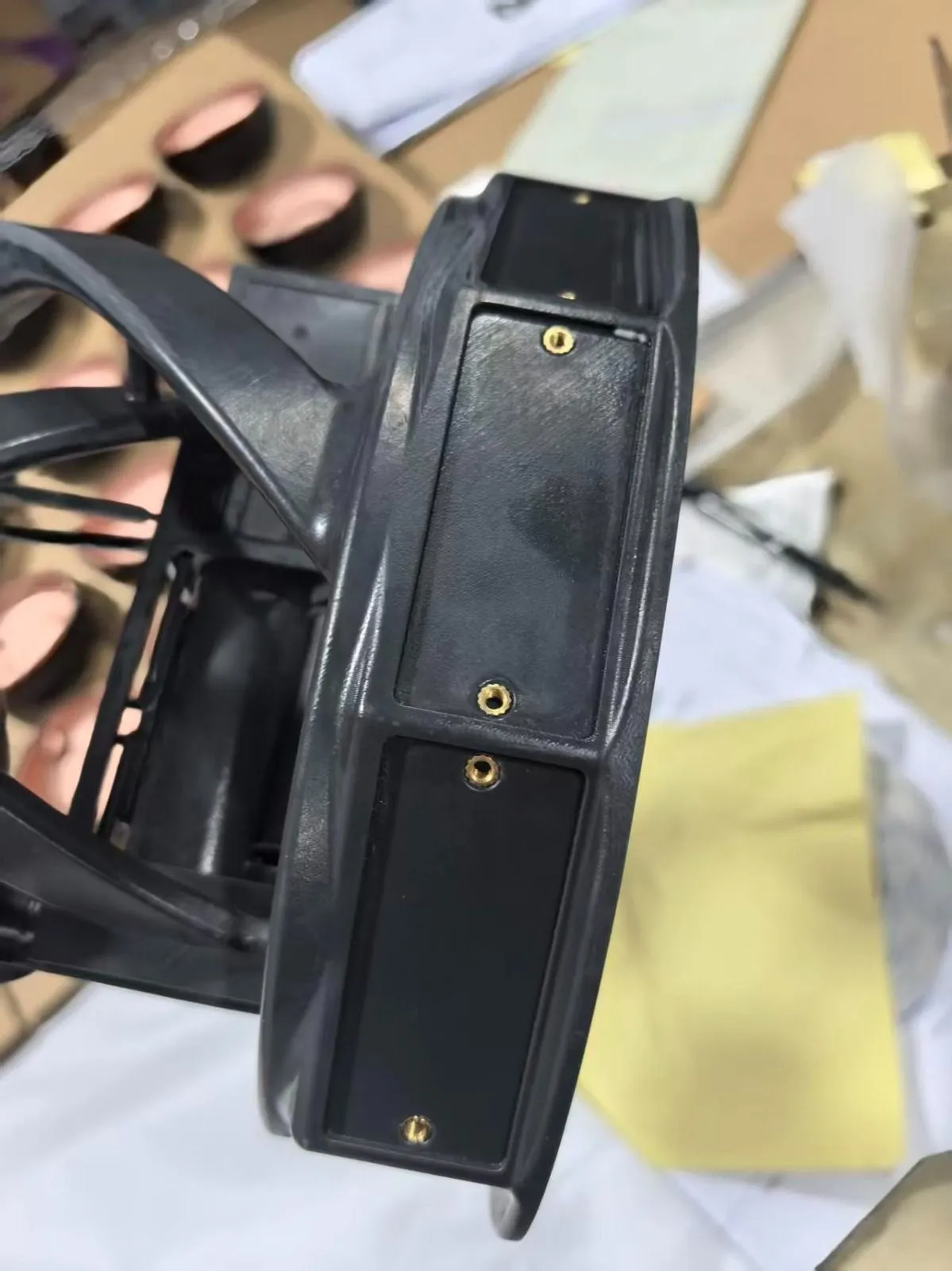
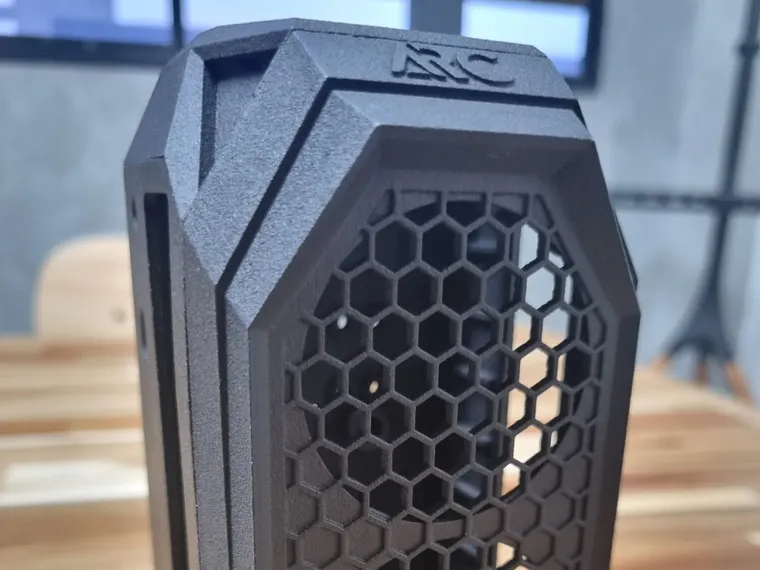
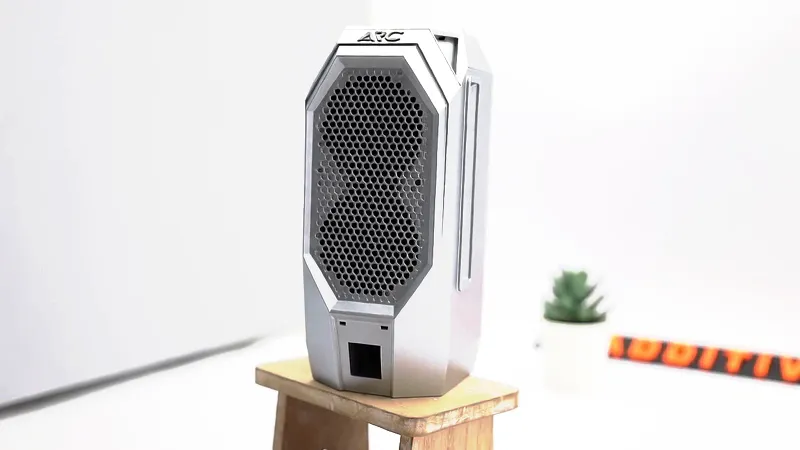
Our ARC computer case has heat-set inserts in its flow channel and back cover, out of sight inside the case. The photo shows brass inserts in a different job: the printed base of a trophy we made.
Press-fit inserts: no heat, but not for hot places
A press-fit insert, which Formlabs calls a screw-to-expand insert, is a tapered, ridged sleeve that pushes into a hole in a finished part. Putting the screw in expands it into the plastic. There is no soldering iron, and Formlabs rates the hold as very good. Its stated drawback is that the insert may loosen at higher temperatures.
Pick it for a part that never gets warm and cannot take an iron. Our pages list heat-set inserts only, so ask us before you design around a press-fit one.
Captive nuts: a standard nut in a pocket
A captive nut is an ordinary nut held in a pocket in the part, so it cannot spin while the screw turns. Formlabs rates the hold as very good, and the thread is metal. The pocket has to be drawn into the part and reachable from outside after printing, unless the nut is dropped in during the print.
On our filament printers we can pause the print, drop the nut into its pocket and print over it. That is covered in embedding in 3D prints. A sealed nut cannot come out without breaking the part, so it suits a fixing that stays put.
- Open pocket: a nut slides in from the side or top after printing, and a drop of glue keeps it there.
- Sealed pocket: the nut stays for good, with no glue and no visible fixing.
Tapping and self-tapping screws: for parts rarely opened
A self-tapping screw cuts its own thread as it goes in, so the hole needs no preparation. Formlabs says it holds well and is quick, but does not stand up to repeated assembly as well as metal. It suits tough, stretchy plastics. Brittle materials may crack, so wear eye protection.
Tapping means cutting a screw thread into the printed hole with a tap made for plastic. Formlabs rates the hold as good, with the same limit on repeated use.
Pick either for a lid or a panel that is rarely opened. Our tolerance guide advises against tapping or driving a screw into a plain hole in plastic, because the thread strips after a few turns. If a part will be opened more often, draw an insert hole.
Printed threads: large and gentle only
You can print the screw thread itself. Formlabs says to keep to larger sizes, at least 1/4”-20 or M6. It adds that resin and nylon powder printing suit this better than filament, because they are more precise, and that printed threads wear sooner than metal.
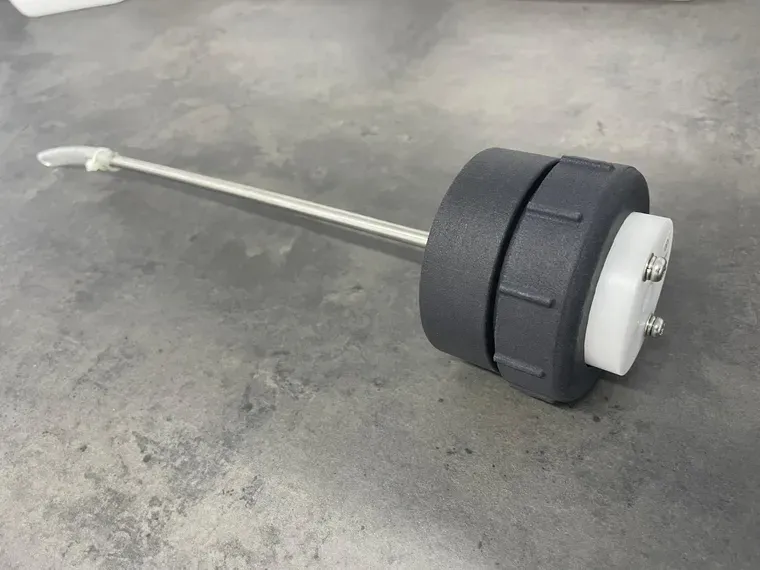
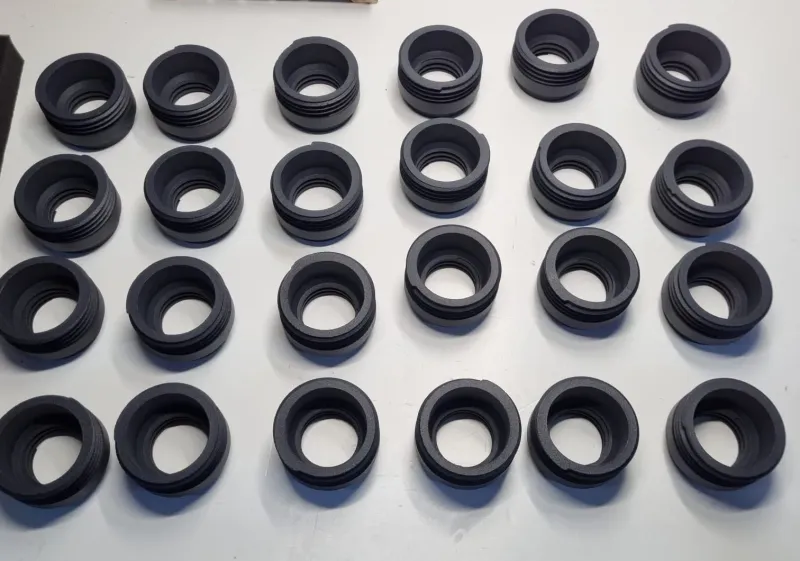
The bottle attachments we made for Millice are an example. They carry an outer thread printed in nylon. Each attachment is 65.7 mm across by our own drawing, and screws onto a 5-litre bottle.
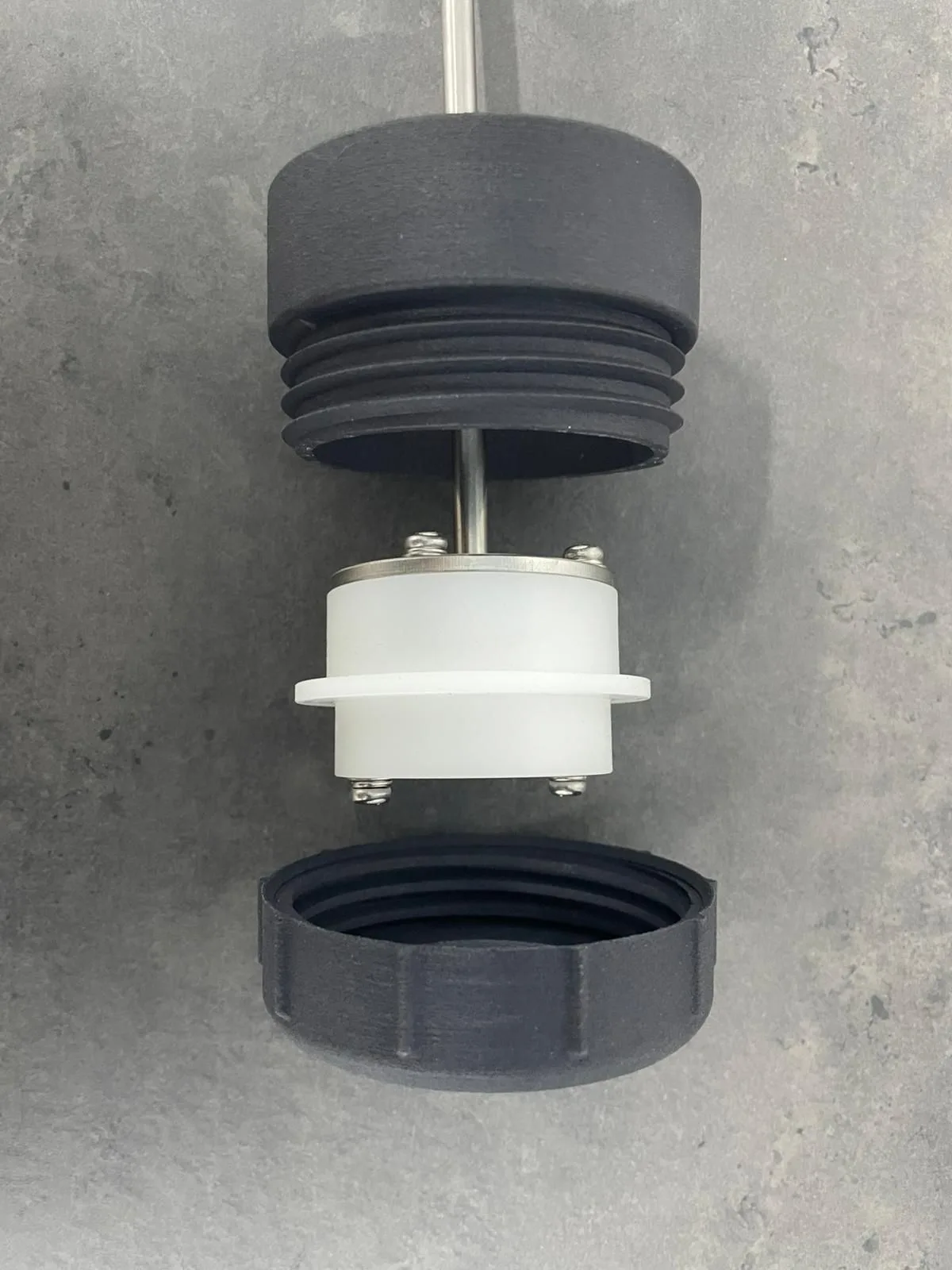
Formlabs says smaller threads need a customised profile. For an M2 to M5 screw, we would use an insert instead.
Drawing the hole for a heat-set insert
The hole is the part people get wrong. Three points come from the makers of the inserts.
- Use the maker’s number. CNC Kitchen’s M3 insert is drawn with a 4.0 mm hole. Other inserts and sizes differ, so read the datasheet of the one you buy.
- Printed holes come out small. In CNC Kitchen’s test they were about 0.25 mm under the drawing. It adds 0.2 to 0.3 mm in CAD for small inserts, and found 4.2 mm drawn gave an easy fit and about 90 per cent of the theoretical maximum hold.
- Blind holes run deeper. The maker says a blind hole should be about 1 mm deeper than the insert is long, and that through holes need no extra length. Leave at least the minimum wall the maker gives around the hole, since the wall is what holds the insert.
For the inserts we fit, our tolerances and clearances guide gives the hole size, depth and wall for M2 to M5. Tell us which holes take inserts when you send your files, and a person checks each hole before the part prints.
What we build in, and what we leave out
We press brass heat-set inserts, M2 to M8, into filament and nylon parts, and we supply the inserts. Hardware sealed inside a print, such as nuts, is covered in our embedding guide. The XCAM LITE camera box we made for SnapX was designed with brass inserts throughout: twelve 1/4 inch, ten M3 and seven M2, marked on the project’s drawing.
Our pages do not list tapping in plastic prints or press-fit inserts as services. If your design needs one, ask us before you draw the part around it.
Where these facts come from
Every figure about inserts and threads was read on the source’s own page on 19/11/2026. Sizes and temperatures change between inserts.
- CNC Kitchen, Tips & Tricks for Heat-Set Inserts used in 3D printing: iron temperatures, how to press an insert in, blind and through holes, glue-in for resin, removal.
- CNC Kitchen, Are Our Heat-Set Insert Datasheets Wrong?: the 4.0 mm hole, the 0.25 mm shrinkage, the 4.2 mm result and the pull-out figure.
- Formlabs, 3D Printing Threads and Adding Threaded Inserts to 3D Printed Parts: press-fit, heat-set, captive nut, tapping, self-tapping and printed threads.
- Wikipedia, ISO metric screw thread: what the letter M and the number mean.
- What we make and fit is from our own pages: embedding in 3D prints, 3D printing tolerances and clearances, and the Millice and XCAM LITE projects.
Frequently asked
What is a threaded insert?
A small sleeve, usually brass, with a screw thread inside and a ridged outside. It goes into a hole in the plastic part, and the screw then runs in the metal thread instead of cutting its own thread in plastic.
What size hole does an M3 heat-set insert need?
One maker lists 4.0 mm as the nominal hole for its M3 insert. Printed holes come out smaller than drawn, though. In that maker's test they were about 0.25 mm under, and 4.2 mm drawn was the sweet spot, where the insert seated easily and still held well. Check the datasheet for the insert you buy, and print a test piece.
How hot should the soldering iron be?
The maker of one popular insert says 10 to 20 °C above the temperature the part was printed at, which it puts at around 225 °C for PLA, 245 °C for PETG and 265 °C for ABS. Melt the insert in about 90 per cent of the way, press the rest home with a tool such as a screwdriver, and hold it a few seconds while the plastic sets.
Can I put heat-set inserts into a resin print?
Not by melting, because resin does not soften under the iron. The usual way is to glue the insert in, in a hole drawn to suit gluing. We fit inserts into resin parts another way, so say so when you send the file.
Can a heat-set insert be taken out again?
Yes. One insert maker sells a tool for M2, M2.5 and M3 inserts that pulls them back out with a soldering iron, and says not to reuse a PLA insert in a PETG part.
Can I print the thread itself instead?
Only for large threads. Formlabs, a resin and powder printer maker, says printed threads suit M6 or larger and wear sooner than metal. For small screws such as M2 to M5, use an insert.
Are self-tapping screws fine in 3D prints?
For a lid you rarely open, yes. Formlabs says they suit tough, stretchy materials and may crack brittle ones, and that they do not stand up to repeated assembly as well as metal. Open the part often and the plastic thread wears, so draw a hole for an insert instead.
Do you supply the inserts, or do I?
We supply the brass inserts and fit them, from M2 to M8. If you want a particular insert or screw thread, tell us when you send the file.
Related
-
 GuideHow do you put metal threads or magnets in a 3D print?
-
 GuideHow much clearance do 3D printed parts need to fit together?
-
 GuideHow do I export and send a 3D file so it prints first time?
-
 ServiceIndustrial 3D Printing
-
 ServiceMJF 3D Printing (Multi Jet Fusion) in Singapore
-
 ServiceProduct Development & Prototyping
-
 ProjectARC computer case parts for SE Manufacturing
-
 ProjectThreaded bottle caps for Millice
-
 Project3D printed replacement brackets for a projector mount