

How do you get a real metal finish on a 3D print?
Updated
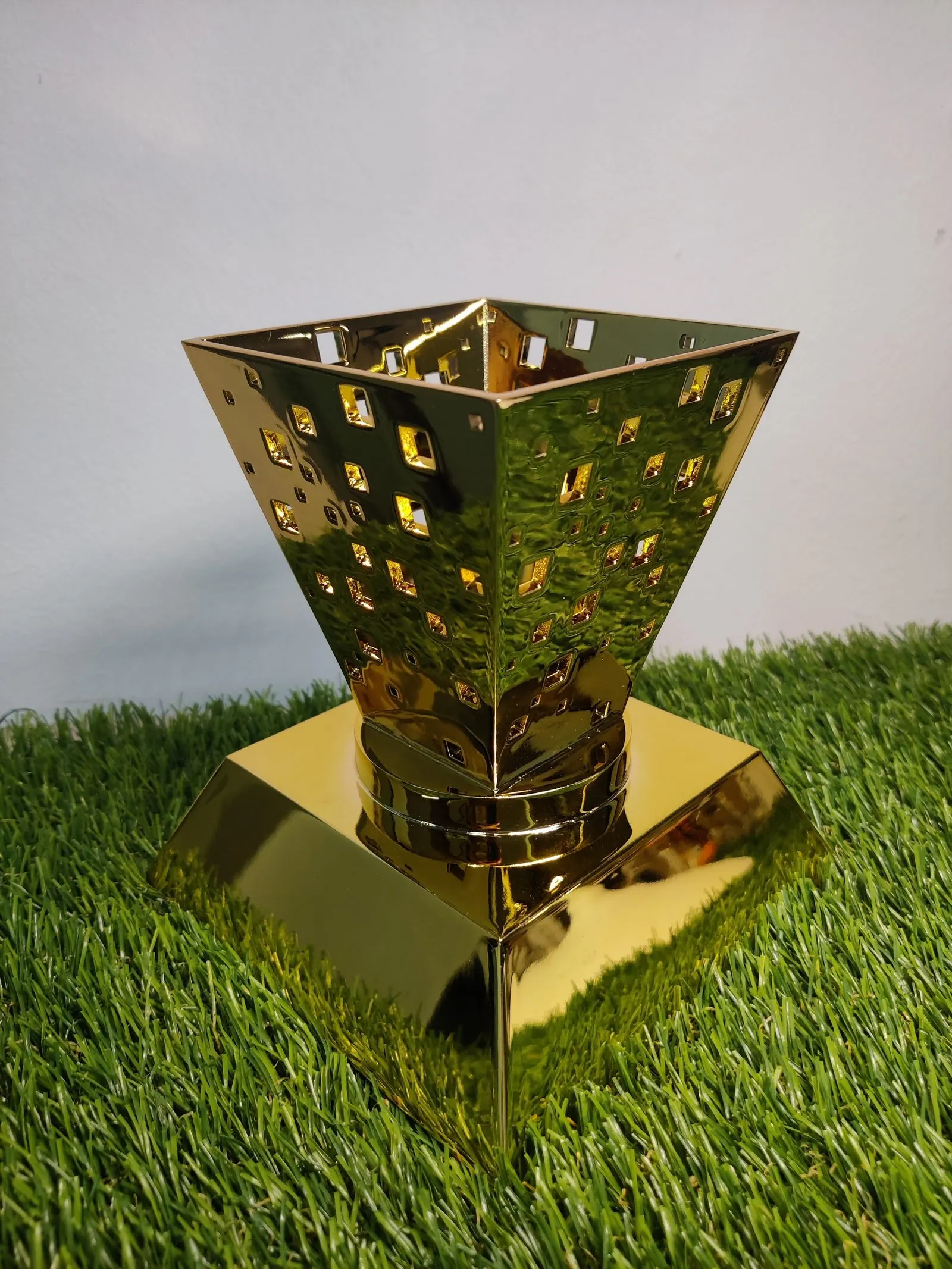
There are three realistic ways to make a 3D print look like metal, and they form a ladder. At the bottom, metallic paint: the cheapest, convincing from across a room. In the middle, chrome-effect sprays: brighter, still a paint film. At the top, true electroplating: a skin of real chrome, gold, copper, nickel or brass over the print, with the shine and feel of a cast part. Sprayed finishes cost less than electroplating, and both are priced by the part’s surface area. And if the part has a mechanical job to do, there is a fourth rung: print it in metal in the first place.
| Finish | Up close | The surface | Best for |
|---|---|---|---|
| Metallic paint | Reads as metal across a room, never a mirror | A paint film | Display models, props, shelf pieces |
| Chrome-effect spray | A brighter silver that photographs well | Still a paint film | Pieces judged mostly in photos |
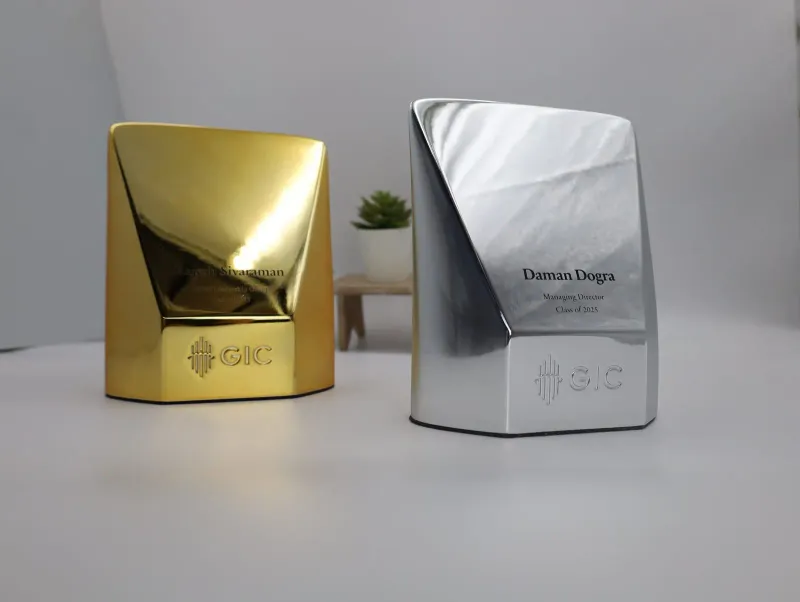
| Electroplating | A true mirror, with the feel of a cast part | Real metal, 50 to 200 microns thick | Trophies, awards, signage, mockups |
| Printed in metal | It is metal | Solid stainless steel, aluminium or titanium | Parts that take load, heat or wear |
When is metallic paint enough?
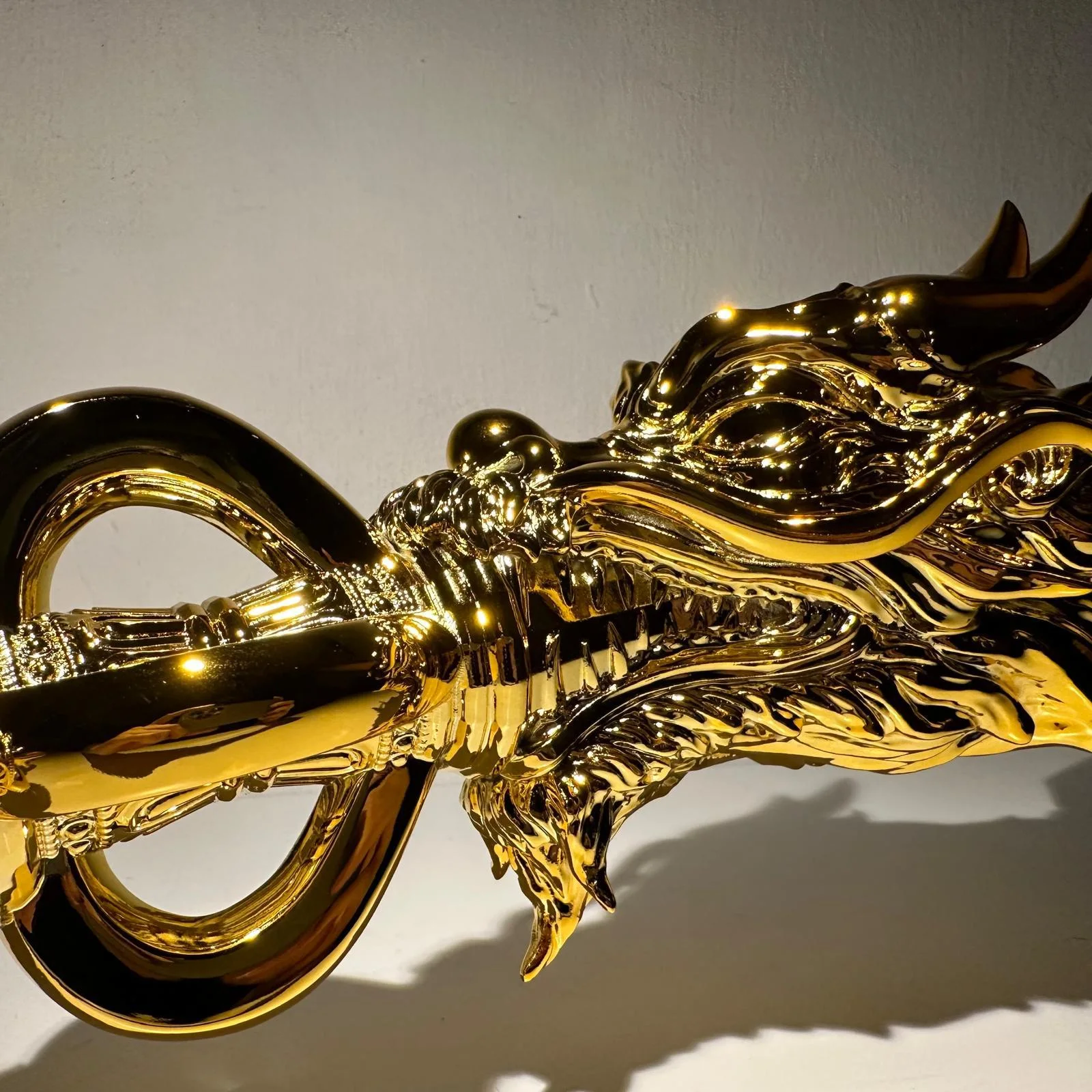
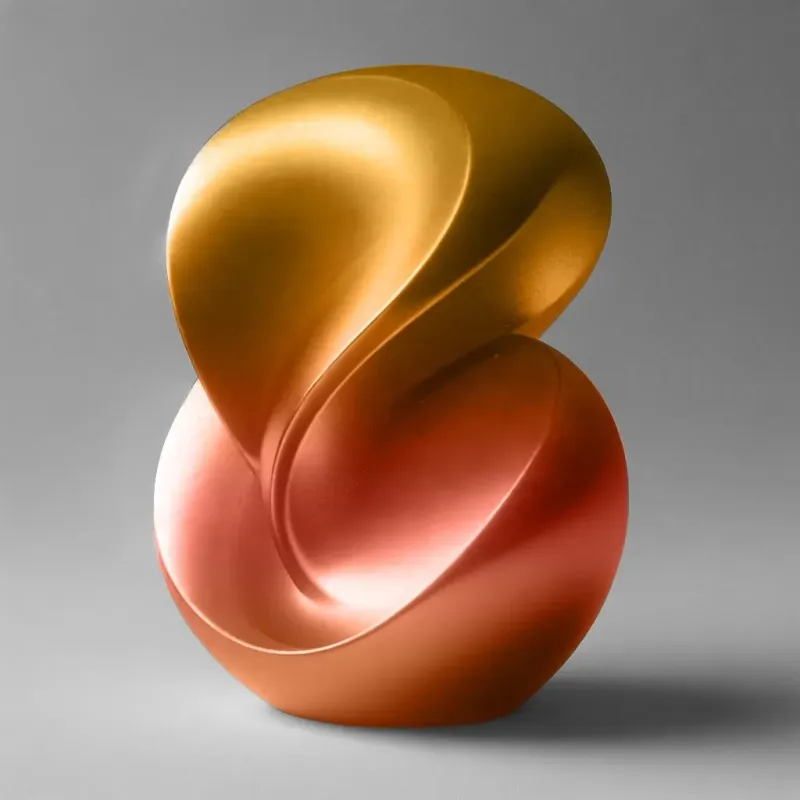
A silver, gold or bronze paint coat reads convincingly metallic at arm’s length and beyond, which is why it suits display models, props and pieces that live on a shelf. On our line it is a standard spray job: the part is filled, sanded and primed first, especially a filament print made by fused deposition modeling (FDM), or the layer lines telegraph through, then colour-coated and sealed. Gloss clear coats help here, because gloss makes metallic colours pop. Pantone-matched spray with a satin clear is the usual pick; our finishing options guide explains the 1k and 2k coat menu. The limit is close inspection: paint never gives you a mirror, and it feels like paint. Here is the same gold done both ways:

What about chrome-effect sprays and vacuum metallising?
Chrome-effect sprays sit one rung up: speciality paints that dry to a much brighter silver than a standard metallic. They photograph well, but the film is still paint, softer than metal and without the depth of a plated surface. Industry has another route, vacuum metallising, where a very thin aluminium layer is deposited on the part inside a vacuum chamber; it is how mass-produced cosmetic caps and car trim get their metal look, and it makes sense at production volume with dedicated tooling. For one-off printed pieces, true electroplating does the same read-as-metal job without the chamber.
What does true electroplating actually give you?
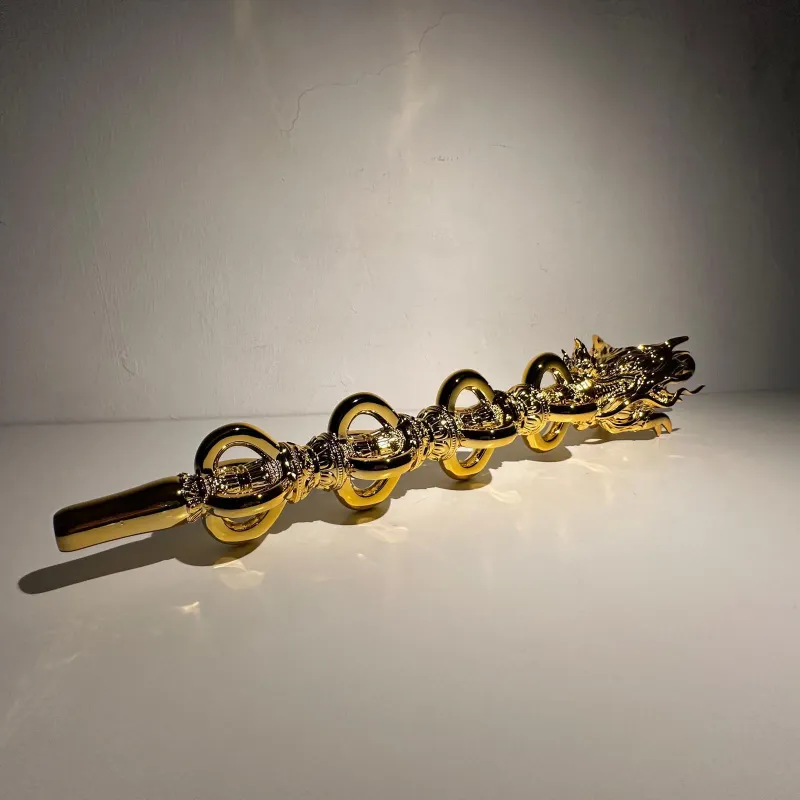
A genuine metal skin, 50 to 200 microns thick, built up in a plating bath over a conductive primer. It is not paint that looks metallic; it is metal, with the weight, reflectivity and edge-crispness of a cast piece. The core finishes are chrome, gold, copper, brass, nickel, antique bronze and gun metal, plus two-tone combinations like gold over copper, and tinted colours (reds, blues, greens) over a metal base that still read as anodised metal rather than flat paint. Every metal is quoted per part by surface area with no minimum, and the plating step typically adds 3 to 5 days. The result survives handling and outdoor display for years. For the full process and colour range, our electroplating guide goes deep on how resin prints made by stereolithography (SLA) take the bath.
Why does surface prep decide the result?
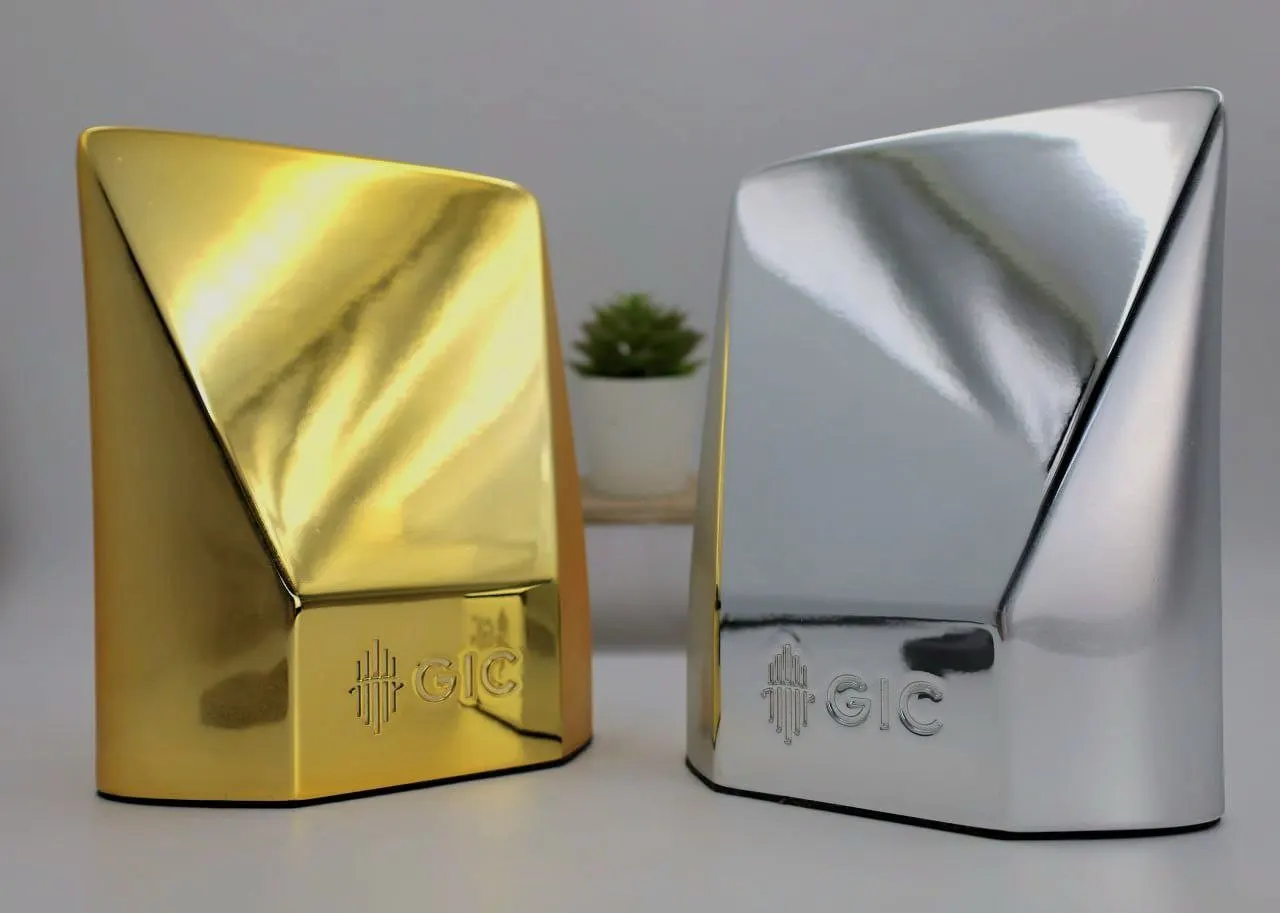
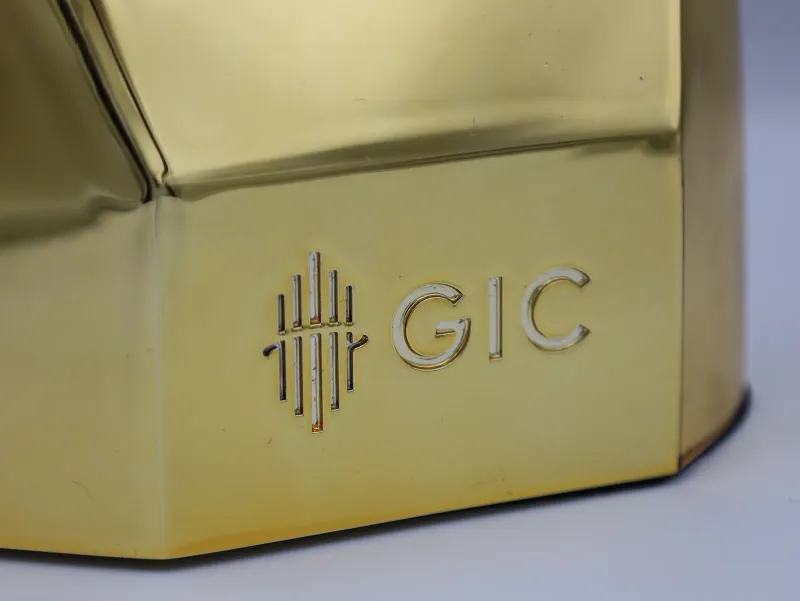
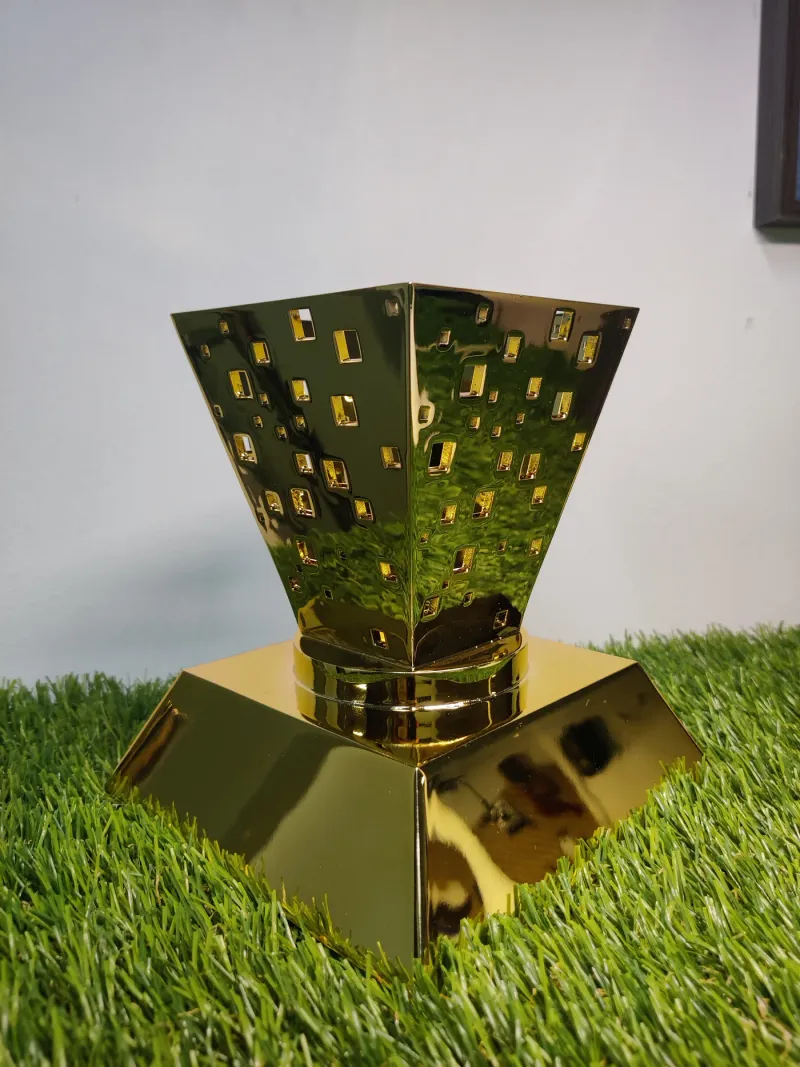
A plated skin is thin, so it faithfully reproduces whatever surface sits underneath, flaws included. That is why the real work happens before the bath. For the electroplated trophy we printed the piece at high resolution, then took every component through multi-stage preparation, sanding, priming and smoothing, before the reflective gold coat went on; the square perforations were printed to tight tolerances so they stayed consistent on every face after plating. Painted finishes obey the same rule: the Frigate Victory battleship hull went through putty, sanding and priming before any colour. SLA resin prints are the easiest starting point because they come off the printer smooth; FDM parts plate fine too, they just need their layer lines knocked back first. One thing to plan for: since the plate is 50 to 200 microns thick, engraved texture shallower than that will soften slightly.
When should you skip the finish and print in metal?
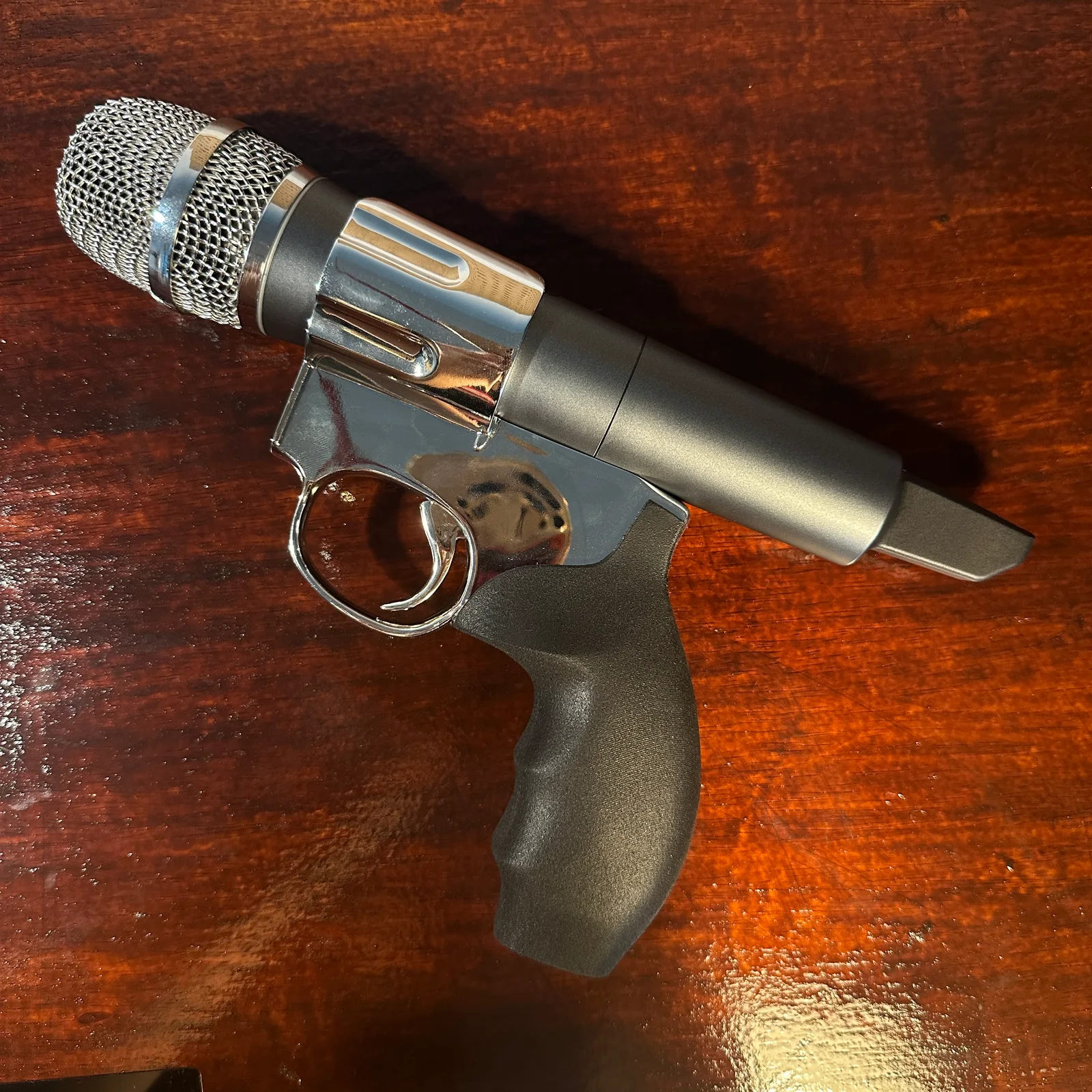
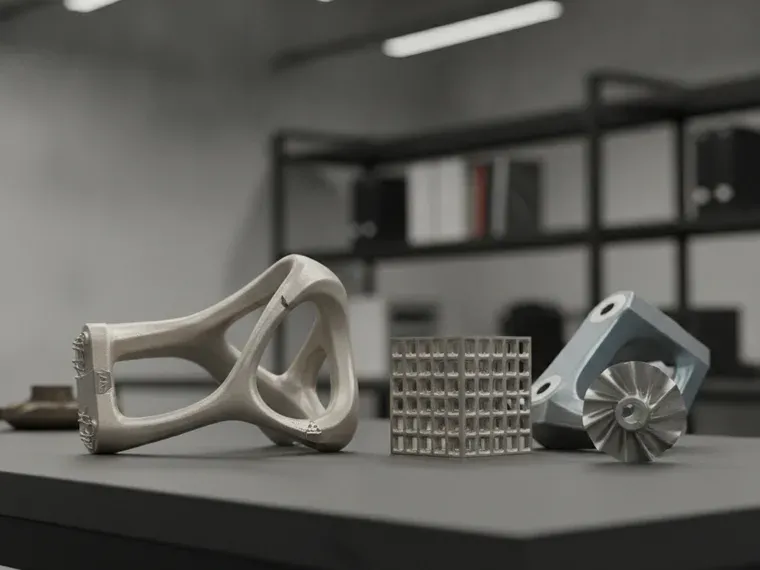
When the part has a job beyond looking good. A plated print is production-grade for trophies, signage and mockups, but the core is still plastic, so load, heat and wear call for the real thing. Our metal 3D printing service prints stainless steel, aluminium and titanium parts, priced per job. The flip side holds too: if the piece only needs to look and feel like metal, plating a print gets there at a fraction of the cost and lead time of real metal casting.
Deciding between a sprayed and a plated finish is easier with the part in front of us. Send the file or the printed piece to our Bendemeer studio through the colour and finishing service, or get an instant quote with a note on the finish you are after.
Frequently asked
How much does it cost to electroplate a 3D print in Singapore?
Plating is priced by the part's surface area and the prep it needs, whichever metal you choose. We quote per part with no minimum order, and plating typically adds 3 to 5 days on top of the print itself, depending on size and complexity. The same process also produces nickel, brass, antique bronze, gun metal, two-tone and tinted colour finishes.
Is metallic paint or electroplating better for a trophy?
For an award that will be handed over, photographed and kept, electroplating is the standard. It is a real metal skin with the shine and feel of a cast piece, and it is the finish behind most of our trophy work. A Pantone-matched sprayed finish reads well from a distance and suits display pieces on a budget, but if the piece must survive close inspection, plate it.
How durable is an electroplated finish on a printed part?
The plated layer is 50 to 200 microns of real metal bonded to a conductive primer. It survives normal handling, light abrasion and outdoor display for years, though it will mark under heavy abuse because the plastic beneath is softer than solid metal. For trophies, signage and product mockups it is production-grade.
When should I print the part in real metal instead of plating it?
When the part has a mechanical job, taking load, heat or wear that a plastic core cannot. Our metal 3D printing runs stainless steel, aluminium and titanium and is priced per job. If the part only has to look and feel like metal, plating a print gets there at a fraction of the cost and lead time of real metal casting.
Related
-
 GuideElectroplating colours and finishes
 -
 Guide3D Print Finishing Options: Which Coat Should You Choose?
 -
 Guide3D Printing Painting and Surface Finishes
 -
 ServiceColour Application & Finishing
 -
 ServiceMetal 3D Printing
 -
 ServiceCustom Trophies & Awards
 -
 ProjectGIC Trophy
 -
 ProjectTemple Vajra, Redesigned
 -
 ProjectMic Stand Revolver