

How do you glue acrylic so the joint stays clear?
Glue acrylic with solvent cement for a clear joint, or tape and two-part adhesive where cement cannot work. Steps, safety, and why super glue fogs it.
On this page
Which way should you join your acrylic?
One or two questions, and you get the method from this guide that fits.
The clear way to glue acrylic is solvent cement, which melts two faces together instead of putting a layer between them. Thickened cement covers edges that do not meet perfectly, and tape or a two-part adhesive covers joints to another material. Super glue is the one to keep off clear pieces. This guide sits inside our acrylic sheet guide.
Which glue for which job
| What you are joining | What to use | What to watch for |
|---|---|---|
| Acrylic to acrylic, where the joint must be clear | Thin solvent cement | Edges must be clean, square and fit together without force |
| Acrylic to acrylic, edges that do not fit perfectly | Thickened solvent cement | Fills small gaps, and the joint stays clear |
| A large flat area, or a joint that must be strong and stand up to its surroundings | Two-part adhesive made for acrylic | Needs weighing, mixing and a flat surface, so it is workshop kit |
| Acrylic to metal, glass or a painted surface | Double-sided foam tape | Surfaces must be clean and dry, and the tape takes up to 72 hours to reach full hold. Check its data sheet for acrylic |
| Acrylic to wood | Tape or screws | Seal the wood first, because the tape maker says porous surfaces need sealing |
| A joint you want to look clean | Not super glue | It leaves a white haze around the joint |
| A box you may need to open again | Screws and brackets | No glue to undo |
Solvent cement: the clear joint
Solvent cement is a thin liquid. It dissolves the surface of both pieces, and as the solvent dries the two surfaces stay fused. One acrylic sheet maker says solvent bonding can give a joint as strong as the sheet itself.
It has limits you should know before you buy a bottle:
- It joins acrylic to acrylic. Makers describe it for acrylic and similar plastics, so use tape or another adhesive on wood, metal or glass.
- It needs good edges. The faces must be cleanly cut, square and dry. Do not polish an edge you plan to cement, because polishing rounds it and weakens the joint.
- Stress shows up as cracks. Fine cracks called crazing can appear when cement meets stressed acrylic, such as a rough saw cut, a bend or a flame-polished edge. After laser cutting, makers advise annealing the part before cementing.
- It is fussy about air and water. Water in the cement, or cement that dries too fast, turns a joint white. Keep the bottle tightly sealed.
- It likes a mild room. One sheet maker advises against cementing below 16 °C or above 38 °C, and calls 21 to 24 °C ideal.
Thickened cement is the same idea in a thicker liquid. It fills small gaps and suits joints that are hard to reach, such as a T-joint. Use thin cement when the edges fit well.
A clean joint, step by step
This is the method acrylic sheet makers call capillary cementing, for two clean edges.
- Fit the parts dry. They should meet without force. Tape them or clamp them in a jig so they cannot move.
- Set the joint flat. Lay it horizontal, with the two edges held about 0.1 mm apart by thin shims, for sheet up to a quarter inch (about 6 mm) thick.
- Run the cement into the joint. A needle-nosed bottle lets it flow in by capillary action, which means the liquid pulls itself into a thin gap.
- Wait 45 to 60 seconds, then take out the shims. The surfaces are soft at this point.
- Press lightly for three minutes. The maker calls for a small pressure only, until the joint is set.
- Leave it alone. The first bond forms in 5 to 10 seconds, but wait three hours before any further work on it. It reaches high strength after 24 to 48 hours.
Safety with solvent cement
Read the product’s own safety data sheet before you open it. The one we read is for Weld-On 4SC, an acrylic solvent cement. Its signal word is Danger, and it says:
- It burns easily. Highly flammable liquid and vapour. Keep it away from heat, sparks, open flames and other ignition sources, and no smoking. The vapour is heavier than air, so it can travel along the ground to a flame and gather in confined spaces, especially at or below ground level.
- Ventilate. Use it only outdoors or in a well-ventilated area, and do not breathe the vapour. Where ventilation is not enough, the sheet says to wear respiratory protection. It may cause drowsiness or dizziness.
- Protect skin and eyes. It lists chemical-resistant gloves (Viton, polyethylene or barrier laminate), chemical goggles, a face shield if it might splash, and long-sleeved protective clothing. It causes skin irritation, may cause an allergic skin reaction, and causes serious eye irritation.
- Know what is in it. That product is 40 to 60% dichloromethane, and the sheet says it is suspected of causing cancer.
At least one acrylic sheet maker sells cements free of dichloromethane. Read the label and data sheet of whatever you buy, because they differ.
Two-part adhesive: for gaps and big areas
A two-part adhesive cures by a chemical reaction when you add a hardener. Sheet makers call the type made for acrylic a polymerizing cement. It fills gaps better than solvent cement, so the parts need not fit as exactly. The maker says to use it where high strength and good resistance to environmental conditions are needed.
Pick the right type. The same maker says ordinary epoxy, polyurethane and similar two-part adhesives are not suitable for bonding its cast acrylic sheet, because their adhesion is very low.
Tape: for fixing acrylic to a surface
Double-sided foam tape is a tidy way to stick a sheet to a wall, a board or a frame. The maker of one well-known foam tape (3M VHB) says its multi-purpose kind bonds metals, glass, paints and medium or high surface energy plastics. Its guide does not name acrylic, so check the tape’s own data sheet.
- Clean and dry first. The tape maker calls for clean, dry surfaces, and its guide uses a 50:50 mix of isopropyl alcohol and water. Test any cleaner on an offcut, because some alcohols attack acrylic.
- Press firmly. Pressure sets the bond.
- Be patient. The tape reaches about half its hold in 20 minutes, 90% in 24 hours and all of it in 72 hours.
One of our signs went up this way. The rose gold logo for Move with Myow was fixed on high-bond tape, with no screws through the wall. See the project.
Super glue: why it fogs acrylic
Super glue is a cyanoacrylate. Unreacted glue goes airborne, settles back on the surface and reacts with moisture there. The result is a white or rainbow-coloured haze outside the joint, which the glue’s makers call blooming.
One acrylic sheet maker’s guide for one grade of its sheet names a thin, wicking cyanoacrylate cement for extra strength, and warns that smudges of it leave white marks. So keep super glue for joints nobody will see, apply the least you can, and test on an offcut.
Screws and brackets: when not to glue
Some pieces should come apart again. Fix those mechanically.
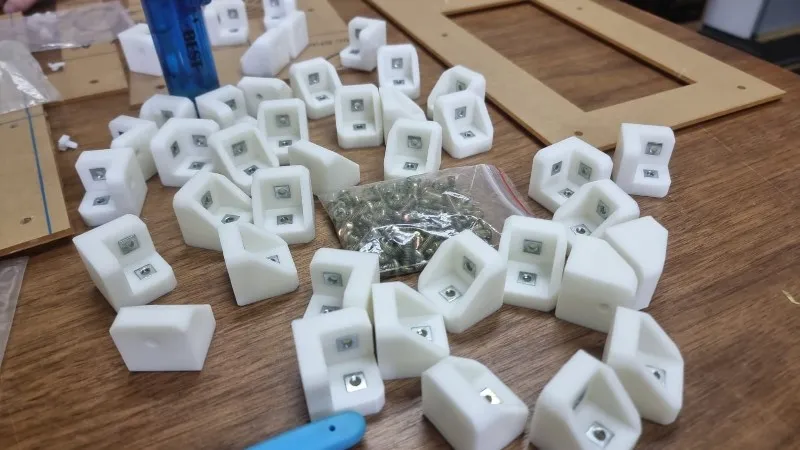
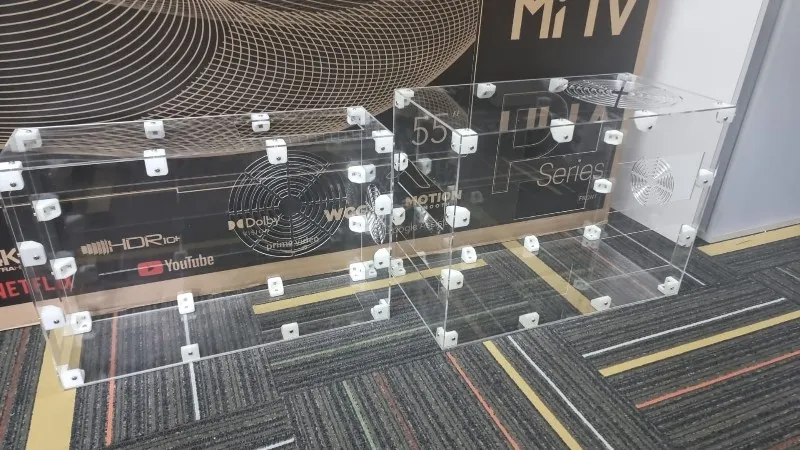
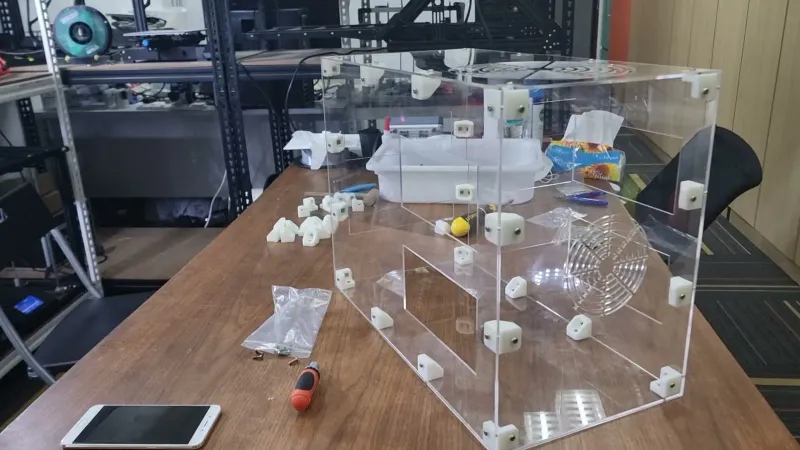
We built two clear cases this way for a Singapore Institute of Technology project. The 3 mm panels were laser cut, and printed brackets with nuts held them with screws, so the panels unscrew if anything inside needs to change.
Layered pieces can float on standoffs. These donor plaques carry an engraved panel on four standoffs over tinted acrylic, fixed into the wall.

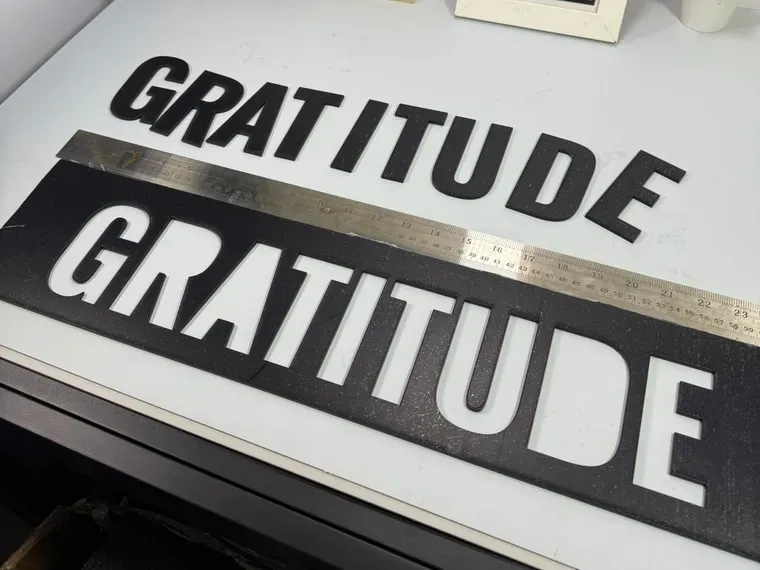
Where we do glue is on our acrylic signs with a raised logo, which is glued onto its panel. If you want acrylic pieces to join, we laser cut them from your file or UV print them up to A4 before they go together.
Where these facts come from
Every outside fact was read on the page named below on 19 November 2026. Cements and tapes differ, so follow the data sheet of the one you buy. Brand names here are the sources’ own products.
- Acrylite, Cementing, What is solvent bonding?, Polymerizable cement, ACRIFIX solvent cements and Cementing Resist sheet: how solvent bonding works, the steps and timings, temperature, crazing, thickened cement, two-part adhesives and cyanoacrylate smudges.
- IPS Corporation, Weld-On 4SC safety data sheet: the hazards, ventilation, protective equipment and dichloromethane share for that one acrylic cement.
- Plaskolite, Fabback mirror fabrication guide: annealing after laser cutting, and which chemicals attack its sheet.
- 3M, VHB tape design guide: what the tape bonds to, cleaning and how fast it builds hold.
- Henkel UK, via FastFix Technology: what blooming is.
- Everything we make, offer and have built comes from our own project pages and sign catalogue.
Frequently asked
What is the best glue for acrylic?
For acrylic to acrylic, a solvent cement. It melts the two faces so they fuse, and its maker says a good joint can match the strength of the sheet itself. For acrylic to a different material, double-sided tape is the usual choice.
Can I use super glue on acrylic?
It bonds, but it can leave a white haze called blooming around the joint, so keep it for hidden joints. Use as little as you can, and test on an offcut first.
Can I glue acrylic that has been laser cut?
Yes, with care. Laser cutting leaves a thin stressed band along the edge, and the sheet maker says it is very susceptible to crazing from incompatible solvents. Anneal the part first, as makers advise, and test the cement on an offcut.
Why did my acrylic crack after gluing?
Cracks that show up as fine lines, called crazing, come from stress in the sheet meeting solvent. Edges that were cut hot, bent or flame polished are common causes. Sheet makers advise annealing, a slow heat treatment, before cementing.
Why is my acrylic joint white or cloudy?
With solvent cement, a white joint usually means water got into the cement or it dried too fast. Keep the bottle sealed. With super glue, the white is blooming.
How long does acrylic cement take to dry?
The first bond forms in five to ten seconds, and the maker says to wait three hours before further processing. Full strength takes 24 to 48 hours, and it keeps building for weeks.
Can I glue acrylic to wood or metal?
Solvent cement is made for acrylic and similar plastics, so use something else for wood or metal. Double-sided foam tape is one way, or screws through oversize holes. Check the tape's data sheet for the surfaces you are joining.
Is acrylic cement dangerous?
The one data sheet we read, for Weld-On 4SC, carries the signal word Danger. It lists the cement as highly flammable, a skin and eye irritant, a possible cause of allergic skin reaction and drowsiness, and suspected of causing cancer. Use it only outdoors or with good ventilation, wear the gloves and goggles the sheet names, and keep it away from flames.
Related
-
 GuideWhat should you know before you buy an acrylic sheet in Singapore?
-
 GuideHow do you cut acrylic sheet, and when is it better to send it out?
-
 GuideWhat is acrylic mirror, and is it better than a glass mirror?
-
 ServiceLaser Engraving & Cutting
-
 ServiceCustom Signage
-
 ServiceUV Printing
-
 ProjectAcrylic cases for a Singapore Institute of Technology project
- ProjectLayered acrylic wall plaques for St Luke's ElderCare
-
 ProjectLED backlit acrylic fairy trophy