3D-Printed Wind Tunnel
- ServiceProduct Development & Prototyping
- MaterialsPLA, Acrylic
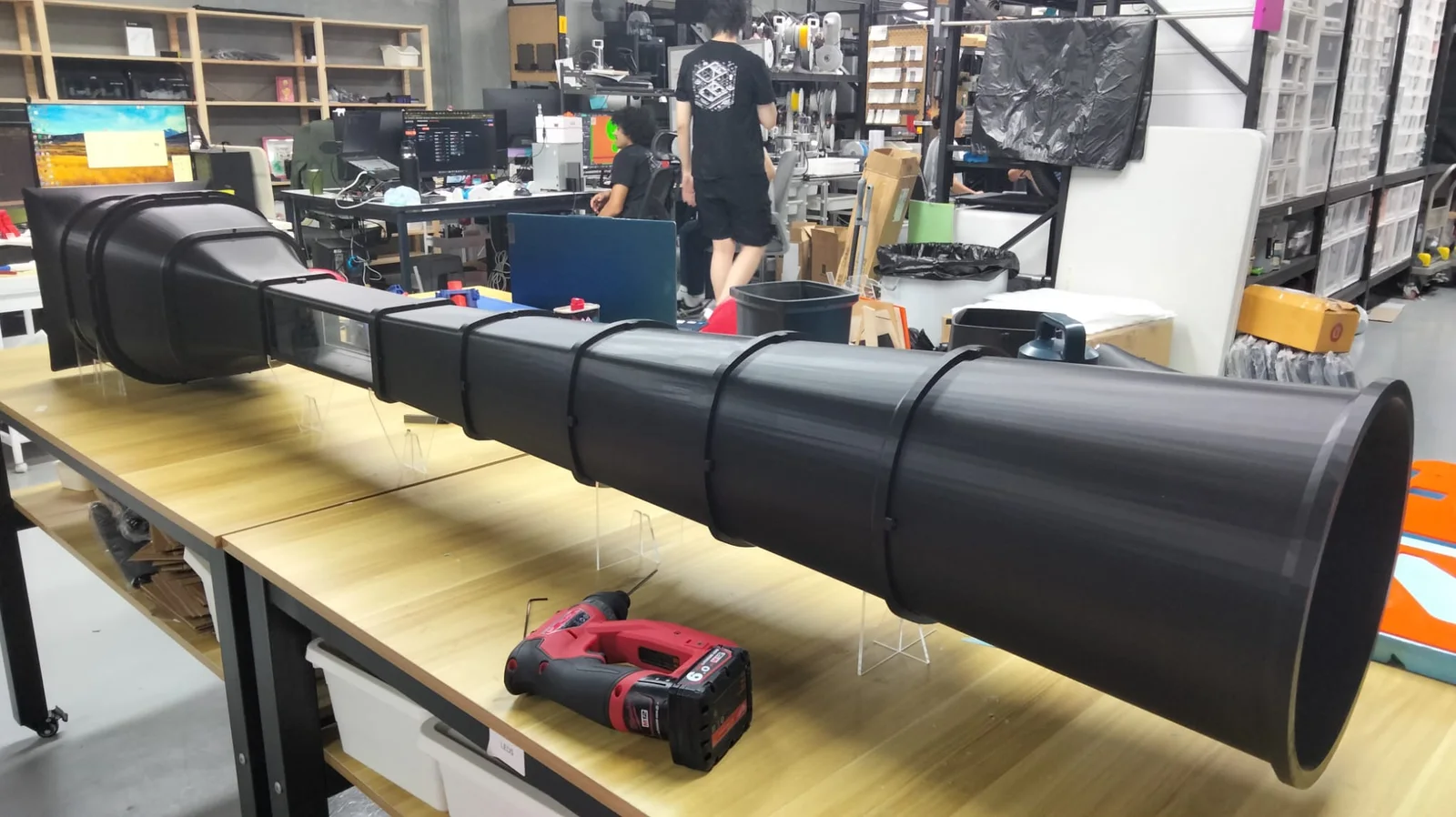
A working wind tunnel, 3D printed in sections and bolted into one long assembly. Air is drawn in through a wide mouth, smoothed and straightened, then accelerated through a test section where a model can be observed and measured, before spreading out again through the diffuser at the far end. It is a full open-circuit tunnel for studying how air behaves, built almost entirely on our printers.
Straightening the airflow
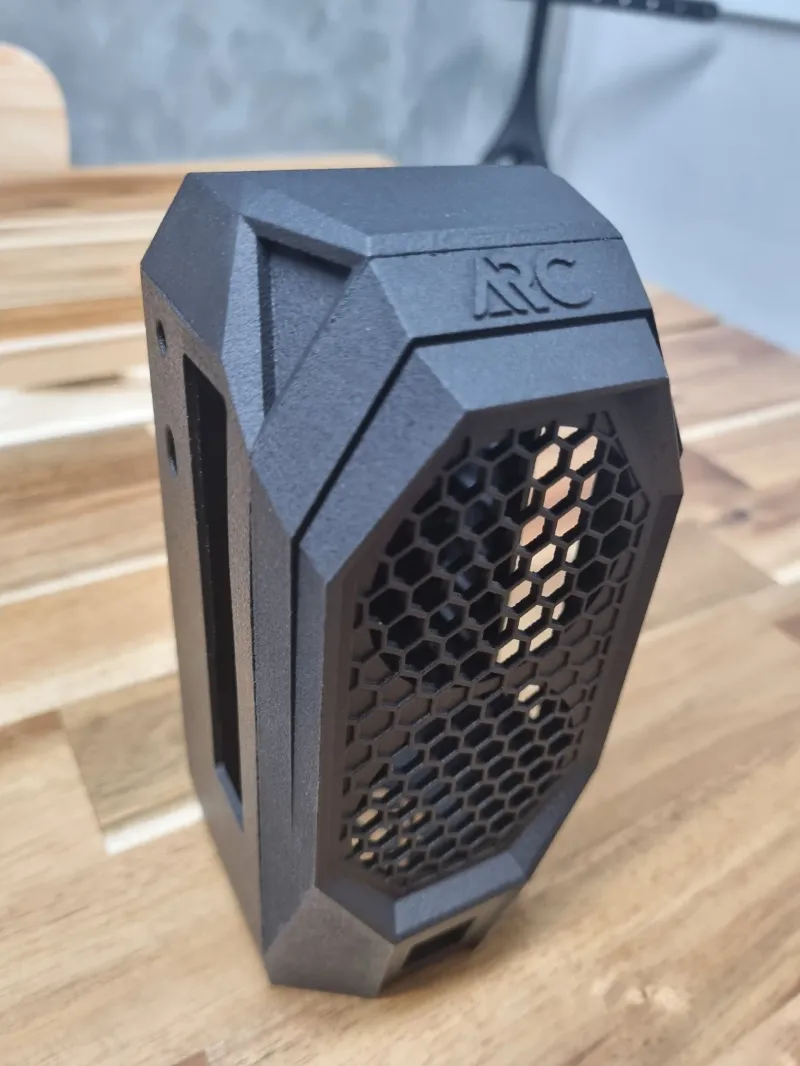
The heart of the tunnel is the flow conditioning. Raw air pulled into an intake is turbulent and swirling, useless for a clean test. A large settling chamber slows it down, and a deep hexagonal honeycomb combs it into straight, parallel streams, the honeycomb you can see in close-up here. A contraction cone then squeezes that smoothed air into the test section, which speeds it up and evens it out further into the steady laminar flow the tunnel is built to produce.
Printed in segments to reach scale
A tunnel this long is far bigger than any single print, so we split it into a series of segments, each sized to the print bed, and gave them matching flanges so they bolt together true. Every part was printed by fused deposition modeling (FDM) in PLA, from the flaring intake and the honeycomb to the tapering diffuser. Printing it in-house meant the geometry could be tuned and reprinted freely, which is exactly what a research prototype needs while the design is still settling.
Made to measure
A wind tunnel is only useful if you can read what the air is doing, so this one is built around observation and measurement. The test section is clear acrylic, so a model inside can be seen and filmed while the air moves over it. Alongside it we designed a load-cell mounting bracket, shown in the render, that holds a test model and feeds the forces on it to a sensor, turning the tunnel from something that simply moves air into an instrument that produces numbers.