

Which filament is strong enough for a jig, fixture or end-use part?
On this page
- Jigs, fixtures and brackets: which to pick
- The six engineering filaments side by side
- PETG-CF: the everyday jig and fixture filament
- Polycarbonate (PC): for covers and guards near heat
- ABS-GF: glass fibre for large, flat, stable parts
- PA6-CF: strong carbon-fibre nylon, kept dry
- PAHT-CF: carbon-fibre nylon for heat and damp
- PPA-CF: the top of the filament range
- Print orientation matters as much as the filament
- When to move to nylon powder printing
- When to move to metal or machining
- Frequently asked
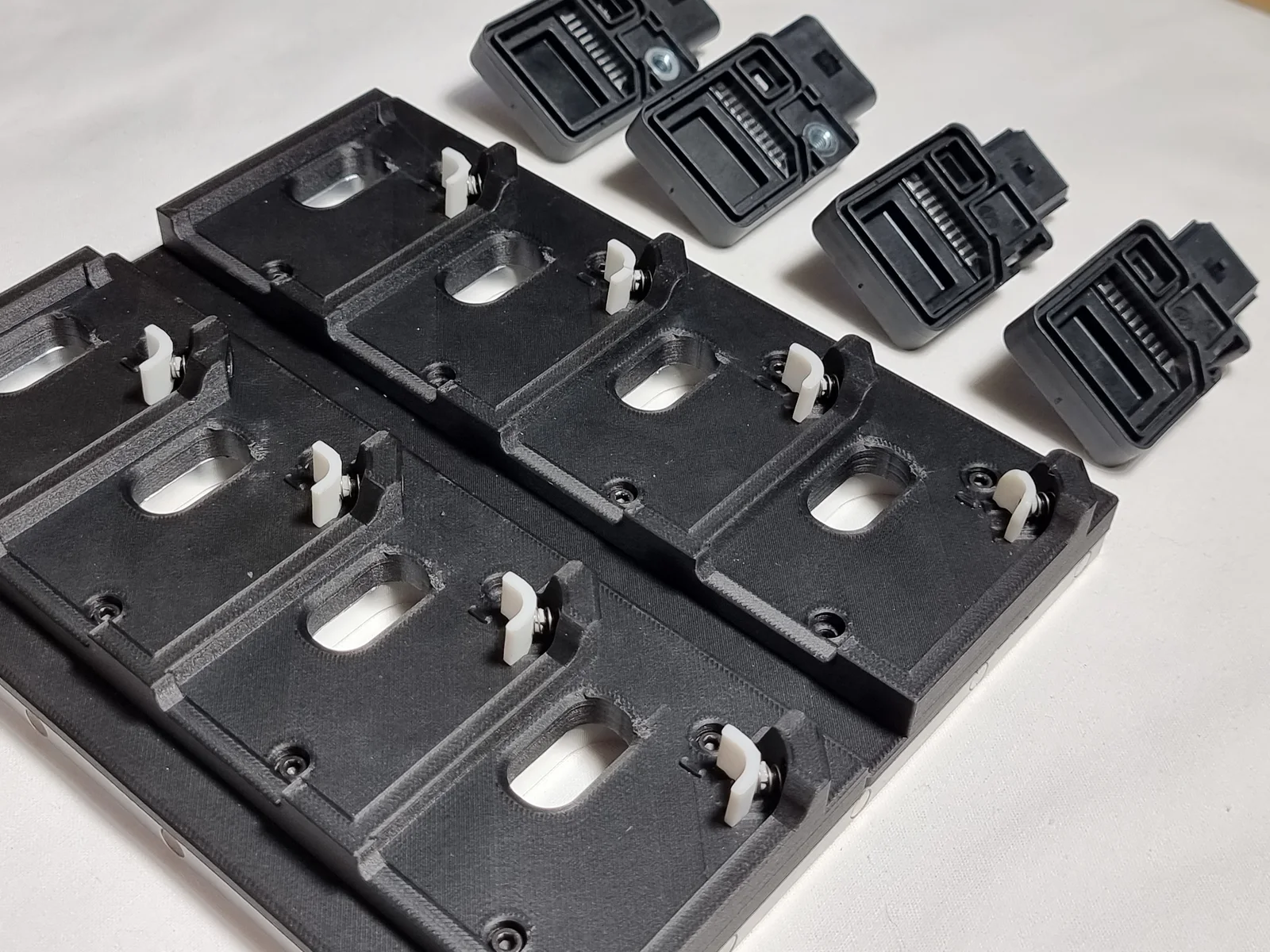
For most jigs and fixtures, carbon-fibre PETG (PETG-CF) is strong and stiff enough, and holds its shape to about 68°C. For real load or heat, step up to carbon-fibre nylon: PA6-CF to about 160°C, PAHT-CF to about 170°C. We print all six engineering filaments below by filament printing (fused deposition modeling, FDM) in our own studio.
Jigs, fixtures and brackets: which to pick
Pick by what the part has to survive. “CF” or “GF” in a name means chopped carbon or glass fibre, which stiffens the part and stops it warping. For the everyday plastics (PLA, PETG, ABS, ASA), see which filament your part should be printed in.
- Everyday jigs and fixtures: PETG-CF, stiff and flat, softens from about 68°C.
- Large flat fixtures that must not warp: glass-fibre ABS (ABS-GF), 3,160 MPa stiffness, softens from about 88°C.
- Covers and guards near heat: polycarbonate (PC), softens from about 110°C.
- Jigs clamped hard all shift, in air-conditioning: PA6-CF, 102 MPa pull strength, softens from about 160°C.
- Brackets near motors and pumps, or in damp air: PAHT-CF, softens from about 170°C, soaks up only 0.88% water.
- Metal-replacement brackets: PPA-CF, strongest at 168 MPa pull strength, softens from about 195°C.
- Clips and latches that flex every time: not carbon fibre, which snaps: nylon powder printing (SLS or MJF), 50 MPa both ways on MJF.
A car dashboard in the sun reached about 69°C in a 2018 Arizona State University study, already past PETG-CF’s limit. Our heat, sun and outdoors guide covers cars and outdoor parts.
The six engineering filaments side by side
| Filament | Softens from | Stiffness, along / across layers (MPa) | Pull strength, along / across layers (MPa) | Toughness, along / across layers (kJ/m²) | Water uptake, by weight |
|---|---|---|---|---|---|
| PETG-CF | about 68°C | 2,460 / 1,340 | No figure published: ask us | 41.2 / 10.7 | 0.30% |
| PC | about 110°C | 2,110 / no figure published | No figure published: ask us | 34.8 / 9.0 | 0.25% |
| ABS-GF | about 88°C | 3,160 / 2,250 | 36 / 29 | 14.5 / 5.3 | 0.53% |
| PA6-CF | about 160°C | 4,430 / 2,170 | 102 / 48 | 40.3 / 15.5 | 2.35% |
| PAHT-CF | about 170°C | 3,860 / 2,180 | 92 / 47 | 57.5 / 13.3 | 0.88% |
| PPA-CF | about 195°C | 11,800 / 4,300 | 168 / 57 | 41.7 / 4.3 | 1.30% |
| Plain PETG, for comparison | about 68°C | 2,780 / no figure published | 51 / no figure published | 34.2 / 10.5 | 0.45% |
Reading it: higher is better in every column but water uptake. Across the layers is where a print is weakest; stiff is not strong, and a part sags long before it melts.
Water uptake: measured at 55% humidity; Singapore averages about 82% (Meteorological Service Singapore), and wet nylon is softer and weaker.
Source: the makers’ data sheets (heat ISO 75, strength ISO 527, toughness Charpy ISO 179) on solid, dried test bars. A normal print is weaker and softens a little sooner, hence “about”. “No figure published” means the sheet gives none, so we judge from your part.
Two things stand out. Fibres do not always add strength: ABS-GF is stiffer than PETG but pulls apart sooner, and PETG-CF is no stiffer than plain PETG (2,460 against 2,780 MPa): its gain is a part that stays flat and true. And the nylons lose half or more of their pull strength across the layers, which matters as much as the choice of material.
PETG-CF: the everyday jig and fixture filament
Carbon-fibre PETG is where most jigs, fixtures and enclosures start. It prints flat and true, holds its size from one part to the next, and comes off the printer with a dense matte finish that hides the layer lines, so it is usually left raw.
- Pick it for: holding jigs, assembly fixtures, inspection trays, electronics enclosures, covers, anything at room temperature that must not flex or warp.
- Heat: about 68°C, the same as plain PETG. Fine on a workbench; not for a part inside a hot machine or on a car dashboard in the sun.
- Damp: takes up 0.30% water, less than plain PETG, so humidity is not a worry.
- Chemicals: its maker rates it as resisting most oils and grease, but not acids or alkalis.
Polycarbonate (PC): for covers and guards near heat
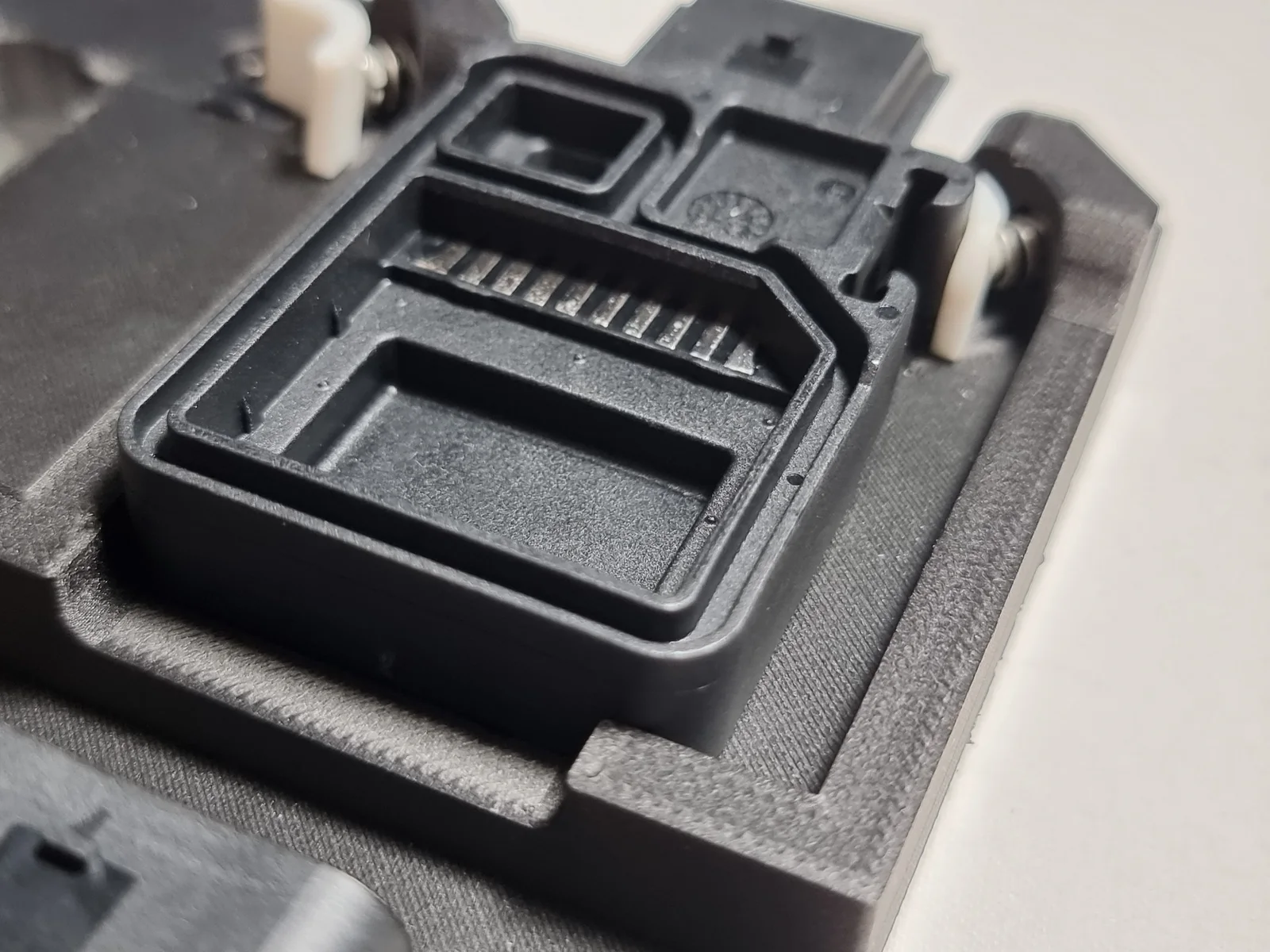
Polycarbonate is the clear step up in heat from PETG without moving to nylon: about 110°C under load. It soaks up very little water (0.25%) and its data sheet rates it self-extinguishing, meaning it stops burning once the flame is taken away.
- Pick it for: guards and covers near lamps, heaters or warm electronics, housings that see more heat than PETG takes.
- Limit: it stretches only 3.8% before breaking (2.1% across the layers), so overloaded it cracks rather than bends. Its toughness on the maker’s test is below PETG-CF’s, so don’t choose it for knocks alone.
- Colours: white, black and a clear black.
ABS-GF: glass fibre for large, flat, stable parts
ABS-GF is ABS with chopped glass fibre in it. Its strength is staying put: it warps far less than plain ABS, so a large flat fixture or enclosure panel comes out flat, and it takes heat to about 88°C.
- Pick it for: big fixtures and base plates, enclosure panels, parts that must hold their shape in a warm room, in more colours than the carbon-fibre filaments (black, white, grey, red, orange and blue).
- Limit: it is stiff (3,160 MPa) but not strong: it pulls apart at 36 MPa, below plain PETG’s 51, and takes a knock poorly (14.5 kJ/m² along the layers). Use it where flatness and heat matter, not where a part is hit or carries a heavy load.
- Chemicals: resists acids and alkalis, but not some solvents or some oils.

PA6-CF: strong carbon-fibre nylon, kept dry
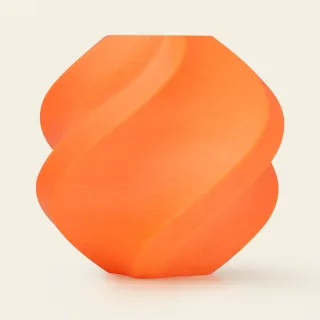
Carbon-fibre nylon (PA6-CF) is our strongest filament for everyday jigs and end-use parts: 4,430 MPa stiff and 102 MPa pull strength along its layers, roughly twice plain PETG’s strength, and good to about 160°C. PPA-CF, below, goes higher still for the hardest jobs.
- Pick it for: brackets and arms that take real load, end-of-arm tooling, fixtures near warm machines, parts that would flex in PETG-CF.
- Limit, damp: it soaks up 2.35% of its weight in water, and its maker publishes a 37% loss of bending strength when wet. Indoors in air-conditioning it is excellent; outdoors or in a humid room, choose PAHT-CF.
- Limit, layers: across the layers it drops to 48 MPa, less than half, so orientation matters.
PAHT-CF: carbon-fibre nylon for heat and damp
PAHT-CF is a high-temperature carbon-fibre nylon built for the conditions that weaken PA6-CF. It takes heat to about 170°C, soaks up only 0.88% water, and is the toughest of the six on the maker’s knock test (57.5 kJ/m² along the layers).
- Pick it for: brackets near motors and pumps, parts in a machine that runs warm, anything outdoors, in a wash-down area or in an unconditioned workshop.
- Trade-off: a little less stiff and strong than PA6-CF on the maker’s dry test bars (3,860 against 4,430 MPa; 92 against 102 MPa), but it keeps more of that in Singapore’s humidity.
PPA-CF: the top of the filament range
PPA-CF is a carbon-fibre high-performance nylon and the strongest, stiffest, most heat-resistant filament we print: 168 MPa pull strength, 11,800 MPa stiff along its layers, good to about 195°C, and it holds its bending strength when humid (208 MPa dry, 202 humid). Its maker rates its chemical resistance above other nylons: most solvents, oils and grease, and weak acids and alkalis, though not strong ones.
- Pick it for: brackets meant to replace a metal part, stiff jigs that must not deflect, parts close to real heat.
- Limit: it is the least forgiving across its layers: 57 MPa and only 0.9% stretch before breaking upright. It suits parts that must stay rigid, not clips or anything that flexes.
- Printing it: it needs an enclosed printer, a hardened nozzle and oven-dried filament. How it is charged: our pricing.
Print orientation matters as much as the filament
A filament print is strong along its layers and weak across them, where each layer is only fused to the one below. PA6-CF pulls apart at 102 MPa along the layers and 48 MPa across them; PPA-CF at 168 and 57. A strong filament printed the wrong way up can fail before a weaker one printed the right way.
- Turn the load along the layers. A bracket or hook usually prints lying flat. Tell us in the quote notes which way the load pushes and we set the orientation.
- Ask for more walls and denser infill. The data-sheet bars are solid; a normal print is mostly a light lattice inside its walls. For a jig or bracket, say in the notes that it is load-bearing.
- Fillet the corners. A rounded corner where an arm meets the body spreads the load instead of concentrating it.

More on this, with diagrams, in FDM print defects that start in the design.
Threads that will be undone again and again want a heat-set brass insert, not a screw into plastic: see embedding hardware in prints and the hole sizes in 3D printing tolerances and clearances.
When to move to nylon powder printing
Nylon powder printing, by selective laser sintering (SLS) or Multi Jet Fusion (MJF), fuses fine nylon powder layer by layer with no supports. It is not stiffer or more heat-resistant than carbon-fibre nylon filament: published PA12 data puts SLS nylon at about 55 to 65°C under load and 1,650 MPa stiff, and MJF nylon at about 95°C and 1,900 MPa. Move to it for other reasons:
- Strength in every direction. Powder nylon is close to equally strong in every direction: 48 against 42 MPa on SLS, 50 both ways on MJF, where filament halves across its layers.
- Shapes filament can’t print cleanly. Internal channels, interlocking parts and undercuts, with no support marks.
- Clips and hinges. It stretches 17 to 18% before breaking along the build, so it bends where PA6-CF (5.8%) snaps.
- Batches. Dozens of parts nest in one build, each the same.
Lead time is longer: for a normal-size part, SLS takes 8 to 12 working days and MJF 12 to 15, against 4 to 7 for filament. See SLS nylon printing.
When to move to metal or machining
Plastic has a ceiling. Move to metal when the part carries a load no plastic can, sits near real heat, or must last for years of wear. Metal printing (selective laser melting, SLM) builds in 316L or 17-4PH stainless steel, aluminium (AlSi10Mg) or titanium (Ti6Al4V), and as a metal it does not soften at any temperature a Singapore workplace reaches. A normal-size metal part takes 10 to 12 working days.
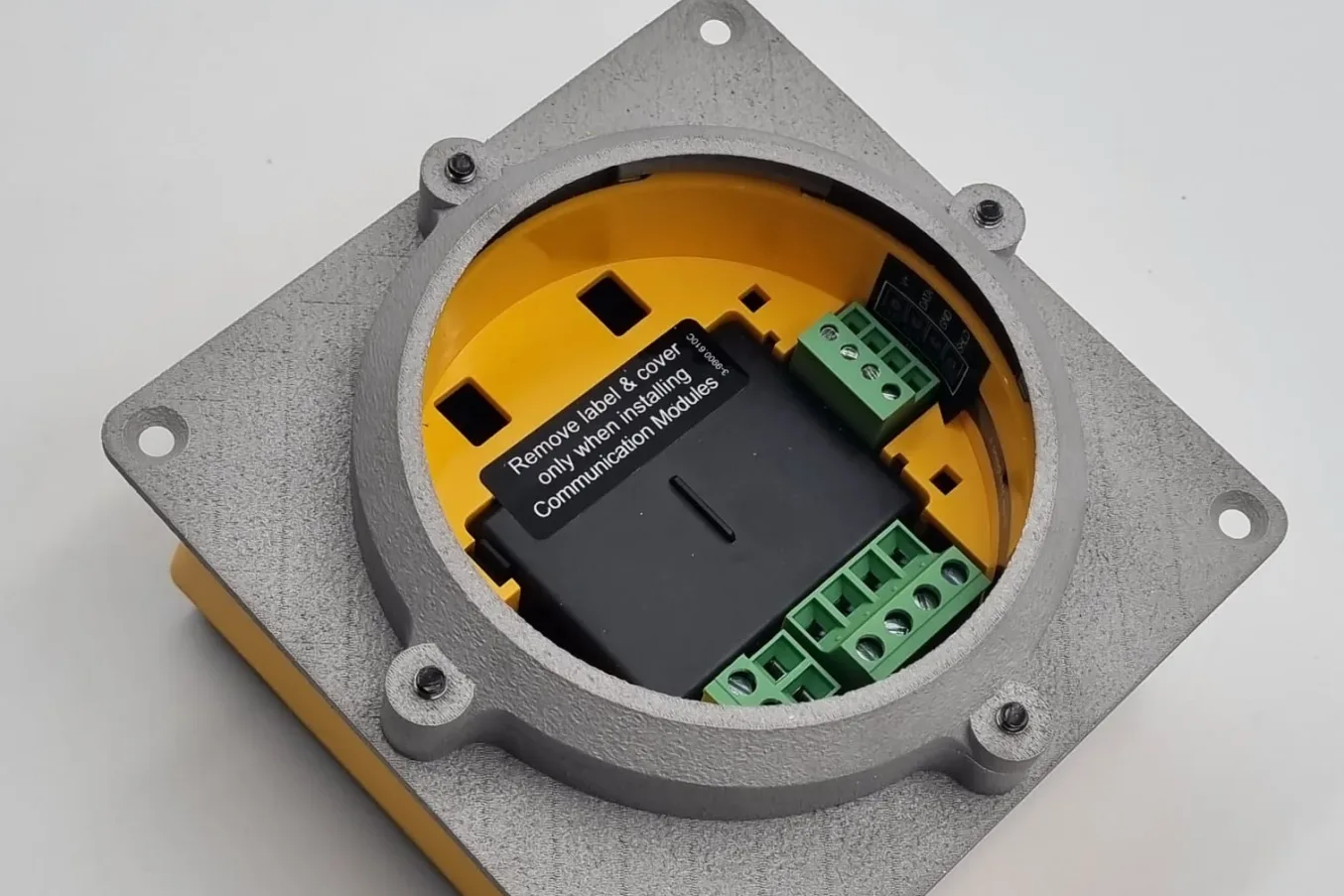
That project shows the cheap route: print the part in plastic to check it fits, then commit to metal once the shape is right. Move to CNC machining instead when most of the part must hold a tighter dimension than printing’s about ±0.3 mm on parts up to 100 mm, or when it is a simple shape cut faster from a block. Metal 3D printing vs CNC machining weighs the two, and our materials guide covers every process side by side.
Frequently asked
What is the strongest filament you print?
PPA-CF, a carbon-fibre high-performance nylon, is the strongest and stiffest filament we print: 168 MPa pull strength (tensile strength) and a stiffness of 11,800 MPa on the maker's data sheet, with heat to about 195°C. The catch is that it is the least forgiving across its layers (57 MPa, and 0.9% stretch before breaking), so it suits stiff brackets and jigs, not parts that flex. For most jobs PA6-CF or PAHT-CF does the work at a lower price.
Is carbon fibre filament stronger, or just stiffer?
Carbon fibre mostly makes a filament stiffer, not stronger: on the makers' own sheets, carbon-fibre PLA pulls apart at 35 to 38 MPa against plain PLA's 35. Glass-fibre ABS-GF is stiffer than plain PETG (3,160 against 2,780 MPa) but pulls apart sooner (36 against 51 MPa), and carbon-fibre PETG is no stiffer than plain PETG (2,460 against 2,780 MPa). Its gain is a part that stays flat and holds its size. Carbon-fibre nylon is where the fibres pay off: PA6-CF and PAHT-CF are both stiffer and stronger than PLA, PETG, ABS or ASA.
Which filament is best for a jig or fixture?
For most jigs and fixtures in a room-temperature workshop, carbon-fibre PETG (PETG-CF) is the pick: stiff, flat, matte and good to about 68°C. Move to ABS-GF (about 88°C) for a large flat fixture that must not warp, or to PA6-CF or PAHT-CF (about 160°C and 170°C) when the jig takes real load or sits near heat.
Does Singapore's humidity matter for nylon filament?
Yes: PA6-CF soaks up 2.35% of its weight in water, and its maker publishes a 37% loss of bending strength when it is wet. Singapore's air averages about 82% humidity, well above the 55% it is tested at. PAHT-CF takes up only 0.88% and is built to keep its properties when damp, so it is the carbon-fibre nylon for anything outdoors, near water or in an unconditioned room.
Why is a 3D printed part weaker standing up?
A filament part can be less than half as strong standing up, because its layers are only fused to each other: carbon-fibre nylon PA6-CF pulls apart at 102 MPa along its layers but 48 MPa across them. That is why we turn a bracket or a clip so its load runs along the layers, and why the material figure alone never tells you if a part will hold.
How hot can a 3D printed bracket get?
From about 68°C for PETG-CF up to about 195°C for PPA-CF, measured under load on the maker's test bars: PC is about 110°C, ABS-GF about 88°C, PA6-CF about 160°C and PAHT-CF about 170°C. A real print with normal infill softens a little sooner than the test bar, so tell us the hottest the part will see and we pick a filament with room to spare.
When should I switch to SLS or MJF nylon instead of filament?
Switch to nylon powder (selective laser sintering, SLS, or Multi Jet Fusion, MJF) when the part must be close to equally strong in every direction (MJF nylon pulls apart at 50 MPa both ways), has a shape that would need lots of supports, must flex like a clip or hinge, or comes in a batch. Don't switch for heat or stiffness: SLS nylon softens from about 55 to 65°C under load and MJF nylon about 95°C, below the carbon-fibre nylon filaments.
Can a 3D printed part replace a machined metal part?
Often: carbon-fibre nylon filament such as PA6-CF (102 MPa, about 160°C) replaces many machined jigs, fixtures, brackets and covers, lighter and quicker to make. Not when the part must carry a metal-sized load, sit near real heat or hold a dimension tighter than printing's about ±0.3 mm on parts up to 100 mm: then metal 3D printing or CNC machining is the right route, and we will say so.
Can you print in a brand or filament you don't stock?
Yes, other brands and special filaments are available on request, at extra cost. We print in our own studio in quality filament from established makers, so name the brand and grade in the quote notes or ask us first.
How long does an engineering filament print take?
Filament printing (fused deposition modeling, FDM) takes 4 to 7 working days as standard for a normal-size part (up to about 10 to 15 cm across), 3 to 5 on express and 1 to 3 on rush; a large part takes longer, so check with us. Nylon powder takes longer (SLS 8 to 12, MJF 12 to 15 working days) and metal 10 to 12, so a filament jig is usually the fastest way to get a working part on the line.
Related
-
 GuidePLA, PETG, ABS or ASA: which filament should your part be printed in?
 -
 GuideWill a 3D printed part survive Singapore heat, sun and rain?
 -
 GuideWhich 3D printing material should you choose?
 -
 ServiceIndustrial 3D Printing
 -
 ServiceSLS 3D Printing
 -
 ServiceMetal 3D Printing
 -
 ProjectElectronic Parts Holding Jig
 -
 ProjectRaspberry Pi Zero Enclosure
 -
 ProjectFlow Meter Panel Mount