

What is metal PLA: a metallic look, or real metal?
Metal PLA means PLA with metallic pigment or PLA filled with real metal powder. How each looks, finishes and wears, and when you need real metal instead.
On this page
What would your print weigh in each one?
Your slicer shows how many grams of PLA a print uses. Enter it, and see the same print in each filament.
Worked out from each maker's published density, for the same volume of plastic. Infill and walls stay the same, so treat it as a guide.
“Metal PLA” is sold as two different things. Metallic-look PLA holds pigment that gives a metal sheen and prints like ordinary PLA. Metal-filled PLA holds real metal powder, so it is heavy and can be polished, and the steel-filled kind wears a brass nozzle. If the part has to be metal, you need plating or metal printing.
Metal-look PLA, metal-filled PLA and real metal compared
| Option | What is in it | Heavier than PLA? | Can be polished to a shine? | Hard on nozzles? | Do we offer it? |
|---|---|---|---|---|---|
| Metallic-look PLA | PLA with metallic pigment | No: about the weight of plain PLA | Not like metal-filled: it is a look, not a metal | No special nozzle listed | Sold as filament in our store |
| Metal-filled PLA | PLA with real metal powder | Yes: one maker puts its bronze grade at three to four times PLA | Yes: sand, then polish | Steel-filled, yes: one maker says use a hardened steel nozzle | Not listed: ask us |
| Plated print | A printed part with a real metal skin | No: the metal skin is thin | Already shiny (chrome, gold, copper) | Not applicable | Yes, electroplating |
| Metal 3D print | Metal powder fused by a laser | Yes: solid metal | Yes: machined or polished | Not applicable | Yes: stainless steel, aluminium, titanium |
Metallic-look PLA: pigment that prints like PLA
Metallic-look PLA is ordinary PLA with metallic pigment mixed in. Its data sheet calls it a metallic textured filament that keeps almost the same performance as regular PLA. It weighs about the same as other PLA: the sheet gives a density of 1.25 grams per cubic centimetre, against 1.24 on the same maker’s plain PLA sheet.
Pick it for trophies, plaques, model bases and display pieces that should look finished straight off the printer. Our store listing says the look is closer to pewter or bronze than a painted finish, and it also says “It’s a look, not a metal.” It does not conduct, does not weigh like metal and is not plated.
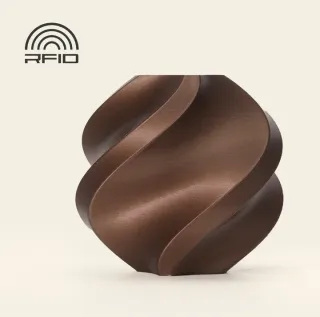
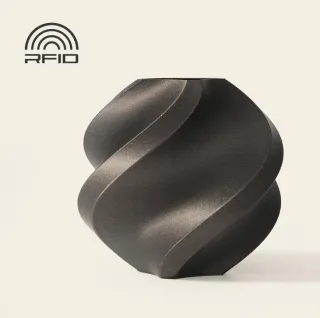
The limits: it is still PLA, whatever it looks like. The data sheet gives a heat deflection temperature of 58°C under load, so keep it out of hot cars and direct sun. For a real metal surface, see plating below.
Silver, gold and copper PLA
People search for these by colour, so here is what the store has.
- Copper: Copper Brown Metallic, in the metallic range.
- Gold: Iridium Gold Metallic, a muted gold with a grey cast. For a brighter, glossy yellow-gold, there is a silk gold.
- Silver: a silk silver with a glossy, chrome-like sheen, or a flat grey silver without a metallic effect. The metallic range has no silver.
None of these is real metal. All are PLA.
Metal-filled PLA: heavy, and some wear nozzles
Metal-filled PLA is PLA with fine metal powder in it: bronze, copper or steel. One maker calls its copper grade “PLA/PHA + fine copper powder”, so the base is still PLA-based plastic. Its bronze version is, by its maker, about three to four times as heavy as regular PLA. Other grades are lighter: one maker lists its steel-filled PLA at 3.13 grams per cubic centimetre and another lists its stainless steel PLA at 2.4, against about 1.25 for plain PLA.
Straight off the printer it looks matte, like cast or sintered metal. Sanding and polishing is what makes it shine. The same maker starts at grit 120 to 180 until the layer lines are gone, then 240 to 320, then 600 or higher, and finishes with a soft cloth and copper polish. Another maker rubs with a wire brush, tumbles small parts with steel shot, or uses a polishing wheel and compound.
The limits are real:
- Steel-filled grades wear brass nozzles. One maker says the high steel content makes its filament abrasive to brass nozzles, and recommends abrasion-resistant ones such as a hardened steel nozzle.
- It is not stronger than PLA, and it does not conduct. One maker says so of its stainless steel version.
- It is brittle on the spool. One maker says its stainless steel version is rather brittle in filament form and should be handled with care.
We do not list metal-filled PLA as a material. If a metal-filled print is what you want, ask.
Plating: real metal on a printed part
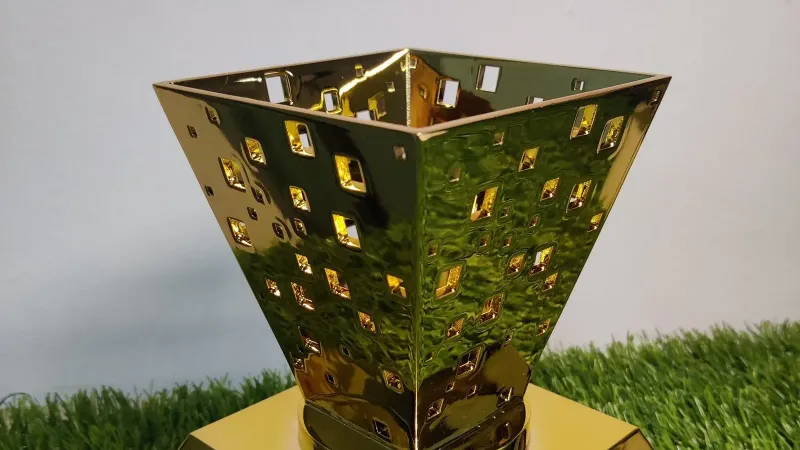
For a true mirror finish, the answer is not a filament. We electroplate printed parts with a genuine metal skin in chrome, gold, copper, nickel or brass. It is decorative plating over your part, not industrial hard-chrome or functional plating.
A filament print is sanded smooth and given a conductive coat first. Plating magnifies every flaw under it, so resin, which starts smoother, plates most cleanly. The revolver below is a white ABS print, sanded, primed and plated in mirror chrome.

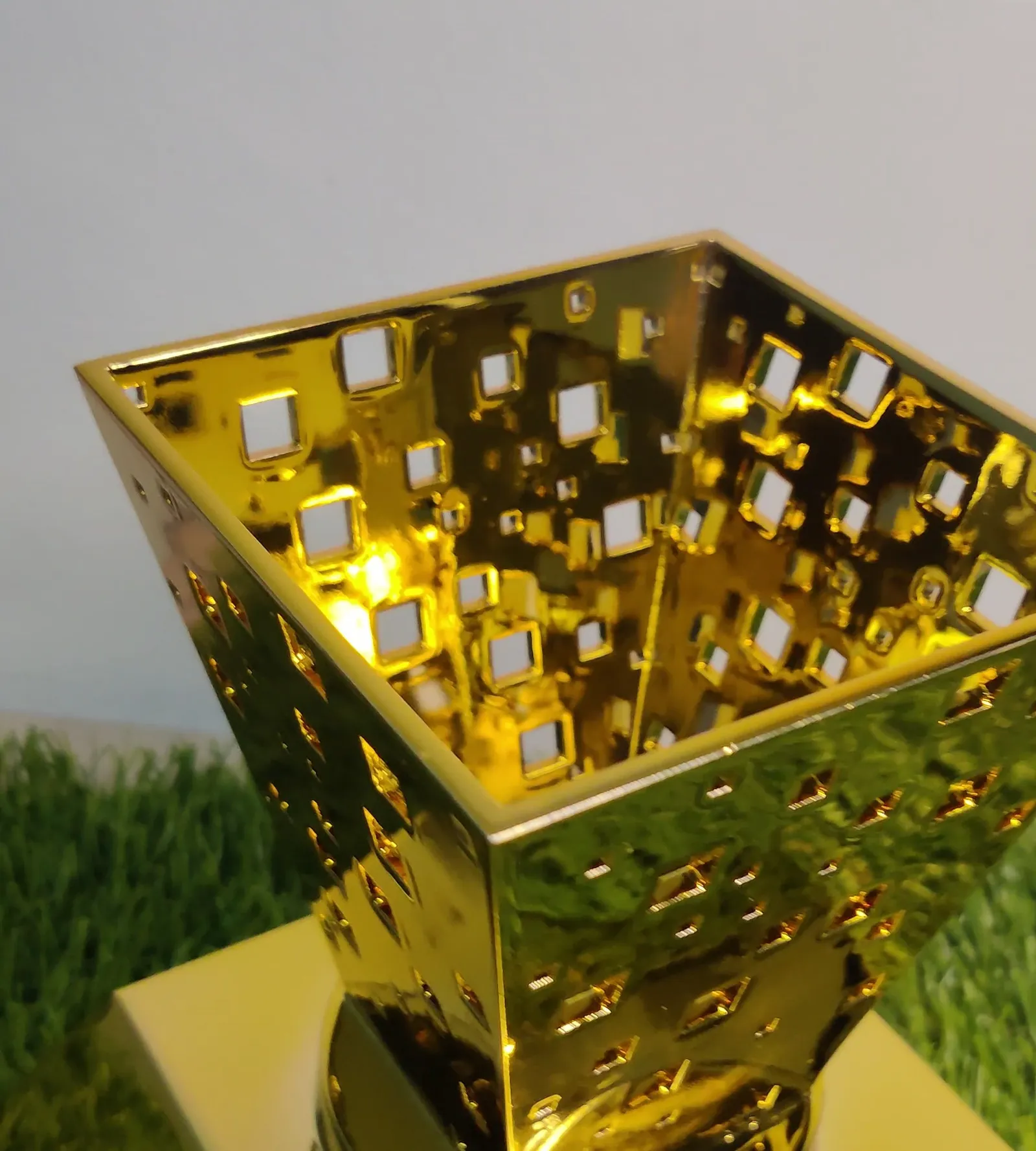
Our guide to electroplating 3D prints covers the colours, and metal finishes compares paint, plating and metal.
Metal 3D printing: when it must be metal
If the part will carry load, take heat or wear, no PLA will do, however it is filled or plated. Metal 3D printing fuses fine metal powder with a laser, layer by layer, into a solid part in stainless steel, aluminium or titanium. It suits brackets, mounts and parts with internal channels. For a simple solid block, machining may cost less, and we will say so.
Our metal 3D printing materials guide lists the alloys.
Where these facts come from
Every outside fact was read on the maker’s own page on 19 November 2026. Filament formulas change, so check the maker’s page for the spool you buy.
- The metallic-look PLA’s technical data sheet: what it is, density, heat deflection and nozzle sizes. The same maker’s PLA Basic data sheet gives the plain PLA density.
- colorFabb, bronzeFill, copperFill and steelFill: metal-filled grades, density, polishing steps, nozzle wear and magnetism.
- Protopasta, Stainless Steel PLA: composition, strength, conductivity, spool length and finishing methods.
- What we sell and offer comes from our own store pages, our electroplating and finishing page and our metal 3D printing page.
Frequently asked
Is metal PLA magnetic?
Some metal-filled grades are. One maker says its steel-filled PLA has slight magnetic properties, while another maker's stainless steel PLA page makes no magnetic claim, so check the page for the grade you buy. The metallic-look kind is pigment in ordinary PLA, and its data sheet makes no magnetic claim, so treat it as plain plastic.
Does metal-filled PLA conduct electricity?
No. One maker says the stainless steel powder in its PLA is too small and too far apart to give any noticeable conductivity. If you need a conductive print, that maker sells a separate conductive PLA.
Is metal-filled PLA stronger than normal PLA?
No. One maker says the stainless steel powder in its PLA is encased in the plastic, so the print is not stronger than standard PLA. You get the weight and the look of metal, not its strength.
Why does a metal-filled spool seem so short?
Because the metal is dense and spools are sold by weight. One maker says a 500 g spool of its stainless steel filament holds about 90 metres, against nearly 200 metres for the same weight of standard PLA.
Can metal-look PLA go in a hot car or in the sun?
Keep it out. The metallic-look PLA's data sheet gives a heat deflection temperature of 58°C under load. For heat, choose a material rated for it.
Can you plate a filament print in real metal?
Yes. A filament print is sanded smooth, given a conductive coat and electroplated. We plate chrome, gold, copper, nickel and brass. Resin plates more cleanly, because it starts smoother.
Which metallic colours do you sell in the store?
Five metallic PLA colours: Iron Gray Metallic, Iridium Gold Metallic, Oxide Green Metallic, Cobalt Blue Metallic and Copper Brown Metallic. Silver comes as a glossy silk finish or a flat grey, outside the metallic range.
Do you print in metal-filled PLA?
We do not list it as a material. Ask us if you need a print in it and we will tell you whether we can do it.
Related
-
 GuideHow do you get a real metal finish on a 3D print?
-
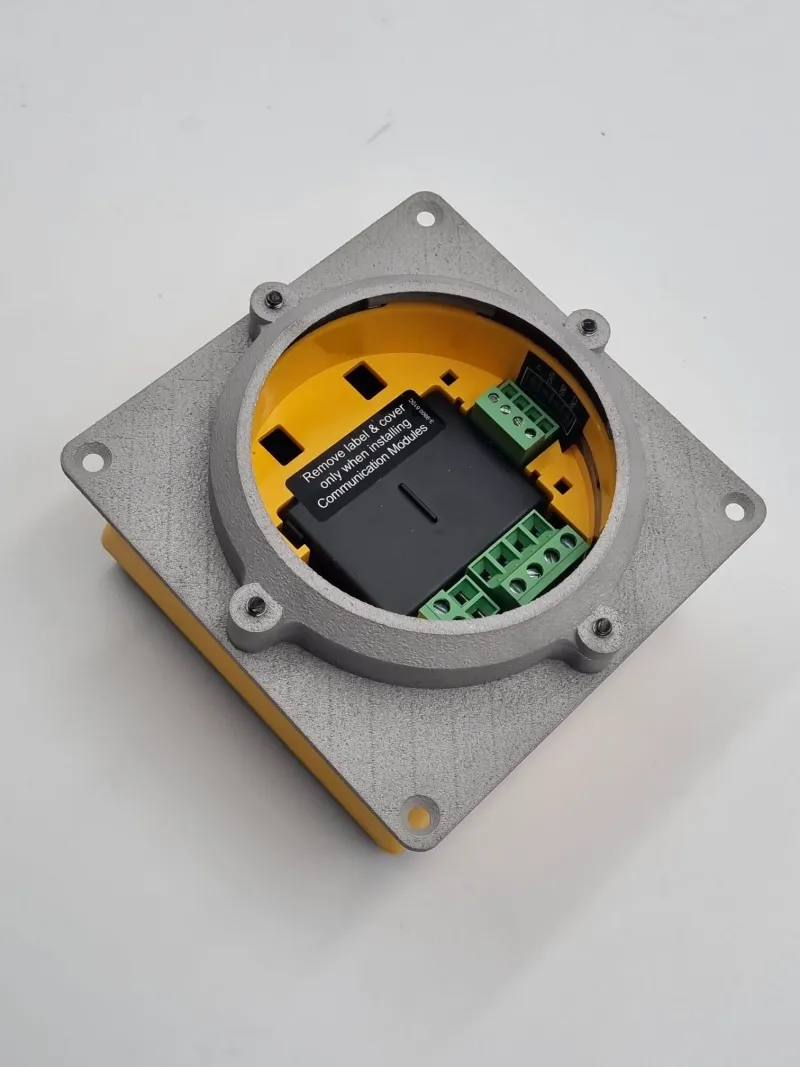 GuideStainless steel, aluminium or titanium: which metal to 3D print?
-
 GuideElectroplating colours and finishes
-
 ServiceColour Application & Finishing
-
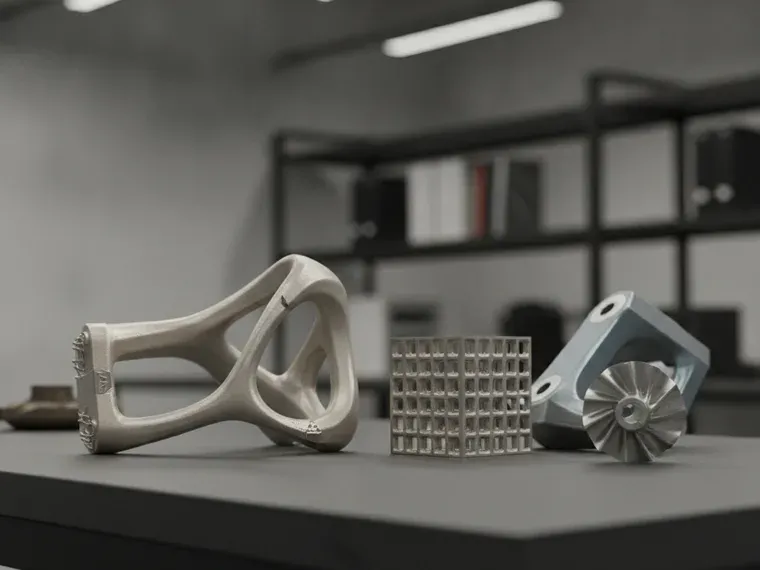 ServiceMetal 3D Printing
-
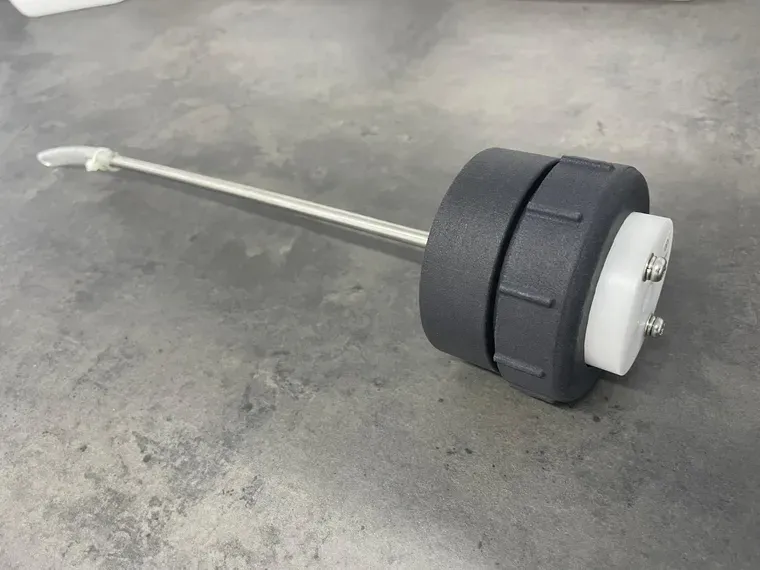 ServiceIndustrial 3D Printing
-
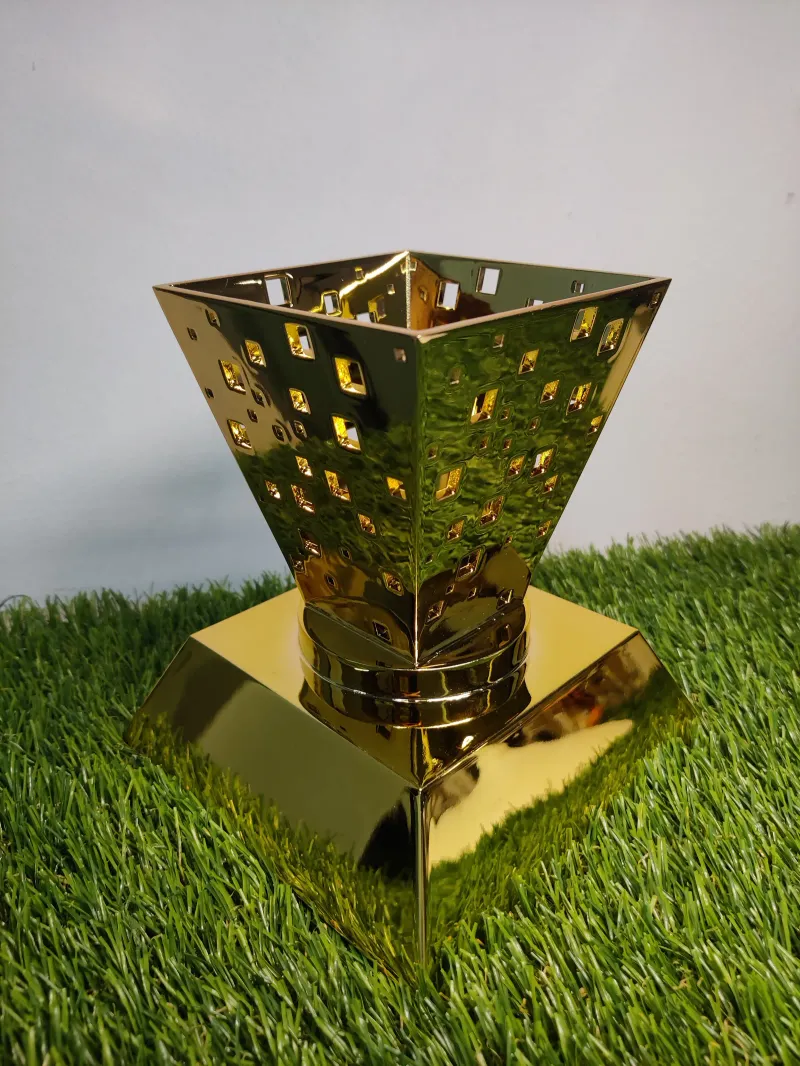 ProjectElectroplated gold trophy for Crest Secondary School
-
 Project3D printed revolver mic stand
-
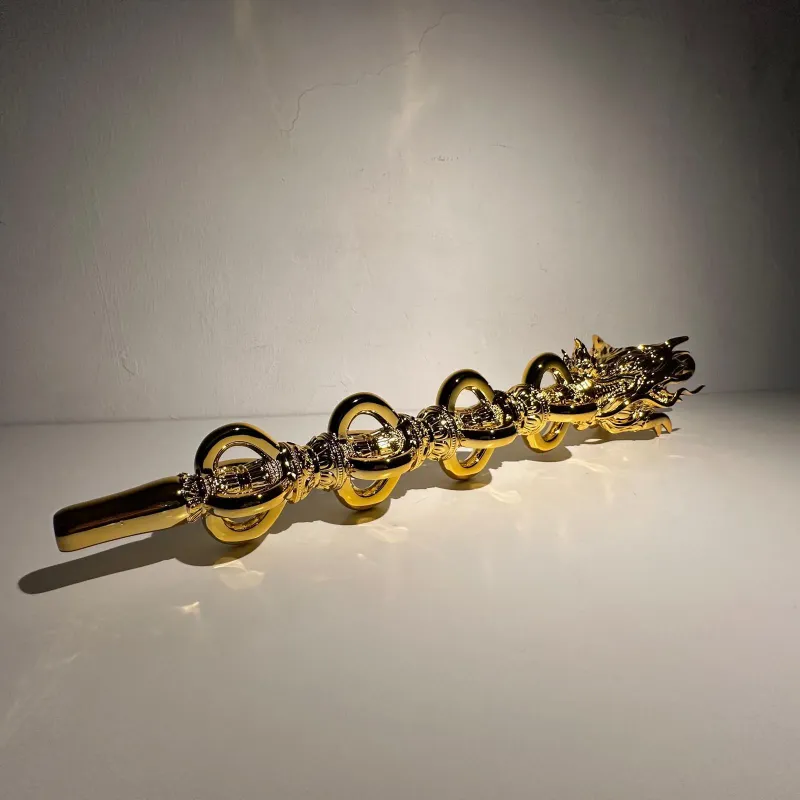 ProjectGold dragon vajra spear for Ci Min Guan Yin Jiang Tang