

Spring-loaded quick-release rail
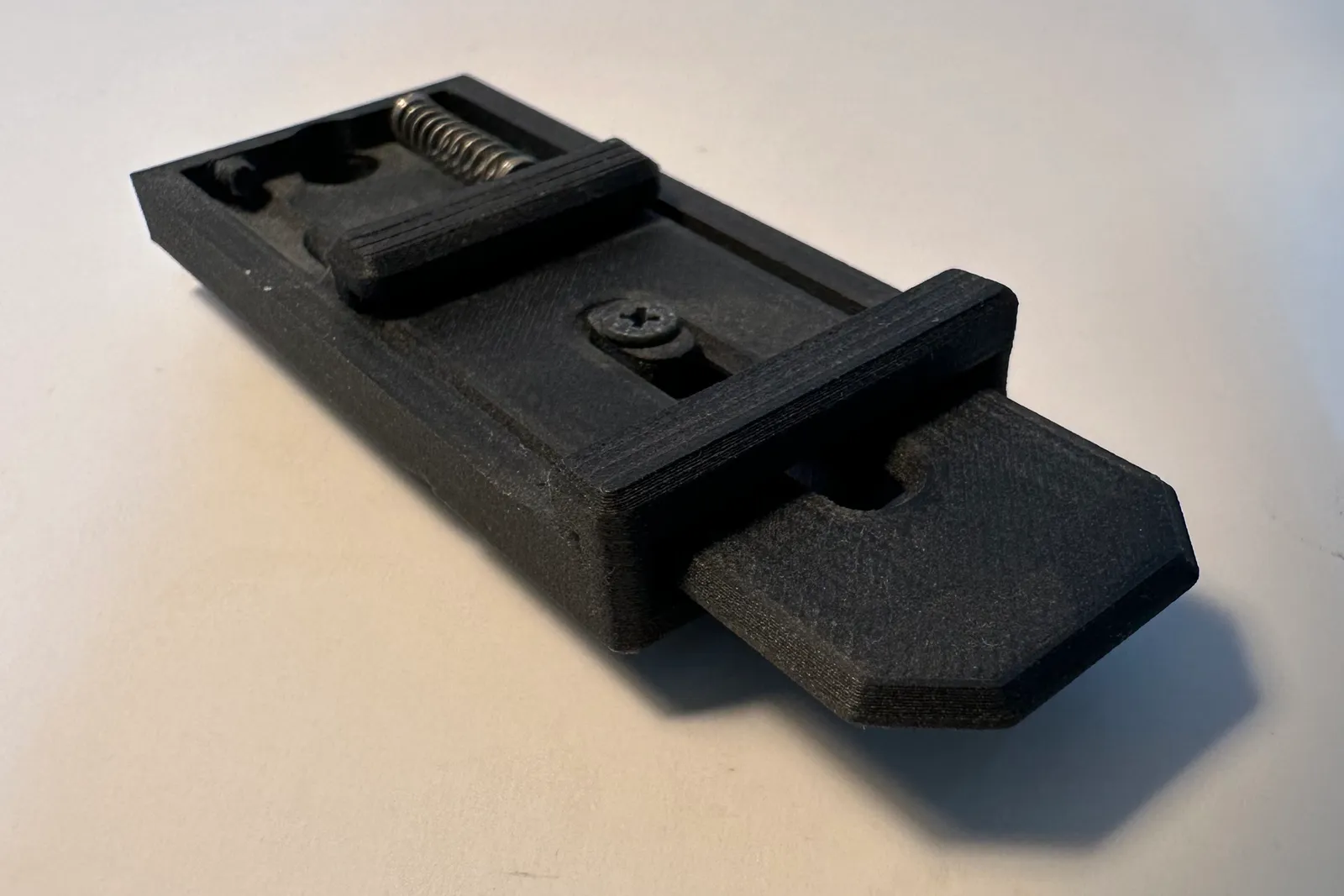
Our own quick-release mount: a 3D printed rail with a sprung latch that clicks a part home and lets it go without tools.
- To release it
- Pull the grip back with one thumb
- What holds it shut
- A steel spring pushing the latch out
- Parts
- Two printed pieces, a spring and a screw
What we brought
Moving parts that work
We design parts that move, not just shapes
The latch slides in a printed channel, pushed by a steel spring and kept in place by one screw.
The right material
A filament chosen for a sliding part
Carbon-fibre polycarbonate is stiff and hard-wearing, so the sliding faces stay true and the latch keeps its snap.
Seen working
Tested by hand, on camera
The clip shows one thumb pulling the latch back and the spring sending it home on release.
Gallery
The whole project at a glance. Drag or swipe to browse; tap a picture to enlarge it.
1 / 9
-
The finished piece
-
From the spring end.
-
The tongue pushed out by the spring.
-
Standing upright, seen straight on.
-
The whole mechanism, side on.
-
One thumb pulls the latch back.
-
ProductionThe printed tongue and its matt finish.
-
Build and assemblyThe spring seated in its pocket.
-
The screw in its slot, the spring below.
The build
How we built it
4 steps, from the brief to the finished piece. Pick a step to jump to it.
The brief
Step 1 of 4
- Lock
- Clicks home on its own, under spring pressure
- Release
- One thumb, no tools
- Parts
- As few as possible, all printed except a spring and a screw
At Additive Inn, our 3D printing studio in Singapore, we set out to design a quick-release mount: a rail that a part clicks onto, holds firm, and lets go under one thumb, with no tools and no fasteners to undo.
Production
Step 2 of 4
We FDM printed the rail and the sliding latch in carbon-fibre polycarbonate, a stiff, heat-resistant filament that keeps its shape under load and resists wear on the sliding faces. The fibre gives the matt, lightly speckled finish.
Build and assembly
Step 3 of 4
We seated a steel compression spring in its pocket to push the latch out, and fitted one screw through a slot in the latch, which keeps it in its channel but lets it slide.
The final build
Step 4 of 4
The latch springs out on its own and pulls back under one thumb, so whatever sits on the rail clicks on and comes off in a second, as often as it needs to.
How it works
The latch in use.
More product development
See all product development →-
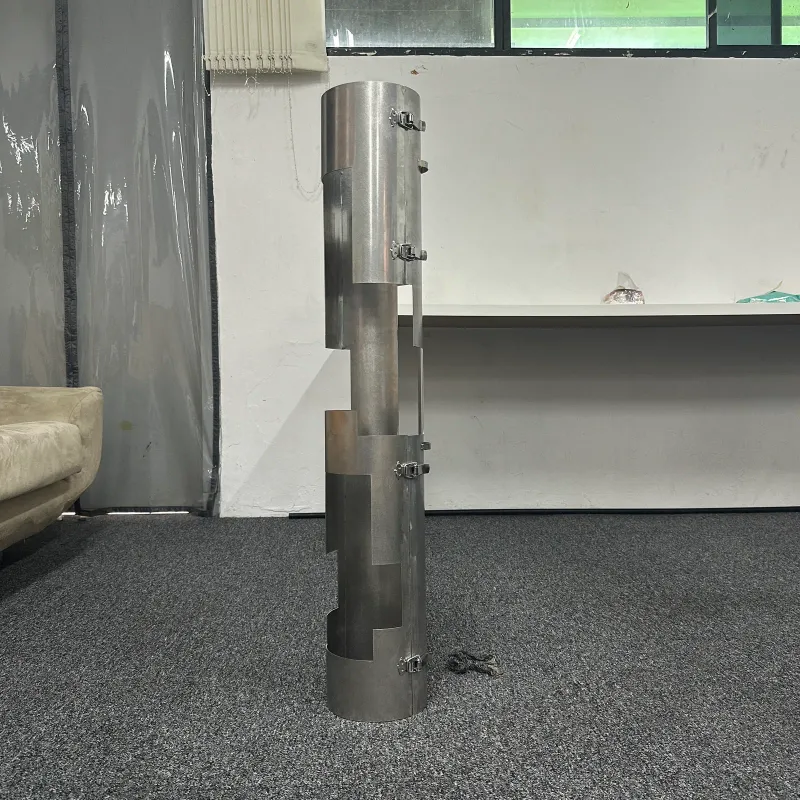 18 DA Bn, Singapore Armed Forces Custom stainless steel housing for an SAF missile manpack A stainless steel carry sleeve for an RBS 70 missile, drawn from the SAF team's own sketch, rolled from sheet and closed with toggle latches.
-
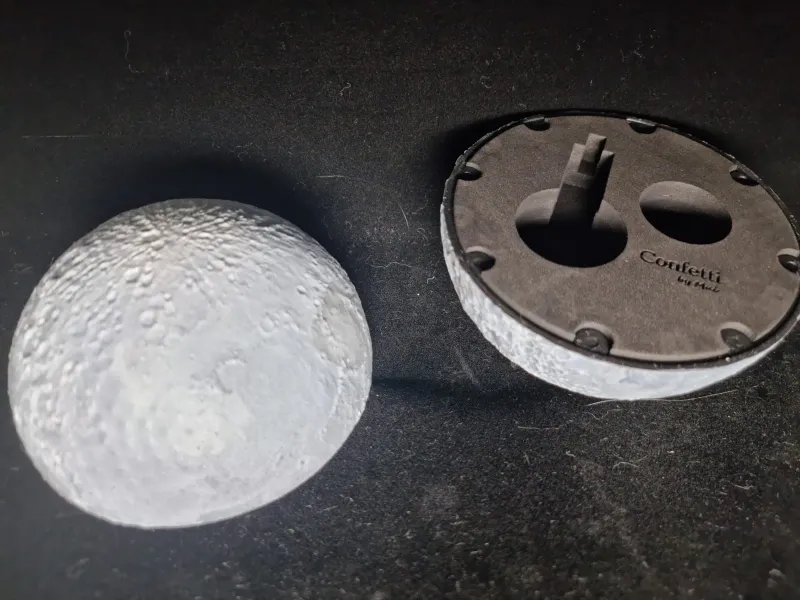 Confetti by Mui Custom moon jewellery box for Confetti by Mui A moon that opens: a jewellery box for Confetti by Mui, primed and hand-painted, closing on magnets around a foam insert with their logo.
-
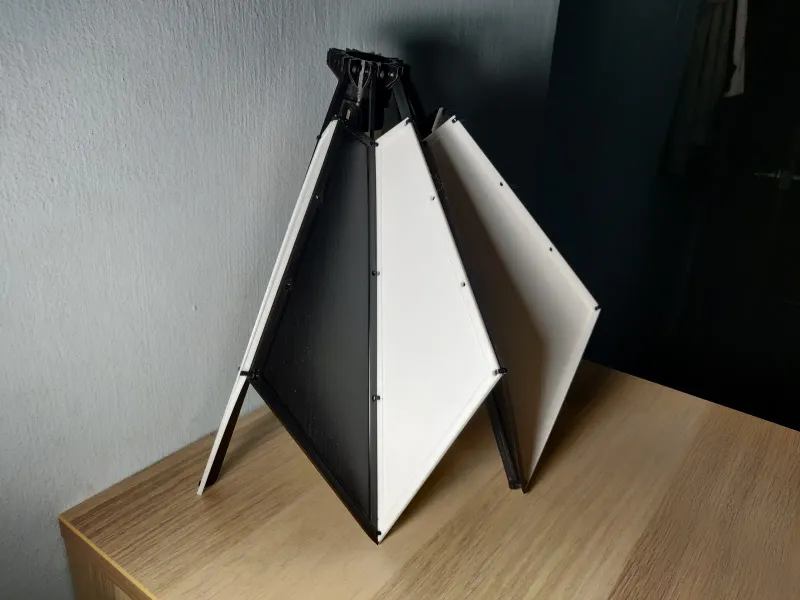 Collapsible shelter prototype A working scale model of a lamp post shelter for pedestrian crossings, 3D printed with hinged panels that fold away and open by hand.