

How do you make cosplay props and armour: 3D print, foam or both?
How to make cosplay props and armour in Singapore: 3D print, EVA foam or both, how to split big pieces, finish them, and what a convention checks.
How should you build your prop?
Tell us what you are making and you get the build route from this guide that fits.
Print the parts that need sharp detail and a hard edge, such as a helmet or a sword guard. Use EVA foam (a light, bendable craft foam) for big armour panels, and mix the two for a full suit. At a Singapore convention, the organiser’s own prop rules decide what you can carry, so read them before you build.
Print, foam or both, by part
| Part | Best made as | Why | Watch out for |
|---|---|---|---|
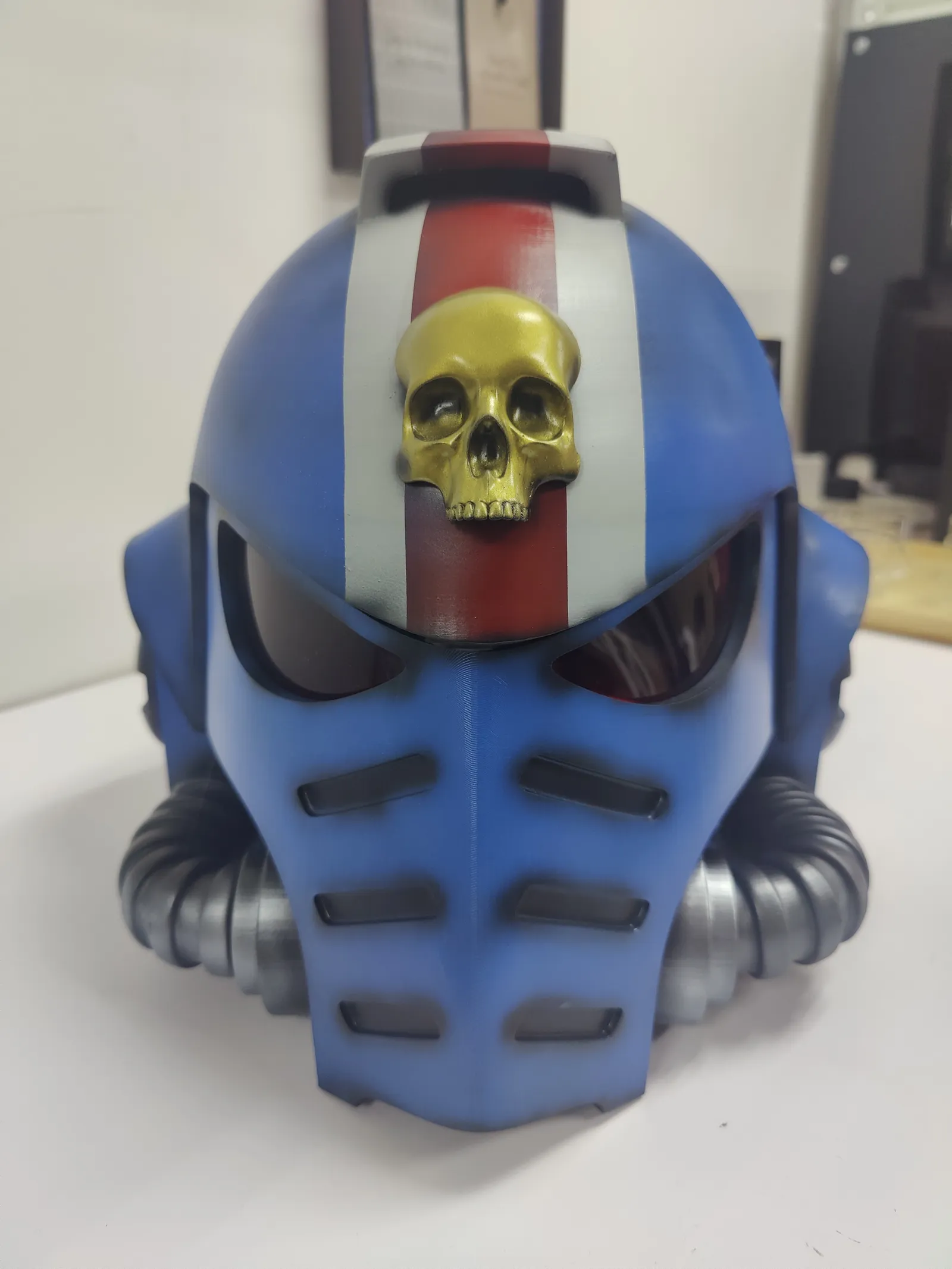
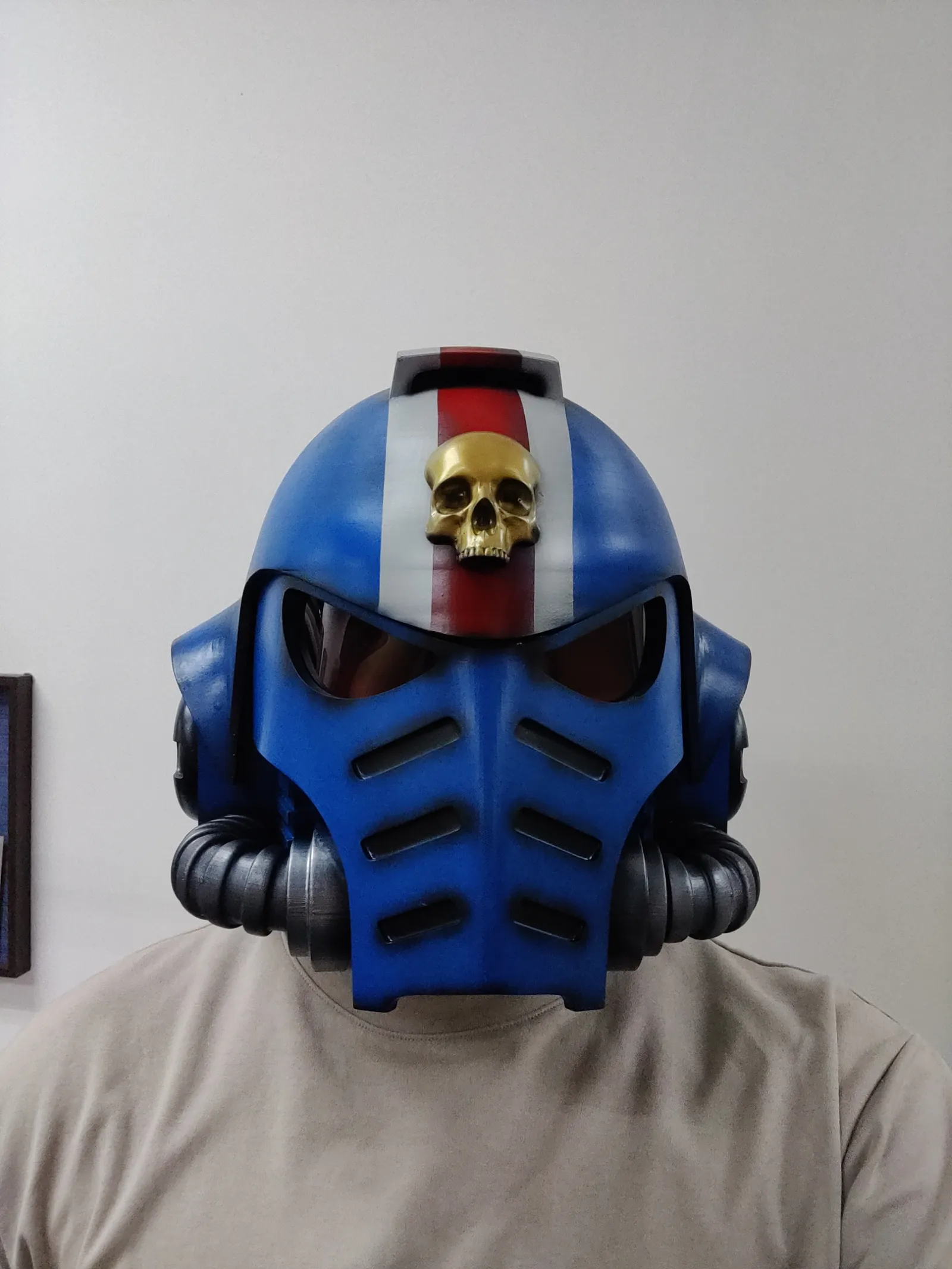
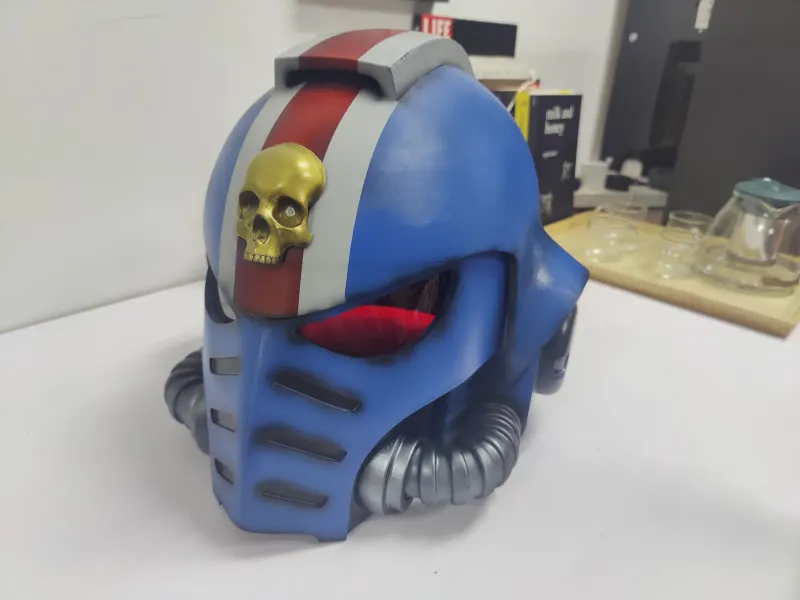
| Helmet or mask | 3D printed | Keeps grille slots, a sculpted skull and ribbed hoses | Weighs more than foam, so ask for a thin shell |
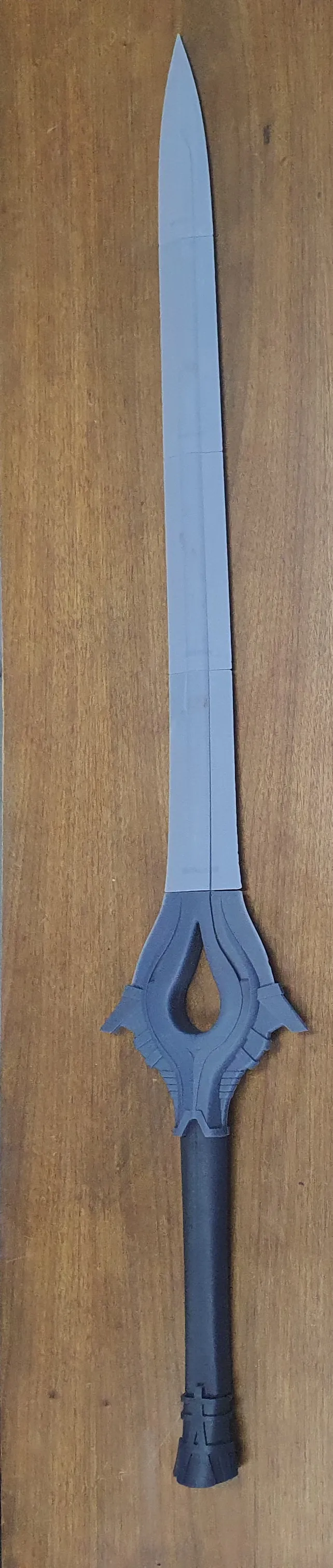
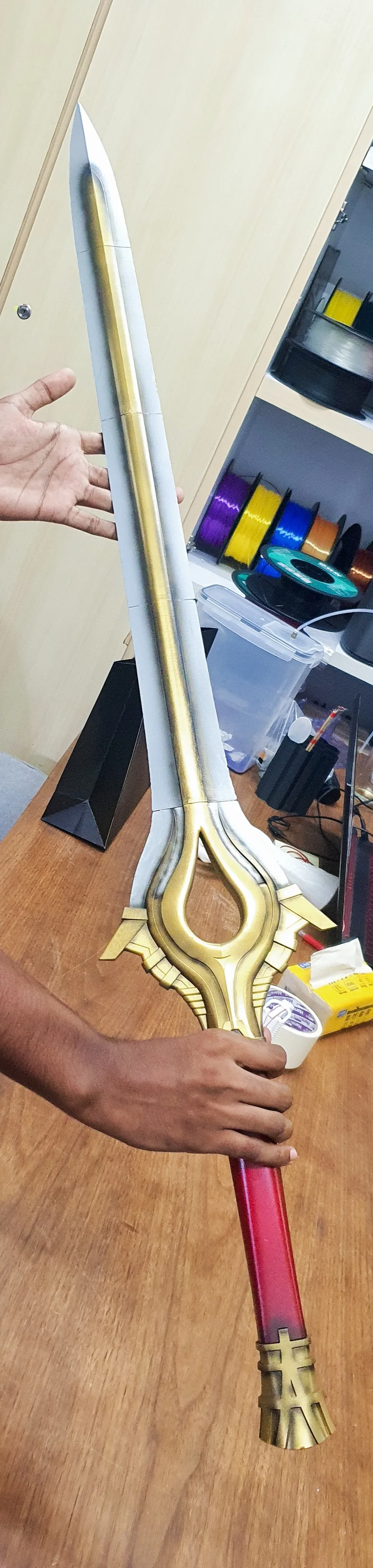
| Sword, guard and grip | 3D printed, in sections | The guard keeps its shape and the blade joins up | Seams to fill and paint |
| Chest, back and thigh panels | EVA foam | Light, and it bends over the body | Heat-seal and prime before paint |
| Joints, straps and knee guards | Flexible TPU | Bends with your body | We do not paint it as a rule, and it sands badly |
| Small detail: badges, skulls, bullets | 3D printed | Crisp, repeatable, colour from the filament | Small parts snap if too thin |
| A full suit | A mix | Foam for the big panels, prints for the detail | More joins to plan |
3D printing: detail and hard edges
Printing suits a prop that has to keep fine detail and a firm edge. Our Space Marine helmet was printed in resin from a client’s own file, and kept its grille slots, the raised skull on the crest and the ribbed hoses at the sides. It fits over an adult head. We cleaned every support off before it left us.
The honest limits:
- Weight. Solid plastic is far heavier than foam. One printer maker puts high-density EVA foam at about 0.086 g/cm³ and solid TPU at about 1.2 g/cm³, around 14 times denser, and Wikipedia gives PLA as 1.21 to 1.43 g/cm³. A printed shell need not be solid: a thinner wall and a lighter infill (the inner fill pattern) take weight out, at some cost in stiffness.
- Heat. Our heat guide puts PLA’s softening point at about 55°C, PETG at about 68°C and ASA at about 90°C. A helmet left in a hot car should not be PLA. See heat, sun and outdoors.
- Layer lines. A raw print shows them. Painting needs filling and sanding first.
We print from your file. If you need one, our guide to free 3D files says where to look and what to check.
EVA foam: light and easy to shape
EVA foam is what craft-foam sheets are made of. A tool maker’s helmet tutorial cuts it with a craft knife, glues the edges with contact glue, and bends the pieces with a heat gun on its lowest setting: foam always bends towards the heated side. The same tutorial heat-seals the finished piece before priming it, then paints it.
Foam is light, and you can build a whole helmet without a 3D printer. Its limits: it blunts a knife quickly, so blades need sharpening, and our printed helmet shows the fine detail a print can hold.
Foam armour is not on our list, so ask us before you plan on it. We laser cut EVA and PE foam for case inserts, gaskets and padding: tell us the foam and its thickness and we confirm before anything runs, and you can ask whether a flat pattern for your build can be cut.
Mixing both for a full suit
Most full builds use both. A printer maker who writes about armour suggests foam or foamed TPU for the big panels, and solid TPU for joints and connectors, because TPU bends with the body where a rigid plate restricts movement. Rigid prints suit the helmet shell, since a helmet does not need to flex.
TPU 95A is in our instant quote, and softer, harder and clear grades are on request. See flexible TPU 3D printing for what each grade feels like. We do not paint TPU as a rule, because ordinary paint cracks as it bends, so choose the filament colour instead.
Splitting a big piece
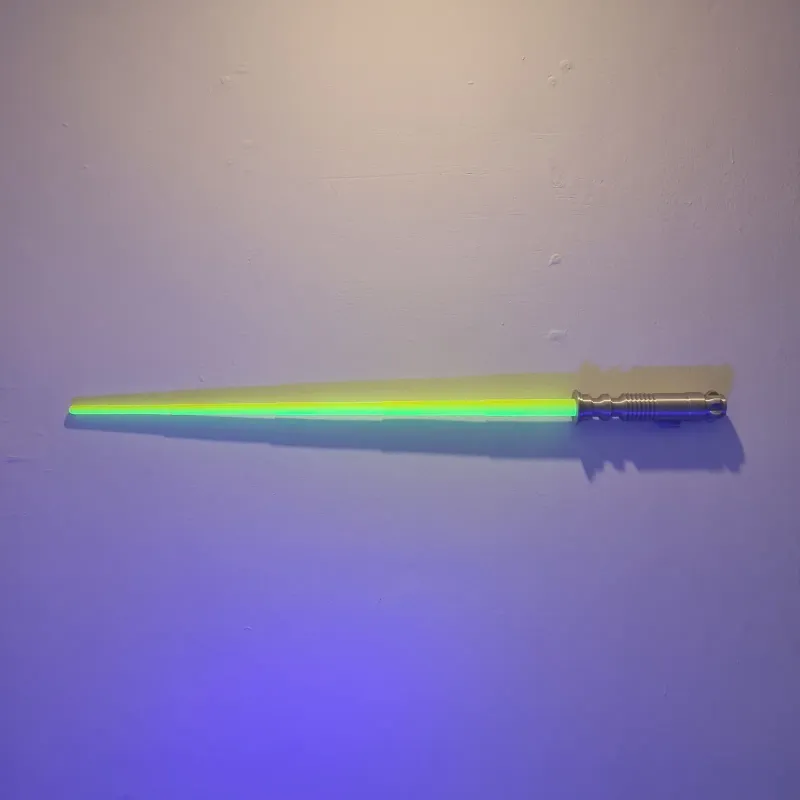
A prop longer than the printer is printed in sections and joined. The full-length cosplay sword below was made this way: its blade was printed in sections, its guard, grip and pommel as separate parts, and the guard and pommel were painted gold on their own before everything was joined.
The largest single piece we print is 1000 x 1000 x 1200 mm on a large-format filament printer, and 360 x 360 x 360 mm on a desktop one. Past that, we split along natural lines, such as a guard or a panel edge, add pegs so the sections line up, then glue or screw them. How big can a 3D print be covers the joins. You approve where the cuts go.
Sanding and painting
A raw print, a foam piece and a TPU plate each take a different finish.
- Printed rigid parts: fill, sand, prime, then paint. Filling and sanding takes layer lines from something you see across the room to something you find with a fingertip. Read filling and sanding and painting 3D prints.
- Foam: heat-seal it, then prime with several coats before you paint, as the helmet tutorial does.
- TPU: sandpaper bounces off it or leaves it fuzzy, so the layer lines you print are the ones you paint over. A printer maker advises a flexible paint, while we choose the filament colour, because paint cracks as the part bends.
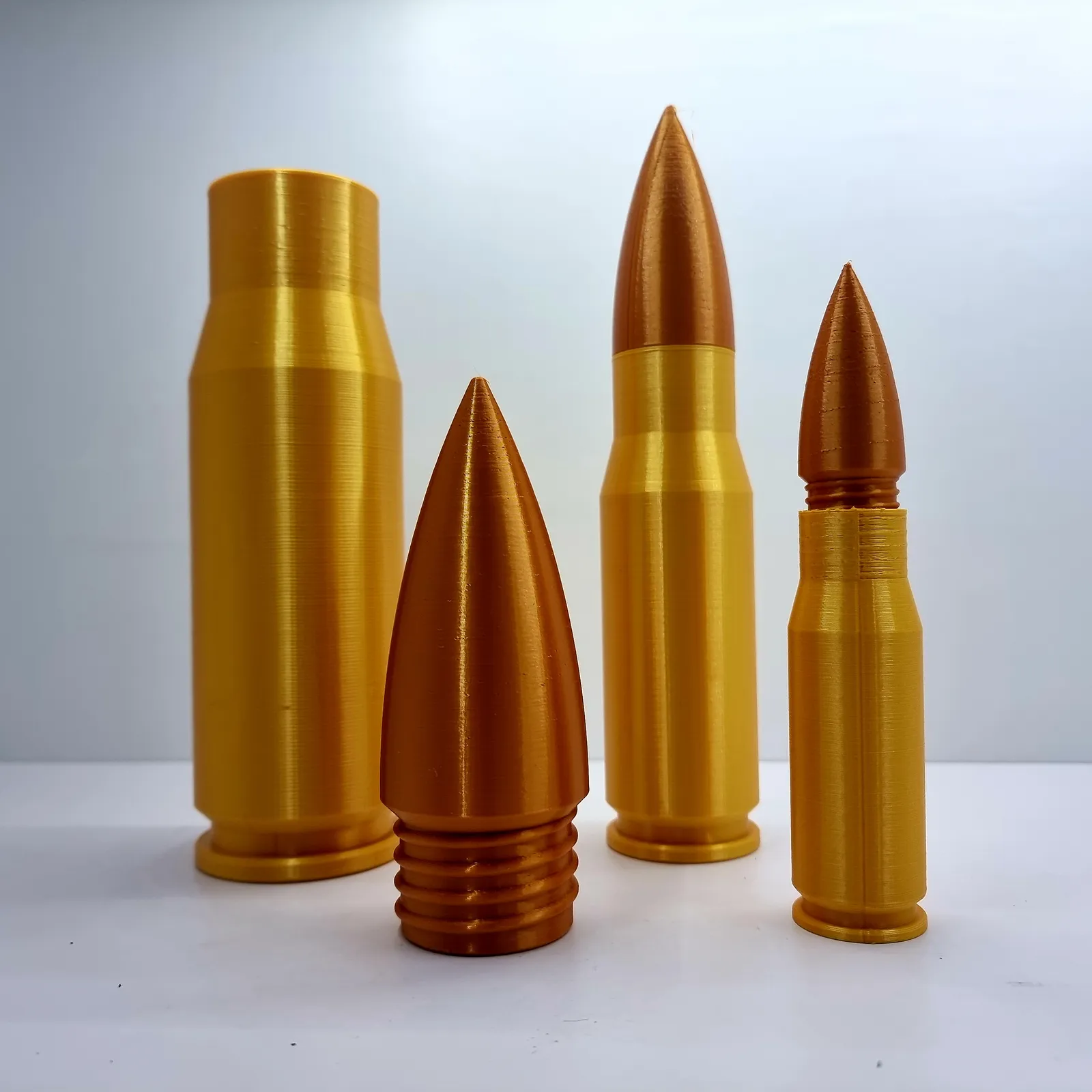
A curved sword we printed was left plain white on purpose, so its shape reads cleanly. Say whether you want paint, a raw print or colour from the filament; the bullet props below take their colour from the plastic itself, and their tips screw off.
Wearing it at a convention
Check the event’s own rules before you build, because they differ and they change each year. Anime Festival Asia Singapore runs on 27–29 November 2026 at Suntec. On 19/11/2026 its event guide said, in its own words:
- Carrying: “transport them to and from the event in a covered bag, e.g. rifle bag for replica firearms or cloth sheath for swords. Only take them out once you are in the event area.”
- Metal blades: “Replica edged weapons (e.g. swords, daggers, thrown weapons) made of metal, of any length, are not allowed at the event, even if the cutting edges are blunt.”
- Muzzles: “All replica firearms are required to have their muzzle tips coloured in orange.”
- Spot checks: “Spot checks of replica weapons will be made and cleared weapons will be marked with a coloured cable tie specific for each day.”
- Masks and helmets: “If the attendee’s costume consists of a feature that conceals facial features, they may be asked to remove the feature at any time. This includes, but not limited to, masks, helmets and bandanas.”
- Wide costumes: “If the attendee’s costume is out-sized or has features that protrude out, we ask the attendees be aware while walking around and to avoid hitting other attendees.”
That is the 2026 guide as it stood on 19/11/2026. Read the current guide before the event, because the organiser can change it.
Outside the venue, the Singapore Police Force wrote in a news release of 5 March 2025: “carrying items such as replica guns in public places may cause unnecessary alarm and may also be deemed as offensive weapons depending on circumstances in which they are found.” The release is about a prosecution for importing replica guns, not a cosplay guide. It also says that “Police approval is required for the importation of replica guns”. Read the police’s current advice before you carry a gun prop anywhere public.
The team behind the Singapore Cosplay Club and Cosfest Asia wrote guidelines in 2017, after talking to the police: “Please do not wear masks on public transport or in places too far away from anime/cosplay events. You are advised to don your costume only when you arrive at the cosplay venue.” That is an old, unofficial note, so treat it as common sense, not as a rule.
A replica firearm is not among our published prop projects. If your costume needs a gun, ask us before you plan on it.
Where these facts come from
Every outside detail was read on the source’s own page on 19/11/2026. Event rules and police advice change, so read the current event guide and the police’s current advice before you go.
- Anime Festival Asia Singapore 2026, Event Guide: the dates, and the weapon, costume and mask rules quoted above.
- Singapore Police Force, news release of 5 March 2025: the advice on carrying replica guns in public places, and the import approval.
- Alvinology, Cosplay guidelines with guidance from the Singapore Police Force: the Cosfest team’s 2017 advice on masks and transport.
- Dremel, How to Make a Foam Cosplay Helmet: cutting, gluing, heating, sealing and priming EVA foam.
- QIDI, TPU Armor for Cosplay: foam and TPU densities, and TPU for joints. A printer maker’s own page.
- Wikipedia, Ethylene-vinyl acetate and Polylactic acid: EVA craft foam, and PLA’s density.
- What we print, paint, cut and how big, and the heat figures, are from our own pages: the helmet and sword and props projects, and our guides to large prints, TPU and heat.
Frequently asked
Are 3D printed props allowed at conventions?
Every event sets its own rules. On 19/11/2026 the Anime Festival Asia Singapore 2026 guide said replica edged weapons “made of metal, of any length, are not allowed” and that “Spot checks of replica weapons will be made”. The ban names metal, so a plastic sword is not covered by it, but it is still checked. Read the current event guide before you build, not on the day.
Can you print a prop from my own file?
Yes. The Space Marine helmet was printed from a client's own file. Send the file, the size and the date, and a person checks it before it prints. No file yet? Ask us whether we can model it.
How big can a prop be printed in one piece?
Up to 1000 x 1000 x 1200 mm on our large-format filament printer, and 360 x 360 x 360 mm on a desktop one. Anything longer, such as a sword, is printed in sections and joined.
How heavy is a printed helmet?
It depends on the size, the wall thickness and the material, and we do not publish a weight for ours. Ask us for the weight of your own file before you order, and tell us how long you will wear it.
Does a replica gun need an orange tip?
At Anime Festival Asia Singapore 2026, the guide read on 19/11/2026 said “All replica firearms are required to have their muzzle tips coloured in orange.” The Singapore Police Force said on 5 March 2025 that carrying replica guns in public places “may cause unnecessary alarm”. A gun prop needs the most care, so read the current guide first.
Can the prop have parts that move or open?
Yes. We printed bullet props whose tips screw off, and capsules with a cap held on by a screw. Tell us which part has to move and ask what can be built into the file.
Can you paint a cosplay prop?
Yes, we painted a full-length sword silver, gold and red, and left a curved sword plain white on purpose. Say whether you want paint, a raw print for you to paint, or colour from the filament.
Is foam easier than printing for a first prop?
Foam needs no printer: you cut it with a craft knife, glue it with contact glue and shape it with a heat gun. A maker's helmet tutorial rates the job medium difficulty. Printing needs a file, but it holds fine detail, as our helmet shows.
How do I carry a prop to a convention?
Cover it. The Anime Festival Asia Singapore 2026 guide, read on 19/11/2026, asks attendees to transport replica weapons “in a covered bag, e.g. rifle bag for replica firearms or cloth sheath for swords” and to take them out “once you are in the event area”. Read the current guide before you travel.
Related
-
 GuideHow big can a 3D print be, and what if mine is bigger?
-
 GuideHow do you paint and finish each kind of 3D print?
-
 GuideWhat can you 3D print in flexible TPU, and when should you cast instead?
-
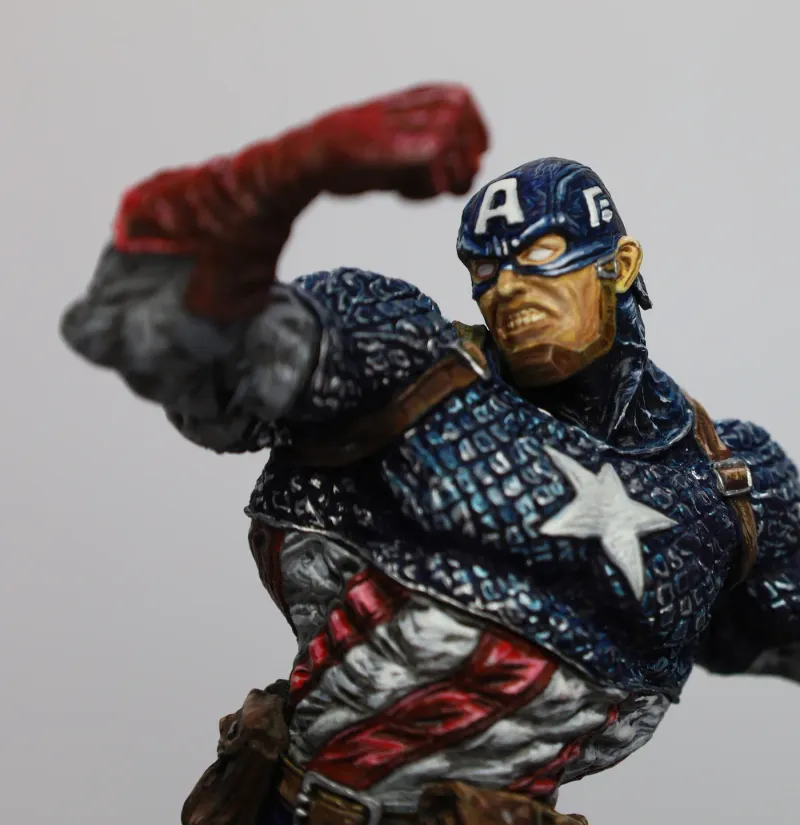 ServiceCustom 3D Figurines
-
 ServiceIndustrial 3D Printing
-
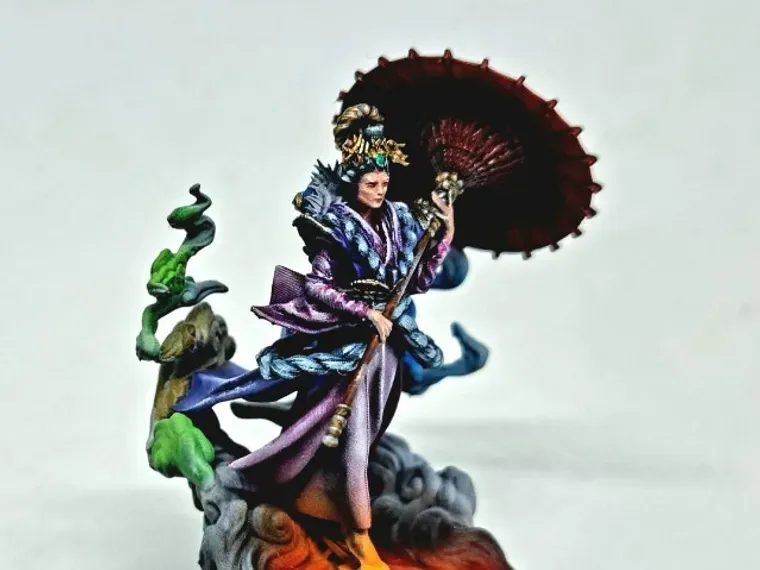 ServiceColour Application & Finishing
-
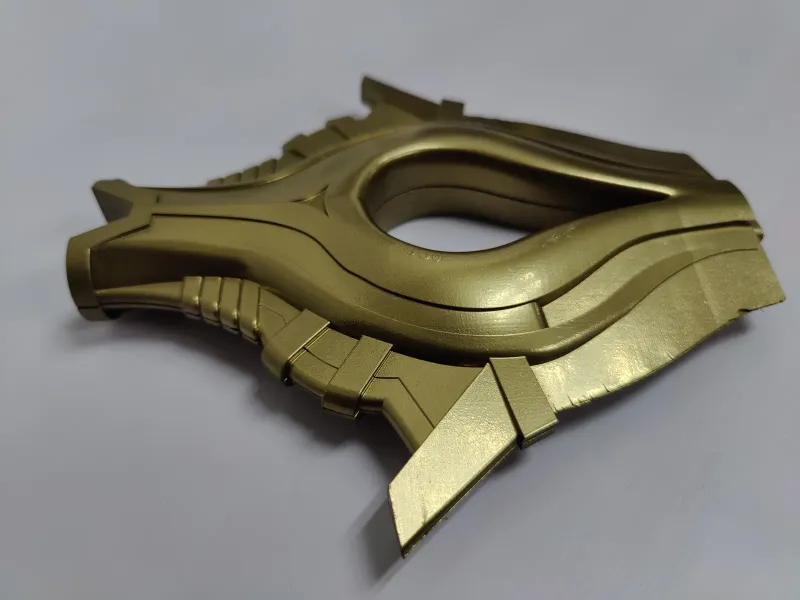 ProjectCosplay swords and props
-
 ProjectWarhammer 40,000 Space Marine helmet for a private client
-
 Project3D printed lightsaber prop