

What can you 3D print in flexible TPU, and when should you cast instead?

TPU 3D printing makes parts that bend, squash and spring back: grips, seals, bumpers, cases and straps. TPU 95A is our standard flexible filament and is in the instant quote, while softer, harder and clear grades are on request. For many identical soft parts, or a true rubber feel, we cast them instead through our silicone moulding service.
TPU grades at a glance
| TPU grade | How it feels | Good for |
|---|---|---|
| TPU 95A, our standard grade, in the instant quote | Firm rubber: bends, springs back and holds its shape | Grips, seals, bumpers, cases and cable sleeves |
| TPU 85A to 90A, on request | Soft: squashes and bends easily | Soft grips, pads, feet and wearable bands |
| TPU 64D and 68D, on request | Hard: stiff but tough, flexes a little without cracking | Protective covers, tough clips and parts that take knocks |
| Clear TPU, on request | Flexible and see-through, slightly frosted as printed | Clear covers, connectors and parts you want to see into |
Shore hardness: how hard a flexible material feels when you press into it. On the A scale, a lower number is softer. The D scale picks up where A runs out, for harder grades.
What TPU is: a rubbery, springy filament
TPU (thermoplastic polyurethane) is a rubbery plastic that we print on our filament printers (fused deposition modeling, FDM), layer by layer like PLA or PETG. Where a rigid print would crack, a TPU part bends and returns to shape. Its maker’s data sheet says TPU 95A stretches over 650% before it breaks along its layers, and over 480% across them.
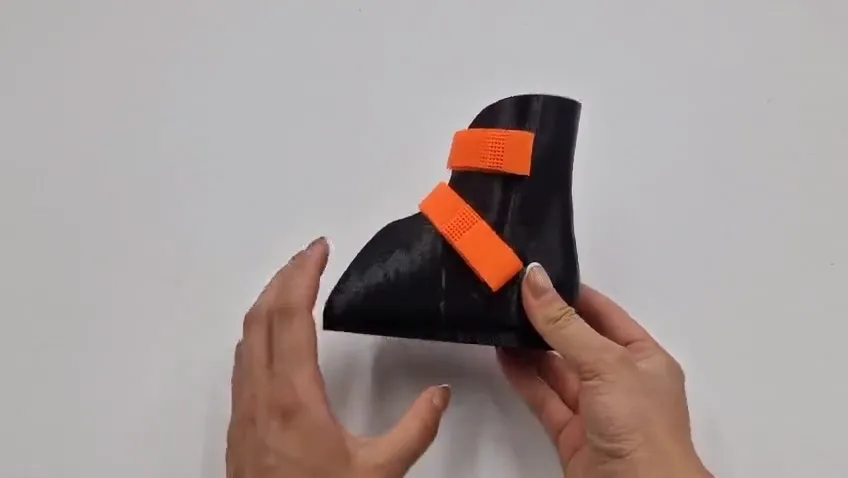
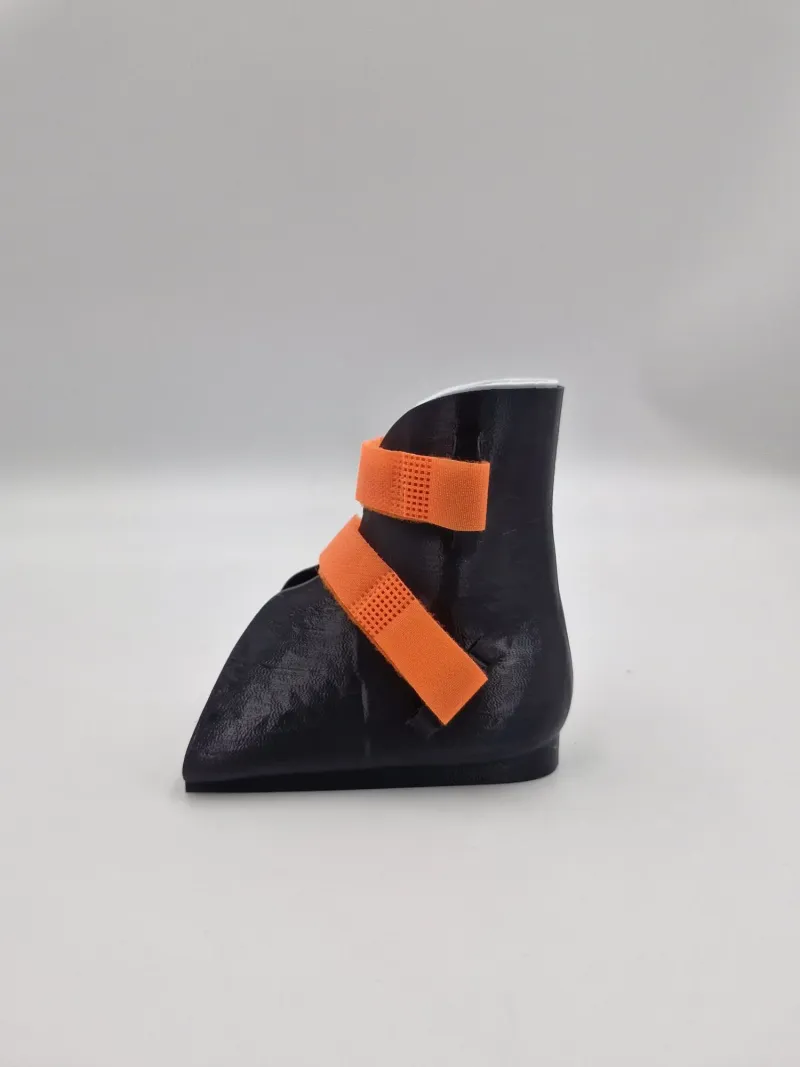
The child’s ankle brace below was printed in TPU so it flexes with the foot. Our filament comparison sets TPU beside the rigid filaments.
What TPU suits: grips, seals and bumpers
Pick TPU when the part has to give a little:
- Grips and handles: soft-touch sleeves and grips that don’t slip.
- Seals and gaskets: for dust and splashes, where a flat face presses against a lid.
- Bumpers, feet and pads: to soak up knocks and stop scratches.
- Phone and device cases, and protective covers: they stretch on and cushion a drop.
- Cable strain reliefs: the soft sleeve where a cable leaves a plug or housing.
- Wearable bands and straps: they bend around a wrist or a tool.
- Fold-over flaps: a thin, flexible strip that lets one piece fold over another.
Where TPU falls short: fine detail and heat
TPU has honest limits, so check these before you order:
- Very fine detail: TPU prints slowly and softly, so tiny text and sharp small features blur. For fine detail in a flexible part, a flexible resin suits better: see our guide to resin types.
- Parts that must stay perfectly stiff: a bracket or frame that has to hold its shape belongs in PETG, ABS or an engineering filament.
- High heat: its maker publishes no softening figure for TPU 95A, so ask us before a TPU part goes anywhere hot.
- Paint: paint cracks off as the part flexes, so choose the filament colour instead.
Clear TPU: flexible and see-through
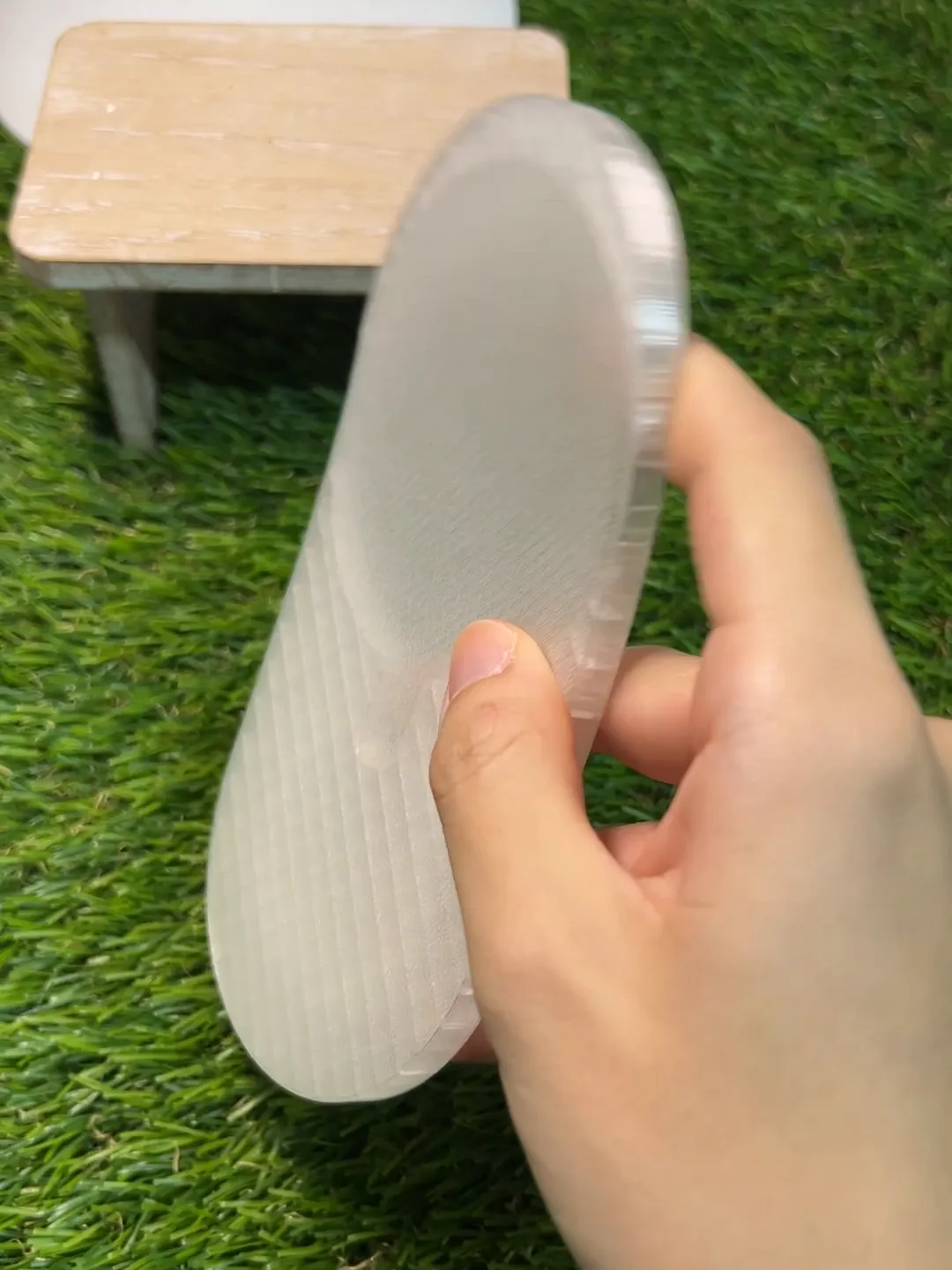
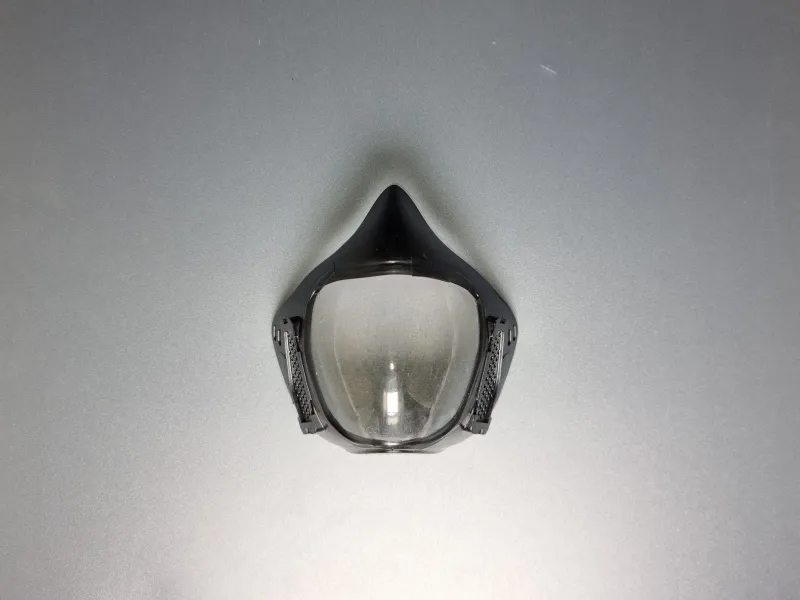
Clear TPU bends like the standard grade but lets light through. As printed, it comes out frosted rather than glass-clear, and the layers show as fine lines. It suits covers, connectors and soft parts where you want to see what sits inside.
The clear connectors at the top of this page were printed to stand in for a white machined plastic part. Clear TPU is on request, so check with us first.
Designing for TPU: walls set the softness
In TPU, how soft a part feels depends on how it is printed as much as on the grade:
- Wall thickness and infill change the feel. Thin walls and a light infill (the inner fill pattern) make a part softer and squashier. Thick walls or a solid print feel closer to the grade’s own hardness. Say in the notes how soft it should feel.
- Avoid long, thin overhangs. TPU sags when it prints over thin air, and supports are hard to peel off it. Design flat faces and gentle slopes, or a flat side to sit on the printer bed.
- Leave room for fits. TPU squashes, so a sleeve can grip a rigid pin more tightly than a rigid print could, but a fit that comes out loose is hard to fix later. The figures in our tolerances and clearances guide are for rigid filament, so tell us when a TPU part has to fit over or into something.
- Bend along the layers. TPU stretches further along its printed layers than across them, so tell us which way the part flexes and we turn it to suit.
Casting instead: for many soft parts
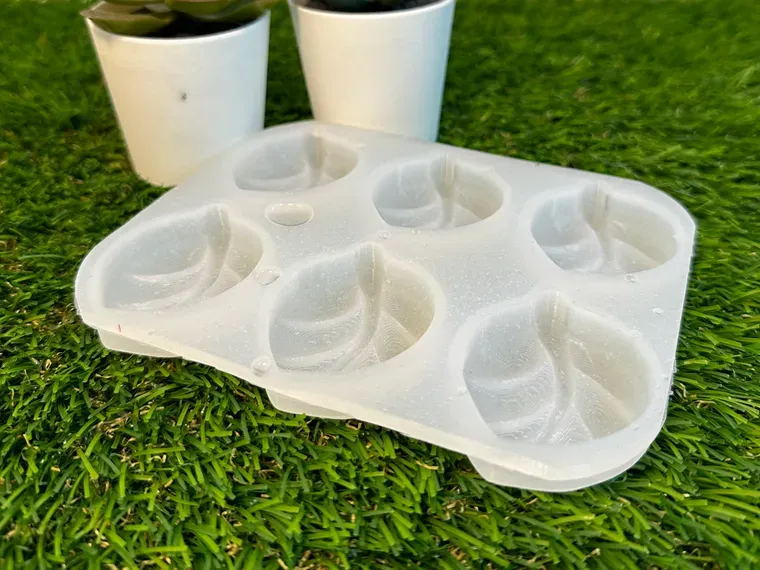
Printing suits one or a few soft parts. Casting suits more. We 3D print and finish an original, make a silicone mould around it, then cast copies (see how vacuum casting works). Choose casting when:
- You need many identical soft parts. One silicone mould gives about 20 to 50 casts, and every cast matches.
- You want a true rubber feel. Rubber-like polyurethane casts run from Shore A 40, soft and squashy, to Shore A 90, firm but still bendable.
- The part touches food or skin. Ask us about silicone casts: tell us what the part will touch and we check the grade.
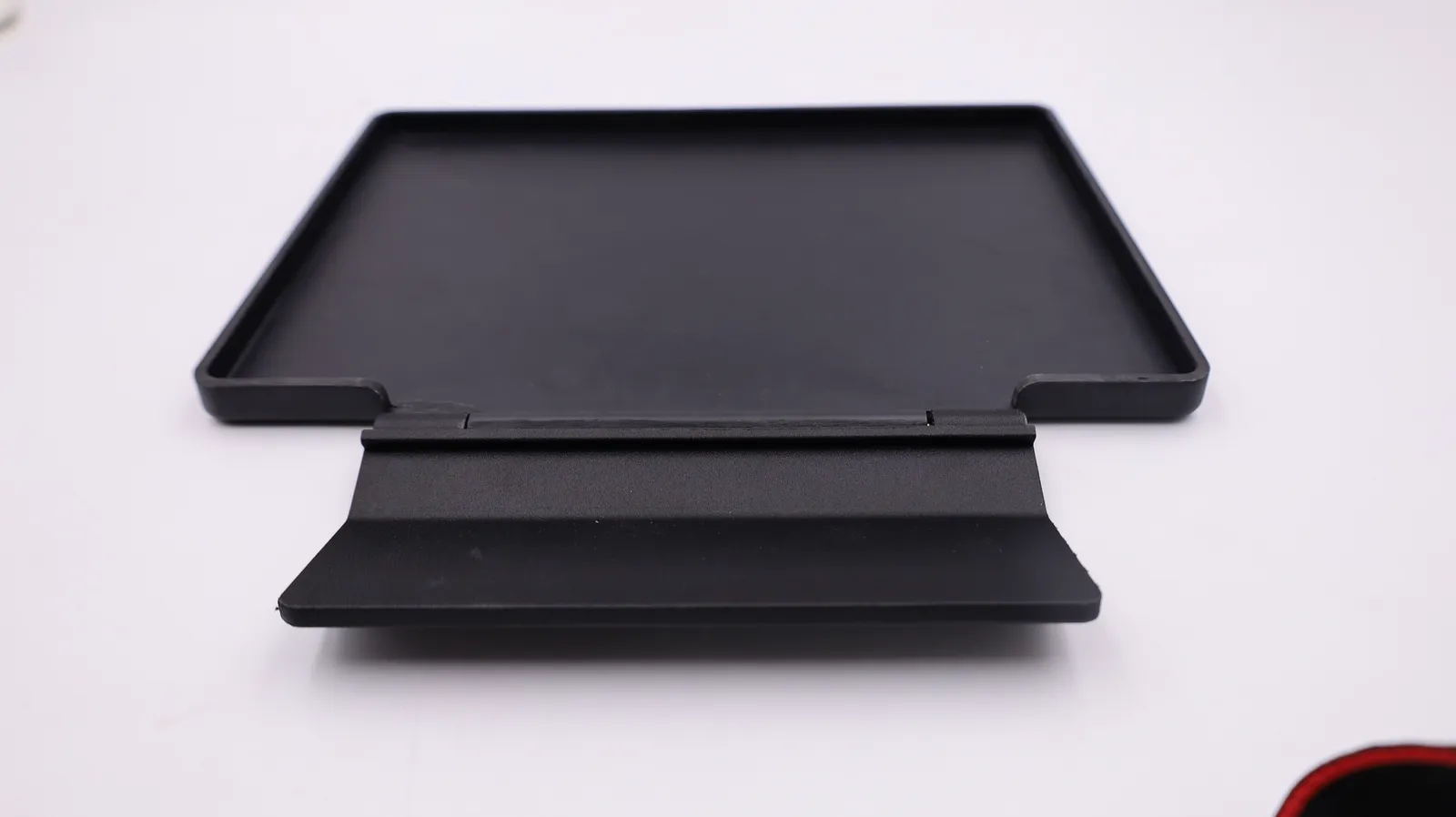
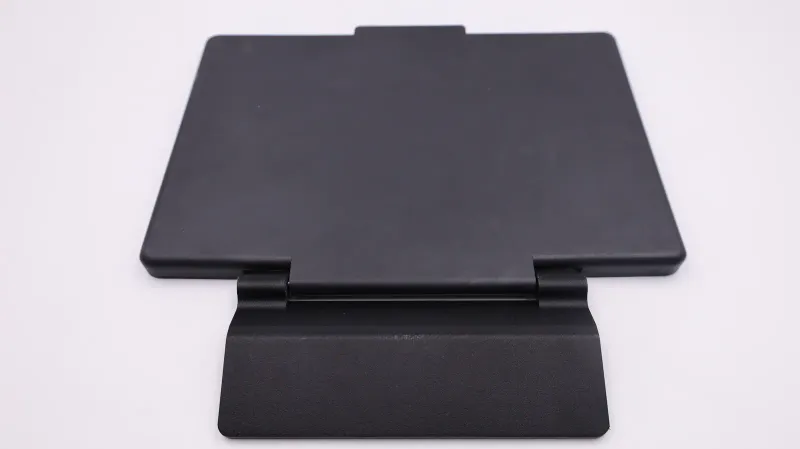
The screen covers below were cast in black rubber-like polyurethane at Shore A 80, as a run of 10. Our vacuum casting materials guide compares every cast material.
Still choosing between rubbery and rigid? Our materials guide compares every family we offer, and our 3D printing service shows what we print in our own studio.
Frequently asked
Can you 3D print something rubbery?
Yes, in TPU (thermoplastic polyurethane), a rubbery filament that bends and springs back. TPU 95A is our standard flexible grade and is in the instant quote; softer 85A to 90A, harder 64D and 68D, and clear TPU are on request. For a rubber feel or a batch of identical soft parts, we cast them in soft polyurethane or silicone instead.
What does 95A mean on TPU?
95A is the part's Shore hardness: a number for how hard a flexible material feels when you press into it. On the A scale, a lower number is softer, so 85A squashes more easily than 95A. Harder grades move to the D scale, where 64D and 68D are stiff but still tough rather than brittle.
Is TPU 85A softer than TPU 95A?
Yes, TPU 85A is noticeably softer than 95A: it squashes and bends with less force, which suits soft grips, pads and bands. It is on request, so check with us first. TPU 95A is firmer, holds its shape better and is the one in the instant quote.
Can you 3D print a phone case or device cover in TPU?
Yes, TPU 95A is a common choice for phone and device cases, bumpers and protective covers, because it bends to go on and cushions a knock. Send us the 3D file and the device model, and leave room for the case to stretch over the corners. For many identical covers, casting is often the better route.
How long does a TPU print take?
As a rough gauge for a simple, low-complexity part about 10 to 15 cm across, a TPU 95A print takes 4 to 7 working days on Standard, 3 to 5 on Express, and 1 to 3 on Super Rush after a feasibility check. Ask us for an accurate date, and allow extra time for the on-request grades.
Can TPU be clear?
Yes, clear TPU is available on request, and it prints see-through but slightly frosted rather than glass-clear. The printed layers show as fine lines. It suits flexible covers, connectors and parts where you want to see what is inside.
Can TPU parts be painted?
TPU parts are not painted as a rule, because paint cracks and flakes off as the part bends. Choose the filament colour instead, or for a coloured soft part in a batch, cast it in a tinted polyurethane or silicone.
When should I cast soft parts instead of printing TPU?
Cast instead of printing when you need many identical soft parts, a true rubber feel, or a part for food or skin contact. We cast soft rubber-like polyurethane from Shore A 40 to 90, and one silicone mould gives about 20 to 50 casts. For one to a few parts, TPU printing is usually quicker.
Related
-
 GuidePLA, PETG, ABS, ASA or TPU: which filament should your part be printed in?
-
 GuideWhich 3D printing material should you choose?
-
 GuideHow much clearance do 3D printed parts need to fit together?
-
 ServiceIndustrial 3D Printing
-
 ServiceSilicone Molding & Vacuum Casting
-
 ServiceProduct Development & Prototyping
-
 ProjectPaediatric ankle-foot orthosis (AFO)
-
 ProjectVacuum cast TPU screen protector
-
 ProjectCast rubber grommet