

Which double-sided tape should you use to mount a sign or a part?
Foam tape, 3M VHB, tissue tape and removable strips compared for mounting signs and parts: surface prep, bond time, tricky surfaces and when to use screws.
Which way should you mount your sign?
Two questions, and you get the mounting method from this guide that fits.
Use acrylic foam tape, such as 3M VHB, for a sign or part that stays put. Use thin tissue tape on curved or textured faces, and removable tape for anything you may take down again. Clean the surface, press hard, and give the bond up to 72 hours before it carries a load.
Double-sided tape by job
| Tape | What it is | Good for | Not for |
|---|---|---|---|
| Acrylic foam tape (3M VHB is one) | A closed-cell acrylic foam with adhesive on both faces | Permanent signs, panels and logos on metal, glass and many painted surfaces. Thicker tape evens out a rough wall | Polypropylene, polyethylene and some powder coated paints, unless a low surface energy tape or primer is used |
| Thin tissue tape | A thin fibre carrier with adhesive on both sides | Curved and textured surfaces, and detailed work | Jobs where a foam core has to fill a gap |
| Removable foam tape or strips | Tape made to peel away without residue | Temporary signs, events and plates you may move | A mount that has to last for years |
Foam tape and 3M VHB
VHB is a trademark of 3M Company, its name for its acrylic foam tapes. 3M’s guide describes them as closed-cell acrylic foam, and lists “architectural signs to frames” and “logo attachment” among its ideas. The foam spreads the load across the whole strip instead of one screw, and a thicker foam suits a wall that is not perfectly flat.
3M’s multi-purpose tapes bond to metal, glass and high and medium surface energy plastics. Surface energy is a property of a surface that helps decide how an adhesive interacts with it. Its guide does not name acrylic sheet, so check the tape’s own data sheet for acrylic and test a scrap first.
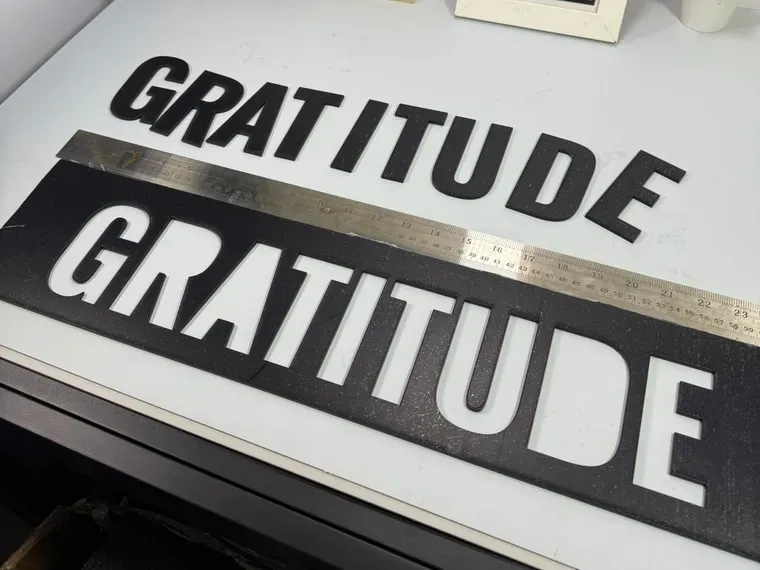
Our own project work shows tape at work. The Floorella SG letters were each cut as a separate piece of black acrylic, with strips of 3M tape on the back so each letter presses straight onto the wall without drilling. The project page does not name the tape product.
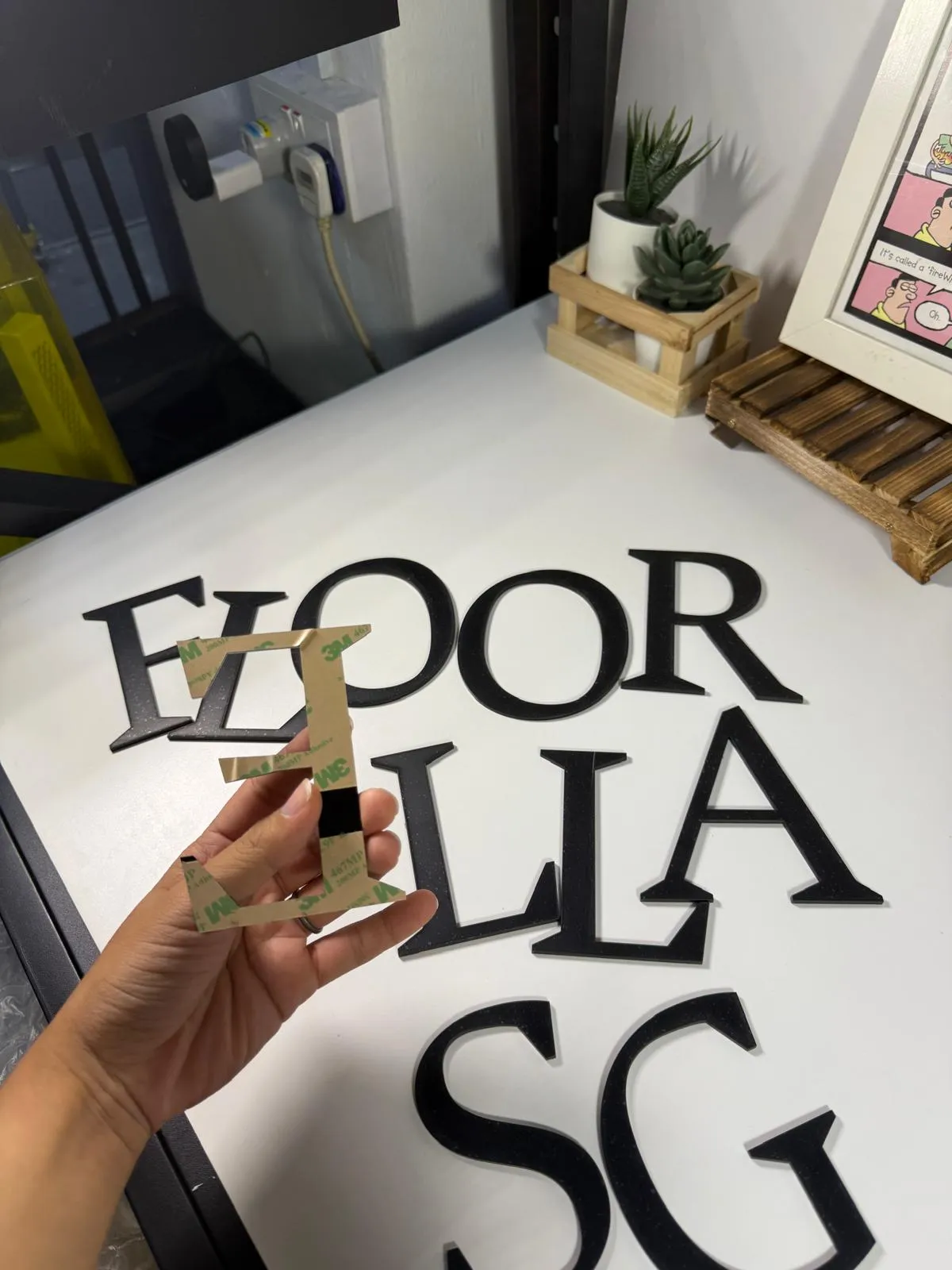
Limits: the bond takes time to build, and 3M describes it as permanent, so plan for the sign to stay.
Tissue tape for curved and textured faces
Tissue tape, also called non-woven tape, is thin. tesa, a tape maker, says it forms an even bond on curved and textured surfaces and can be removed without leaving residue. Foam tape is the better pick where the tape has to fill a gap, because tesa notes that foam tapes compensate for uneven surfaces.
Limits: thin tape does not fill hollows. Check the maker’s data sheet for the load it carries.
Removable tape and strips
Removable tape is for temporary bonds: signs, events and displays. tesa says it peels away without leaving residue or damaging the surface, and that no single removable tape is strongest, because strength depends on the surface, the load and how it has to come off.
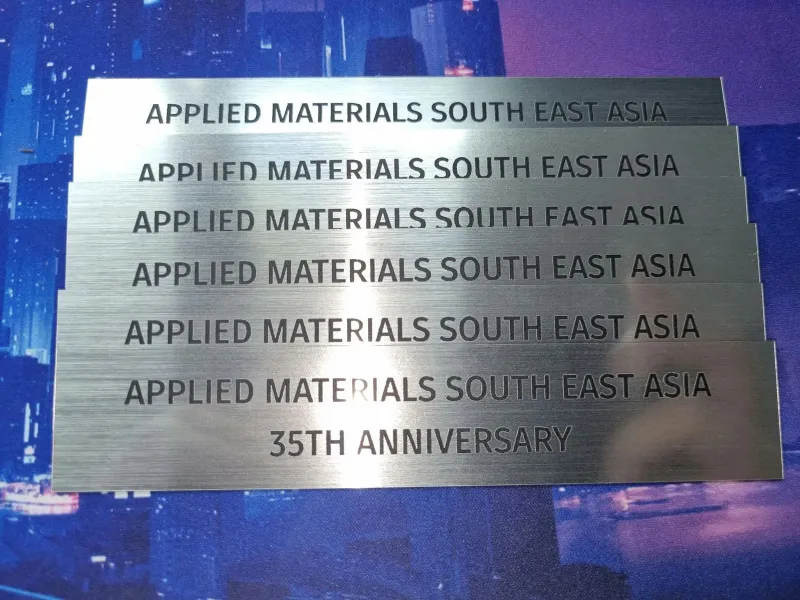
In our print studio, a plate can go out with 3M removable tape. It is packed loose with each piece for you to stick on, we do not stick it on for you, and it is made to peel off clean. Our name plate guide shows where plates go.
Limits: it is not made for a mount you want to forget for years.
Preparing the surface
3M’s guide gives three steps: make sure both surfaces are clean and dry, using a 50:50 mix of isopropyl alcohol and water; apply the tape; then press hard with a J-roller to at least 15 psi (100 kPa), which helps the adhesive bond properly. Our guide to gluing acrylic says to test any cleaner on an offcut, because some alcohols attack acrylic.
Then wait. 3M puts the bond at about 50% after 20 minutes, 90% after 24 hours and 100% after 72 hours. Most acrylic adhesives bond down to 10 °C, and 3M makes a low temperature kind that works down to 0 °C.
So the order is: clean, dry, stick, press, wait three days. In practice, that means do not lean anything on a sign you put up an hour ago.
Surfaces that fight tape
- Low surface energy plastics. 3M’s guide says its low surface energy tape bonds to polypropylene, polyethylene and some powder coated paints, and lists Primer 94 for these surfaces. Ordinary foam tape is not the one for them.
- Rough or uneven walls. 3M says to pick a thicker tape for more unevenness, and to test the surface for how well the adhesive flows and touches.
- Soft (plasticised) vinyl. 3M says its modified acrylic tapes do not cover it. The multi-purpose acrylic is the type it says resists plasticiser migration in vinyl.
- Mirror acrylic. Its maker says to test first, because some adhesives attack the coat on the back: see our mirror acrylic guide.
When you cannot say which category the wall falls into, test a strip on a hidden patch.
Screws and standoffs instead
Choose screws or standoffs when the sign needs to float. A standoff, says MBS Sign Supply, is a sign mounting fastener that holds a panel away from a wall, creating a floating effect.
MBS’s checklist for a standoff starts with the wall: nylon anchors or toggle bolts in drywall, masonry anchors in concrete or brick. It also asks how heavy the sign is and whether it is outdoors, where it says to use stainless steel only.
Tape needs thought about service life, temperature and sunlight too. tesa’s own checklist asks about indoor or outdoor use, direct sunlight and chemicals before it names a tape.
How our own signs are fixed
- Printed acrylic panels (3, 5 or 10 mm, from 100 by 60 mm up to 900 by 450 mm) go on silver standoffs. A panel takes four, and a strip under 100 mm on its short side takes two.
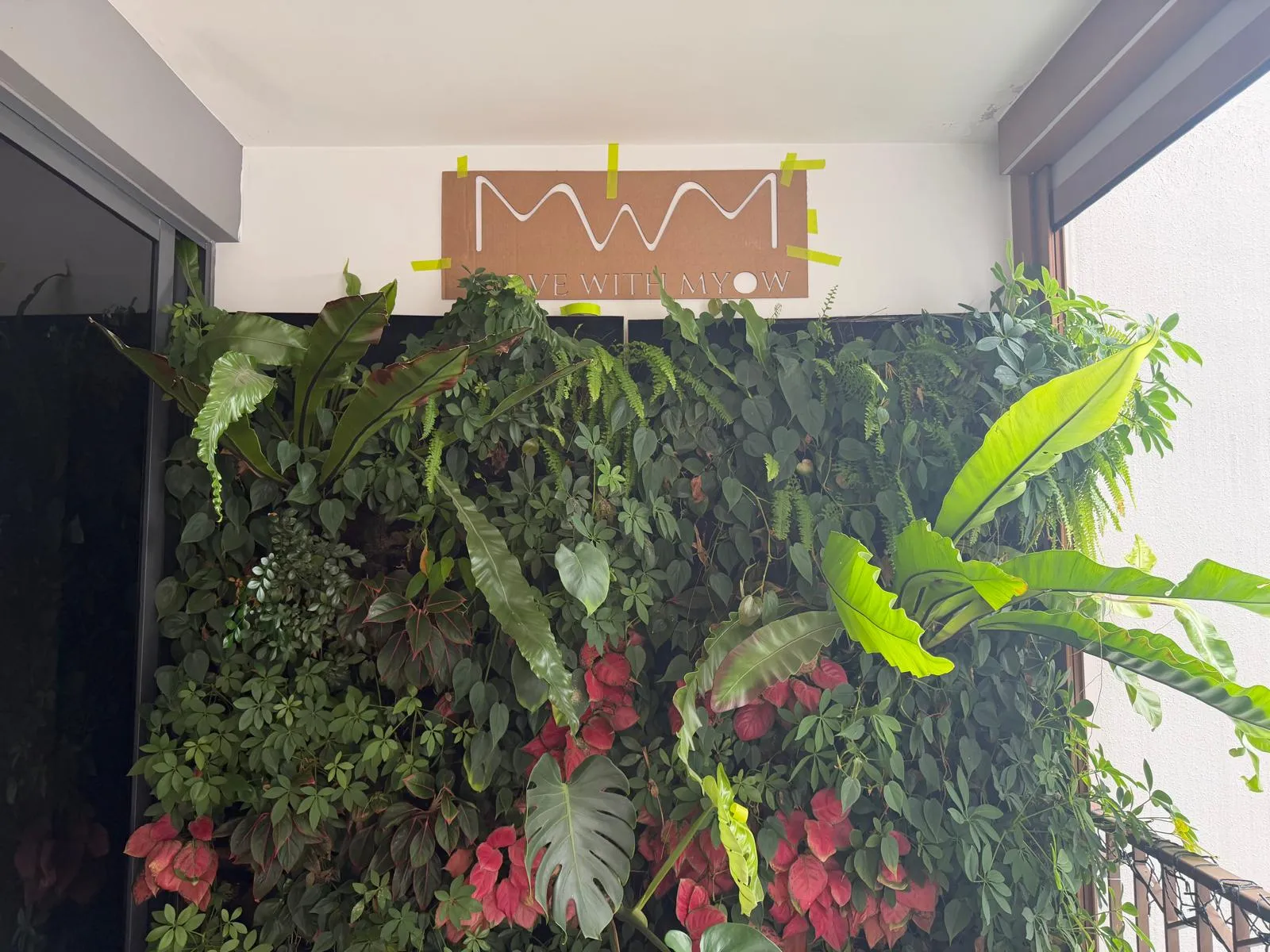
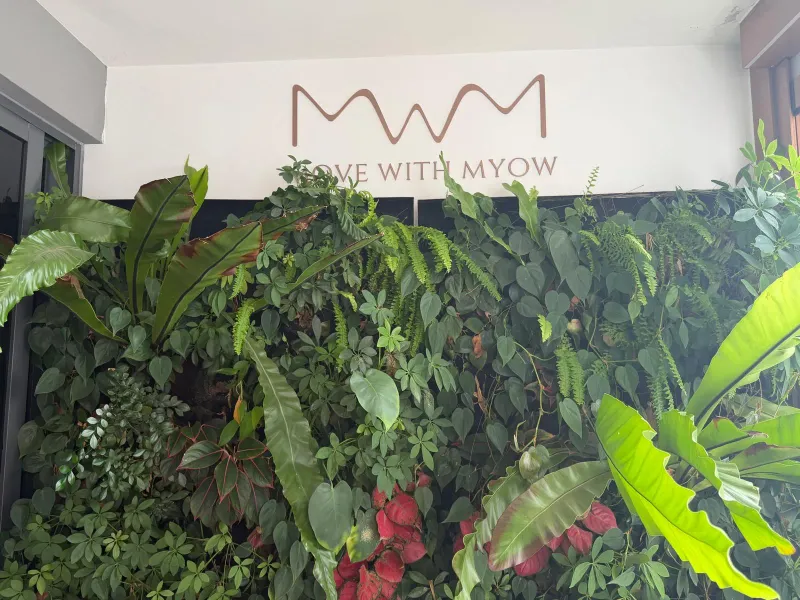
- Cut-out logo signs are laid out on a template and pressed onto the wall. The Move with Myow sign is 5 mm acrylic, primed and sprayed rose gold, fixed with high-bond tape and no screws through the wall.
- Name plates and print studio pieces offer 3M removable tape packed loose, holes for your own screws, or standoffs. Holes and standoffs are for rectangular pieces only.
Our acrylic sheet guide covers the sheet itself, and the acrylic signage buyer’s guide covers the choice of letters, panels and mounting.
Where these facts come from
Every outside fact was read on the page named below on 19 November 2026. Tapes differ by product and batch, so follow the data sheet of the tape you buy.
- 3M, VHB Tape Design Guide: what the tapes are, application steps, bond build, primers and surface energy. 3M’s own pages would not open for us, so this is a copy of 3M’s guide hosted by the distributor CGR Products. It is marked © 3M 2018 with 3M Ireland and UK addresses, so 3M’s current guidance may differ.
- tesa, how to choose double-sided tape, foam tapes, removable tapes and choosing a removable tape: tissue, foam and removable tapes.
- MBS Sign Supply, Fastener basics: what a standoff is and how to choose one.
- What we make and offer comes from our own project pages, the sign catalogue and the print studio’s mounting options.
Frequently asked
Is 3M VHB the same as foam tape?
VHB tapes are acrylic foam tapes: 3M's own guide describes the tapes in the range as closed-cell acrylic foam. Other makers, such as tesa, sell acrylic foam tape under their own names.
How long before a VHB bond is at full strength?
3M's guide gives about 50% after 20 minutes, 90% after 24 hours and full strength after 72 hours. Heat can speed it up, so hang nothing heavy on a fresh bond.
What should I clean the wall with?
3M's guide says to use a 50:50 mix of isopropyl alcohol and water, then let the surface dry before the tape goes on.
Can tape go up in a cold room?
3M says most acrylic adhesives bond down to 10 °C, and that its low temperature acrylic bonds down to 0 °C. Check the data sheet before taping in a cold or chilled room.
Will foam tape stick to a polypropylene part?
Not well. 3M's guide lists polypropylene and polyethylene among its lower surface energy substrates, and offers a separate low surface energy tape and a primer for them. Test a sample first.
Can I tape acrylic to a wall?
Yes, and we have done it for cut-out letters. 3M's design guide does not name acrylic sheet, so read the data sheet of the tape you buy and test a piece first.
Can I take a taped sign down later?
3M's guide calls a VHB bond permanent, so plan for it to stay. Removable tape is made for coming off cleanly, and our print studio packs 3M removable tape for you to stick on yourself.
When should I use standoffs instead of tape?
When you want the sign to float off the wall and throw a shadow behind it. A supplier says each of its standoffs is rated for up to 18 lbs, so check the rating of any you buy.
Related
-
 GuideHow do you glue acrylic so the joint stays clear?
-
 GuideWhat is acrylic mirror, and is it better than a glass mirror?
-
 GuideWhat name plate suits an office door, a desk, a gate or a machine?
-
 ServiceCustom Signage
-
 ServiceLaser Engraving & Cutting
-
 ServiceUV Printing
-
 ProjectRose gold acrylic logo sign for Move with Myow
-
 ProjectLogo signs for small businesses
-
 ProjectPrivacy shield for a dome security camera