Buying an acrylic sign: the decisions to make before you order
An acrylic sign order comes down to four decisions: the sheet grade (cast or extruded), the format (cut letters, a printed panel or built-up 3D letters), the mounting (stand-offs, flush or freestanding) and where it will live (indoors or out). Settle those and the thickness, colour and lighting choices mostly follow. We cut, print and finish signs in-house at our workshop at 994 Bendemeer Road, so this guide runs through each decision the way we would in a quoting conversation. For the commercial menu of sign types, start at our signage service.
Cast or extruded acrylic: does the sheet grade matter?
Less than thickness does, but it is worth knowing the difference. Cast acrylic takes a laser beautifully: the cut edge polishes up glassy, which matters when the edge is on show, as it is on cut letters and edge-lit pieces. Extruded acrylic is cheaper and very consistent in thickness, which suits flat panels where a printed face covers the surface and nobody studies the edge. We cut clear, frosted and coloured acrylic across the full Pantone range, plus mirrored and metallic-finish sheets, and flame-polished edges are available when a premium clear edge is the point.
How thick should the panel or letters be?
Acrylic runs from 3mm to 25mm. Thin stock at 3mm to 5mm suits small interior signs and layered builds. Thick stock from 10mm to 25mm gives that chunky edge-glow and stands up on its own as freestanding letters.
Cut letters, a printed panel, or built-up 3D letters?
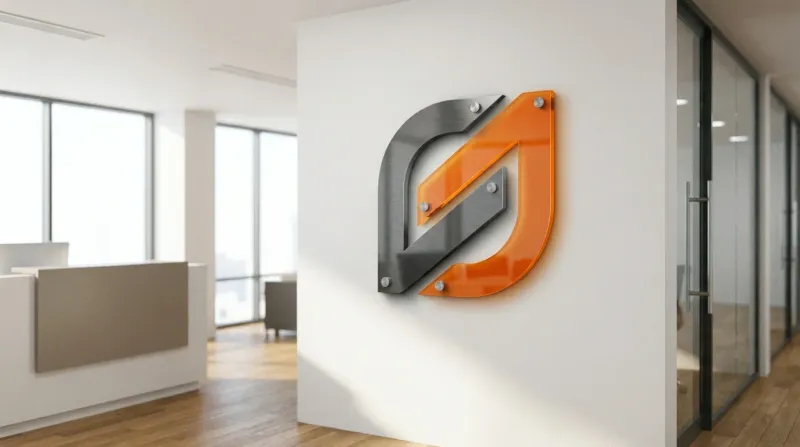
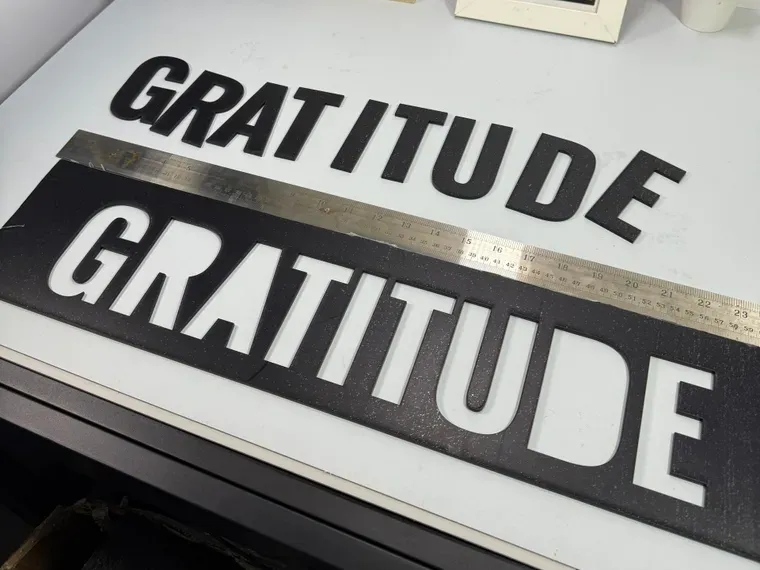
Cut letters are the default for a crisp 2D brand mark: laser-cut to plus or minus 0.1mm, then stand-off mounted so they float off the wall. Laser cutting starts from S$25 per A4 piece.
A printed panel is the pick when the artwork is a full-colour graphic rather than a silhouette. We UV-print CMYK plus white ink directly onto the acrylic, so the graphic sits in the surface instead of peeling like vinyl, with Pantone matching for brand-critical colour. UV print runs S$10 to S$40 per part on a flatbed up to 600 by 400mm, and the white ink layer keeps logos sharp on dark or coloured sheet.
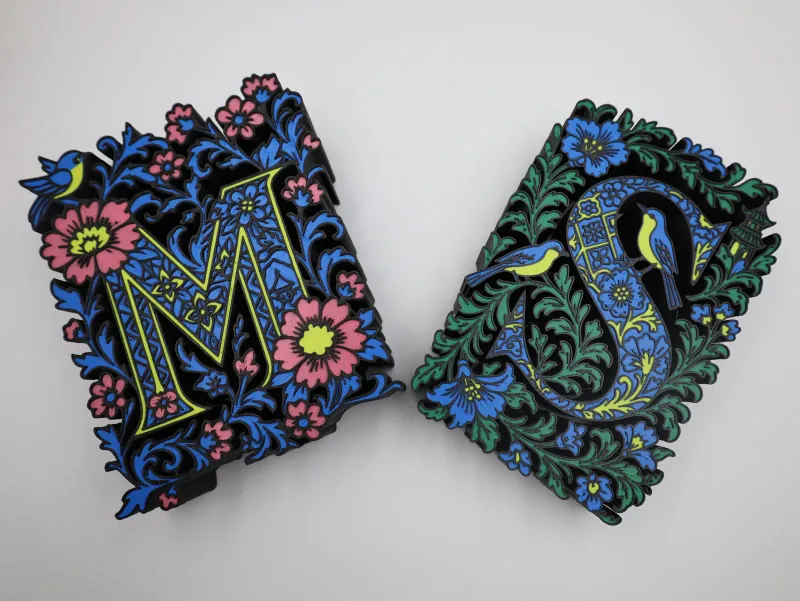
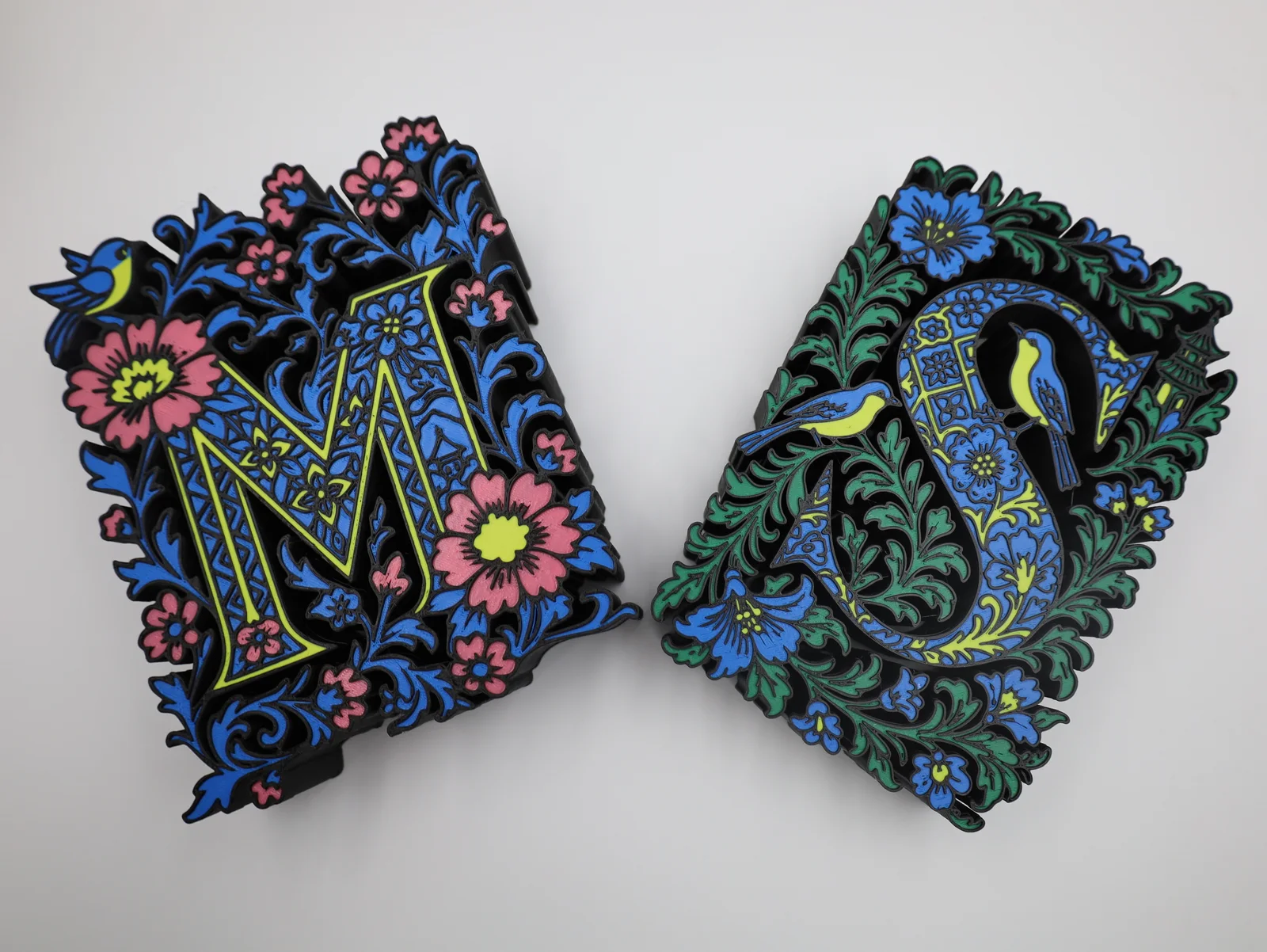
Built-up 3D letters add real depth: chamfered edges, curves and sculptural forms that cannot come off a flat sheet. We 3D print them in PLA, PETG or resin from S$0.10 per gram, typically S$15 to S$40 per character, then sand, prime and paint. Colour can even be printed in rather than painted on: our multicolour 3D-printed letters laid five PLA colours in a single job, so the ornate pattern is solid plastic that does not scratch or fade.
Stand-offs, flush mount, or freestanding?
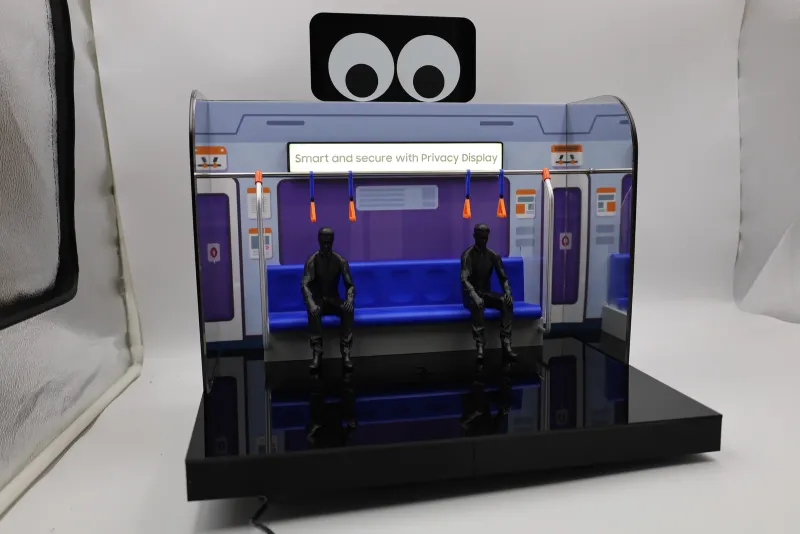
Stand-off hardware is the reception-wall classic: the letters sit a few millimetres proud of the wall and cast a soft shadow. Freestanding bases suit counters and events, hanging hardware suits shopfronts, and lit signs get a backlight box. We pre-fit every mounting before delivery so the on-site install is quick. If you want glow, LED edge-lit and halo-lit acrylic works hard in receptions, retail counters and exhibition booths; the Samsung Galaxy S26 booth we built pairs a laser-cut, formed acrylic shell with an LED-backlit panel that reads like real MRT carriage signage.
Will it survive outdoors?
Indoors, acrylic is the easy answer: it survives an air-conditioned interior for years. Outdoors is a different brief. For exterior signs we recommend ASA or aluminium composite instead, and finishes shift to UV-cured topcoats; UV-printed graphics can live outside under a clear coat. Tell us the location up front and we specify for it from the start.
What does it cost, and how long does it take?
Every sign is quoted per design, but the published ballparks help. An A4-size laser-cut acrylic sign runs S$60 to S$150 depending on thickness and finish, a 1m-wide backlit acrylic sign S$300 to S$800, and UV-printed graphics add S$10 to S$40 per part. Production is 5 to 7 working days once the design is confirmed, plus 2 to 3 days for UV print or backlit LED work, and 2 to 3 weeks for large identical runs. Send a vector file (AI, EPS or PDF) and we quote the same business day; our laser file guide shows exactly what a clean file looks like, and if you only have a logo image we can redraw it.
For the broader menu, including wayfinding and plaques, see our custom signage guide. Ready to price yours? Send your logo, the location and a rough size to the studio and we return a price the same business day.
Frequently asked
What is the difference between cast and extruded acrylic for signage?
Cast acrylic laser-cuts with a cleaner, glassier edge, which matters on cut letters and edge-lit signs where the edge is on show. Extruded acrylic is cheaper and very consistent in thickness, which is fine for flat panels where a printed face covers the surface. Tell us how the sign will be viewed and we specify the sheet with the quote.
How thick should an acrylic sign be?
Acrylic runs from 3mm to 25mm. Use 3mm to 5mm for small interior signs and layered builds, and 10mm to 25mm where you want a chunky edge-glow or letters that stand on their own. Thickness is one of the main price drivers, so we confirm it at quoting.
Can an acrylic sign be used outdoors?
Acrylic is happiest indoors, where it survives an air-conditioned interior for years. For exterior signage we recommend ASA or aluminium composite instead, with UV-cured topcoats, and UV-printed graphics hold up outside under a clear coat. Mention the location in your brief and we specify materials for it.
What file do I need to order an acrylic sign?
A vector file in AI, EPS or PDF is ideal, and it gets you a quote the same business day. If all you have is a logo image, we can redraw it to vector before cutting. For 3D-printed dimensional signs, send a STEP, STL or OBJ file instead.
Related