

Is styrofoam the same as polystyrene, and which one suits a model?
Styrofoam is a brand of extruded polystyrene. The white foam sold as styrofoam here is EPS. How EPS, XPS and HIPS differ, and what to use for a model.
Which polystyrene suits what you are making?
One or two questions, and you get the material this guide would start with.
No, though people use the two words as if they were. Styrofoam is a brand name for a blue or grey insulation board made of extruded polystyrene (XPS). The white beaded foam in packing boxes, which people in Singapore commonly call styrofoam, is expanded polystyrene (EPS). HIPS, high-impact polystyrene, is a third thing: a solid plastic sheet.
Styrofoam, EPS, XPS and HIPS
| Name | What it is | How it looks and feels | Good for | Not good for |
|---|---|---|---|---|
| Styrofoam | A DuPont brand of XPS insulation board | Light blue, and grey on newer North American boards | Whatever XPS does | Naming EPS: the brand does not cover it |
| EPS (expanded polystyrene) | Beads fused into a block | White, beady, corky, crumbles at the edge | Packing, stage props, rough massing models | Sharp edges and fine detail |
| XPS (extruded polystyrene) | A smooth foam board with closed cells | Smooth, solid, cuts clean edges | Contour layers, bases and carved models | A model that is handled a lot |
| HIPS (high-impact polystyrene) | A solid sheet, rubber-modified | Smooth plastic sheet, not a foam | Vacuum forming, signs and displays | Carving, or anything needing foam |
What styrofoam really means
Styrofoam is a trademark. DuPont’s own page calls it Styrofoam Brand extruded polystyrene (XPS) insulation, a closed-cell foam board for buildings. Its legal line lists the ™ marks on the page as trademarks of affiliates of DuPont de Nemours, Inc. Wikipedia describes the boards as light blue, and DuPont says its newer North American boards are grey.
Wikipedia notes the word is argued to have become a genericised trademark, often used for EPS. In Singapore it often means the white foam of takeaway boxes, cooler boxes and packing blocks. NEA’s recycling guide uses it that way: it lists styrofoam food containers, cooler boxes and packing peanuts.
So when you order, name the foam you want: white beaded block, smooth board, or solid sheet.
EPS: white beads
EPS is a rigid closed-cell foam made of pre-expanded beads. It is usually white. It feels corky and a little papery, and it is mostly air.
- Good for: packing, stage decoration, exhibition props and quick massing models.
- Limit: a cut face shows its beads and can crumble, so a crisp edge or fine detail is hard to get.
- Cutting: EPS blocks and boards are commonly cut with a hot wire.
XPS: the smooth board
XPS is also a closed-cell foam, but it is made by extrusion, not from beads. It has a smooth texture and cuts into sharp-edged shapes without crumbling. It is used in crafts and in architectural models.
- Good for: ground contours, base blocks and carved masses.
- Limit: it is still soft foam. A model that people pick up will dent.
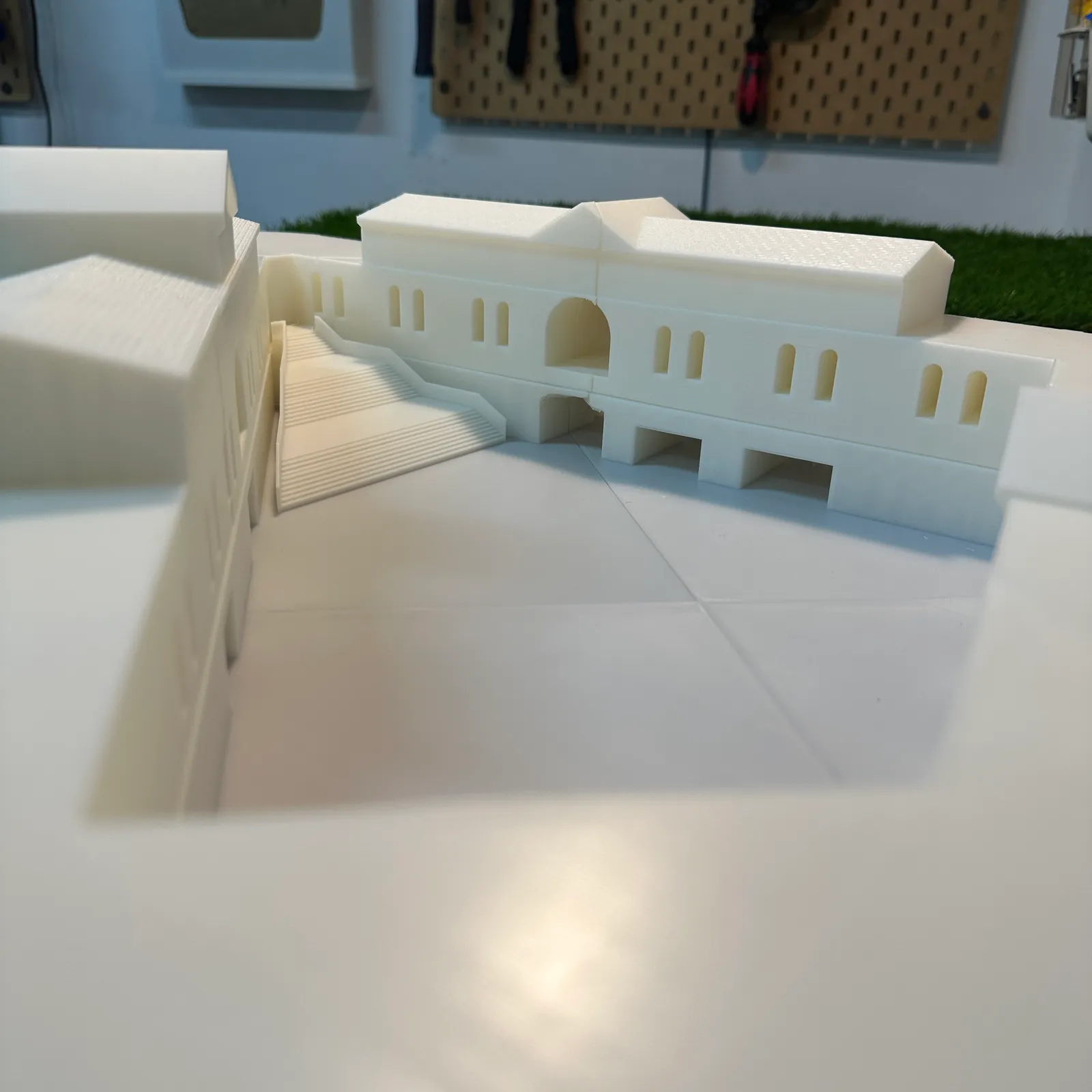
The stepped edges below show the ground levels of a plaza. We printed them in, so they stay crisp.

HIPS: the solid sheet
HIPS is a rubber-modified polystyrene sheet. One maker describes it as offering enhanced impact resistance and being easy to process. It forms well when heated, and is used for signs and point-of-sale displays.
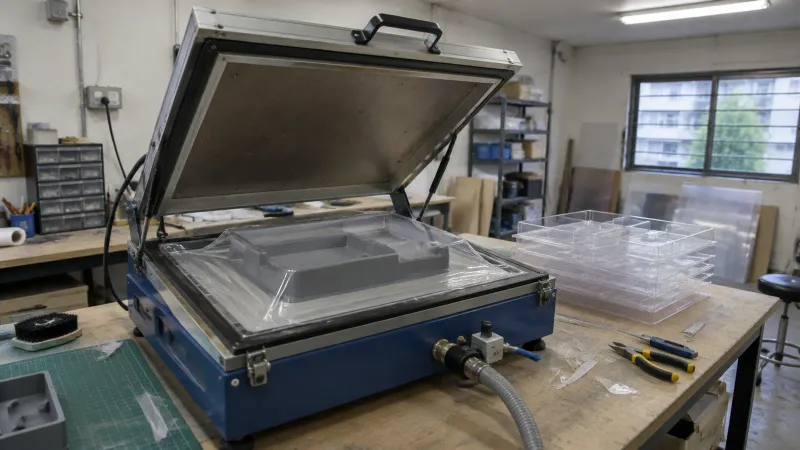
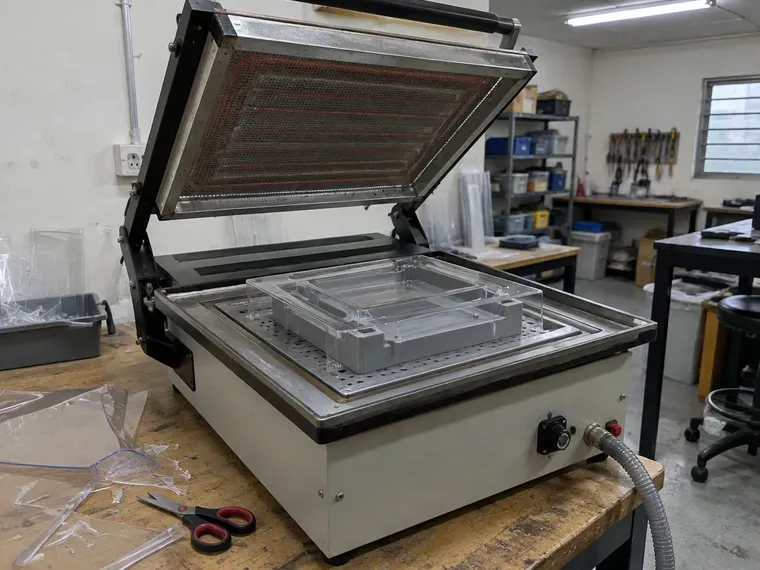
We vacuum form HIPS: a sheet is heated, laid over a 3D printed mould, and pulled tight by a vacuum. It suits low-cost packaging and displays. It is not a foam, so it does not carve and it is not for insulation.
Our guide to vacuum forming shows how a formed part is made and which sheets we use.
Cutting and painting foam
Foam is easy to shape, and easy to ruin.
- Cut with a hot wire or a craft knife. A hot wire melts through the foam. A safety guide for stage work says polystyrene foam gives off mostly carbon dioxide and water vapour, but other fumes can follow, so use a fan or an open window. Keep the wire off polyurethane foam, which gives off toxic fumes.
- Keep sanding dust down. Sanding polystyrene foam makes dust that can burn.
- Keep solvents away. Polystyrene dissolves quickly in acetone, and spray paint propellants and solvents attack the foam too.
- Seal before you paint. A foam supplier advises two or three light coats of a water-based sealer such as diluted PVA glue or acrylic gesso, each dried and scuff-sanded before the next. That advice is for foam in general, not polystyrene in particular, so test on a scrap before you spray.
Recycling styrofoam in Singapore
Do not put polystyrene foam in the blue bin. NEA’s disposables page says Styrofoam cannot be recycled, and its recycling guide lists polystyrene foam products under “Dispose as general waste”. For styrofoam food containers, cooler boxes and packing peanuts, the same guide says “Clean or dirty, don’t recycle any!”
If a foam block is still good, reuse it for packing or a rough mock-up before you bin it.
When a model should not be foam
Foam is fine for a quick study. It does not suit a model that will be handled, shown or kept: the core is soft and the surface dents.
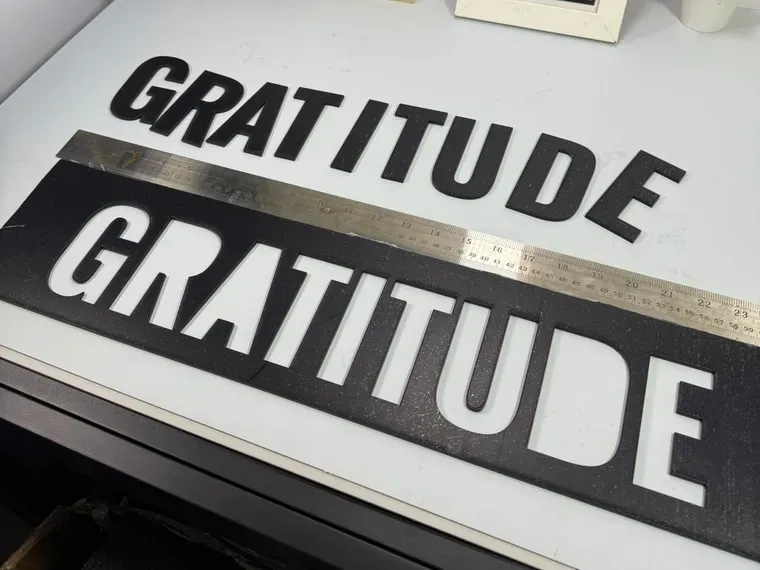
We do not laser cut polystyrene foam, whether EPS or XPS. Our laser cuts EVA and PE foam, and card, plywood, MDF and acrylic. For a model that has to last, we laser cut plywood or acrylic, or 3D print it.
Our guide to foam board covers the paper-faced kind in more detail, and how architectural scale models are made shows the methods side by side.
Where these facts come from
Every outside fact was read on the page named below on 19/11/2026. Product lines and rules change, so check the source before you rely on a detail.
- DuPont, Styrofoam Brand XPS Insulation: the trademark line, closed-cell XPS and the grey colour.
- Wikipedia, Styrofoam and Polystyrene: how the name is used, EPS beads, XPS texture, hot wire cutting and solvents.
- EPS Industry Alliance, home page: EPS is 98 percent air.
- 3A Composites, Polycasa HIPS product guide: what HIPS sheet is and how it is used.
- Actsafe Safety Association, Using Foam in Set and Prop Construction: fumes, ventilation and dust.
- eFoam, How to Paint Foam: water-based sealers before paint, and slicing with a craft knife. This page is about foam in general, mostly polyurethane and polyethylene, so test on a scrap.
- National Environment Agency, Recycling Guide and Reducing Our Use of Disposables: what Singapore says about styrofoam, quoted as written.
- Our own pages: vacuum forming, what is vacuum forming, foam board and our laser cutting materials guide.
Frequently asked
Is styrofoam a brand name?
Yes. DuPont's own page marks Styrofoam as a trademark of its group, for its extruded polystyrene (XPS) insulation board. People use it for any polystyrene foam, which is why a shop may need you to say which foam you mean.
Is the white foam in a packing box styrofoam?
It is expanded polystyrene (EPS), made of fused beads. Many people here call it styrofoam, and Singapore's NEA does too in its recycling guide. Strictly, the brand name belongs to the blue or grey XPS board.
Which is better for a model, EPS or XPS?
XPS, if the model has edges. It is smooth and cuts into sharp-edged shapes without crumbling. EPS is fine for rough massing, where nobody sees the surface.
Does spray paint melt styrofoam?
It can. The solvents and propellants in spray paint attack polystyrene foam. A foam supplier advises sealing foam with a water-based sealer such as diluted PVA glue or acrylic gesso before painting, but its advice covers foam in general, so test on a scrap before you spray the model.
Can I cut polystyrene foam with a hot wire?
Yes. EPS blocks and boards in building work are commonly cut with a hot wire. Work with a fan or an open window, at least 3 m from anything that burns, and keep the wire off polyurethane foam, which gives off toxic fumes.
Is HIPS the same as styrofoam?
No. HIPS is a solid sheet of rubber-modified polystyrene, not a foam. It is used for vacuum forming, signs and displays. It has none of the crumbly, beaded feel of EPS.
Can you laser cut polystyrene foam?
Not on our laser. We cut EVA and PE foam, which melt to a smooth edge, and we leave polystyrene foam and paper-faced foam board off the machine. For a neat laser cut study model, ask about card.
Can styrofoam go in the blue recycling bin in Singapore?
No. NEA says Styrofoam cannot be recycled, and its recycling guide says "Dispose as general waste" for polystyrene foam products. For styrofoam food containers, cooler boxes and packing peanuts it says "Clean or dirty, don't recycle any!"
Is thermocol the same as EPS?
Yes, thermocol is another name for expanded polystyrene. Wikipedia shows thermocol slabs made of EPS beads, one from a packing box and one used for crafts. Ask the shop for EPS by name if you want the white beaded kind.
Related
-
 GuideWhat is foam board, and when is it good enough for a model?
-
 GuideHow is an architectural scale model actually made?
-
 GuideWhat is vacuum forming, and when should you use it?
-
 ServiceVacuum Forming in Singapore
-
 ServiceLaser Engraving & Cutting
-
 Service3D Modelling, CAD and 3D Scanning
- ProjectArchitectural concept model of a courtyard building
-
 ProjectThree-storey architectural scale model
-
 ProjectLaser-cut architectural concept model for Mitch Teh