

How is an architectural scale model actually made?
Updated
Every scale model that leaves our workshop goes through the same five stages: pick the scale, rebuild the drawings into printable CAD, make the parts on whichever machines suit them, paint and detail by hand, then base, light and case the piece. What changes is the mix of processes. A masterplan might be mostly massing printed by fused deposition modeling (FDM); a facade study might come off the laser as a stack of plywood plates. Our scale models team runs the whole chain under one roof at 994 Bendemeer Road, and most builds take 2 to 6 weeks.
How do we choose the scale?
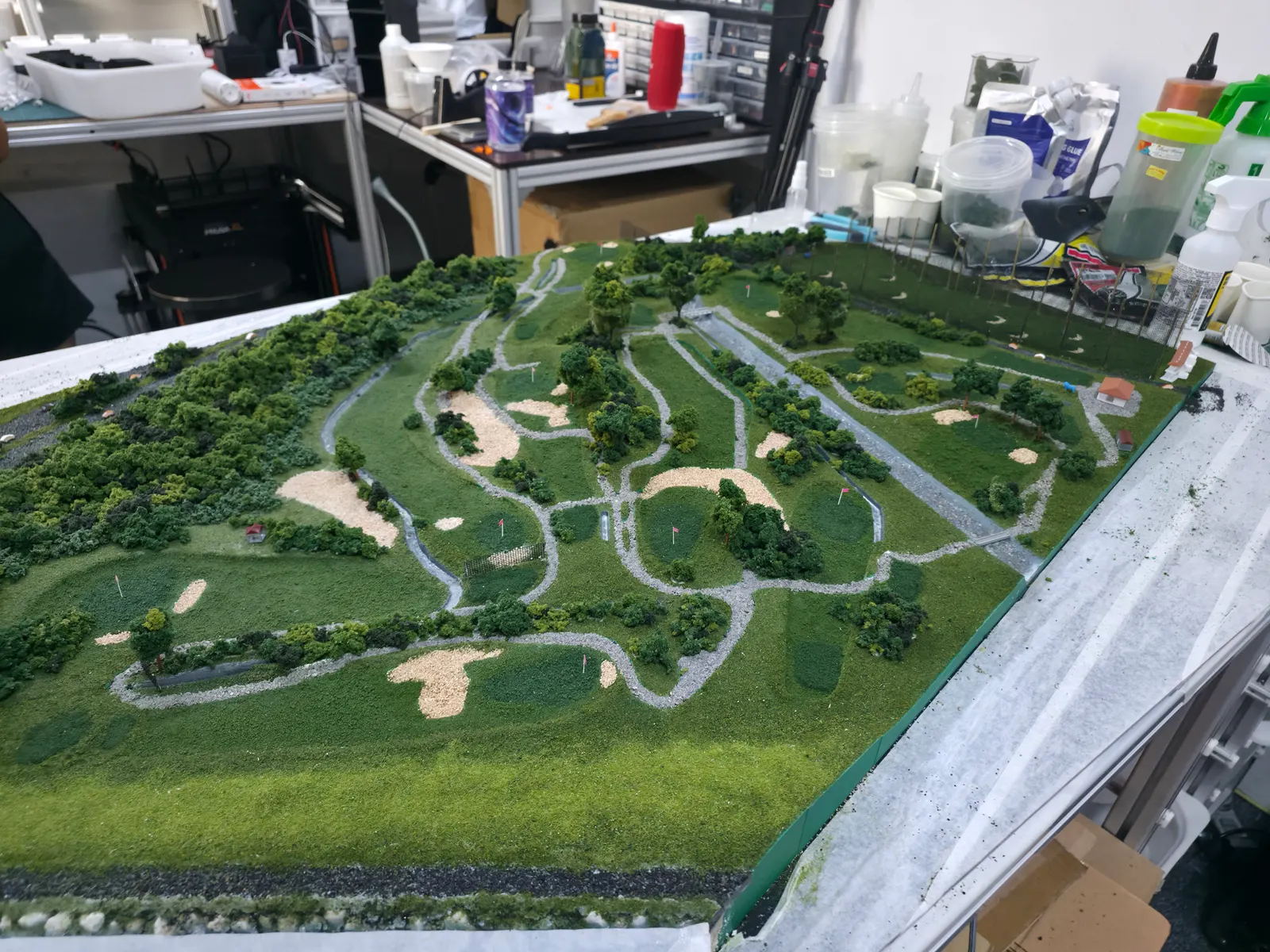
Scale trades the display footprint against the smallest detail that must survive shrinking. We work from 1:50 presentation pieces down to 1:400 and finer for masterplans; the Mandai Golf Course model was built at 1:400 so the whole course fits on one base. The test, from our guide to designing architectural models for FDM: the smallest feature that matters, such as a window mullion or a balcony rail, should still be at least 1 mm thick at the chosen scale. Below that, it blurs or breaks.
What happens to your drawings before anything is printed?
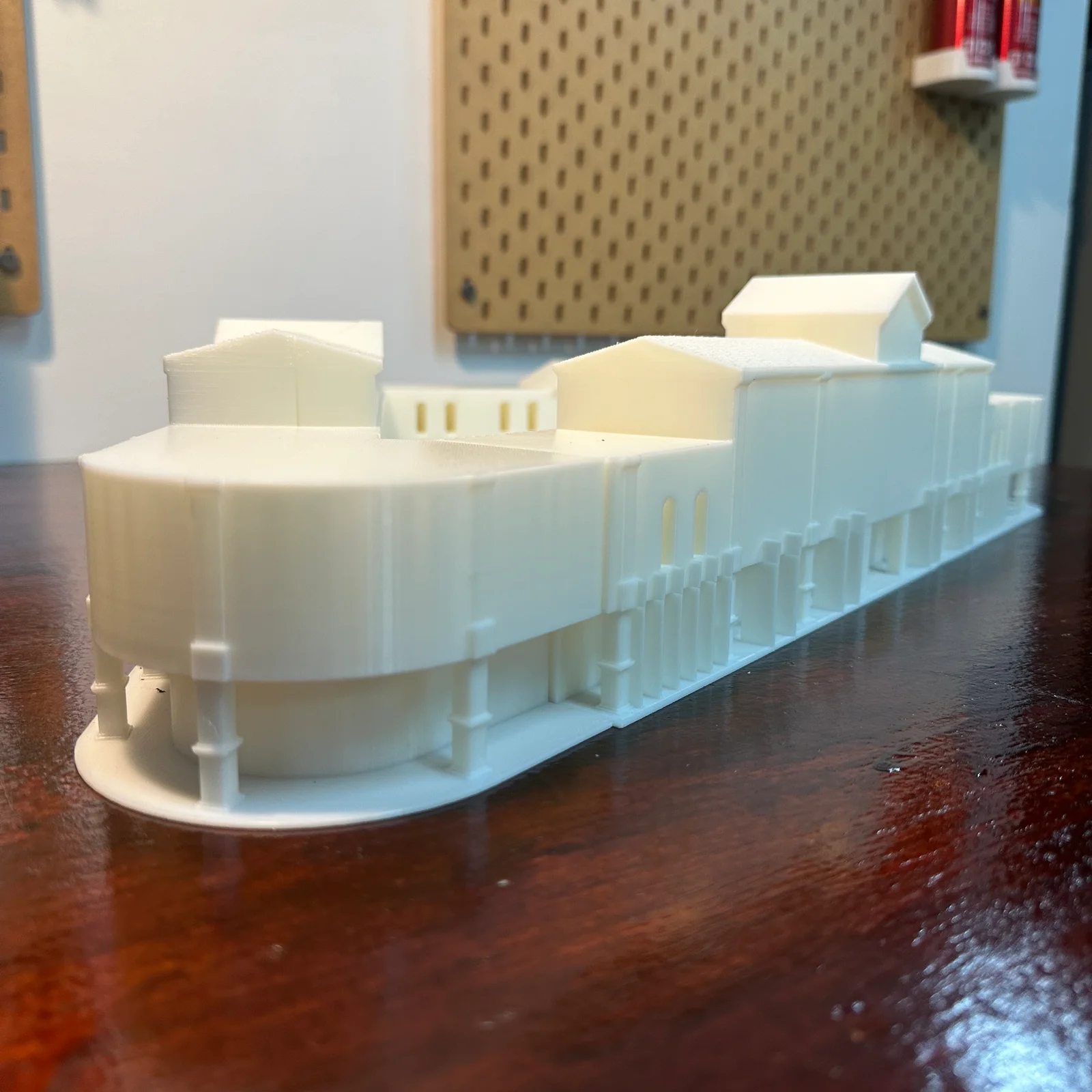
Architectural files are almost never printable as received. We take DWG, DXF, Revit, IFC, SketchUp, Rhino and STEP files, as well as PDFs and sketches, and rebuild them into watertight, fabrication-ready parts (the usual faults are in why a 3D file won’t slice): walls thickened, fine details enlarged to printable sizes, and the massing split into sections that fit our machines.
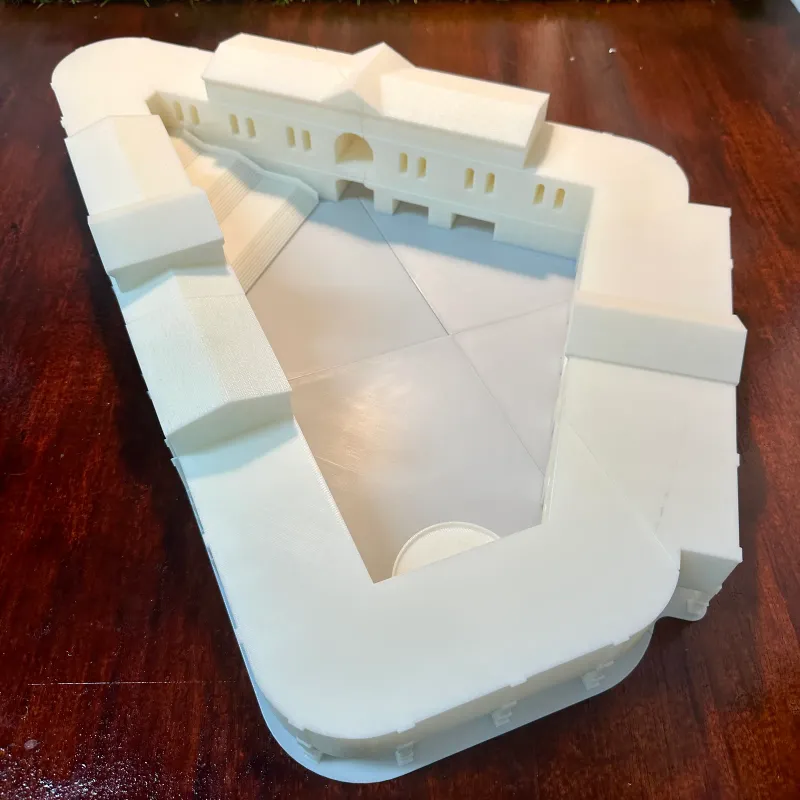
We split where a model is bigger than the printer, or where a split makes painting and assembly easier, along a floor, a wing or another natural line. We recommend where and why; the decision is yours. Seams go where they will not be seen. Our post on large-scale 3D printing lists the build volumes we plan around.
Which parts are 3D printed and which are laser cut?
No single process carries a good model, so we mix them on purpose.
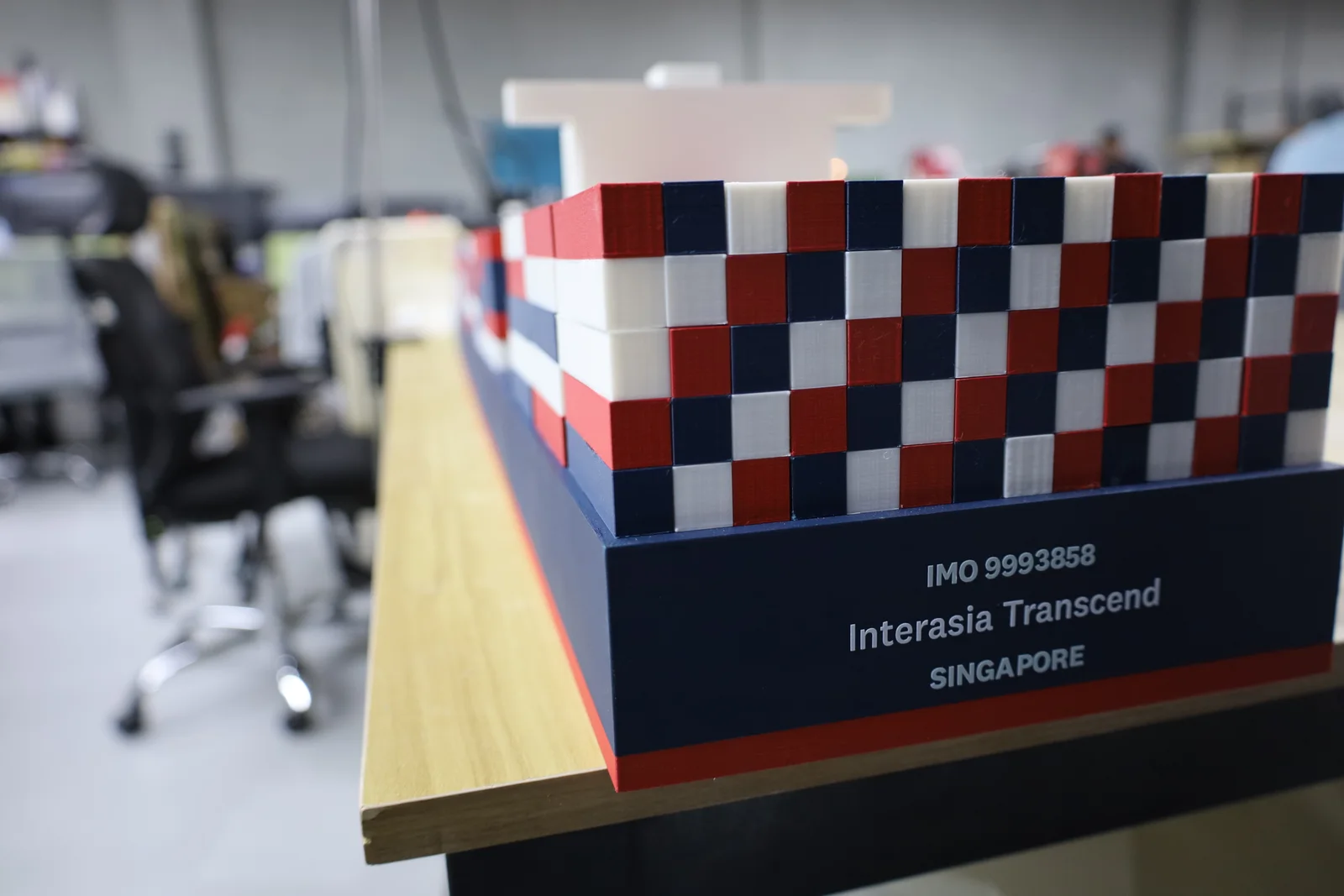
FDM printing handles volume. For the Interasia Transcend ship model we FDM printed the whole vessel, hull, bridge and hundreds of separate containers, then UV printed the foredeck fittings and the nameplate onto the surfaces.
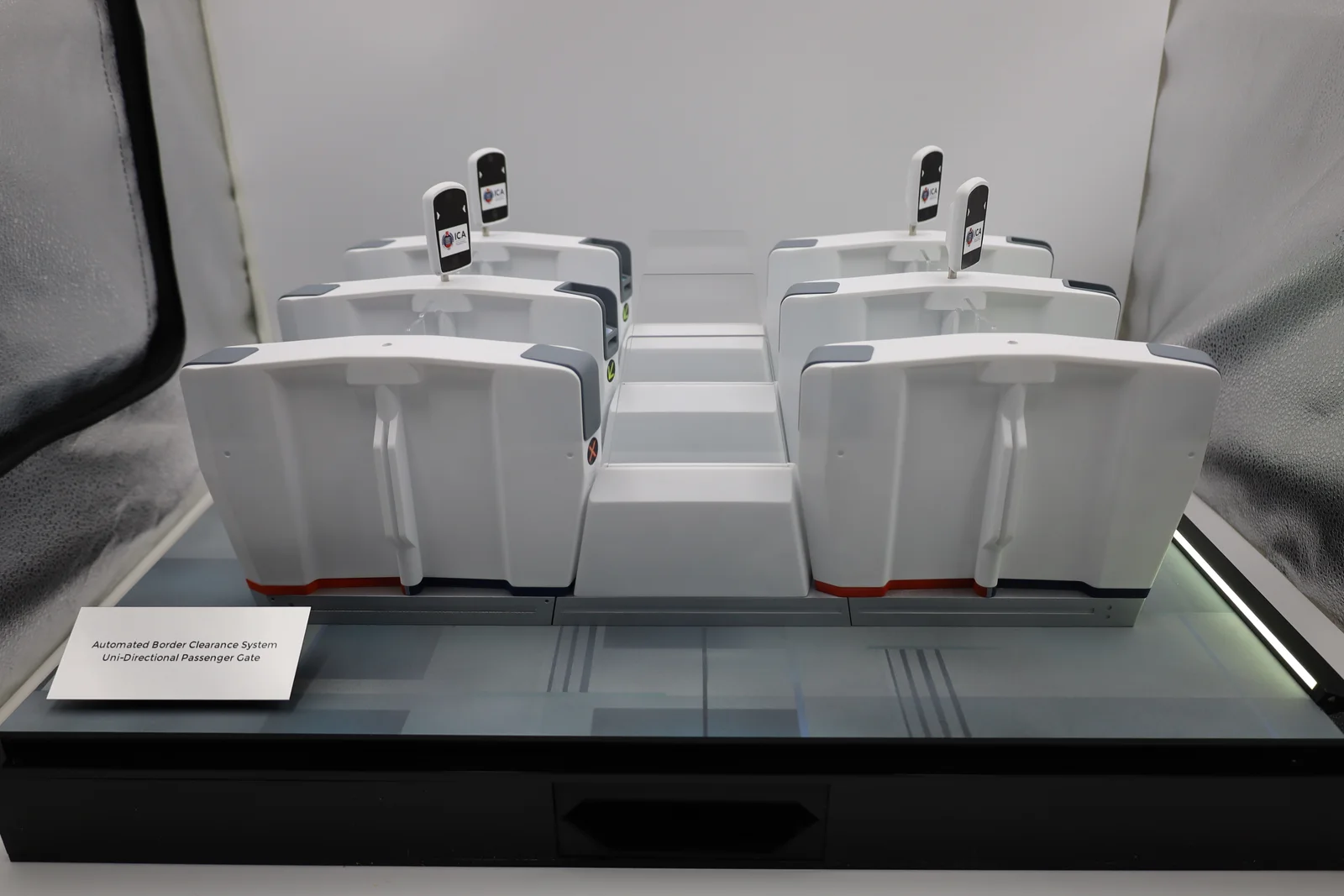
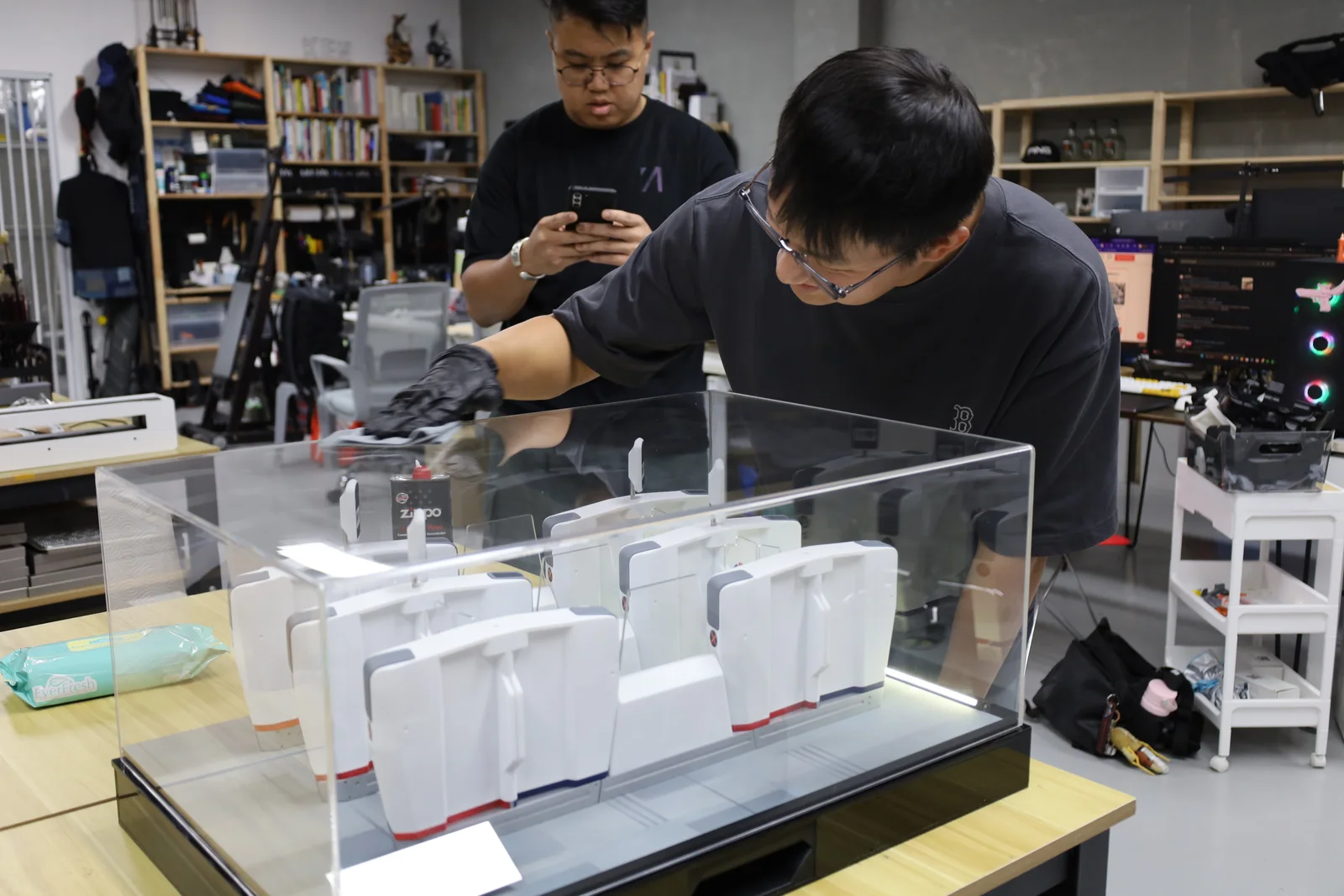
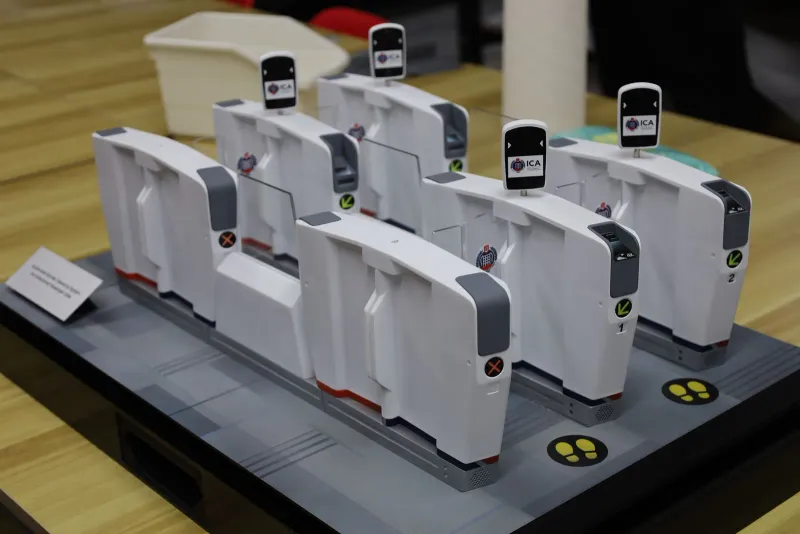
Stereolithography (SLA) resin carries fine detail. Every gate in our ICA border clearance gate model was SLA printed for the smooth, moulded look of the real hardware, down to the clear swing-flaps and camera heads.
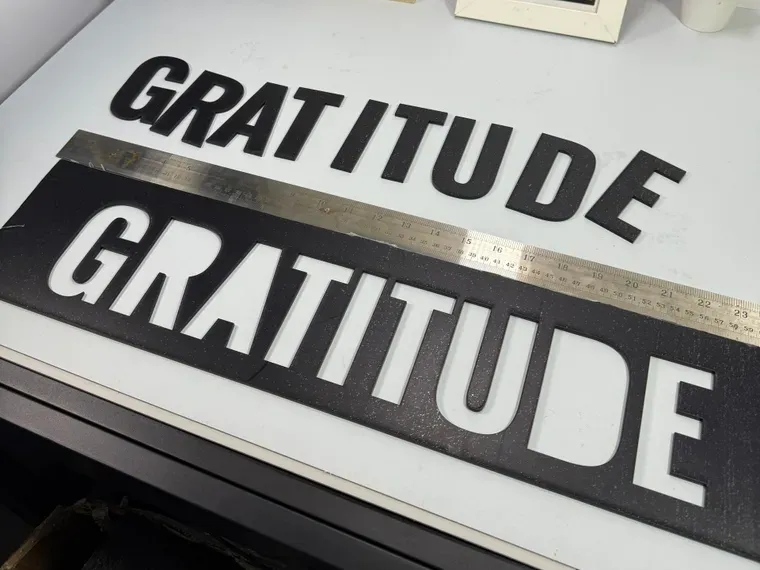
Laser-cut sheet does floors, facades and bases. In our laser-cut wooden architectural model, every floor plate, facade panel and walkway deck was cut from thin plywood. On the faceted building model, the repeating diamond-lattice screens were only practical on the laser, with a red courtyard maze 3D printed at the centre for contrast.
How does a white print become a convincing miniature?
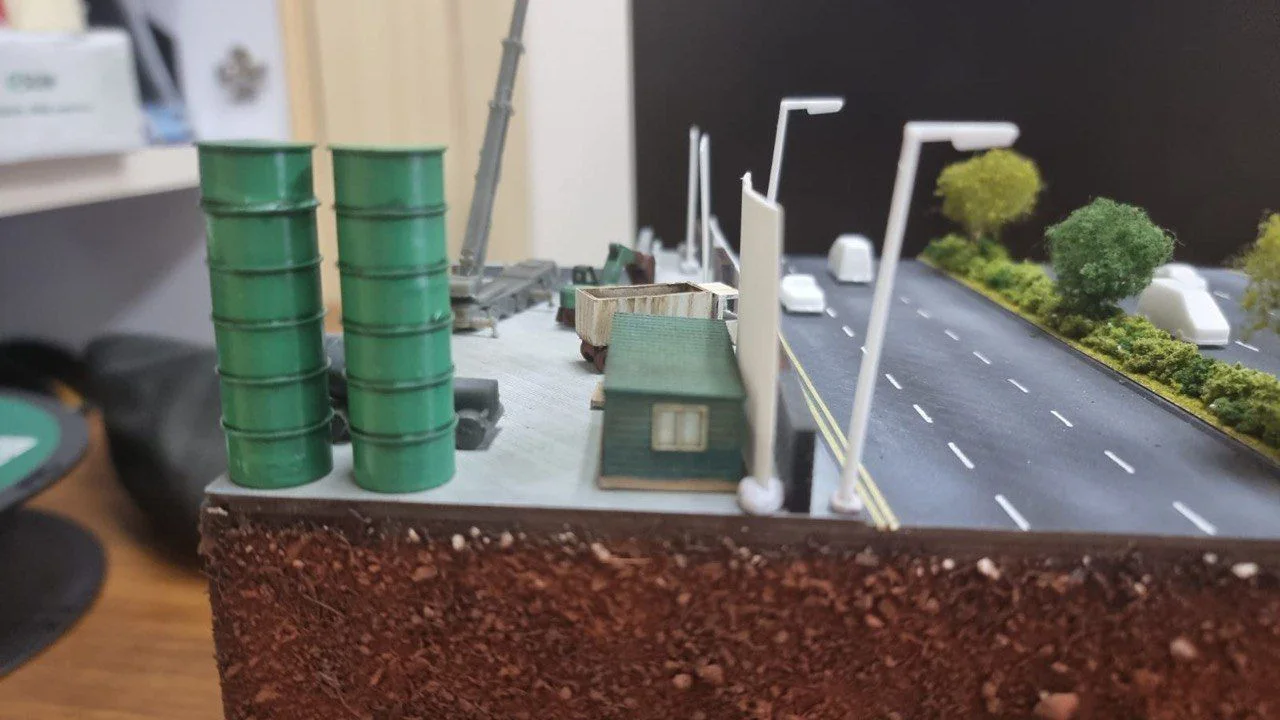
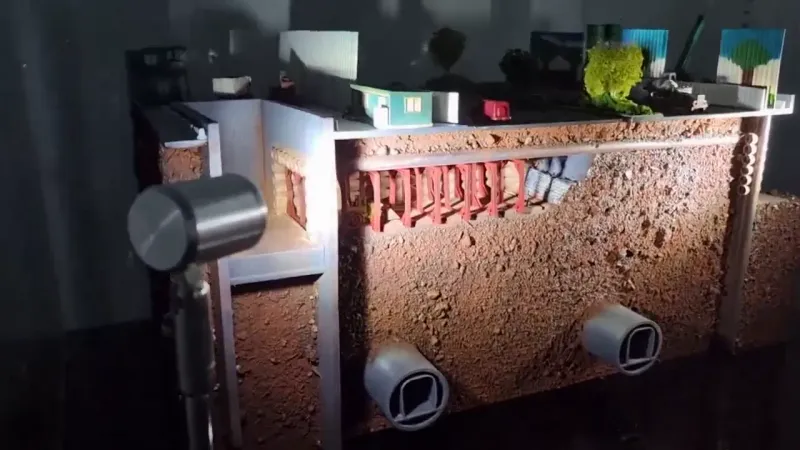
Paint, and patience. The ICA gates were primed and hand-airbrushed, then given their crests, camera-head graphics and lane markings as fine decals. On the LTA MRT construction diorama, a cutaway showing the excavation, strutting and bored tunnels under a live street, the soil strata, raw earth and the weathering on every crane, truck and cabin are hand-painted after priming, with trees, road markings, streetlights and tiny figures on top.
Industrial subjects get the same care. The Hydrov underwater ROV model was resin printed, airbrushed in the machine’s grey and blue, and fitted with real bristle brush discs so its hull-scrubbing job reads at a glance.
What about lighting, bases and cases?
We design the presentation hardware with the model, not after it. The ICA model sits on a printed base lit from within so the walkway glows, under a clear acrylic case. Each LTA cutaway has its own lit acrylic case. The Interasia base carries a UV printed nameplate with the vessel’s name, IMO number and Singapore registry. Exhibition pieces are delivered and installed on site, lighting and landscaping included.
How long does it take, and what does it cost?
Most models take 2 to 6 weeks, and we can phase delivery to meet a tender or exhibition date. Every model is quoted per project because the cost mix varies so much: 3D printing priced by the gram (resin costs more than filament; the pricing page has current rates), laser-cut or CNC bases, then the hand finishing that usually decides the budget. That mix is what you are really pricing when you look for an architectural model maker in Singapore, so we quote from your actual drawings, not a rate card.
Have a model to build? Send drawings, a site plan or product CAD through our contact page and we reply with an approach, a timeline and a price, usually the same business day.
Frequently asked
What scale should an architectural model be?
Large presentation pieces usually sit around 1:50, while masterplans go down to 1:400 and finer; the Mandai Golf Course model was built at 1:400. The practical test is that the smallest detail that matters, such as a window mullion or a balcony rail, should still be at least 1 mm thick at the chosen scale. We pick the scale together based on your display footprint and the detail the model must carry.
Can you build a scale model directly from CAD or BIM files?
Yes. We work from DWG, DXF, Revit, IFC, SketchUp, Rhino and STEP files, and just as readily from PDFs or sketches. Our in-house design team rebuilds whatever arrives into watertight, fabrication-ready geometry, thickening walls, exaggerating fine details and splitting the model into printable sections.
How long does a custom scale model take to build?
Most models take 2 to 6 weeks depending on size, detail and finishing. We confirm a timeline with the quote and can phase delivery so a key section is ready for a tender or exhibition date while the rest follows.
Do you deliver and install finished models?
Yes. Exhibition and display pieces are delivered and installed on site by our team, including lighting and landscaping where the model calls for it. Smaller pieces can be collected from our workshop at 994 Bendemeer Road or couriered.
Related
-
 GuideHow do I design an architectural model for 3D printing?
 -
 GuideHow big can a 3D print be, and what if mine is bigger?
 -
 ServiceIndustrial 3D Printing
 -
 ServiceLaser Engraving & Cutting
 -
 ProjectICA Automated Border Clearance Gate Model
 -
 ProjectMRT Construction Diorama for LTA
 -
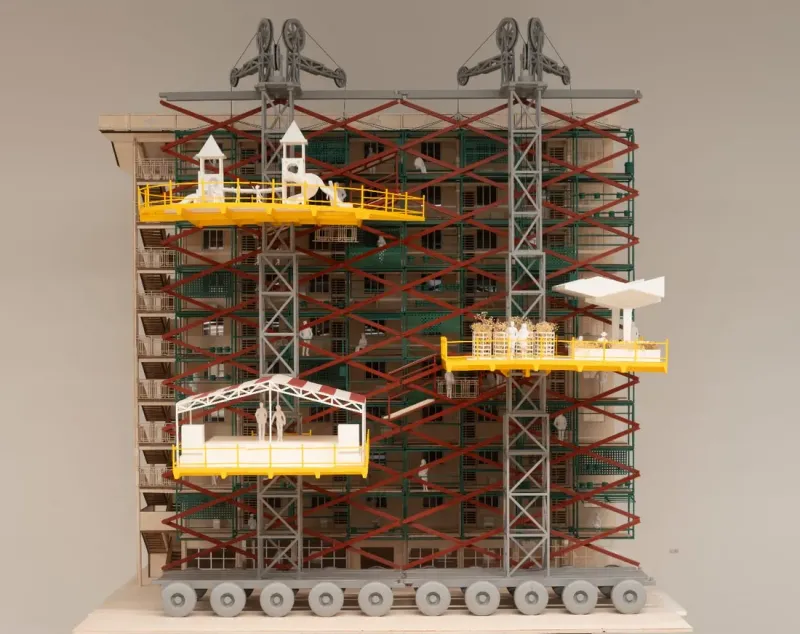 ProjectLaser-Cut Architectural Concept Model for Mitch Teh