

Should you use balsa or basswood for your model?
Balsa is the lightest, softest model wood and basswood is nearly three times denser with a finer grain; here is which suits which model.
What does the same part weigh in each board?
Enter a part size. It is weighed in balsa, basswood, birch plywood and MDF.
Densities: balsa 150 and basswood 415 kg a cubic metre (the Wood Database, dried averages), birch plywood 700 (a UK supplier), MDF 727 oven dry (an industry declaration). Single pieces of wood vary.
Balsa is the lightest and softest of the commercial woods. Basswood is nearly three times denser, with a finer, even grain. Pick balsa when weight and speed matter, and basswood when the model has thin parts or will be handled. Both cut easily by hand and on a laser. We cut plywood and MDF on ours, so for these two woods, ask us first.
Which wood suits which job
| The job | The better wood | Why |
|---|---|---|
| A model that hangs or flies | Balsa | It is the lightest commercial wood |
| A quick study model, glued up in an evening | Balsa | Very easy to work and soft under the blade |
| Thin frames, mullions and fine strips | Basswood | Finer, even grain |
| A part that gets handled | Basswood | About six times harder by the Janka scale |
| A shape carved or sanded by hand | Basswood | One of the most suitable woods for hand carving |
| A model you will paint | Basswood | Balsa soaks up the first coats |
| A shell or base that must stay flat | Plywood or MDF | Plywood’s layers resist swelling; MDF is far denser |
| A fixing you would nail or pin | Neither | Both hold nails poorly, so glue them |
Weight and hardness, side by side
| Balsa | Basswood | |
|---|---|---|
| Dried weight | 150 kg/m³ | 415 kg/m³ |
| Janka hardness (the force to press a steel ball halfway in) | 67 lbf (300 N) | 410 lbf (1,820 N) |
| Grain | Straight, medium to coarse | Straight, fine and even |
| Colour | White to off-white or tan, sometimes pink or yellow | Pale white to light brown |
| By hand | Very easy; fuzzy edges with a dull blade | Easy; a favourite for carving |
| On a laser | Low power, fast; dark fuzzy edges if overburnt | Low power, fast; clean cuts, but overburns too |
Both figures are averages for dried wood, and balsa varies tree to tree: the Wood Database gives a range of 8 to 14 pounds per cubic foot.
Balsa: light, soft and fast
Model aircraft are one of balsa’s common uses. It is very easy to work by hand and hardly dulls a cutter, and glue holds it. It is a poor choice where a part will be pressed, pinned or handled often, because it is soft.
- Cut with a fresh blade. A dull blade leaves a fuzzy edge.
- Glue, do not nail. Balsa should not be used to hold nails.
- Expect the first coats to soak in. Balsa takes up a lot of finish at first.
Balsa has been reported to cause skin irritation, though severe reactions are quite uncommon.
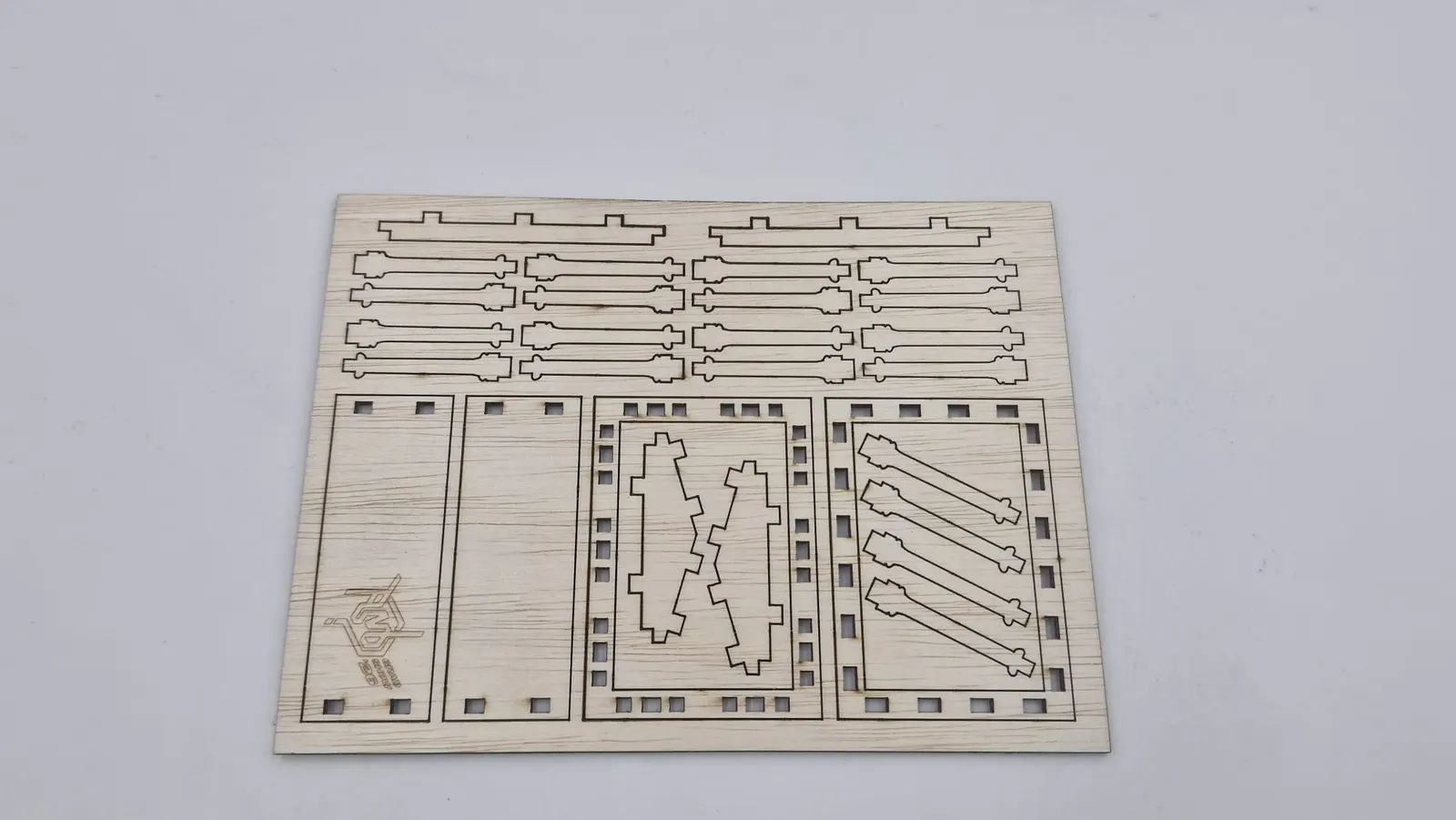
Basswood: finer detail and a harder edge
Basswood has a fine, even grain, and knots and other defects are uncommon. It glues and finishes well, and its pale colour makes it easy to paint. Carvers favour it. In Europe it is called lime or linden.
It is still soft. It holds nails poorly and is rated non-durable against decay, so keep it dry and sealed. It shrinks a lot while drying but is stable once dry.
Cutting by hand, and by laser
By hand, balsa is very easy to work and hardly dulls a cutter, but a dull blade leaves fuzzy surfaces, so start with a sharp one. Basswood is easy to work too.
On a laser, soft woods like these need less power and cut quickly. One laser maker says they can show dark, fuzzy edges if settings are not carefully controlled. That is why a test cut on a scrap piece comes first. How the edge looks depends on the wood and the settings, so ask us for a sample.
Sheet sizes you can buy
The maker Midwest Products lists balsa sheets 3 inches wide and 36 inches long, in 1/16, 3/32, 1/8, 3/16 and 1/4 inch thicknesses. Its basswood sheets start at 1/32 inch and go up to 1/2 inch, in widths from 1 to 8 inches and lengths of 24 or 36 inches. In millimetres, a 3 by 36 inch balsa sheet is 76 by 914 mm. A 1/16 inch sheet is 1.6 mm thick, and 1/4 inch is 6.4 mm.
Spotlight in Singapore has a balsa wood range for models, with sheets and sticks. We could not confirm a Singapore shop for basswood sheet, so try a hobby or craft shop.
Plywood and MDF for models
Plywood and MDF are the choices for a shell, a baseboard or a facade that must stay flat. Plywood is built from layers with the grain usually set at right angles, which reduces swelling and shrinking. An average North American MDF board weighs about 727 kg/m³ oven dry, against balsa’s 150 and basswood’s 415. Our guide to laser cutting materials lists what our laser cuts, and the plywood guide compares the boards.
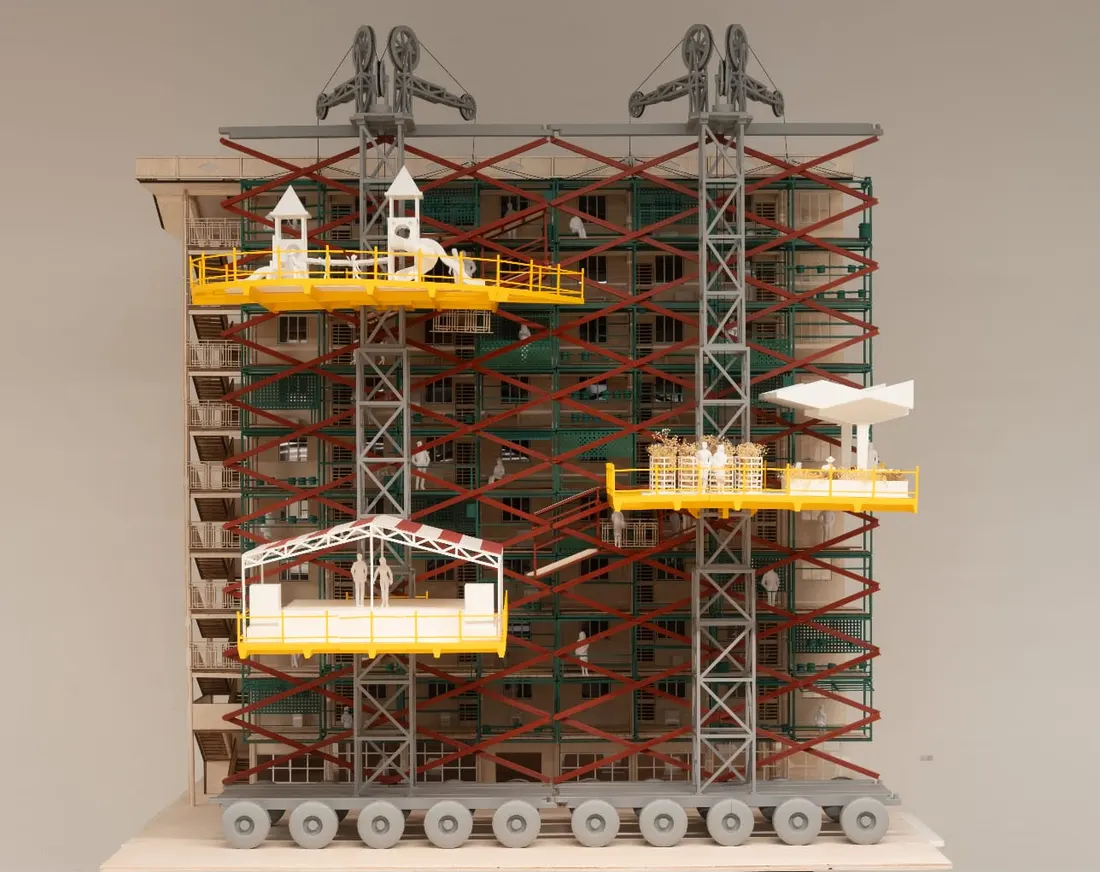
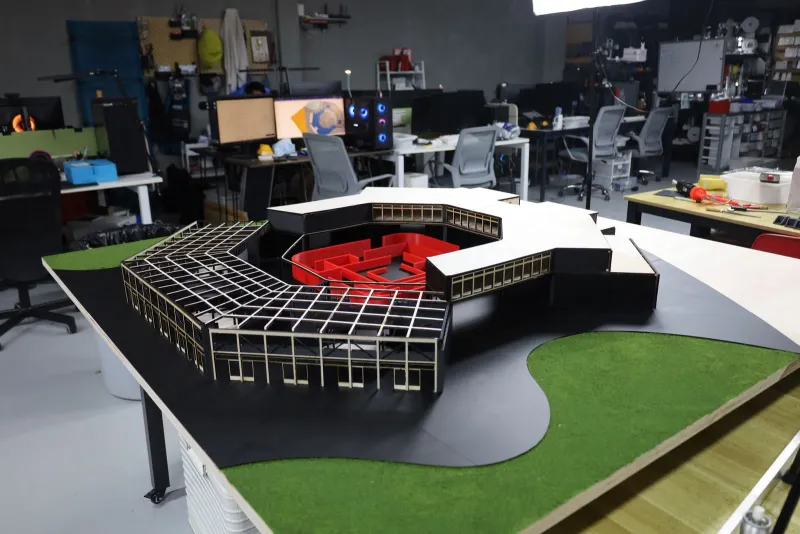
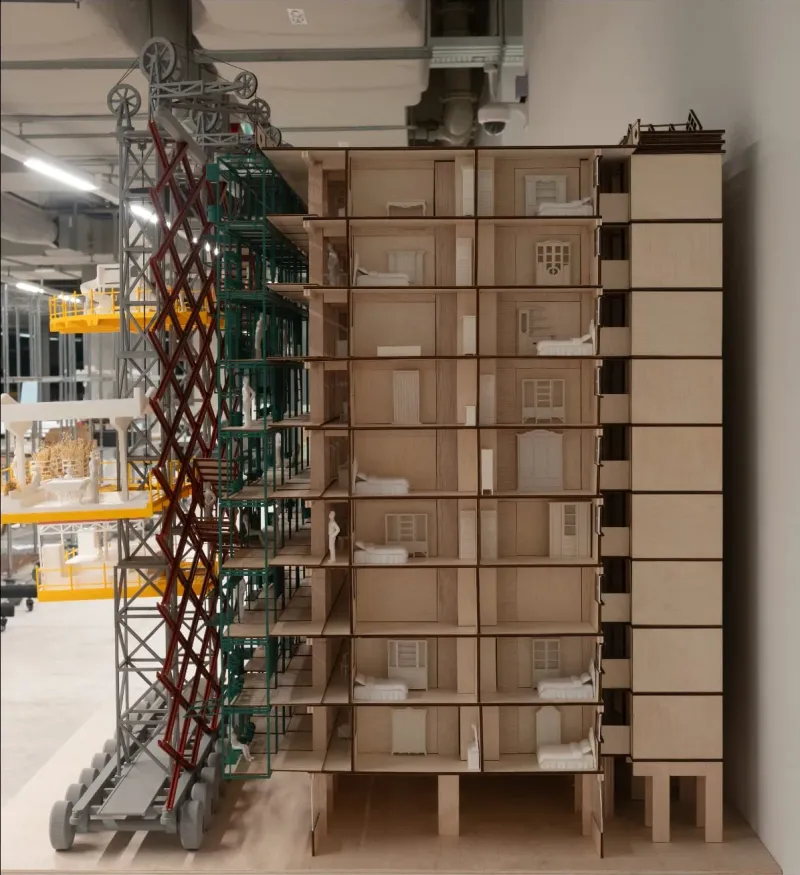
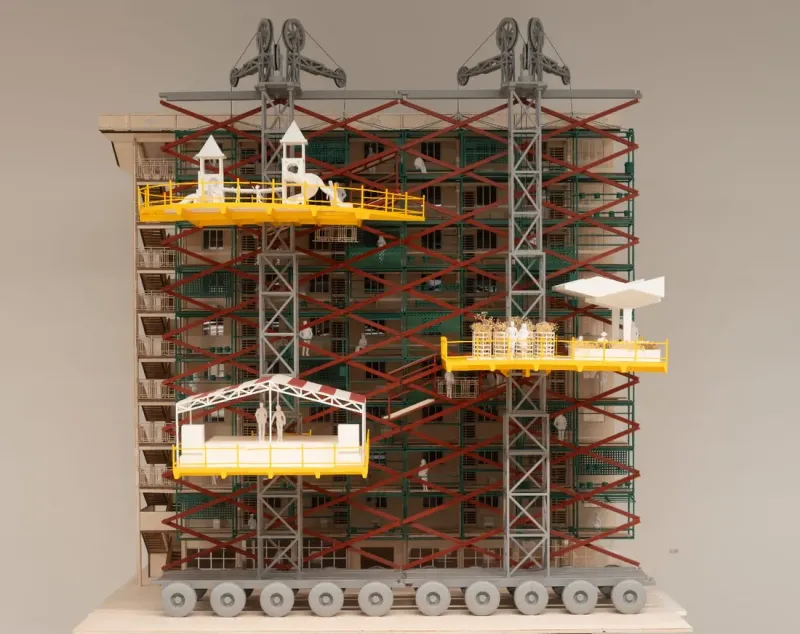
Our laser-cut model work on this site is in thin plywood. The faceted building model had every lattice screen, frame and roof beam laser cut from it, and the plywood was left raw. The block of flats in the next photo is laser cut plywood too.
What we cut, and what we do not say
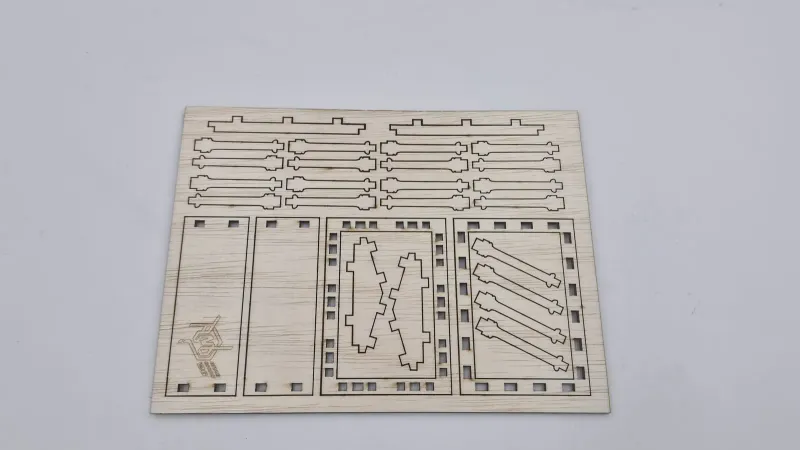
Our laser cuts plywood and MDF from 3 mm to 12 mm. We have cut a client’s own plywood sheets too, 320 pop-out kits in three days. Balsa and basswood are not on our materials list, and nothing on this site says we cut them. If you want a model in either, ask us, and a person checks the file and tells you plainly what we can do.
Where these facts come from
Every figure about the woods was read on the source’s own page on 19/11/2026. Wood properties vary from tree to tree and board to board.
- The Wood Database, Balsa and Basswood: dried weight, Janka hardness, grain, colour, workability, nails, finishing and skin irritation.
- Midwest Products, Wood: balsa and basswood sheet sizes and thicknesses.
- Thunder Laser, Best Wood for Laser Engraving and Trotec, Wood material handling: how soft woods behave under a laser.
- Spotlight Singapore, Balsa wood: its balsa range.
- Composite Panel Association, via the American Wood Council, North American Medium Density Fiberboard environmental product declaration: the average MDF density.
- Wikipedia, Plywood and Janka hardness test: how plywood is built, and what the Janka figure measures.
- What we cut is from our own pages: laser cutting materials guide and the faceted building, architectural model and pop-out kits projects.
Frequently asked
Is balsa a hardwood or a softwood?
Botanically it is a hardwood, because the tree has broad leaves and is not a conifer. It is also the softest of the lot. The Wood Database calls it generally the lightest and softest of all commercial woods.
Why does balsa cut with a fuzzy edge?
Its very low density. The Wood Database says fuzzy surfaces can be a problem when cutters are dull, so use a fresh blade and light pressure. On a laser, the equivalent is overburning, which shows as dark, fuzzy edges when settings are off.
Can I nail or pin balsa or basswood?
Not reliably. The Wood Database says balsa should not be used to hold nails and that glue is the better way to join it, and rates basswood poor at holding nails. Plan the model around glued joints.
Which one paints better?
Basswood is the simpler of the two. The Wood Database says balsa soaks up large quantities of finish on the first coats, while basswood finishes well and its pale colour makes it easy to paint. With balsa, allow for extra coats at the start.
Is basswood the same as lime or linden?
Yes, they are the same genus. Tilia species are called lime or linden in Europe and basswood in North America.
Can balsa or basswood be laser cut?
Yes. Laser makers say both cut and engrave quickly on low power. Test on a scrap first, because soft woods overburn easily.
Do you cut balsa and basswood?
Our materials list names plywood and MDF from 3 mm to 12 mm. Balsa and basswood are not on it, so ask us before you plan a job around them. We have cut a client's own plywood sheets before.
What sizes do balsa and basswood sheets come in?
One maker lists balsa sheets 3 inches wide and 36 inches long, 1/16 to 1/4 inch thick. Its basswood sheets run from 1/32 to 1/2 inch thick in widths from 1 to 8 inches. That is 76 mm wide and 914 mm long for the balsa.
Related
-
 GuideWhich plywood do you need, and where do you buy it in Singapore?
-
 GuideWhat can be laser cut, and which material suits your job?
-
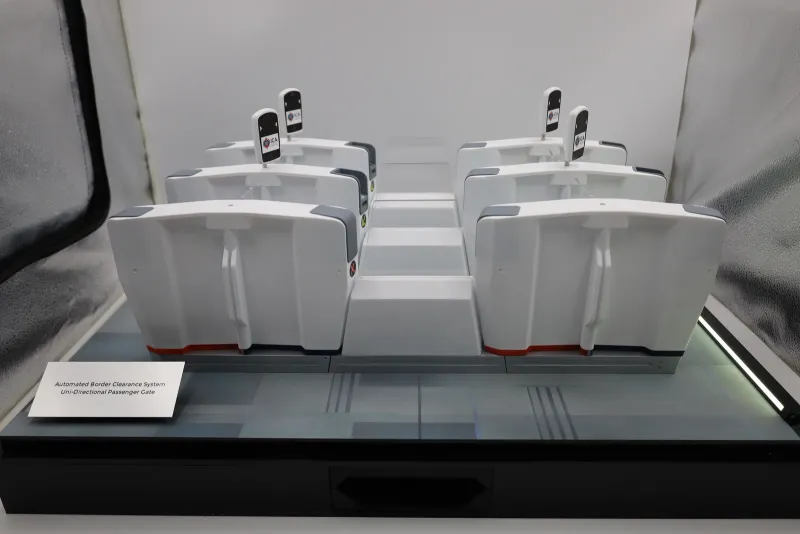 GuideHow is an architectural scale model actually made?
-
 ServiceLaser Engraving & Cutting
-
 ServiceIndustrial 3D Printing
-
 ServiceProduct Development & Prototyping
-
 ProjectLaser-cut architectural concept model for Mitch Teh
- ProjectFaceted laser-cut architecture model
-
 Project320 laser-cut pop-out wooden kits