

What is a lithophane, and how do you 3D print one?
A lithophane is a thin plate that shows a photo when lit from behind. How 3D printed ones work, which photos suit, free makers and how to light one.
Turn a photo into a lithophane file
Pick a photo, watch the plate change as you adjust it, then download the file to print.
Choose or drop a photo
JPG, PNG or WebP
Drawing the sample picture…
The width includes the border, and the height follows your photo. Dark parts print thick and light parts thin. A common range is 0.8 to 3.2 mm: thin enough to glow, thick enough to go dark.
More settings
That is outside 0.8 to 3.2 mm, the range one printer maker's guide gives for a standard lithophane. Print a small test panel first.
Plate
-
Thickness
-
File
-
The file lies flat. Lithophanes are printed standing up, so say that in the notes when you ask for a price.
Next step
White works best, so pick PLA Basic in white in the quote, then say in the notes that it is a lithophane to be printed standing up. A person checks every file before it prints.
Your photo never leaves your device: the plate is worked out in this page, and nothing is uploaded. The previews are a guide. Real light, filament and printer settings change how a print looks, so print a small test panel first.
A lithophane is a thin plate whose thickness changes across it. Held up to a light, the thin patches glow and the thick patches stay dark, and a picture appears. A 3D printer makes one in white plastic from a photo you run through a free converter.
Lithophane shapes by job
| What you want | Shape to print | How it looks | What to watch |
|---|---|---|---|
| One photo on a shelf or in a window | Flat plate in a frame | A picture in shades of grey, shown properly only with light behind it | It needs a light behind it, not a plain wall |
| A nightlight | Curved plate with a holder for a small light | The picture glows in a dark room | The holder must fit your light |
| A lampshade | Cylinder, bell or sphere | The picture wraps round the lamp | Round shapes are harder to print |
| A colour picture | Flat plate with a printed paper behind it | A colour version of the photo | The paper is a special version of your photo |
What a lithophane is
A lithophane is a thin plaque of translucent material, normally porcelain, moulded to different thicknesses so that backlight shows them as different shades. Only when lit from behind does the image display properly.
The European version was invented by a French diplomat, Baron Paul de Bourgoing, who patented it in 1827. Chinese porcelain had a hidden-decoration technique before that, but it was scratched or engraved into the clay, not moulded. Meissen, Berlin and English potteries took up the French one soon after. Production peaked from about 1840 to 1870, mostly for lampshades, nightlights and window hangings. Today the word is also used for pictures made by cutting or by 3D printing.
Flat plate: for one photo
A flat plate is the simplest lithophane and the one to start with. It is usually printed in white polylactic acid (PLA), the common desktop filament. A guide from a printer maker puts the thickness at 0.8 to 3.2 mm, thin enough to glow and thick enough to go dark.
Pick it for a window, a shelf or a light box. Its limits:
- It needs light behind it. The image only displays properly when lit from behind.
- It prints standing up. That gives finer detail, but a tall, thin plate can wobble, so it needs a wide base.
- It is slow to print at fine detail. A full-size panel can take several hours, so a small test panel first saves a long failed print.
Lamps and nightlights: curved shapes
A free maker such as ItsLitho offers arcs, vases, bells, cylinders and spheres, with light holders for nightlights and lampshades. The nightlight and lampshade shapes are lit from inside, with a small light sitting in the holder.
Pick this shape when the lithophane is the lamp. The limit is the printing: a round lithophane is harder to stand up without it falling over, and the usual fix is supports. Check that the holder fits the light you plan to use before you send the file.
Colour: paper behind a white plate
A colour lithophane uses one colour of plastic and a printed paper behind it. The paper is not your original photo. A lithophane maker converts the photo into a version with the brightness taken out, because the plate’s thickness already carries the light and dark.
You print that version on paper at the plate’s exact size and glue it to the back. The limit is the gluing: the paper has to line up with the plate.
Photos that work best
The conversion turns brightness into thickness, so a photo needs strong light and dark areas and one clear subject. Portraits, pets and buildings in hard light do well. Group shots, silhouettes against the sun and low-resolution phone crops do not.
A quick test: turn the photo to greyscale and look at it small. If you can still tell what it shows, it will print well. A pale face on a pale wall has little to work with.
Free lithophane makers
Two free tools make a print file from a photo:
- 3DP Rocks turns a picture into a lithophane and works in the browser, on a phone, and offline.
- ItsLitho has a free online maker with plane, arc, vase, bell, cylinder and sphere shapes, frames, and nightlight and lampshade holders. You download the finished STL, the standard 3D model file.
Check the thickness range before you download: about 0.8 to 3 mm is a common starting point. If you want free models rather than a photo of your own, see where to get free 3D files.
How to light one
Light the plate from behind with a soft, even light. A diffused, low-voltage USB LED strip is enough to test one. Keep the light away from the plastic and let air move round it.
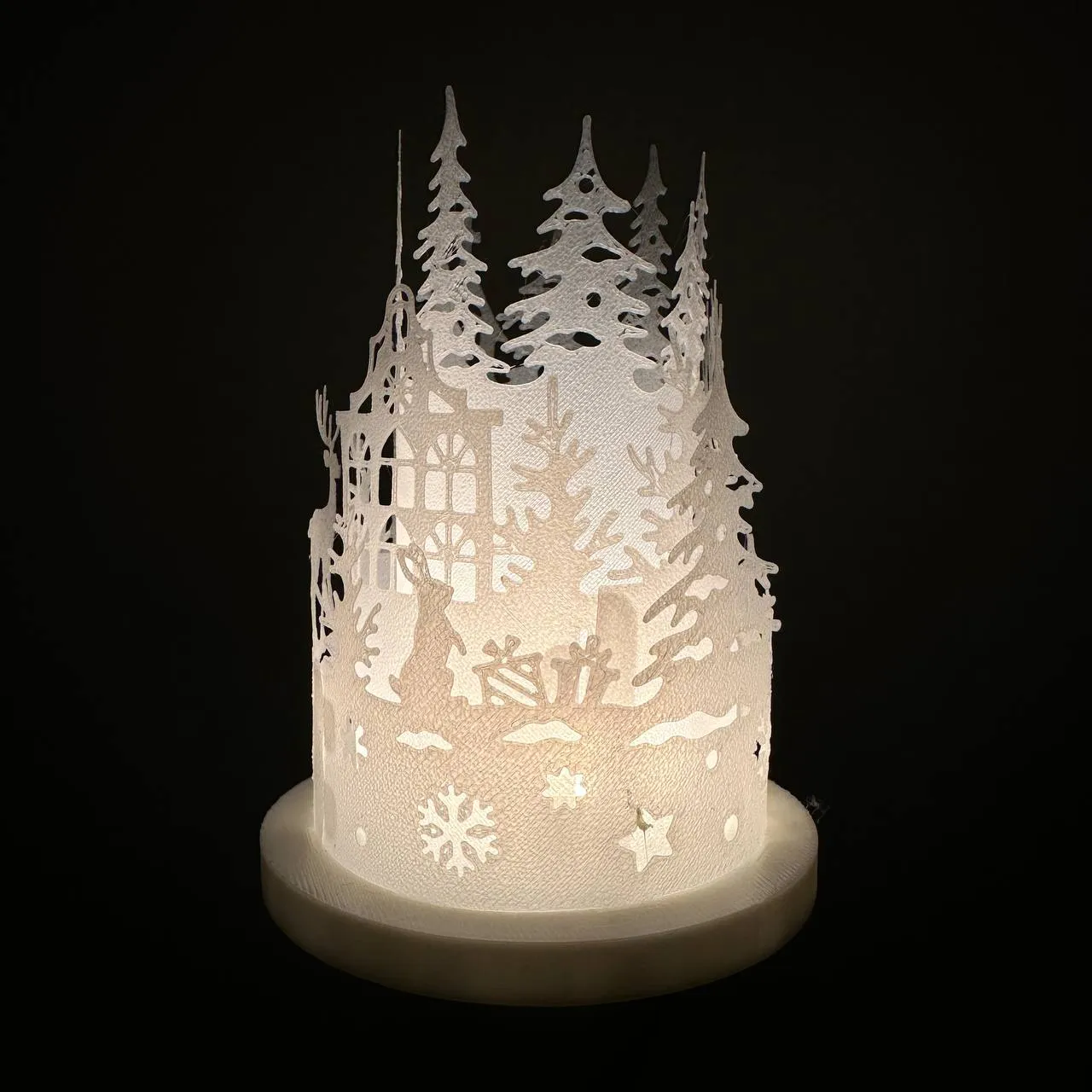
If the centre is brighter than the edges, move the light further back or add a diffuser sheet. A printed lithophane is decorative lighting, not a certified lamp or a toy.
Printing one with us
Send us the STL from a lithophane maker through the instant quote. Pick PLA Basic in white, then open the advanced settings for layer height and infill and ask for a set print direction. Say in the notes that it is a lithophane, and a person checks every file before it prints.
It is priced by size and quantity, and the price list is public. Judge the finish from the maker’s preview, and print a small test panel before a big one. Not sure which filament suits your picture? Ask us.
Where these facts come from
Every outside fact was read on the page named below on 19 November 2026. Settings differ by printer and filament, so treat every figure as a starting point.
- Wikipedia, Lithophane: the definition, the Greek name, the 1827 patent, the 1840 to 1870 peak and the usual sizes.
- A printer maker’s guide, How Lithophanes Work: the thickness range, standing the plate up and the layer height.
- A printer maker’s guide, How to 3D Print a Lithophane: choosing a photo, white or natural PLA, the test panel and lighting.
- ItsLitho, free maker, slicer settings and colour lithophane guide: shapes, white filament, round shapes and colour paper.
- 3DP Rocks: its own description of the tool.
- What we offer comes from our own instant quote guide and colour guide.
Frequently asked
What does lithophane mean?
It comes from Greek: lithos means stone and phainen means to cause to appear. The name fits, because the picture only displays properly when the plate is lit from behind.
How thick is a 3D printed lithophane?
One printer maker's guide puts a standard lithophane between 0.8 and 3.2 mm thick. The thin parts become the bright parts of the picture and the thick parts the dark ones, so the gap between thinnest and thickest sets the contrast.
Why print a lithophane standing up?
Standing up, the picture's fine detail comes from the layer height, which is much finer than the nozzle width. Printed flat, the nozzle width limits the detail. A tall, thin plate can wobble as it prints, so it is often given a wide base or brim.
What filament is best for a lithophane?
White or natural PLA is the usual choice, and a lithophane maker's own guide says white and silver-grey filaments work best in general. Every filament has its own thinnest and thickest sweet spot, which is why a small test panel is worth printing first.
Can a lithophane be in colour?
Yes, with a trick: print the plate in one colour, then glue a printed paper picture behind it. The paper is a special version of your photo with the brightness taken out, because the plate already supplies the light and dark.
Is a lithophane safe to use as a lamp?
Treat it as decorative lighting, not as a certified lamp or a toy. Use a low-voltage USB or battery LED, keep the light away from the plastic and let air move around it. Never use an open flame behind plastic.
How big were the first lithophanes?
The longest side of a porcelain lithophane was typically between 15 and 25 cm. They were made as lampshades, nightlights and window hangings, and some had stands to put in front of a light. A 3D printed one can be any size your printer or ours can handle.
Do I need to supply the file?
Yes, we print from a lithophane STL, which a free maker makes from your photo. If you are stuck, send us the photo and the shape you want and we will say what can be done.
Related
-
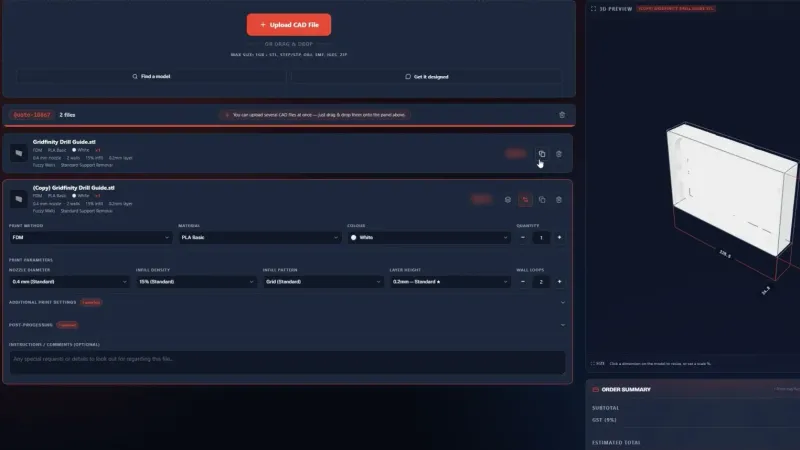 GuideHow does the instant 3D printing quote work, and is the price final?
-
 GuidePLA, PETG, ABS, ASA or TPU: which filament should your part be printed in?
-
 GuideWhat are good things to 3D print at home, for school or for work?
-
 ServiceIndustrial 3D Printing
-
 ServiceCustom 3D Figurines
-
 Service3D Modelling, CAD and 3D Scanning
-
 Project3D printed Christmas village lamp
-
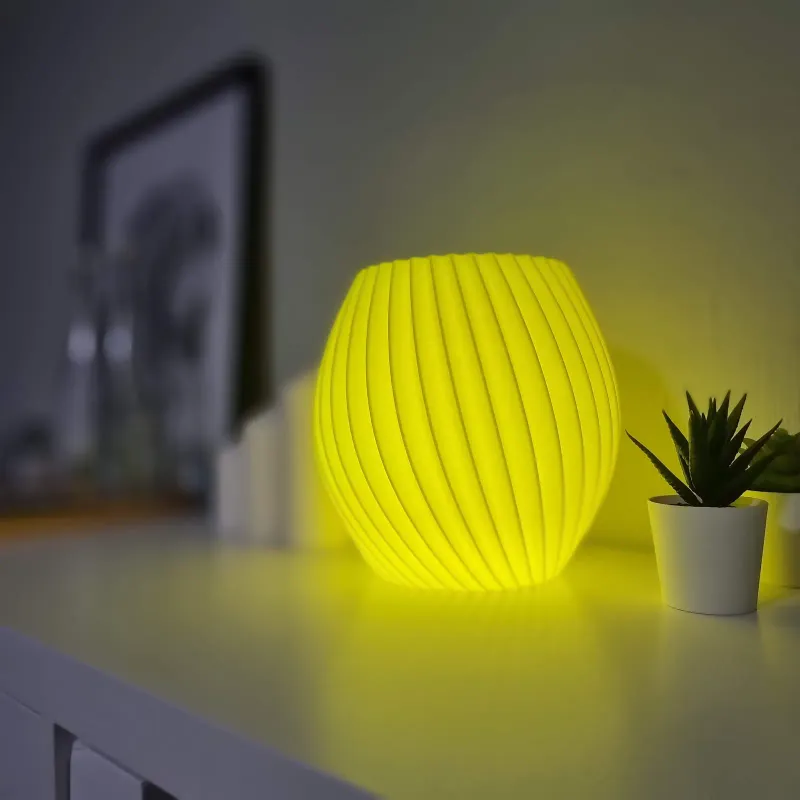 Project3D printed light diffusers
-
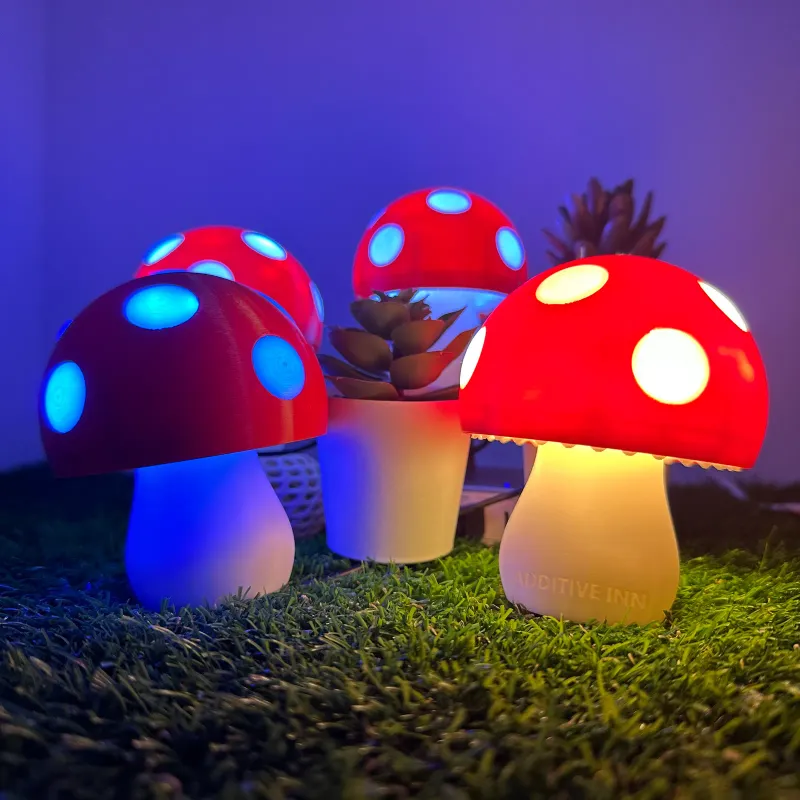 Project3D printed mushroom lamp