

What is wood veneer, and how is it different from plywood or laminate?
Wood veneer is a thin slice of real wood glued to a core. How thin, how it is cut, raw or backed, veneer against laminate, and what laser cutting can do.
On this page
- Wood veneer types at a glance
- How thin is veneer
- How veneer is cut: rotary, flat, quarter and rift
- Raw, paper-backed or two-ply
- Veneer against laminate and solid wood
- Where veneer is used
- Plywood is veneer, and what we cut
- Laser cutting and engraving veneer
- What goes wrong with veneer
- Where these facts come from
- Frequently asked
Which kind of veneer do you need?
Two questions, and you get the veneer or board from this guide that fits.
Wood veneer is a thin slice of real wood, glued onto a core panel such as plywood or medium-density fibreboard (MDF). It puts the face of a fine timber on a cheaper, tougher board. Plywood is veneer too: it is three or more layers of it glued together.
Wood veneer types at a glance
| Kind of veneer | What it is | Good for | Honest limit |
|---|---|---|---|
| Raw veneer | A bare slice of wood, no backing | Flat panels glued to a core, in almost any species and grain | Small pieces must be joined for a big panel, and the two sides can look different |
| Paper-backed veneer | A slice with a paper backing | Large panels, curves and columns | Bonded with contact cement or a peel-and-stick adhesive |
| Wood on wood (two-ply) | A face veneer with a plainer wood backer, the grain turned against the face | A stronger large sheet | Usually bonded with contact cement |
| Reconstituted veneer | Dyed fast-growing tropical wood, laminated into a block and re-sliced | A made pattern from fast-growing wood | The pattern is made, not a tree’s own |
| Veneer in plywood | Veneer layers glued together | Boards, model parts, kits | Plywood varies from board to board in flatness and thickness |
How thin is veneer
Very thin, and thinner than most people picture. The industry body for decorative hardwoods says veneer is usually thinner than 1/8 inch, about 3 mm. A veneer supplier names 1/42 to 1/45 inch as the most common raw thickness, about 0.6 mm, which it likens to six sheets of printer paper. An encyclopaedia entry says veneers are cut as thin as 0.64 mm.
The catch with a sheet that thin is that it can be sanded through to the glue. Paper-backed sheets usually come with a 10 or 20 mil backing, which is 0.25 or 0.5 mm. That number is not the wood.
How veneer is cut: rotary, flat, quarter and rift
How a log meets the blade decides the grain. The encyclopaedia says the grain and figure depend on the angle the wood is sliced at.
| Cut | How it is made | What it is known for |
|---|---|---|
| Rotary | The log turns against a blade and is peeled in one long roll, cut concentric to the growth rings | Mainly used for plywood, as the look is not wanted |
| Flat cut or crown cut | The log is sliced across the growth rings | A “cathedral” grain, often compared to the look of solid lumber |
| Quarter cut | Sliced from a quarter section of the log | Very straight grain |
| Rift cut | Sliced to give a straight grain | Very straight grain, and highly sought after in white oak |
Straight-grain cuts have a catch. A veneer supplier lists a “barber pole effect”, where light reflects differently from every other sheet when several sit side by side. It says this is often unavoidable in quarter and rift cut veneer.
Raw, paper-backed or two-ply
Raw veneer has no backing and can go either way up, but the two sides can look different once a finish goes on. A veneer supplier calls it the most common veneer for exotic species and figures, and says it is applied with a press or by hand with hide glue.
Paper-backed veneer is real wood on a paper backing. Smaller pieces are joined before the backing goes on, so it comes in large sheets, and it is less likely to crack on a curve or column. It is bonded with contact cement or a pressure-sensitive adhesive, a peel-and-stick layer.
Two-ply, or wood on wood, is a decorative face with a lesser-grade veneer on the back, made to give a stronger product. It is typically 4 x 8 ft and bonded with contact cement.
One more kind is made for laser work. A laser maker sells veneer sheets with an adhesive backing for peel-and-stick use, and says a maker can add 3M tape to a veneer sheet to make their own.
Veneer against laminate and solid wood
| Veneer | High-pressure laminate | Solid wood | |
|---|---|---|---|
| What you see | Real wood grain, different on every sheet | A coloured or printed paper pattern | Real wood grain, all the way through |
| How it is made | A slice of wood glued to a core | Resin-soaked paper layers pressed under heat and high pressure, bonded to a core | One piece of timber |
| Where it wins | A rare wood goes much further, and the core holds it steady | An overlay paper on top is there to improve abrasion, scratch and heat resistance | No glue line to sand through |
| Where it falls short | It can be sanded through to the glue | It is paper and resin, not wood | The industry body says extremes of temperature and moisture might make it crack or swell |
The core is what keeps veneer steady. A veneer supplier says slicing a burl into veneer keeps its wood movement under control, because the adhesive and the core hold it.
Where veneer is used
Veneer covers doors, cabinet tops and panels, parquet floors and parts of furniture. It is also used for marquetry, the art of applying pieces of veneer to form decorative patterns, and for beading, a thin decorative edge round a box. A veneer supplier adds musical instruments, jewellery boxes and car interiors.
Edge banding is veneer too. A veneer supplier describes it as wood veneer used to cover the edge of a board, typically sold in 7/8 inch width for 3/4 inch thick boards.
Plywood is veneer, and what we cut
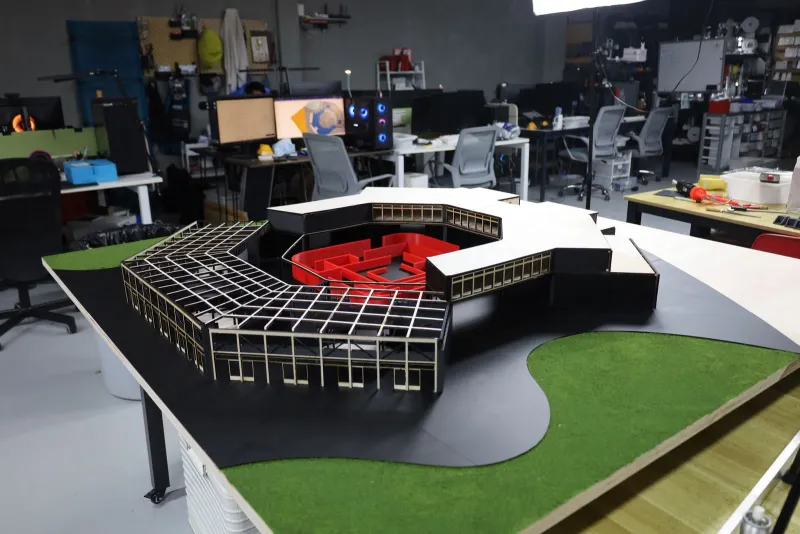
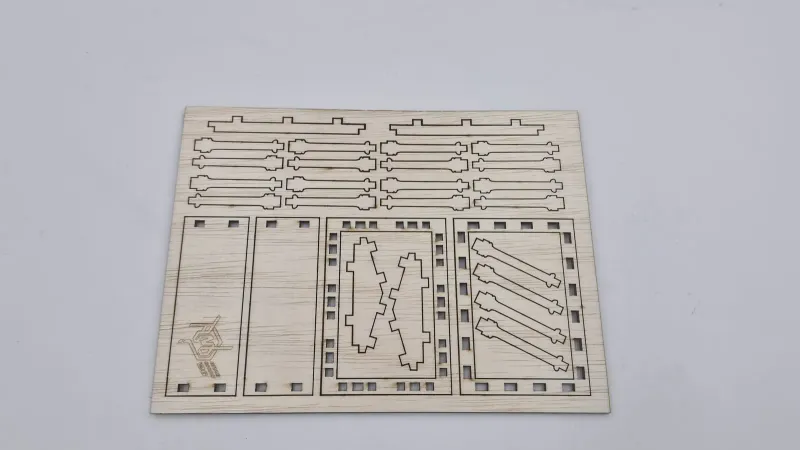
Every plywood sheet is a stack of veneer layers. Our laser cuts plywood and MDF from 3 mm to 12 mm, so a veneer face is something we already cut when it is part of a board. Our guide to plywood types in Singapore covers the boards, and birch plywood covers the one laser users pick most.
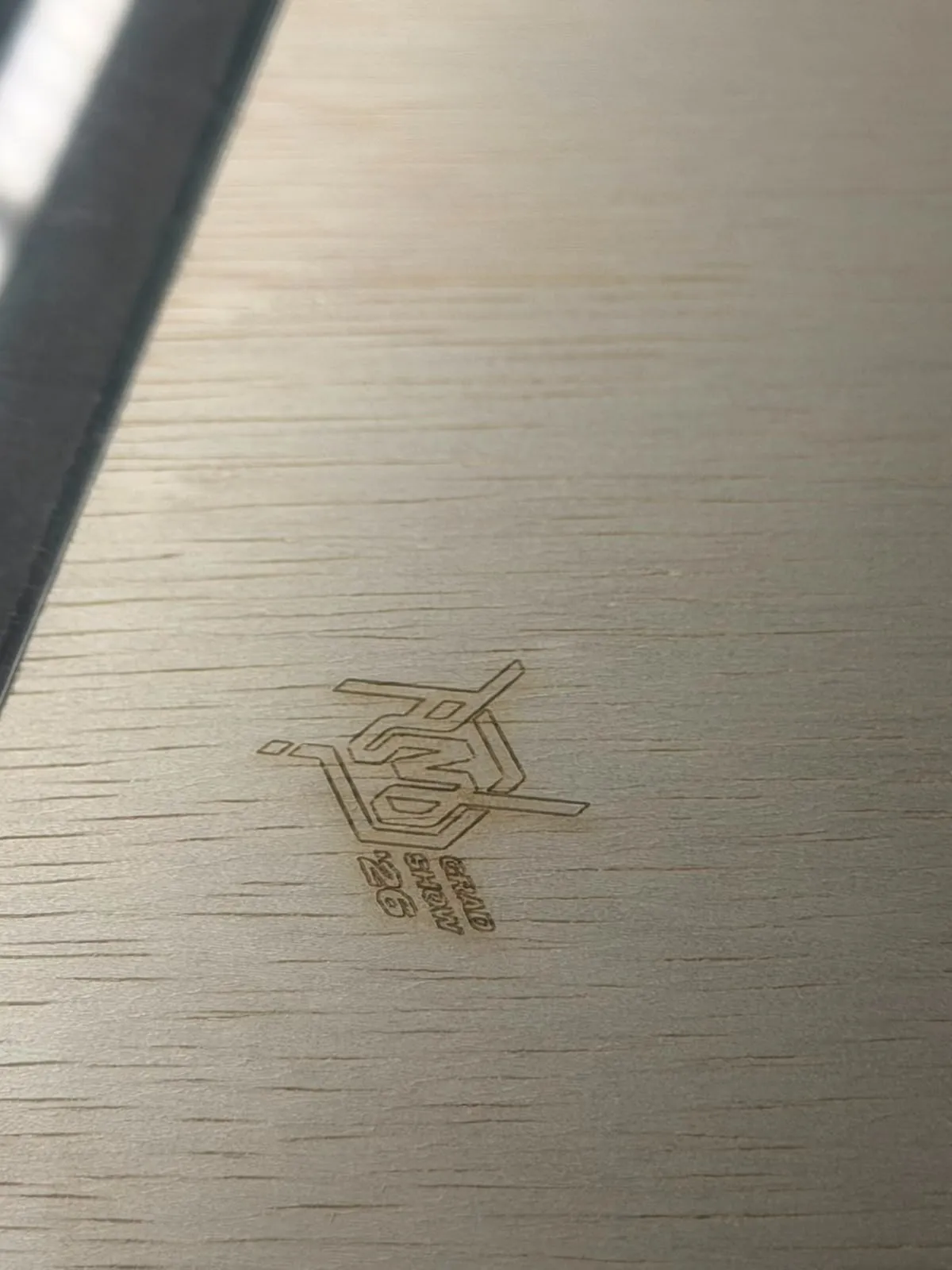
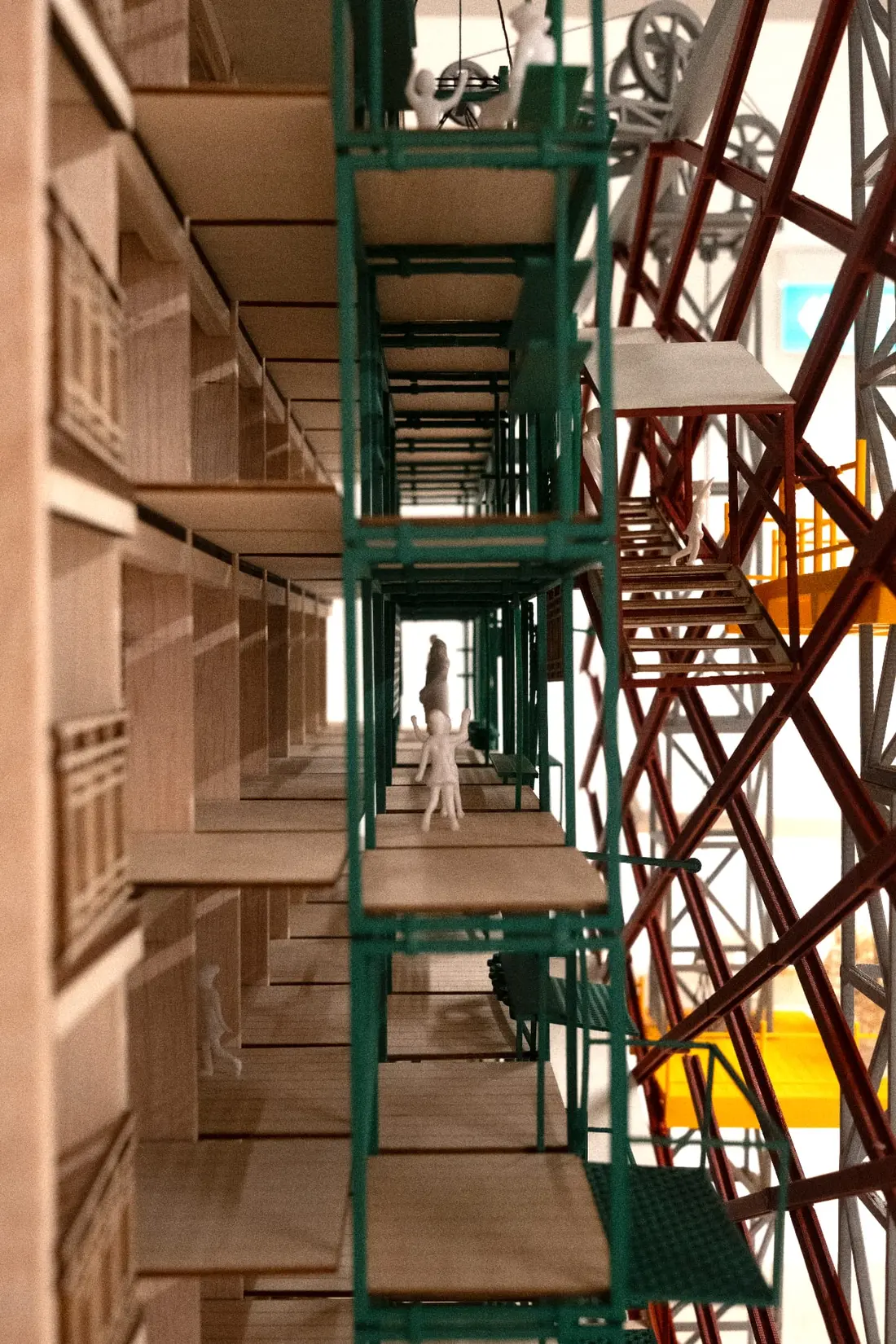
The project pages call the wood “thin plywood” and do not record the species or the thickness of the face veneer. They show what plywood does on our laser, not what a loose veneer sheet does.
Laser cutting and engraving veneer
Other laser makers say it can be done. One lists veneer inlays among its cutting examples, another says its lasers engrave and cut veneer, and a third describes veneer as micro-thin sheets of natural wood and sells it with a peel-and-stick back.
We do not list loose veneer sheet. Our cutting page names plywood and MDF from 3 mm to 12 mm. So for veneer, the honest answer is to ask. Tell us the sheet, its thickness and whether it has a backing, send your cut file, and a person checks it and says yes or no. For plywood we offer to cut a sample on your board and test it first, so ask whether that suits your veneer.
What goes wrong with veneer
- Sanding through. A veneer supplier calls it undesirable: sand too hard and the glue line shows, which ruins the panel.
- A panel that bows. The same supplier says both sides of a panel must be veneered, or the panel warps. A plainer, cheaper “balance” veneer goes on the back.
- Colour that moves. The supplier says cherry darkens in UV light, while teak and walnut take on a warm amber tone.
- Creep. It lists “cold creep”, where the veneer moves on its core as the air gets damper and drier.
Check for these before you order.
Where these facts come from
Every outside fact was read on the page named here on 19 November 2026. Suppliers change their ranges, so check before you buy.
- Wikipedia, Wood veneer: the definition, how veneer is cut, raw, paper-backed and two-ply veneer, plywood and the 0.64 mm figure.
- Decorative Hardwoods Association (formerly HPVA), Veneer and its advantages: thickness, species and veneer on a core.
- VeneerSupplies.com, A starter course in wood veneer, veneering dictionary and learning centre: common thickness, cuts, backings, edge banding, sand-through, balance, creep and colour change.
- Wikipedia, High-pressure laminate: how laminate is made.
- Glowforge, Material deep dive: veneer, Epilog Laser, wood laser photo gallery and Eurolaser, laser cutting of wood and MDF: what other laser makers say about veneer.
- Our own laser cutting page, the pop-out kit project and the architectural model project: the 3 to 12 mm plywood and MDF range and what the projects were cut from.
Frequently asked
Is wood veneer real wood?
Yes. It is a thin slice cut from a real log, so the grain is real and no two sheets look the same. What it is not is a solid board: it only works once it is glued to a core, which is the part that gives it strength.
How thick is wood veneer?
A veneer supplier calls 1/42 to 1/45 inch the most common raw thickness, which is about 0.6 mm. The industry body for decorative hardwoods says veneer is usually thinner than 1/8 inch, about 3 mm.
What does 10 mil or 20 mil mean on paper-backed veneer?
It is the thickness of the paper backing, not of the wood. A mil is a thousandth of an inch, so 10 mil is about 0.25 mm and 20 mil about 0.5 mm. The wood face sits on top of that.
Is veneer the same as laminate?
No. Veneer is real wood. High-pressure laminate is resin-soaked paper layers with a printed pattern on top, so it can copy wood but is not wood. One sign is that no two veneer sheets look the same.
Is veneer better than solid wood?
It depends on the job. The industry body for decorative hardwoods says veneer is not prone to warping, splitting or seasonal movement, and a veneer supplier says a log sliced into veneer goes much further. A panel still warps if only one side is veneered, and veneer can be sanded through to the glue, which solid wood cannot.
Can veneer be stained or varnished?
Yes, it takes stains and finishes much like solid wood, according to a veneer supplier. Burl veneers are usually left unstained. The supplier recommends testing on sample boards first.
Can you laser cut veneer?
Other laser makers list veneer as something their machines cut and engrave. We do not list veneer sheet on our own cutting page, which names plywood and MDF from 3 to 12 mm, so send us the sheet details and a person checks it and says yes or no.
Is plywood just veneer?
Plywood is three or more layers of veneer glued together. The thin top layer you see on a plywood sheet is a veneer.
Why does veneer look different on its two sides?
On raw veneer the two sides can show different grain after a finish goes on, because of the way the wood cells opened as the knife passed. An encyclopaedia entry says the knife leaves a loose side, where the cells have been opened up, and a tight side, so pick the face before you glue.
Related
-
 GuideWhich plywood do you need, and where do you buy it in Singapore?
-
 GuideWhy do model makers and laser cutters pick birch plywood?
-
 GuideWhat can be laser cut, and which material suits your job?
-
 ServiceLaser Engraving & Cutting
-
 ServiceProduction Runs & Reverse Engineering
-
 Service3D Modelling, CAD and 3D Scanning
- Project320 laser-cut pop-out wooden kits
- ProjectFaceted laser-cut architecture model
-
 ProjectLaser-cut architectural concept model for Mitch Teh