

What is overspray, and which faces will it reach?
Updated
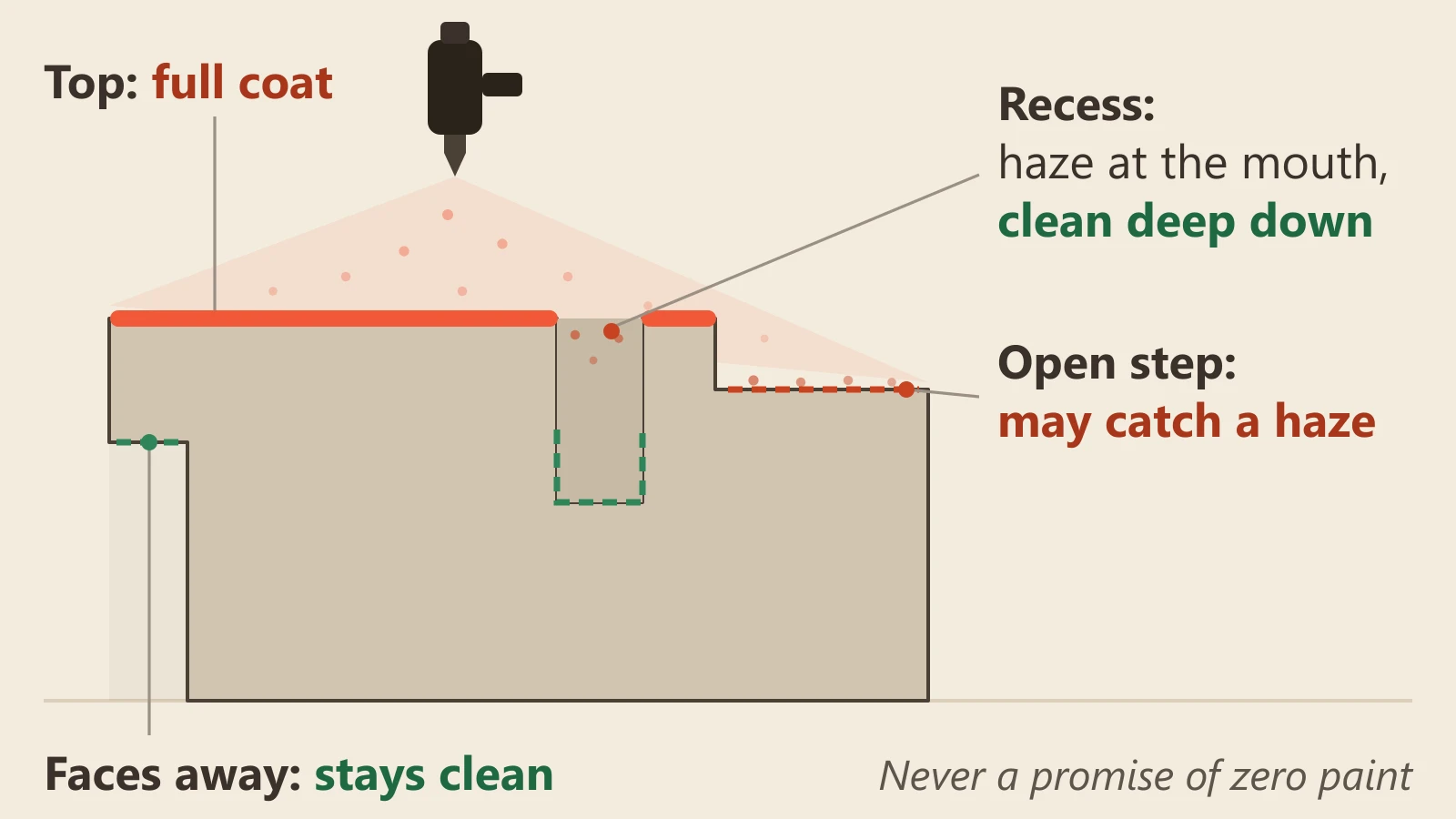
When we spray a finish onto a part (primer, paint or a clear topcoat), a little of the fine mist drifts past where it’s aimed, and the drift that settles on surfaces you wanted left unpainted is called overspray.
The short answer: leaving a face (one surface of the part) unpainted is not a promise of zero paint. An open face beside the painted area can catch a light haze, while the depth of a recess, faces pointing away and anything we mask usually stay clean; if haze lands where it shouldn’t, we sand it back, or redo the part if it won’t sand back cleanly.
Why an unpainted face can still catch paint
Painting is priced by the surface area we coat, so the faces you ask us to leave unpainted come off the price (how finishing is priced). But leaving a face unpainted only means we don’t aim at it. It can’t change where a fine mist travels, which is one of the limits of any sprayed finish.
Whether an unpainted face stays clean comes down to one question: could the mist reach it?
Faces that can catch overspray
- Flat, open faces right beside a painted area
- Faces angled toward the spray
- Shallow steps, rounded corners and edges close to the painted area
These don’t get a full coat, just a haze of the colour, from barely visible to a clear fade like the one below.
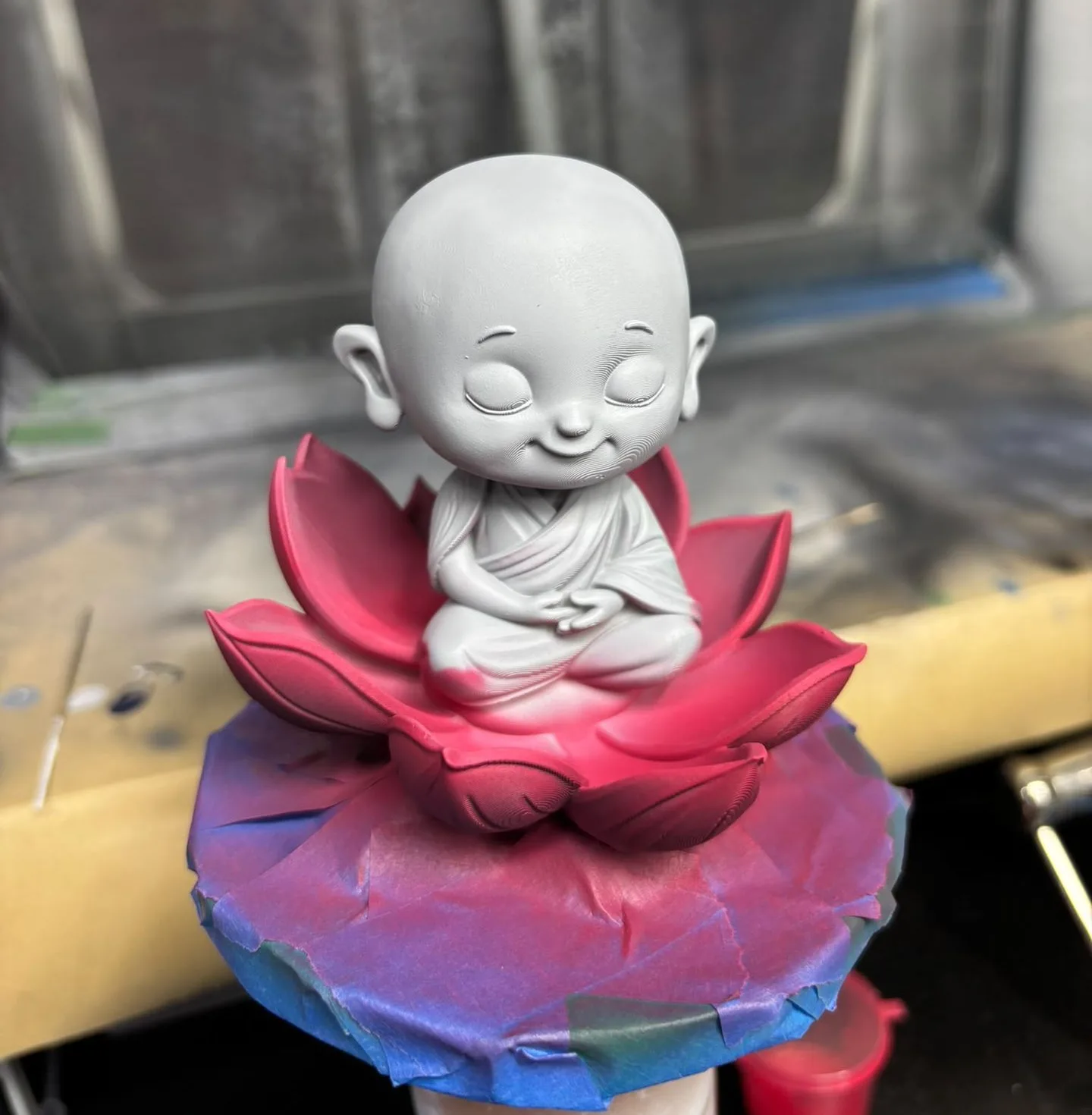
Faces that usually stay clean
- The depth of recesses, pockets, internal channels and round holes (the mouth can catch a little)
- Faces pointing away from the spray, the back of the part
- Anything we mask off with tape or a plug
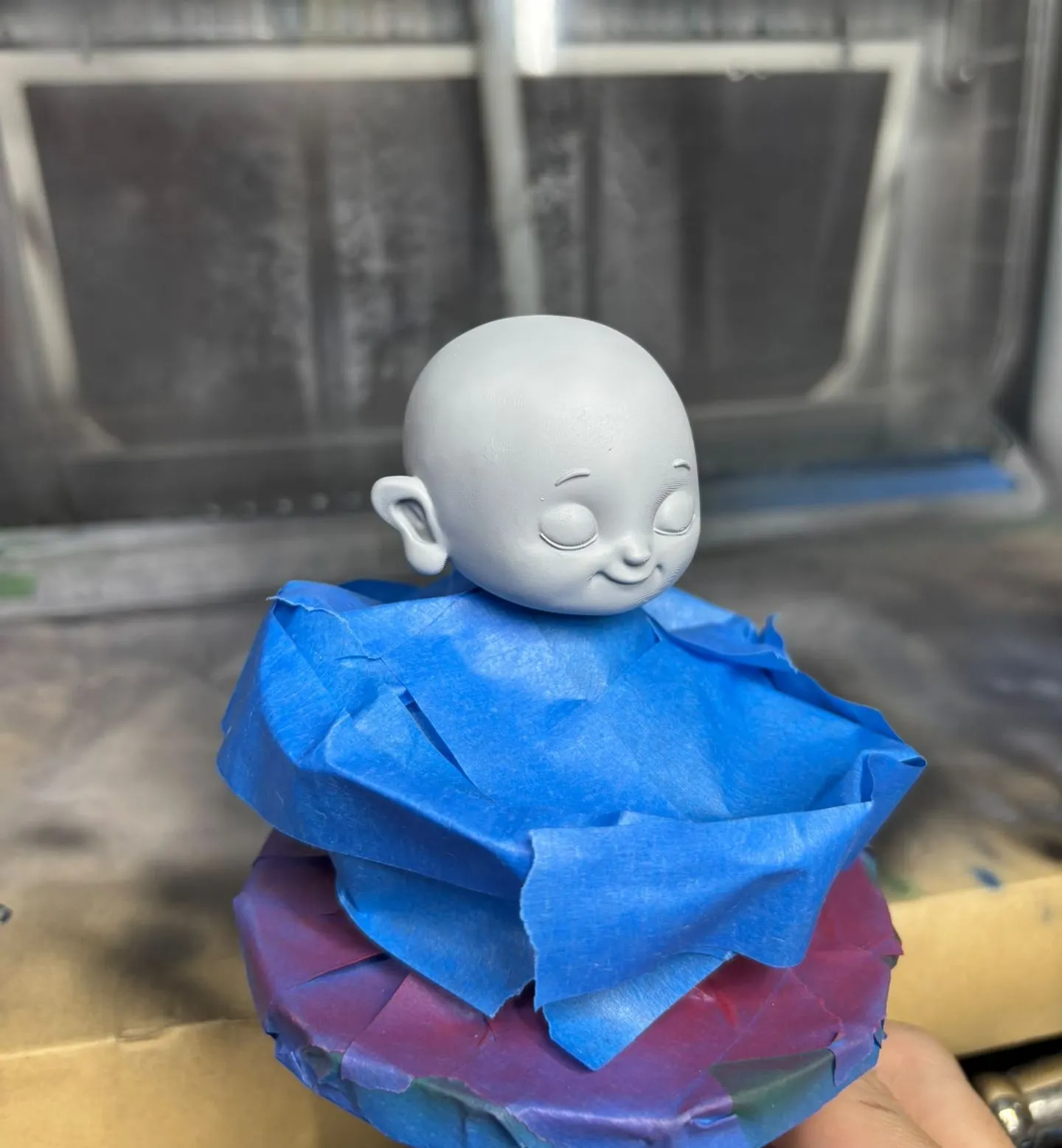
Threads, holes and faces that fit together
Some unpainted faces matter more than others. A thread, a bolt hole or a face that has to sit flat against another part can’t take even a thin coat: paint adds a layer of its own, enough to stop a screw turning, a pin seating or a lid closing. We plug holes and tape the faces that fit against another part whether or not overspray would ever reach them.
How to mark what stays unpainted
Circle the faces that stay unpainted on a screenshot or photo of the part and send it with the file. The instant quote prices paint over the whole part, so we quote it for you with those faces left out. Say which of them fit against another part, so we protect those first. We check every part before we start, and if a face won’t come out the way you marked it, we tell you before any work or payment goes ahead.
What we do about overspray
We mask what has to stay unpainted and turn the part on the bench so the spray travels away from it. On simple shapes that gives a clean line. On intricate parts a faint haze on an open face can’t always be avoided. If it lands where it shouldn’t, we sand it back. If it won’t sand back cleanly, we redo the part, so the part you collect is one you’re happy with.
Frequently asked
What is overspray?
Overspray is the fine mist of paint that drifts beyond the area being sprayed and settles on nearby surfaces. When we paint a 3D-printed part, open faces right beside the painted area can pick up a light haze, while the depth of a recess and faces pointing away from the spray usually stay clean.
Will the faces I leave unpainted stay completely clean?
Not always. Leaving a face unpainted takes it out of the painting price, but it isn't a promise of zero paint. Open faces beside a sprayed area may catch a light haze; the depth of recesses and holes, and faces pointing away, almost always stay clean. We mask, tape and plug where practical and check every part before we start.
How do you keep overspray off unpainted faces?
We mask, tape and plug the faces that must stay unpainted, angle the part so the spray travels away from them, and spray thin, controlled coats. That gives a clean line on simple shapes; intricate parts can still show a faint haze on an open face.
Can you keep threads, holes and faces that fit together paint-free?
Yes, these are the faces we protect first. Holes and threads are plugged or taped, and faces that sit against another part are masked, because even a thin coat can stop a screw turning or a lid closing. Tell us which faces fit against something else when you send the file.
What if overspray lands on a face that should stay unpainted?
We sand it back. If it won't sand back cleanly, we redo the part, so the part you collect is one you're happy with.
Can I design the part so overspray matters less?
Yes. Faces inside a recess, or on the side facing away from the spray, stay cleanest, so put the faces that must stay unpainted there when you can. Where one colour meets another, a small step or groove gives the masking a clear edge to sit against. Send us the file and tell us which faces matter most; a person checks every file before it prints.
Related
-
 Guide3D Print Finishing Options: Which Coat Should You Choose?
 -
 GuideHow do you paint and finish each kind of 3D print?
 -
 GuideWhat spray paint colours can my 3D print come in?
 -
 ServiceColour Application & Finishing
 -
 ServiceIndustrial 3D Printing
 -
 ServiceSLA 3D Printing
 -
 ProjectCustom dragon shoe attachments
 -
 ProjectFrigate scale models, VICTORY 88
 -
 ProjectYamaha bike body panels