

How do you fit a live engraving booth into a dinner and dance?

A company D&D (dinner and dance) gives a fringe activity two short windows: the cocktail hour before guests sit down, and the stretch after dinner when the dance floor opens. A live engraving booth fits the night when it stands where guests pass in both windows, opens with the doors, and has its own lines in the event company’s run of show. This guide covers where to put it, when guests use it, the queue and the timing.
The booth through the night
| Part of the night | What happens at the booth | What to plan |
|---|---|---|
| Doors open, cocktails | Expect the most orders: guests are standing, free and already taking photos | The booth set up and open before the first guest arrives |
| Seated, dinner served | Few new orders while the laser works through the queue | Guests get a WhatsApp when their piece is ready, so nobody leaves the table to wait |
| Speeches, awards and performances | Quiet at the booth | Agree with the event company whether engraving carries on or pauses |
| After dinner, dance floor open | A second round of orders, and most collections | One line from the emcee pointing guests to the booth |
| The last half hour | Collections only | A last-orders time, so every piece is handed over before the room empties |
The times in your run of show decide the rest. We plan the item and the booth’s hours around them.
Where the booth stands
Many dinner and dances hold the cocktail reception in a foyer outside the ballroom, then close the doors for dinner. That gives two good spots and one to avoid.
- In the foyer, by the ballroom doors. It catches every guest on arrival, when they have the most time. Guests can still find it after dinner if the foyer is on their way to the bar or the washrooms.
- Inside the ballroom, near the back. It catches the second round after dinner, and guests collect their pieces without leaving the party. It misses the arrivals if the cocktail hour happens outside.
- Not beside the stage or the dance floor. Guests gathering there get in the way of the servers and the photographer, and the stage lighting makes the screen hard to read.
What the spot needs:
- A table about 1.8 m long, with room in front for a few people to stand.
- One power point close by. The socket often decides the spot, so ask the venue which ones you can use before you draw the floor plan.
- A clear view of the booth screen. Guests scan the QR code on it, and ticket numbers appear there when pieces are ready to collect.
- Phone signal. Guests order on their own mobile data, so the venue’s wifi doesn’t matter, but a basement ballroom can be weak. Check your phone at the spot during the site visit.
When guests use it
Open with the doors. Arrival is when guests have the most free time, and they are already taking photos in their outfits. Foyer lighting is usually brighter than a ballroom after dinner too, which gives the line art more to work from.
Let dinner do the waiting. Once guests are seated, few new orders arrive and the laser catches up. Each guest holds a ticket number, gets a WhatsApp when the piece is done and can check the number on the booth screen, so nobody stands in a line through the main course.
Take a second round after dinner. When the dance floor opens, guests are up and moving again. Some order for the first time, others collect. A guest who wants the dance floor in their photo can order now, or pick a photo from earlier in the evening from their camera roll.
Plan the queue to your headcount
Every piece takes its turn on the laser, so the real question is how many pieces the booth can make in the two windows your run of show gives it. There are two ways to run it:
- The company covers an item for each guest. The booth then works as your door gift. Give us the headcount early and we’ll plan the item and the hours to match.
- Guests pay per piece. This suits a large dinner where not every guest will want one.
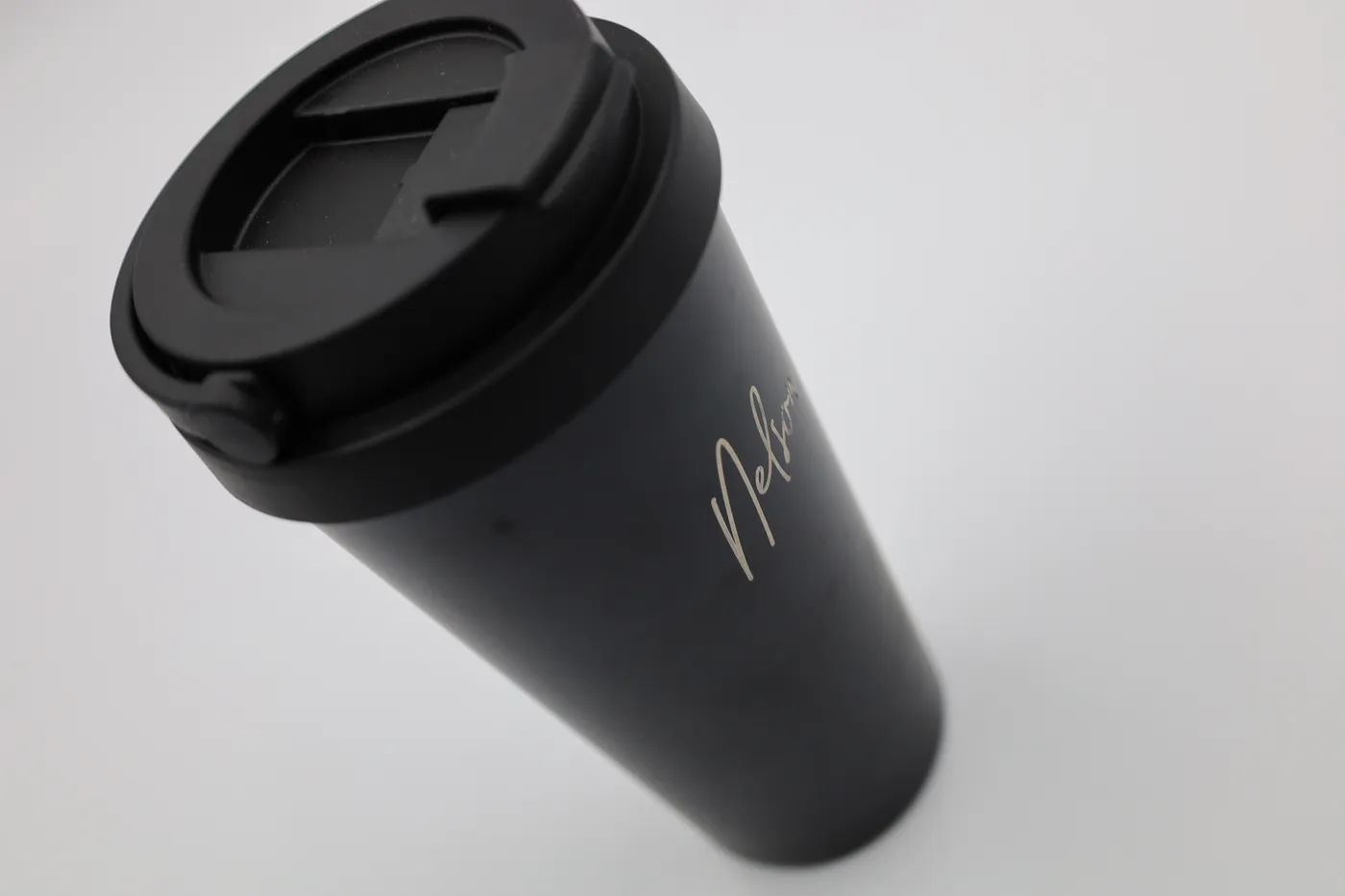
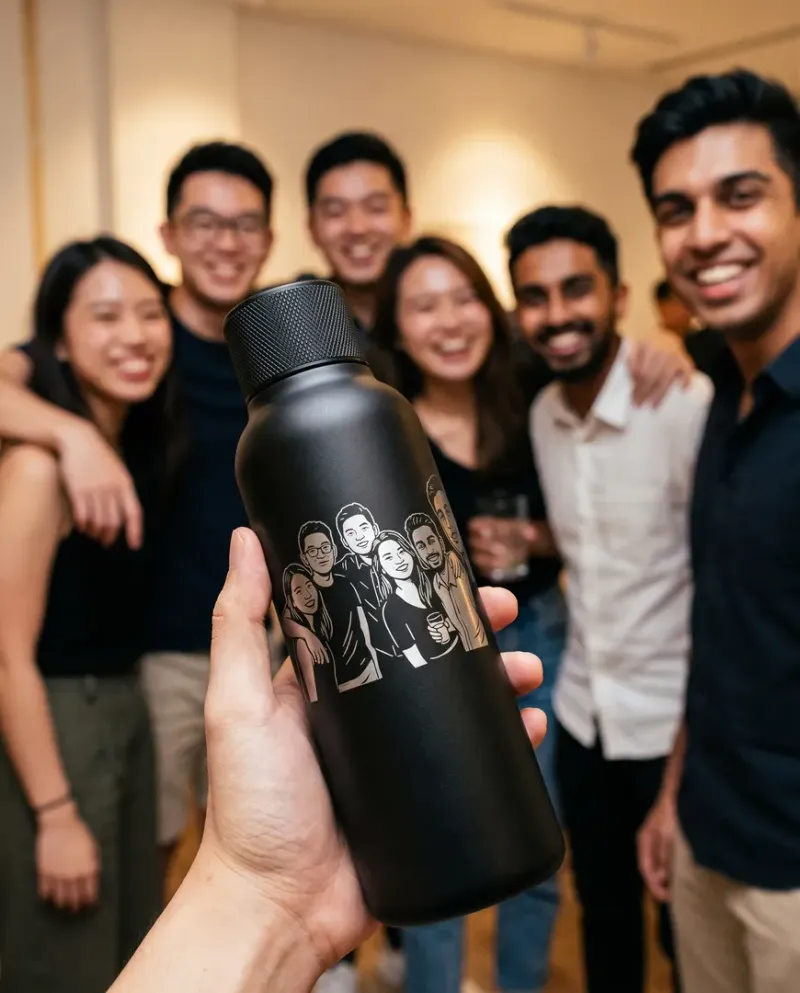
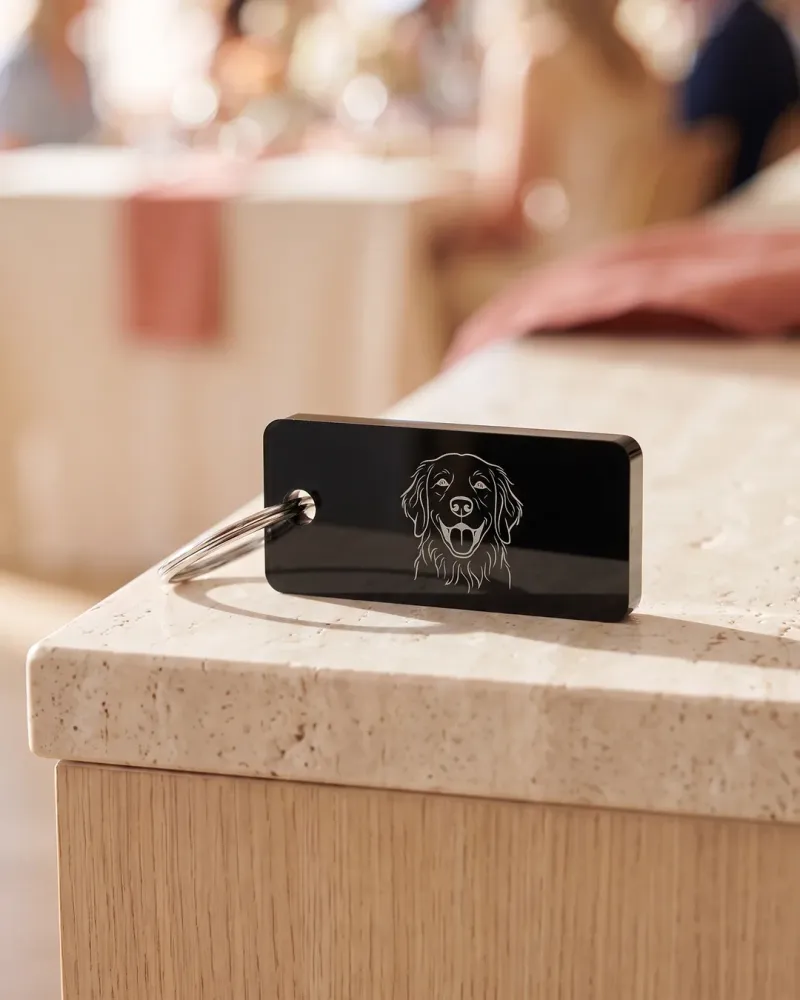
The item matters too. A black acrylic keychain goes home in a pocket or a clutch, while a stainless steel bottle is one more thing to carry past the dance floor. A steel luggage tag sits between the two. If you offer two or three items, guests choose theirs first, before the photo.
The honest limits:
- A rush in the last half hour can’t all be engraved before guests leave. A last-orders time is what stops a guest going home without the piece they ordered.
- We check every drawing, but a name typed in a hurry on the way back to the table goes on as typed.
- A group photo taken in the dark at the back of the ballroom gives the least to work with, because the drawing needs a clear outline of each face.
Give the booth a slot in the run of show
A run of show is the timed plan an event company runs the night from: when doors open, when dinner is served, and when each speech, award and performance starts. If an event management company such as RBTHOL is running your dinner and dance, ask them to give the booth its own lines in it. Four are enough:
- Setup. A time to bring in the laser, the items and the screen, agreed with the venue, before guests arrive.
- Open. The booth opens with the doors.
- A mention from the stage. One line from the emcee after dinner, pointing guests to the booth.
- Last orders and close. A time after which the booth takes no new orders, so pieces are collected before the last song.
Tell the event company what the booth needs (the table, the power point and the spot), and send us your logo for the guest page and the booth screen, so the booth looks like part of the night and not a stall that wandered in. Each guest’s ticket carries the event’s name too.
Next to other stations
Many dinner and dances run more than one fringe activity: a photo booth, a caricature artist, or a hands-on station of a different kind, such as the live candle and diffuser bars White Pixies runs at galas and product launches. Two stations where guests make something give the room more to do, as long as they stand far enough apart that guests at one don’t block the other. Check each station’s own space and power needs with its vendor before you draw the floor plan.
If you haven’t picked the rest of the line-up yet, our fringe activities guide compares the common ones by how many guests they serve and what they need, and the door gift guide covers what guests actually keep.
Frequently asked
When should a live engraving booth open at a dinner and dance?
When the doors open for the cocktail reception. Guests are standing, free and already taking photos, so expect most orders then. The booth keeps engraving through dinner and takes a second round of orders once the dance floor opens.
Does the booth need the venue's wifi?
No. Guests order on their own mobile data. Signal can be weak in a basement ballroom, so test your own phone at the booth's spot during the site visit.
Can every guest at the dinner take home an engraved piece?
Yes, if it is planned for. Tell us your headcount and the times in your run of show, and we'll set the item and the booth's hours so there's a piece for every guest you want to cover.
Who pays for the pieces at a company dinner and dance?
Either the company or the guest. A company that uses the booth as its door gift covers an item for each guest, so nobody pays at the table. Guests can pay per piece instead. Settle this when you book, since it sets how many pieces we pack.
Can the booth match the dinner's theme or branding?
Yes, in three places: your logo on the guest page, your logo on the booth screen and the event's name on every ticket. Your company logo can be engraved on the items too, alongside each guest's portrait.
What does the event company need to know about the booth?
Its footprint, a setup time and a last-orders time. The booth takes a table about 1.8 m long and one power point, with its screen in view. Setup happens before guests arrive, and last orders keeps collections ahead of the room emptying.
Related
-
 GuideHow do you choose fringe activities for a corporate event in Singapore?
-
 GuideDoor gift ideas for Singapore events, by what people actually keep
-
 GuideHow do long service awards work in Singapore?
- ServiceLive Engraving Door Gift Booth
-
 ServiceCustom Keychains
-
 ServiceCustomised Corporate Gifts
-
 Project45th anniversary awards for Bando
-
 ProjectWSG Workforce Resilience Awards trophies
-
 ProjectAppreciation award trophies for the Public Transport Council