

Injection-moulded canard sleeve for ST Engineering
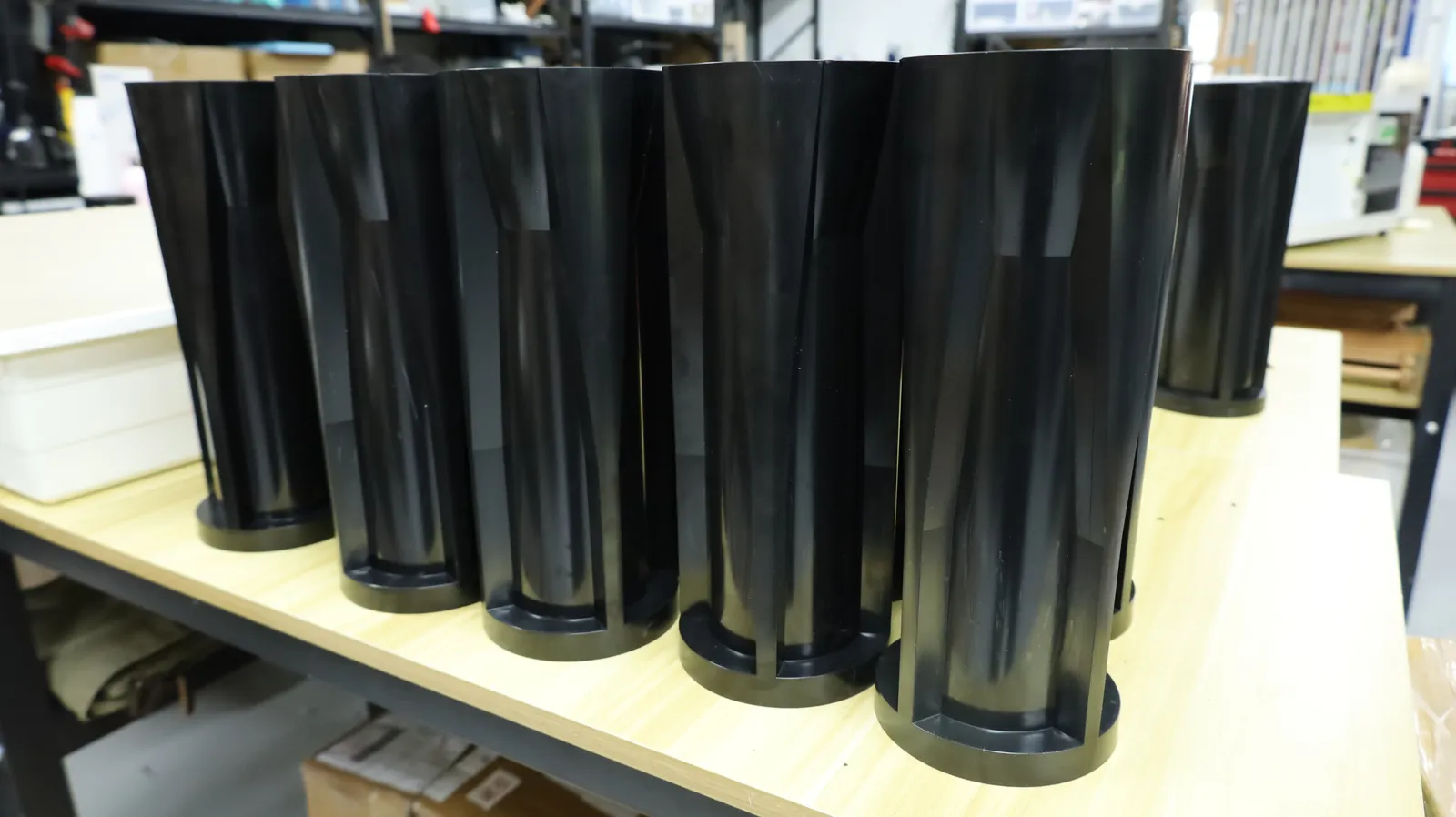
A black injection-moulded sleeve for ST Engineering's storage canister: designed for moulding, mould made and samples measured, ahead of production.
- Client
- ST Engineering
- Service
- Injection Moulding
- Made for
- ST Engineering Advanced Material Engineering, Singapore
- Built for
- Long storage inside a canister, under a constant load
- The mould
- Two side slides and push-plate ejection
- Pieces quoted for production, over two years
- Over 2,000
- Samples in each trial round
- 10
- Tolerance on the six critical dimensions
- ±0.1 mm
- From mould release to the first moulded sleeves
- About 4 weeks
What we brought
What we can do
From 3D printed parts to a production mould
The sleeve began as 3D printed PC parts. When ST Engineering needed thousands, we moved it to injection moulding.
How we look after you
Every moulding detail agreed before steel is cut
Gate, parting lines, ejection, sink and shrinkage were agreed on one drawing before the mould was released.
What you get
Samples checked against your critical dimensions
We measured each sample round against the six critical dimensions and logged it in an inspection report.
Gallery
The whole project at a glance. Drag or swipe to browse; tap a picture to enlarge it.
1 / 18
-
The finished piece
-
A round of ten moulded samples.
-
Two samples side by side.
-
The tapered channel along one side.
-
The open end and its slots.
-
Design for moulding · Revision 0DrawingThe six critical dimensions, each ±0.1 mm.
-
RenderThe production design, V8.2.
-
Design for moulding · Revision 1RenderWhere the mould splits on the part.
-
RenderSink and wall thickness, checked before tooling.
-
Making the mouldA steel mould block, ready for machining.
-
Wire EDM cutting a mould part.
-
Copper electrodes for the EDM work.
-
One half of the steel mould.
-
The mould half, polished.
-
Checking the cavity edges up close.
-
Samples and checksOne of the first moulded sleeves.
-
The gate mark, in its recess.
-
Measuring a sample's length.
The build
How we built it
5 steps, from the brief to the finished piece. Pick a step to jump to it.
The brief
Step 1 of 5 · 19/06/2026
- Storage life
- At least ten years, with low water absorption
- Load
- Holds its shape under a constant load of about 20 kg
- Toughness
- Good vibration, impact and wear resistance
- Heat
- Deflection temperature above 100 °C
- Quantity
- Over 2,000 pieces quoted for production, over two years
At Additive Inn, our 3D printing studio in Singapore, we deliver injection-moulded parts. ST Engineering asked us for a tough black sleeve to sit inside a storage canister. They had tested 3D printed versions and now needed thousands of pieces over two years.
Design for moulding
Step 2 of 5 · 22/07/2026
We consolidated the sleeve into one drawing, V8.2, with six critical dimensions held to ±0.1 mm. Our DFM review planned a single-cavity mould and checked sink, wall thickness and shrinkage before ST Engineering released it for tooling.
-
Revision 0
The six critical dimensions, each ±0.1 mm.
DrawingRender +1 more
-
Revision 0 · 17/07/2026
ST Engineering approved V8.2 as the single design the mould would be made to.
-
Revision 1 · 22/07/2026
We agreed the gate, parting lines, push-plate ejection and a 1.02 shrink allowance, and the mould was released.
Render +1 more
Making the mould
Step 3 of 5
We had the steel mould machined, wire cut and spark eroded, with copper electrodes for the fine features. The thin steel rib that forms the 2.5 mm fin slot was the most delicate part of the tool.
Samples and checks
Step 4 of 5 · 21/08/2026
The first moulded sleeves came off the tool in August. We checked each sample round against the critical dimensions, recorded it in a dimensional inspection report and looked over the gate mark in its shallow recess.
The final build
Step 5 of 5 · 05/10/2026
We delivered the moulded samples to ST Engineering for their own tests. Their load test called for a stiffer plastic, so the next round was PC-ABS, which held its shape after two days under load. Its height and diameter are now being tuned.
More vacuum casting & injection moulding
See all vacuum casting & injection moulding →-
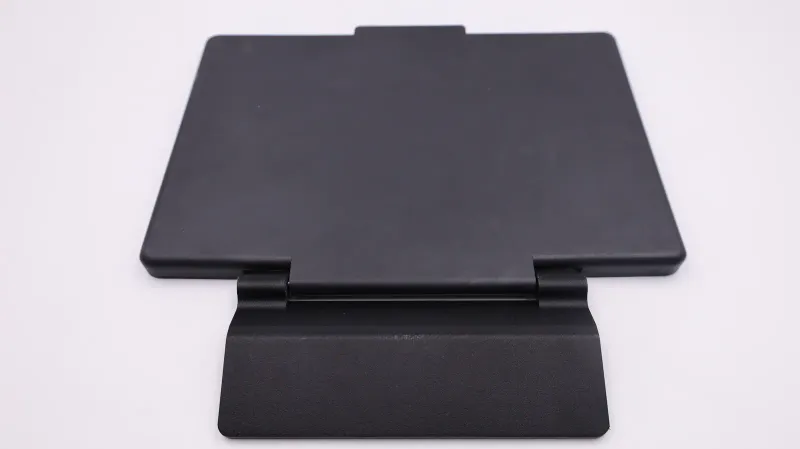 Acmedial Vacuum-cast TPU screen protector for Acmedial A flip-up screen cover for a Dualto unit, designed in 3D, proved on a printed prototype and vacuum-cast in soft black TPU.
-
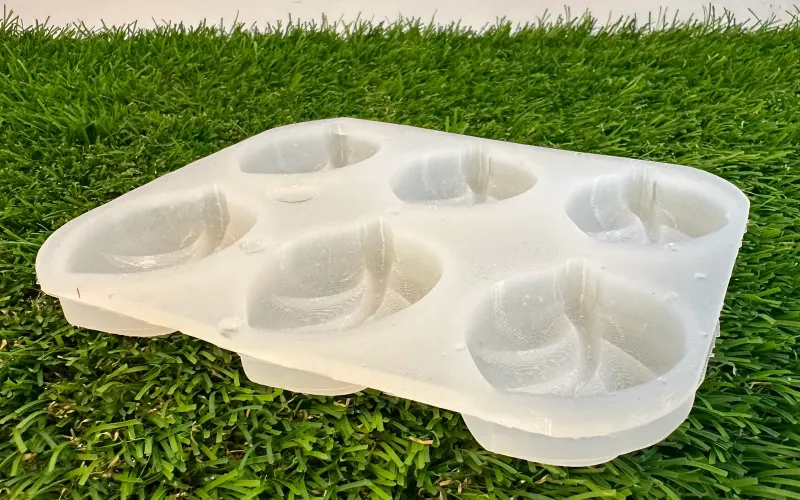 Four One Eleven Six-cavity silicone leaf mould for Four One Eleven A reusable silicone mould with six leaf cavities, so one pour casts six identical leaves, each with its veins and stem.
-
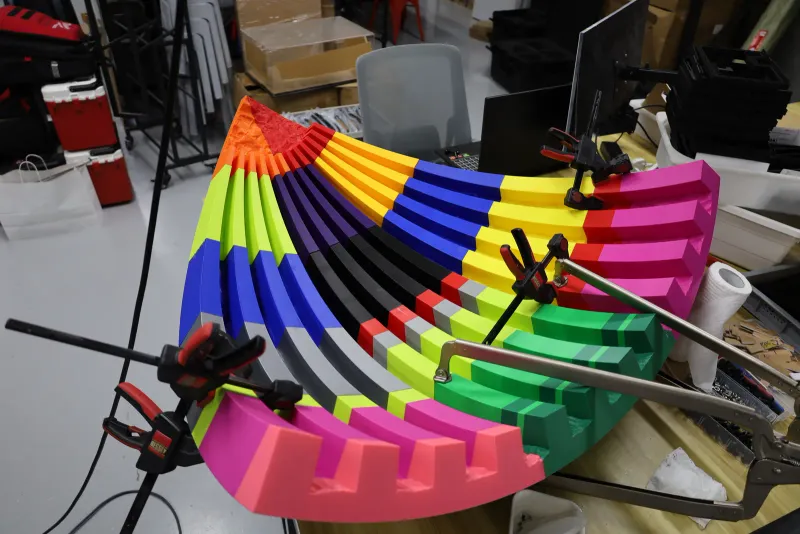 3D printed cement planter mould for Vault 7 A ribbed, rock-textured corner mould and matching texture strips, 3D printed for Vault 7 to cast a curved cement planter box.