

What is sheet metal bending, and when should you use it?
On this page
- Sheet metal bending at a glance: what it makes and what it suits
- How sheet metal bending works: cut flat, then fold
- Stainless steel, mild steel or aluminium: which metal to bend
- Design rules for bent parts: five that avoid a remake
- When to use something else: machining or printing
- Ordering a bent part: what to send us
- Frequently asked
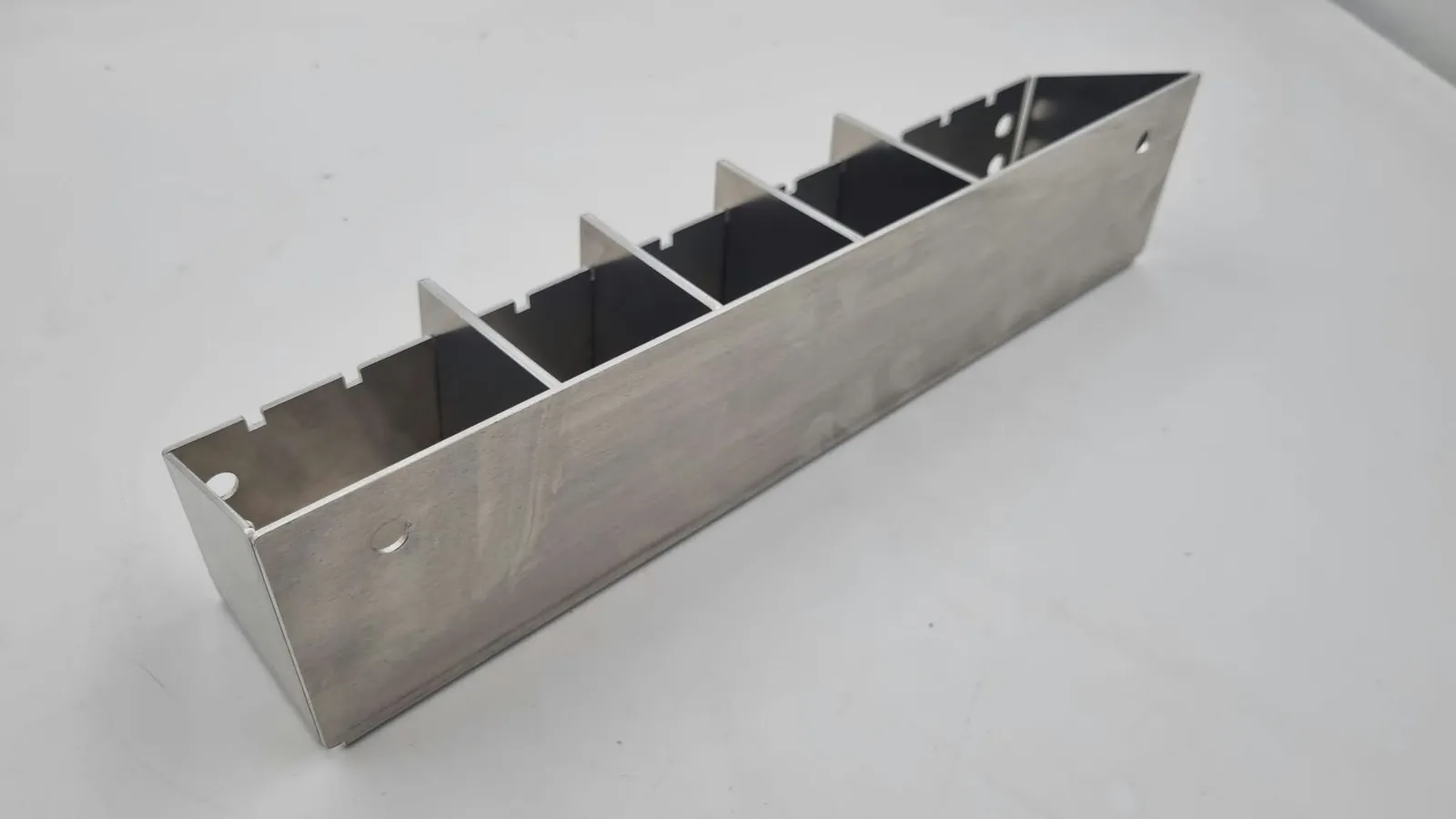
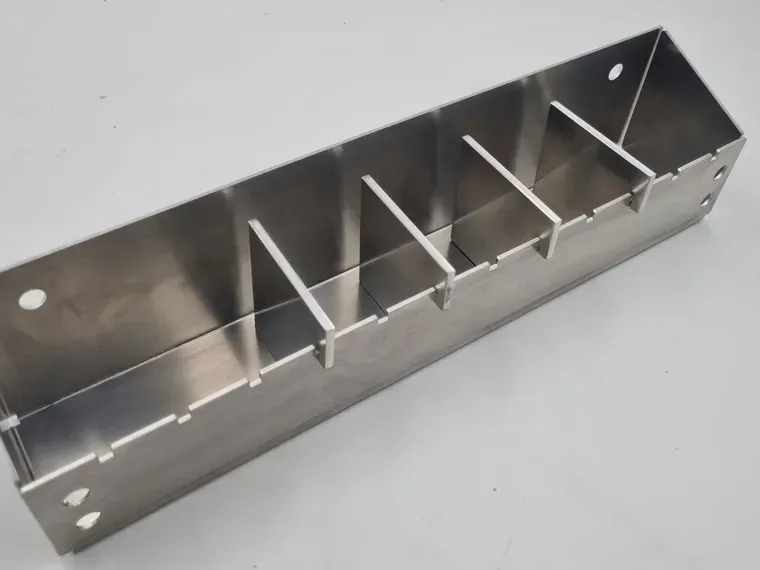
Sheet metal bending makes a part by cutting a flat shape from metal sheet, then folding it along straight lines on a press brake. Use it for thin-walled metal parts such as brackets, panels, trays and enclosures, and choose machining or metal 3D printing for solid or complex shapes.
Sheet metal bending at a glance: what it makes and what it suits
| Question | Answer |
|---|---|
| What it does | Cuts a flat shape from metal sheet, then folds it into a bracket, tray, panel or box |
| Metals | Stainless steel, mild steel and aluminium; ask us about others |
| Largest part | No fixed figure: tell us the size and thickness and we confirm |
| Accuracy | Less exact than machining; published guides quote bend angles to ±1° to ±2° |
| Lead time | No fixed figure: it depends on size, quantity and finish, so ask us |
| Best for | Thin-walled metal parts: brackets, covers, panels, trays and enclosures |
| Not for | Solid blocks, thick sections, deep pockets or shapes curved in two directions |
The accuracy figures come from the SendCutSend bending guidelines and the Xometry sheet metal guide. Mark the dimensions that must be exact and we confirm what we can hold.
How sheet metal bending works: cut flat, then fold
A sheet metal part starts flat. The outline, holes and slots are cut from a sheet, usually by a laser built for metal or a CNC punch. Every hole goes in while the sheet is flat, because it is far easier to cut there than on a finished box.
The flat piece then goes into a press brake. This is a long press with a blade-like punch on top and a V-shaped groove (the die) below. The punch pushes the sheet into the groove and the sheet folds along a straight line. Each bend is one press stroke, so a tray with four sides takes four.
Two things make bending a skill rather than a guess:
- Springback. Metal springs back a little once the punch lifts, so each bend is pushed slightly past the angle you want.
- Stretch. The outside of a bend stretches and the inside squashes, so the flat piece must be cut to a length that allows for every bend. See the K-factor rule below.
Stainless steel, mild steel or aluminium: which metal to bend
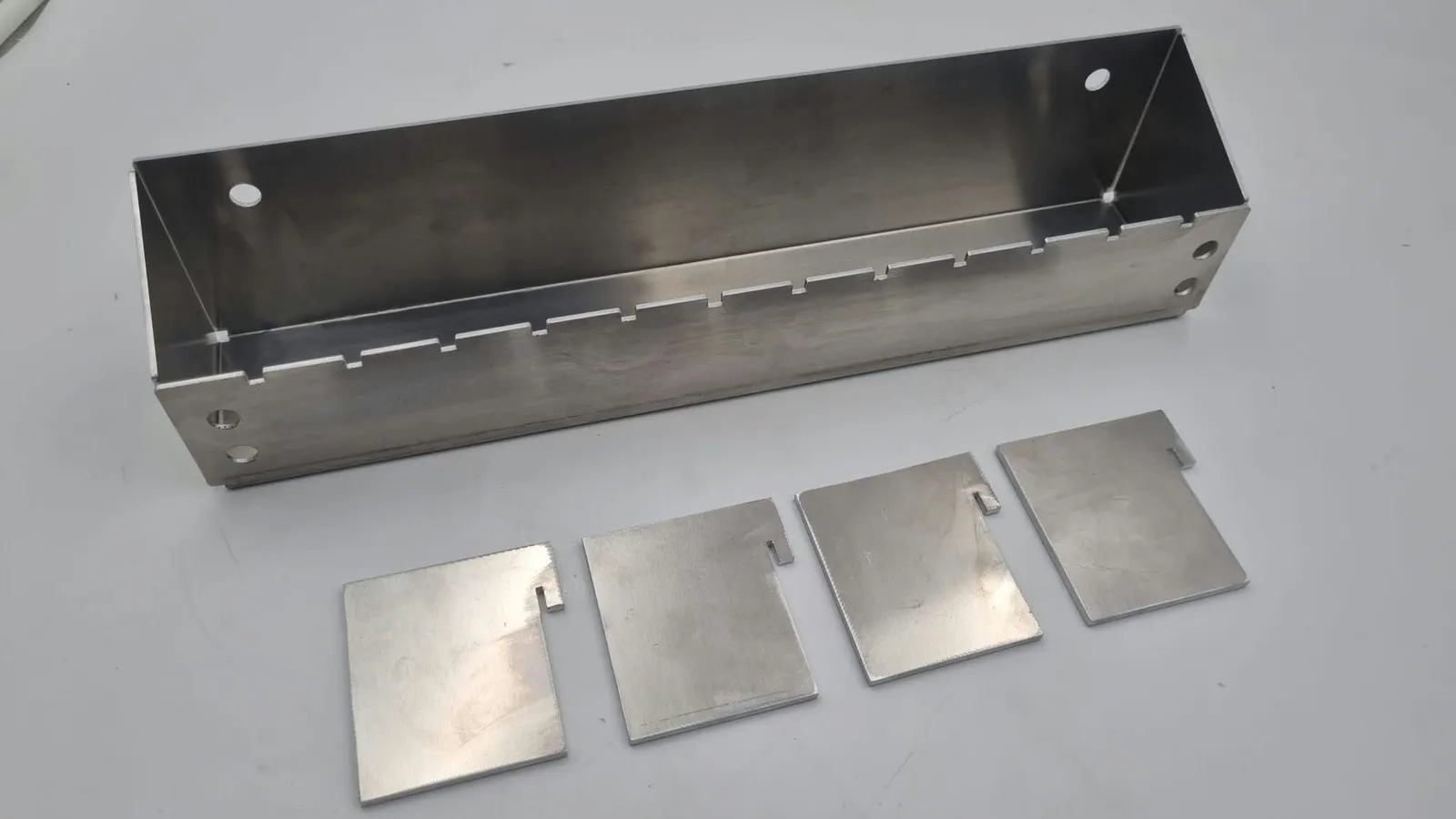
Most sheet metal parts are made from one of three metals. For anything else, such as brass, copper or galvanised steel, ask us.
- Stainless steel resists rust and cleans easily, so it suits food, medical and outdoor use. It takes more force to bend than mild steel.
- Mild steel is strong and the lowest-cost choice, but it rusts. It should always be primed and painted.
- Aluminium is much lighter than steel and does not rust. Some harder grades crack on a tight bend and need a larger radius, so tell us the grade if your drawing names one.
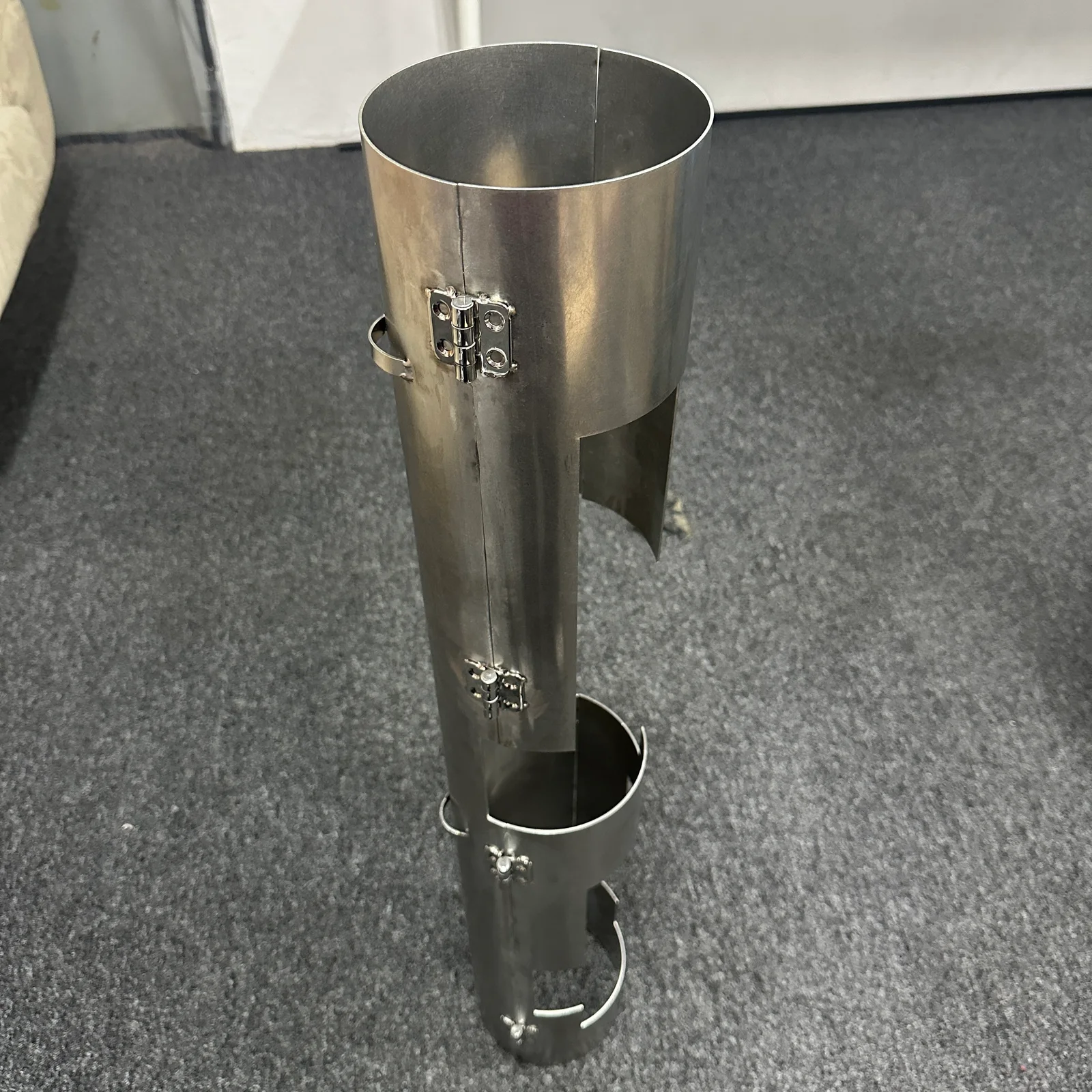
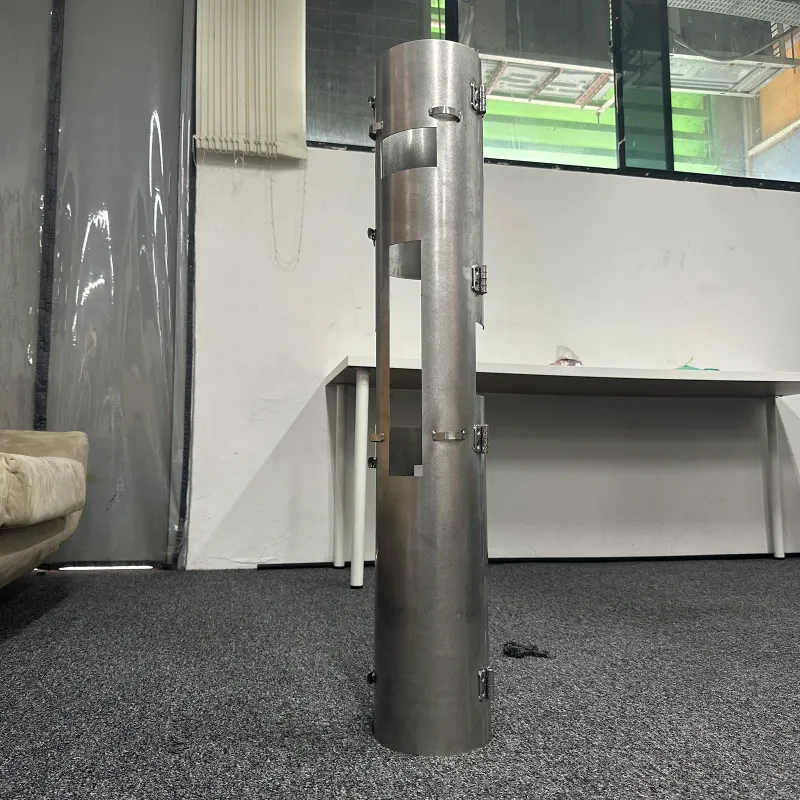
Sheet can be rolled into curves as well as folded. For a custom stainless steel housing we cut the sheet with its window cutouts, rolled it into nested cylinders, then fitted welded hinges and toggle latches.
Design rules for bent parts: five that avoid a remake
These are general rules from published design guides. The exact figures depend on the metal, the thickness and the tools, so we check every drawing before it is cut.
- Bend radius: at least the sheet’s thickness. The inside curve of a bend should be no tighter than the sheet is thick, or the outside can crack, says the Xometry sheet metal guide. Thicker or harder metal needs more.
- Flange length: long enough to grip. A flange is the flat side that a bend makes. It must be long enough for the press brake to hold. The Protolabs sheet metal toolkit sets the minimum at 2.5 to 4 times the thickness, plus the bend radius, depending on the metal and thickness. On 2 mm sheet with a 2 mm radius, that is about 7 mm or more.
- Holes: keep them clear of the bend. A hole too close to a bend stretches out of round. Protolabs uses the same distance as its minimum flange length, measured from the bend.
- Same radius on every bend. One radius means one tool for the whole part. Protolabs’ design tips suggest keeping bend radii the same where you can.
- K-factor: the number behind the flat length. Inside a bend, one layer neither stretches nor squashes. The K-factor says where that layer sits, as a fraction of the thickness, as the SOLIDWORKS help explains. Software uses it to size the flat piece. Send a 3D model and the flat piece is worked out from it; if you draw the flat pattern yourself, tell us the K-factor you used.
When to use something else: machining or printing
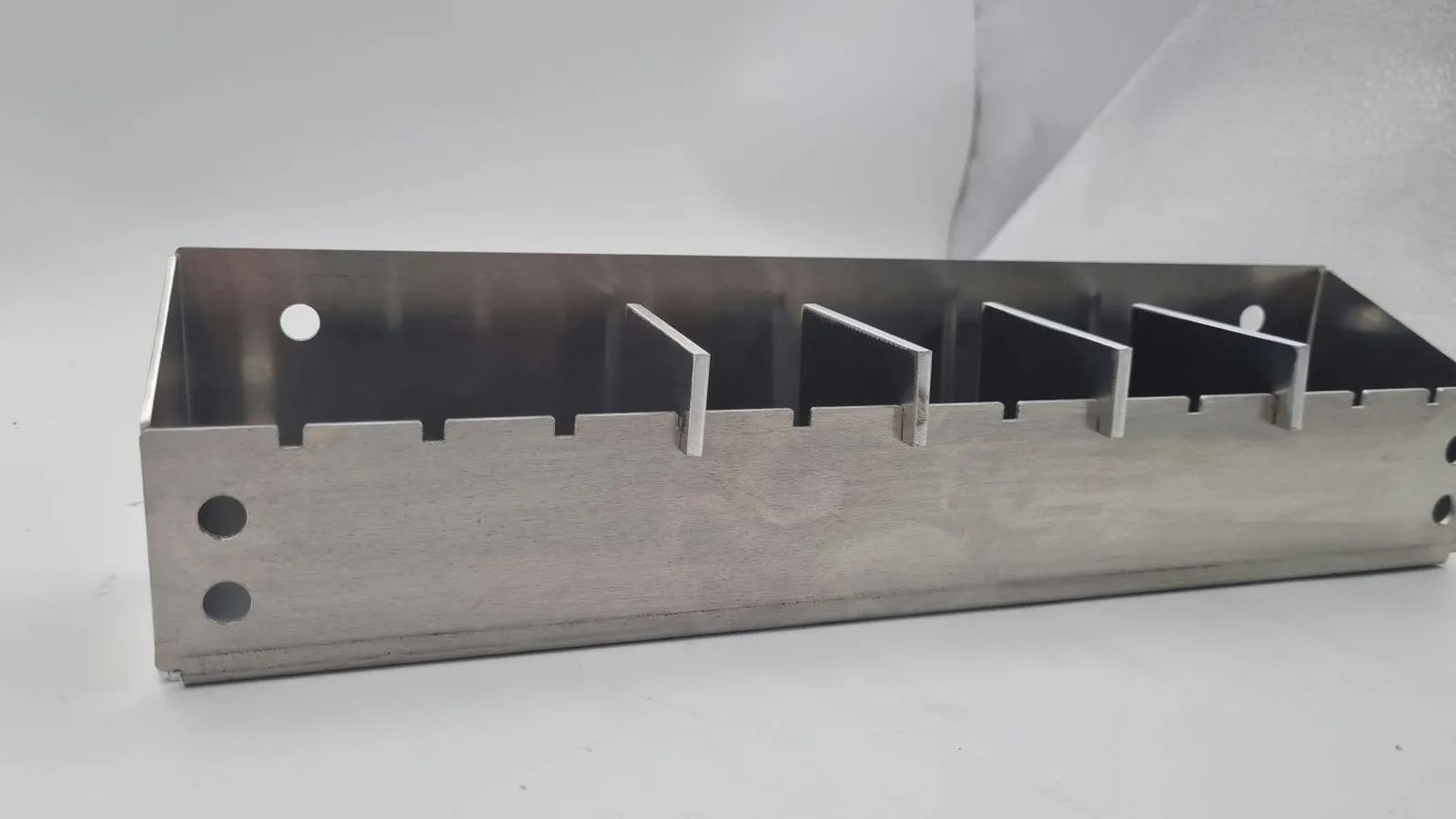
Sheet metal is the right answer when a part is mostly thin walls of even thickness. It is the wrong one when the part is not:
| The part | A better way to make it |
|---|---|
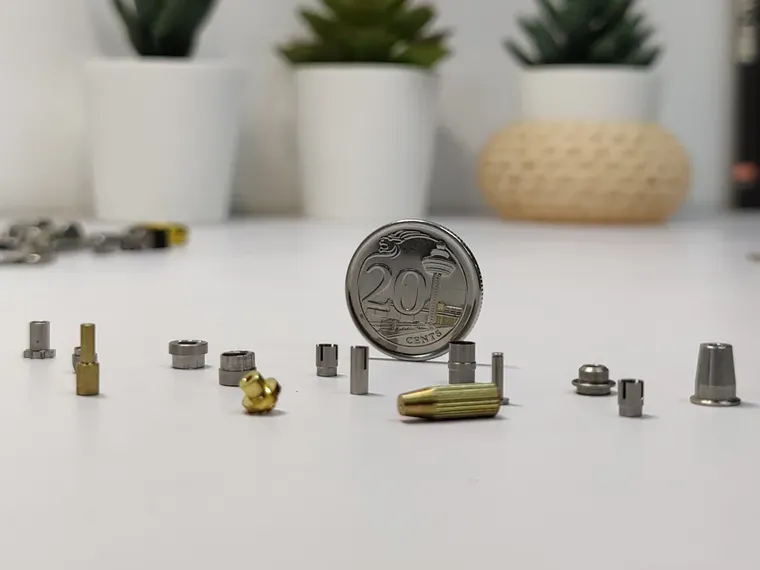
| A solid block, a thick section or a precise pocket | CNC machining, which cuts it from a solid piece |
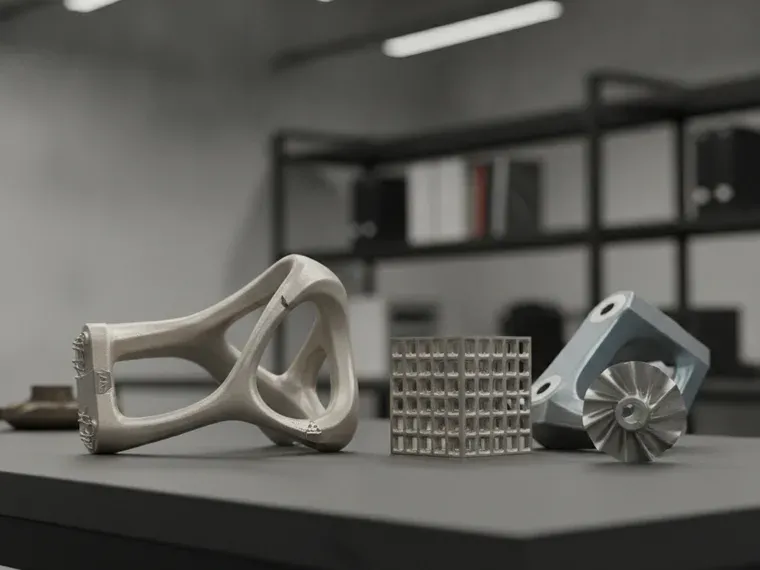
| A small, complex metal part with curves in every direction | Metal 3D printing, which builds it from metal powder |
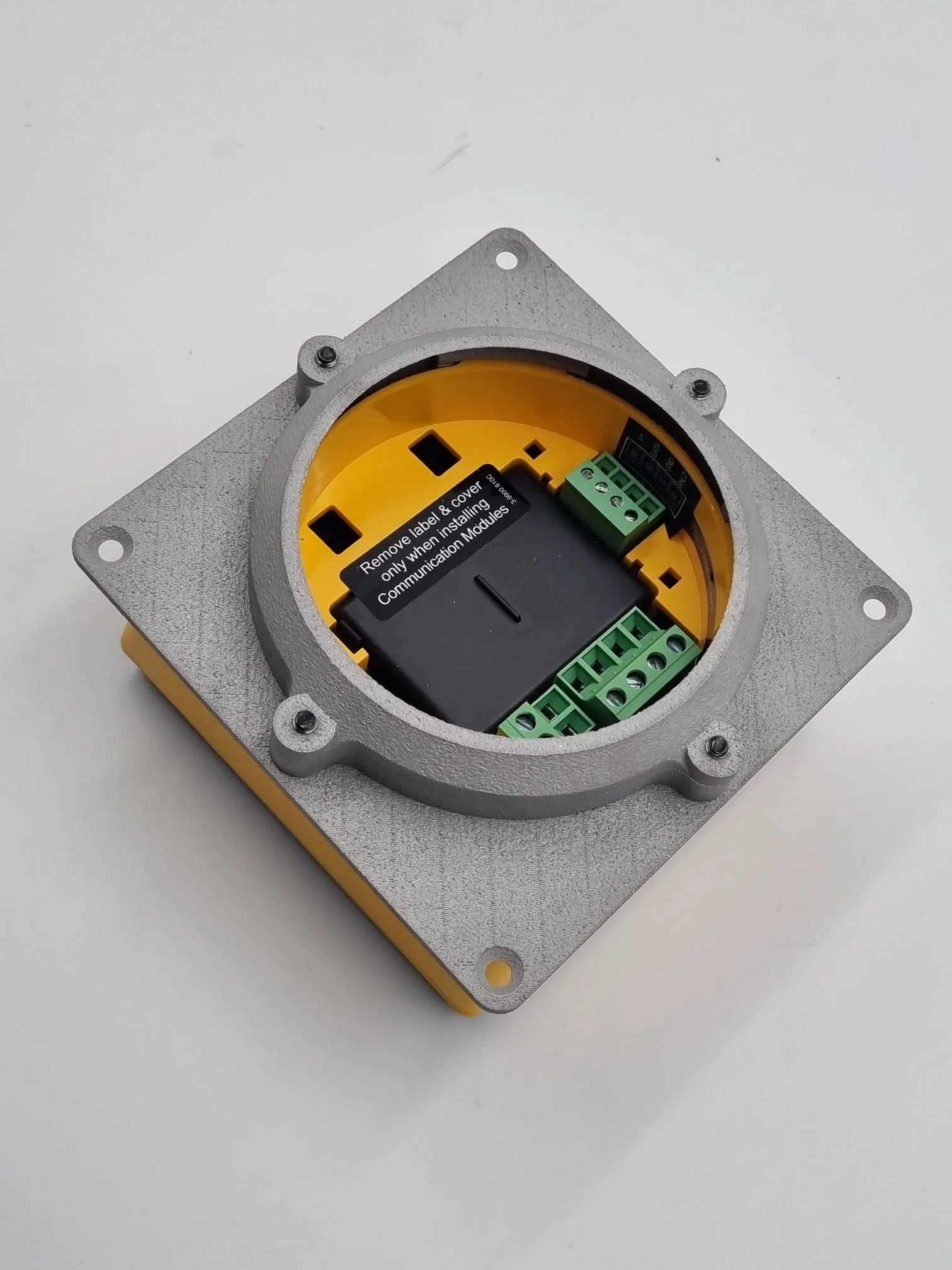
| A plastic housing, or a prototype to test the shape first | 3D printing in plastic, in about 4 to 7 working days for a normal-size part (check with us) |
A thin bracket bends from a strip of sheet, where machining the same shape would cut most of a block away. A part whose walls change thickness, or curve in two directions at once, cannot be folded at all. That is where machining or printing takes over. See metal 3D printing compared with CNC machining, and what CNC machining is.
Ordering a bent part: what to send us
Send a 3D model as STEP, or a flat drawing as DXF with the bend lines marked. Tell us:
- the metal and its thickness;
- the quantity;
- the finish: bare, brushed, or primed and painted;
- which dimensions must be exact, and what the part fits against.
A person reads every drawing and replies with a price and anything that should change before cutting. If no drawing exists yet, our design team can draw the part from a sketch or a sample. Collect the finished parts from our Bendemeer studio in Singapore, or have them couriered islandwide.
Frequently asked
Is sheet metal bending the same as sheet metal fabrication?
Sheet metal bending is one step inside sheet metal fabrication. Fabrication is the whole job: cutting the flat shape, bending it, then joining, fitting hardware and finishing. Bending is the step that turns a flat piece into a three-dimensional part.
What file do I need for a sheet metal part?
The best file for a sheet metal part is a 3D model saved as STEP, because the flat shape can be unfolded from it with the right allowance for each bend. A flat drawing (DXF) with the bend lines marked also works if you tell us the bend allowance or K-factor you used. Add the metal, the thickness, the quantity and the finish.
How thick a sheet can be bent?
How thick a sheet can be bent depends on the metal, the length of the bend and the bend radius, so tell us the size and thickness and we confirm. Thicker sheet needs a larger radius and a longer flange, and a long bend in thick steel needs much more force than a short one in thin aluminium.
How accurate is a bent sheet metal part?
A bent sheet metal part is less exact than a machined one, mainly because the angle of each bend varies a little. Published design guides quote bend angles to about ±1° (SendCutSend, for bends up to about 600 mm) or ±2° (Xometry). Mark the dimensions that must be exact on your drawing and we confirm what we can hold.
What is a K-factor in sheet metal?
The K-factor is a number that says where the layer that neither stretches nor squashes sits inside a bend, as a fraction of the sheet's thickness. CAD software uses it to work out how long the flat piece must be so the bent part comes out the right size. You only need it if you draw the flat pattern yourself.
Can bent sheet metal parts be painted?
Bent sheet metal parts can be primed and painted, and a mild steel part always should be, because bare mild steel rusts. Stainless steel and aluminium resist corrosion and are often left bare, or primed and painted to match a colour. Tell us the colour, ideally as a Pantone code, and the sheen you want.
Is sheet metal cheaper than CNC machining or metal 3D printing?
For thin-walled parts such as brackets, panels and enclosures, sheet metal is usually the cheapest metal route. A flat sheet is cut and folded, where machining would cut most of a solid block away and printing builds every millimetre from powder. Send the drawing with the quantity and we tell you which route costs less.
Can sheet metal make curved or round parts?
Sheet metal can make curved and round parts, because sheet can be rolled into curves and cylinders as well as folded into straight bends. A press brake makes sharp, straight folds; rolling makes smooth curves, as on a round stainless steel housing we made.
Related
-
 GuideWhat is CNC machining, and when should you use it?
 -
 GuideMetal 3D printing or CNC machining: which does your part need?
 -
 GuideStainless steel, aluminium or titanium: which metal to 3D print?
 -
 ServiceSheet Metal Fabrication and Bending in Singapore
 -
 ServiceCNC Machining
 -
 ServiceMetal 3D Printing
 -
 ProjectCustom Stainless Steel Housing
 -
 ProjectFlow Meter Panel Mount
 -
 ProjectST Engineering Robot Casing