Bambu Reusable Spool
$15.00 – $20.00 SGD
excl. GST · 9% added at checkout
In stock
A standard spool that's already done a roll with us, cleaned and checked. It looks used and works exactly like a new one, for 25% less.
SKU · AI-SPOOL-USED
Bambu Lab
Bambu Reusable Spool
Buy the spool once, then buy refills. Cheaper per kilo, and far less plastic on the shelf.
Two spools, used or new
Same fit, same size, same hub. What changes is the heat it survives, and what you pay.
StandardS$15 used · S$20 new
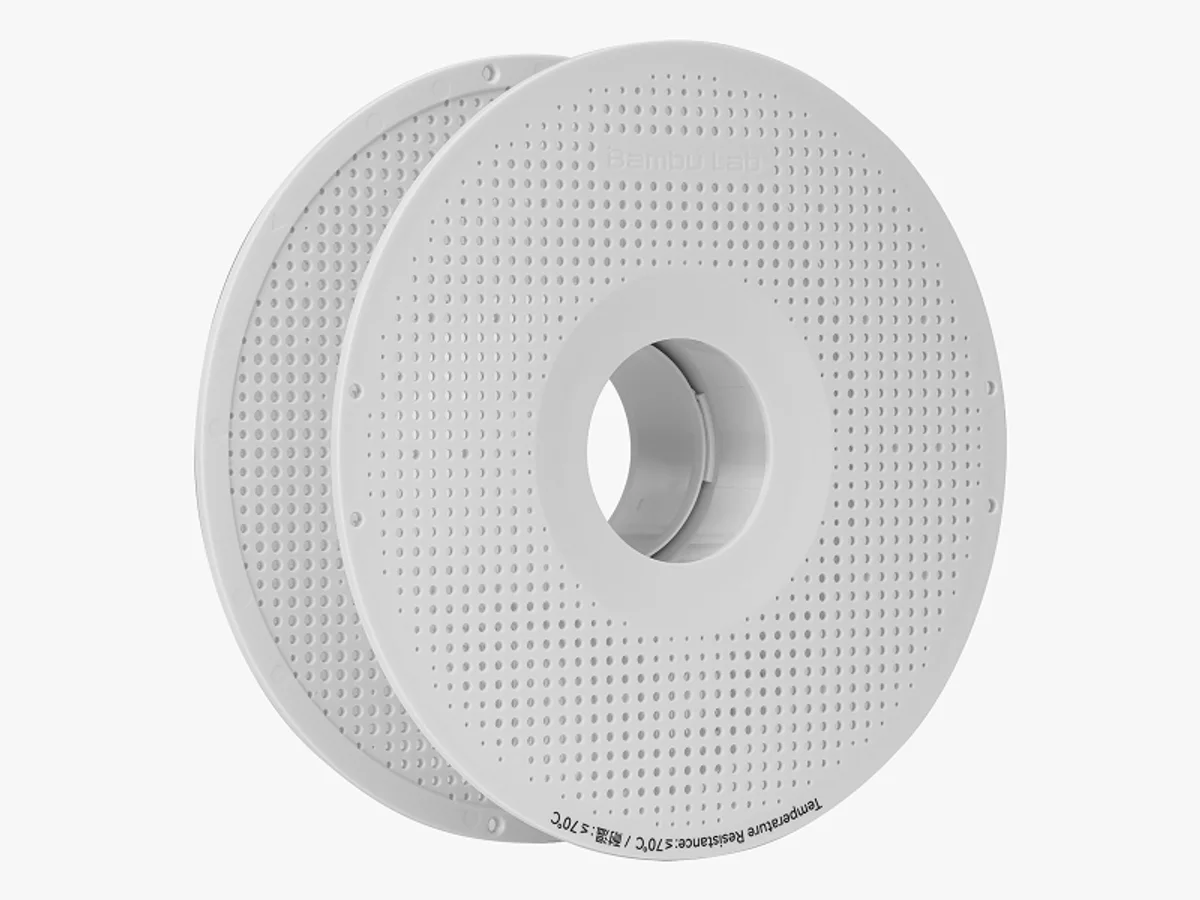
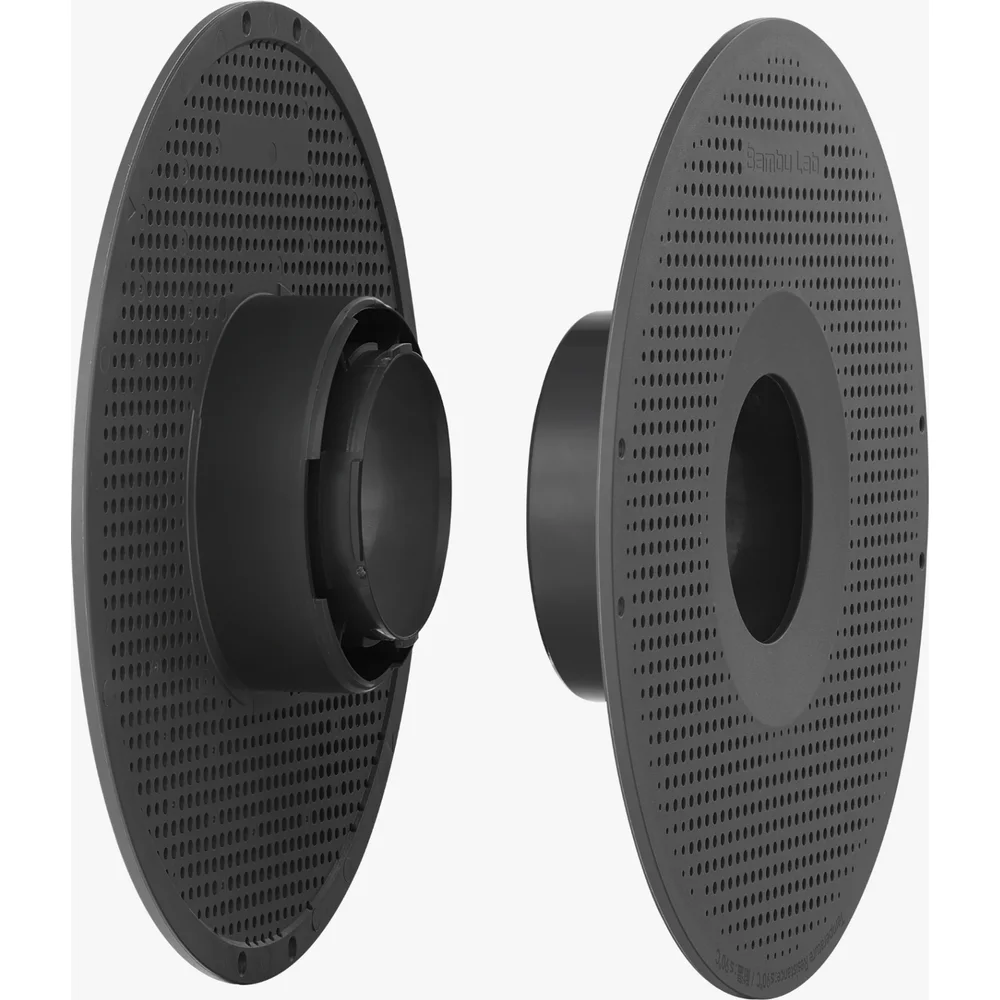
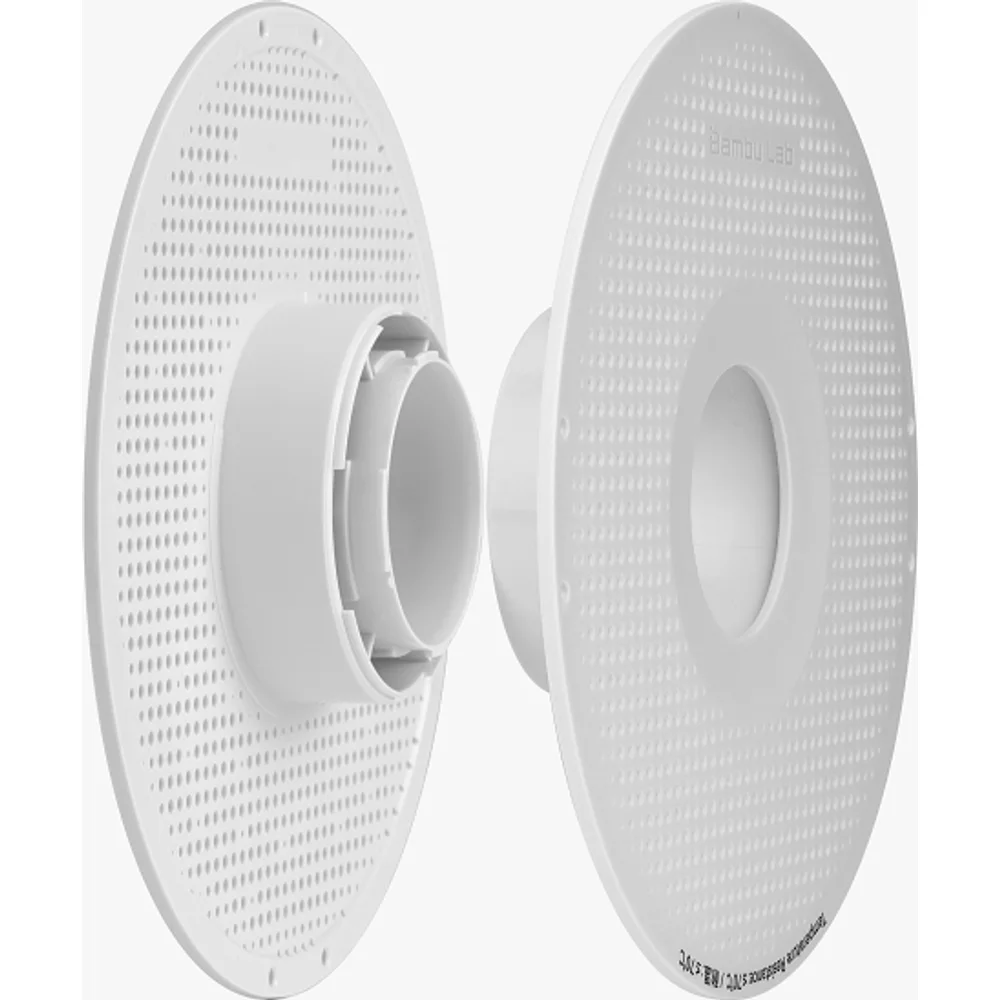
Moulded ABS, rated to 70°C, white. The everyday spool for PLA and PETG.
High temperatureS$15 used · S$20 new
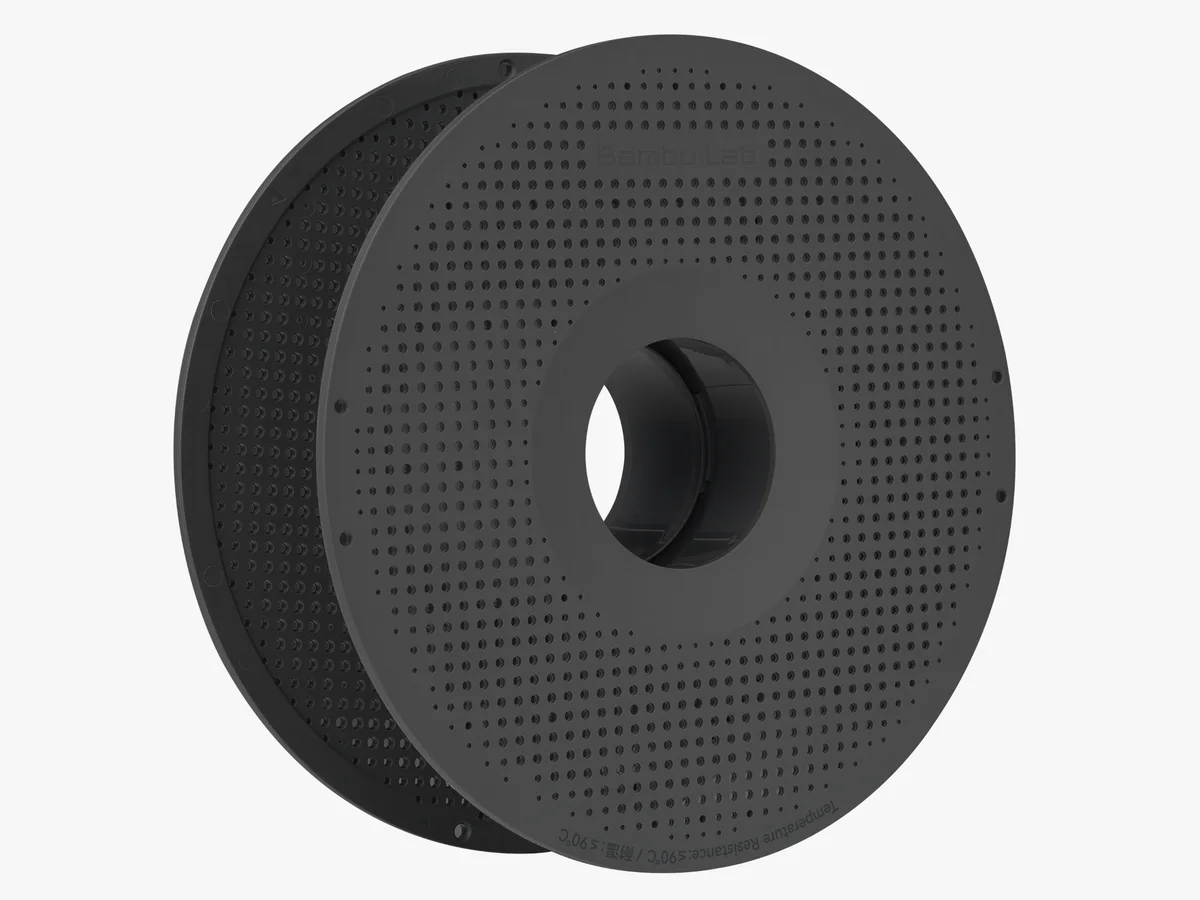
The same shell in ABS and PC, rated to 90°C, black. For ABS, ASA, TPU, PC and the fibre blends.
The standard spool
The one to buy first, and the one most people only ever buy.
The everyday spool, and the one to buy first. It fits the AMS, the AMS 2 Pro, the AMS HT and every machine we sell.
It's moulded in ABS, 200 mm across and 67 mm wide, 250 g empty, and Bambu lists it in white. That size is not arbitrary: an AMS accepts spools 197 to 202 mm in diameter and 50 to 68 mm wide, so this one sits in the middle of the window with room either side.
Rated to 70°C. That covers PLA drying at 45°C and PETG at 65°C comfortably, which is the great majority of what most people print. Above 70°C is where ABS gives, and that's the whole reason the other version exists.
The high-temperature spool
Same price, same fit, built to come out of an 85°C dry still round.
Same fit, same price, built to survive the heat. The shell is ABS with polycarbonate blended in, which is what lifts the rating from 70°C to 90°C. Bambu lists it in black. Engineering materials need drying at 80 to 85°C before every print, and ABS on a printer bed goes to 90 to 100°C.
A standard spool put through that can soften and go slightly out of round, and a spool that's out of round binds in the AMS feed path. That's what this version is built to stop. There's a measured version of the same problem in Bambu's own docs: a TPU spool grows from 65.4 mm to about 69.4 mm while it dries, and 68 mm is the widest the AMS will take.
Buy this one if you run ABS, ASA, TPU, PC, PA6-CF, PAHT-CF, PPA-CF or PPS-CF. Bambu ships TPU on a high-temperature spool themselves, so match it. If you only print PLA and PETG, the standard spool is all you need.
Told apart by colour
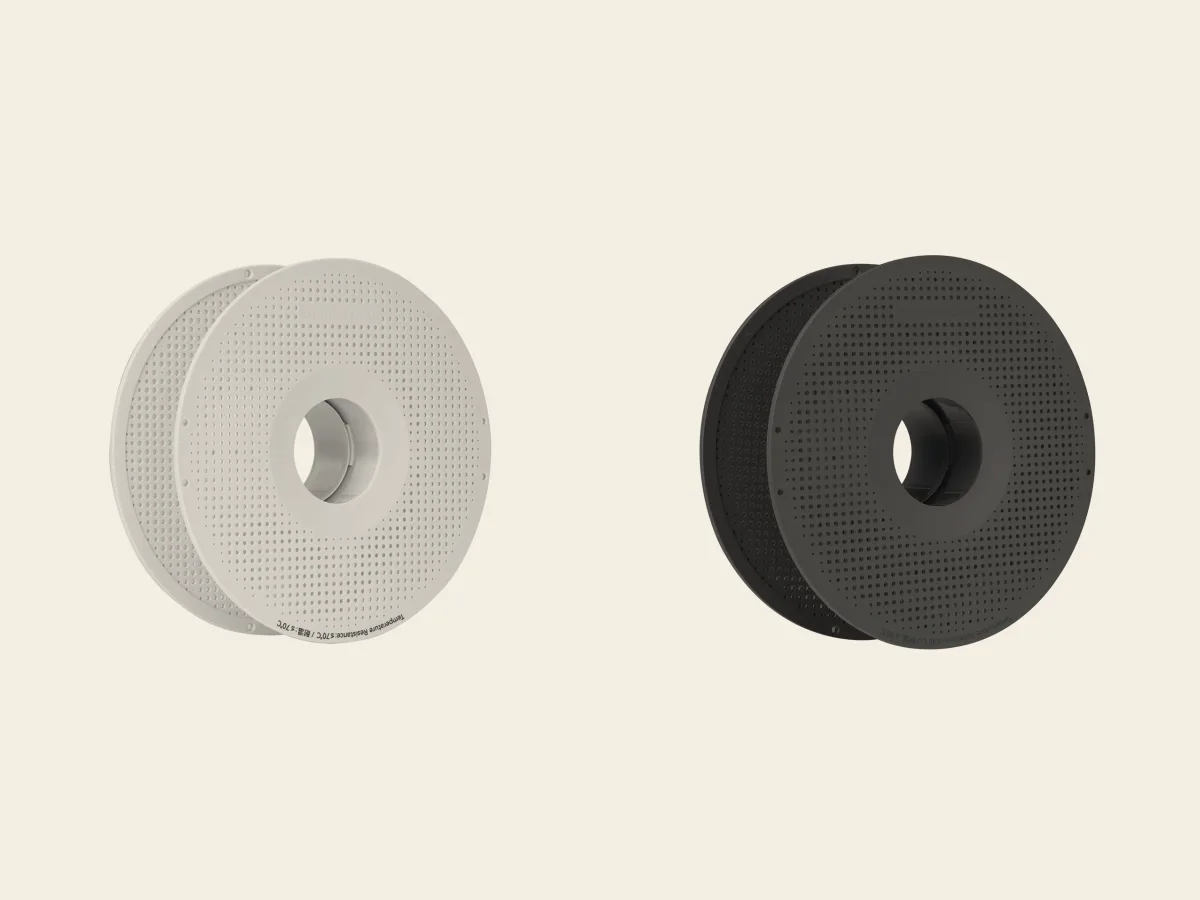
White is the standard one. The dark one, which Bambu lists as black, is rated for the heat.
They're the same object in two plastics: same shell, same halves, same fit. Either one drops into an AMS without a thought, and either one takes any refill we stock.
What differs is the material and the rating: ABS at 70°C for the standard, ABS with polycarbonate at 90°C for the high-temperature one. Colour is the only difference you can see from across the room, so it's worth keeping them on separate shelves. Bambu doesn't publish a moulded stamp or any other marking to tell them apart, and we're not going to invent one.
Why a spool of your own
Buy the plastic once. After that you're only buying filament.
A refill is just the filament, wound into a ring that holds its own shape around a cardboard core. It costs less per kilo than the same filament on a spool, and you save again every time you reload. Bambu's claim for the whole idea is at least 20% less plastic waste in filament consumption.
The spool itself doesn't wear out. Keep one for each colour you run regularly, and loading a refill takes a couple of minutes. The spool has no electronics of its own to pair or configure: the last step of Bambu's own reload procedure is peeling the old label off and sticking on the one that came with the new roll, so the spool always says what's actually on it.
We can't tell you in advance which way a roll arrives, because Bambu keeps moving colours between the two formats and doesn't announce it. So the filament page offers a spool right beside the picker, at these same prices. Add one with your first roll of a colour and refill it from then on.
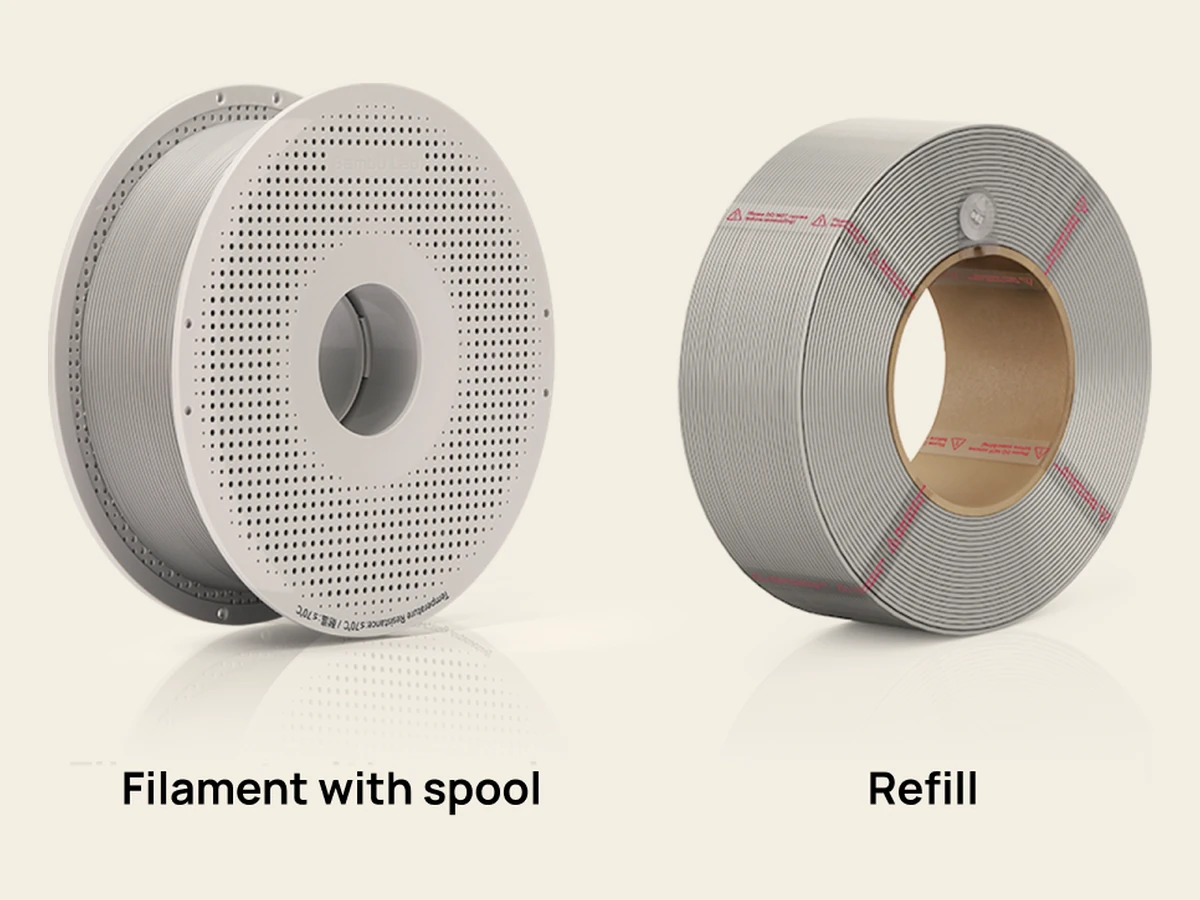
Two halves and a quarter turn
There's nothing inside it: a wide half, a narrow half, and a twist lock between them.
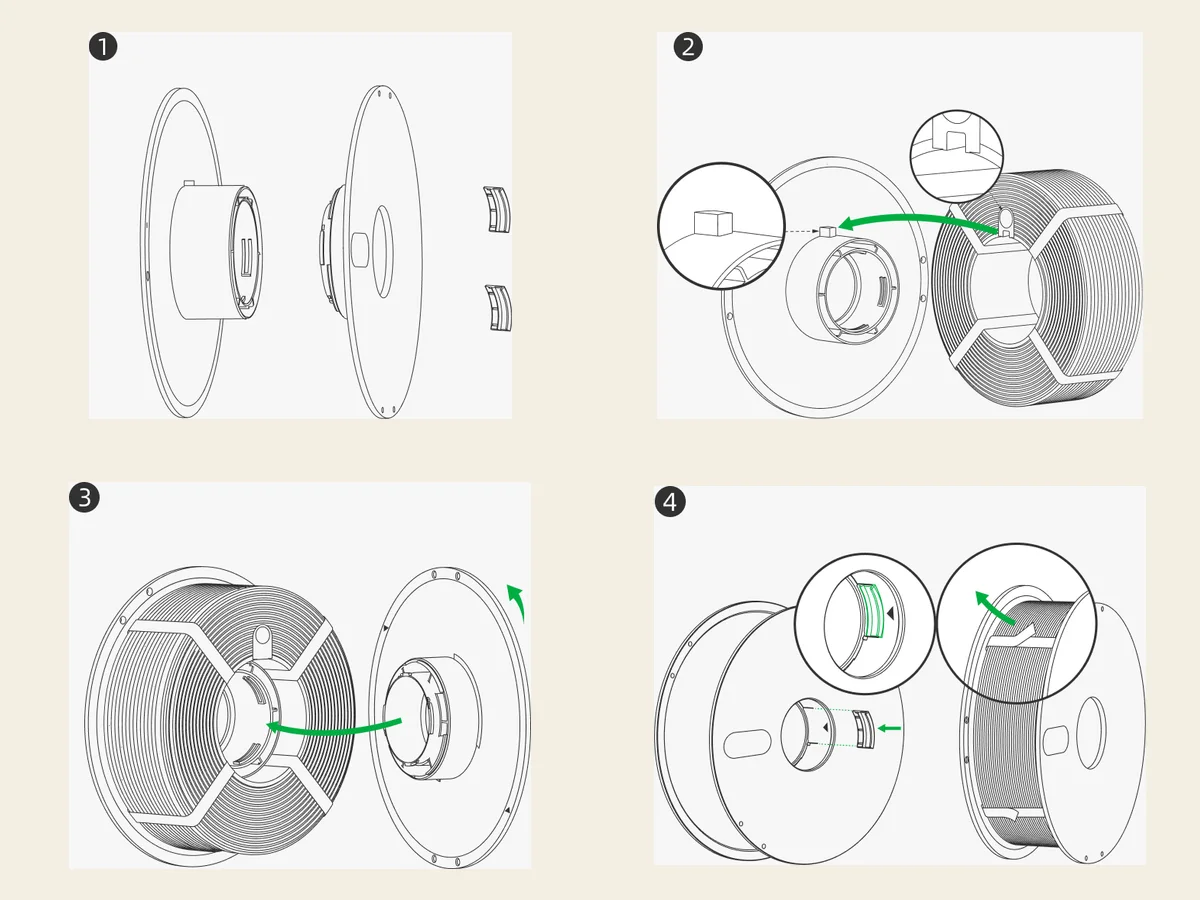
Turn it anticlockwise and it comes apart into a wide half and a narrow half. The wide half carries a small locator block; the cardboard core of a refill has a notch cut in it, and those two line up. Press the coil home, fit the narrow half, turn clockwise until you hear a soft click and it's locked. No tools, no screws, and nothing that goes on the wrong way round if the notch is where it should be.
There's a round hole in the side of the rim. That's where the loose end of the filament goes, and it isn't decorative: an unclipped end springs off the coil, the coil scatters, and Bambu's own name for what happens next is an exploding spool. Clip the end every single time, on the way in and on the way out.
If you'd rather print one than buy one, Bambu publishes the files: a wide piece, a narrow piece and a pair of spacing shims. Handy to know, and also the reason we stock the moulded version. A printed spool in PLA has no business anywhere near an 85°C dry cycle.
What "used" actually means here
It's a genuine Bambu spool that has already held one roll of filament. Not a copy, not a reject.
We get through a lot of filament, so empty spools pile up here faster than we can use them. Rather than bin them, we clean them, check the halves still close square and the hub still runs true, and sell them for 25% less.
Nothing about how it works changes. It takes the same refills, clicks into the AMS the same way, and the high-temperature ones still survive the same 85°C dry. What you give up is the looks: expect some scuffing, and don't expect a box.
These don't depend on what Bambu ships, so there's always a shelf of them here. It's usually the one we can hand you the same day.
Buying it here
Genuine Bambu Lab spools, stocked in Singapore. Prices exclude GST. We add 9% at checkout. PayNow is free; paying by card adds a flat 4% processing fee. Self-collect free at Bendemeer, or islandwide courier at $15 flat, free once the order passes $250 before GST.
Drying and airtight storage between prints is what keeps filament printing well in this climate. The AMS 2 Pro and AMS HT do both.
Standard or high temperature
Bambu's own specification for the two types. The top four rows are identical on both. Everything from Material down is the reason there are two of them.
| Standard | High temperature | |
|---|---|---|
| Outer diameter | 200 mm | 200 mm |
| Width | 67 mm | 67 mm |
| Weight, empty | 250 g | 250 g |
| Fits | AMS, AMS 2 Pro, AMS HT, AMS lite and every machine we sell | Same |
| Material | ABS | ABS + PC |
| Rated to | 70°C | 90°C |
| Colour, as Bambu lists it | White | Black |
| Filament it's for | PLA, PETG | PLA, PETG, ABS, ASA, PA6-GF, ABS-GF, PAHT-CF, PET-CF, PA6-CF, PC, TPU |
| Electronics | None. The RFID tag travels with the filament, not the spool | Same |
Swipe the table sideways for every column
It only matters if you dry filament, and with engineering materials that's every print. A standard spool put through an 85°C dry can deform enough to bind in the AMS. Drying temperatures by material are on the filament page.
How it fits, and what the printer reads
The spool is a passive part. Everything the machine knows about what's on it comes from the filament, not from the spool.
| Spool sizes an AMS accepts | 197 to 202 mm diameter, 50 to 68 mm wide. This spool is 200 × 67 mm, so it sits mid-window |
|---|---|
| AMS lite | Grips the centre hole rather than the rim, and is specified for 53 to 58 mm inner diameter. Bambu lists the reusable spool as compatible with the AMS and the AMS lite |
| Filament diameter | 1.75 mm, same as every Bambu machine we sell |
| RFID | The tag belongs to the filament, not to the spool. An AMS reads Bambu's tags to set print parameters, estimate what's left and run auto-refill |
| Identifying a reloaded spool | By the label. Bambu's reload procedure ends with peeling the old one off and applying the label that came with the new roll |
| Third-party and cardboard spools | Bambu recommends plastic spools that fit the AMS properly. Cardboard needs an adapter ring, or it slips and leaves debris inside the unit |
| Spools too big for the rear holder | Remove the filament buffer, use an external holder or dry box, or print your own |
A spool that has been through too hot a dry cycle is the one real failure mode here. Out of round means it binds in the feed path, and Bambu measured a TPU spool growing from 65.4 mm to about 69.4 mm during drying, against an AMS limit of 68 mm.
Drying temperature by material, and the spool it needs
Read your material down the left. Anything drying above 70°C wants the high-temperature spool, because that is where the standard one starts to give. Temperatures are Bambu's AMS HT figures.
| Filament | Dry at | For | Spool |
|---|---|---|---|
| PLA family, including Matte, Silk, CF, Wood, Galaxy | 45°C | 12 h | Standard |
| Support for PLA, Support for PLA/PETG | 60°C | 12 h | Standard |
| PETG, PETG-CF | 65°C | 12 h | Standard |
| TPU | 75°C | 18 h | High temperature |
| ABS, ASA, ASA-CF, ABS-GF, PC | 80°C | 8 h | High temperature |
| PET-CF, Support for PA/PET | 80°C | 12 h | High temperature |
| Support for ABS | 80°C | 4 h | High temperature |
| PA6-CF, PAHT-CF | 85°C | 12 h | High temperature |
| PVA | 85°C | 18 h | High temperature |
| PPA-CF, PPS-CF | Neither AMS will do it. Bambu sends you to a 100 to 140°C convection oven | High temperature, and mind the oven |
Swipe the table sideways for every column
An AMS 2 Pro tops out at 65°C, so anything below the TPU line here needs an AMS HT or an oven rather than a 2 Pro. Bambu's own warning for the top of the range: some materials that want high-temperature drying may still not dry fully, PVA and the PPS and PPA blends among them.
Loading a refill
Four moves, no tools, and nothing that can go on the wrong way round.
The spool comes apart into two halves and a pair of small clips. Take it apart, drop the refill onto the hub with its tab lined up against the notch, and press the halves back together.
The clips go in last. The loose end of the filament comes out through the slot in the rim, so it can't spring free while the spool sits on the shelf.
Loaded this way, the printer reads the refill just like a factory spool. Right material, right colour, right drying profile, nothing to set up by hand.